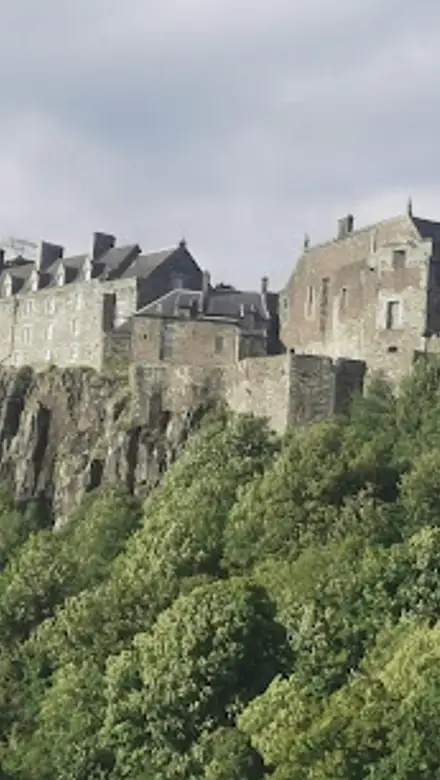
The King's Knot, Stirling Travel Guide
Free Guide: A 3-metre octagonal mound and geometric earthworks where Scottish kings once displayed their power and culture.


A brief summary of The King's Knot
A 3-metre octagonal mound and geometric earthworks where Scottish kings once displayed their power and culture.
A historic royal pleasure ground beneath Stirling Castle, the King's Knot comprises an octagonal stepped mound rising 3 metres high, surrounded by geometric earthworks that once formed elaborate formal gardens. Originally designed as an ornamental garden for Charles I in the 1620s and restored by Queen Victoria in 1842, this free-to-visit landmark offers peaceful walks, stunning castle views, and a tangible connection to Scotland's royal heritage. Perfect for leisurely strolls, dog walking, and photography.
On-site amenities
 Seating areas
 Trash bins
 Information boards
Opening hours
- Every dayOpen 24 hours
Opening hours as listed on the venue’s Google Business Profile. Hours can change for services and special events, so check with the venue before you go.
- Address
- Scotland
- Website
Getting there
Bus
Walking
Car
Taxi or Ride-share
Discover more about The King's Knot
A Royal Pleasure Ground Through the Centuries
The King's Knot sits within the ancient King's Park, Crown property since at least the 1100s, where Scottish royalty once pursued leisure activities including jousting, hawking, and hunting. The park itself was formally established by William the Lion in the 12th century and underwent significant development between 1490 and 1508, when James IV transformed it into an ornamental landscape. More than 1,000 trees were planted in 1497, and the park was enriched with fish pools, vegetable gardens, and orchards. When the Scottish court relocated to London in 1603 following James I's accession to the English throne, the gardens fell into disrepair.
Charles I's Grand Vision and Victorian Restoration
The distinctive earthworks visible today were created between 1627 and 1629 in preparation for Charles I's Scottish coronation in 1633. William Watts, appointed as Master Gardener to His Majesty at Stirling Castle, designed and constructed the King's Knot as an ornamental garden modelled on the romantic châteaux gardens of France. The feature was intended to enchant and impress visitors, demonstrating the wealth, power, and cultural sophistication of the Stuart monarchy. The octagonal stepped mound, rising 3 metres high with a rectangular parterre to the southeast, became the centrepiece of this carefully planned landscape. When Queen Victoria visited in 1842 and complained about the gardens' condition, she ordered extensive restoration work that fundamentally altered the site. The mound was considerably modified, and it is possible the entire orientation of the gardens was changed during this Victorian intervention.
The Geometry of Power and Prestige
The King's Knot's distinctive octagonal form and geometric layout were not merely decorative—they embodied Renaissance ideals of order, control, and royal authority. The earthworks create a series of natural undulations across the landscape that are best appreciated from an elevated vantage point, particularly from the Ladies' Lookout within Stirling Castle itself. From ground level, the site appears as a gently rolling green space, but aerial views reveal the sophisticated geometric patterns that once defined formal garden beds and pathways. The adjacent Queen's Knot, now a flat expanse of grass, hints at the scale and ambition of the original royal gardens, though little remains of their former splendour beyond the main mound.
A Living Landscape Today
Today, the King's Knot is maintained as a peaceful, open green space managed by Historic Environment Scotland. The site is entirely free to visit and remains open year-round, accessible to all. The grassed earthworks invite leisurely exploration, and the location has become particularly popular with dog walkers and families seeking outdoor recreation near Stirling Castle. The park's flat terrain and open character make it welcoming for casual visitors, though the full historical significance of the site is best understood through research or interpretation from the castle ramparts above. The geometric undulations that once formed the ornamental gardens now create a distinctive landscape that local residents affectionately know as 'the cup and saucer'—a testament to how this royal feature has become woven into the fabric of contemporary Stirling life.
Evendo Review Centre
 Google
Guest reviews
Best time to go
Quietest: Jan, Feb & Nov · before 7am or at 9pm
Busy times are Evendo estimates for a typical year, to help you plan. Actual crowds vary with events, school holidays and the weather.
Explore The King's Knot on the map
A handpicked selection of must-see spots near The King's Knot, mapped for you.
Get your free copy of our complete guide to The King's Knot, delivered straight to you.
Everything on this page, from opening hours and how to get there to Eve’s tips and the best time to go, in one PDF you can read offline, print or share.
Already have an account? Sign in
Your The King's Knot guide is ready.
We'll send it to · Not you? Sign out

Getting your guide ready…
We are putting together a fresh copy of the The King's Knot guide. This can take up to a minute.
This can take a few moments. If your browser asks, choose Allow so the download can start. You'll find the guide in your Downloads folder.
Nothing happened? Download it again
Sorry, the guide is taking longer than usual. Please try again in a minute, or get it by email instead.
Unlock the best of The King's Knot
Skip-the-line tickets, guided tours with entry, and walking tours of the area, booked in a few clicks.

Other nearby places you may find interesting
The closest places of the same kind, if this one is not quite what you had in mind.
-
-
-
-
-


Swipe for more places
More to explore near The King's Knot

 Best experiences near The King's Knot
 Best hotels near The King's Knot
 Best landmarks near The King's Knot
 Best attractions near The King's Knot
 Best shops near The King's Knot
 Best restaurants near The King's Knot
 Best bars near The King's Knot
Do you manage this location?
Take control to get all the benefits, like improved information, better appearance, and stronger visibility across AI-powered discovery.
Explore more

Explore more of Stirling
Discover Stirling: A city where history comes alive amidst stunning landscapes and cultural richness in the heart of Scotland.
Explore Stirling
Explore more of United Kingdom
Discover the United Kingdom: A blend of rich history, stunning landscapes, and vibrant cities, offering a unique travel experience for every visitor.
Explore United Kingdom