

Cow Tower Travel Guide
Free Guide: Explore Cow Tower, Norwich’s rare medieval artillery blockhouse guarding the River Wensum with commanding views and rich history.


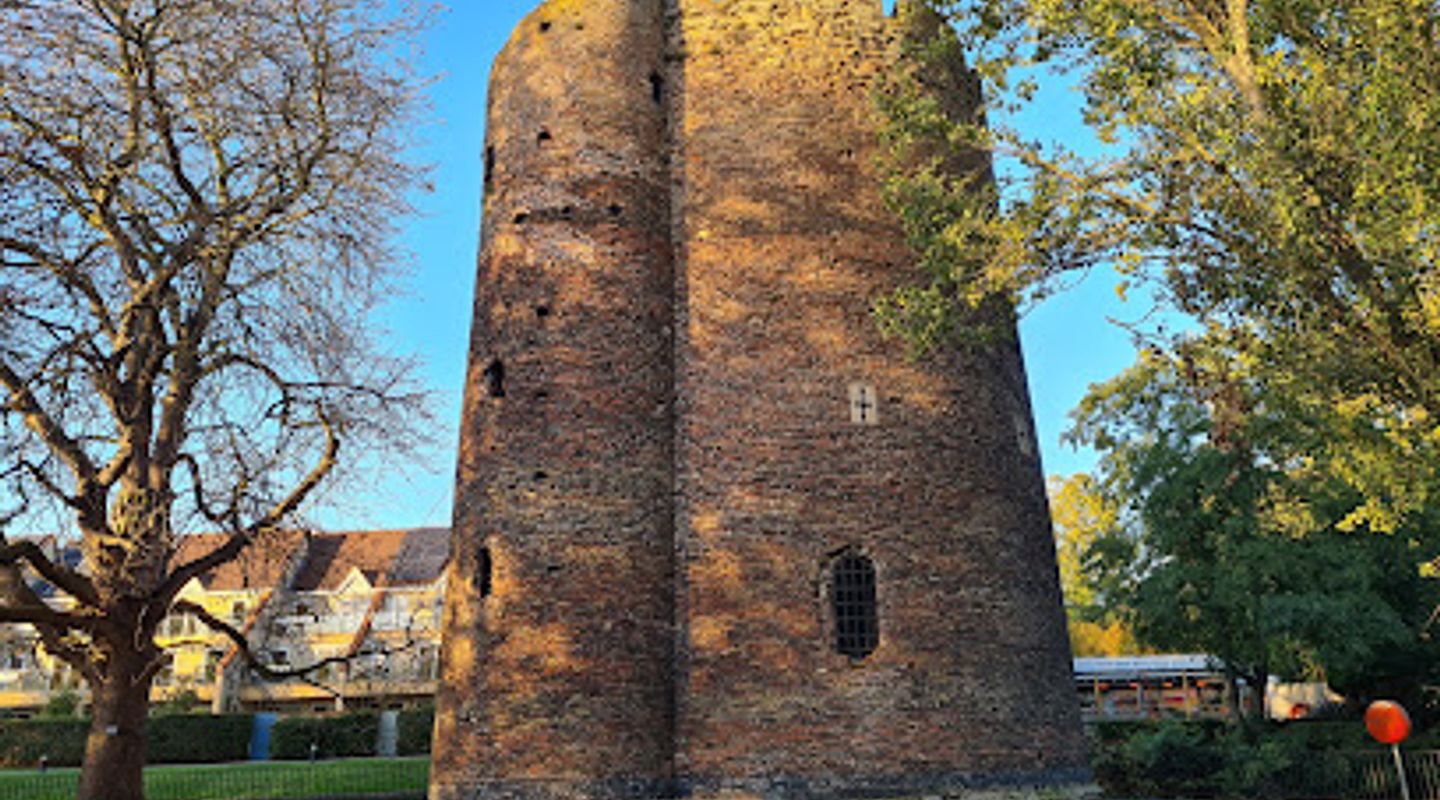
A brief summary of Cow Tower
Explore Cow Tower, Norwich’s rare medieval artillery blockhouse guarding the River Wensum with commanding views and rich history.
Cow Tower, built in 1398-9, is one of England’s earliest purpose-built artillery blockhouses, located on the banks of the River Wensum in Norwich. This imposing brick and flint tower was designed to defend the city by housing guns and gunners, commanding a strategic riverside position. Though the interior is closed to visitors, the exterior and surrounding riverside paths offer a scenic glimpse into Norwich’s medieval defenses and history.
On-site amenities
 Information boards
- Address
- Cotman Fields, Norwich NR1 4AA
- Phone
- Website
Getting there
Bus
Train
Car
Walking
Discover more about Cow Tower
Origins and Military Purpose
Constructed between 1398 and 1399, Cow Tower stands as one of the earliest artillery blockhouses purpose-built in England. Its primary role was to defend Norwich by controlling a key strategic point along the River Wensum. The tower’s height of over 15 metres (approximately 49 feet) allowed it to overlook the high ground on the opposite riverbank, ensuring a commanding view to monitor and repel any hostile forces approaching via the river. It was designed to house a garrison of gunners and artillery, equipped with widely splayed gun ports suitable for the newly developed cannon technology of the late 14th century, while also retaining arrow loops for crossbows and small firearms. This blend of medieval and early gunpowder weaponry reflects the transitional military innovations of the period.
Architectural Features and Construction
The tower’s robust walls feature a core of mortared flint rubble, faced both internally and externally with brick, complemented by external stone dressings. This durable construction was essential for withstanding attacks and the recoil of artillery fire. The ground floor likely served as a communal dining area for the garrison, with sleeping quarters on the upper two floors. Cow Tower is unique in its standalone design compared to other artillery towers in England, which are often integrated into city walls or gates. Its name is believed to derive from the surrounding meadow historically known as Cowholme, linking the tower to its local landscape context.
Historical Significance and Later History
Cow Tower played a notable role during the turbulent times of the 16th century, including the Kett’s Rebellion of 1549, when rebels attacked Norwich with artillery and damaged the tower’s parapets. Repairs were undertaken in the late 19th century, though some restoration efforts then were less than careful, causing further damage. The tower’s floors and roof have since been lost, leaving it as a shell of its former self. In 1953, the Ministry of Works took guardianship of the tower, stabilizing the structure to preserve it for future generations. Today, it is managed jointly by English Heritage and Norwich City Council and is recognized as a Grade I listed building and scheduled monument.
Visitor Experience and Surroundings
While the interior of Cow Tower is not accessible to visitors, the exterior can be freely explored along flat, well-maintained riverside paths. The tower serves as a striking historical focal point on the scenic River Wensum walk, offering excellent photographic opportunities. Information boards near the site provide insights into its construction and defensive role. The surrounding area is peaceful and ideal for picnics or quiet reflection, blending natural beauty with rich medieval history. Though there are no facilities on site, Norwich city centre’s amenities, including shops, cafés, and restrooms, are conveniently nearby.
Context within Norwich’s Heritage
Cow Tower complements Norwich’s extensive medieval heritage, standing alongside other historic sites such as Norwich Castle and the cathedral. Its survival as a standalone artillery tower is rare in England, with only a few comparable structures like God’s House Tower in Southampton and the West Gate in Canterbury. This uniqueness enhances its importance as a tangible link to the city’s defensive past and military architecture during the early gunpowder era.
Preservation and Cultural Value
As a protected heritage site, Cow Tower represents both the military ingenuity of late medieval England and the evolving nature of urban defense. Its preservation allows visitors and historians to appreciate the strategic and architectural responses to threats faced by Norwich centuries ago. The tower’s commanding presence on the riverbank continues to evoke the vigilance and resilience of the city’s past inhabitants, making it a valuable cultural landmark within Norfolk’s historic landscape.
Evendo Review Centre
 Google
Guest reviews
Best time to go
Quietest: Jan, Feb & Dec · before 6am or from 9pm
Busy times are Evendo estimates for a typical year, to help you plan. Actual crowds vary with events, school holidays and the weather.
Explore Cow Tower on the map
A handpicked selection of must-see spots near Cow Tower, mapped for you.
Get your free copy of our complete guide to Cow Tower, delivered straight to you.
Everything on this page, from opening hours and how to get there to Eve’s tips and the best time to go, in one PDF you can read offline, print or share.
Already have an account? Sign in
Your Cow Tower guide is ready.
We'll send it to · Not you? Sign out

Getting your guide ready…
We are putting together a fresh copy of the Cow Tower guide. This can take up to a minute.
This can take a few moments. If your browser asks, choose Allow so the download can start. You'll find the guide in your Downloads folder.
Nothing happened? Download it again
Sorry, the guide is taking longer than usual. Please try again in a minute, or get it by email instead.
Other nearby places you may find interesting
The closest places of the same kind, if this one is not quite what you had in mind.
-
How Hill National Nature Reserve Explore diverse fen habitats, historic gardens, and tranquil waterways at How Hill National Nature Reserve in the heart of Norfolk Broads.
-
National Trust - Horsey Windpump Explore Norfolk’s largest restored windpump with panoramic Broads views, wildlife gardens, and tranquil marshland walks.
-
Museum of the Broads Explore Norfolk’s unique waterways heritage through boats, art, and interactive exhibits at the Museum of the Broads in Stalham.
-
Martham Broad Nature Reserve Discover Norfolk’s pristine wetland sanctuary where rare wildlife and tranquil waters create a timeless natural escape.
-
National Trust - Felbrigg Hall, Gardens & Estate Discover Felbrigg Hall’s rich history, vibrant gardens, and tranquil parkland—a timeless Norfolk estate blending heritage and nature.
Swipe for more places
More to explore near Cow Tower

 Best experiences near Cow Tower
 Best hotels near Cow Tower
 Best landmarks near Cow Tower
 Best attractions near Cow Tower
 Best shops near Cow Tower
 Best restaurants near Cow Tower
 Best bars near Cow Tower
Do you manage this location?
Take control to get all the benefits, like improved information, better appearance, and stronger visibility across AI-powered discovery.
Explore more

Explore more of The Broads
Discover The Broads: Britain's Magical Waterland, where serene waterways, charming villages, and abundant wildlife create a perfect escape into nature.
Explore The Broads
Explore more of United Kingdom
Discover the United Kingdom: A blend of rich history, stunning landscapes, and vibrant cities, offering a unique travel experience for every visitor.
Explore United Kingdom
