

St Olave's Priory Travel Guide
Free Guide: Medieval brick undercroft and Augustinian priory ruins in peaceful Norfolk countryside, free to explore year-round.


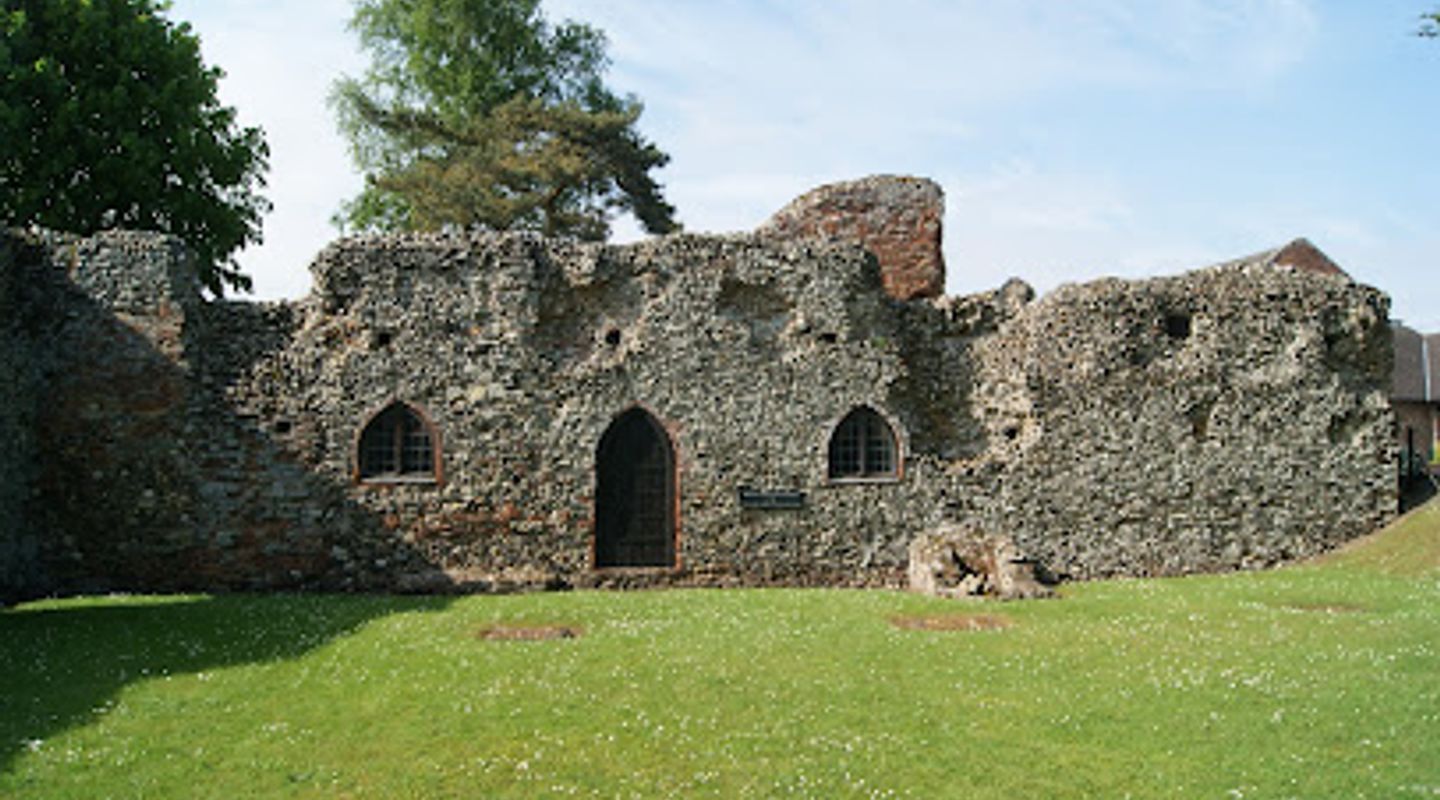
A brief summary of St Olave's Priory
Medieval brick undercroft and Augustinian priory ruins in peaceful Norfolk countryside, free to explore year-round.
A remarkably preserved 14th-century brick-vaulted refectory undercroft belonging to a small Augustinian priory founded in 1216 near Great Yarmouth. This English Heritage site showcases medieval monastic architecture and offers a peaceful rural setting with atmospheric ruins, including fragments of the cloister, church foundations, and historical information boards. Free entry and open year-round during daylight hours.
On-site amenities
 Food options
 Drink options
 Information boards
 Trash bins
Opening hours
- Every day9 am–5 pm
Opening hours as listed on the venue’s Google Business Profile. Hours can change for services and special events, so check with the venue before you go.
- Address
- Beccles Rd, Great Yarmouth NR31 9HE
- Phone
- Website
Getting there
By Car from Great Yarmouth
By Train and Walk from Haddiscoe Station
On Foot from Beccles Road
Combination Visit with Priory Farm
Discover more about St Olave's Priory
A Medieval Religious Community Dedicated to a Scandinavian Saint
St Olave's Priory was founded around 1216 by Roger Fitz Osbert, a local nobleman, as a home for Augustinian Canons who combined spiritual devotion with service to their community. The priory's dedication to St Olav, the 11th-century king and patron saint of Norway, is unusual for English religious sites and reflects the strong medieval trade and cultural connections between East Anglia and Scandinavia. This distinctive choice reveals the cosmopolitan nature of medieval Norfolk and the far-reaching influence of Scandinavian Christianity across northern Europe.
Architectural Remnants and the Remarkable Undercroft
The most striking feature of St Olave's Priory is its wonderfully complete 14th-century brick-vaulted refectory undercroft, a testament to the skill and resources of medieval craftsmen. Brick construction was rare and expensive during this period, making the undercroft's survival particularly significant. The undercroft later served as a cottage, occupied continuously until 1902, which paradoxically helped preserve this architectural gem. Beyond the undercroft, visitors can trace the priory's layout through surviving fragments: the church foundations to the south consist of five bays from the early 13th century, with a south aisle added in 1300–1310. The cloister remains include early 13th-century brick-faced piers that once supported the roof, with three surviving on the north wall and four on the south. The west wall of the cloister range features an early 14th-century ashlar doorway that would have led to the Prior's lodgings and service rooms.
Dissolution, Transformation, and Preservation
Like countless English monasteries, St Olave's Priory fell victim to Henry VIII's Dissolution of the Monasteries in 1537. Following this upheaval, Sir Henry Jerringham purchased the site and constructed a three-storey mansion north of the cloisters in 1547, incorporating monastic remains into its structure. This mansion was demolished in 1784. Stone from the priory was removed in 1823 for repairs to nearby Herringfleet church, and the refectory undercroft was converted into a residential cottage in 1825, a use it maintained until the early 20th century. Today, the site is carefully managed by English Heritage, allowing visitors to contemplate the layers of history embedded in these ruins.
Exploring the Site and Its Peaceful Setting
The priory occupies a tranquil rural location near the Norfolk Broads, close to the ancient ferry crossing of the River Waveney. The grounds feature uneven surfaces, grass pathways, and low-level wall remains that invite exploration and contemplation. Information boards scattered throughout provide historical context, helping visitors piece together the story of monastic life and the passage of centuries. The compact nature of the site means a visit typically takes 20 to 45 minutes, making it an ideal stop for those exploring the Norfolk countryside or the Broads. The quiet atmosphere and rural surroundings create an immersive experience of medieval religious life, inviting reflection on the devotion and community that once flourished here.
Evendo Review Centre
 Google
Guest reviews
Best time to go
Quietest: Jan, Feb & Nov · before 8am or from 6pm
Busy times are Evendo estimates for a typical year, to help you plan. Actual crowds vary with events, school holidays and the weather.
Explore St Olave's Priory on the map
A handpicked selection of must-see spots near St Olave's Priory, mapped for you.
Get your free copy of our complete guide to St Olave's Priory, delivered straight to you.
Everything on this page, from opening hours and how to get there to Eve’s tips and the best time to go, in one PDF you can read offline, print or share.
Already have an account? Sign in
Your St Olave's Priory guide is ready.
We'll send it to · Not you? Sign out

Getting your guide ready…
We are putting together a fresh copy of the St Olave's Priory guide. This can take up to a minute.
This can take a few moments. If your browser asks, choose Allow so the download can start. You'll find the guide in your Downloads folder.
Nothing happened? Download it again
Sorry, the guide is taking longer than usual. Please try again in a minute, or get it by email instead.
Other nearby places you may find interesting
The closest places of the same kind, if this one is not quite what you had in mind.
-
-
-
-
-


Swipe for more places
More to explore near St Olave's Priory

 Best experiences near St Olave's Priory
 Best hotels near St Olave's Priory
 Best landmarks near St Olave's Priory
 Best attractions near St Olave's Priory
 Best shops near St Olave's Priory
 Best restaurants near St Olave's Priory
 Best bars near St Olave's Priory
Do you manage this location?
Take control to get all the benefits, like improved information, better appearance, and stronger visibility across AI-powered discovery.
Explore more

Explore more of The Broads
Discover The Broads: Britain's Magical Waterland, where serene waterways, charming villages, and abundant wildlife create a perfect escape into nature.
Explore The Broads
Explore more of United Kingdom
Discover the United Kingdom: A blend of rich history, stunning landscapes, and vibrant cities, offering a unique travel experience for every visitor.
Explore United Kingdom
