Whiteford Lighthouse Travel Guide
Free Guide: A rare cast-iron lighthouse standing in the tidal estuary of the Gower Peninsula, reachable only at low tide across vast sands and saltmarsh.


A brief summary of Whiteford Lighthouse
A rare cast-iron lighthouse standing in the tidal estuary of the Gower Peninsula, reachable only at low tide across vast sands and saltmarsh.
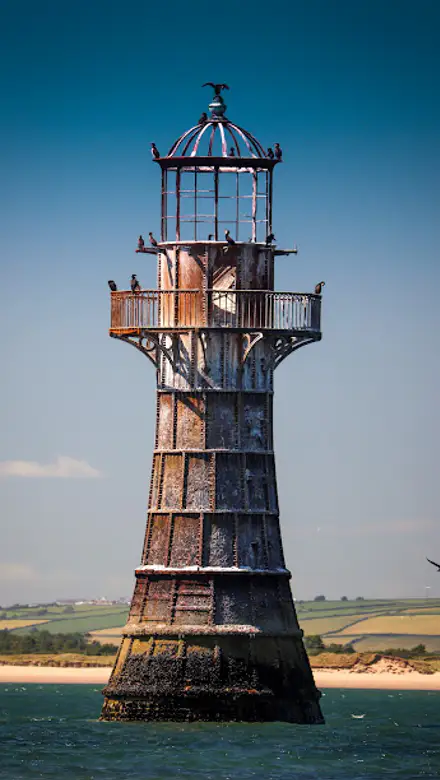
Standing half a mile into the Loughor estuary on the Gower Peninsula, Whiteford Lighthouse is the only large wave-swept cast-iron lighthouse in Britain. Built in 1865, this Grade II* listed tower marks shifting shoals and now stands as a striking relic of Victorian maritime engineering. Accessible only at low tide, the lighthouse rises from a concrete and masonry base, its iron plates bolted together in a rare external-flange design. Surrounded by saltmarsh, dunes and wild ponies, it offers a dramatic, atmospheric walk across Whiteford Sands.
On-site amenities
 Restrooms
 Drinking water
 Seating areas
 Information boards
- Address
- Swansea SA3 1DL
- Website
Getting there
On foot from Llanmadoc
From Llanmorlais
By car to local car park
Public transport and walk
Discover more about Whiteford Lighthouse
A cast-iron sentinel in the estuary
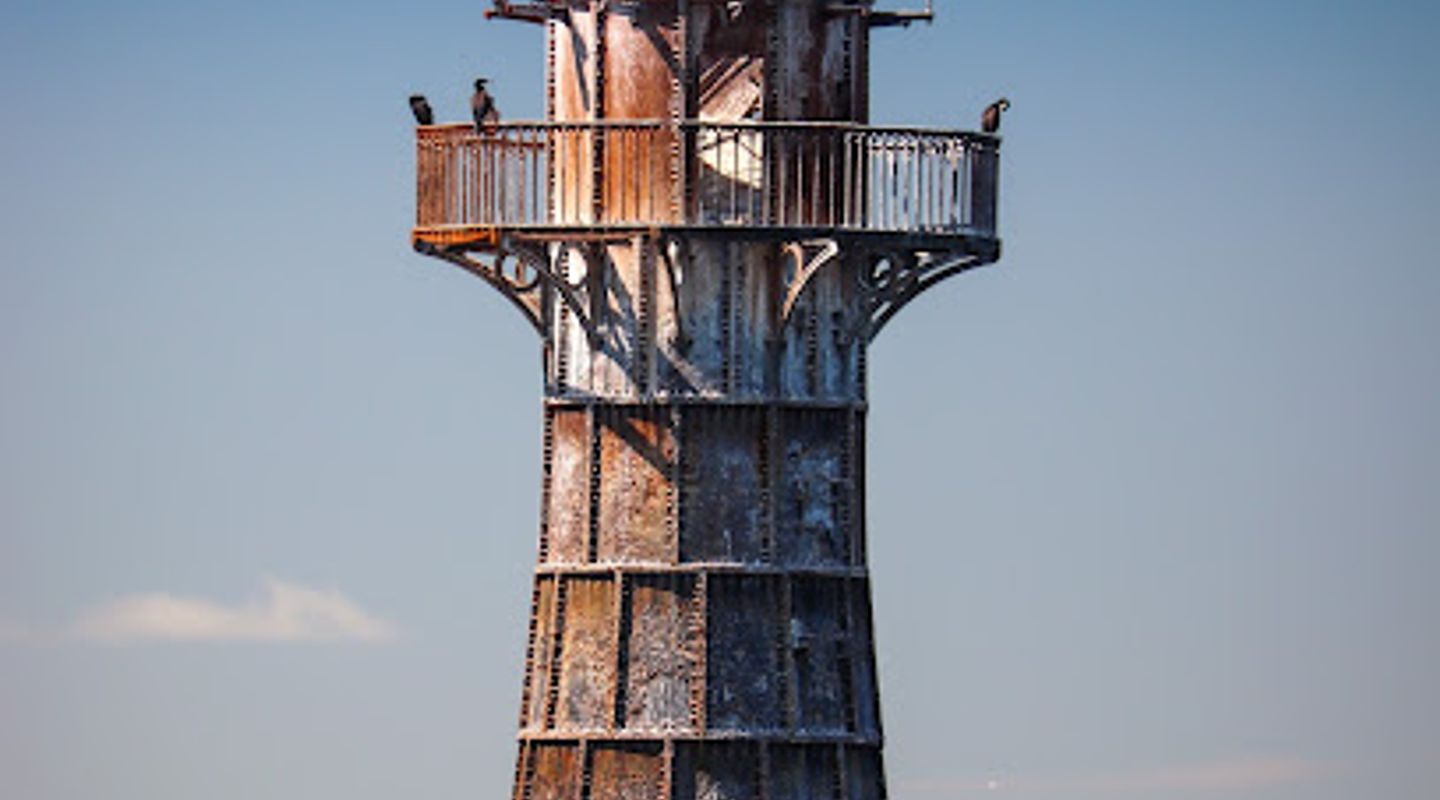
Whiteford Lighthouse, also known as Whitford Point Lighthouse, is a rare survivor of 19th‑century lighthouse design: a large, wave‑swept cast‑iron tower standing in British coastal waters. Completed in 1865 to mark the shoals of Whiteford Point at the northern tip of the Gower Peninsula, it replaced an earlier wooden‑pile beacon that had proved too vulnerable to storms. The tower’s shell is made of heavy cast‑iron plates bolted together with external flanges, a distinctive construction method that facilitated assembly during the short low‑water windows available at the site. Rising about 13.4 metres (44 feet) from a concrete and masonry base, the lighthouse was designed to be partially submerged at high tide, making it a true offshore beacon.
Engineering and operation
The lighthouse was commissioned by the Llanelli Harbour and Burry Navigation Commissioners to guide vessels safely into the Loughor estuary and Llanelli. Its seven rings of cast‑iron plates sit on a foundation of timber piles driven into glacial moraine, with later reinforcements added in the 1870s and 1880s to address cracking. Originally, the light was shown from half‑flood to half‑ebb, visible for about 9 nautical miles, and operated by keepers who reached the tower at low water via a now‑eroded causeway. There were no permanent living quarters beyond a basic living room; keepers likely worked in shifts from the mainland. The light was formally discontinued in 1921, though it was briefly relit in the 1980s before being permanently decommissioned.
A walk through nature to a historic relic
The lighthouse lies within the Whiteford and North Gower area, part of a National Trust‑managed landscape of saltmarsh, dunes and woodland. Visitors approach across Whiteford Sands, a vast, sweeping beach backed by dunes and marsh, where wild ponies and sheep graze and birds such as curlew and snipe feed in the tidal flats. The walk to the lighthouse is long and exposed, crossing sand, shingle and a rocky causeway at the edge of the estuary. At low tide, the lighthouse becomes reachable on foot, but the window is narrow and the tide comes in quickly, so careful timing is essential. The surrounding area is also marked by reminders of its wartime past, with occasional warning signs about unexploded ordnance from its time as an army firing range.
Preservation and atmosphere
Today, Whiteford Lighthouse is a Grade II* listed building and a Scheduled Ancient Monument, recognised as a nationally important example of 19th‑century lighthouse engineering. The tower’s domed roof is now partially collapsed, with the lantern floor fallen into the living room below, but its iron structure remains a powerful presence against the sky and sea. The lighthouse is not open to the public, but its exterior and immediate surroundings can be explored at low tide. The combination of industrial heritage, dramatic tidal conditions and wild coastal scenery gives the site a unique, slightly haunting atmosphere, especially at dawn or dusk when the light catches the iron plates and the estuary is quiet.
Evendo Review Centre
 Google
Guest reviews
Best time to go
Quietest: Jan, Feb & Dec · before 8am or from 9pm
Busy times are Evendo estimates for a typical year, to help you plan. Actual crowds vary with events, school holidays and the weather.
Explore Whiteford Lighthouse on the map
A handpicked selection of must-see spots near Whiteford Lighthouse, mapped for you.
Get your free copy of our complete guide to Whiteford Lighthouse, delivered straight to you.
Everything on this page, from opening hours and how to get there to Eve’s tips and the best time to go, in one PDF you can read offline, print or share.
Already have an account? Sign in
Your Whiteford Lighthouse guide is ready.
We'll send it to · Not you? Sign out

Getting your guide ready…
We are putting together a fresh copy of the Whiteford Lighthouse guide. This can take up to a minute.
This can take a few moments. If your browser asks, choose Allow so the download can start. You'll find the guide in your Downloads folder.
Nothing happened? Download it again
Sorry, the guide is taking longer than usual. Please try again in a minute, or get it by email instead.
Other nearby places you may find interesting
The closest places of the same kind, if this one is not quite what you had in mind.
-
-
-
-
-


Swipe for more places
More to explore near Whiteford Lighthouse

 Best experiences near Whiteford Lighthouse
 Best hotels near Whiteford Lighthouse
 Best landmarks near Whiteford Lighthouse
 Best attractions near Whiteford Lighthouse
 Best shops near Whiteford Lighthouse
 Best restaurants near Whiteford Lighthouse
 Best bars near Whiteford Lighthouse
Do you manage this location?
Take control to get all the benefits, like improved information, better appearance, and stronger visibility across AI-powered discovery.
Explore more

Explore more of Wales
Discover Wales: Ancient castles, stunning landscapes, and vibrant culture in the heart of the United Kingdom.
Explore Wales
Explore more of United Kingdom
Discover the United Kingdom: A blend of rich history, stunning landscapes, and vibrant cities, offering a unique travel experience for every visitor.
Explore United Kingdom