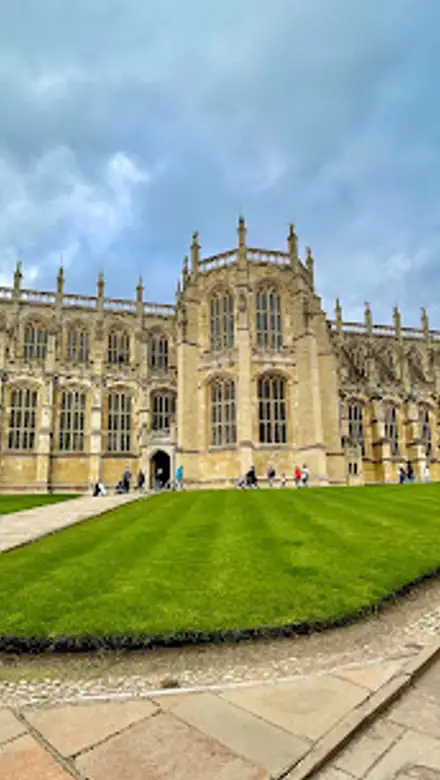
St George's Chapel, Windsor Travel Guide
Free Guide: England's finest Gothic chapel and resting place of monarchs, where medieval craftsmanship meets royal history.


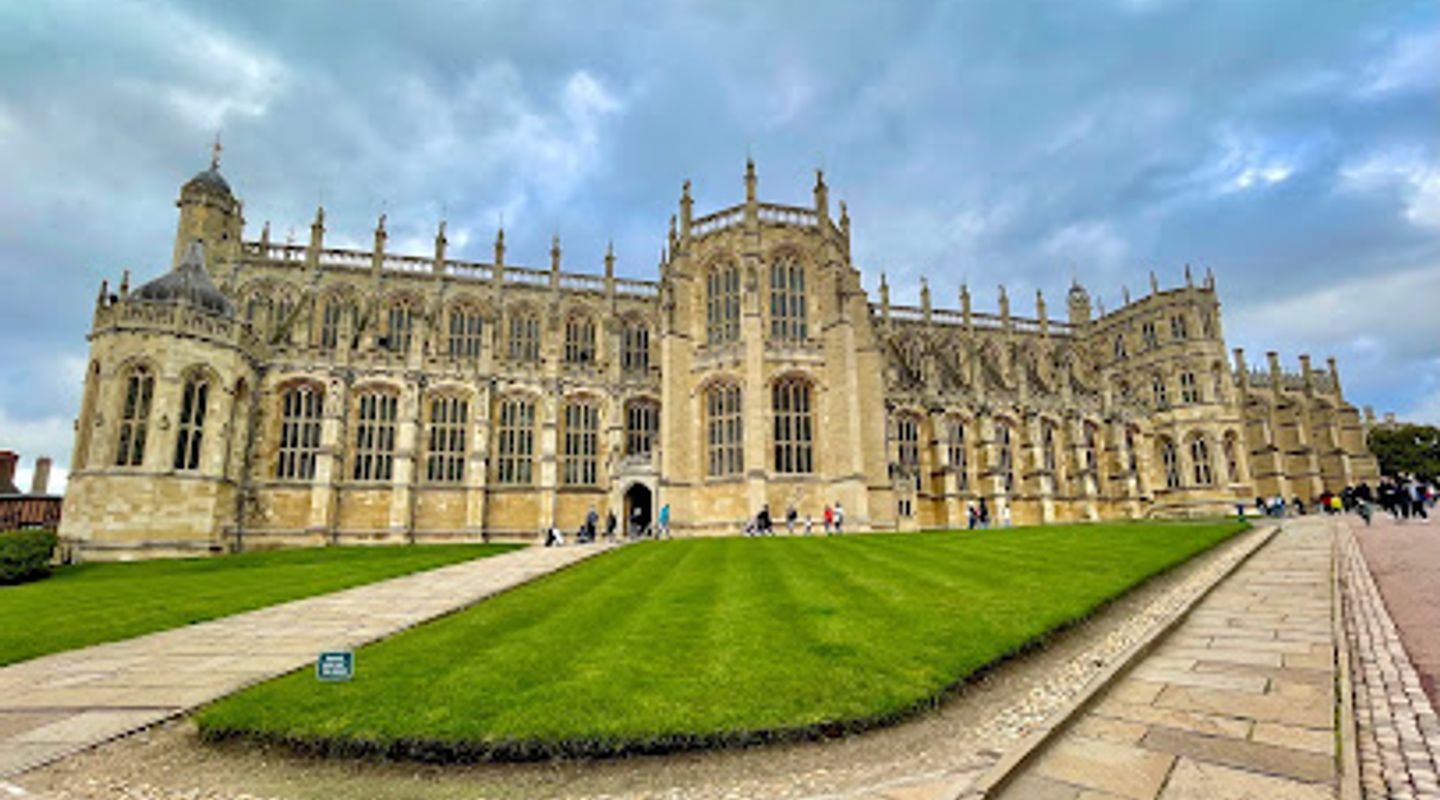
A brief summary of St George's Chapel
England's finest Gothic chapel and resting place of monarchs, where medieval craftsmanship meets royal history.
St George's Chapel stands as one of England's finest examples of Gothic architecture, nestled within Windsor Castle's Lower Ward. This 15th-century masterpiece serves as the spiritual home of the Order of the Garter and the final resting place of 11 monarchs, including Queen Elizabeth II, Henry VIII, and Charles I. Visitors marvel at its soaring fan vaulting, intricate stained glass windows, and ornate choir screen while experiencing the profound history woven into every stone.
On-site amenities
 Restrooms
 Drink options
 Food options
 Seating areas
 Information boards
 Visitor centre
Opening hours
- Mon10 am–4 pm
- TueClosed
- WedClosed
- Thu10 am–4 pm
- Fri10 am–4 pm
- Sat10 am–4 pm
- SunClosed
Opening hours as listed on the venue’s Google Business Profile. Hours can change for services and special events, so check with the venue before you go.
- Address
- Windsor Castle Parking Lots, 2 The Cloisters, Windsor SL4 1NJ
- Phone
- Website
Getting there
Windsor Castle Admission Centre
Train and Local Transport
Walking from Windsor Town Centre
Service Attendance (Free Alternative)
Discover more about St George's Chapel
A Monument to Royal Power and Medieval Craftsmanship
St George's Chapel represents one of the most accomplished achievements of English Gothic architecture. Construction began in 1475 under Edward IV and continued through the reigns of subsequent monarchs, with the magnificent fan vaulting added by Henry VIII and the final vault completed in 1528. The chapel's perpendicular Gothic style showcases soaring pillars, expansive windows, and intricate stonework that creates an impression of grace and elegance. The stone ceiling, with its elaborate fan vaulting, draws the eye upward and remains one of the chapel's most breathtaking features. Every architectural element—from the delicate tracery to the precisely carved details—demonstrates the skill of medieval craftsmen who labored for over five decades to complete this sacred space.
The Spiritual Heart of the Order of the Garter
Since its establishment in 1348 by Edward III, St George's Chapel has served as the spiritual home of the Order of the Garter, one of the world's oldest and most prestigious orders of chivalry. The chapel's interior displays the heraldic insignia, helmets, banners, and swords of the Knights of the Garter above the choir stalls, creating a visual record spanning six centuries. Each June, the Sovereign and the Knights of the Garter gather for the annual Garter Day service of thanksgiving, a tradition that continues to this day. The chapel functions as a working place of worship, with services held daily and the public invited to participate in this living tradition of royal and ecclesiastical ceremony.
Royal Tombs and Historical Significance
The chapel contains the mortal remains of 11 monarchs, making it a mausoleum of extraordinary historical importance. Queen Elizabeth II rests here alongside her late husband, the Duke of Edinburgh. Henry VIII and his third wife Jane Seymour lie in a shared vault, while Charles I was buried in the choir's centre following his execution in 1649. Other notable interred include George VI, Queen Mary, and the Queen Mother. The chapel also houses the tombs of numerous princes, princesses, and members of the royal household, each marked by plaques and memorials that tell the stories of centuries of monarchy. Visitors often spend considerable time reading these inscriptions and contemplating the weight of history contained within these walls.
Architectural Treasures and Decorative Splendour
The chapel's interior showcases remarkable examples of medieval craftsmanship. The 15th-century choir screen features delicate carvings of flowers, animals, and saints, separating the Quire from the nave with exquisite precision. The stained glass windows, dating to the 15th century, depict scenes from the life of Christ, the apostles, and saints in vibrant colours that testify to the skill of medieval artisans. The Sovereign's Stall, dating from the late 18th century, represents a later period of royal patronage. Medieval woodwork and ironwork throughout the chapel demonstrate the evolution of decorative arts across centuries. The west window contains particularly fine 15th-century stained glass, while heraldic plates adorning the rear of the choir stalls reflect the pageantry of medieval court life.
A Venue for Royal Ceremonies and Weddings
Beyond its role as a burial place, St George's Chapel has hosted some of the most significant royal ceremonies in modern history. The chapel served as the setting for the wedding of Prince Harry and Meghan Markle in 2018, as well as the marriage of Princess Eugenie and Jack Brooksbank the same year. These high-profile events underscore the chapel's continued importance in royal life and its status as a venue worthy of the monarchy's most significant celebrations. The chapel's intimate yet grand proportions make it an ideal setting for such occasions, combining solemnity with splendour.
Visitor Experience and Practical Considerations
Access to St George's Chapel is included with admission to Windsor Castle, though the chapel operates on a restricted schedule. Visitors enter via the Windsor Castle admission centre and follow a designated one-way route through the building. An included audio guide provides context and historical information, enhancing understanding of the architecture and royal connections. Photography and filming are prohibited within the chapel, allowing visitors to experience the space without distraction. The chapel may reach capacity in the afternoon, particularly after 2:30 pm, so early visits are recommended. On Sundays, the chapel closes to general visitors, though services remain open to worshippers. The chapel is fully accessible to wheelchair users, with level access and facilities to accommodate visitors with mobility requirements.
Evendo Review Centre
 Google
Guest reviews
Best time to go
Quietest: Jan, Feb & Dec · before 10am or from 5pm
Busy times are Evendo estimates for a typical year, to help you plan. Actual crowds vary with events, school holidays and the weather.
Explore St George's Chapel on the map
A handpicked selection of must-see spots near St George's Chapel, mapped for you.
Get your free copy of our complete guide to St George's Chapel, delivered straight to you.
Everything on this page, from opening hours and how to get there to Eve’s tips and the best time to go, in one PDF you can read offline, print or share.
Already have an account? Sign in
Your St George's Chapel guide is ready.
We'll send it to · Not you? Sign out

Getting your guide ready…
We are putting together a fresh copy of the St George's Chapel guide. This can take up to a minute.
This can take a few moments. If your browser asks, choose Allow so the download can start. You'll find the guide in your Downloads folder.
Nothing happened? Download it again
Sorry, the guide is taking longer than usual. Please try again in a minute, or get it by email instead.
Unlock the best of St George's Chapel
Skip-the-line tickets, guided tours with entry, and walking tours of the area, booked in a few clicks.
 Tour with entry
Windsor Daily Town Walking Tour - 11am & 2pm
from $17.65 Tour with entry
Windsor Castle Half Day Trip from London
from $49.18 Tour with entry
Stonehenge, Windsor Castle, Bath Day Trip & Historic Pub Lunch
from $89.65 Tour with entry
Windsor Castle, Stonehenge and Oxford Day Guided Tour from London
from $91.65


Other nearby places you may find interesting
The closest places of the same kind, if this one is not quite what you had in mind.
-
-
-
-
-


Swipe for more places
More to explore near St George's Chapel

 Best experiences near St George's Chapel
 Best hotels near St George's Chapel
 Best landmarks near St George's Chapel
 Best attractions near St George's Chapel
 Best shops near St George's Chapel
 Best restaurants near St George's Chapel
 Best bars near St George's Chapel
Do you manage this location?
Take control to get all the benefits, like improved information, better appearance, and stronger visibility across AI-powered discovery.
Explore more

Explore more of Windsor
Discover the royal allure of Windsor, a historic town along the River Thames, home to Windsor Castle and a blend of charming shops and beautiful parks.
Explore Windsor
Explore more of United Kingdom
Discover the United Kingdom: A blend of rich history, stunning landscapes, and vibrant cities, offering a unique travel experience for every visitor.
Explore United Kingdom