

Sydney Camm Memorial, Windsor Travel Guide
Free Guide: A full-size Hawker Hurricane replica honouring the Windsor-born designer who shaped aviation history.


A brief summary of Sydney Camm Memorial
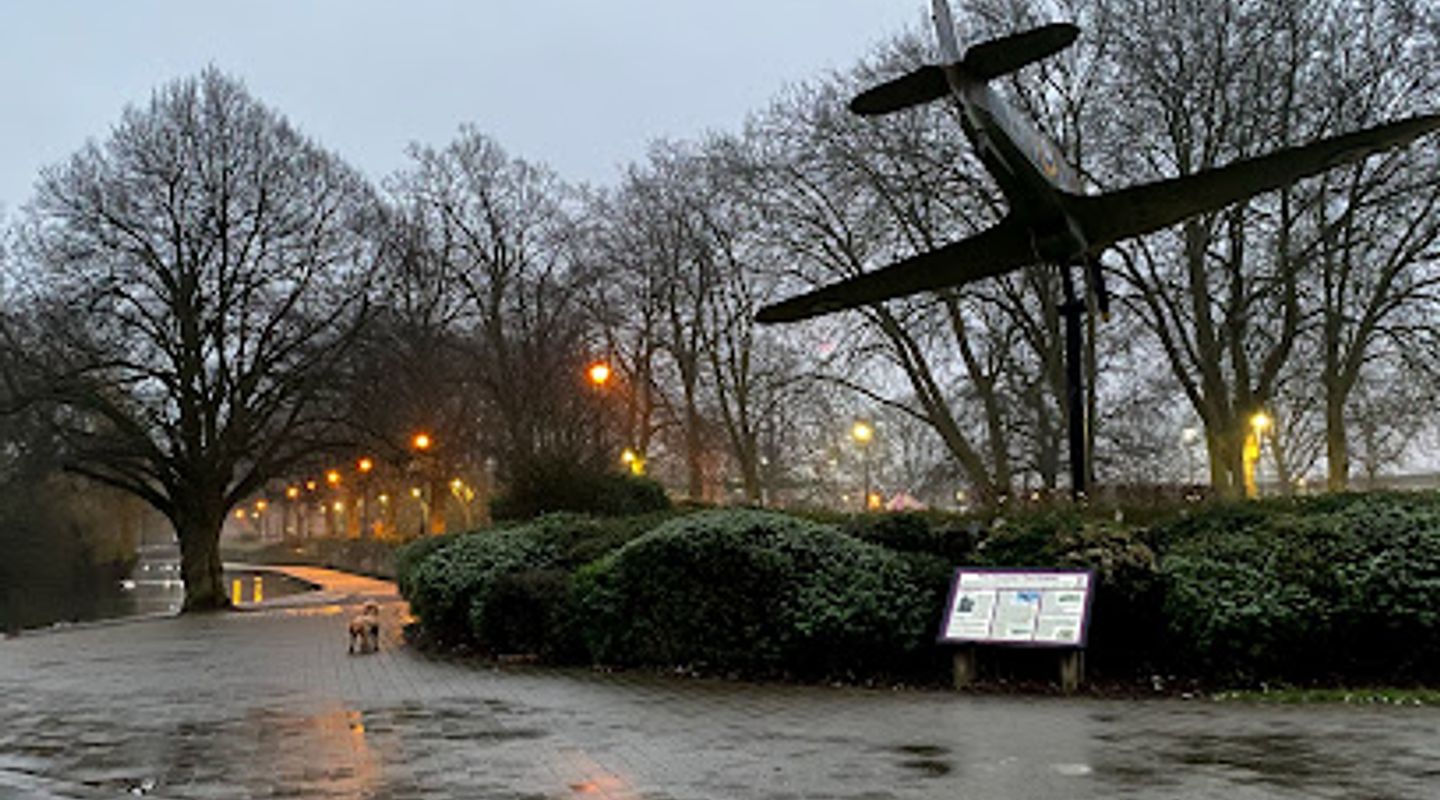
A full-size Hawker Hurricane replica honouring the Windsor-born designer who shaped aviation history.
A full-size replica of the iconic Hawker Hurricane fighter aircraft stands as a lasting tribute to Sir Sydney Camm, the brilliant aeronautical engineer born in Windsor who designed this legendary World War II plane. Located near Alexandra Gardens along the riverside, this striking memorial celebrates Camm's extraordinary contributions to aviation history and his pivotal role in the Battle of Britain. The replica bears authentic markings from aircraft flown during the conflict, making it a poignant landmark for history enthusiasts and aviation lovers.
On-site amenities
 Seating areas
 Information boards
 Trash bins
Opening hours
- Every dayOpen 24 hours
Opening hours as listed on the venue’s Google Business Profile. Hours can change for services and special events, so check with the venue before you go.
- Address
- Barry Ave, Windsor SL4 5HZ
Getting there
Walking from Windsor Town Centre
By Bus
By Car with Parking
By Train and Walking
Discover more about Sydney Camm Memorial
The Visionary Behind the Hurricane
Sir Sydney Camm (1893–1966) was one of the most prolific aircraft designers of the twentieth century, yet he began his career with no formal technical training beyond a woodworking apprenticeship. Born at 10 Alma Road in Windsor on 5 August 1893, Camm showed an early passion for aeronautics, designing and building model aircraft as a schoolboy with his brother Fred. Their venture into selling high-quality flying models to Eton College boys—delivered secretly at night via strings lowered from dormitories to avoid detection—demonstrated both his ingenuity and entrepreneurial spirit. This youthful enthusiasm culminated in 1912 when Camm helped establish the Windsor Model Aeroplane Club and participated in building a man-carrying glider that was successfully flown with an engine.
From Workshop to Hawker Engineering
Camm's formal aviation career began shortly before World War I when he joined the Martinsyde aircraft company at Brooklands in Surrey as a shop-floor carpenter. His talent quickly earned him promotion to the drawing office, where he spent the war years developing his design skills. After Martinsyde's liquidation in 1921, he worked briefly for another aircraft manufacturer before joining Hawker Engineering Company in November 1923 as a senior draughtsman at their Kingston upon Thames facility. Within two years, his exceptional abilities led to his appointment as chief designer—a position he would hold for 43 years. During his tenure at Hawker, Camm was responsible for designing 52 different aircraft types, of which approximately 26,000 were manufactured. At one point during the 1930s, 84 percent of all aircraft in the Royal Air Force were designed by Camm, a testament to his dominance in the field.
The Hurricane and the Battle of Britain
The Hawker Hurricane, Camm's most celebrated design, first flew in 1935 and entered RAF service in 1937. This revolutionary monoplane fighter featured a Rolls-Royce Merlin engine, an enclosed cockpit, and retractable undercarriage—innovations that made it the first RAF fighter of its kind. The Hurricane proved to be resilient, easily repairable, remarkably manoeuvrable, and possessed a stable firing platform, qualities that proved invaluable during the Battle of Britain in 1940. The aircraft played a crucial role in defending Britain against Nazi Germany's aerial assault, and Camm's design became synonymous with British courage and technological achievement. The News Chronicle famously hailed Camm as the man who saved Britain, and his contributions were recognized when he was appointed CBE in 1941 and knighted in 1953.
A Legacy Beyond the Hurricane
Camm's design career extended far beyond the Hurricane. He went on to create the Typhoon fighter-bomber, which saw extensive action during the 1944 Normandy invasion, followed by the Tempest and the Sea Fury—the ultimate expression of high-performance, piston-engined, propeller-driven monoplane design. With the advent of the jet engine in 1942, Camm successfully transitioned to jet-powered aircraft, designing the highly successful Sea Hawk and its successor, the swept-wing Hunter jet-fighter, which set the world air speed record in 1953. Later in his career, Camm worked on the radical concept of VTOL (Vertical Takeoff and Landing) technology, which ultimately became the Harrier jump jet—a revolutionary aircraft that transformed military aviation and warfare. His designs can be seen at the RAF Museum in Hendon and in displays at the Windsor & Royal Borough Museum.
The Memorial in Alexandra Gardens
In 2012, a full-size replica of the Hawker Hurricane was erected near Alexandra Gardens in Windsor, close to Camm's childhood home, creating a striking and accessible memorial to his genius. The replica bears the authentic markings of an aircraft flown during the Battle of Britain by Squadron Leader John Grandy, who later became Marshal of the Royal Air Force and served as Constable and Governor of Windsor Castle from 1978 to 1988. This tangible tribute allows visitors to appreciate the scale and presence of the aircraft that Camm designed, standing as a permanent reminder of his extraordinary contributions to aviation history. The memorial serves as both a local landmark and a point of pilgrimage for aviation enthusiasts, historians, and those interested in World War II heritage. A commemorative blue plaque also marks his former residence at 10 Alma Road, while another plaque on Athlone Square commemorates the site where the Windsor Model Aeroplane Club built their pioneering man-carrying glider.
Evendo Review Centre
 Google
Guest reviews
Best time to go
Quietest: Jan, Feb & Dec · before 6am or at 10pm
Busy times are Evendo estimates for a typical year, to help you plan. Actual crowds vary with events, school holidays and the weather.
Explore Sydney Camm Memorial on the map
A handpicked selection of must-see spots near Sydney Camm Memorial, mapped for you.
Get your free copy of our complete guide to Sydney Camm Memorial, delivered straight to you.
Everything on this page, from opening hours and how to get there to Eve’s tips and the best time to go, in one PDF you can read offline, print or share.
Already have an account? Sign in
Your Sydney Camm Memorial guide is ready.
We'll send it to · Not you? Sign out

Getting your guide ready…
We are putting together a fresh copy of the Sydney Camm Memorial guide. This can take up to a minute.
This can take a few moments. If your browser asks, choose Allow so the download can start. You'll find the guide in your Downloads folder.
Nothing happened? Download it again
Sorry, the guide is taking longer than usual. Please try again in a minute, or get it by email instead.
Unlock the best of Sydney Camm Memorial
Skip-the-line tickets, guided tours with entry, and walking tours of the area, booked in a few clicks.

Other nearby places you may find interesting
The closest places of the same kind, if this one is not quite what you had in mind.
-
-
-
-
-


Swipe for more places
More to explore near Sydney Camm Memorial

 Best experiences near Sydney Camm Memorial
 Best hotels near Sydney Camm Memorial
 Best landmarks near Sydney Camm Memorial
 Best attractions near Sydney Camm Memorial
 Best shops near Sydney Camm Memorial
 Best restaurants near Sydney Camm Memorial
 Best bars near Sydney Camm Memorial
Do you manage this location?
Take control to get all the benefits, like improved information, better appearance, and stronger visibility across AI-powered discovery.
Explore more

Explore more of Windsor
Discover the royal allure of Windsor, a historic town along the River Thames, home to Windsor Castle and a blend of charming shops and beautiful parks.
Explore Windsor
Explore more of United Kingdom
Discover the United Kingdom: A blend of rich history, stunning landscapes, and vibrant cities, offering a unique travel experience for every visitor.
Explore United Kingdom
