

Free Espiritu Santo Travel Guide & Mobile App
Explore Espiritu Santo with free travel guides. Discover regional history, expert tips, proposed trips, and audio guides on web or mobile app.


Explore Espiritu Santo for freshwater blue holes, WWII history, rainforest walks, coral reefs and beaches across Vanuatu’s largest island.
Read more about Espiritu Santo
When is the best time to visit Espiritu Santo?
Best: June–August · 26–27°C| Month | High (°C) | Rainfall (mm) |
|---|---|---|
| January | 31 | 300 |
| February | 31 | 250 |
| March | 30 | 200 |
| April | 29 | 150 |
| May | 28 | 120 |
| June (best) | 27 | 100 |
| July (best) | 26 | 90 |
| August (best) | 26 | 90 |
| September | 27 | 100 |
| October | 28 | 120 |
| November | 29 | 150 |
| December | 30 | 200 |
Getting to and around Espiritu Santo
How to get there
Transportation
Top city travel guides in Espiritu Santo
The cities of Espiritu Santo, and the easiest places to base yourself.

Swipe for more cities
Destinations in Espiritu Santo
Resorts, valleys and scenic spots worth a trip of their own.
-

-


Swipe for more destinations
Best attractions in Espiritu Santo
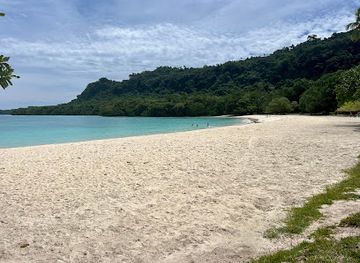
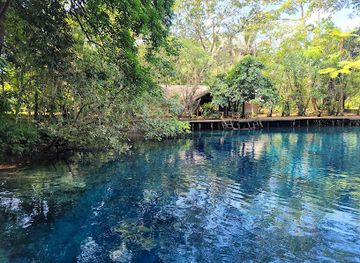
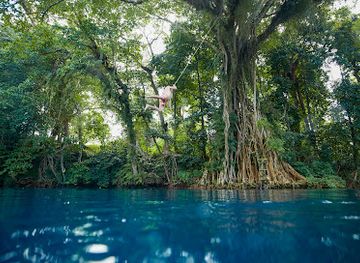
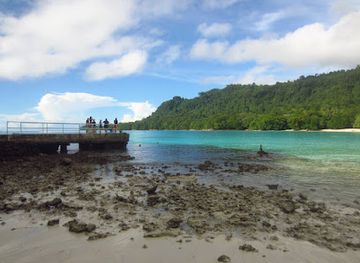
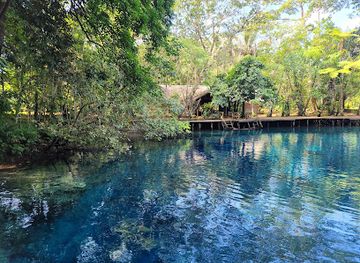
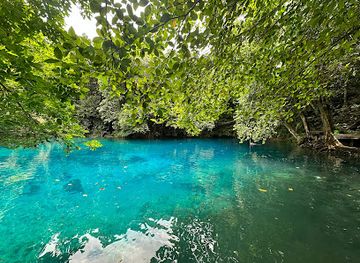
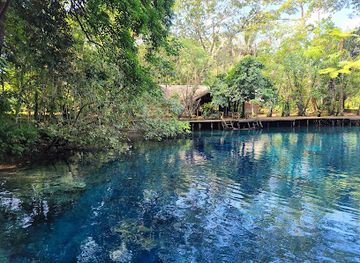
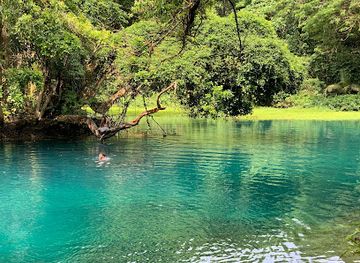
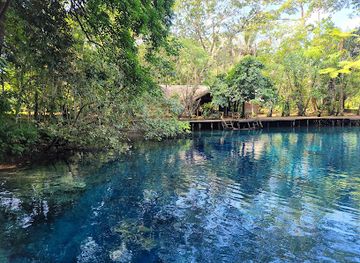
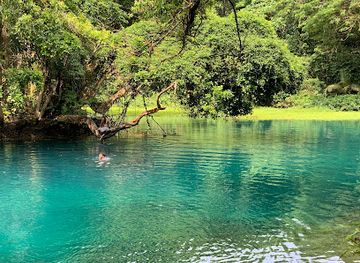
Espiritu Santo’s attractions are defined by the relationship between water, forest and history. Around Luganville, Matevulu and Riri Blue Holes offer clear freshwater swimming in limestone and jungle settings, while Nanda Blue Hole lies farther north and can be combined with coastal exploration. Champagne Beach and the shoreline near Port Olry provide attractive swimming and snorkelling conditions when seas are calm, though facilities and access vary. Guided excursions to Millennium Cave lead through rainforest, streams and a substantial cave system, with local communities directing the experience. Divers come for coral reefs, wartime wrecks and, above all, the SS President Coolidge, while snorkellers can explore shallower coastal sites. Inland and northern Santo offer a more remote experience through the Vatthe Conservation Area, village visits and forest journeys. Fishing, kayaking, hiking and boat trips are available through local operators, but weather and customary access shape what can be done. The island rewards visitors who combine its famous water sites with a slower exploration of rural landscapes, conservation work and Luganville’s wartime legacy.
-
Tourist attraction
Nanda Blue Hole
Experience the breathtaking beauty and tranquil waters of Nanda Blue Hole in Vanuatu, a must-visit natural attraction for every traveler.
-
Beach
Champagne Beach
Experience the tranquil beauty of Champagne Beach in Vanuatu, where soft sands and clear waters create a tropical paradise perfect for relaxation and adventure.
-
Tourist attraction
Matevulu Blue Hole
Experience the breathtaking beauty of Matevulu Blue Hole, a stunning natural attraction in Vanuatu with crystal-clear waters perfect for swimming and relaxation.
-
Tourist attraction
Riri Blue Hole
Experience the breathtaking beauty of Riri Blue Hole, a serene oasis in Vanuatu ideal for swimming, snorkeling, and relaxation amidst lush nature.



Best landmarks in Espiritu Santo
The SS President Coolidge is Santo’s most recognisable historic landmark, although it lies beneath the water rather than on the shore. The former troopship’s wreck records the island’s wartime transformation and is accessible only to appropriately qualified divers with specialist operators. Luganville’s waterfront and surrounding roads also preserve traces of the enormous American base built during the Second World War, including scattered wartime structures and submerged military relics. In the natural landscape, Mount Tabwemasana is Vanuatu’s highest summit and a defining feature of Santo’s mountainous interior, even though its remote terrain makes it a serious objective rather than a casual viewpoint. Champagne Beach provides one of the island’s most familiar coastal scenes, with pale sand and sheltered-looking water that can nevertheless change with weather and swell. The island’s blue holes are geological and cultural landmarks as well as swimming sites: their intensely clear water, limestone settings and community custodianship distinguish Matevulu, Riri and Nanda from ordinary resort pools. Together these places express Santo’s principal themes of ocean history, rainforest geology and customary stewardship.
-
Tourist attraction
Nanda Blue Hole
Experience the breathtaking beauty of Nanda Blue Hole, a natural oasis in Vanuatu perfect for swimming, snorkeling, and relaxation amidst lush greenery.
-
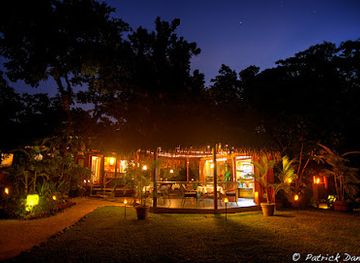
 Restaurant
Turtle Bay Lodge, Restaurant and PADI Dive Centre
Discover paradise at Turtle Bay Lodge, where stunning beaches, thrilling diving, and delicious dining await in beautiful Vanuatu.
-
Tourist attraction
Matevulu Blue Hole
Experience the serene beauty of Matevulu Blue Hole, a stunning natural attraction in Vanuatu perfect for swimming, snorkeling, and relaxation amidst nature's wonders.
-
Beach
Champagne Beach
Explore Champagne Beach in Vanuatu, a stunning tropical paradise with pristine sands, crystal-clear waters, and vibrant marine life perfect for relaxation and adventure.
Explore Espiritu Santo on the map
Plan your trip on one map. See where the top cities, national parks and sights are, and book hotels and experiences in a few clicks.
Best hotels in Espiritu Santo
Best restaurants in Espiritu Santo
Dining on Santo is generally informal and closely connected to local produce. Fresh fish, shellfish where available, coconut, taro, yam, manioc, sweet potato, bananas and seasonal fruit appear in home cooking, market food and accommodation meals. Luganville has the island’s broadest choice, including cafés, bakeries, simple restaurants and places serving Ni-Vanuatu, French-influenced and international dishes. Outside town, meals are more likely to be arranged through guesthouses, resorts, village excursions or roadside stalls, and menus may depend on the day’s catch and garden harvest. Lap-lap, a traditional dish made from grated root crops or banana with meat or fish and cooked in an earth oven, is associated with Vanuatu’s wider culinary culture and may be encountered through community or cultural experiences. Locally grown beef, tropical fruit and seafood are useful choices, while coconut and island-grown produce feature widely. Confirm meal times and dietary requirements in advance when staying in rural areas, where supplies and cooking facilities are limited.
-
Restaurant
Turtle Bay Lodge, Restaurant and PADI Dive Centre
Experience the ultimate blend of relaxation and adventure at Turtle Bay Lodge in Vanuatu—where culinary delights meet breathtaking marine exploration.
-
Tourist attraction
Nanda Blue Hole
Experience the breathtaking beauty of Nanda Blue Hole in Vanuatu – a stunning natural wonder perfect for swimming and snorkeling adventures.
-
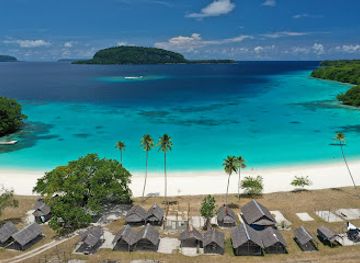
Resort hotel
Aore Island Resort
Discover tranquility and adventure at Aore Island Resort – your tropical paradise in Vanuatu.
-
Tourist attraction
Riri Blue Hole
Experience the stunning beauty of Riri Blue Hole in Luganville - a must-visit natural attraction for every traveler exploring Vanuatu's wonders.
Best bars in Espiritu Santo
Santo’s evening life is concentrated in Luganville and is modest compared with Port Vila. Hotels, resorts, restaurants and small town bars provide places for a drink, conversation and occasional live music, while kava bars offer a distinctly Pacific social setting for those who wish to try kava respectfully. Some accommodation venues organise evening meals or informal entertainment, particularly for divers and organised groups. Outside Luganville, nightlife usually means dining at a guesthouse or resort, sitting with a village community by arrangement, or enjoying the night sky rather than visiting a club. There is no large, continuous nightclub district across the island, and opening arrangements can be seasonal or change without notice. Visitors should arrange transport back to their accommodation before going out, especially beyond town, and should treat kava as a local tradition rather than an alcohol substitute to consume quickly.
-
Tourist attraction
Nanda Blue Hole
Immerse yourself in the stunning beauty of Nanda Blue Hole, Vanuatu's tranquil natural paradise perfect for swimming and relaxation.
-
Bar
Turtle Bay Lodge, Restaurant and PADI Dive Centre
Experience the tranquility of Turtle Bay Lodge, where adventure meets relaxation in Vanuatu's stunning coastal paradise.
-
Tourist attraction
Matevulu Blue Hole
Discover the mesmerizing beauty of Matevulu Blue Hole in Vanuatu, a serene oasis offering adventure and relaxation in stunning turquoise waters.
-
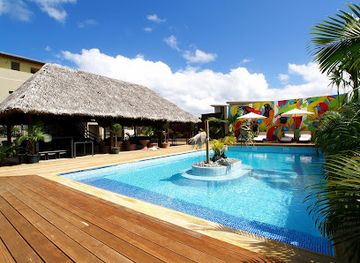
Hotel
The Espiritu Hotel
Discover the beauty of Vanuatu at The Espiritu Hotel, a serene retreat offering comfort, adventure, and warm hospitality on Espiritu Santo.
Best nightclubs in Espiritu Santo
Santo’s evening life is concentrated in Luganville and is modest compared with Port Vila. Hotels, resorts, restaurants and small town bars provide places for a drink, conversation and occasional live music, while kava bars offer a distinctly Pacific social setting for those who wish to try kava respectfully. Some accommodation venues organise evening meals or informal entertainment, particularly for divers and organised groups. Outside Luganville, nightlife usually means dining at a guesthouse or resort, sitting with a village community by arrangement, or enjoying the night sky rather than visiting a club. There is no large, continuous nightclub district across the island, and opening arrangements can be seasonal or change without notice. Visitors should arrange transport back to their accommodation before going out, especially beyond town, and should treat kava as a local tradition rather than an alcohol substitute to consume quickly.
-
Bar
Champagne Beach Bar
Experience the vibrant atmosphere and stunning views at Champagne Beach Bar, your tropical escape in Hog Harbour, Vanuatu.
-
Resort hotel
The Exclusive Sunrise Eco-Resort
Discover the perfect blend of luxury and nature at The Exclusive Sunrise Eco-Resort on Barrier Beach, Espiritu Santo.
-
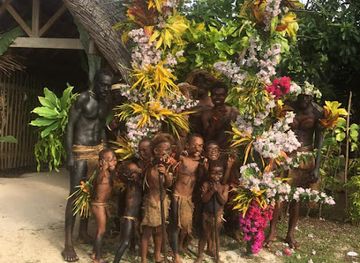
Performing arts group
Leweton Cultural Experience
Explore the heart of Vanuatu's culture at Leweton Cultural Experience, where traditions come alive through music, dance, and art.
-
Bar
Mango Kava Bar
Experience the laid-back charm of Mango Kava Bar in Luganville, where refreshing kava drinks and local culture come together in a vibrant atmosphere.
Best shops in Espiritu Santo
Shopping on Espiritu Santo is practical and local rather than centred on large retail complexes. Luganville has small shops, markets, bakeries and general stores where visitors can buy snacks, drinks, basic supplies and locally grown fruit and vegetables. Market produce changes with the season and may include bananas, root crops, coconuts and other garden foods. Craft stalls and community projects may offer woven items, carvings, shell-based products and locally made souvenirs, but availability varies and purchases should be made respectfully from the maker or recognised seller. Santo beef, coffee, coconut products and packaged island foods can make useful gifts when properly labelled and permitted by the traveller’s destination-country customs rules. Rural villages and conservation excursions may include craft sales or produce, while hotels and dive operators sometimes display locally made items. Bargaining should not be aggressive, and visitors should avoid buying coral, shells, archaeological material or wartime artefacts whose removal may be illegal or damaging.
-
Tourist attraction
Nanda Blue Hole
Nanda Blue Hole: Experience the breathtaking beauty of Vanuatu's crystal-clear waters and serene natural surroundings.
-
Tourist attraction
Matevulu Blue Hole
Experience the breathtaking beauty of Matevulu Blue Hole, a stunning natural gem in Vanuatu's tropical paradise.
-
Tourist attraction
Million Dollar Point
Explore the fascinating underwater realm of Million Dollar Point in Luganville, where history and marine life converge for an unforgettable adventure.
-
Diving center
Aore Adventure Sports & Lodge
Experience the ultimate diving and relaxation getaway at Aore Adventure Sports & Lodge on Aore Island, Espiritu Santo, Vanuatu.
Get your free copy of our complete guide to Espiritu Santo, delivered straight to you.
Everything on this page, from attractions and restaurants to essentials and local phrases, in one PDF you can read offline, print or share.
Already have an account? Sign in
Your Espiritu Santo guide is ready.
We'll send it to · Not you? Sign out

Getting your guide ready…
We are putting together a fresh copy of the Espiritu Santo guide. This can take up to a minute.
This can take a few moments. If your browser asks, choose Allow so the download can start. You'll find the guide in your Downloads folder.
Nothing happened? Download it again
Sorry, the guide is taking longer than usual. Please try again in a minute, or get it by email instead.
Espiritu Santo essentials
Currency and Payment
Safety
Emergency Situations
Do's and Don'ts
Local Tips
From Eve
Local phrases worth knowing
You don't need to get them perfect. A few words go a long way, and locals appreciate the effort.
Basics
| English | Local | Say it |
|---|---|---|
| Hello | Halo | [ha-lo] |
| Goodbye | Tata | [ta-ta] |
| Yes | Yes | [yes] |
| No | No | [no] |
| Please/You're welcome | Plis | [plees] |
| Thank you | Tenk yu | [tenk yoo] |
| Excuse me/Sorry | Sori | [so-ree] |
| How are you? | Olsem wanem? | [ol-sem wa-nen] |
| Fine. And you? | Fain. An yu? | [fine an yoo] |
| Do you speak English? | Yu save tok Pisin? | [yoo sa-veh tok pee-sin] |
| I don't understand | Mi no save | [mee no sa-veh] |
Eating & Drinking
| English | Local | Say it |
|---|---|---|
| I'd like to see the menu, please | Mi wantem lukim menu, plis | [mee wan-tem loo-kim men-oo, plees] |
| I don't eat meat | Mi no kaek meat | [mee no kayk meet] |
| Cheers! | Kia | [kee-ah] |
| I would like to pay, please | Mi wantem pem, plis | [mee wan-tem pem, plees] |
Emergencies
| English | Local | Say it |
|---|---|---|
| Help! | Help! | [help] |
| Go away! | Gao awei! | [gow aw-ay] |
| Call the Police! | Kolim polis! | [ko-leem po-lees] |
| Call a doctor! | Kolim dokta! | [ko-leem dok-ta] |
| I'm lost | Mi los | [mee los] |
| I'm ill | Mi sik | [mee seek] |
Shopping
| English | Local | Say it |
|---|---|---|
| I'd like to buy... | Mi wantem baem... | [mee wan-tem bye-em] |
| I'm just looking | Mi soim lukim | [mee so-im loo-kim] |
| How much is it? | Hao mas i? | [how mas ee] |
| That's too expensive | I tu ekspensiv | [ee too ex-pen-siv] |
| Can you lower the price? | Yu save redusim prais? | [yoo sa-veh re-doo-sim pryce] |
Time & Numbers
| English | Local | Say it |
|---|---|---|
| What time is it? | Hao taem i? | [how time ee] |
| It's one o'clock | I wan o'klock | [ee wan oh-clock] |
| Half past (10) | Half past (10) | [half past ten] |
| Morning | Mornin | [mor-ning] |
| Afternoon | Aftanun | [af-ta-noon] |
| Evening | Ivening | [ee-ven-ing] |
| Yesterday | Yestede | [yes-te-de] |
| Today | Tude | [too-deh] |
| Tomorrow | Tumoro | [too-mo-ro] |
| 1 | Wan | [wan] |
| 2 | Tu | [too] |
| 3 | Tri | [tree] |
| 4 | Foa | [fo-ah] |
| 5 | Faef | [five] |
| 6 | Sik | [sik] |
| 7 | Seven | [seven] |
| 8 | Eit | [eight] |
| 9 | Nain | [nine] |
| 10 | Ten | [ten] |
Transport & Directions
| English | Local | Say it |
|---|---|---|
| Where's a/the...? | Wea i...? | [wea ee] |
| What's the address? | Hao i long address? | [how ee long ad-dress] |
| Can you show me (on the map)? | Yu save soem mi (long map)? | [yoo sa-veh so-em mee long map] |
| When's the next (bus)? | Hao taem i next (bus)? | [how time ee next bus] |
| A ticket (to ....) | Wan tiket (go....) | [wan ti-ket go] |
History of Espiritu Santo
Lapita settlement and early island societies
People have lived in the islands of the Vanuatu archipelago for several thousand years, with Lapita communities reaching the region during the first millennium BC. Santo’s coasts, reefs and fertile interior supported later communities whose descendants developed distinct languages, customs and systems of land stewardship. Much of the island’s traditional life remained organised around village, kinship and garden production rather than centralised towns. Archaeology and oral histories together point to long patterns of movement, exchange and adaptation across Santo and neighbouring islands.
European contact and mission expansion
European navigators reached the New Hebrides, as Vanuatu was then known, from the seventeenth century onwards, but sustained outside influence developed much later. Traders, missionaries and labour recruiters became active during the nineteenth century. Christian missions established new institutions and altered patterns of settlement, education and authority, while the activities of blackbirders, who transported islanders for labour elsewhere, caused profound disruption. Santo’s remote terrain limited some outside control, but coastal communities were increasingly drawn into the commercial and religious networks of the wider archipelago.
The Anglo-French Condominium
From 1906 until independence in 1980, the New Hebrides were administered jointly by Britain and France in the unusual arrangement known as the Anglo-French Condominium. The two powers maintained separate legal, educational and administrative systems, creating a complicated colonial structure whose effects were felt in towns such as Luganville. Mission schools, plantations, trading stations and competing official institutions shaped modern settlement patterns. Local communities nevertheless retained land traditions, languages and customary authority that remain important in Santo today.
Luganville and the Second World War
The arrival of Allied forces transformed south-eastern Santo during the Second World War. Luganville became the centre of a major American military base, with airfields, roads, hospitals, fuel facilities and extensive harbour infrastructure built across the island. Thousands of military personnel passed through, bringing machinery and supplies on an unprecedented scale. After the war, much equipment was abandoned or removed, but underwater wrecks, scattered structures and the former military landscape remain visible reminders of Santo’s strategic importance in the Pacific conflict.
The SS President Coolidge
The luxury liner SS President Coolidge was converted into a troopship during the Second World War and sank near Santo in 1942 after striking defensive mines while entering the harbour. Most people aboard survived, but the vessel came to rest in deep water close to Luganville. Its largely intact wreck is now one of the Pacific’s best-known technical diving sites, with experienced divers visiting sections of the ship that contain military equipment and other historic remains. The wreck is both a maritime memorial and a major part of Santo’s modern tourism identity.
Independence and contemporary Santo
Vanuatu became independent in 1980, and Santo has since developed within the national framework while retaining strong local identities and customary land relationships. Luganville remains the island’s commercial and transport centre, whereas many rural communities continue to depend on subsistence gardens, fishing and small-scale agriculture. Tourism has grown around diving, beaches, freshwater sites, conservation and community-led excursions. The island’s contemporary character therefore combines colonial and wartime traces with Ni-Vanuatu cultural continuity and a largely rural economy.
Espiritu Santo in Photos
Browse through our photo collection highlighting the charm and character of the destination.
Neighbouring regions of Espiritu Santo
The closest regions to Espiritu Santo, if you have time for more than one.
-

-

-

-

-


Swipe for more regions
Explore more

Explore more of Vanuatu
Discover Vanuatu, a pristine South Pacific paradise with breathtaking beaches, vibrant culture, thrilling adventures, and some of the world's best diving spots.
Explore Vanuatu