

Free Penama Travel Guide & Mobile App
Explore Penama with free travel guides. Discover regional history, expert tips, proposed trips, and audio guides on web or mobile app.


Explore Penama in Vanuatu for land-diving traditions, volcanic islands, waterfalls, village life and mountain landscapes shaped by kastom.
Read more about Penama
When is the best time to visit Penama?
Best: June–August · 28°C| Month | High (°C) | Rainfall (mm) |
|---|---|---|
| January | 29 | 300 |
| February | 29 | 270 |
| March | 29 | 250 |
| April | 29 | 230 |
| May | 29 | 190 |
| June (best) | 28 | 150 |
| July (best) | 28 | 130 |
| August (best) | 28 | 140 |
| September | 28 | 170 |
| October | 29 | 210 |
| November | 29 | 250 |
| December | 29 | 280 |
Getting to and around Penama
How to get there
Transportation
Destinations in Penama
Resorts, valleys and scenic spots worth a trip of their own.

Swipe for more destinations
Best attractions in Penama
Penama’s attractions are primarily landscapes, living traditions and community-based experiences rather than built visitor complexes. On Pentecost, the foremost cultural attraction is naghol, or land diving, performed from purpose-built towers during the appropriate season and only when communities choose to hold ceremonies. The island also offers forested walks, village visits, yam-growing landscapes and rugged coastal scenery. Ambae is shaped by Manaro Voui, one of Vanuatu’s active volcanic systems; its summit area is subject to official restrictions, but the volcano remains central to the island’s geography and history. Maewo’s wet mountain terrain contains streams, cascades and waterfalls reached through locally arranged walks, with conditions varying after heavy rain. Across all three islands, churches, gardens, traditional houses, weaving, carving, song and exchange provide insight into contemporary kastom. Visitors should arrange guides and permissions in advance, since many experiences take place on customary land and are not signposted or operated to fixed tourist schedules.
-
Park
Lo-one
Explore the stunning natural beauty of Lo-one Park in Ambae, a serene haven for nature lovers and adventure seekers in Vanuatu.
-
Tourist attraction
Loonè beach
Experience the pristine beauty and tranquil atmosphere of Loonè Beach, a tropical paradise in Duin Dui, Vanuatu, perfect for relaxation and adventure.

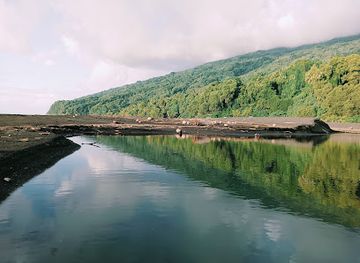
Best landmarks in Penama
Penama’s most recognisable landmarks are often natural or ceremonial. Manaro Voui on Ambae rises as the defining volcanic presence of the island and has shaped settlement, stories and recent evacuation history; access to its summit region must follow current official advice. On Pentecost, the tall wooden towers built for naghol are distinctive seasonal structures whose importance lies in the ceremony and community responsibilities surrounding them, not merely in their appearance. The island’s steep eastern escarpments and coastal ridges provide a dramatic physical setting for villages and gardens. Maewo is marked by lush mountain slopes, watercourses and waterfalls, with particular sites identified locally rather than through a standard national tourist circuit. Churches, village nakamals and traditional houses also function as important cultural landmarks, but their meaning is inseparable from the communities that maintain them. Visitors should seek permission before approaching, entering or photographing any customary or religious site.
-
Tourist attraction
Evergreen Cascades Waterfall
Explore the breathtaking Evergreen Cascades Waterfall in Vanuatu, a natural wonder surrounded by lush landscapes and perfect for adventure seekers.
-
Resort hotel
Nasama Resort
Discover the serene beauty of Nasama Resort in Port Vila, Vanuatu, where relaxation meets adventure in a tropical paradise.
-
Tourist attraction
Eden on the River
Explore the natural beauty and rich biodiversity at Eden on the River, the ultimate tropical escape in Vanuatu.
-
National museum
Vanuatu National Museum
Discover the vibrant history and culture of Vanuatu at the Vanuatu National Museum, a must-visit attraction in Port Vila for all travelers.
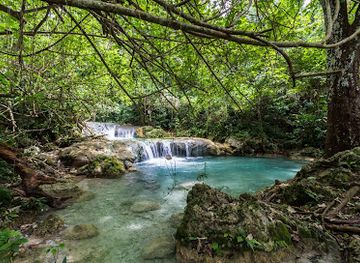
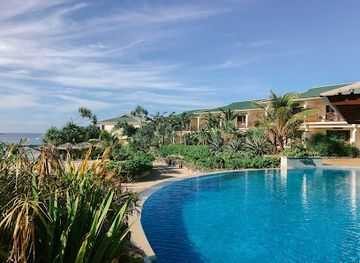
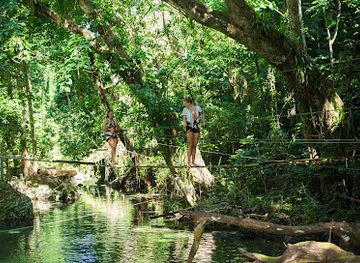
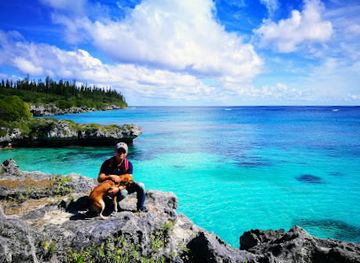
Explore Penama on the map
Plan your trip on one map. See where the top cities, national parks and sights are, and book hotels and experiences in a few clicks.
Best hotels in Penama
Best restaurants in Penama
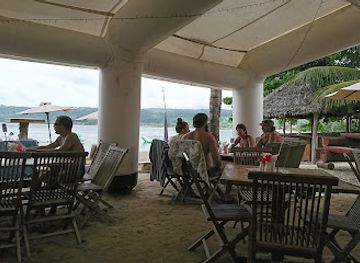
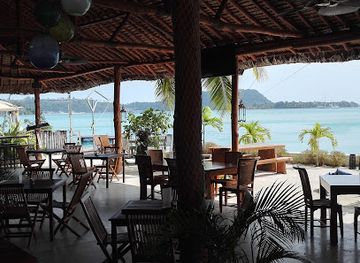
Dining in Penama is closely connected to household gardens, fishing and community hospitality rather than a formal restaurant scene. Meals commonly draw on yam, taro, manioc, sweet potato, breadfruit, coconut, seasonal fruit and locally caught fish, with meat available according to local supply and occasion. Lap-lap, a baked dish made from grated root vegetables and often prepared with coconut cream and meat or fish, is part of Vanuatu’s wider food culture and may be encountered at community meals. On Pentecost, Ambae and Maewo, visitors are more likely to eat at a guesthouse, village home or small local food outlet than at a destination restaurant. Availability can be limited and menus are rarely fixed, so advance arrangements are sensible. Markets and roadside sales may offer fruit, cooked food or garden produce where they operate. Bring suitable snacks for travel days, but accept locally offered food graciously and ask before picking, entering gardens or buying produce directly from growers.
-
Family-friendly
The Beach Bar
Experience family-friendly dining at The Beach Bar in Vanuatu - where delicious cuisine meets stunning ocean views.
-
Restaurant
The Stonegrill Restaurant
Discover the unique dining experience at The Stonegrill Restaurant in Port Vila, where every meal is an interactive culinary adventure.
-
 Restaurant
Tamanu on the beach
Experience fine dining at Tamanu on the Beach in Port Vila, where gourmet meals meet stunning ocean views and luxury accommodations.
-
Restaurant
Reefers Restaurant & Rum Bar
Discover authentic Vanuatu flavors at Reefers Restaurant & Rum Bar in Port Vila - a tropical dining experience with stunning views.

Best bars in Penama
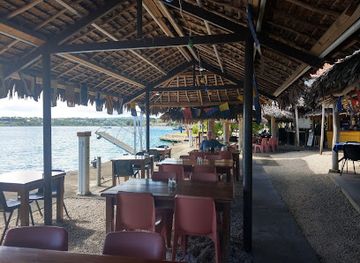
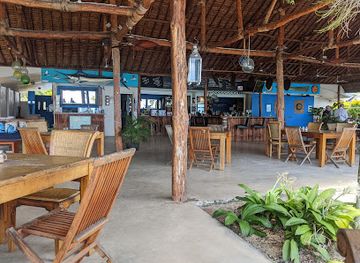
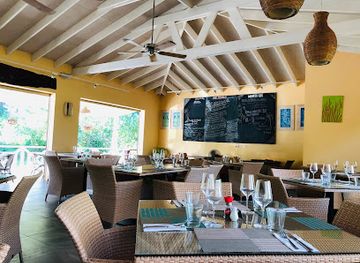
Penama does not have a substantial nightclub circuit. Evening life is concentrated in village communities, small nakamals, local kava venues, guesthouses and occasional social gatherings rather than late-opening entertainment districts. Kava, a traditional drink made from the roots of the kava plant, is consumed in social settings across Vanuatu; visitors should follow local guidance about where and when it is appropriate, and should not treat a nakamal as a bar designed for noisy tourism. Churches, community events, string bands and customary gatherings may be more significant than commercial nightlife. In larger settlements, small shops or informal venues may sell locally available beer and other drinks, but opening arrangements are variable. Plan to return to accommodation before dark in unfamiliar areas and rely on hosts for advice about safe, respectful evening movement.
-
Family-friendly
The Beach Bar
Experience the ultimate family-friendly dining at The Beach Bar in Vanuatu, where delicious meals meet stunning ocean views.
-
Restaurant
Waterfront Bar and Grill
Experience the vibrant culinary scene of Port Vila at Waterfront Bar and Grill, where local flavors meet stunning waterfront views for an unforgettable dining experience.
-
Restaurant
Reefers Restaurant & Rum Bar
Experience the vibrant flavors of Vanuatu at Reefers Restaurant & Rum Bar, a must-visit culinary destination in Port Vila.
-
Restaurant
Cafe Vila
Experience the vibrant flavors of Vanuatu at Café Vila, offering a diverse menu and stunning ocean views in Port Vila.
Best nightclubs in Penama
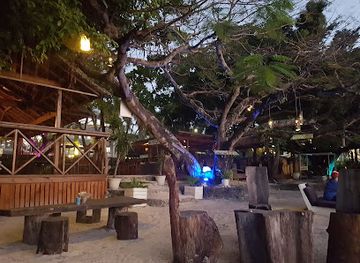
Penama does not have a substantial nightclub circuit. Evening life is concentrated in village communities, small nakamals, local kava venues, guesthouses and occasional social gatherings rather than late-opening entertainment districts. Kava, a traditional drink made from the roots of the kava plant, is consumed in social settings across Vanuatu; visitors should follow local guidance about where and when it is appropriate, and should not treat a nakamal as a bar designed for noisy tourism. Churches, community events, string bands and customary gatherings may be more significant than commercial nightlife. In larger settlements, small shops or informal venues may sell locally available beer and other drinks, but opening arrangements are variable. Plan to return to accommodation before dark in unfamiliar areas and rely on hosts for advice about safe, respectful evening movement.
-
Bar
Banyan Beach Bar
Experience tropical bliss at Banyan Beach Bar in Port Vila, where sunsets and cocktails meet for an unforgettable island adventure.
-
Sports bar
The Retreat Seaside Sports Bar & Resort
Experience vibrant island life at The Retreat Seaside Sports Bar & Resort, where relaxation meets entertainment in breathtaking Vanuatu.
-
Cocktail bar
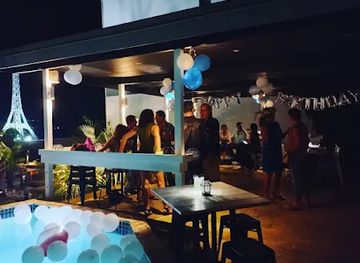
Stone Lounge
Experience the vibrant atmosphere and expertly crafted cocktails of Stone Lounge in Port Vila, a must-visit destination for cocktail enthusiasts.
-
Night club
Club Lit
Discover the electrifying nightlife of Port Vila at Club Lit, where vibrant music and exciting atmosphere come together.


Best shops in Penama
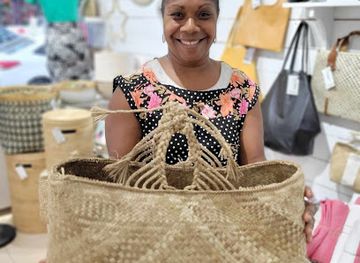
Shopping in Penama is small-scale and practical, centred on local produce, village sales and items arranged through community-based visits rather than conventional retail streets. Visitors may find woven mats and baskets, carved objects, shell or fibre ornaments, locally made clothing and small artworks, although availability and style differ between Pentecost, Ambae and Maewo. Fresh fruit, root crops, coconut products and cooked food may be sold near transport points or during community gatherings, but supplies are seasonal and should not be treated as a guaranteed market. Buy directly and respectfully, establish prices before an exchange and ask whether an item is appropriate to take away, particularly if it has ceremonial significance. Foreign-branded goods and reliable souvenir ranges are more readily found in Port Vila or Luganville, outside Penama. A useful provincial purchase is often a locally made craft or food product sourced through a host, with payment made fairly and without bargaining aggressively over small amounts.
-
Gift shop
Fung Kuei Duty Free
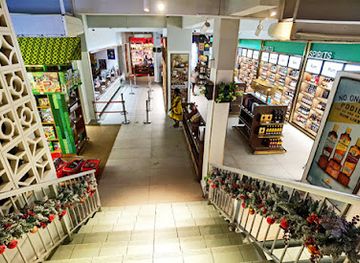
Explore Fung Kuei Duty Free in Port Vila for unbeatable duty-free shopping, featuring liquor, watches, and unique gifts at great prices.
-
Shopping mall
Tana Russet Plaza
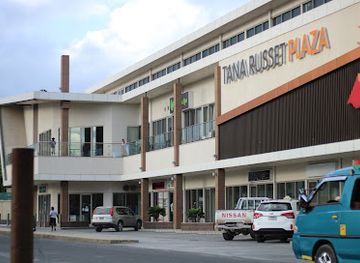
Experience the vibrant shopping and dining scene at Tana Russet Plaza in Port Vila, your gateway to local culture and international brands.
-
Duty free store
Paris Shopping - Duty Free Vanuatu
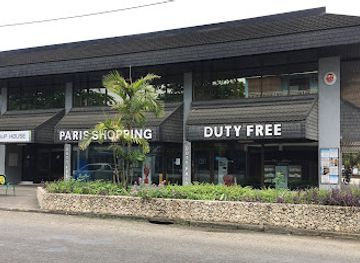
Experience the best of duty-free shopping in Port Vila with an array of international brands and local treasures at Duty Free Vanuatu.
-
Store
Pandanus Vanuatu Ltd
Explore the vibrant creations of Pandanus Vanuatu, where authentic craftsmanship meets unique souvenirs in the heart of Port Vila.
Get your free copy of our complete guide to Penama, delivered straight to you.
Everything on this page, from attractions and restaurants to essentials and local phrases, in one PDF you can read offline, print or share.
Already have an account? Sign in
Your Penama guide is ready.
We'll send it to · Not you? Sign out

Getting your guide ready…
We are putting together a fresh copy of the Penama guide. This can take up to a minute.
This can take a few moments. If your browser asks, choose Allow so the download can start. You'll find the guide in your Downloads folder.
Nothing happened? Download it again
Sorry, the guide is taking longer than usual. Please try again in a minute, or get it by email instead.
Penama essentials
Currency and Payment
Safety
Emergency Situations
Do's and Don'ts
Local Tips
From Eve
Local phrases worth knowing
You don't need to get them perfect. A few words go a long way, and locals appreciate the effort.
Basics
| English | Local | Say it |
|---|---|---|
| Hello | Halo | [ha-lo] |
| Goodbye | Tata | [ta-ta] |
| Yes | Ae | [ai] |
| No | No | [no] |
| Please/You're welcome | Plis | [plees] |
| Thank you | Tenkyu | [ten-kyu] |
| Excuse me/Sorry | Sori | [so-ree] |
| How are you? | Yu ora? | [yu ora] |
| Fine. And you? | Fain. An yu? | [fine. an yu] |
| Do you speak English? | Yu tok English? | [yu tok ing-glish] |
| I don't understand | Mi no save | [mee no sa-veh] |
Eating & Drinking
| English | Local | Say it |
|---|---|---|
| I'd like to see the menu, please | Mi wantem luk menu, plis | [mee wan-tem look menu, plees] |
| I don't eat meat | Mi no kaek meat | [mee no kayk meet] |
| Cheers! | Kia ora! | [kee-ah ora] |
| I would like to pay, please | Mi wantem pei, plis | [mee wan-tem pay, plees] |
Emergencies
| English | Local | Say it |
|---|---|---|
| Help! | Help! | [help] |
| Go away! | Go awei! | [go ah-way] |
| Call the Police! | Kol polisi! | [kol po-lee-see] |
| Call a doctor! | Kol dokta! | [kol dok-ta] |
| I'm lost | Mi los | [mee los] |
| I'm ill | Mi sik | [mee seek] |
Shopping
| English | Local | Say it |
|---|---|---|
| I'd like to buy... | Mi wantem bai... | [mee wan-tem bye] |
| I'm just looking | Mi lukim nomo | [mee loo-kim no-mo] |
| How much is it? | Hao mak it? | [how mak it] |
| That's too expensive | Dat i tu ekspensive | [dat ee too eks-pen-siv] |
| Can you lower the price? | Yu save daunem praes? | [yu sa-veh down-em price] |
Time & Numbers
| English | Local | Say it |
|---|---|---|
| What time is it? | Hao taem i? | [how time ee] |
| It's one o'clock | I wan o'clock | [ee wan oh-clock] |
| Half past (10) | Haf pas (10) | [haf pas ten] |
| Morning | Moring | [mor-ing] |
| Afternoon | Aftanoon | [af-ta-noon] |
| Evening | Ivening | [ee-ven-ing] |
| Yesterday | Yestede | [yes-teh-deh] |
| Today | Tude | [too-day] |
| Tomorrow | Tumoro | [too-mo-ro] |
| 1 | Wan | [wan] |
| 2 | Tu | [too] |
| 3 | Tri | [tree] |
| 4 | Foa | [foh-ah] |
| 5 | Faef | [fife] |
| 6 | Siks | [six] |
| 7 | Sev | [sev] |
| 8 | Eit | [eight] |
| 9 | Nain | [nine] |
| 10 | Ten | [ten] |
Transport & Directions
| English | Local | Say it |
|---|---|---|
| Where's a/the...? | Wera a/da...? | [we-ra ah/dah] |
| What's the address? | Hao nao adres? | [how now ad-res] |
| Can you show me (on the map)? | Yu save shoem mi (long map)? | [yu sa-veh show-em mee long map] |
| When's the next (bus)? | Hwen i next (bus)? | [hwen ee next bus] |
| A ticket (to ....) | Wan tiket (go ....) | [wan tee-ket go] |
History of Penama
Lapita settlement and Austronesian seafaring
The islands of Penama were settled within the wider movement of Austronesian-speaking seafarers across the western Pacific. Archaeological evidence from Vanuatu shows the importance of Lapita-era voyaging, pottery traditions and coastal settlement in the first millennium BCE, although the surviving record differs from island to island. Over succeeding centuries, communities developed distinct languages, systems of land use and customary authority. The islands’ steep interiors, fertile volcanic soils and productive coastal waters encouraged varied local economies rather than a single island-wide culture.
Customary societies before European rule
Before sustained European involvement, Pentecost, Ambae and Maewo were organised through networks of villages, kinship, chiefly authority, gardening and exchange. Yam cultivation has long held particular importance on Pentecost and elsewhere in the province, while ceremonies, dances, oral histories and systems of obligation connected communities to land and ancestors. The differing languages and customs found across Penama reflect centuries of island-based development. Many of these traditions remain active, although they have been reshaped by Christianity, schooling, migration and the modern state.
European contact and missionary expansion
European ships began visiting the New Hebrides during the age of Pacific exploration, but regular outside influence expanded during the nineteenth century. Catholic and Protestant missionaries established churches and schools, often working through local converts and teachers. Christianity became deeply influential across Penama, while older practices were sometimes discouraged, reinterpreted or incorporated into new social structures. Mission buildings, church communities and Christian observance remain important parts of island life, alongside customary institutions that continue to govern land, ceremony and community responsibilities.
Blackbirding and the colonial economy
During the nineteenth and early twentieth centuries, people from the New Hebrides were coercively recruited, deceived or pressured into labour on plantations in Queensland, Fiji, New Caledonia and other parts of the Pacific. This era, commonly associated with blackbirding, caused severe disruption to island communities and contributed to population loss and social upheaval. The colonial economy also brought imported goods, new forms of administration and commercial plantation activity. Its effects are part of the wider historical background to modern Vanuatu, even where few physical colonial remains survive in rural Penama.
The Anglo-French Condominium
From 1906 until independence, the New Hebrides were governed under an unusual Anglo-French Condominium in which British and French administrations operated in parallel. The arrangement created separate legal, educational and administrative systems and left a complicated institutional legacy. Churches and missions often provided much of the formal education and healthcare available beyond the main settlements. On Penama’s islands, customary landholding and village authority remained central to everyday life, while colonial officials and external commercial interests exercised influence unevenly.
Independence and the Republic of Vanuatu
The New Hebrides became the independent Republic of Vanuatu in 1980 after a period of political mobilisation and conflict over the future of the islands. Penama became one of the country’s provinces, with its name formed from Pentecost, Ambae and Maewo. Independence strengthened national institutions while leaving land, language, church affiliation and customary authority as powerful local forces. Provincial administration, schools, roads, communications and tourism have developed gradually, but most communities remain strongly connected to subsistence gardening, fishing and customary exchange.
Volcanic evacuations on Ambae
Ambae’s Manaro Voui volcano has repeatedly influenced the island’s history and contemporary geography. Increased volcanic activity in 2017 and 2018 led to large-scale evacuations and the temporary relocation of the island’s population, a major national emergency in Vanuatu. The eruptions demonstrated the practical importance of volcanic monitoring, maritime transport and community preparedness in an archipelago exposed to natural hazards. Ambae’s volcano is not simply a scenic feature: access, settlement and travel plans must take official warnings and local knowledge seriously.
Penama in Photos
Browse through our photo collection highlighting the charm and character of the destination.
Neighbouring regions of Penama
The closest regions to Penama, if you have time for more than one.
-

-

-

-

-


Swipe for more regions
Explore more

Explore more of Vanuatu
Discover Vanuatu, a pristine South Pacific paradise with breathtaking beaches, vibrant culture, thrilling adventures, and some of the world's best diving spots.
Explore Vanuatu