

Ambae Island, Vanuatu Travel Guide
Discover Ambae Island, Vanuatu's hidden gem, where volcanic landscapes, rich traditions, and serene beaches create a perfect paradise for nature and culture lovers.
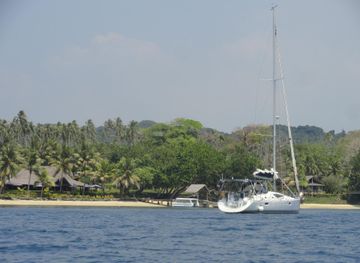
Ambae Island, often referred to as the 'Island of Paradise,' is a lush, volcanic island located in the South Pacific Ocean. Its landscape is dominated by the active volcano, Mount Manaro, which offers an exhilarating experience for adventure seekers. The island is covered with dense rainforests, beautiful waterfalls, and surrounded by pristine beaches, making it a perfect destination for nature lovers and explorers. Visitors to Ambae can immerse themselves in the rich culture and traditions of the local Ni-Vanuatu people. The island's villages are known for their warm hospitality and traditional ceremonies, providing an authentic experience of Vanuatu's cultural heritage. From the intricate sand drawings to the rhythmic beats of local music, every aspect of life on Ambae is deeply connected to its natural environment. For those looking to unwind, the island's serene beaches and crystal-clear waters offer a tranquil escape from the hustle and bustle of everyday life. Snorkeling and diving enthusiasts will find vibrant coral reefs teeming with marine life just off the coast. Whether you are exploring the island's volcanic landscapes, engaging with its cultural traditions, or simply relaxing by the sea, Ambae Island promises an unforgettable adventure.

Know before you go
Hi, I'm Eve. Here are a few practical things to know before exploring Ambae Island.
- Check the volcanic activity status before planning your visit to ensure safety.
- Hire a local guide for trekking Mount Manaro to benefit from their expertise and knowledge.
- Bring insect repellent to protect against mosquitoes, especially in the rainy season.
- Respect local customs and traditions, and always ask permission before taking photos of people.
- Carry cash as credit card facilities are limited on the island.
Destinations in Ambae Island
Resorts, valleys and scenic spots worth a trip of their own.

Explore Ambae Island: Things to Do, Places to Eat, Hotels & More
Handpicked recommendations for top attractions, local dining, accommodations, and more

Top Attractions & Sightseeing in Ambae Island


Best bars in Ambae Island
Top-rated picks
Best Bars

The Beach Bar
Discover The Beach Bar in Mele, Vanuatu – a family-friendly paradise with delicious food, refreshing drinks, and stunning ocean views.

Banyan Beach Bar
Experience stunning ocean views and tropical cocktails at Banyan Beach Bar in Port Vila, the perfect spot for relaxation and vibrant nightlife.

War Horse Saloon
Discover the lively atmosphere of War Horse Saloon in Port Vila, where delicious drinks and a vibrant nightlife await.

The Retreat Seaside Sports Bar & Resort
Discover The Retreat Seaside Sports Bar & Resort, a vibrant destination in Port Vila offering delicious food, sports entertainment, and stunning ocean views.


Best shops in Ambae Island
Top-rated picks
Best Shops

Fung Kuei Duty Free
Explore Fung Kuei Duty Free: Your ultimate shopping destination in Port Vila, featuring tax-free luxury goods and unique local souvenirs.

Tana Russet Plaza
Experience the vibrant shopping scene at Tana Russet Plaza, where local culture and international brands meet in the heart of Port Vila.

Paris Shopping - Duty Free Vanuatu
Explore luxury shopping at Paris Shopping - Duty Free Vanuatu, your premier destination for exclusive goods at unbeatable prices.

Pandanus Vanuatu Ltd
Discover Pandanus Vanuatu Ltd, your go-to boutique for unique handbags, stunning jewelry, stylish shoes, and unforgettable souvenirs in Port Vila.

Explore Ambae Island on the Map
A handpicked selection of must-see spots in Ambae Island, mapped for you.
Ambae Island Essentials
-
Ambae Island is part of Vanuatu, located in the South Pacific Ocean. The nearest international airport is Bauerfield International Airport in Port Vila, the capital of Vanuatu. From Port Vila, you can take a domestic flight to the Lonorore Airport on Ambae Island. Alternatively, you can travel by ferry from other islands in Vanuatu, although this option may take longer and be subject to weather conditions.
-
Once on Ambae Island, transportation options include local buses, taxis, and boats. Local buses are the most affordable way to get around, but they may not follow a fixed schedule. Taxis are available but can be expensive. Renting a vehicle is an option, but road conditions may vary, so a 4x4 vehicle is recommended. Boats can be used for island-hopping or reaching remote locations.
-
The official currency on Ambae Island is the Vanuatu Vatu (VUV). Credit cards are accepted in some hotels and larger establishments, but it is advisable to carry cash, especially in rural areas. ATMs are limited on the island, so withdrawing sufficient cash in Port Vila before traveling is recommended.
-
Ambae Island is generally safe for tourists. However, it is advisable to take standard precautions such as avoiding walking alone at night, keeping an eye on your belongings, and staying aware of your surroundings. There are no specific high-crime areas targeting tourists, but it is always best to stay vigilant.
-
In case of emergency, dial 112 for immediate assistance. Local medical facilities are available, but they may be limited. It is highly recommended to have travel insurance that covers medical emergencies and evacuation. For minor health issues, there are pharmacies where you can purchase over-the-counter medications.
-
Fashion: Do dress modestly, especially when visiting villages and religious sites. Avoid wearing revealing clothing. Religion: Do respect local customs and traditions. Always ask for permission before entering private or sacred areas. Public Transport: Do be respectful and courteous to other passengers. Don't eat or drink on public transport. Greetings: Do greet people with a friendly 'hello' or the local greeting 'Halo'. Eating & Drinking: Do try local foods and accept food offerings graciously. Don't refuse hospitality, as it is considered impolite.
-
To experience Ambae Island like a local, visit the local markets where you can buy fresh produce and traditional Vanuatu goods. Engage with the locals, as they are often friendly and willing to share stories about the island's history and culture. Don't miss visiting the volcanic Lake Manaro, which is a significant natural attraction on the island. For a unique experience, participate in a traditional village ceremony or festival.
When is the best time to visit Ambae Island?
Useful Local Phrases for Ambae Island
You don't need to speak the language perfectly. Even learning a few simple words can make conversations warmer—and locals usually appreciate the effort.
— Eve

Here are the phrases I use most often in Ambae Island. Try a few—you'll be surprised how far they go! 😊
❤️
-
- HelloOlokae
[O-lo-kai] - GoodbyeToktok
[Tok-tok] - YesYes
[Yes] - NoNo
[No] - Please/You're welcomePlis
[Plee-s] - Thank youTangkyu
[Tang-kyu] - Excuse me/SorrySori
[So-ree] - How are you?Yu stap gud?
[Yu stap good?] - Fine. And you?Mi gud. Na yu?
[Me good. Na yu?] - Do you speak English?Yu tok Inglis?
[Yu tok In-glis?] - I don't understandMi no save
[Me no sa-vay]
- HelloOlokae
-
- I'd like to see the menu, pleaseMi wantem lukim menu, plis
[Me wan-tem loo-kim men-u, plees] - I don't eat meatMi no kaek meat
[Me no kaa-k meat] - Cheers!Dai
[Dai] - I would like to pay, pleaseMi wantem pei, plis
[Me wan-tem pay, plees]
- I'd like to see the menu, pleaseMi wantem lukim menu, plis
-
- Help!Help!
[Help!] - Go away!Go awei!
[Go away!] - Call the Police!Kol Polise!
[Kol Po-leez!] - Call a doctor!Kol dokta!
[Kol dock-ta!] - I'm lostMi los
[Me los] - I'm illMi sik
[Me sik]
- Help!Help!
-
- I'd like to buy...Mi wantem bai...
[Me wan-tem bye...] - I'm just lookingMi so loog
[Me so log] - How much is it?Hao mak?
[How mak?] - That's too expensiveDat i tu mak
[Dat ee too mak] - Can you lower the price?Yu ken laowa da prais?
[Yu ken la-o-wa da price?]
- I'd like to buy...Mi wantem bai...
-
- What time is it?Hao taem i?
[How time ee?] - It's one o'clockI wan oklok
[Ee wan o-clock] - Half past (10)Haf pas (10)
[Haf pas (10)] - MorningMornin
[Morn-ing] - AfternoonAftanun
[Af-ta-noon] - EveningIvinin
[I-vee-ning] - YesterdayYestedei
[Yes-ter-day] - TodayTudei
[Too-day] - TomorrowTumarou
[Too-ma-row] - 1Wan
[Wan] - 2Tu
[Too] - 3Tri
[Tree] - 4Foa
[Fo-a] - 5Faiv
[Five] - 6Siks
[Six] - 7Sev
[Seven] - 8Eit
[Eight] - 9Nain
[Nine] - 10Ten
[Ten]
- What time is it?Hao taem i?
-
- Where's a/the...?Wea i...?
[Wea ee...?] - What's the address?Hao i se adresse?
[How ee say ad-dress?] - Can you show me (on the map)?Yu ken soem mi (long map)?
[Yu ken so-em me (long map)?] - When's the next (bus)?Hwen i neks (bas)?
[When ee next (bus)?] - A ticket (to ....)Wan tiket (go....)
[Wan tick-et (go....)]
- Where's a/the...?Wea i...?
History of Ambae Island
-
Ambae Island is steeped in mythology, with one of the most famous legends being that of Tagaro, the creator deity. According to local lore, Tagaro created Ambae and the surrounding islands, shaping the land and bestowing it with lush vegetation. This myth is a cornerstone of the island's cultural identity, influencing various traditional practices and beliefs.
-
Archaeological evidence suggests that Ambae Island has been inhabited for thousands of years. Early settlers, likely of Polynesian origin, established small communities and lived off the land and sea. These early inhabitants developed intricate systems of agriculture and fishing, laying the groundwork for the island’s enduring subsistence practices.
-
The first recorded European contact with Ambae Island occurred in 1606 when the Spanish explorer Pedro Fernández de Quirós sighted the island. However, it wasn't until the 19th century that significant interaction occurred, primarily through missionaries who sought to convert the local population to Christianity. This period marked a profound transformation in the island's social and religious landscape.
-
In the late 19th and early 20th centuries, missionaries from the Presbyterian Church established a strong presence on Ambae Island. They built churches, schools, and clinics, introducing Western education and healthcare. While their efforts led to significant changes in local customs and beliefs, many traditional practices were retained and adapted to fit within the new Christian framework.
-
During World War II, Ambae Island, like many other Pacific islands, experienced the presence of Allied forces. The island's strategic location made it a valuable spot for the Allies, who used it as a base for operations in the region. This period brought temporary economic boosts and introduced new technologies and ideas to the islanders.
-
Vanuatu, including Ambae Island, gained independence from colonial rule in 1980. The post-independence era has been marked by efforts to modernize infrastructure while preserving the island's rich cultural heritage. Today, Ambae is a blend of traditional practices and modern influences, with ongoing initiatives to promote sustainable development and tourism.
-
Ambae Island is home to the active Manaro Voui volcano, also known as Lombenben. The volcano has had multiple eruptions in recent history, with significant activity recorded in 2005, 2017, and 2018. These eruptions have led to temporary evacuations and have had a lasting impact on the island's environment and communities. The volcano remains a central feature of life on Ambae, both as a natural wonder and a source of occasional disruption.
Neighbouring Regions of Ambae Island
The closest regions to Ambae Island, if you have time for more than one.




Your all‑in‑one travel companion app
Explore expert travel guides, compare and book tours, experiences, hotels, and more—all from the palm of your hand. Download now for seamless trip planning wherever your wanderlust takes you.


Explore More of Vanuatu

Looking beyond Ambae Island? Discover Vanuatu for broader travel guides, local hot-spots, and regional highlights.
Explore VanuatuAmbae Island in Photos
Browse through our photo collection highlighting the charm and character of the destination.


Ambae Island: The Mystical Heart of Vanuatu
Ambae Island, often referred to as the 'Island of Paradise,' is a lush, volcanic island located in the South Pacific Ocean. Its landscape is dominated by the active volcano, Mount Manaro, which offers an exhilarating experience for adventure seekers. The island is covered with dense rainforests, beautiful waterfalls, and surrounded by pristine beaches, making it a perfect destination for nature lovers and explorers. Visitors to Ambae can immerse themselves in the rich culture and traditions of the local Ni-Vanuatu people. The island's villages are known for their warm hospitality and traditional ceremonies, providing an authentic experience of Vanuatu's cultural heritage. From the intricate sand drawings to the rhythmic beats of local music, every aspect of life on Ambae is deeply connected to its natural environment. For those looking to unwind, the island's serene beaches and crystal-clear waters offer a tranquil escape from the hustle and bustle of everyday life. Snorkeling and diving enthusiasts will find vibrant coral reefs teeming with marine life just off the coast. Whether you are exploring the island's volcanic landscapes, engaging with its cultural traditions, or simply relaxing by the sea, Ambae Island promises an unforgettable adventure.