

Free Malampa Travel Guide & Mobile App
Explore Malampa with free travel guides. Discover regional history, expert tips, proposed trips, and audio guides on web or mobile app.


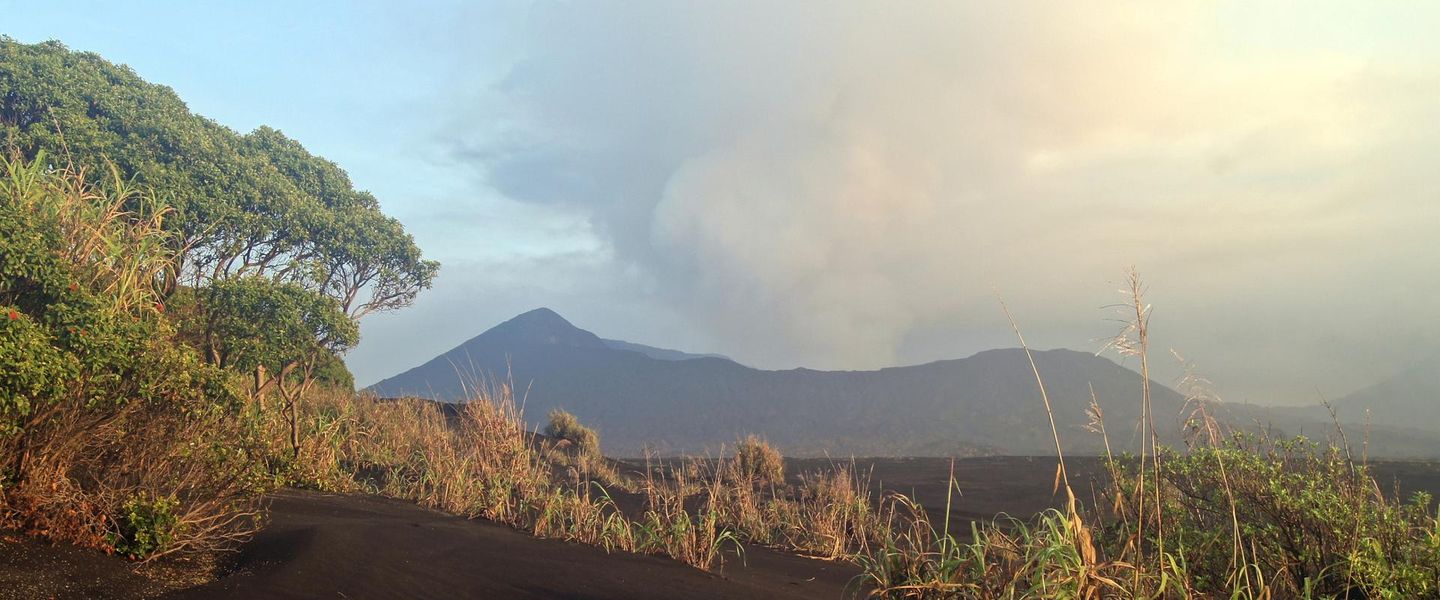


Explore Malampa in Vanuatu for active volcanoes, customary culture, reef islands, forested Malakula and village-led island journeys.
Read more about Malampa
When is the best time to visit Malampa?
Best: June–August · 27°C| Month | High (°C) | Rainfall (mm) |
|---|---|---|
| January | 30 | 251 |
| February | 30 | 231 |
| March | 30 | 211 |
| April | 29 | 190 |
| May | 29 | 170 |
| June (best) | 27 | 150 |
| July (best) | 27 | 140 |
| August (best) | 27 | 145 |
| September | 28 | 160 |
| October | 29 | 180 |
| November | 30 | 200 |
| December | 30 | 220 |
Getting to and around Malampa
How to get there
Transportation
Top city travel guides in Malampa
The cities of Malampa, and the easiest places to base yourself.
-

-
-


Swipe for more cities
Destinations in Malampa
Resorts, valleys and scenic spots worth a trip of their own.
-

-


Swipe for more destinations
Best attractions in Malampa
Malampa’s attractions are defined by natural environments and community-led experiences rather than a dense collection of formal visitor sites. On Malakula, travellers can combine the practical centre of Lakatoro with forested inland routes, coastal villages, reef areas and excursions to the Maskelyne Islands, where boating, snorkelling and village visits depend on local conditions and arrangements. Ambrym offers the province’s most dramatic landscapes: broad black-ash expanses and demanding routes towards Mounts Marum and Benbow, with local guides essential for access and safety. The island is also noted for kastom dance, carving and slit-gong traditions, which should be encountered through community permission rather than treated as a guaranteed performance. Paama provides a quieter setting of steep green hills, gardens and coastal settlements. Across the province, visitors may encounter traditional cooking, fishing, canoe or boat journeys, village walks and opportunities to learn about customary land and marine practices. Facilities are modest, and the quality of an excursion depends greatly on weather, transport, local knowledge and respectful preparation.
-
Island
Paama
Explore the untouched paradise of Paama Island, where stunning beaches, lush landscapes, and vibrant culture await your discovery in Vanuatu.
-
 Garden
Asanalivo
Discover the serene beauty of Asanalivo in Asamaranda, a tranquil garden retreat perfect for nature lovers and peaceful getaways.
Best landmarks in Malampa
The most recognisable natural landmark in Malampa is Ambrym’s volcanic massif, dominated by the active volcanic centres of Mounts Marum and Benbow. Their ash plains, lava formations and crater landscapes give the island an appearance unlike the greener coastal scenery, but access is physically demanding and must be guided by current local advice. On Malakula, the Maskelyne Islands form a distinctive southern maritime landscape of small islands, reefs and narrow channels, where customary communities remain closely connected to the sea. Lakatoro’s provincial-government area is an important civic reference point rather than a monumental historic quarter, reflecting Malampa’s practical administrative role. Across the larger islands, village churches, ceremonial houses, carved slit gongs and traditional meeting places can carry considerable local significance, although their status and access vary by community. The province’s most important landmarks are therefore not always formal monuments: they include volcanic terrain, reef passages, customary spaces and village structures whose meaning is best explained by residents and local guides.
-
Tourist attraction
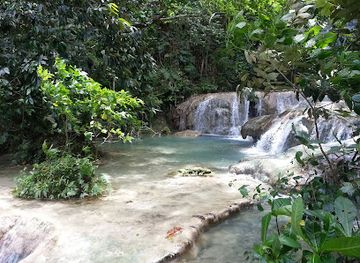
Evergreen Cascades Waterfall
Experience the breathtaking Evergreen Cascades Waterfall, a natural oasis in Vanuatu, perfect for relaxation, adventure, and exploration.
-
Resort hotel
Tamanu on the beach
Discover the perfect blend of luxury, nature, and culinary excellence at Tamanu on the Beach, a premier resort hotel in Vanuatu's stunning Efate island.
-
Resort hotel
Nasama Resort
Experience ultimate relaxation at Nasama Resort, a beautiful resort hotel in Port Vila, Vanuatu, offering stunning views and local cultural experiences.
-
Tourist attraction
Eden on the River
Explore the serene beauty of Eden on the River in Rentapau, Efate, where nature, adventure, and local culture unite for an unforgettable experience.
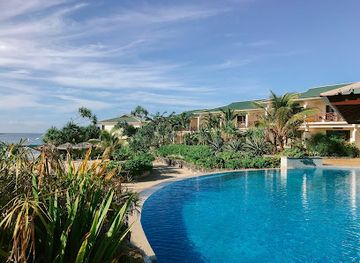
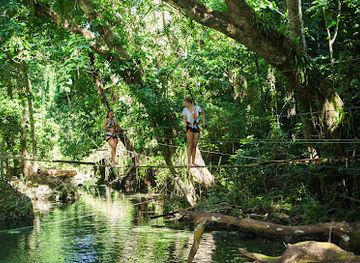
Explore Malampa on the map
Plan your trip on one map. See where the top cities, national parks and sights are, and book hotels and experiences in a few clicks.
Best hotels in Malampa
Best restaurants in Malampa
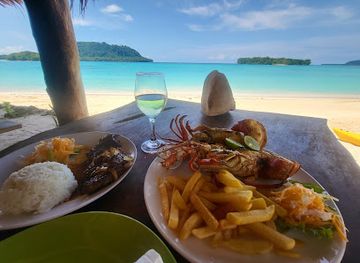
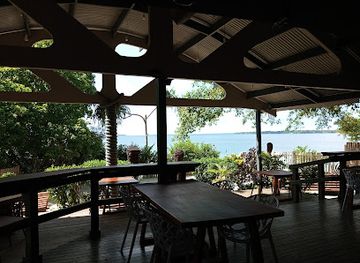
Eating in Malampa is primarily a local, seasonal and community-based experience rather than a restaurant-led one. Lakatoro and Norsup offer the greatest choice of simple meals and provisions, while accommodation houses and village hosts may prepare food by arrangement elsewhere. Garden crops such as yam, taro, manioc and sweet potato form the foundation of many meals, often accompanied by coconut cream, greens, fruit and freshly caught fish. Laplap, made from grated root crops and cooked with coconut cream, is an important Vanuatu dish, while tuluk is a related preparation commonly associated with meat-filled root-crop mixtures. Coconut, banana, pawpaw and seafood are widely relevant to island cooking, although availability varies. Visitors should give advance notice about dietary requirements, carry snacks when travelling between settlements and avoid assuming that remote communities can provide a full menu. Meals connected with a village visit or homestay can offer a more meaningful understanding of Malampa’s food traditions than a formal dining room.
-
Restaurant
Chez Louis Restaurant
Discover authentic Vanuatu cuisine at Chez Louis Restaurant along the stunning Champagne Coast.
-
Restaurant
smugglers Seafood Restaurant & Bar
Experience the vibrant flavors of Vanuatu at Smugglers Seafood Restaurant & Bar in Luganville - where fresh seafood meets breathtaking views.
-
Restaurant
Nethung Restaurant
Experience authentic Vanuatu cuisine at Nethung Restaurant in Lakatoro, Malekula Island - where local flavors come alive.
-
Restaurant
Nonvehre Ocean View Restaurant
Experience local cuisine with breathtaking ocean views at Nonvehre Ocean View Restaurant in Ambrym, Vanuatu.
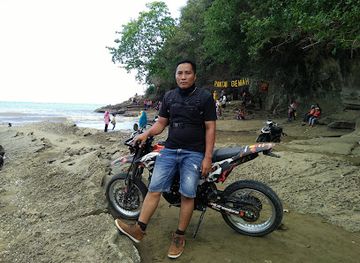
Best bars in Malampa
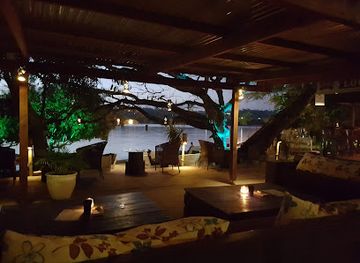
Malampa does not have a major nightclub scene, and evening life generally centres on village gatherings, accommodation areas, small kava venues, simple bars and occasional community or church events. Lakatoro and Norsup provide the most likely settings for an evening drink or informal socialising, while smaller islands and rural settlements become quiet after dark. Kava, a traditional drink made from the root of the kava plant, is part of social life in Vanuatu, but visitors should follow local etiquette and drink responsibly. Some guesthouses may serve locally available beer or arrange meals, although opening arrangements are not uniform. Live music, dancing and celebrations may occur during community events, but should not be assumed to be scheduled entertainment. Remote travellers should plan evening transport and carry a torch, particularly where roads, paths and power supplies are limited.
-
Family-friendly
The Beach Bar
Discover the charm of The Beach Bar in Mele, a family-friendly oasis offering delicious cuisine and stunning ocean views for an unforgettable experience.
-
Restaurant
Waterfront Bar and Grill
Discover the flavors of Vanuatu at Waterfront Bar and Grill, where fresh seafood meets breathtaking ocean views in Port Vila.
-
Bar
Three Pigs
Experience the vibrant flavors of Vanuatu at Three Pigs, a bar and restaurant with stunning ocean views and a welcoming atmosphere.
-
Bar
Banyan Beach Bar
Experience the vibrant atmosphere and stunning ocean views at Banyan Beach Bar in Port Vila, the perfect spot for cocktails and relaxation.
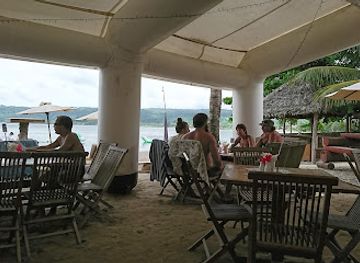
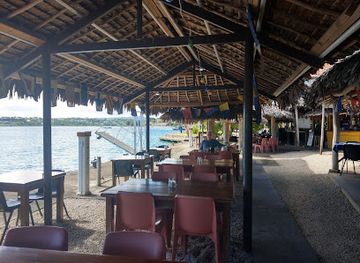
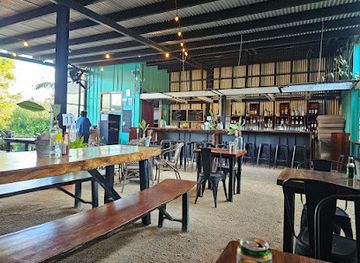
Best nightclubs in Malampa
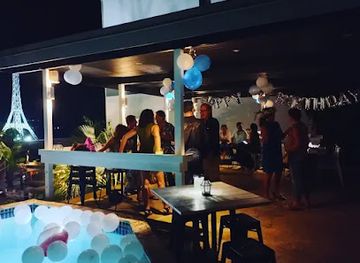
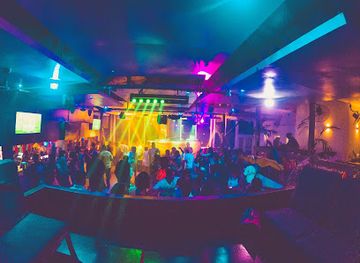
Malampa does not have a major nightclub scene, and evening life generally centres on village gatherings, accommodation areas, small kava venues, simple bars and occasional community or church events. Lakatoro and Norsup provide the most likely settings for an evening drink or informal socialising, while smaller islands and rural settlements become quiet after dark. Kava, a traditional drink made from the root of the kava plant, is part of social life in Vanuatu, but visitors should follow local etiquette and drink responsibly. Some guesthouses may serve locally available beer or arrange meals, although opening arrangements are not uniform. Live music, dancing and celebrations may occur during community events, but should not be assumed to be scheduled entertainment. Remote travellers should plan evening transport and carry a torch, particularly where roads, paths and power supplies are limited.
-
Cocktail bar
Stone Lounge
Experience the vibrant atmosphere and tropical cocktails at Stone Lounge in Port Vila, a must-visit destination for every traveler.
-
Night club
Club Lit
Experience the electrifying nightlife of Port Vila at Club Lit, where top DJs spin the best beats in a vibrant atmosphere.
-
Night club
ELEKTROROCK
Discover the lively nightlife of Port Vila at ELEKTROROCK, where music, dance, and vibrant energy await you every night.
-
Bar
WW2 Million Dollar Point Bar & Cafe
Discover the historical charm and breathtaking views at WW2 Million Dollar Point Bar & Cafe in Santo, Vanuatu.
Best shops in Malampa
Shopping in Malampa is limited but closely connected to everyday island life. Lakatoro and Norsup are the most practical places for basic supplies, locally made food, transport necessities and small gifts, while village communities may offer carvings, woven items, shell work or other handicrafts by arrangement. Availability is seasonal and individual, so visitors should buy respectfully and ask about the maker, materials and appropriate price rather than bargaining aggressively. Local produce can include coconuts, root crops, fruit and fish, although sales depend on harvests, transport and community routines. There are no extensive luxury-shopping districts or large retail centres in the province. Useful souvenirs may include responsibly sourced handicrafts, but coral, shells, wildlife products and archaeological objects should not be removed without clear permission and should never be taken from reefs or customary land. Carry cash in small denominations, as remote sellers generally do not accept cards.
-
Gift shop
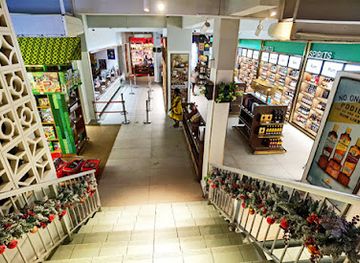
Fung Kuei Duty Free
Explore Fung Kuei Duty Free in Port Vila for an unmatched shopping experience with a diverse selection of duty-free products and exceptional prices.
-
Duty free store
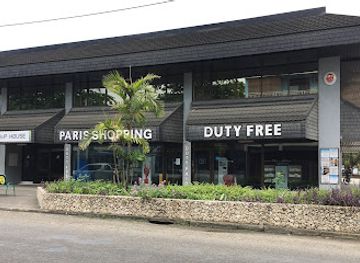
Paris Shopping - Duty Free Vanuatu
Explore the finest duty-free shopping at Paris Shopping - Duty Free Vanuatu, where exclusive luxury meets affordability for every traveler.
-
Store
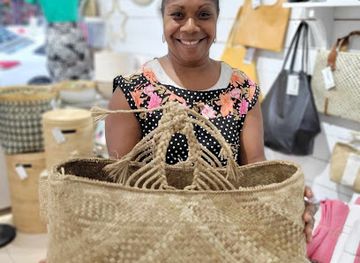
Pandanus Vanuatu Ltd
Explore the vibrant craftsmanship of Vanuatu at Pandanus Vanuatu Ltd, your go-to store for unique handbags, jewelry, shoes, and souvenirs.
-
Real estate developer
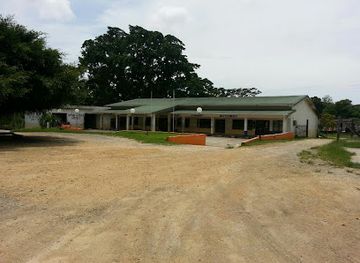
Lakatoro Trading Centre
Discover the vibrant Lakatoro Trading Centre, where local culture and community spirit come alive through crafts, produce, and unique experiences.
Get your free copy of our complete guide to Malampa, delivered straight to you.
Everything on this page, from attractions and restaurants to essentials and local phrases, in one PDF you can read offline, print or share.
Already have an account? Sign in
Your Malampa guide is ready.
We'll send it to · Not you? Sign out

Getting your guide ready…
We are putting together a fresh copy of the Malampa guide. This can take up to a minute.
This can take a few moments. If your browser asks, choose Allow so the download can start. You'll find the guide in your Downloads folder.
Nothing happened? Download it again
Sorry, the guide is taking longer than usual. Please try again in a minute, or get it by email instead.
Malampa essentials
Currency and Payment
Safety
Emergency Situations
Do's and Don'ts
Local Tips
From Eve
Local phrases worth knowing
You don't need to get them perfect. A few words go a long way, and locals appreciate the effort.
Basics
| English | Local | Say it |
|---|---|---|
| Hello | Halo | [ha-lo] |
| Goodbye | Bai | [bye] |
| Yes | Yes | [yes] |
| No | No | [no] |
| Please/You're welcome | Plis | [plees] |
| Thank you | Tangkyu | [tang-kyu] |
| Excuse me/Sorry | Sori | [so-ree] |
| How are you? | Hao yu? | [how yoo] |
| Fine. And you? | Fain. An yu? | [fine. an yoo] |
| Do you speak English? | Yu spek Inglis? | [yoo spek ing-lis] |
| I don't understand | Mi no save | [mee no sah-vay] |
Eating & Drinking
| English | Local | Say it |
|---|---|---|
| I'd like to see the menu, please | Mi wantem lukim menu, plis | [mee wan-tem loo-keem men-yoo, plees] |
| I don't eat meat | Mi no katem mit | [mee no ka-tem meet] |
| Cheers! | Cheers! | [cheers] |
| I would like to pay, please | Mi wantem paem, plis | [mee wan-tem pay-em, plees] |
Emergencies
| English | Local | Say it |
|---|---|---|
| Help! | Help! | [help] |
| Go away! | Go awei! | [go a-way] |
| Call the Police! | Kolim Polis! | [ko-lim po-lees] |
| Call a doctor! | Kolim dokta! | [ko-lim dok-ta] |
| I'm lost | Mi los | [mee los] |
| I'm ill | Mi sik | [mee seek] |
Shopping
| English | Local | Say it |
|---|---|---|
| I'd like to buy... | Mi wantem baem... | [mee wan-tem bye-em] |
| I'm just looking | Mi jus lukim | [mee jus loo-keem] |
| How much is it? | Hao makem? | [how mah-kem] |
| That's too expensive | Dat i tu ekspensiv | [dat ee too eks-pen-siv] |
| Can you lower the price? | Yu save loarem price? | [yoo sah-vay lo-ar-em price] |
Time & Numbers
| English | Local | Say it |
|---|---|---|
| What time is it? | Hao taem i? | [how time ee] |
| It's one o'clock | I wan oklok | [ee wan o-clock] |
| Half past (10) | Haf pas (10) | [haf pas ten] |
| Morning | Mornin | [mor-ning] |
| Afternoon | Aftanoon | [af-ta-noon] |
| Evening | Ivening | [ee-ve-ning] |
| Yesterday | Yestedei | [yes-te-day] |
| Today | Tudei | [too-day] |
| Tomorrow | Tumoro | [too-mo-row] |
| 1 | Wan | [wan] |
| 2 | Tu | [too] |
| 3 | Tri | [tree] |
| 4 | Foa | [foa] |
| 5 | Faev | [faev] |
| 6 | Siks | [siks] |
| 7 | Seven | [sev-en] |
| 8 | Eit | [eight] |
| 9 | Nain | [nine] |
| 10 | Ten | [ten] |
Transport & Directions
| English | Local | Say it |
|---|---|---|
| Where's a/the...? | Wea i...? | [wea ee] |
| What's the address? | Hao naem blong? | [how name blong] |
| Can you show me (on the map)? | Yu save soem mi (long map)? | [yoo sah-vay so-em mee long map] |
| When's the next (bus)? | Hwen i next (bas)? | [when ee next bus] |
| A ticket (to ....) | Wan tiket (go....) | [wan ti-ket go] |
History of Malampa
Lapita settlement and ancient island communities
The islands of present-day Malampa were settled within the wider Austronesian movement across the western Pacific, including the Lapita cultural horizon that reached Vanuatu more than 3,000 years ago. Early communities adapted to volcanic soils, forest, reefs and small offshore islands, developing gardening, fishing and trading networks. Archaeological evidence across Vanuatu indicates long continuity of human occupation, although the surviving cultural landscapes of Malakula, Ambrym and Paama were shaped by many later migrations and local developments. The province’s languages, land relationships and customary systems are part of this deep history rather than recent cultural survivals.
Customary societies before European rule
Before colonial administration, Malakula, Ambrym and Paama contained numerous communities with their own languages, chiefly authorities, ceremonial systems and relationships to land and sea. Malakula became particularly known to European observers for complex grades and initiation traditions, while Ambrym developed influential ceremonial arts, including monumental slit gongs, dance and carving. Such descriptions were often filtered through colonial assumptions, but they reflect the diversity of social institutions that continued to organise village life. Kastom remains important today, although its meaning and practice differ between communities.
Sandalwood, traders and mission expansion in the nineteenth century
From the early nineteenth century, European traders, beachcombers and missionaries increasingly visited the New Hebrides, the colonial name for Vanuatu. Sandalwood attracted commercial attention, and later labour recruitment, disease and violent encounters caused severe disruption in many island communities. Presbyterian, Catholic and other missions established churches and schools in parts of Malampa, often challenging existing religious authority while also becoming important centres of literacy and community organisation. The effects of conversion varied by island and village, producing a layered religious landscape rather than a single uniform transformation.
The Anglo-French Condominium, 1906–1980
Britain and France governed the New Hebrides through an unusual joint administration known as the Anglo-French Condominium from 1906 until independence. Separate British and French legal and educational systems operated alongside indigenous customary authority, creating confusing institutional divisions and limited central coordination. In Malampa, as elsewhere in the archipelago, missions, traders, plantations and local communities interacted within this framework. Copra, cocoa, cattle and subsistence gardening formed parts of the colonial economy, but most island life continued to depend on village land, family labour and marine resources.
The Second World War and changing island connections
The Second World War brought major military activity to Vanuatu, especially on Efate and Espiritu Santo, which became important Allied bases. Malampa was not the principal theatre of those installations, but the war altered regional transport, trade and contact with the outside world. Wartime demand brought new goods, employment and ideas, while the wider Pacific conflict contributed to the development of cargo movements and religious-social movements later grouped under the broad term cargo cults. These developments formed part of a wider cultural response to colonial power and rapid economic change.
Independence and the Republic of Vanuatu
The New Hebrides became the independent Republic of Vanuatu in 1980 after a period of political mobilisation and conflict over the future of the islands. Independence strengthened national institutions while leaving provincial and customary authorities central to everyday governance. Malampa became one of Vanuatu’s provinces, with Lakatoro as its administrative centre. Since independence, the province has balanced subsistence agriculture, copra and other rural livelihoods with public services, domestic transport and small-scale tourism, all within an environment exposed to cyclones, earthquakes, volcanic activity and changing market conditions.
Malampa in Photos
Browse through our photo collection highlighting the charm and character of the destination.
Neighbouring regions of Malampa
The closest regions to Malampa, if you have time for more than one.
-

-

-

-

-


Swipe for more regions
Explore more

Explore more of Vanuatu
Discover Vanuatu, a pristine South Pacific paradise with breathtaking beaches, vibrant culture, thrilling adventures, and some of the world's best diving spots.
Explore Vanuatu