

Front Beach (Vung Tau) Travel Guide - Free
Explore Front Beach in Vung Tau with Evendo's free guide. Find the best shops, historic streets, restaurants, and gems on web or mobile.


Front Beach in Vung Tau pairs a palm-lined seafront with colonial landmarks, seafood restaurants, sunset walks and easy access to southern Vietnam’s coast.
A Waterfront with a Long Memory
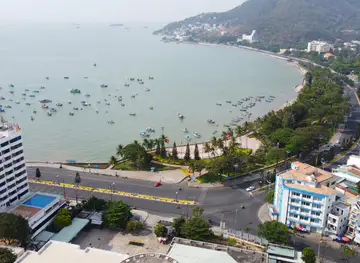
Front Beach, or Bãi Trước, curves along the western side of Vung Tau where the city looks across the water towards the Long Sơn area and the wider southern Vietnamese coast. Its promenade, shaded by palms and urban parkland, is the natural orientation point for a first visit. The shoreline is more suited to strolling, people-watching and sunset views than to swimming, while the busier bathing beaches lie elsewhere on the peninsula. Quang Trung Street and the lower slopes of Big Mountain frame the district with hotels, seafood restaurants, cafés and older civic buildings.Read more about Front Beach
Colonial Vung Tau and the Hillside
Everyday Life by the Bay
Best attractions in Front Beach
Front Beach’s principal attraction is the waterfront itself, where a landscaped promenade and open bay create an easy route for walking, photography and sunset watching. Front Beach Park provides a public setting for observing local exercise, family gatherings and the changing maritime traffic, while Quang Trung Street forms a useful urban spine between the shore and the city centre. Above the bay, Bach Dinh, or the White Palace, is the neighbourhood’s most rewarding historic visit, combining a former official residence with gardens and wide views across the water. The lower slopes of Big Mountain add shaded roads and glimpses of older Vung Tau, while the waterfront’s cafés, seafood restaurants and evening lights provide a more everyday attraction than a formal sightseeing site. Visitors should regard Front Beach primarily as a scenic historic district rather than a swimming beach.
-
Beach
Front Beach
Explore Front Beach in Vung Tau, Vietnam – a stunning coastal paradise with golden sands, vibrant culture, and breathtaking views.
12 min walk · 1.0 km from neighbourhood centre
-
Tourist attraction
Bãi biển Vũng Tàu
Experience the beauty and culture of Vũng Tàu Beach, Vietnam's premier coastal retreat, where sun, sand, and adventure await.
12 min walk · 1.0 km from neighbourhood centre
-
Park
Triangle Park
Explore Triangle Park in Vung Tau, Vietnam, where nature, culture, and relaxation blend in a picturesque setting for all travelers.
14 min walk · 1.1 km from neighbourhood centre
-
Tourist attraction
Quảng trường
Discover the vibrant heart of Vũng Tàu at Quảng Trường, a cultural hotspot filled with delicious street food and lively performances.
12 min walk · 0.9 km from neighbourhood centre


Best landmarks in Front Beach
Bach Dinh, the White Palace, is Front Beach’s key architectural landmark. Set on the Big Mountain hillside above the bay, the former retreat and official residence is associated with French colonial administration and the Nguyễn dynasty, giving it significance beyond its ornamental appearance. Its elevated terraces and surrounding greenery establish a visual connection between Vung Tau’s historic ruling institutions and its maritime setting. Below it, the Front Beach promenade and park function as civic landmarks rather than isolated monuments: they organise the waterfront and provide the public stage on which the neighbourhood’s daily life unfolds. Quang Trung’s older urban fabric, the curved bay and the hillside roads together express the district’s layered development from colonial resort to contemporary coastal city. The active harbour edges and sea-facing infrastructure are also important local features, although they should be viewed only from public areas.
-
Park
Front Beach Park
Discover the beauty of Front Beach Park in Vung Tau, Vietnam—a serene coastal retreat perfect for relaxation, recreation, and cultural experiences.
12 min walk · 1.0 km from neighbourhood centre
-
Tourist attraction
Vung Tau Lighthouse
Discover the Vung Tau Lighthouse, a historic landmark with stunning sea views, perfect for tourists exploring Vietnam's beautiful coastline.
16 min walk · 1.2 km from neighbourhood centre
-
Beach
Front Beach
Explore Front Beach, Vũng Tàu - a stunning coastal haven with golden sands, vibrant culture, and breathtaking sunsets.
12 min walk · 1.0 km from neighbourhood centre
-
Historical landmark
Monument for War Heroes
Explore the Monument for War Heroes in Vung Tau, a significant historical landmark honoring Vietnam's brave soldiers and offering stunning coastal views.
15 min walk · 1.2 km from neighbourhood centre


Explore Front Beach on the map
A handpicked selection of must-see spots in Front Beach, mapped for you.
Best hotels in Front Beach
Best restaurants in Front Beach
Dining in Front Beach revolves around the bay, with seafood restaurants and casual eateries lining or branching from the waterfront roads. Menus commonly focus on locally sourced shellfish, prawns, squid, fish and crab, prepared grilled, steamed or with Vietnamese sauces; selecting from a tank or displayed catch is part of the experience in some establishments, so prices and weights should be checked before ordering. Trần Phú and Quang Trung provide the clearest concentration of sea-facing dining, while nearby streets offer cơm, noodles, hotpot and cafés for less formal meals. Coffee shops are an important part of the neighbourhood’s rhythm, particularly in the morning and late afternoon, when residents use the bay as a social backdrop. Front Beach’s food culture is practical and maritime, shaped more by Vung Tau’s coastal setting than by an elaborate restaurant district.
-
Restaurant
Van Chai Restaurant
Experience authentic Vietnamese cuisine at Van Chai Restaurant in Vung Tau - where every dish tells a story.
15 min walk · 1.2 km from neighbourhood centre
-
Restaurant
Lan Rừng Coffee & Restaurant
Experience authentic Vietnamese cuisine and exceptional coffee at Lan Rừng Coffee & Restaurant in Vũng Tàu's serene atmosphere.
7 min walk · 0.6 km from neighbourhood centre
-
French
Bistro Nine
Savor the exquisite flavors of France at Bistro Nine in Vung Tau – where culinary artistry meets local freshness.
16 min walk · 1.2 km from neighbourhood centre
-
Western
Belly's Watering Hole
Discover delightful Western cuisine at Belly's Watering Hole in Vũng Tàu, where comfort food meets a warm atmosphere.
12 min walk · 0.9 km from neighbourhood centre


Best bars in Front Beach
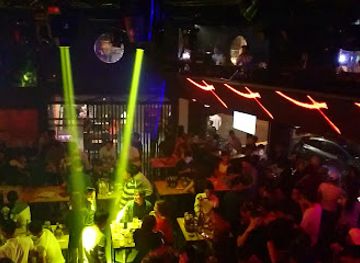
Front Beach is more relaxed after dark than a dedicated club quarter, with evening life concentrated around the promenade, hotel lounges, cafés and seafood restaurants. Visitors can expect groups walking beside the illuminated bay, families and couples lingering over drinks, and informal coffee gatherings rather than a dense line of nightclubs. Some waterfront hotels and restaurants serve beer, cocktails or wine, while music-led entertainment tends to be occasional and venue-specific rather than a defining neighbourhood tradition. Quang Trung and the streets behind the shore become useful for casual evening dining, but the atmosphere remains comparatively easy-going. Noise carries across the water and residential lanes, so late-night visitors should keep conversations and music moderate. Those seeking larger clubs or a more concentrated nightlife scene may need to look beyond Front Beach in the wider city.
-
Western
Ned Kelly's Pub
Discover the lively charm of Ned Kelly's Pub in Vung Tau, where great food and drinks meet a vibrant atmosphere.
11 min walk · 0.9 km from neighbourhood centre
-
Bar
Cask Bar
Discover the vibrant atmosphere of Cask Bar in Vung Tau, where stunning beach views and delicious drinks create the perfect escape.
11 min walk · 0.9 km from neighbourhood centre
-
Bar
MK Bar
Experience the vibrant nightlife at MK Bar in Vũng Tàu, where friendly service meets a fantastic drinks menu in a lively atmosphere.
9 min walk · 0.7 km from neighbourhood centre
-
Bar
Corner Bar
Experience the vibrant atmosphere and friendly service at Corner Bar, Vũng Tàu's favorite spot for socializing and relaxation.
11 min walk · 0.9 km from neighbourhood centre


Best nightclubs in Front Beach
Front Beach is more relaxed after dark than a dedicated club quarter, with evening life concentrated around the promenade, hotel lounges, cafés and seafood restaurants. Visitors can expect groups walking beside the illuminated bay, families and couples lingering over drinks, and informal coffee gatherings rather than a dense line of nightclubs. Some waterfront hotels and restaurants serve beer, cocktails or wine, while music-led entertainment tends to be occasional and venue-specific rather than a defining neighbourhood tradition. Quang Trung and the streets behind the shore become useful for casual evening dining, but the atmosphere remains comparatively easy-going. Noise carries across the water and residential lanes, so late-night visitors should keep conversations and music moderate. Those seeking larger clubs or a more concentrated nightlife scene may need to look beyond Front Beach in the wider city.
-
Night club
Blue Moon - Beer Club
Discover the vibrant nightlife at Blue Moon - Beer Club in Vung Tau, Vietnam, with great drinks, lively music, and an unforgettable atmosphere.
10 min walk · 0.8 km from neighbourhood centre
-
Bar
Cask Bar
Experience the vibrant nightlife at Cask Bar in Vung Tau, a lively destination for cocktails and great company near the beautiful Front Beach.
11 min walk · 0.9 km from neighbourhood centre
-
Night club
The Ship Club
Discover the thrilling nightlife at The Ship Club, Vũng Tàu's premier destination for dancing, drinks, and unforgettable memories.
7 min walk · 0.6 km from neighbourhood centre
-
Bar
VFB Restaurant & Bar
Discover the lively ambiance and diverse menu at VFB Restaurant & Bar, Vung Tau's perfect spot for food and fun.
15 min walk · 1.2 km from neighbourhood centre



Best shops in Front Beach
Front Beach is not Vung Tau’s main specialist shopping district, but its waterfront streets contain practical retail, cafés, convenience shops, souvenir stalls and small businesses serving hotel guests and local residents. The most characteristic purchases are edible rather than decorative: packaged seafood products, dried goods and regional snacks can appear in shops around the wider centre, although selection varies. Quang Trung and the streets behind the promenade are more useful for everyday items than for a concentrated boutique experience. Vung Tau Market, outside the immediate Front Beach waterfront, offers a broader traditional-market atmosphere and should be described as a nearby city-centre excursion rather than part of the neighbourhood itself. Shopping here works best as an accompaniment to a walk, with the bay, restaurants and cafés providing the district’s stronger commercial identity.
-
Market
VUNG TAU Market
Experience the vibrant culture and flavors of Vietnam at Vung Tau Market, a bustling marketplace filled with local delicacies and unique souvenirs.
7 min walk · 0.6 km from neighbourhood centre
-
Beach
Front Beach
Experience the natural beauty and vibrant atmosphere of Front Beach in Vũng Tàu, Vietnam - a must-visit coastal paradise for tourists.
12 min walk · 1.0 km from neighbourhood centre
-
Clothing store
M90 Shop
Explore the latest fashion trends at M90 Shop in Vung Tau, where style meets comfort in a vibrant shopping atmosphere.
12 min walk · 1.0 km from neighbourhood centre
-
Clothing store
Routine Vũng Tàu
Explore trendy men's and women's fashion at Routine Vũng Tàu, the perfect stop for stylish apparel and accessories.
15 min walk · 1.2 km from neighbourhood centre


Front Beach essentials
Getting There
Getting Around
Safety
Emergency Situations
Do's and Don'ts
Local Tips

From Eve
Local phrases worth knowing
You don't need to get them perfect. A few words go a long way, and locals appreciate the effort.
Basics
| English | Local | Say it |
|---|---|---|
| Hello | Xin chào | [sin chow] |
| Goodbye | Tạm biệt | [tahm byet] |
| Yes | Có | [koh] |
| No | Không | [kohng] |
| Please/You're welcome | Xin vui lòng | [sin vui lawng] |
| Thank you | Cảm ơn | [kahm uhn] |
| Excuse me/Sorry | Xin lỗi | [sin loy] |
| How are you? | Bạn khỏe không? | [ban kwee kohng] |
| Fine. And you? | Khỏe. Còn bạn? | [kwee. kawn ban] |
| Do you speak English? | Bạn nói tiếng Anh không? | [ban noy tyeng ang kohng] |
| I don't understand | Tôi không hiểu | [toy kohng hye-u] |
Eating & Drinking
| English | Local | Say it |
|---|---|---|
| I'd like to see the menu, please | Tôi muốn xem menu, vui lòng | [toy moon sem menu, vwee lawng] |
| I don't eat meat | Tôi không ăn thịt | [toy kohng an tit] |
| Cheers! | Dô! | [doh] |
| I would like to pay, please | Tôi muốn thanh toán, vui lòng | [toy moon thanh toan, vwee lawng] |
Emergencies
| English | Local | Say it |
|---|---|---|
| Help! | Cứu! | [kyoo] |
| Go away! | Đi đi! | [dee dee] |
| Call the Police! | Gọi cảnh sát! | [goy kahng saht] |
| Call a doctor! | Gọi bác sĩ! | [goy bahk see] |
| I'm lost | Tôi lạc đường | [toy lak doo-ong] |
| I'm ill | Tôi ốm | [toy ohm] |
Shopping
| English | Local | Say it |
|---|---|---|
| I'd like to buy... | Tôi muốn mua... | [toy moon moo-ah] |
| I'm just looking | Tôi chỉ xem | [toy chee sem] |
| How much is it? | Nó giá bao nhiêu? | [noh za bao nyew] |
| That's too expensive | Đắt quá | [dat kwa] |
| Can you lower the price? | Bạn có thể giảm giá được không? | [ban koh te zam za dohk kohng] |
Time & Numbers
| English | Local | Say it |
|---|---|---|
| What time is it? | Bây giờ mấy giờ? | [bay zoh mai zoh] |
| It's one o'clock | Một giờ | [moht zoh] |
| Half past (10) | Mười giờ nửa | [moo-ee zoh noo-ah] |
| Morning | Buổi sáng | [bwow-ee sahng] |
| Afternoon | Buổi chiều | [bwow-ee chee-oo] |
| Evening | Buổi tối | [bwow-ee toh-ee] |
| Yesterday | Hôm qua | [hom kwa] |
| Today | Hôm nay | [hom nye] |
| Tomorrow | Ngày mai | [nguy mai] |
| 1 | Một | [moht] |
| 2 | Hai | [hai] |
| 3 | Ba | [ba] |
| 4 | Bốn | [bohn] |
| 5 | Năm | [nahm] |
| 6 | Sáu | [sow] |
| 7 | Bảy | [bay] |
| 8 | Tám | [tam] |
| 9 | Chín | [cheen] |
| 10 | Mười | [moo-ee] |
Transport & Directions
| English | Local | Say it |
|---|---|---|
| Where's a/the...? | Có...ở đâu? | [koh...uh dow] |
| What's the address? | Địa chỉ là gì? | [dee-ah chee la zee] |
| Can you show me (on the map)? | Bạn có thể chỉ cho tôi (trên bản đồ) không? | [ban koh te chee choh toy (trern bahn doh) kohng] |
| When's the next (bus)? | Khi nào xe buýt tiếp theo? | [khee now say buet tyep the-oh] |
| A ticket (to ....) | Một vé (đến ...) | [moht vay (den ...)] |
History of Front Beach
From Cape Saint-Jacques to Vung Tau
The peninsula occupied by modern Vung Tau was known to European navigators and colonial authorities as Cap Saint-Jacques, a name reflected in older maps and maritime records. The sheltered western shore that became Front Beach offered a natural landing place and views across the bay, while the hills provided defensive and climatic advantages. Under French colonial rule, Vung Tau developed as a coastal resort and administrative settlement rather than simply as a fishing community. Roads, villas and public buildings gradually gave the waterfront a more formal urban character, establishing the relationship between the bay, the hills and the civic centre that still defines Front Beach.
The White Palace and Colonial Resort
Bach Dinh, generally translated as the White Palace, was constructed between 1898 and 1916 on the hillside above Front Beach. Built for the French colonial administration and later used as a retreat by members of Vietnam’s Nguyễn dynasty, the residence reflects the peninsula’s changing political importance. Its elevated position gave occupants commanding views over the bay, while its gardens and verandas suited Vung Tau’s role as a retreat from the heat and pressures of larger urban centres. The building remains one of Front Beach’s clearest links with the period when the shoreline became associated with resort architecture, official residences and colonial leisure.
A Working Waterfront and Urban Shore
During the twentieth century, Front Beach developed as both a public seaside space and part of Vung Tau’s working urban waterfront. Fishing, small-scale maritime activity, tourism and civic commerce existed alongside one another, producing a district that was never simply a resort enclave. After national reunification, Vung Tau’s importance as a coastal city continued, later expanding through petroleum-related economic growth and domestic tourism. Hotels, restaurants, paved roads and landscaped public areas increasingly shaped the bay, while the older hillside buildings and maritime functions remained visible in the neighbourhood’s street pattern.
The Contemporary Promenade
In recent decades, Front Beach has become one of Vung Tau’s principal public-facing districts, with a broad seafront setting used for walking, informal exercise, photography and evening gatherings. Its commercial landscape has expanded around hotels, cafés and seafood restaurants, while the historic White Palace and the peninsula’s older roads provide continuity with earlier phases of development. The district’s identity now rests on this overlap: a civic waterfront for residents, a gateway for visitors arriving by sea or road, and a historic quarter whose colonial-era associations remain part of Vung Tau’s appeal without defining all of its contemporary life.
Front Beach in Photos
Browse through our photo collection highlighting the charm and character of the destination.
Neighbourhoods near Front Beach
The closest neighbourhoods to Front Beach, if you have time for more than one stop.
-

-
-


Swipe for more neighbourhoods
Explore more

Explore more of Vung Tau
Vung Tau blends sea views, French-era heritage, hilltop temples, fresh seafood and lively beaches in a relaxed Vietnamese coastal city near Ho Chi Minh City.
Explore Vung Tau