

Vung Tau Lighthouse (Vung Tau) Travel Guide - Free
Explore Vung Tau Lighthouse in Vung Tau with Evendo's free guide. Find the best shops, historic streets, restaurants, and gems on web or mobile.


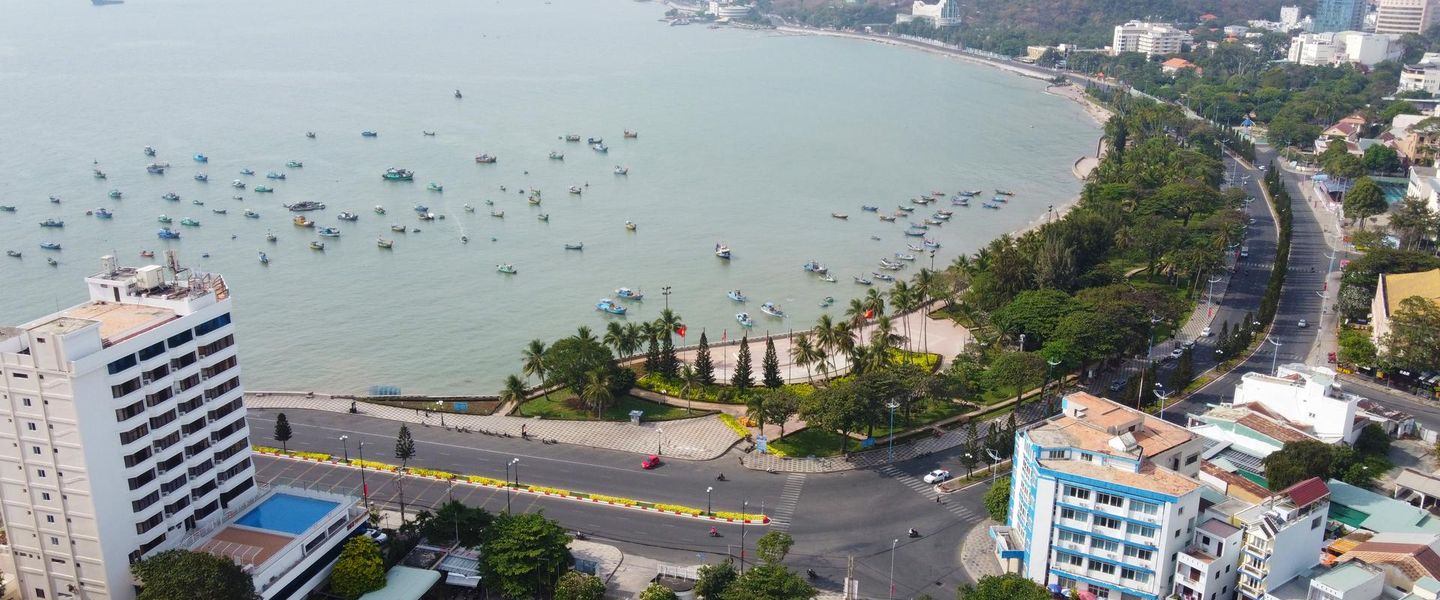


Vung Tau Lighthouse pairs sea views, French-era heritage and the climb up Small Mountain with easy access to Vung Tau’s waterfront in southern Vietnam.
Sea Views and Mountain Roads
Vung Tau Lighthouse occupies a rocky shoulder of Small Mountain, or Núi Nhỏ, above the southern end of Vung Tau’s Front Beach. The area is less a conventional urban neighbourhood than a hillside landmark zone: a winding road climbs through greenery and quiet residential edges towards the white lighthouse, while footpaths and steep steps lead towards viewpoints on the mountain. From the summit, the coastline curves away towards the city, fishing boats gather offshore and the broad South China Sea opens beyond the headland.Read more about Vung Tau Lighthouse
A Compact Heritage Landscape
Quiet Slopes, Lively Waterfront
Best attractions in Vung Tau Lighthouse
The main attraction is Vung Tau Lighthouse, a white maritime tower reached by a winding road and known for its elevated views across the city, Front Beach and the surrounding sea. The lighthouse grounds and approach create a compact heritage visit rather than a large museum complex, with the landscape itself providing much of the interest. On the same Small Mountain, the Christ the King statue draws visitors up a separate series of steps and offers another perspective over the coastline. The roads and paths around Núi Nhỏ pass tropical vegetation, rocky slopes and occasional shrines, while Ha Long Street below connects the hill with the waterfront promenade. The nearby beach and seafront parks are best treated as adjacent extensions of the visit, not as part of the lighthouse site itself, offering an easy contrast between the quiet height of the mountain and Vung Tau’s open urban shoreline.
-
Tourist attraction
Jesus Christ Statue
Experience breathtaking views and spiritual serenity at the majestic Jesus Christ Statue in Vung Tau, Vietnam, a must-visit tourist attraction.
14 min walk · 1.1 km from neighbourhood centre
-
Tourist attraction
Front Beach Park
Discover the beauty and vibrancy of Front Beach Park, a coastal retreat in Vung Tau, perfect for relaxation, recreation, and local culture.
12 min walk · 1.0 km from neighbourhood centre
-
Pilgrimage place
Đền Thánh Đức Mẹ Bãi Dâu
Discover the serene beauty of Đền Thành Đúc Mẹ Bãi Dâu, a spiritual haven on the coast of Vũng Tàu, Vietnam, rich in culture and breathtaking views.
13 min drive · 4.5 km from neighbourhood centre
-
Museum
Worldwide Arms Museum
Explore the rich history of warfare at the Worldwide Arms Museum in Vung Tau, showcasing military artifacts and engaging exhibits.
6 min drive · 1.9 km from neighbourhood centre


Best landmarks in Vung Tau Lighthouse
Vung Tau Lighthouse is the defining landmark of Small Mountain and one of the clearest symbols of the city’s relationship with the sea. Its present form, generally dated to 1913, is a practical white tower with a lantern room rather than an ornate monument, and its elevated position explains its continuing visual importance. The lighthouse’s surrounding access road, service structures and open viewpoints form a small maritime heritage landscape above the coast. Nearby, the Christ the King statue is a major religious landmark on the same mountain, distinguished by its monumental scale and long stair approach. The two sites represent different aspects of Vung Tau’s identity: navigation and coastal infrastructure on one hand, and Catholic pilgrimage on the other. Ha Long Street and the Front Beach seafront below provide the urban setting against which these hillside landmarks are most clearly understood.
-
Tourist attraction
Jesus Christ Statue
Explore the majestic Jesus Christ Statue in Vung Tau, a stunning blend of spirituality and breathtaking views, perfect for tourists seeking peace and beauty.
14 min walk · 1.1 km from neighbourhood centre
-
Park
Front Beach Park
Discover the tranquil beauty and vibrant atmosphere of Front Beach Park in Vung Tau, a perfect retreat for relaxation and cultural exploration.
12 min walk · 1.0 km from neighbourhood centre
-
Buddhist temple
Thich Ca Phat Dai Pagoda
Discover the serene beauty of Thich Ca Phat Dai Pagoda in Vung Tau, a captivating Buddhist temple that offers spiritual reflection and stunning scenery.
14 min drive · 4.5 km from neighbourhood centre
-
Museum
Worldwide Arms Museum
Discover the military history at the Worldwide Arms Museum in Vung Tau, a must-visit destination for history enthusiasts and curious travelers.
6 min drive · 1.9 km from neighbourhood centre


Explore Vung Tau Lighthouse on the map
A handpicked selection of must-see spots in Vung Tau Lighthouse, mapped for you.
Best hotels in Vung Tau Lighthouse
Best restaurants in Vung Tau Lighthouse
Dining immediately around Vung Tau Lighthouse is limited by the steep, primarily scenic character of Small Mountain, so most visitors eat on the lower slopes or along Ha Long Street and the Front Beach waterfront. The local food culture is strongly connected to the sea, with seafood restaurants and casual eateries serving fish, prawns, shellfish and Vietnamese rice or noodle dishes. Around the broader Front Beach area, cafés provide places to pause before or after the climb, while the city’s markets and central streets offer a wider choice of everyday Vietnamese food. Menus and quality vary between establishments, and seafood may be priced by weight, so confirming the preparation and total cost before ordering is sensible. The lighthouse area is better suited to a viewpoint stop and a meal nearby than to a concentrated restaurant crawl.
-
Italian
Luca Pizza & Italian Restaurant
Discover Luca Pizza & Italian Restaurant: Your go-to spot in Vung Tau for authentic wood-fired pizza and homemade pasta that delights every palate.
9 min walk · 0.7 km from neighbourhood centre
-
Restaurant
Lan Rừng Coffee & Restaurant
Discover authentic Vietnamese cuisine and refreshing coffee at Lan Rừng Coffee & Restaurant in Vũng Tàu – a must-visit for every traveler.
11 min walk · 0.9 km from neighbourhood centre
-
French
Don Quijote
Discover exquisite French cuisine at Don Quijote in Vung Tau - where every dish tells a story of culinary mastery.
15 min walk · 1.2 km from neighbourhood centre
-
Seafood
Marina Club - Cafe & Lounge
Experience exquisite seafood dining at Marina Club - Cafe & Lounge in Vung Tau, Vietnam; where fresh flavors meet stunning seaside views.
11 min walk · 0.9 km from neighbourhood centre


Best bars in Vung Tau Lighthouse
The lighthouse slopes themselves are generally quiet after dark, with little reason to treat the immediate area as a dedicated nightlife district. Evening activity gathers lower down around Front Beach, Ha Long Street and the adjacent waterfront, where cafés, seafood restaurants and informal drinking spots serve visitors and local residents. The seafront is suitable for a promenade after sunset, but the uphill roads and paths around Small Mountain are less appealing once visibility falls. Vung Tau’s broader centre has more evening options than the lighthouse zone, including karaoke and casual bars, although the scale is more relaxed than that of a major party city. Visitors staying near the mountain can therefore combine a sunset viewpoint with dinner by the water, while keeping night-time exploration to lit streets and established venues.
-
Bar
Gazebo
Discover Gazebo in Vung Tau: a lively bar-cafe-restaurant offering delightful cuisine and refreshing drinks in a vibrant seaside atmosphere.
8 min walk · 0.6 km from neighbourhood centre
-
Bar
Cask Bar
Experience the vibrant nightlife at Cask Bar in Vung Tau, where delicious cocktails and a lively atmosphere await you.
12 min walk · 1.0 km from neighbourhood centre
-
Bar
MK Bar
Dive into the vibrant nightlife at MK Bar in Vung Tau, Vietnam, where refreshing drinks and friendly faces await.
12 min walk · 0.9 km from neighbourhood centre
-
Bar
Corner Bar
Experience the vibrant atmosphere of Corner Bar in Vũng Tàu, where affordable drinks and good company await every visitor.
12 min walk · 1.0 km from neighbourhood centre


Best nightclubs in Vung Tau Lighthouse
The lighthouse slopes themselves are generally quiet after dark, with little reason to treat the immediate area as a dedicated nightlife district. Evening activity gathers lower down around Front Beach, Ha Long Street and the adjacent waterfront, where cafés, seafood restaurants and informal drinking spots serve visitors and local residents. The seafront is suitable for a promenade after sunset, but the uphill roads and paths around Small Mountain are less appealing once visibility falls. Vung Tau’s broader centre has more evening options than the lighthouse zone, including karaoke and casual bars, although the scale is more relaxed than that of a major party city. Visitors staying near the mountain can therefore combine a sunset viewpoint with dinner by the water, while keeping night-time exploration to lit streets and established venues.
-
Night club
Blue Moon - Beer Club
Discover the heart of Vung Tau's nightlife at Blue Moon Beer Club, where great drinks and dancing await every night of the week.
14 min walk · 1.1 km from neighbourhood centre
-
Night club
88 Beer Garden
Discover the ultimate nightlife experience at 88 Beer Garden in Vung Tau, where vibrant atmosphere meets an extensive drink selection.
5 min drive · 1.7 km from neighbourhood centre
-
Night club
H68 Club
Dive into the electrifying nightlife at H68 Club in Vung Tau – where vibrant music and dazzling lights create unforgettable experiences.
7 min drive · 2.4 km from neighbourhood centre
-
Night club
The Ship Club
Discover the vibrant nightlife of Vung Tau at The Ship Club, where music, dancing, and unforgettable experiences await in a chic setting.
9 min walk · 0.7 km from neighbourhood centre



Best shops in Vung Tau Lighthouse
Shopping around Vung Tau Lighthouse is modest and largely practical rather than destination retail. The mountain approach has occasional small refreshment sellers and roadside stops, but it is not a concentrated market or independent shopping quarter. For food gifts, local produce and everyday Vietnamese goods, visitors will find more choice in Vung Tau’s central markets and commercial streets, which lie beyond the immediate lighthouse slopes. The waterfront near Front Beach has cafés, souvenir stalls and small businesses aimed at beach visitors, while the wider city is a better place to look for packaged seafood, snacks and locally produced gifts. Because the hillside is primarily a heritage and viewpoint area, the most distinctive purchase associated with a visit is often a simple refreshment for the climb rather than a specialist craft or fashion item.
-
Hypermarket
Lotte Mart Vung Tau
Experience the best of shopping and local cuisine at Lotte Mart Vung Tau, your go-to hypermarket for a delightful retail experience.
8 min drive · 2.5 km from neighbourhood centre
-
Shopping mall
Lam Son Square
Discover Lam Son Square, Vung Tau's premier shopping mall offering a blend of retail, dining, and cultural experiences for every tourist.
5 min drive · 1.7 km from neighbourhood centre
-
Gift shop
Nhóc Giftshop Vũng Tàu
Explore Nhóc Giftshop Vũng Tàu for unique Vietnamese souvenirs, from handcrafted items to delightful gifts that capture the essence of local culture.
6 min drive · 2.1 km from neighbourhood centre
-
Clothing store
Mum's shop Vũng Tàu
Explore the vibrant local fashion at Mum's Shop Vũng Tàu, where unique styles and quality craftsmanship await every visitor.
5 min drive · 1.8 km from neighbourhood centre


Vung Tau Lighthouse essentials
Getting There
Getting Around
Safety
Emergency Situations
Do's and Don'ts
Local Tips

From Eve
Local phrases worth knowing
You don't need to get them perfect. A few words go a long way, and locals appreciate the effort.
Basics
| English | Local | Say it |
|---|---|---|
| Hello | Xin chào | [Sin chow] |
| Goodbye | Tạm biệt | [Tahm byet] |
| Yes | Có | [Kaw] |
| No | Không | [Khawng] |
| Please/You're welcome | Xin vui lòng | [Sin vwee long] |
| Thank you | Cảm ơn | [Kawm uhn] |
| Excuse me/Sorry | Xin lỗi | [Sin loy] |
| How are you? | Bạn khỏe không? | [Bahn kweh khawng] |
| Fine. And you? | Khỏe. Còn bạn? | [Kweh. Kawn bahn] |
| Do you speak English? | Bạn có nói tiếng Anh không? | [Bahn kaw noy tyeng Anh khawng] |
| I don't understand | Tôi không hiểu | [Toy khawng hye-uh] |
Eating & Drinking
| English | Local | Say it |
|---|---|---|
| I'd like to see the menu, please | Tôi muốn xem thực đơn, vui lòng | [Toy muhng sem took durn, vwee long] |
| I don't eat meat | Tôi không ăn thịt | [Toy khawng un tit] |
| Cheers! | Chúc sức khỏe! | [Chook s-uhc kweh] |
| I would like to pay, please | Tôi muốn thanh toán, vui lòng | [Toy muhng thanh twan, vwee long] |
Emergencies
| English | Local | Say it |
|---|---|---|
| Help! | Cứu! | [Kyu] |
| Go away! | Đi ra! | [Dee ra] |
| Call the Police! | Gọi cảnh sát! | [Goy kawng saht] |
| Call a doctor! | Gọi bác sĩ! | [Goy bahk see] |
| I'm lost | Tôi lạc đường | [Toy laht doong] |
| I'm ill | Tôi ốm | [Toy uhm] |
Shopping
| English | Local | Say it |
|---|---|---|
| I'd like to buy... | Tôi muốn mua... | [Toy muhng mwa] |
| I'm just looking | Tôi chỉ xem | [Toy chee sem] |
| How much is it? | Bao nhiêu tiền? | [Bow nyew tyen] |
| That's too expensive | Quá đắt đỏ | [Kwah daht doh] |
| Can you lower the price? | Bạn có thể giảm giá được không? | [Bahn kaw te zyem zah duh khawng] |
Time & Numbers
| English | Local | Say it |
|---|---|---|
| What time is it? | Bây giờ là mấy giờ? | [Bai zoh la may zoh] |
| It's one o'clock | Bây giờ là một giờ | [Bai zoh la moot zoh] |
| Half past (10) | Mười giờ mười phút | [Moo-ee zoh moo-ee foot] |
| Morning | Buổi sáng | [Bwoy sahng] |
| Afternoon | Buổi chiều | [Bwoy ch-yew] |
| Evening | Buổi tối | [Bwoy toey] |
| Yesterday | Hôm qua | [Hom wah] |
| Today | Hôm nay | [Hom nai] |
| Tomorrow | Ngày mai | [Nyai mai] |
| 1 | Một | [Moot] |
| 2 | Hai | [Hai] |
| 3 | Ba | [Bah] |
| 4 | Bốn | [Bohn] |
| 5 | Năm | [Nahm] |
| 6 | Sáu | [Sow] |
| 7 | Bảy | [Bay] |
| 8 | Tám | [Tahm] |
| 9 | Chín | [Cheen] |
| 10 | Mười | [Moo-ee] |
Transport & Directions
| English | Local | Say it |
|---|---|---|
| Where's a/the...? | Chỗ...ở đâu? | [Chaw...uh dow] |
| What's the address? | Địa chỉ là gì? | [Dee-ah chee la zee] |
| Can you show me (on the map)? | Bạn có thể chỉ cho tôi (trên bản đồ) không? | [Bahn kaw te chee chaw toy (tr-en bahn doh) khawng] |
| When's the next (bus)? | Khi nào là chuyến xe (buýt) tiếp theo? | [Khee nyow la ch-oo-ee-an zay (boo-ut) tyep theo] |
| A ticket (to ....) | Một vé (đến ....) | [Moot vay (den ....)] |
History of Vung Tau Lighthouse
A Maritime Beacon on Small Mountain
Vung Tau’s lighthouse is associated with the French colonial development of the port and coastal settlement in the nineteenth century. A lighthouse was established on Small Mountain in 1862, forming part of the navigational system for vessels approaching the Saigon River and surrounding waters. Its position above the headland made the site valuable not only for visibility at sea but also for understanding the area’s geography: the promontory separates the open coast from the sheltered waters around Vung Tau. The beacon helped give the mountain a practical maritime role long before it became a principal viewpoint for visitors.
The Lighthouse Rebuilt
The present lighthouse is generally dated to 1913, when the earlier installation was replaced or substantially rebuilt during the colonial period. Its simple white cylindrical tower, lantern room and surrounding service buildings reflect the functional architecture of early twentieth-century aids to navigation rather than an ornamental civic monument. The site’s continued association with maritime signalling connects Vung Tau to the shipping routes that made the settlement strategically important. Although the city has expanded around the mountain, the lighthouse still reads as a working piece of coastal infrastructure and a physical reminder of Vung Tau’s seafaring position.
Pilgrimage and the Modern Viewpoint
During the twentieth century, Small Mountain acquired an additional religious and recreational significance. The Christ the King statue, constructed on the mountain in the 1970s and completed in 1974, established a major Catholic pilgrimage site close to the lighthouse. Its stairways and viewpoints added a second reason to climb the hill, bringing religious visitors and sightseers into the same landscape. Roads, seaside development and the growth of domestic tourism later made the lighthouse one of Vung Tau’s recognisable excursion points, while the slopes retained a mixture of vegetation, shrines and residential edges.
Vung Tau Lighthouse in Photos
Browse through our photo collection highlighting the charm and character of the destination.
Neighbourhoods near Vung Tau Lighthouse
The closest neighbourhoods to Vung Tau Lighthouse, if you have time for more than one stop.
-

-

-


Swipe for more neighbourhoods
Explore more

Explore more of Vung Tau
Vung Tau blends sea views, French-era heritage, hilltop temples, fresh seafood and lively beaches in a relaxed Vietnamese coastal city near Ho Chi Minh City.
Explore Vung Tau