

Free Campbell County Travel Guide & Mobile App
Explore Campbell County with free travel guides. Discover regional history, expert tips, proposed trips, and audio guides on web or mobile app.


Campbell County, Wyoming pairs Gillette’s western heritage with Powder River Basin landscapes, coal history, open grasslands and easy road access.
Read more about Campbell County
Getting to and around Campbell County
How to get there
Transportation
Top city travel guides in Campbell County
The cities of Campbell County, and the easiest places to base yourself.

Swipe for more cities
Destinations in Campbell County
Resorts, valleys and scenic spots worth a trip of their own.

Swipe for more destinations
Best attractions in Campbell County
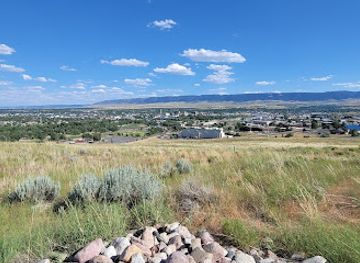
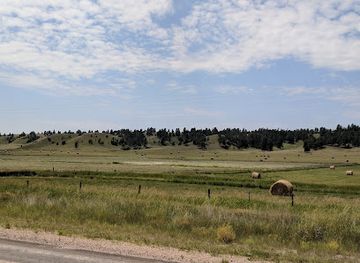
Campbell County’s attractions are grounded in local history, public recreation and the expansive landscape of the Powder River Basin. In Gillette, the Rockpile Museum is the essential cultural stop, interpreting Indigenous heritage, ranching, railways, domestic life and the growth of coal mining through regional collections and displays. The Campbell County Recreation Center and the city’s parks provide practical facilities for exercise and family recreation, while CAM-PLEX serves as a major venue for exhibitions, livestock events, competitions and community gatherings. Wright offers a different perspective on the county through its planned-town setting and close connection with the energy industry. Beyond the towns, visitors can explore open grassland, wildlife habitat and reclaimed mine landscapes by following public roads and observing access rules. Birdwatching, photography, stargazing and quiet scenic drives are more realistic activities here than a dense circuit of conventional sightseeing attractions. Devils Tower National Monument is a notable nearby excursion in neighbouring Crook County, but it should not be presented as a Campbell County attraction. The county works best for travellers interested in working landscapes, local museums and the changing relationship between ranching, mineral extraction and prairie ecology.
-
Museum
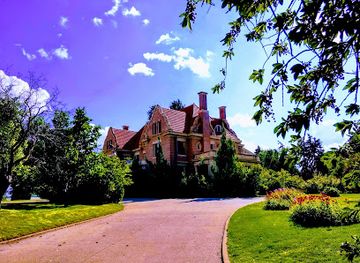
Trail End State Historic Site
Discover the rich history of Wyoming at Trail End State Historic Site, a captivating museum showcasing the legacy of the American West.
Best landmarks in Campbell County
The most recognisable landmark in Campbell County is the Rockpile Museum in Gillette, whose name and collections reflect the rocky outcrops and geological character of the wider Powder River Basin. It is an important civic marker as well as a museum, helping visitors read the county’s past through objects connected with ranching, transport, settlement and mining. Gillette’s urban landscape contains further reminders of its railway-era origins and its later growth as an energy centre, although the city’s significance is more cumulative than monumental. Wright is a landmark of a different kind: its planned form and civic layout express the era of large-scale coal expansion and the deliberate creation of an industrial community on the prairie. Outside the settlements, the broad mine contours, rail corridors, reclaimed grasslands and rolling horizons form a distinctly human-shaped landscape whose scale is itself striking. Visitors should distinguish these county landmarks from Devils Tower, an internationally recognised natural monument located in neighbouring Crook County, and from the historic military sites of the Powder River region lying elsewhere in north-eastern Wyoming.
-
National reserve
Devils Tower National Monument
Explore the grandeur of Devils Tower National Monument, a geological marvel and sacred site, offering stunning views, rich history, and unforgettable outdoor adventures.
-
History museum
National Historic Trails Interpretive Center
Explore the National Historic Trails Interpretive Center in Casper, Wyoming, and journey through the stories of America's pioneering spirit.
-
National reserve
Thunder Basin National Grassland
Explore the breathtaking landscapes and diverse wildlife of Thunder Basin National Grassland, a true gem of Wyoming's natural beauty.
-
Memorial park
Dalbey Memorial Park
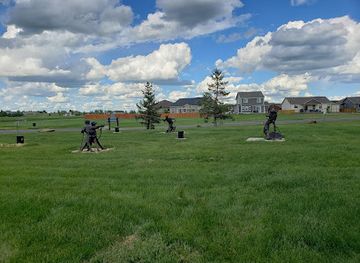
Explore the serene beauty of Dalbey Memorial Park in Gillette, Wyoming, a perfect destination for relaxation, picnics, and scenic walks amidst nature.

Explore Campbell County on the map
Plan your trip on one map. See where the top cities, national parks and sights are, and book hotels and experiences in a few clicks.
Best hotels in Campbell County
Best restaurants in Campbell County
Dining in Campbell County is centred on Gillette, with Wright providing a smaller selection of everyday restaurants and cafés. The food scene reflects the practical character of a north-eastern Wyoming service centre: American grills, family restaurants, cafés, bakeries, steak-focused menus and familiar road-trip fare sit alongside newer casual dining. Beef, burgers and hearty breakfasts are strongly associated with the local setting, while regional ranching and agricultural production help explain the prominence of meat and filling comfort food. Visitors will also find national chains near the main transport routes, useful for travellers with early departures or long drives. Gillette’s independent restaurants offer the best opportunity to look beyond standard highway dining, while supermarkets and seasonal produce outlets are convenient for self-catering. The county does not have a sharply defined signature cuisine comparable with a coastal or immigrant food region; its culinary identity is instead tied to Wyoming’s western ranch culture, working schedules and broad American traditions. Plan provisions before heading into sparsely settled country, where dining choices and opening arrangements can be limited.
-
Pizza
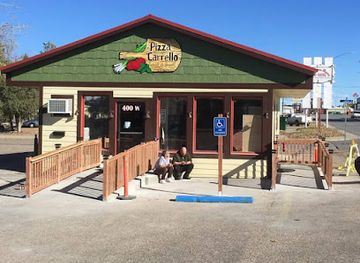
Pizza Carrello
Savor authentic Italian flavors at Pizza Carrello in Gillette, WY – where every slice tells a story of culinary passion and creativity.
-
Steak
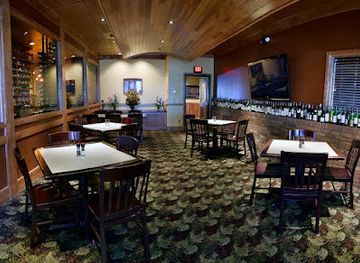
The Prime Rib Restaurant & Wine Cellar
Discover The Prime Rib Restaurant & Wine Cellar in Gillette for an unforgettable dining experience featuring top-notch steaks and exquisite wines.
-
Steak
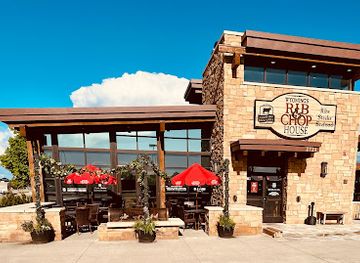
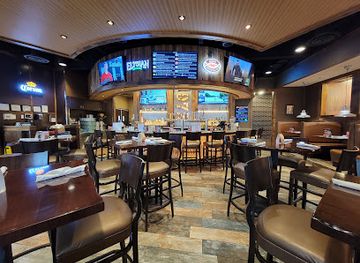
Wyoming's Rib & Chop House - Gillette
Discover Wyoming's Rib & Chop House in Gillette - where steak lovers unite for an unforgettable dining experience with family-friendly service.
-
American
Ruby Tuesday
Discover delicious American cuisine at Ruby Tuesday in Gillette - where fresh ingredients meet friendly service.
Best bars in Campbell County
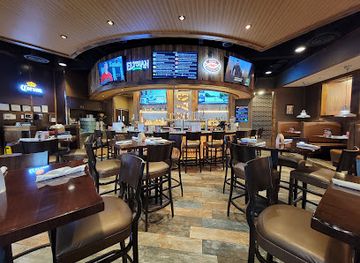
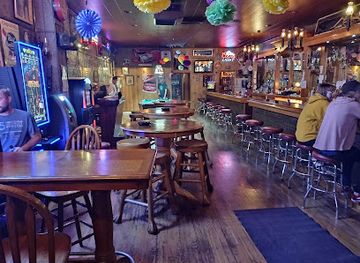
Evening life in Campbell County is concentrated in Gillette and is generally relaxed rather than club-driven. Traditional pubs, sports bars, hotel lounges, casual restaurants and locally oriented drinking places provide the main social settings, with occasional live music, community events and performances adding variety. CAM-PLEX can bring larger gatherings to town, although its programme changes, so visitors should check current listings rather than expect a permanent nightlife district. Wright has a smaller selection of places for an evening meal or drink, and rural areas largely become quiet after dark. Gillette’s size supports a more varied evening than the surrounding grasslands, but the county is not known for a major late-night nightclub scene. Brewing, spirits and cocktail options may be available in town, yet alcohol is only one part of local leisure culture; evening walks, organised events, dining and dark-sky viewing can be equally appropriate. Arrange transport in advance if staying outside Gillette, particularly in winter or after drinking.
-
Bar
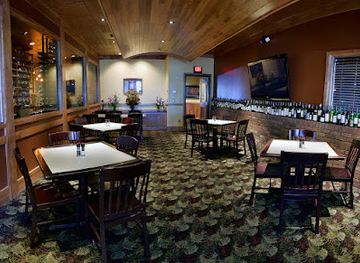
The Prime Rib Restaurant & Wine Cellar
Experience the best of American cuisine at The Prime Rib Restaurant & Wine Cellar in Gillette, Wyoming, featuring prime steaks, fresh seafood, and an extensive wine selection.
-
Steak
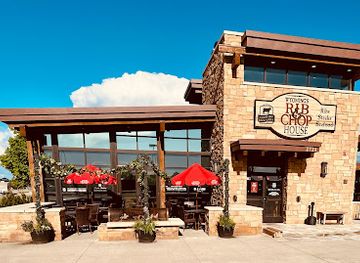
Wyoming's Rib & Chop House - Gillette
Experience the best of Wyoming's culinary scene at Wyoming's Rib & Chop House, where juicy steaks and flavorful barbecue await.
-
Bar
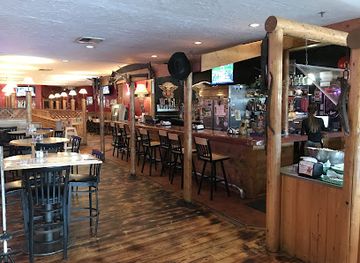
Pokey's
Experience the best barbecue in Gillette, Wyoming at Pokey's, a vibrant bar and grill that serves up delicious flavors and a fun atmosphere.
-
Bar
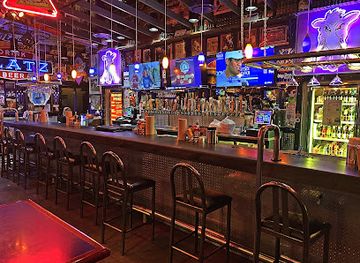
Humphrey's Bar & Grill
Discover Humphrey's Bar & Grill, a culinary hotspot in Gillette, WY, offering gourmet burgers and a vibrant atmosphere for all food lovers.
Best nightclubs in Campbell County
Evening life in Campbell County is concentrated in Gillette and is generally relaxed rather than club-driven. Traditional pubs, sports bars, hotel lounges, casual restaurants and locally oriented drinking places provide the main social settings, with occasional live music, community events and performances adding variety. CAM-PLEX can bring larger gatherings to town, although its programme changes, so visitors should check current listings rather than expect a permanent nightlife district. Wright has a smaller selection of places for an evening meal or drink, and rural areas largely become quiet after dark. Gillette’s size supports a more varied evening than the surrounding grasslands, but the county is not known for a major late-night nightclub scene. Brewing, spirits and cocktail options may be available in town, yet alcohol is only one part of local leisure culture; evening walks, organised events, dining and dark-sky viewing can be equally appropriate. Arrange transport in advance if staying outside Gillette, particularly in winter or after drinking.
-
American
Ruby Tuesday
Discover the heart of American dining at Ruby Tuesday in Gillette, Wyoming, where comfort food meets warm hospitality.
-
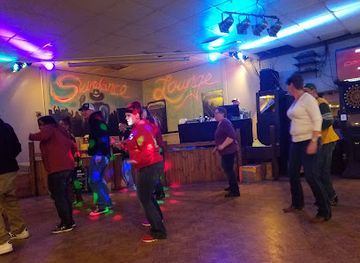
Cocktail bar
Sundance Lounge
Discover the lively Sundance Lounge in Gillette, Wyoming, the ultimate cocktail bar for karaoke lovers and night owls alike.
-
Bar
Fireside Bar & Lounge
Experience the warmth and charm at Fireside Bar & Lounge in Gillette, Wyoming, where good drinks and great company await.
-
Bar
Center Bar
Experience the vibrant nightlife at Center Bar, Gillette's go-to destination for affordable drinks and a friendly atmosphere.

Best shops in Campbell County
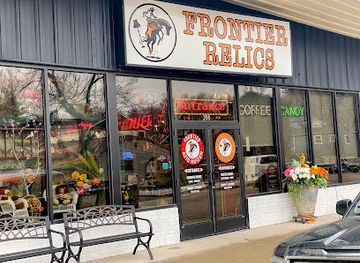
Shopping in Campbell County is concentrated in Gillette, which serves as the principal retail centre for a large rural hinterland. The city offers practical high-street services, supermarkets, outdoor and workwear retailers, independent businesses and the everyday shops expected in a regional Wyoming hub. Visitors looking for locally meaningful purchases should seek western clothing, ranch-inspired goods, books about Wyoming, regional artwork and products connected with the county’s coal and frontier history rather than expecting a specialist craft district. The Rockpile Museum shop, where available, is a useful place to look for interpretive material and locally relevant souvenirs. Wright has a smaller retail offer, mainly serving residents and visitors passing through, while rural areas have few shopping facilities. Seasonal community events, craft fairs and local markets may provide opportunities to buy handmade goods or food products, but their timing varies. Stock up on fuel, snacks and outdoor necessities in Gillette before exploring the county, since distances between commercial centres are substantial and roadside retail is not continuous.
-
Museum
Frontier Auto Museum & Cafe
Experience nostalgia and culinary delights at the Frontier Auto Museum & Cafe, a unique blend of history and flavor in Gillette, Wyoming.
-
Consignment shop
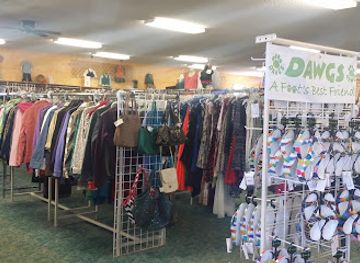
Value Villa
Explore Value Villa in Gillette, Wyoming, a consignment shop filled with unique finds and hidden treasures waiting for you.
-
Gift shop
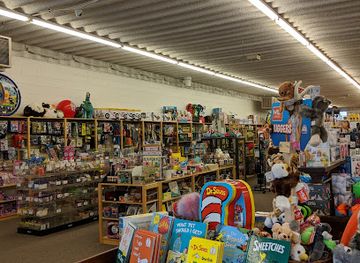
Teacher's Corner/Kid's Mart
Explore Teacher's Corner/Kid's Mart in Gillette, WY - a charming gift shop with educational toys and supplies for young minds.
-
Hobby store
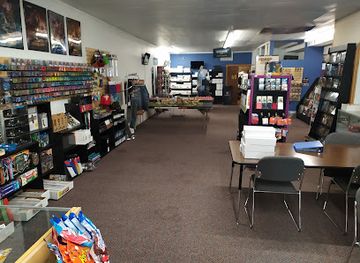
Dungeons and Dugouts LLC
Explore a treasure trove of tabletop games, miniatures, and role-playing adventures at Dungeons and Dugouts LLC in Gillette, Wyoming.
Get your free copy of our complete guide to Campbell County, delivered straight to you.
Everything on this page, from attractions and restaurants to essentials and local phrases, in one PDF you can read offline, print or share.
Already have an account? Sign in
Your Campbell County guide is ready.
We'll send it to · Not you? Sign out

Getting your guide ready…
We are putting together a fresh copy of the Campbell County guide. This can take up to a minute.
This can take a few moments. If your browser asks, choose Allow so the download can start. You'll find the guide in your Downloads folder.
Nothing happened? Download it again
Sorry, the guide is taking longer than usual. Please try again in a minute, or get it by email instead.
Campbell County essentials
Currency and Payment
Safety
Emergency Situations
Do's and Don'ts
Local Tips
From Eve
Local phrases worth knowing
You don't need to get them perfect. A few words go a long way, and locals appreciate the effort.
Basics
| English | Local | Say it |
|---|---|---|
| Hello | Howdy | [haw-dee] |
| Goodbye | See ya later | [see yah lay-ter] |
| Yes | Yup | [yup] |
| No | Nope | [nohp] |
| Please/You're welcome | Sure thing | [shur thing] |
| Thank you | Thanks a lot | [thanks uh lot] |
| Excuse me/Sorry | Pardon me | [par-din mee] |
| How are you? | How ya doin'? | [how yah doin'?] |
| Fine. And you? | Good! How 'bout you? | [good! how bout you?] |
| Do you speak English? | Can ya speak English? | [can yah speak ing-glish?] |
| I don't understand | I ain't gettin' it | [I ain't gettin' it] |
Eating & Drinking
| English | Local | Say it |
|---|---|---|
| I'd like to see the menu, please | Can I see the menu? | [can I see the men-yoo?] |
| I don't eat meat | I don't eat meat | [I don't eat meat] |
| Cheers! | Cheers! | [cheers!] |
| I would like to pay, please | Can I get the check? | [can I get the chek?] |
Emergencies
| English | Local | Say it |
|---|---|---|
| Help! | Help! | [help!] |
| Go away! | Get lost! | [get lost!] |
| Call the Police! | Call the cops! | [call the cops!] |
| Call a doctor! | Get a doctor! | [get a docter!] |
| I'm lost | I’m lost | [I’m lost] |
| I'm ill | I ain't feelin' well | [I ain't feelin' wel] |
Shopping
| English | Local | Say it |
|---|---|---|
| I'd like to buy... | I wanna buy... | [I wanna buy...] |
| I'm just looking | Just browsin' | [just brow-zin'] |
| How much is it? | What’s the price? | [what's the pryce?] |
| That's too expensive | That's way too pricey | [that's way too pry-see] |
| Can you lower the price? | Can ya drop the price? | [can yah drop the pryce?] |
Time & Numbers
| English | Local | Say it |
|---|---|---|
| What time is it? | What time ya got? | [what time yah got?] |
| It's one o'clock | It's one o'clock | [it's one o'clock] |
| Half past (10) | Half past ten | [half past ten] |
| Morning | Mornin' | [mornin'] |
| Afternoon | Afternoon | [afternoon] |
| Evening | Evenin' | [evenin'] |
| Yesterday | Yesterday | [yesterday] |
| Today | Today | [today] |
| Tomorrow | Tomorrow | [tomorrow] |
| 1 | One | [one] |
| 2 | Two | [two] |
| 3 | Three | [three] |
| 4 | Four | [four] |
| 5 | Five | [five] |
| 6 | Six | [six] |
| 7 | Seven | [seven] |
| 8 | Eight | [eight] |
| 9 | Nine | [nine] |
| 10 | Ten | [ten] |
Transport & Directions
| English | Local | Say it |
|---|---|---|
| Where's a/the...? | Where's the...? | [where's the...?] |
| What's the address? | What’s the address? | [what’s the ad-dress?] |
| Can you show me (on the map)? | Can you point it out? | [can you point it out?] |
| When's the next (bus)? | When's the next bus? | [when's the next bus?] |
| A ticket (to ....) | A ticket to ... | [a ticket to ...] |
History of Campbell County
Indigenous Homelands and Early Travel Routes
Long before American settlement, the plains of present-day Campbell County were used by Indigenous peoples, including communities associated with the Northern Cheyenne, Lakota and other Plains nations. The region’s grasslands supported seasonal movement, hunting and trade, while later wagon and military routes crossed north-eastern Wyoming. The broader Powder River country became an important zone of conflict as the United States sought to secure routes and settlement during the nineteenth century. Although much of the most famous military history occurred in neighbouring counties, it forms essential context for understanding the county’s later development.
The Bozeman Trail Era
During the 1860s, the Bozeman Trail cut through the Powder River region as a route from the Oregon Trail country towards Montana’s gold fields. Its use brought emigrants and soldiers into direct conflict with Indigenous nations defending their lands. Forts and military campaigns associated with the trail were located principally outside modern Campbell County, but the county lay within the wider landscape affected by these events. The resulting warfare and treaties reshaped travel, settlement and federal control across north-eastern Wyoming.
Ranching and Settlement in the Late Nineteenth Century
After the reduction of military conflict and the opening of transport links, cattle ranching became a defining economic activity across the Powder River Basin. Homesteaders, stock growers and merchants established themselves around water sources and emerging routes. The open grasslands favoured large-scale grazing, while the distance between settlements encouraged self-reliance and relatively dispersed communities. Ranching remains visible in Campbell County today, even though later mineral development transformed its economy and settlement pattern.
The Founding of Gillette and Railway Expansion
Gillette was established in the late nineteenth century in connection with railway expansion through north-eastern Wyoming and was incorporated in 1891. Rail access enabled livestock, agricultural goods and mineral products to reach wider markets, while the new town became a trading and service centre for surrounding ranches. Its location at the meeting point of transport routes helped it outgrow smaller settlements and laid the foundation for its present role as Campbell County’s administrative, commercial and cultural centre.
Coal Development in the Powder River Basin
Coal was known in the Powder River Basin before the modern energy boom, but large-scale extraction accelerated during the twentieth century as railways, electricity generation and industrial demand expanded. Campbell County became one of the country’s most important coal-producing areas, with surface mining changing the physical landscape and attracting workers, investment and infrastructure. The industry influenced housing, schools, roads and local government, while reclamation programmes have sought to restore mined land to grassland and wildlife habitat after extraction.
Wright and Planned Energy Communities
Wright was developed in the 1970s as a planned community associated with the expansion of coal mining in the Powder River Basin. Its layout and civic facilities reflect a period when energy demand drove rapid population growth and new settlements in otherwise sparsely populated country. Wright’s history illustrates how industrial development created not only mines and rail links but also schools, shops, recreation facilities and neighbourhoods. The community remains an important part of Campbell County’s modern social and economic story.
Economic Change and Reclamation
Campbell County’s recent history has been shaped by changing energy markets, environmental regulation and debates about the future of coal. Mining remains central to the county’s identity, but employment and investment have also broadened into services, construction, transport, healthcare, education and outdoor recreation. Reclaimed mine lands, restored grasslands and renewed attention to local heritage show how the county continues to negotiate the relationship between extraction, conservation and community life in the Powder River Basin.
Campbell County in Photos
Browse through our photo collection highlighting the charm and character of the destination.
Neighbouring regions of Campbell County
The closest regions to Campbell County, if you have time for more than one.
-

-

-
-

-


Swipe for more regions
Explore more

Explore more of Wyoming
Discover Wyoming: A Land of Unspoiled Beauty, Rich History, and Boundless Outdoor Adventures in the Heart of the American West.
Explore Wyoming