Embarking on your first ski trip is an exhilarating experience, but navigating the world of ski equipment can be daunting. Choosing the right skis is crucial for a comfortable and enjoyable learning curve. This guide breaks down the key factors – ski type, length, and width – to help you select the perfect skis and confidently glide down the slopes.
Understanding Ski Types: Finding Your Perfect Match
For beginners, understanding the different types of skis is the first step in making an informed decision. Each type is designed for specific terrains and skiing styles, so choosing the right one can significantly impact your experience. The primary types to consider are all-mountain skis, carving skis, and all-mountain wide skis.
All-mountain skis are the most versatile option for beginners. As the name suggests, they are designed to perform well in a variety of conditions, from groomed runs to light powder. These skis typically have a moderate width and a balanced flex, making them easy to control and forgiving of mistakes. Brands like Fischer, Atomic, and Head offer excellent all-mountain skis suitable for beginners. These skis are ideal for those who want to explore different parts of the mountain and aren't yet committed to a specific skiing style.
Carving skis, also known as front-side skis, are designed for groomed runs and hardpack snow. They are narrower than all-mountain skis, typically with a waist width of 70-85mm, which allows for quick edge-to-edge transitions and precise turns. Carving skis are perfect for beginners who want to focus on developing their carving technique and enjoy the feeling of gliding smoothly down the slopes. Volkl and Nordica are known for producing high-quality carving skis that are responsive and easy to control.
All-mountain wide skis are a hybrid option that combines the versatility of all-mountain skis with the added floatation of wider skis. These skis typically have a waist width of 85mm or more, making them suitable for both groomed runs and softer snow conditions. They are a good choice for beginners who anticipate skiing in mixed conditions or who want a ski that can handle occasional powder days. Brands like Salomon and Blizzard Tecnica offer all-mountain wide skis that provide a good balance of performance and versatility.
When considering ski type, it's also helpful to understand the concepts of rocker and camber. Camber refers to a slight upward arch in the middle of the ski, which provides edge hold and stability on hardpack snow. Rocker, on the other hand, refers to an upward curve in the tip and/or tail of the ski, which improves floatation in powder and makes it easier to initiate turns. Most all-mountain skis feature a combination of rocker and camber, offering a good balance of performance in different conditions.
Choosing the right ski type depends on your individual preferences and the conditions you expect to encounter on the mountain. All-mountain skis are a great starting point for most beginners, while carving skis are ideal for those who want to focus on groomed runs, and all-mountain wide skis are a good option for those who anticipate skiing in mixed conditions.
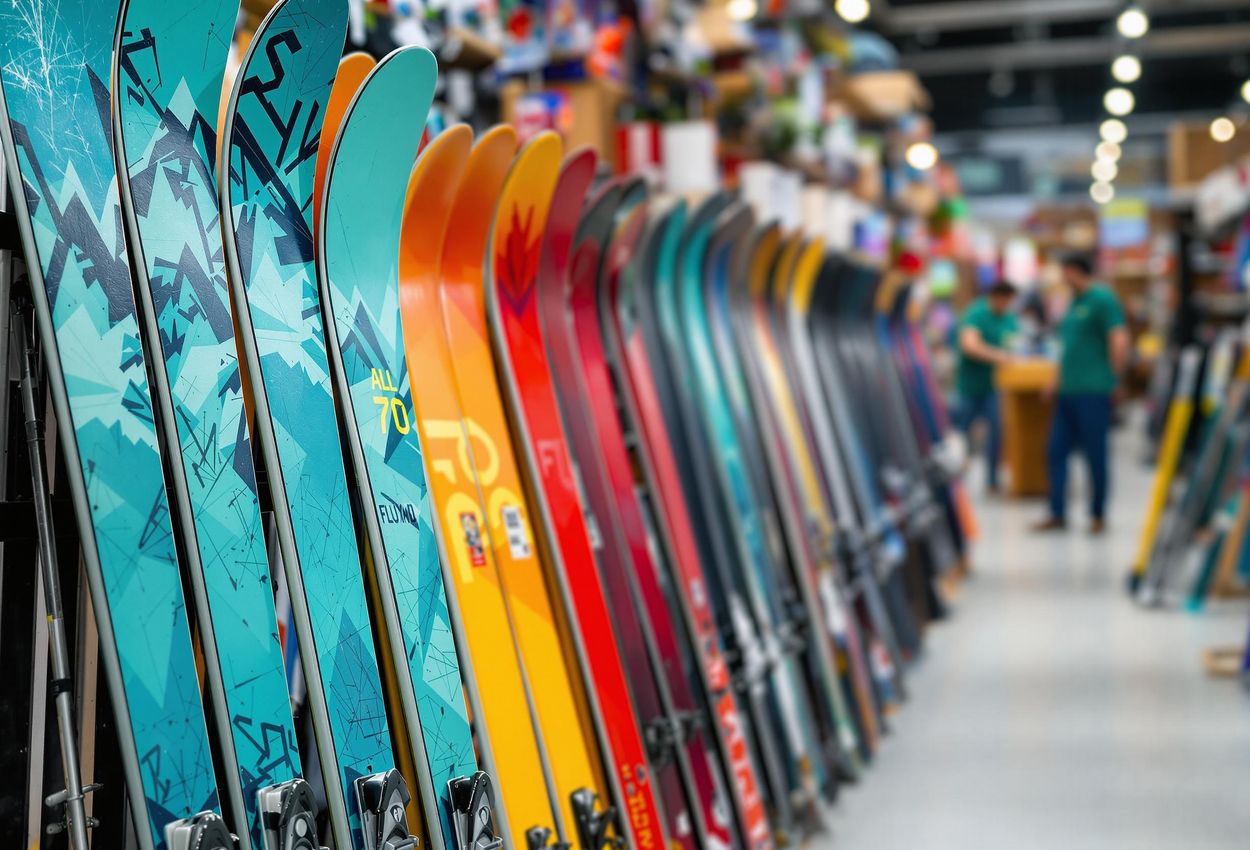
Image Description: A serene shot capturing a variety of skis neatly arranged in a ski rental shop. The skis are of different types (all-mountain, carving) and colors, showcasing the range available to beginners. The lighting is soft, highlighting the textures of the skis and the organized setting of the shop. The purpose is to visually introduce the different types of skis available to beginners, emphasizing the variety and choices they have. The angle is a medium shot, allowing viewers to see the details of the skis without overwhelming them. The subjects are the skis themselves, with subtle background elements suggesting a rental shop environment. Style Instructions: The photo should be taken on January 7, 2025, with a shallow depth of field to focus on the skis. Use natural lighting with a soft, diffused effect to avoid harsh shadows. The composition should be balanced, with the skis arranged in an orderly fashion. The style is Serene.
Decoding Ski Length: Height, Weight, and Ability
Once you've determined the type of ski that's right for you, the next step is to choose the appropriate length. Ski length plays a crucial role in how the skis perform and how easy they are to control. The ideal ski length depends on several factors, including your height, weight, and skiing ability.
As a general rule of thumb, beginners should choose skis that come up to somewhere between their chin and the top of their head when standing the skis on their tails. This range provides a good balance of stability and maneuverability for those who are just starting out. Shorter skis are easier to turn and control, making them ideal for learning the basics. Longer skis, on the other hand, offer more stability at higher speeds but can be more challenging to maneuver.
Height is the primary factor in determining ski length. Taller skiers generally need longer skis to provide adequate stability and support. Shorter skiers, on the other hand, can benefit from shorter skis that are easier to turn and control. Weight also plays a role, as heavier skiers may need longer skis to provide sufficient floatation and stability. It's important to consider both your height and weight when choosing ski length to ensure a comfortable and balanced skiing experience.
Your skiing ability is another important factor to consider. Beginners should generally choose shorter skis that are easier to control, while more advanced skiers may prefer longer skis that offer more stability at higher speeds. If you're unsure about your ability level, it's always best to err on the side of caution and choose shorter skis. As you progress and become more confident, you can always move up to longer skis.
To help you determine the appropriate ski length, here's a general size chart:
- Skier Height: 4'10 - 5'2 - Suggested Ski Length: 140-150cm
- Skier Height: 5'3 - 5'6 - Suggested Ski Length: 150-160cm
- Skier Height: 5'7 - 5'10 - Suggested Ski Length: 160-170cm
- Skier Height: 5'11 - 6'2 - Suggested Ski Length: 170-180cm
Keep in mind that this is just a general guideline, and the ideal ski length may vary depending on your individual characteristics and preferences. It's always a good idea to consult with a ski professional or rental shop employee to get personalized recommendations.
Brands like Evo, Salomon, and Blizzard Tecnica offer a wide range of skis in different lengths to accommodate skiers of all sizes and abilities. When shopping for skis, be sure to check the manufacturer's size chart and consider your individual needs and preferences.
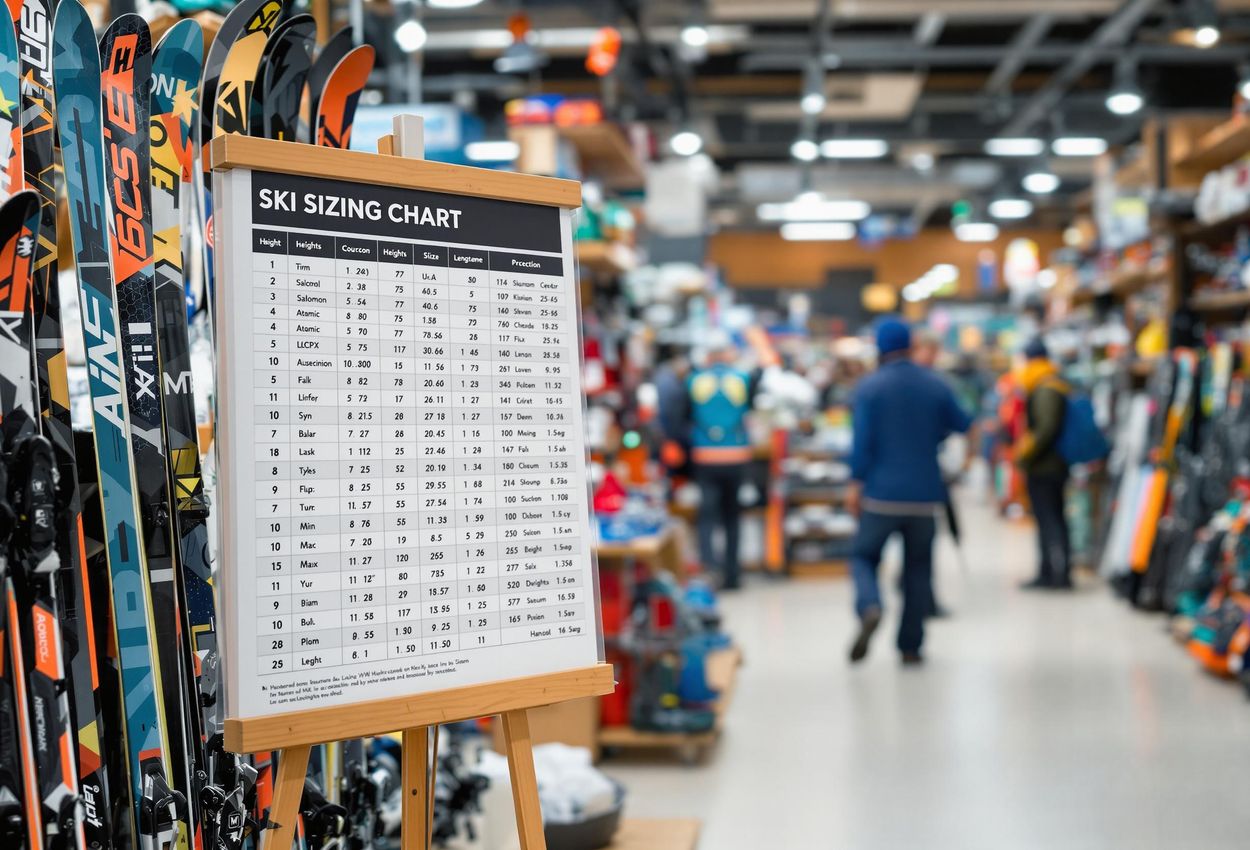
Image Description: A detailed ski sizing chart displayed in a ski shop. The chart lists various heights and corresponding ski lengths, providing a visual guide for beginners. The setting is a brightly lit ski shop, with skis and other equipment visible in the background. The purpose is to provide a clear and informative visual aid for beginners to understand how to choose the right ski length based on their height. The angle is a close-up shot, focusing on the chart itself to ensure readability. The subjects are the ski sizing chart and its informative content. Style Instructions: The photo should be taken on January 7, 2025, with even lighting to ensure the chart is clearly visible. Use a shallow depth of field to slightly blur the background, keeping the focus on the chart. The style is Candid.
Width Matters: Waist Width and Terrain
In addition to ski type and length, ski width is another important factor to consider when choosing skis for beginners. Ski width, also known as waist width, refers to the width of the ski at its narrowest point, typically measured in millimeters. The waist width of a ski affects its performance in different snow conditions and terrains.
Narrower skis, typically with a waist width of 70-85mm, are ideal for groomed runs and carving. These skis are quick and responsive, making it easy to initiate turns and maintain edge control on hardpack snow. They are a good choice for beginners who want to focus on developing their carving technique and enjoy skiing on groomed slopes. Brands like Wagner Custom Skis offer narrower skis designed for precision and performance on hard snow.
Wider skis, typically with a waist width of 90mm or more, provide better floatation in powder and soft snow. These skis are a good choice for beginners who anticipate skiing in mixed conditions or who want a ski that can handle occasional powder days. They are also more forgiving in uneven terrain, making them a good option for those who want to explore different parts of the mountain.
The ideal ski width depends on the type of snow conditions you expect to encounter most often. If you primarily ski on groomed runs, narrower skis are a good choice. If you frequently ski in powder or soft snow, wider skis are a better option. If you want a versatile ski that can handle a variety of conditions, a mid-width ski in the 85-95mm range is a good compromise.
It's also important to consider the impact of wetter snow conditions on ski width selection. In regions like the Pacific Northwest, where snow tends to be wetter and heavier, wider skis can provide added floatation and control. If you live in an area with wetter snow, consider choosing skis with a slightly wider waist width to improve your performance in these conditions.
Websites like Switchback Travel and Backcountry.com offer a wide selection of skis in different widths to suit skiers of all abilities and preferences. When shopping for skis, be sure to read reviews and compare specifications to find the perfect width for your needs.
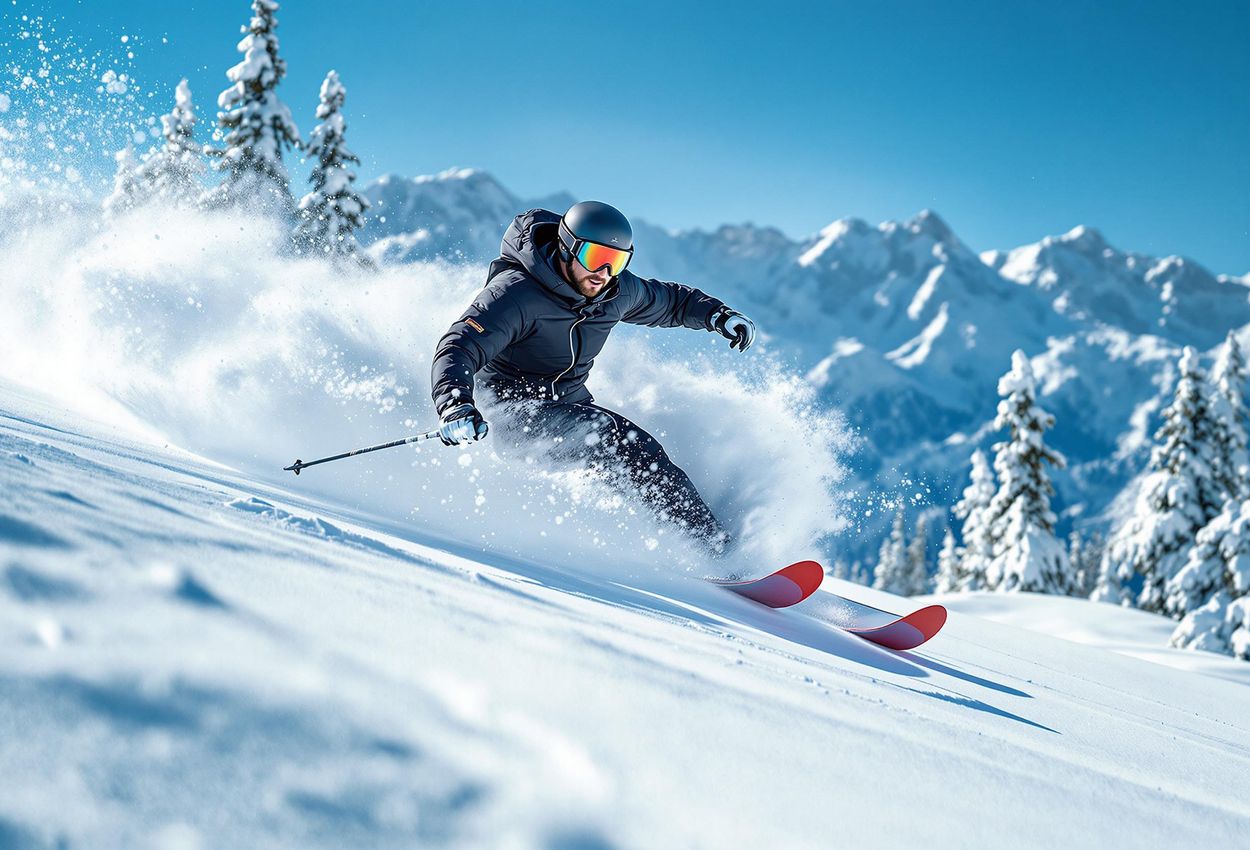
Image Description: A skier gracefully gliding through fresh powder snow on a wide pair of skis. The setting is a mountain slope with a backdrop of snow-covered trees and a clear blue sky. The purpose is to visually demonstrate the advantage of wider skis in powder conditions, highlighting their ability to provide floatation and control. The angle is a medium shot, capturing the skier in action and the surrounding snowy landscape. The subjects are the skier, the skis, and the powder snow. Style Instructions: The photo should be taken on January 7, 2025, with bright, natural light and a fast shutter speed to freeze the motion of the skier. Use a wide-angle lens to capture the expansive mountain scenery. The style is Action.