


Destination Guide
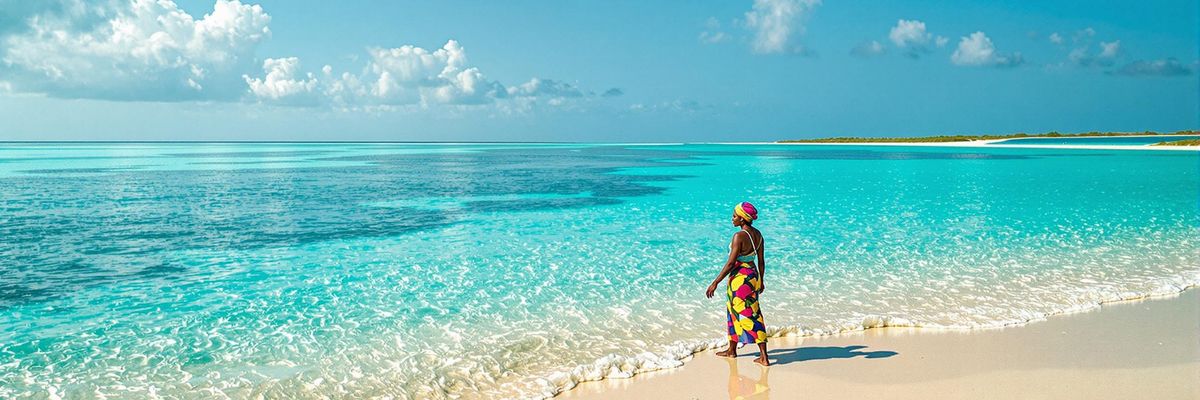
Xai-Xai: A Coastal Retreat
Relax on the beaches and explore the reefs of Xai-Xai.
View More

Venture into Angola's southern highlands, where dramatic landscapes meet vibrant cultures. From the iconic Serra da Leba pass to the towering Cristo Rei statue, Huíla Province offers a journey of breathtaking vistas and immersive cultural experiences.
Nestled in the heart of Angola, Huíla Province beckons with its unique blend of natural wonders and cultural richness. This region, characterized by its dramatic highlands and diverse communities, promises an unforgettable adventure for those seeking to explore beyond the beaten path. From the awe-inspiring Serra da Leba to the culturally significant Cristo Rei statue, Huíla offers a tapestry of experiences that will captivate the senses and enrich the soul.
Prepare to be mesmerized by the stunning landscapes, where mist-shrouded mountains meet lush forests, and where the earth dramatically drops away to reveal distant lands. Immerse yourself in the vibrant culture of the local tribes, whose traditions and artistry add depth and color to this remarkable province. Whether you are a seasoned traveler or a curious explorer, Huíla Province invites you to discover the hidden gems of Angola's southern highlands.
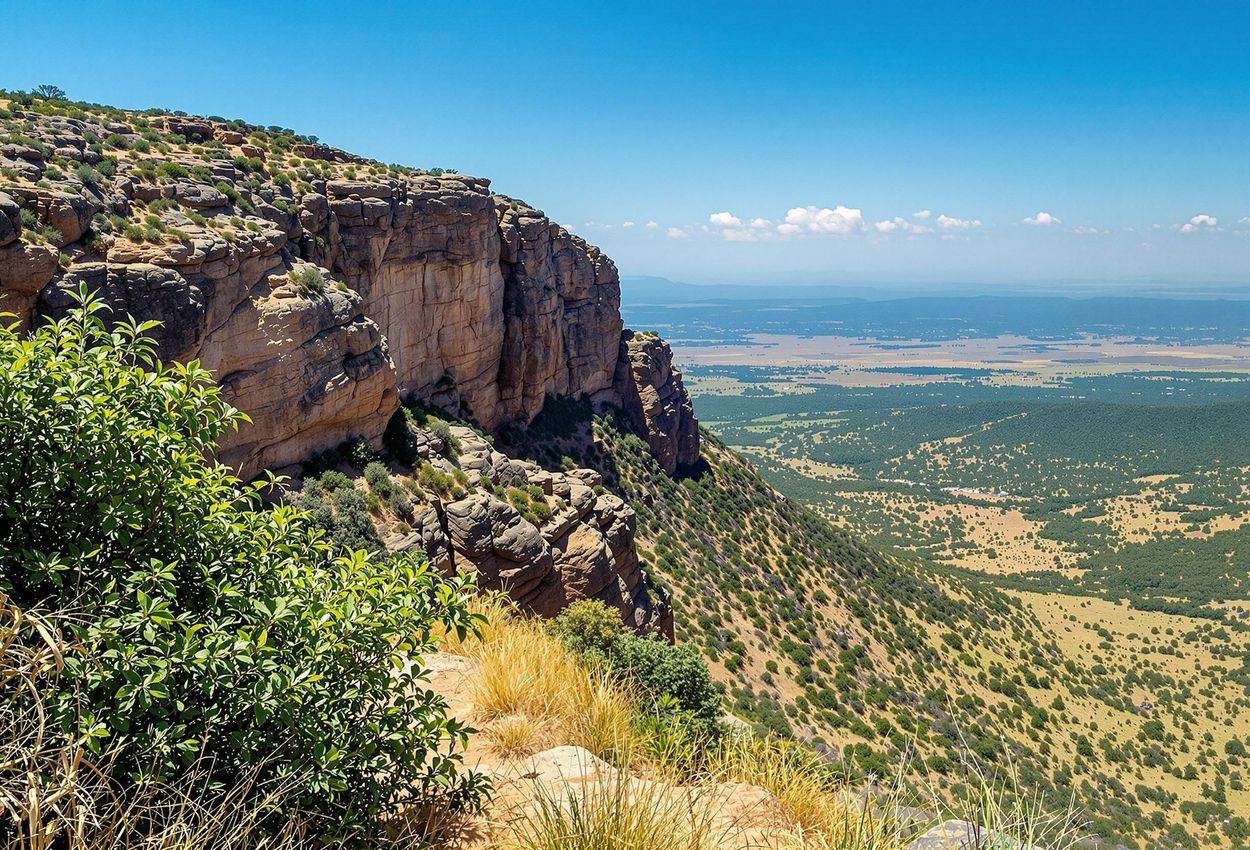
The drive to Serra da Leba is an experience in itself, a gradual ascent through ever-changing landscapes that build anticipation with every turn. Leaving the city of Lubango behind, the road winds its way through rolling hills, dotted with small villages and cultivated fields.
As you climb higher, the vegetation transforms, giving way to denser forests and rocky outcrops. The air becomes noticeably cooler, a refreshing change from the warmer temperatures of the lowlands. The anticipation grows as you catch glimpses of the distant mountains, their peaks often shrouded in mist. This is the gateway to Serra da Leba, a mountain pass that stands as a testament to both natural beauty and engineering ingenuity.
The Serra da Leba pass itself is an iconic stretch of road, famous for its series of hairpin bends that snake their way up the mountainside. This feat of engineering, completed in the 1970s, is a marvel to behold, a testament to human skill and determination. As you navigate the bends, each turn offers a new and breathtaking perspective of the landscape below. The road clings to the mountainside, offering panoramic views of the valleys and plains that stretch out towards the horizon. The experience is both exhilarating and humbling, a reminder of the power and beauty of nature.
At the summit of the pass lies the Miradouro da Serra da Leba, a viewpoint that offers arguably the most stunning views in all of Angola. From this vantage point, the entire landscape unfolds before you, a tapestry of misty mountains, lush forests, and winding roads. The air is crisp and clean, carrying the scent of pine and damp earth. On a clear day, the views stretch for miles, offering a sense of boundless freedom and tranquility. The clouds often hang low, creating a mystical atmosphere that adds to the magic of the experience.
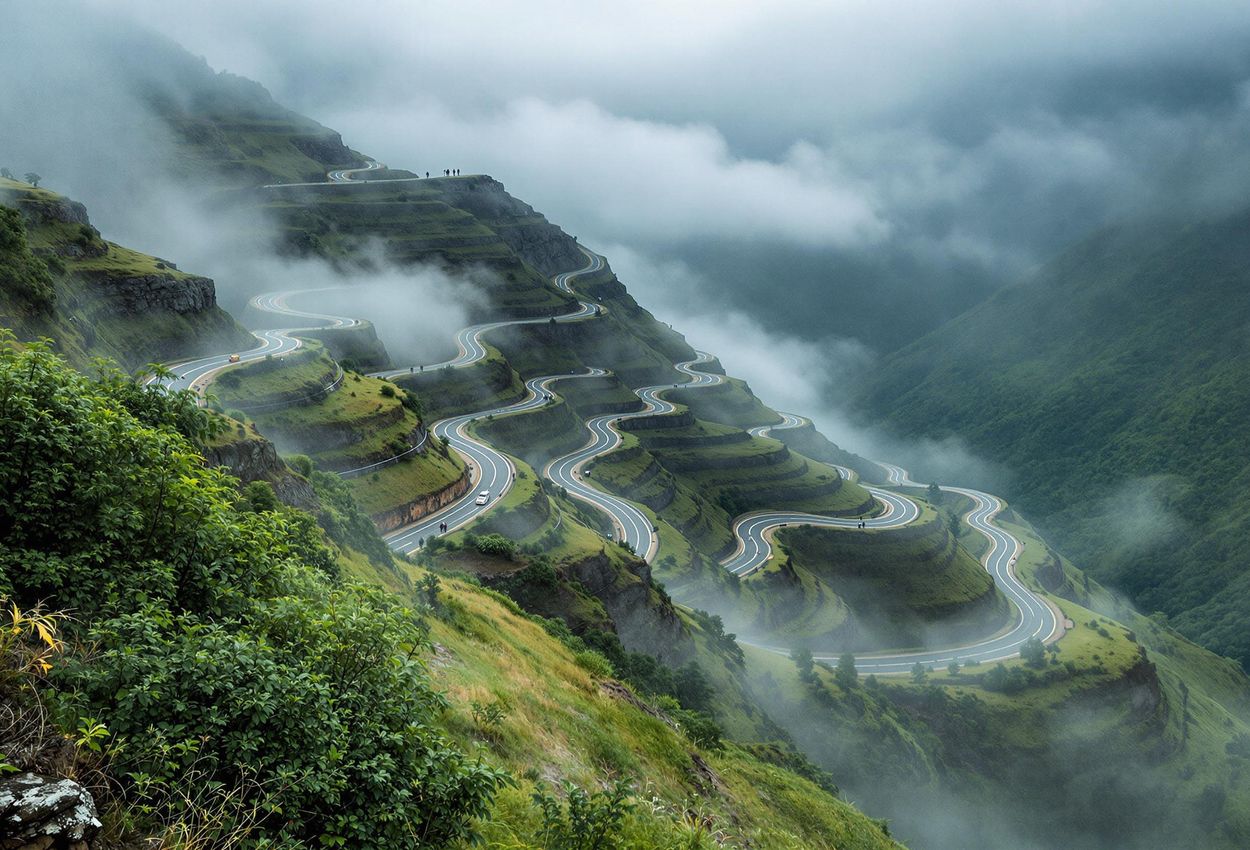
For those seeking a hidden gem, a lesser-known viewpoint can be found a short distance from the main Miradouro, near the communication masts. This spot offers a unique perspective of the pass, capturing the full sweep of the hairpin bends as they descend into the valley. It's a perfect location for photographers and those seeking a more secluded spot to soak in the scenery. The cooler climate of Serra da Leba is a welcome respite from the heat of the lowlands, making it an ideal destination for a day trip or a longer stay.
As the sun begins to set, the Serra da Leba transforms into a magical realm of light and shadow. The mountains are bathed in a golden glow, and the valleys fill with a soft, ethereal mist. The air is still and quiet, broken only by the occasional call of a bird or the rustling of leaves. It's a moment of profound beauty, a reminder of the simple joys of life and the power of nature to inspire and uplift.
Whether you're drawn by the engineering marvel of the pass, the panoramic views from the Miradouro, or the tranquility of the mountains, a journey to Serra da Leba is an experience that will stay with you long after you've left. It's a place where you can connect with nature, challenge your senses, and discover the hidden beauty of Angola's southern highlands.
Local Tip: For a unique experience, consider visiting Serra da Leba during the rainy season. The landscape transforms into a vibrant green, and the waterfalls along the pass are at their most spectacular. However, be prepared for slippery roads and limited visibility.
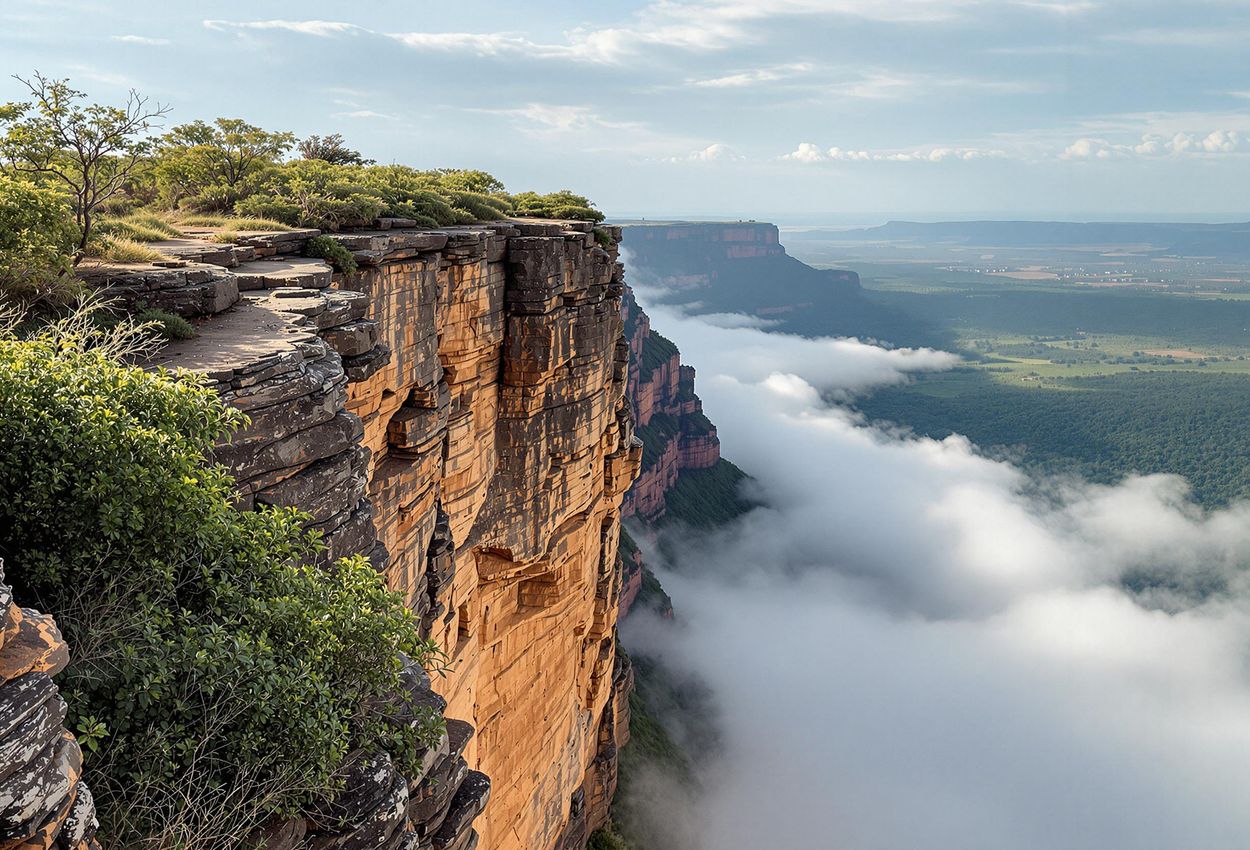
Fenda da Tundavala is a dramatic geological wonder, a massive chasm where the Angolan plateau abruptly ends. This awe-inspiring abyss offers a glimpse into the raw power of nature, a place where the earth seems to fall away into nothingness.
As you approach Fenda da Tundavala, the landscape gradually changes, from rolling hills to a flat, seemingly endless plateau. The anticipation builds as you near the edge, the air growing cooler and the wind picking up. And then, suddenly, the earth gives way, revealing a chasm of immense proportions. The view from the cliffs is breathtaking, a panorama of sheer cliffs, distant valleys, and endless sky.
The chasm itself is a geological marvel, a testament to the forces that have shaped the earth over millions of years. The plateau drops abruptly, creating a dramatic contrast between the flat highlands and the distant lands of Namibe. The scale of the abyss is difficult to comprehend, a reminder of the insignificance of human existence in the face of such immense natural power. Looking into the depths of the chasm, one can almost feel the pull of gravity, the sense of being drawn into the void.
Local legends surround Fenda da Tundavala, adding a layer of mystery and intrigue to this already captivating place. According to tradition, the chasm was once used as a place of justice for local tribes. Those accused of crimes were brought to the edge and given a chance to prove their innocence. If they were able to survive the fall, they were considered innocent; if not, their fate was sealed. Whether true or not, these legends add to the mystique of Fenda da Tundavala, a place where the boundaries between reality and myth seem to blur.
The Tundavala National Stadium in Lubango is named after this landmark, a testament to its significance in the region. This multi-use stadium, completed in 2010, hosts football matches and other events, serving as a hub of activity and a symbol of local pride. The stadium has a capacity of 20,000 people and is often used by the football club Clube Desportivo Da Huila.
One of the most unique aspects of Fenda da Tundavala is the perspective it offers of the clouds. Due to its high elevation, it is often possible to observe clouds below the abyss, creating a surreal and dreamlike experience. The clouds drift and swirl, creating ever-changing patterns of light and shadow. It's a view that is both humbling and awe-inspiring, a reminder of the beauty and power of nature.
Visiting Fenda da Tundavala requires caution and respect. The cliffs are steep and unprotected, and the wind can be strong and unpredictable. It's important to stay well away from the edge and to be aware of your surroundings at all times. However, for those who are willing to take the necessary precautions, the reward is an unforgettable experience, a glimpse into one of Angola's most dramatic and awe-inspiring natural wonders.
Hidden Gem: For a different perspective of Fenda da Tundavala, consider visiting at sunrise or sunset. The changing light transforms the landscape, creating a magical atmosphere of color and shadow. The early morning mist often hangs low in the chasm, adding to the sense of mystery and wonder.
The Cristo Rei statue in Lubango stands as a towering symbol of faith and hope, its outstretched arms embracing the city and the surrounding highlands. This iconic monument, often compared to Christ the Redeemer in Rio de Janeiro, offers panoramic views and a glimpse into the region's rich history.
Built in 1957 by settlers from Madeira, the Cristo Rei statue is a testament to the enduring power of faith and the cultural ties that bind communities together. The statue stands atop a hill overlooking Lubango, its white figure gleaming in the African sun. Its construction reflects the architectural styles of the time, with a sturdy cement and lime base and an internal staircase that leads to the top.
The views from the base of the statue are simply breathtaking. Cristo Rei serves as a 360-degree viewpoint, offering unparalleled vistas of Lubango and the surrounding landscape. From this vantage point, the city unfolds below, a tapestry of colorful buildings and bustling streets. The surrounding hills and valleys stretch out towards the horizon, their green slopes dotted with small villages and cultivated fields. The air is fresh and clean, carrying the scent of eucalyptus and wildflowers.
The architectural details of the statue are worth noting. The cement and lime base provides a solid foundation, while the internal staircase allows visitors to climb to the top for an even more expansive view. The statue itself is a masterpiece of craftsmanship, its features carefully sculpted to convey a sense of peace and serenity. The outstretched arms of Cristo Rei seem to embrace the city, offering a sense of protection and hope.
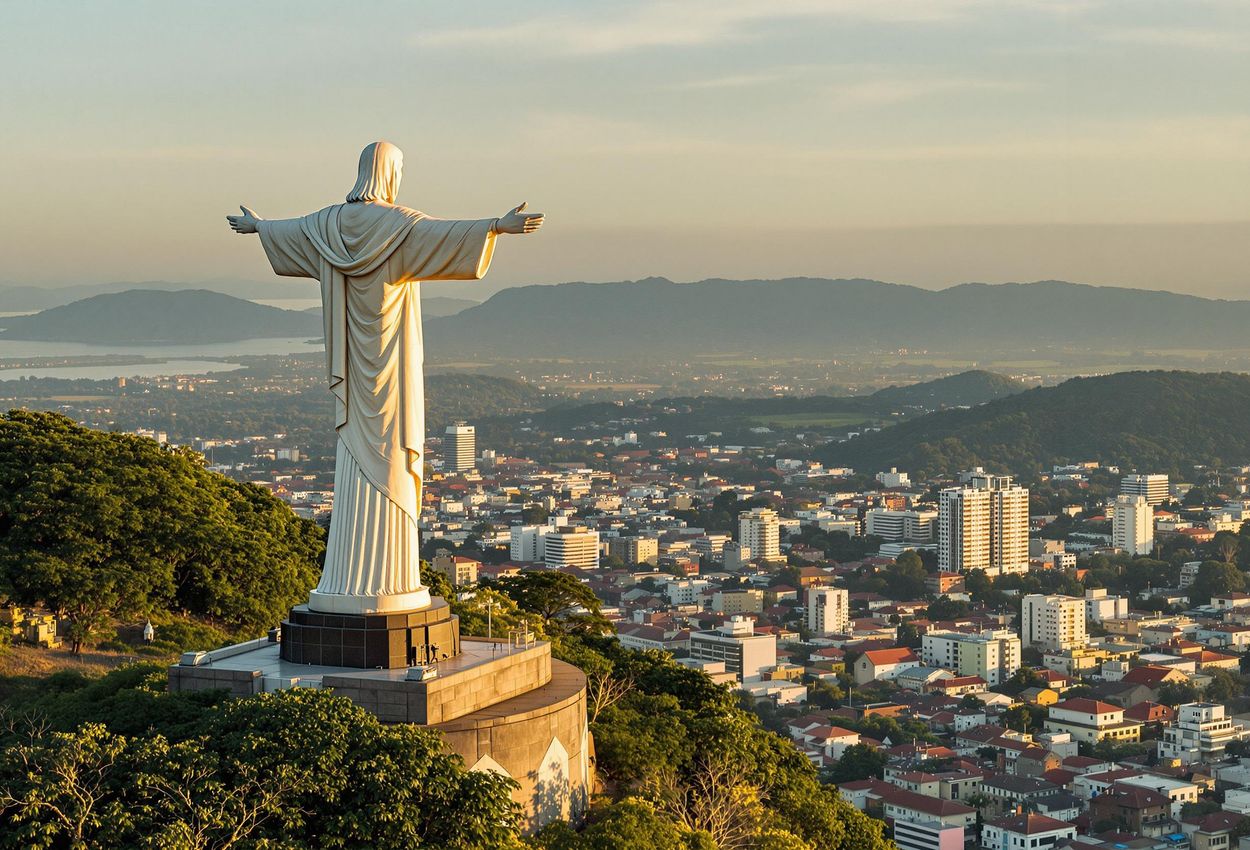
As a symbol of Christianity in the Chela mountain region, Cristo Rei holds deep cultural significance. It represents the enduring faith of the local communities and their connection to the wider world. The statue is a place of pilgrimage and prayer, a place where people come to seek solace, inspiration, and guidance. It is also a place of celebration, a place where communities gather to mark important events and to reaffirm their shared values.
Visiting Cristo Rei is an experience that will stay with you long after you've left. It's a place where you can connect with history, culture, and spirituality, a place where you can reflect on the beauty and wonder of the world around you. Whether you are a religious pilgrim, a history buff, or simply a curious traveler, Cristo Rei offers a unique and unforgettable experience.
Local Tip: Visit Cristo Rei at sunset for a truly magical experience. The setting sun casts a golden glow over the statue and the surrounding landscape, creating a scene of breathtaking beauty. The air is still and quiet, and the views stretch for miles, offering a sense of peace and tranquility.
The Cristo Rei statue is situated 3 km west of the Tundavala National Stadium.
Huíla Province is more than just stunning landscapes; it's a region rich in culture and tradition, home to diverse tribes with unique customs and artistry. Exploring the cultural heart of Huíla offers a glimpse into the soul of Angola, a chance to connect with the people and their heritage.
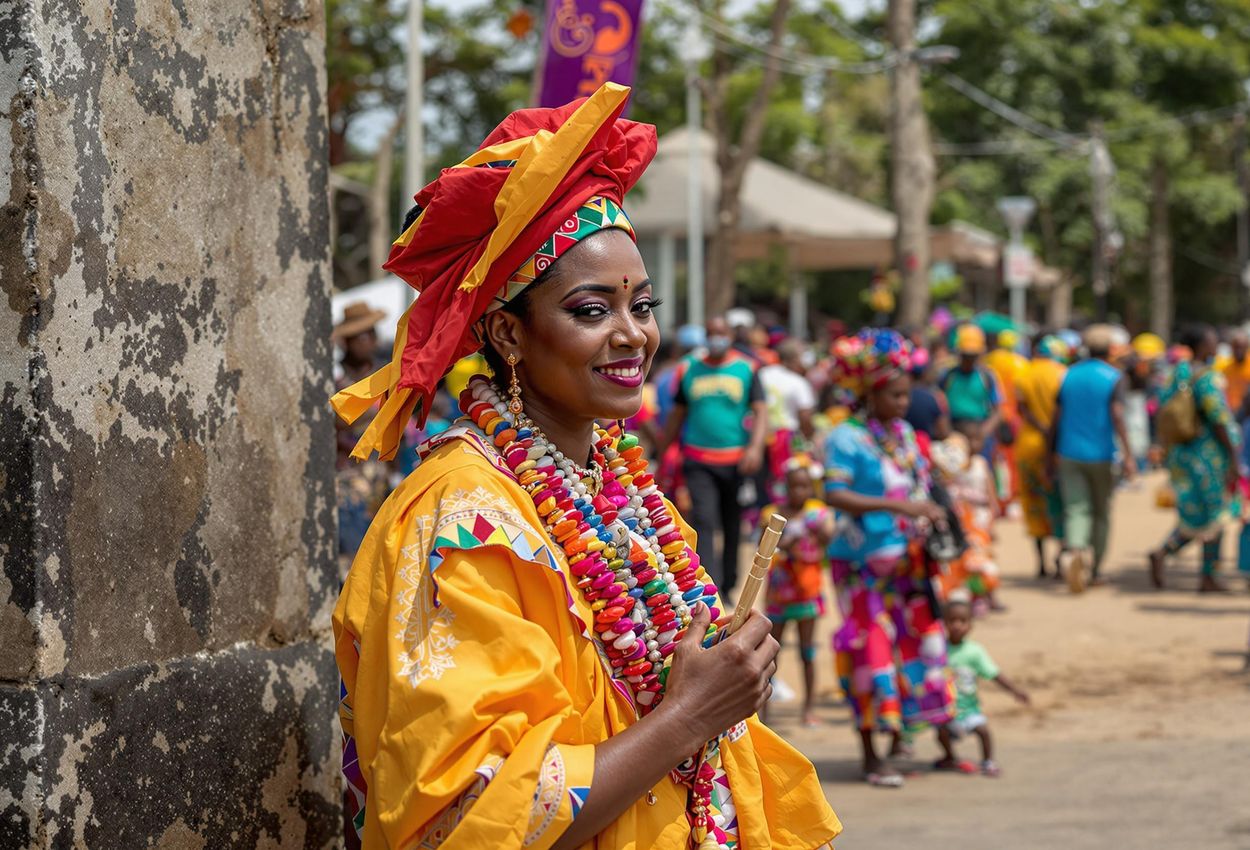
The local tribes of Huíla Province are the custodians of a rich cultural heritage, their traditions passed down through generations. Each tribe has its own unique customs, beliefs, and artistic expressions, adding to the vibrant tapestry of the region. From their traditional clothing and adornments to their music and dance, the local tribes offer a glimpse into a way of life that is both ancient and enduring.
Local festivals and cultural events provide an opportunity to witness these traditions firsthand. The Lubango Festival, held annually in August, is a month-long celebration of culture, music, fashion, and community. Based on the feast of Our Lady of the Hill, the festival features music performances, fashion parades, a sports tournament, motorbike racing, and the Miss Huíla beauty pageant. The Expo-Huíla trade show also takes place during the Lubango Festival, showcasing local businesses and products.
Basket-making is a significant industry in Huíla Province, providing livelihoods for many local communities. Skilled artisans weave intricate patterns using natural fibers, creating beautiful and functional objects. These baskets are not only practical items but also works of art, reflecting the creativity and skill of the local people. The baskets are appreciated at international exhibitions.
One of the most distinctive cultural elements of the region is the Samacaca fabric, a textile deeply rooted in the culture of the Mwila people. Also known as pano de Samakaka, the name is derived from the Kimbundu word Kisamakaka, meaning cloth. The vibrant colors and geometric patterns of Samacaca cloth are instantly recognizable, reflecting the cultural identity and age-old values of the Mwila people. The motifs often include symbols like diamonds or arrows, each bearing a specific meaning.
Hidden Gem: A local market offers visitors the opportunity to purchase traditional Samacaca fabric and handmade accessories. This is a chance to support local artisans and to acquire a unique and authentic souvenir of your trip to Huíla Province. The fabrics are 216 inches in length and 48 inches in width and are 100% cotton.
Exploring the cultural heart of Huíla Province is an enriching experience, a chance to connect with the people, their traditions, and their artistry. Whether you are attending a local festival, visiting a traditional village, or simply admiring the local crafts, you will be captivated by the vibrancy and authenticity of this remarkable region. Huíla Province invites you to immerse yourself in its cultural heartbeat, to discover the soul of Angola, and to create memories that will last a lifetime.
Local Tip: When visiting local communities, it is important to be respectful of their customs and traditions. Dress modestly, ask permission before taking photographs, and be mindful of local etiquette. Engaging with the local people in a respectful and genuine way will enhance your experience and create lasting connections.
Our editors` picks of the latest and greatest in travel - delivered to your inbox daily
Relax on the beaches and explore the reefs of Xai-Xai.
View More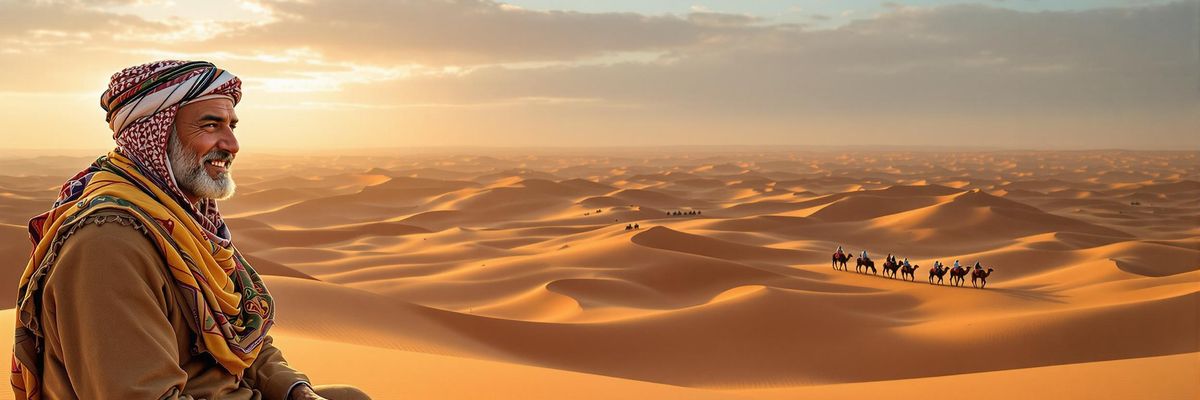
Embrace the cooler temperatures and experience the International Festival of the Sahara in Douz this December.
View More
Celebrate the year-end festivities in Accra, culminating in the vibrant Afrofuture festival.
View More Albania EDITION
 Algeria EDITION
 Argentina EDITION
 Armenia EDITION
 Australia EDITION
 Austria EDITION
 Bangladesh EDITION
 Belgium EDITION
 Belize EDITION
 Benin EDITION
 Bhutan EDITION
 Bolivia EDITION
 Bosnia and Herzegovina EDITION
 Botswana EDITION
 Brazil EDITION
 Bulgaria EDITION
 Burkina Faso EDITION
 Cambodia EDITION
 Cameroon EDITION
 Canada EDITION
 Central African Republic EDITION
 Chad EDITION
 Chile EDITION
 China EDITION
 Colombia EDITION
 Costa Rica EDITION
 Croatia EDITION
 Cyprus EDITION
 Denmark EDITION
 Djibouti EDITION
 Ecuador EDITION
 Egypt EDITION
 El Salvador EDITION
 Eritrea EDITION
 Estonia EDITION
 Ethiopia EDITION
 Finland EDITION
 France EDITION
 Gabon EDITION
 Georgia EDITION
 Germany EDITION
 Ghana EDITION
 Greece EDITION
 Guatemala EDITION
 Guinea EDITION
 Guinea-Bissau EDITION
 Honduras EDITION
 Hungary EDITION
 Iceland EDITION
 India EDITION
 Indonesia EDITION
 Ireland EDITION
 Israel EDITION
 Italy EDITION
 Jamaica EDITION
 Japan EDITION
 Jordan EDITION
 Kenya EDITION
 Kuwait EDITION
 Laos EDITION
 Latvia EDITION
 Lebanon EDITION
 Lesotho EDITION
 Liberia EDITION
 Lithuania EDITION
 Luxembourg EDITION
 Madagascar EDITION
 Malawi EDITION
 Malaysia EDITION
 Maldives EDITION
 Mali EDITION
 Malta EDITION
 Mauritania EDITION
 Mauritius EDITION
 Mexico EDITION
 Mongolia EDITION
 Montenegro EDITION
 Morocco EDITION
 Mozambique EDITION
 Namibia EDITION
 Nepal EDITION
 Netherlands EDITION
 New Zealand EDITION
 Nicaragua EDITION
 Niger EDITION
 Nigeria EDITION
 Norway EDITION
 Oman EDITION
 Pakistan EDITION
 Panama EDITION
 Papua New Guinea EDITION
 Paraguay EDITION
 Peru EDITION
 Philippines EDITION
 Poland EDITION
 Portugal EDITION
 Qatar EDITION
 Romania EDITION
 Rwanda EDITION
 Saudi Arabia EDITION
 Senegal EDITION
 Serbia EDITION
 Singapore EDITION
 Slovakia EDITION
 Slovenia EDITION
 Somalia EDITION
 South Africa EDITION
 South Korea EDITION
 Spain EDITION
 Sri Lanka EDITION
 Suriname EDITION
 Sweden EDITION
 Switzerland EDITION
 Tanzania EDITION
 Thailand EDITION
 Tunisia EDITION
 Uganda EDITION
 United Arab Emirates EDITION
 United Kingdom EDITION
 Uruguay EDITION
 Venezuela EDITION
 Vietnam EDITION
 Zambia EDITION
 Zimbabwe EDITION
Subscribe to our newsletter and get the most captivating travel stories, hidden gems, and expert insights delivered straight to your inbox. As a subscriber, you’ll be first in line for exclusive content, premium offers, and unforgettable travel experiences