


Destination Guide
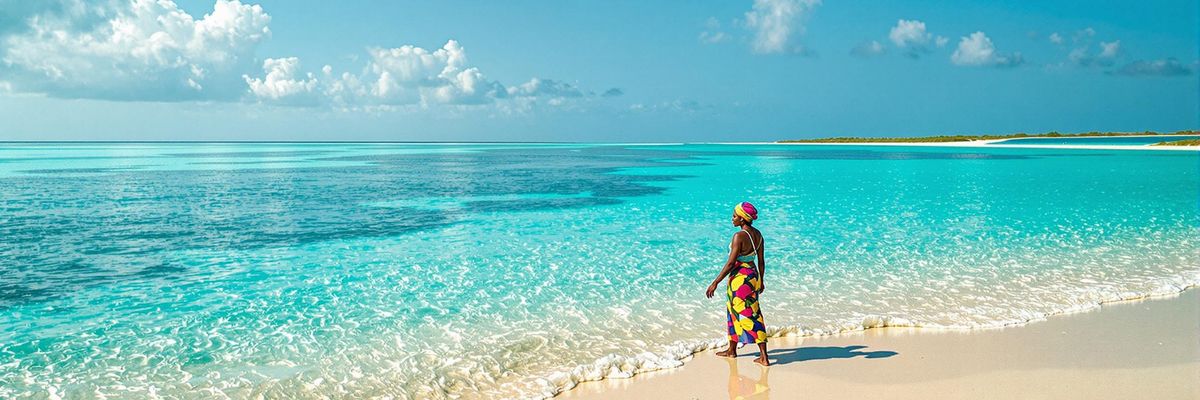
Xai-Xai: A Coastal Retreat
Relax on the beaches and explore the reefs of Xai-Xai.
View More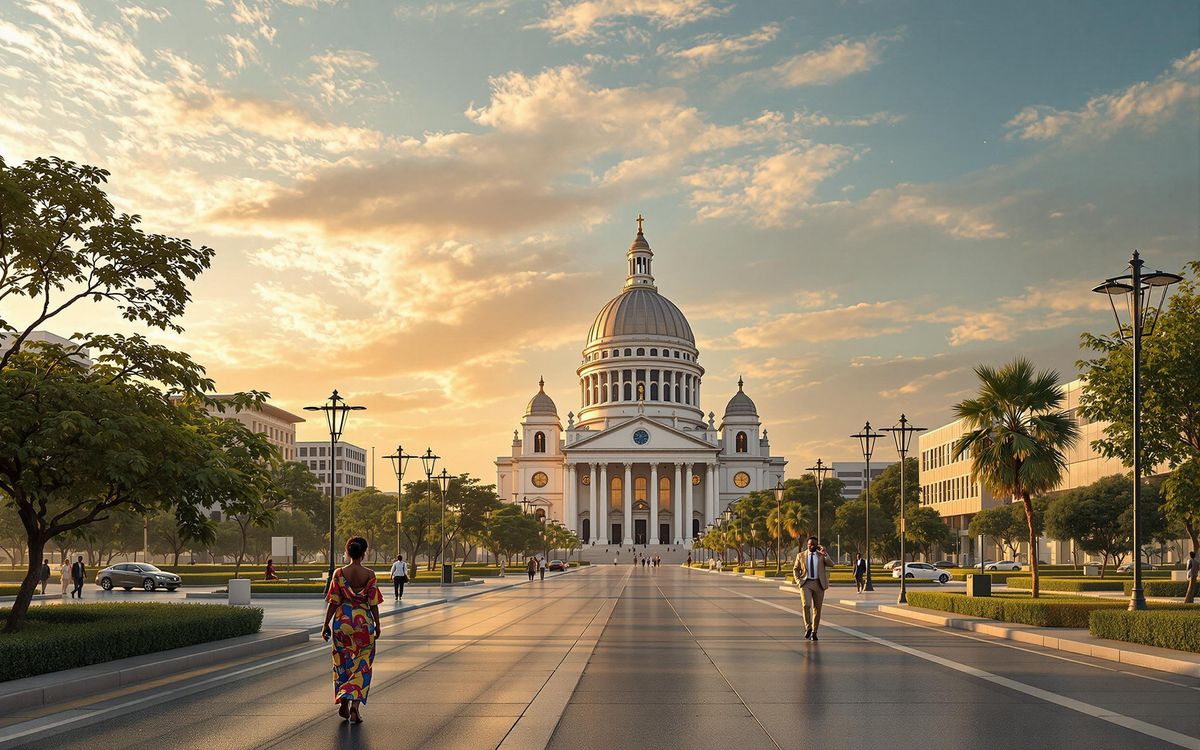

Yamoussoukro, the political capital of Côte d'Ivoire, is a city that defies expectations. Rising from the savanna like a mirage, it showcases architectural grandeur and a unique vision, a testament to a leader's ambition and a nation's aspirations.
Arriving in Yamoussoukro is an experience in itself. The wide boulevards, seemingly too large for the amount of traffic they carry, stretch out before you, lined with modern buildings that stand in stark contrast to the surrounding landscape. This is a city meticulously planned, a capital born of a vision to create a new heart for Côte d'Ivoire.
Yamoussoukro has been the political capital of Côte d'Ivoire since 1983, a decision spearheaded by President Félix Houphouët-Boigny. Located approximately 240 kilometers (150 mi) north-west of Abidjan, the economic center, Yamoussoukro embodies a blend of modern architecture and Ivorian culture. The city's layout and infrastructure reflect a desire to create a capital that symbolizes progress and national unity. However, some governmental institutions, such as the National Assembly, still reside in Abidjan.
President Houphouët-Boigny envisioned Yamoussoukro as a beacon of peace and prosperity for Côte d'Ivoire. His vision shaped the city's development, resulting in the construction of monumental structures such as the Basilica of Our Lady of Peace and the Presidential Palace. These landmarks serve as symbols of Ivorian identity and reflect the country's aspirations on the global stage.
While Yamoussoukro may not be a typical tourist hotspot, its unique blend of modernity and tradition offers a compelling experience for those willing to venture off the beaten path. The city's broad boulevards and grandiose structures provide a sense of spaciousness and order, while the surrounding Ivorian countryside offers a glimpse into the country's rich cultural heritage.
The city is clean, green, and rationally planned, with European-style boulevards crisscrossing vacant grassy spaces and fields of rice, plantains, and pineapples. Despite its official status as the capital, Yamoussoukro is sometimes described as a ghost town. However, several mega-projects have been completed in recent decades, making the city a striking contrast of monumental architecture and decaying infrastructure.
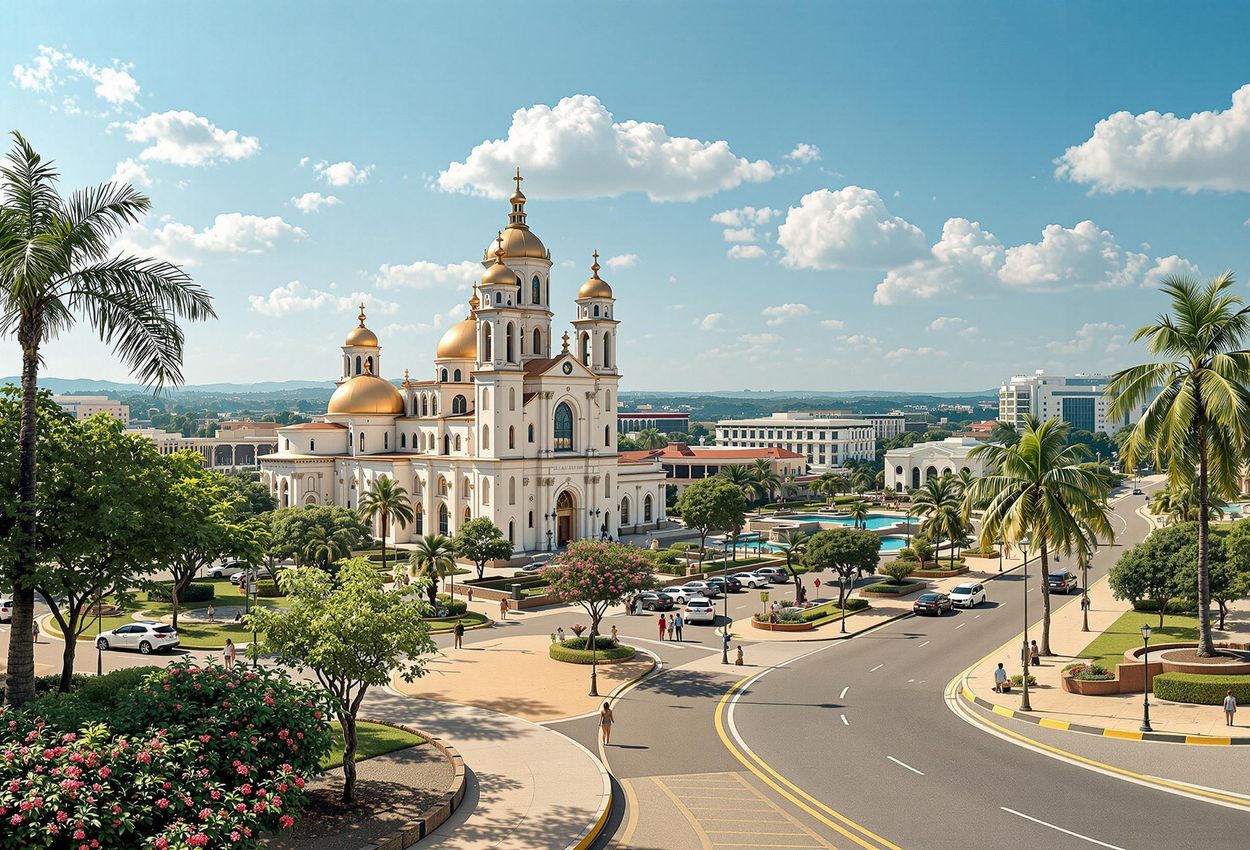
The Basilica of Our Lady of Peace is the crown jewel of Yamoussoukro, a testament to architectural ambition and religious devotion. Its immense scale and intricate design leave visitors in awe, making it a must-see landmark in Côte d'Ivoire.
The Basilica of Our Lady of Peace stands as a symbol of architectural grandeur and spiritual significance in Yamoussoukro. Completed in 1990 and consecrated by Pope John Paul II, the basilica is listed by Guinness World Records as the largest church in the world, surpassing even St. Peter's Basilica in Rome in terms of overall area.
The basilica's design bears a striking resemblance to St. Peter's Basilica, but with its own unique Ivorian flair. The exterior is dominated by an impressive dome soaring 158 meters (518 feet) high, visible from almost every point in the city. The dome is not just an architectural marvel but also a symbol of peace and hope, reflecting President Houphouët-Boigny's vision for the city and the nation.
Visitors to the basilica have the option of taking guided tours, which provide insights into the history, architecture, and religious significance of the site. Knowledgeable guides lead visitors through the vast nave, pointing out the ornate altars, intricate mosaics, and stunning stained-glass windows. These windows, crafted with vibrant colors and detailed imagery, depict biblical scenes and Ivorian motifs, creating a harmonious blend of cultures.
The interior of the basilica is just as impressive as the exterior. The vast nave can accommodate up to 18,000 worshippers, with space for 7,000 seated. The high ceilings and expansive space create a sense of reverence and awe, inviting visitors to contemplate the divine. The ornate altars, crafted from precious materials, add to the basilica's opulence and grandeur.
The stained-glass windows are a particular highlight, casting colorful patterns of light across the nave. Each window tells a story, depicting scenes from the Bible and the history of Côte d'Ivoire. The vibrant colors and intricate details create a mesmerizing effect, captivating visitors and inviting them to reflect on the messages conveyed.
Visiting the basilica requires appropriate attire, reflecting the sacred nature of the site. It is advisable to dress modestly, avoiding overly revealing clothing. Photography may be restricted in certain areas, so it is best to check with the guides before taking pictures.
Despite its grandeur, the basilica sometimes sees only a few hundred visitors, as it is located outside the downtown area. The construction of the basilica, using marble imported from Italy, sparked controversy due to its immense cost.
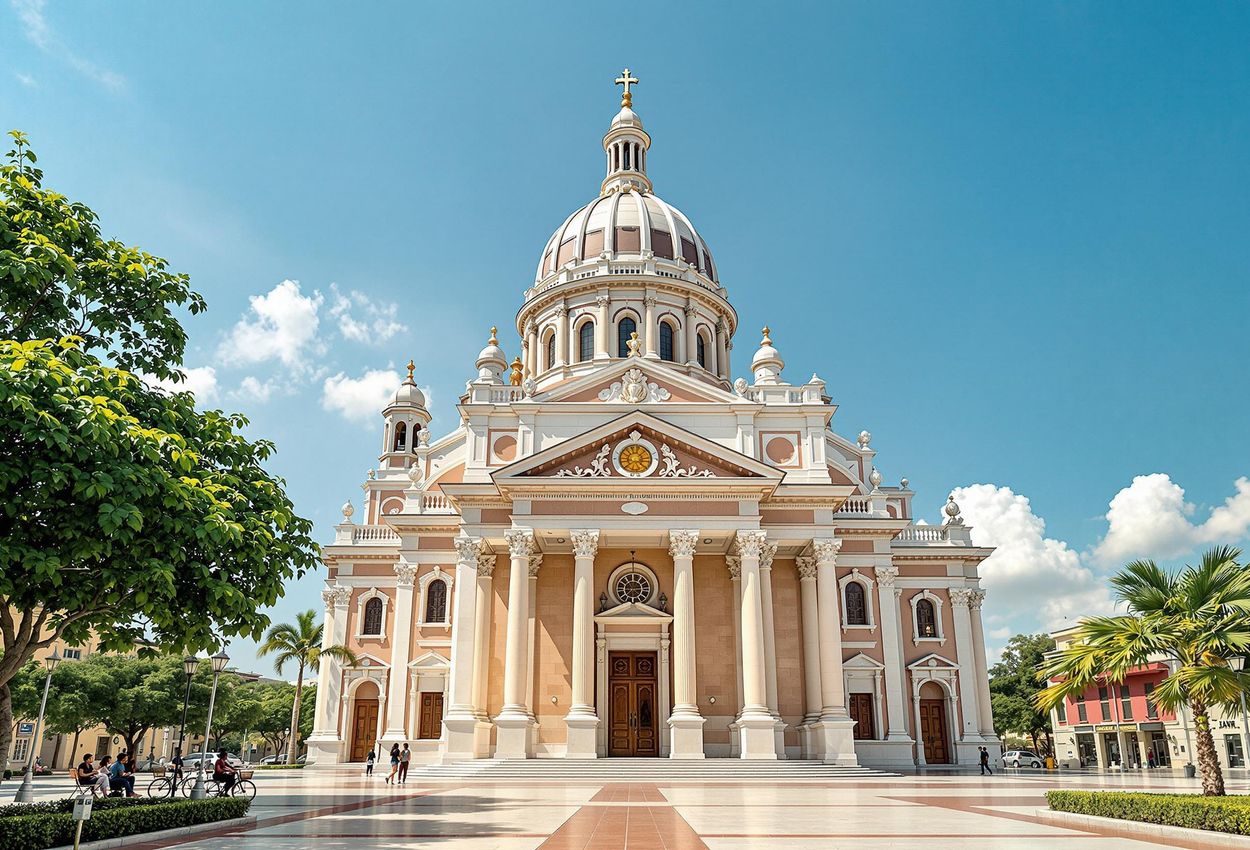
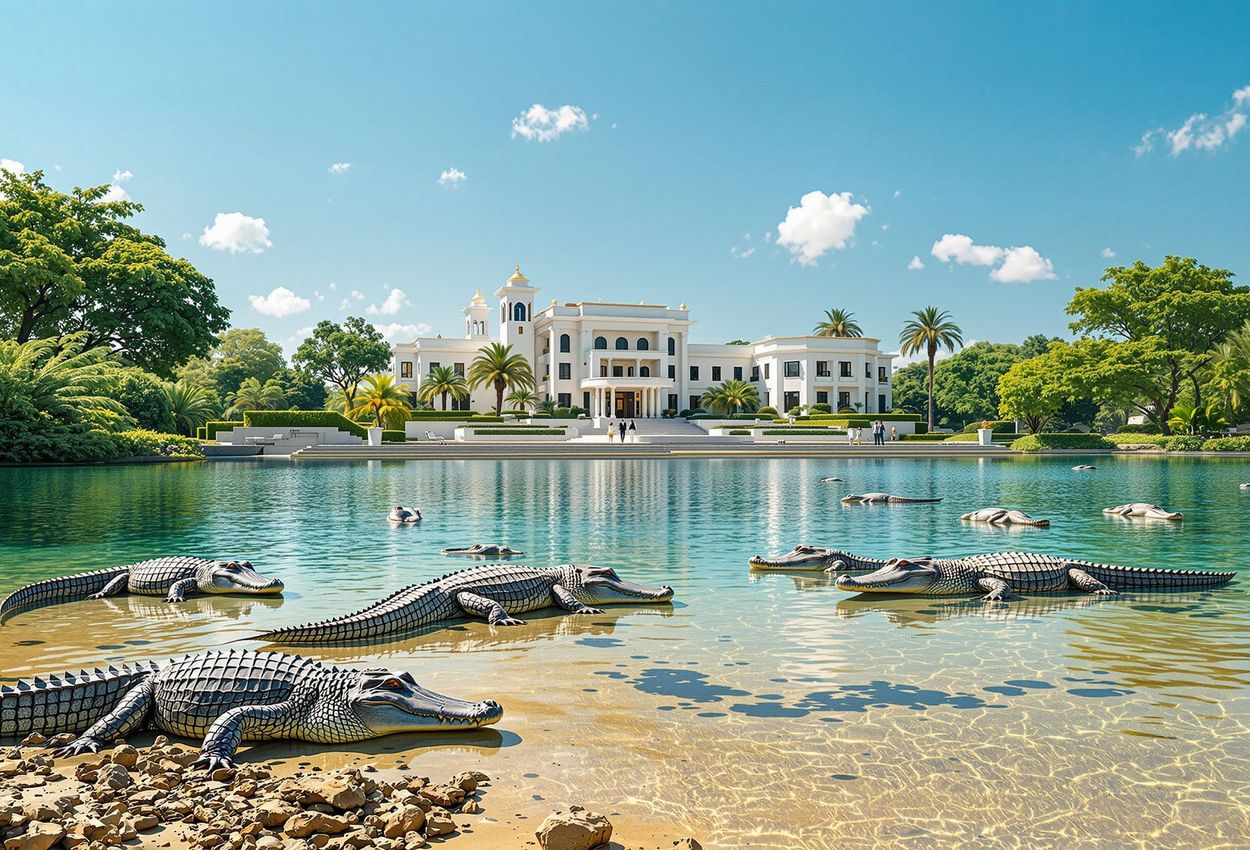
The Presidential Palace in Yamoussoukro is more than just a symbol of political power; it's a place where tradition and modernity intertwine. The sacred crocodiles in the palace's lake add an element of mystique and connect the palace to local beliefs.
The Presidential Palace in Yamoussoukro stands as a symbol of Ivorian political power and a reminder of the city's role as the nation's capital. The palace is not open to the public, but visitors can view the lake and the crocodiles.
One of the most intriguing aspects of the Presidential Palace is the presence of sacred crocodiles in the lake near the palace. These crocodiles are not merely decorative; they are deeply connected to local beliefs and traditions, adding an element of mystique to the seat of power.
The tradition of keeping crocodiles at the Presidential Palace dates back to President Félix Houphouët-Boigny, who was a member of the Baoulé ethnic group. He revived an old tradition of reverence by constructing three crocodile-infested artificial lakes surrounding the palace. These crocodiles are considered sacred animals, guardians of the palace and symbols of power and protection.
Over the years, the crocodiles, some weighing almost one ton, have become a popular attraction for locals and tourists alike. The daily feeding routine at 5 p.m. is a spectacle to behold, as the massive reptiles emerge from the water to devour their meal.
One particular crocodile, known as 'old Diko,' gained legendary status over the years. Stories circulated about Diko's age and size, adding to the mystique surrounding the crocodiles. While the palace itself is not accessible to the public, the lake and its crocodile inhabitants offer a glimpse into the unique blend of politics, tradition, and wildlife that characterizes Yamoussoukro.
Visitors are welcome to observe the crocodiles from a safe distance, taking in the sight of these ancient creatures in their unusual habitat. The palace grounds are meticulously maintained, offering a glimpse of the grandeur that characterizes Yamoussoukro.
The Félix Houphouët-Boigny Foundation for Peace is a testament to the late president's commitment to peace and development. As a research institute connected to UNESCO, the foundation plays a vital role in promoting peace and dialogue in Africa and beyond.
The Félix Houphouët-Boigny Foundation for Peace stands as a research institute dedicated to promoting peace and dialogue. Established in 1973 and later connected to UNESCO, the foundation embodies President Houphouët-Boigny's vision for a world free from conflict and violence.
The foundation's architecture is a blend of modern and traditional Ivorian styles, reflecting the country's cultural heritage. The buildings are surrounded by lush gardens and serene courtyards, creating a peaceful atmosphere conducive to reflection and dialogue. The art within the Foundation includes paintings, sculptures, and other works that celebrate peace, unity, and cultural diversity.
The Foundation is at the origin of the International Congress on Peace in the Minds of Men in 1989 and the Yamoussoukro Declaration for Peace in 1997, both placed and organized under the aegis of UNESCO.
The foundation serves as a center for research, training, and dialogue, bringing together scholars, policymakers, and peace activists from around the world. Its mission is to promote a culture of peace through education, research, and advocacy, addressing the root causes of conflict and fostering understanding and cooperation among different cultures and communities.
The foundation also hosts conferences, seminars, and workshops on topics related to peace, security, and development. These events provide a platform for sharing knowledge, exchanging ideas, and building networks of collaboration among individuals and organizations working for peace.
In addition to its research and training activities, the Félix Houphouët-Boigny Foundation also administers the Félix Houphouët-Boigny Peace Prize, awarded annually to individuals or organizations that have made a significant contribution to promoting peace. The prize is a prestigious recognition of outstanding efforts to build a more peaceful and just world.

Planning a trip to Yamoussoukro requires some preparation, but the experience is well worth the effort. Understanding the local customs and taking necessary precautions will ensure a smooth and enjoyable visit.
Getting to Yamoussoukro is relatively straightforward, with options for both flights and buses from Abidjan. Domestic flights offer a quick and convenient way to reach the capital, while buses provide a more scenic journey through the Ivorian countryside. The roads to Yamoussoukro are generally in good condition, making it a comfortable drive.
UTB buses depart every 1½ hours daily from 06.00 until 18.30 to Abidjan. Services to Bouaké leave at 08.30, 09.00 and 11.00 each day and every 1½ hours thereafter until 21.00. There are also two direct buses a day to Daloa and Man at 10.30 and 13.00.
Yamoussoukro experiences a tropical climate, characterized by warm temperatures and high humidity throughout the year. Light, breathable clothing is recommended, along with comfortable shoes for walking. Sunscreen and insect repellent are also essentials to keep handy.
Like any travel destination, it's wise to remain aware of your surroundings and take common-sense precautions. It is generally a safe city.
When interacting with locals, it's important to be mindful of Ivorian customs and etiquette. Politeness and respect are highly valued, and it's customary to greet people with a handshake or a nod. Learning a few basic French phrases can also go a long way in building rapport and showing your appreciation for the local culture.
Bargaining is common in the local markets, but it's important to do so respectfully and with a smile. It's also advisable to ask for permission before taking photographs of people or private property.
Exploring the local cuisine is an essential part of experiencing Yamoussoukro's culture. Be sure to try some attieké (cassava couscous) and alloco (fried plantains), which are popular local dishes.
Our editors` picks of the latest and greatest in travel - delivered to your inbox daily
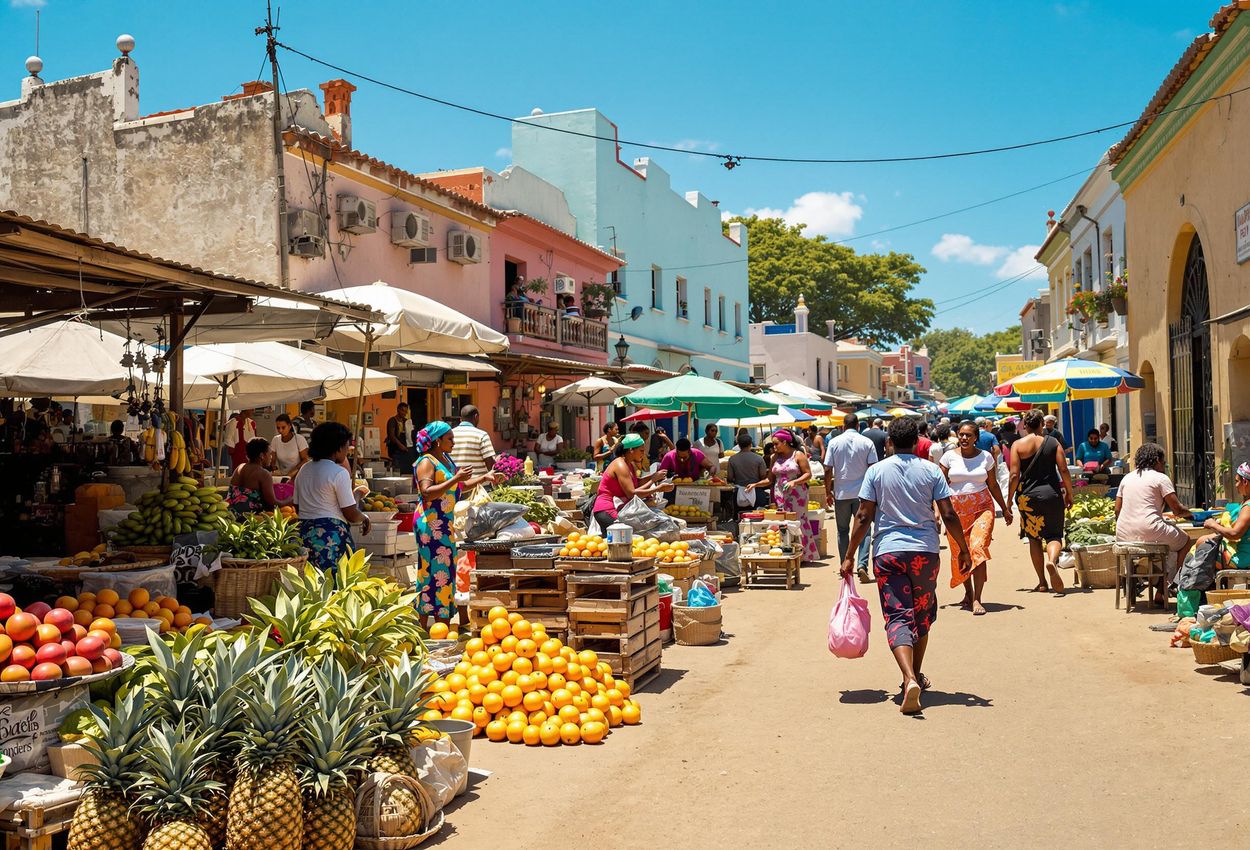
Relax on the beaches and explore the reefs of Xai-Xai.
View More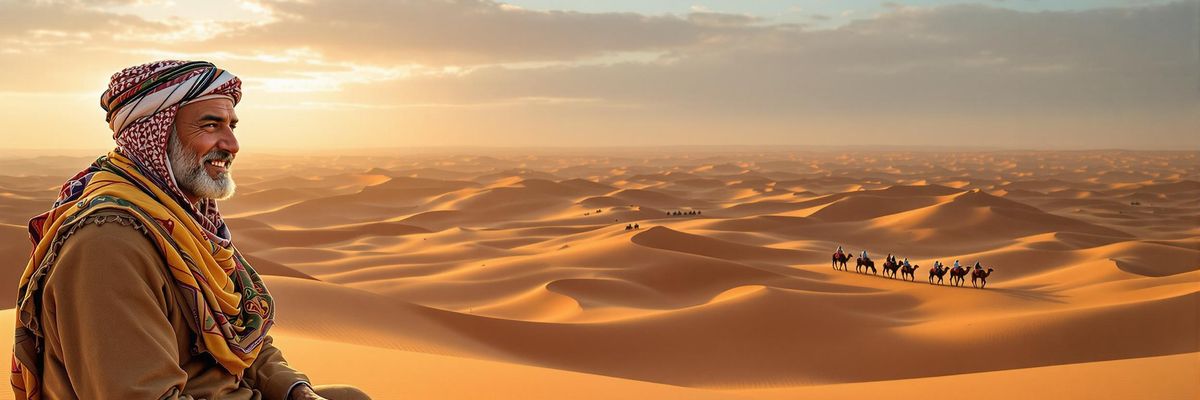
Embrace the cooler temperatures and experience the International Festival of the Sahara in Douz this December.
View More
Celebrate the year-end festivities in Accra, culminating in the vibrant Afrofuture festival.
View More Albania EDITION
 Algeria EDITION
 Argentina EDITION
 Armenia EDITION
 Australia EDITION
 Austria EDITION
 Bangladesh EDITION
 Belgium EDITION
 Belize EDITION
 Benin EDITION
 Bhutan EDITION
 Bolivia EDITION
 Bosnia and Herzegovina EDITION
 Botswana EDITION
 Brazil EDITION
 Bulgaria EDITION
 Burkina Faso EDITION
 Cambodia EDITION
 Cameroon EDITION
 Canada EDITION
 Central African Republic EDITION
 Chad EDITION
 Chile EDITION
 China EDITION
 Colombia EDITION
 Costa Rica EDITION
 Croatia EDITION
 Cyprus EDITION
 Denmark EDITION
 Djibouti EDITION
 Ecuador EDITION
 Egypt EDITION
 El Salvador EDITION
 Eritrea EDITION
 Estonia EDITION
 Ethiopia EDITION
 Finland EDITION
 France EDITION
 Gabon EDITION
 Georgia EDITION
 Germany EDITION
 Ghana EDITION
 Greece EDITION
 Guatemala EDITION
 Guinea EDITION
 Guinea-Bissau EDITION
 Honduras EDITION
 Hungary EDITION
 Iceland EDITION
 India EDITION
 Indonesia EDITION
 Ireland EDITION
 Israel EDITION
 Italy EDITION
 Jamaica EDITION
 Japan EDITION
 Jordan EDITION
 Kenya EDITION
 Kuwait EDITION
 Laos EDITION
 Latvia EDITION
 Lebanon EDITION
 Lesotho EDITION
 Liberia EDITION
 Lithuania EDITION
 Luxembourg EDITION
 Madagascar EDITION
 Malawi EDITION
 Malaysia EDITION
 Maldives EDITION
 Mali EDITION
 Malta EDITION
 Mauritania EDITION
 Mauritius EDITION
 Mexico EDITION
 Mongolia EDITION
 Montenegro EDITION
 Morocco EDITION
 Mozambique EDITION
 Namibia EDITION
 Nepal EDITION
 Netherlands EDITION
 New Zealand EDITION
 Nicaragua EDITION
 Niger EDITION
 Nigeria EDITION
 Norway EDITION
 Oman EDITION
 Pakistan EDITION
 Panama EDITION
 Papua New Guinea EDITION
 Paraguay EDITION
 Peru EDITION
 Philippines EDITION
 Poland EDITION
 Portugal EDITION
 Qatar EDITION
 Romania EDITION
 Rwanda EDITION
 Saudi Arabia EDITION
 Senegal EDITION
 Serbia EDITION
 Singapore EDITION
 Slovakia EDITION
 Slovenia EDITION
 Somalia EDITION
 South Africa EDITION
 South Korea EDITION
 Spain EDITION
 Sri Lanka EDITION
 Suriname EDITION
 Sweden EDITION
 Switzerland EDITION
 Tanzania EDITION
 Thailand EDITION
 Tunisia EDITION
 Uganda EDITION
 United Arab Emirates EDITION
 United Kingdom EDITION
 Uruguay EDITION
 Venezuela EDITION
 Vietnam EDITION
 Zambia EDITION
 Zimbabwe EDITION
Subscribe to our newsletter and get the most captivating travel stories, hidden gems, and expert insights delivered straight to your inbox. As a subscriber, you’ll be first in line for exclusive content, premium offers, and unforgettable travel experiences