In the shadow of the world’s most photographed skylines, something fragile is fraying. From the misty canals of Venice to the alleyways of Barcelona and the houseboat-lined waterways of Amsterdam, the very places that inspired bucket lists are now struggling under the weight of our collective desire to see them. The good news is that a quiet revolution is underway, reshaping how and when we travel so that iconic destinations can finally breathe again.Understanding the Overtourism Challenge
On a spring afternoon in Venice, the light settles over the Grand Canal like powdered gold, turning the water a soft, luminous green. Vaporetto engines thrum in the distance, church bells ripple through the air, and in the narrow lanes around Piazza San Marco, bodies move as a single, shuffling tide. Souvenir stalls spill onto the paving stones; rolling suitcases clatter over centuries-old bridges. It is beautiful and suffocating at once, a living postcard pushed beyond its limits.
This is the essence of overtourism: when the number of visitors overwhelms a destination’s physical spaces, infrastructure, environment, or social fabric. It is not simply a question of how many people arrive, but when they come, where they cluster, and how local economies are re-engineered to serve them. Cheap flights, frictionless booking platforms, and an endless scroll of social media imagery have compressed the world into a handful of must-see hotspots. A single viral post of a lavender field, a cliffside village, or a pastel canal can send thousands of travelers to the same narrow street in the same high season, straining everything from sewage systems to neighborhood grocery stores.
In Barcelona, the impacts are inscribed on façades and front doors. Around La Rambla and the labyrinthine lanes of the Barri Gòtic, residents have watched rents climb relentlessly as apartments are flipped into short-term rentals. Long-standing hardware shops and butchers have given way to gelaterias and novelty T-shirt stands; the rhythm of everyday life is pushed to the margins. A teacher who once walked to work now endures a longer commute from a distant suburb, priced out of the neighborhood where she grew up.
In Amsterdam, those postcard-perfect canals of Jordaan and the cobbled streets around Dam Square face a different strain. Stag parties and cheap flights have turned the historic center into a weekend playground. Locals weave between beer bikes and wobbling rental bicycles, dodging rolling suitcases on tram tracks. Even the iconic gabled houses, many of them dating back to the Dutch Golden Age, feel under siege as mass tourism fuels noise, litter, and the conversion of family homes into visitor accommodation.

Back in Venice, the imbalance is starkest in the numbers. Fewer than 50,000 residents now live in the historic center, yet on peak days the city can receive more than triple that in visitors. Commuter-style day-trippers, arriving mid-morning and leaving by dusk, crowd bridges and alleyways but spend relatively little beyond a quick snack and a trinket. For Venetians, the city’s economy has tilted away from services that sustain local life and toward those that serve an endless flow of temporary guests. Grocery stores close, hardware shops vanish; in their place come mask vendors and limoncello boutiques.
Ask those who remain what has changed, and the answer is rarely just about money. On a quiet fondamenta away from Rialto Bridge, a middle-aged resident named Marco leans against the peeling brick of his apartment building and folds his arms. He was born on this island; his parents ran a small bacaro, and he remembers as a child being sent to fetch bread from the neighborhood baker.
Before, visitors were like guests at a family table; they stayed longer, they were curious about our stories, they knew this was a fragile place to be treated gently. Now it feels like we live inside a corridor, an attraction people hurry through. The city belongs to everyone for a few hours and to almost no one for a lifetime.
He talks about how schoolyards became hotel courtyards, how friends have decamped to the mainland, how elderly Venetians time their errands to avoid the worst of the afternoon crush. When cruise ships were still docking at the edge of the lagoon, he recalls the way their hulking silhouettes would rise behind bell towers, a visual metaphor for a tourism model that had outgrown its setting.
Elsewhere, the impacts are etched into the land itself. In Bali, rice terraces once carved for subsistence farming carry the footprints of millions, their narrow paths trampled by a constant procession of visitors chasing the same sunset view. Water tables sag under the weight of resort development; plastic waste leaches into rivers where offerings once floated. The paradox of overtourism is that the very landscapes and cityscapes that draw travelers are being eroded by our presence, unless destinations radically reimagine how they welcome the world.
That reimagining is already underway. Across continents, tourism boards, city governments, and local communities are experimenting with bold new approaches to crowd management and sustainability. Some are subtle nudges in time and space; others, like entry fees or reservation-only access, are tectonic shifts. Together, they hint at a future in which travel does not mean choosing between our own joy and a destination’s survival.
Visitor Dispersal: Spreading the Footprint
One of the most powerful tools in the fight against overtourism is also one of the simplest: moving people around. Not away from a destination altogether, but across it and beyond it, softening the blow to the most strained hotspots while revealing an often richer, more varied experience for the traveler. Visitor dispersal is the art of suggestion, an invitation to broaden your sense of place.
Consider Oregon, where the sapphire bowl of Crater Lake National Park has long drawn photographers, hikers, and road-trippers. At the height of summer, the narrow rim roads can jam with cars, and the most popular overlooks transform into viewing platforms where visitors shuffle in and out for the same shot. Recognizing that the pressure was unsustainable, Travel Oregon quietly rewrote its invitation. Using geotargeted campaigns, it began to serve ads and storytelling to travelers already in the region, highlighting lesser-known lakes, forest trails, and volcanic landscapes within a comfortable drive of Crater Lake.
Instead of herding everyone toward a single caldera, the campaign painted a constellation of alternatives: the moss-draped trails near Toketee Falls, the obsidian fields of Newberry National Volcanic Monument, quiet campgrounds where night skies are just as star-strewn. For visitors, this shift meant fewer queues, fewer crowded viewpoints, and more of the serendipity that defines truly memorable travel. For local communities beyond the usual gateway towns, it meant a more even flow of income across the region’s short high season.

In cities, dispersal takes on a different shape. Part of the labor is psychological: shaking travelers loose from the idea that a destination consists only of its three most Instagrammed sites. In Paris, officials have long grappled with bottlenecks around the Louvre, the Eiffel Tower, and Montmartre. Recent visitor campaigns have subtly reoriented the story of the city, spotlighting neighborhoods that sit beyond the usual pilgrimage routes. The canal-side promenades of Canal Saint-Martin, the village-like calm of Butte-aux-Cailles, and the green expanse of Parc des Buttes-Chaumont are framed not as consolation prizes but as authentic, lived-in slices of Parisian life.
Japan, too, has turned to dispersal in response to the gridlock of its most beloved sites. For years, images of the Fushimi Inari Taisha torii gates and the mirror-still waters of Arashiyama reflected in autumn foliage dominated travel imaginations. Trains deposited visitors in Kyoto by the thousands, compressing their itineraries into a handful of increasingly strained districts. In response, national and regional tourism authorities have begun promoting alternative cities and regions: pottery towns, mountain onsen villages, and coastal routes where the pace is slower and the travel experience more reciprocal.
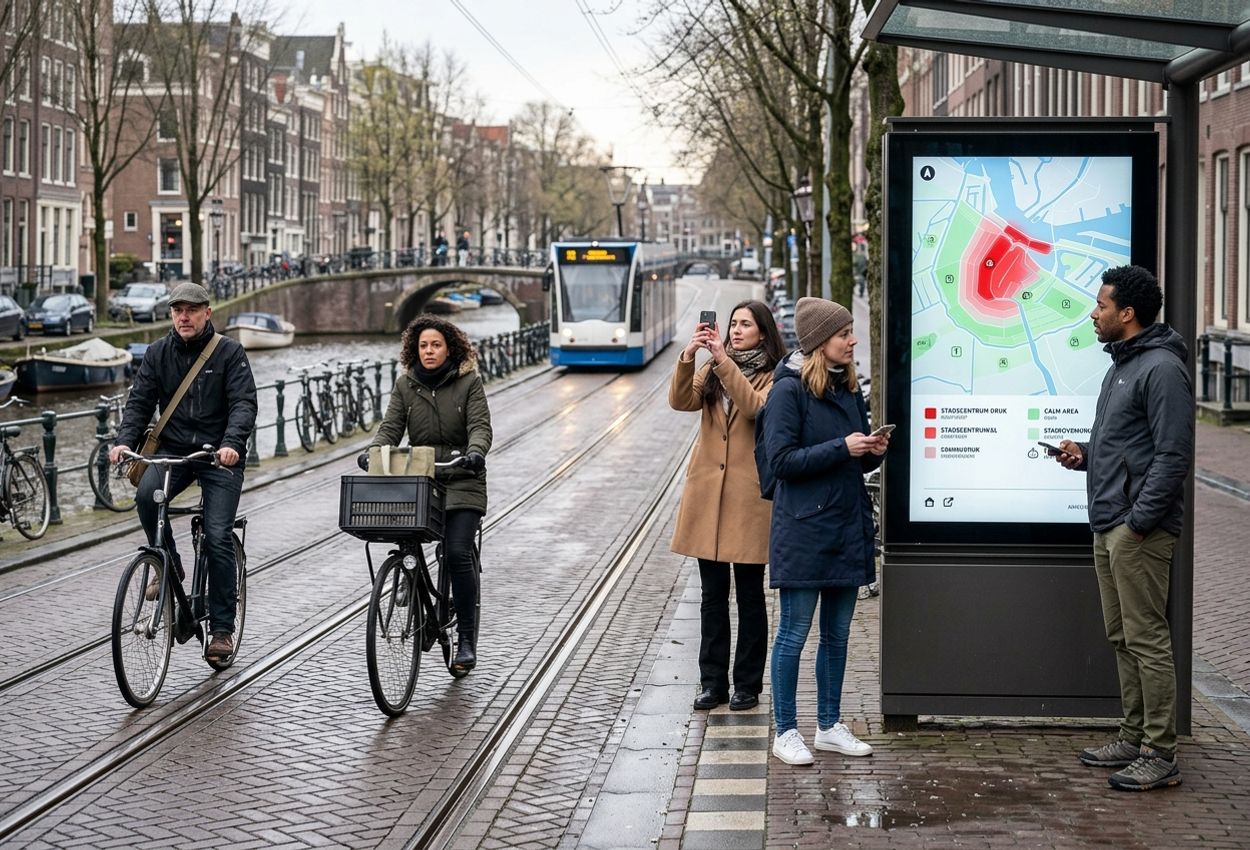
Technology has become an indispensable ally in this effort. In Amsterdam, a city that knows overtourism too well, officials have leaned on real-time data and digital nudging. Through tools like the Discover the City features integrated into local tourism platforms and apps, visitors can see live information on crowd levels in iconic districts such as the Red Light District and the Museumplein. The system suggests alternative neighborhoods, markets, and parks when certain zones cross pre-defined thresholds of saturation, offering nearby options that match visitor interests but disperse their impact.
The experience from the traveler’s perspective is subtle: an alert recommending a stroll along the contemporary galleries and independent cafés of Oud-West instead of another lap of Dam Square, or a prompt steering families toward a quieter canal-side playground rather than the shoulder-to-shoulder bustle of the inner ring. Over time, these micro-suggestions reshape movement patterns, ease the pressure on fragile historic cores, and invite a more layered understanding of the city.
Dispersal can also mean extending the map beyond city limits. Japan’s national discourse on overtourism around Mount Fuji has inspired efforts to broaden travelers’ sense of where the mountain can be experienced. Rather than funnelling everyone into the most famous viewpoints, local authorities and tourism operators are quietly promoting alternative vantage points that sit on the periphery of the main routes. One such hidden gem lies along a lesser-known trail in the foothills near the shores of Lake Saiko, west of the more touristed Lake Kawaguchi.
This forested trail, stitched with roots and soft pine needles, winds up through a tapestry of cedar and cypress. The air is cooler here than in the packed parking lots ringing the better-known viewing spots. As you climb, birdsong replaces bus engines; the scent of damp earth and resin lingers in the shade. Eventually the trees thin, and a small, rocky clearing opens like a balcony over the Fuji Five Lakes region. From this modest ridge, Mount Fuji rises not as a backdrop for a swing or a selfie platform but as a solitary, snow-capped cone floating above a fringe of hills, its flanks shifting from lilac to rose in the late afternoon light.
There are no ticket booths, no souvenir stalls, just a simple wooden sign and a narrow bench where a local hiker might pause to share mandarins and a thermos of green tea. Stories like this one point to the deeper promise of dispersal: not only does it relieve pressure on iconic viewpoints, but it also returns travel to a slower register, one in which encounters with residents, landscapes, and traditions unfold beyond the frame of the obvious.
For destinations, successful dispersal requires more than a clever app or a rebranded brochure. It demands investment in transportation links to outlying areas, support for small businesses beyond city centers, and a willingness to share the limelight. Done well, it balances a destination’s carrying capacity with travelers’ curiosity, coaxing us gently away from the overrun and toward the overlooked.
Time-Based Ticketing: Managing Peak Demand
If dispersal spreads visitors out in space, time-based ticketing spreads them out in time. It is crowd control at the level of the clock, and in some of the world’s most besieged destinations, it is fast becoming non-negotiable.
Few places illustrate this shift more starkly than Venice. After years of debate and delays, the city introduced a day-tripper access fee on selected peak days, effectively asking visitors who do not stay overnight to reserve their spot within defined hours. While the measure is still evolving, it sits alongside a broader experiment in scheduled access, designed to soften the mid-day crush when alleyways near Ponte di Rialto and Piazza San Marco have historically been almost impassable.
Across the Mediterranean in southern France, the rugged inlets of the Calanques National Park near Marseille and Cassis have undergone a more dramatic transformation. Once, on scorching summer days, the narrow paths down to the turquoise waters of Calanque de Sugiton would funnel thousands of hikers toward a single cove, eroding soil, compacting roots, and sending rubbish skittering down cliffs. Today, access in high season is controlled through an online reservation system. Visitors book a specific date, receive a digital pass, and rangers at trailheads check permits before allowing people to descend.

On paper, the mechanism is deceptively simple: the park sets a daily cap based on ecological studies and safety considerations, then allocates timed entries throughout the day. In practice, the experience is transformative. Hikers who secure a morning slot find the path dappled in shade, the sound of cicadas loud enough to be heard over human voices. Those who descend in the late afternoon meet fewer people on the trail, their footsteps softened in dust that has not been trampled into powder. On the beach itself, there is room to lay out a towel without overlapping someone else’s, to swim without bumping shoulders, to listen to the rhythmic slap of waves on the cliff base instead of snippets of ten different conversations.
Time-based ticketing systems function on a few core principles. First, they establish maximum visitor thresholds that reflect the true carrying capacity of a site. Second, they require advance planning from travelers, whether via a dedicated portal, an integrated calendar-based platform, or a tourism app that bundles attractions and transport. And third, they create ripple effects that destinations must anticipate: shifting demand to shoulder seasons, to lesser-known sites, or to unsanctioned access points if communication and enforcement are not robust.
To understand what makes such a system work, imagine speaking with a tourism official responsible for managing timed entry at a fragile coastal reserve. Standing in a small office lined with aerial photographs and maps, she traces the evolution of their policy with a fingertip.
Before reservations, we had no control over who came or when. On the busiest days, it felt as if the landscape was under siege – paths widening, rare plants trampled, lifeguards overwhelmed. People would arrive angry from the heat and the parking chaos, and that frustration colored their entire experience. Timed entry changed the psychology. Now, when visitors arrive, they know they belong to a particular window. The queue moves, the staff are calmer, and the environment is finally given breathing space between the waves of people.
Her team uses a calendar-based ticketing platform that integrates with the region’s broader tourism website. Visitors can see color-coded days months in advance: green for low demand, yellow for moderate, red for near capacity. The system sends automatic reminders about what to bring, how to reach the trailhead via public transport, and the code of conduct on-site. By the time travelers arrive, many of their uncertainties – where to park, whether there is shade, how long the hike will take – have been preemptively answered.
For destinations considering similar measures, the practical steps are increasingly clear. First, they must invest in robust digital infrastructure: secure payment gateways where fees are required, user-friendly calendars with real-time availability, and mobile-optimized tickets that do not require constant connectivity to display. Second, they must pair technology with human presence. Rangers, stewards, or guides at entry points can check permits, educate visitors, and soften the sense of being managed with a sense of being welcomed.
The benefits of time-based systems extend beyond ecological protection. Queues shrink dramatically, tension defuses, and the overall visitor experience improves as people are no longer competing en masse for the same narrow slice of time and space. In museums and historic buildings, crowding inside galleries diminishes, enabling visitors to linger longer, to notice the texture of frescoes or the grain of stone. At outdoor sites, the soundtrack shifts from raised voices and whistles to birdsong and breeze.
Critics warn, rightly, that such systems risk excluding those without reliable internet access, credit cards, or the confidence to navigate digital tools in an unfamiliar language. To counteract this, some destinations have introduced mixed models: a portion of slots released online in advance, another tranche held back for same-day allocation at on-site kiosks or staffed information points. Others offer community exemptions or discounted windows for local residents, acknowledging their right to continued, spontaneous access to the places that shape their daily lives.
In the long run, time-based ticketing is less about gatekeeping than recalibration. It asks travelers to reimagine spontaneity, not as an unplanned arrival at noon in the height of high season, but as creativity within a framework: sunrise entry, a shoulder-season trip, a detour to a nearby village when a favored slot is unavailable. For destinations under acute pressure, it can be the difference between a steady heartbeat and a chronic state of emergency.
Sustainable Infrastructure: Building for the Future
Beneath the headlines about entry fees and viral crowds lies a quieter, more structural story: the physical systems that make tourism possible are being rebuilt. Sustainable infrastructure is less photogenic than a cliffside sunset, but it may ultimately determine whether beloved destinations thrive or merely endure their visitors.
Consider the humble hotel room. In places overwhelmed by tourism, accommodation can be both culprit and remedy. Conventional construction strains water supplies, generates waste, and often displaces local residents. In contrast, a new generation of green-certified stays aims to weave hospitality into the environment with a lighter touch. Across Europe and beyond, eco-labeled guesthouses and hotels are integrating rainwater harvesting, solar panels, graywater recycling, and passive cooling into their designs. Room keys that control electricity, sensors that dim unused corridor lights, and rooftop gardens that insulate as they delight are becoming part of the architecture of responsible travel.

Transportation is undergoing a similar shift. Electric buses replace diesel coaches on mountain routes, their quieter engines disturbing wildlife less and allowing guides’ voices to carry through the cabin without microphones. Bicycle-sharing schemes and well-marked cycling lanes invite visitors to explore at a human pace rather than from behind the glass of a tour bus. In island destinations, hybrid ferries and boats equipped with cleaner engines reduce emissions and underwater noise, giving marine life a reprieve.
The most ambitious examples, however, are systemic, aligning infrastructure upgrades with broader development goals. In parts of Tanzania, where safari tourism is both an economic lifeline and an ecological tightrope, investments in sustainable infrastructure have begun to reshape how visitors move through fragile landscapes. Lodges on the fringes of national parks such as Serengeti National Park and Ngorongoro Conservation Area increasingly rely on solar arrays for power, reducing dependence on diesel generators that once rumbled through the night. Boreholes and carefully managed rainwater catchment systems reduce pressure on local water sources, while waste is sorted, composted, or transported out of the ecosystem instead of being burned or buried nearby.
These changes do not happen in isolation. They are the product of intricate community–private–public partnerships in which local villagers, conservation authorities, and tour operators sit at the same table. Revenues from park fees and conservation levies help fund rural electrification, school construction, and health clinics, ensuring that the benefits of tourism are visible and tangible beyond lodge gates. In return, communities participate in anti-poaching initiatives, co-manage conservancies, and help set the terms for how many vehicles may crowd a cheetah sighting or how close a hot-air balloon may float to nesting sites.
The impact of this infrastructure is both visible and invisible. On the surface, visitors may notice well-maintained boardwalks that keep feet off delicate grasses, composting toilets at popular viewpoints that prevent contamination of streams, or shaded picnic areas built from locally sourced, sustainable materials. Behind the scenes, sensor-equipped boreholes track water usage; microgrids balance energy loads between lodge clusters and nearby villages. The result is a form of tourism that begins to operate within planetary boundaries rather than at their expense.
Coastal destinations are following suit. In island communities that once struggled with overflowing landfills and erratic power supplies, waste-to-energy plants, desalination systems powered in part by renewables, and centralized recycling hubs are gradually replacing ad-hoc solutions. These investments are expensive, but they extend a destination’s capacity to host visitors without eroding the very qualities that draw them in – emerald bays that remain clear, reefs that resist bleaching, hillsides that are not scarred by illegal dumping.
Sustainable infrastructure also means designing for people, not just systems. Thoughtfully planned visitor centers double as cultural hubs where local artisans sell crafts, storytellers share oral histories, and young guides interpret ecosystems for guests. Wayfinding signage is produced in collaboration with local communities, using multiple languages and symbols that welcome rather than instruct. Trails are graded and surfaced to allow access to those with reduced mobility, expanding the right to experience landscapes that were once only reachable by the fit and fearless.
None of this is accidental. It requires long-term planning horizons that stretch beyond election cycles and tourist seasons, backed by regulations that reward sustainable building practices and penalize reckless expansion. It depends on financing mechanisms that channel tourism income into public works: airport departure taxes dedicated to conservation projects, hotel bed levies earmarked for waste and water infrastructure, visitor contributions transparently tied to tangible improvements.
In the context of overtourism, these investments are more than virtuous add-ons. They are a form of risk management. Destinations that harden their infrastructure against climate shocks, seasonality, and visitor surges are better placed to protect both residents and guests when extremes – of weather, of demand – inevitably arrive. They treat tourism not as a windfall but as a long-term relationship that must be nurtured, negotiated, and occasionally recalibrated.
The Role of Technology: AI and Data-Driven Solutions
If overtourism is partly a data problem – too many people in the wrong place at the wrong time – then technology, particularly artificial intelligence, is increasingly part of the solution. Around the world, cities and regions are quietly wiring themselves with sensors, cameras, and connected devices that render visitor flows visible in real time. The challenge, and the opportunity, lies in what they do with that knowledge.
In Amsterdam, a city defined by delicate balances – between locals and visitors, bicycles and trams, water and land – authorities have deployed a web of Internet of Things devices to monitor everything from pedestrian counts on narrow bridges to noise levels in nightlife districts. Cameras and sensors feed anonymized data into centralized platforms that use AI to detect patterns and anomalies: an unexpected surge of visitors in a single canal belt, a bottleneck at a tram stop, a nightlife area tipping into unsafe density on a weekend evening.
Rather than simply logging these numbers for posterity, algorithms help predict where pressure will build next. City officials can then intervene: rerouting crowds using dynamic wayfinding signs, temporarily pausing access to certain streets, or pushing notifications through tourism apps that encourage visitors to pivot to less congested quarters. Hotels and museums, plugged into the same information ecosystem, can adjust their own advice to guests, suggesting off-peak visiting hours or alternative venues.
Copenhagen has adopted similar data-driven strategies, integrating cycling counters, harbor sensors, and visitor statistics into urban dashboards that inform policy. During major events, AI models calibrated with historical data allow the city to forecast how many people will congregate in specific plazas or waterfront promenades at given times. This enables more precise deployment of public transport capacity, security, and cleaning crews – crucial for residents’ quality of life and for ensuring that visitors encounter a city that feels prepared rather than overwhelmed.
Beyond individual cities, specialized platforms are emerging to support destinations as they grapple with the complexity of tourism flows. AI-powered systems such as D / AI Destinations and similar tools ingest data from multiple sources – booking engines, mobile network operators, flight schedules, social media check-ins – to create multidimensional pictures of how and when people move through regions. These platforms can flag emerging hotspots before they tip into crisis, simulate the effects of new policies like pedestrianization or bus rerouting, and model how promoting an under-visited town might redistribute overnight stays.
For tourism boards and local governments, the value lies not only in seeing where visitors are today, but in asking what-if questions. What if a new hiking trail were opened in a little-known valley – would it siphon pressure from the crowded ridge two valleys over, or simply add to total volume? What if cruise ship arrivals were staggered by three hours – would that allow historic centers to absorb foot traffic more evenly, or simply extend daily stress? By running these scenarios virtually, destinations can fine-tune interventions before imposing them on real communities and landscapes.
At the traveler level, this data-driven shift is increasingly tangible. In Florence, the Feel Florence app has reimagined tourism guidance as a live conversation rather than a static brochure. Drawing on real-time indicators of crowding in iconic areas such as Piazza del Duomo and Ponte Vecchio, the app gently nudges visitors toward less saturated streets, cloisters, and viewpoints. Instead of arriving at the cathedral square to find it impenetrably packed, users might receive a suggestion to detour first through the cloistered calm of Basilica di San Miniato al Monte on the hillside, where the city unfurls below in terracotta and stone.
The app’s algorithms learn from preferences: a traveler who lingers near contemporary galleries is more likely to be offered routes that weave in ateliers and lesser-known museums; someone who consistently chooses green spaces will receive recommendations heavy on gardens and parks. In this way, AI personalizes dispersal, turning a blunt instrument into something closer to a bespoke itinerary that also happens to align with the city’s sustainability goals.
Of course, these technologies raise questions. Who owns and controls the data that underpins them? How are privacy and civil liberties safeguarded when sensors track movement through public spaces? Can smaller destinations, with limited budgets and technical expertise, realistically deploy such sophisticated systems, or will they deepen a divide between well-resourced global cities and fragile rural or island communities?
Some answers are emerging through collaboration. Regional tourism organizations are pooling resources to adopt shared data platforms that serve multiple municipalities. Universities and research institutes partner with local governments to design ethically grounded monitoring frameworks. Open-data policies, when thoughtfully implemented, allow community groups and independent researchers to audit and interpret tourism impacts, keeping official narratives honest.
Crucially, technology is not a panacea. It can illuminate patterns and suggest responses, but it cannot by itself decide what kind of tourism a place wants. That remains a political and cultural conversation, one in which residents weigh the benefits of visitor income against the costs to their housing, their streetscapes, their sense of home. AI may optimize flows, but communities must choose the destination.
In the end, the promise of AI and data-driven solutions in tourism is not about creating perfectly managed theme parks, but about restoring a measure of equilibrium. When deployed transparently and thoughtfully, these tools can help ensure that ancient alleys are not reduced to one-way conveyor belts, that national parks do not crumble under a thousand footprints a day, that residents are not forced to live in permanent high season. They can help reframe travel as a relationship between people and places governed by mutual respect rather than mere convenience.
For travelers, this future might feel slightly different: more advance reservations, more gentle prompts to arrive early or late, more suggestions to swap one crowd-pleasing viewpoint for a quieter alternative with a story of its own. But in exchange, we are offered something precious: the chance to encounter destinations not at breaking point, but at their best – still themselves, still surprising, still able to welcome us without losing what made them worth visiting in the first place.