In an era defined by escalating climate concerns, the whispers of ancient civilizations offer invaluable lessons. By examining how past societies navigated environmental shifts, we gain critical insights into addressing our present and future challenges.
The study of ancient civilizations, and how they were impacted by climate change, offers a unique lens through which to view our current environmental predicament. Historians, archaeologists, and climate scientists are collaborating to understand the intricate relationship between climate fluctuations and societal changes, recognizing that the past holds keys to a more sustainable future. By analyzing the successes and failures of ancient societies in the face of environmental adversity, we can glean practical strategies for mitigating the impacts of climate change and building more resilient communities.
This interdisciplinary approach allows for a comprehensive understanding of how climate change has shaped human history, offering lessons that are both timely and timeless. From the জল management techniques of ancient Egypt to the urban planning of the Indus Valley Civilization, the ingenuity and adaptability of our ancestors provide a roadmap for navigating the complexities of our changing world. This exploration into the past serves not only as a historical account but as a guide for creating a more sustainable and equitable future for all.
Studying ancient civilizations allows us to understand the long-term consequences of environmental change and the importance of proactive adaptation measures. It highlights the critical need for global cooperation, sustainable resource management, and innovative solutions to ensure the well-being of both present and future generations. As we confront the growing challenges of a warming planet, the echoes of the past remind us that our ability to learn from history will ultimately determine our collective destiny.
Echoes of the Past: Climate Change and Societal Shifts
The examination of ancient civilizations provides a crucial understanding of contemporary climate change challenges. The rise and fall of empires, the migration of peoples, and the evolution of cultures are often intertwined with shifts in climate patterns.
The relevance of ancient history to current environmental issues cannot be overstated. By delving into the past, we uncover patterns of human behavior and environmental impact that resonate with our modern experiences. Ancient societies faced climate challenges ranging from prolonged droughts to devastating floods, and their responses offer a rich tapestry of adaptive strategies and cautionary tales. Studying these responses allows us to identify effective approaches to climate resilience and avoid repeating past mistakes.
The study of past societies' reactions to climate change, whether successful or unsuccessful, provides invaluable lessons and insights for addressing present and future challenges. Civilizations such as the Maya, the Akkadian Empire, and ancient Egypt all experienced periods of climate stress that significantly impacted their social, economic, and political structures. Analyzing how these societies adapted, or failed to adapt, offers a framework for understanding the potential consequences of our current environmental trajectory. For instance, the Mayan civilization's decline has been linked to prolonged drought, while ancient Egypt's ability to manage the Nile's flood patterns allowed it to thrive for centuries.
The interdisciplinary approach involving historians, archaeologists, and climate scientists is essential for unraveling the complexities of these ancient narratives. Historians provide the cultural and social context, while archaeologists uncover physical evidence of past environments and human activities. Climate scientists contribute their expertise in reconstructing past climate conditions and modeling future scenarios. This collaborative effort yields a more holistic understanding of the interplay between climate and society, offering actionable insights for policymakers and communities striving to build a sustainable future. By integrating these diverse perspectives, we can develop more effective strategies for mitigating climate change impacts and fostering resilient societies.
Understanding how ancient civilizations responded to climate change is not merely an academic exercise but a practical necessity for navigating the challenges of our time. The lessons learned from the past can inform our present actions, guiding us toward a future where human societies and the environment can thrive in harmony. As we face an uncertain climate future, the wisdom of the ancients provides a beacon of hope and a call to action.
Egypt's Nile: Adaptation and Vulnerability
Ancient Egypt's story is intimately tied to the Nile River, its lifeline. The civilization's prosperity depended on the river's consistent flood patterns, which provided fertile soil and water for agriculture.
Ancient Egypt's relationship with the Nile River and its fluctuating flood patterns offers valuable insights into adaptation and vulnerability. The Egyptians developed sophisticated irrigation and water management systems to cope with the river's natural variations. Canals, dams, and reservoirs were constructed to regulate water flow, ensuring a stable food supply even during periods of low rainfall. These systems allowed the Egyptians to cultivate crops year-round, supporting a large and complex society.
The civilization adapted to changes in the river's levels through intricate water management techniques. The construction of long-term grain storage facilities was a key adaptive response to climate stress, allowing communities to stockpile food during times of abundance and distribute it during periods of scarcity. This proactive approach helped mitigate the impact of unpredictable weather patterns and maintain social stability. Moreover, the Egyptians diversified their agricultural practices, cultivating a variety of crops that were resilient to different environmental conditions.
Prolonged droughts and erratic weather patterns had significant impacts on Egyptian society, potentially leading to social unrest and political turmoil. During periods of severe drought, crop yields declined, leading to food shortages and economic hardship. These conditions often exacerbated social inequalities, as those with access to resources were better able to cope with the challenges. The resulting tensions could lead to civil unrest and weaken the central authority of the state.
Insights from Yale experts Nadine Moeller and Joseph Manning highlight the importance of cooperation and adaptive strategies in ancient Egypt. They emphasize that the Old Kingdom's stability was maintained through a balanced political equilibrium and economy. Climate change-related Nile failures disrupted agricultural yields, necessitating a rethinking of food systems. The development of long-term grain storage facilities became a crucial adaptive response, allowing towns to build their own grain reserves for distribution to inhabitants. Changing subsistence patterns also played a significant role in mitigating climate stress.
Mesopotamia's Dust: Drought and Empire's End
The Akkadian Empire, the first united empire in Mesopotamia, thrived due to its advanced irrigation systems. However, its reliance on agriculture made it vulnerable to climate change.
The Akkadian Empire's downfall serves as a stark reminder of the potential consequences of climate change. A 300-year drought, starting around 2200 BCE, crippled the empire's agricultural base, leading to widespread crop failures and societal disruption. The empire's reliance on rain-fed agriculture in the north and irrigated lands in the south meant that it was particularly susceptible to changes in precipitation patterns.
The drought led to significant environmental changes in the Middle East, constantly disrupting life and up-ending emerging empires. As agriculture collapsed, people migrated away from stricken areas, putting pressure on remaining resources and leading to conflicts. The once-thriving city of Tell Leilan was abandoned and covered with a meter of windblown silt, a testament to the severity of the drought.
The climatic dynamics that caused widespread agricultural failures and the end of the Akkadian era have been extensively explored. Fossil coral records provide evidence that frequent winter dust storms and a prolonged cold winter season contributed to the empire's collapse. These environmental changes would have caused major agricultural problems, possibly leading to social instability and famine. The correlation between ancient winter climate anomalies and the civilization area of Mesopotamia and the Akkadian Empire is clear, with the dry spells being sudden and intense.
The story of the Akkadian Empire highlights the importance of climate resilience and diversification in agriculture. The empire's failure to adapt to the prolonged drought led to its disintegration, underscoring the need for societies to develop strategies to cope with environmental challenges. By learning from the Akkadian experience, modern societies can better prepare for the impacts of climate change and build more sustainable and resilient communities.
Mayan Resilience: Overpopulation and Drought
The Mayan civilization, known for its advanced culture and complex social structures, faced numerous challenges that led to its decline. Among these were overpopulation, competition for resources, and violent conflicts.
The Mayan civilization's decline in Mesoamerica offers another compelling case study of the interplay between environmental factors and societal collapse. Overpopulation, competition for resources, and violent conflicts placed immense strain on Mayan society. These factors, combined with an extensive period of drought, contributed to the civilization's downfall.
The role of an extended period of drought in ruining crops and cutting off drinking water supplies cannot be overstated. Paleoclimate records indicate that a series of severe droughts coincided with the societal collapse of the Classic Maya during the Terminal Classic period (approximately 800–950 C.E.). These droughts led to a decline in agricultural productivity, causing food shortages and social unrest. The Maya depended heavily on rain-fed maize agriculture, lacking centralized long-term grain storage, making them particularly vulnerable to rainfall fluctuations.
The religious practices of the Maya also played a role in their response to environmental challenges. The Maya believed that the gods controlled the natural world, and they engaged in elaborate rituals and sacrifices to appease the deities and maintain fertile lands. However, as the drought persisted, these practices proved ineffective, leading to a crisis of faith and further destabilizing Mayan society.
Despite the challenges, the Maya demonstrated resilience by adapting land use practices during previous droughts. They shifted from extensive agriculture to intensive, water-conservative maize cultivation. However, the more severe droughts of the Terminal Classic, combined with the increased complexity of Late Classic societies, made adaptation less effective. The Mayan experience underscores the importance of sustainable resource management, social equity, and adaptive capacity in the face of environmental change.
Arabian Peninsula: Adapting to Water Stress
Ancient civilizations in the Arabian Peninsula faced unique challenges due to the region's arid climate. Water scarcity was a constant concern, and societies developed innovative strategies to adapt to these conditions.
Ancient civilizations in the Arabian Peninsula provide valuable insights into adapting to climate change, particularly water stress. Region-specific approaches to adaptation included the use of shallow aquifers and seasonal playas in northern Arabia. These water sources allowed communities to survive through highly variable climatic conditions, including centuries-long droughts. Desert oases, such as the one in Jubbah, sustained human occupation for millennia.
The construction of walls around oases and landscape features to capture water runoff was another key adaptation strategy. These structures helped to maximize water availability in arid environments, supporting agriculture and human settlements. Additionally, ancient peoples in the Arabian Peninsula developed sophisticated irrigation systems to manage water resources efficiently.
In the southeastern region, climatic downturns led to a shift from hunting and gathering to domesticated animal herding. This adaptation allowed communities to maintain a stable food supply in the face of changing environmental conditions. The transition to pastoral lifeways demonstrates the flexibility and resourcefulness of ancient societies in the Arabian Peninsula.
The experiences of ancient civilizations in the Arabian Peninsula highlight the importance of local knowledge, adaptive technologies, and sustainable resource management in building climate resilience. By studying these adaptations, modern societies can gain valuable insights into how to cope with water scarcity and other environmental challenges in arid regions. The lessons from the past underscore the need for context-specific solutions and community-based approaches to climate adaptation.
Indus Valley: Urban Planning and Environmental Change
The Indus Valley Civilization, known for its advanced urban planning and sophisticated infrastructure, provides a unique perspective on how societies adapted to climate change.
The Indus Valley Civilization's urban settlements and water storage networks reflect a deep understanding of environmental management. The civilization's unique environmental context, with overlapping winter and summer rainfall systems, required innovative adaptation strategies. The Indus people developed efficient water management techniques, including wells, reservoirs, and drainage systems, to cope with variable rainfall patterns.
Climate change threatened the Indus Valley Civilization's trade and agriculture. Studies suggest that the civilization faced periods of reduced monsoon rainfall and increased aridity. These changes impacted agricultural productivity and trade networks, leading to economic and social challenges. The civilization's decline has been linked to these environmental shifts, highlighting the vulnerability of complex societies to climate change.
The use of millet, rice, and tropical pulses in the pre-urban and urban phases of the Indus Civilization suggests adaptation to varied environmental conditions. This diversification of crops allowed the Indus people to maintain a stable food supply despite fluctuating rainfall patterns. The civilization's ability to adapt its agricultural practices demonstrates its resilience and ingenuity.
The Indus Valley Civilization offers valuable lessons for contemporary societies facing climate change. Its emphasis on urban planning, water management, and agricultural diversification provides a model for building sustainable and resilient communities. By learning from the Indus experience, modern societies can better prepare for the impacts of climate change and create a more sustainable future. The civilization's legacy underscores the importance of integrating environmental considerations into urban development and resource management.
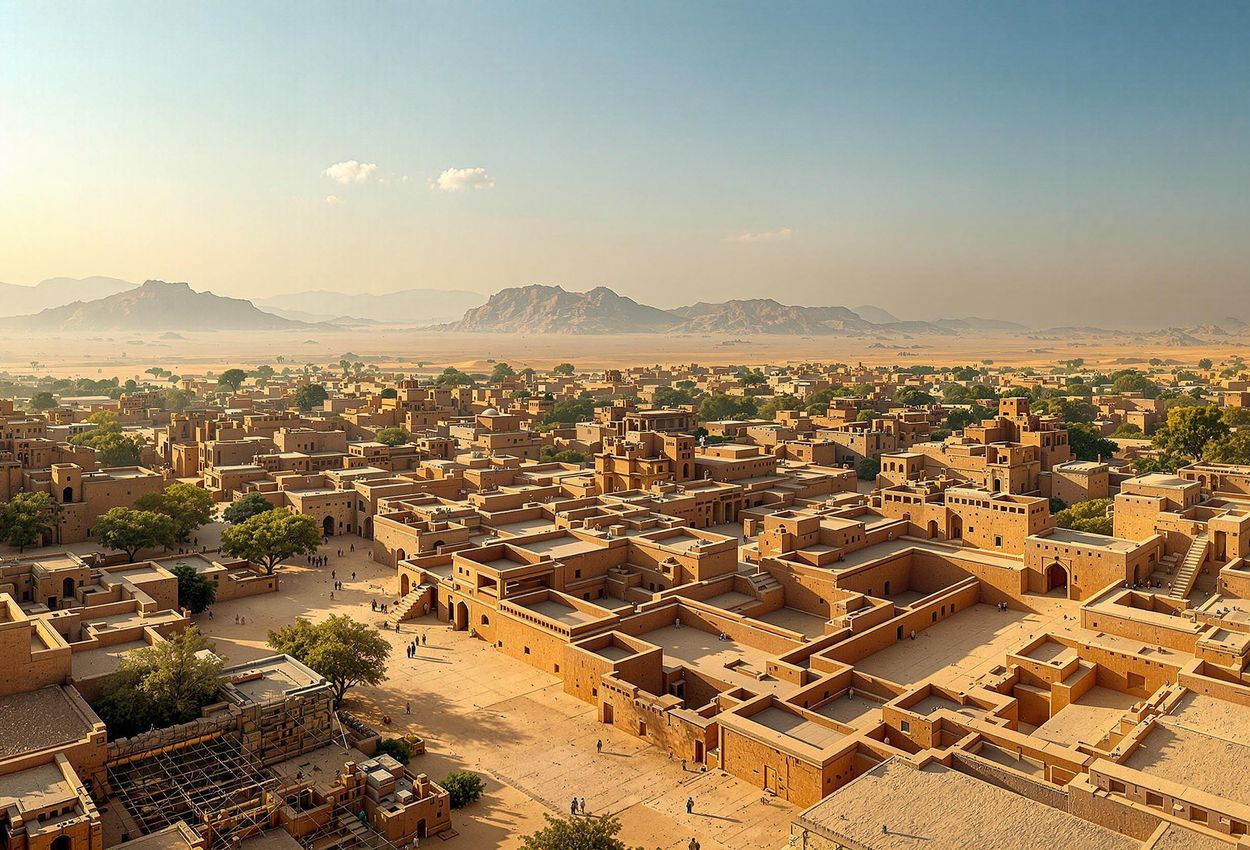
Image Description: A panoramic view of the ancient city of Mohenjo-daro in the Indus Valley, showcasing its advanced urban planning and water management systems. The image should capture the city's grid-like layout, with well-defined streets and brick structures. In the foreground, focus on a large public bath or water reservoir, highlighting the civilization's emphasis on water conservation. The backdrop should feature the arid landscape of the Indus Valley, emphasizing the environmental challenges faced by the civilization. The image should be taken during the late afternoon to capture the warm, golden light and long shadows, enhancing the sense of history and mystery. The purpose of the image is to illustrate the Indus Valley Civilization's innovative approach to urban planning and water management in the face of climate change. The date of the photo is August 1, 2025.
Style Instructions: Landscape style, taken with a wide-angle lens (16-35mm) to capture the vastness of the city and its surroundings. Use a low ISO (100-200) to minimize noise and maximize detail. The aperture should be set to f/8 or f/11 to ensure sharpness throughout the image. The white balance should be adjusted to capture the warm tones of the late afternoon light. The composition should emphasize the city's layout and the contrast between the urban environment and the arid landscape. The focus should be on the public bath or water reservoir in the foreground, with the rest of the city gradually fading into the background. The image style is Architecture.
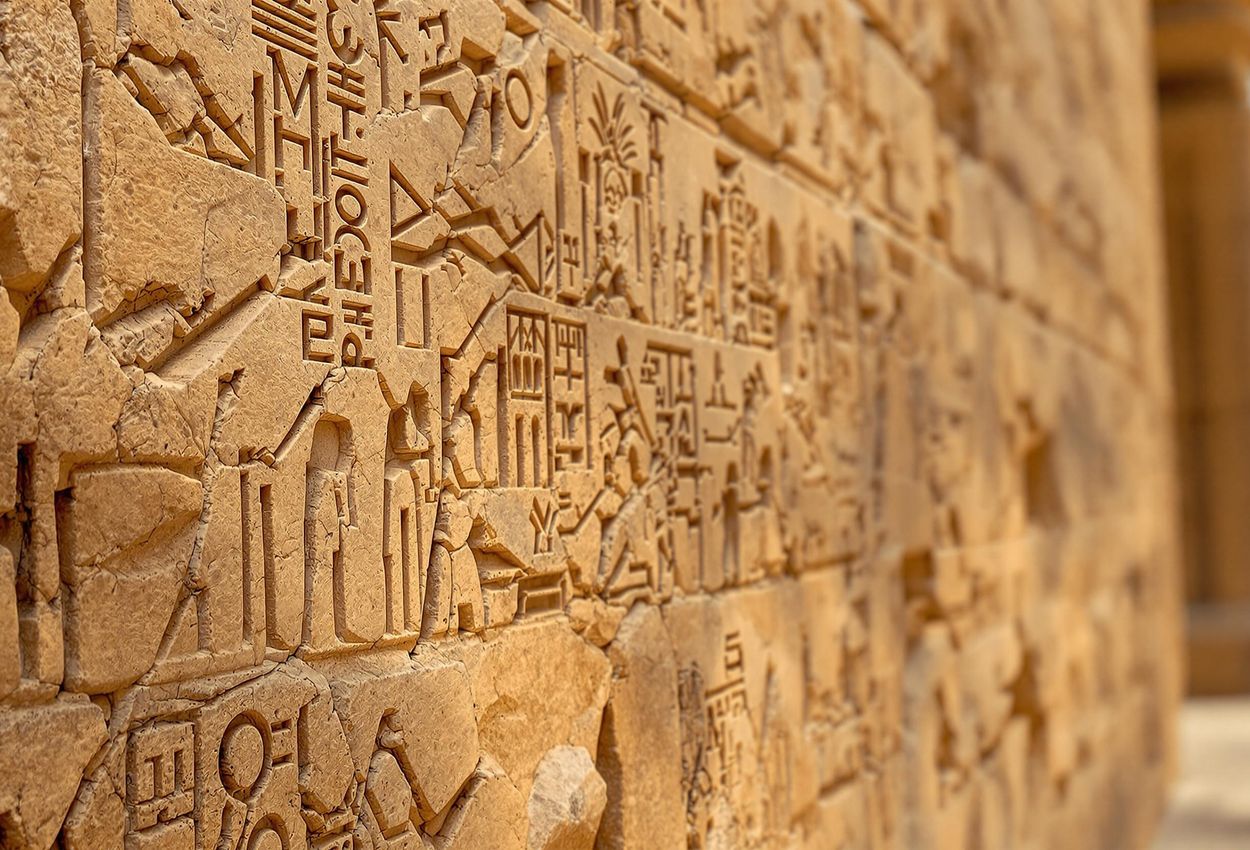
Image Description: A close-up shot of hieroglyphics carved into a stone wall in the Karnak Temple in Luxor, Egypt. The hieroglyphics should depict scenes of agricultural practices, such as irrigation and harvesting, emphasizing the importance of the Nile River to ancient Egyptian society. The image should be taken during the early morning to capture the soft, diffused light and minimize harsh shadows. Focus on the intricate details of the hieroglyphics, highlighting the skill and artistry of the ancient Egyptians. The purpose of the image is to illustrate the ancient Egyptians' deep connection to the Nile River and their sophisticated understanding of agriculture. The date of the photo is August 1, 2025.
Style Instructions: Macro style, taken with a macro lens (100mm) to capture the fine details of the hieroglyphics. Use a low ISO (100-200) to minimize noise and maximize detail. The aperture should be set to f/5.6 or f/8 to ensure sharpness throughout the image. The white balance should be adjusted to capture the warm tones of the early morning light. The composition should emphasize the hieroglyphics and their depiction of agricultural practices. The focus should be on the hieroglyphics, with the stone wall gradually fading into the background. The image style is Architecture.

Image Description: An aerial view of the Mesopotamian landscape, showing the remains of an ancient ziggurat surrounded by arid, dusty plains. The ziggurat should be partially ruined, with visible signs of erosion and decay. The image should capture the vastness of the landscape and the harsh environmental conditions that contributed to the decline of the Akkadian Empire. The purpose of the image is to illustrate the impact of drought and environmental change on ancient Mesopotamian civilization. The image should be taken during the midday to capture the harsh sunlight and emphasize the aridity of the landscape. The date of the photo is August 1, 2025.
Style Instructions: Aerial style, taken with a drone or aircraft to capture the vastness of the landscape. Use a low ISO (100-200) to minimize noise and maximize detail. The aperture should be set to f/8 or f/11 to ensure sharpness throughout the image. The white balance should be adjusted to capture the warm tones of the midday light. The composition should emphasize the ziggurat and its surroundings, with the arid plains stretching out to the horizon. The focus should be on the ziggurat, with the landscape gradually fading into the background. The image style is Landscape.

Image Description: A serene view of an oasis in the Arabian Desert, with lush vegetation and a clear pool of water surrounded by sand dunes. The image should capture the contrast between the arid desert and the life-sustaining oasis. In the foreground, focus on the date palms and other vegetation, highlighting their role in providing food and shade. The purpose of the image is to illustrate the importance of oases in supporting human life in the Arabian Peninsula. The date of the photo is August 1, 2025.
Style Instructions: Serene style, taken with a standard lens (50mm) to capture the natural beauty of the oasis. Use a low ISO (100-200) to minimize noise and maximize detail. The aperture should be set to f/5.6 or f/8 to ensure sharpness throughout the image. The white balance should be adjusted to capture the warm tones of the desert light. The composition should emphasize the contrast between the oasis and the surrounding desert. The focus should be on the vegetation and water, with the sand dunes gradually fading into the background. The image style is Landscape.
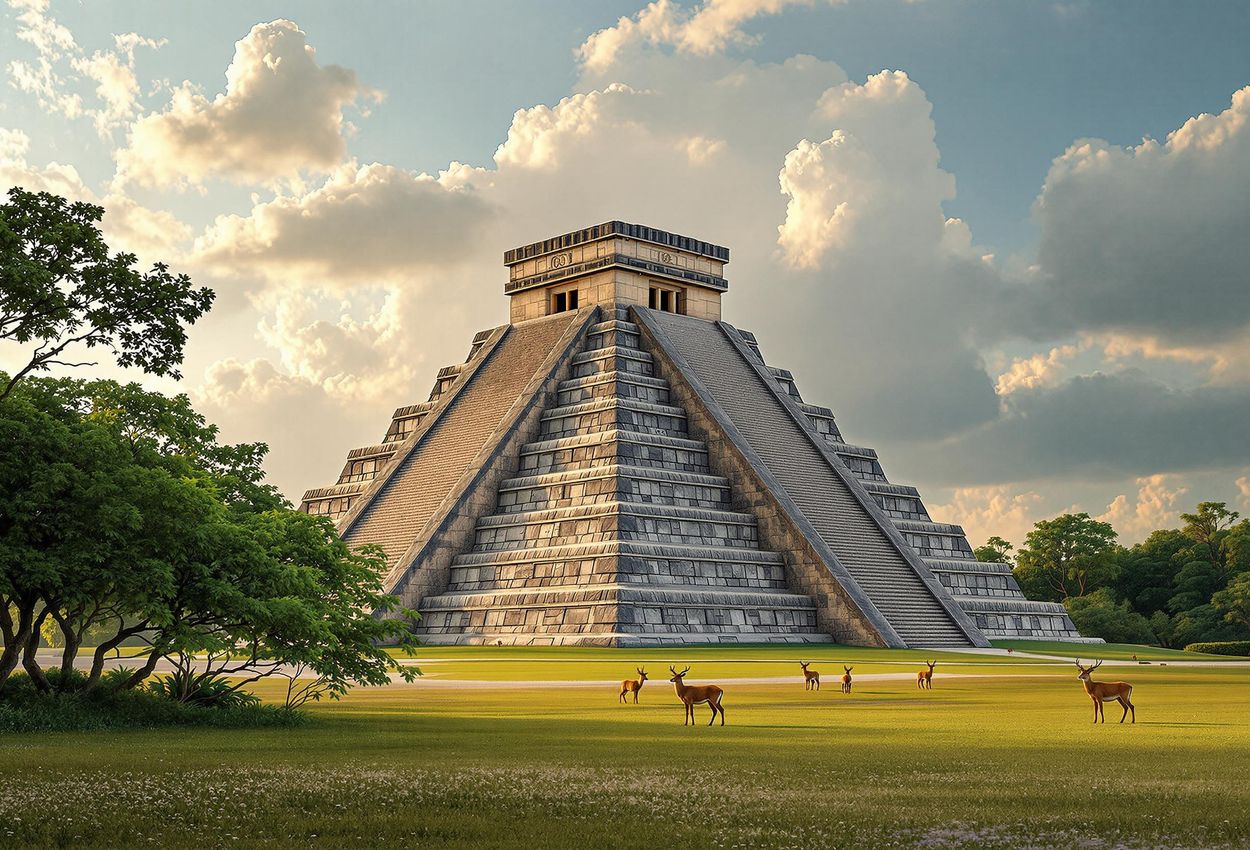
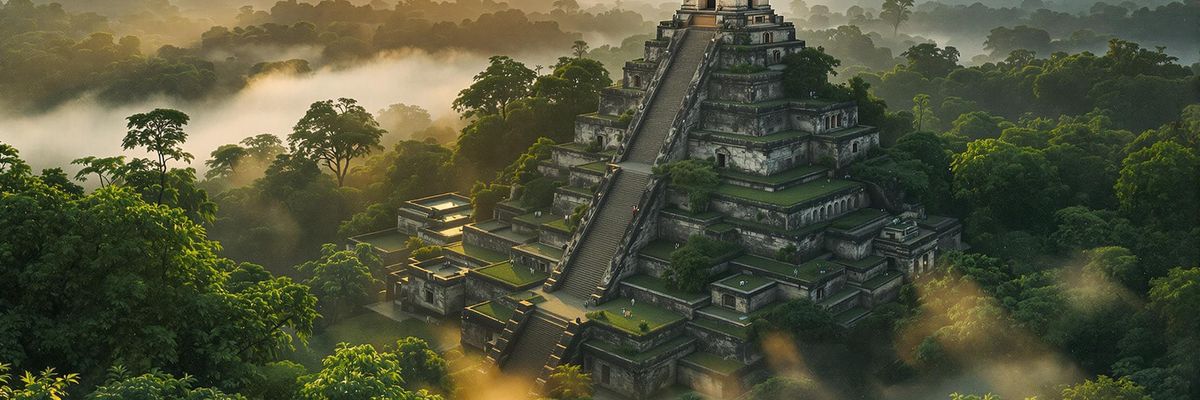
Image Description: A dramatic view of a Mayan temple in the Yucatán Peninsula, with towering stone structures and intricate carvings. The image should capture the grandeur and mystery of the Mayan civilization. The image should be taken during the early morning or late afternoon to capture the soft, diffused light and minimize harsh shadows. Focus on the intricate details of the carvings, highlighting the skill and artistry of the Mayan people. The purpose of the image is to illustrate the architectural achievements of the Mayan civilization and their deep connection to the natural world. The date of the photo is August 1, 2025.
Style Instructions: Dramatic style, taken with a wide-angle lens (16-35mm) to capture the full scale of the temple. Use a low ISO (100-200) to minimize noise and maximize detail. The aperture should be set to f/8 or f/11 to ensure sharpness throughout the image. The white balance should be adjusted to capture the warm tones of the early morning or late afternoon light. The composition should emphasize the temple and its surroundings, with the sky providing a dramatic backdrop. The focus should be on the temple, with the landscape gradually fading into the background. The image style is Architecture.
By studying ancient civilizations and their responses to climate change, we can gain valuable insights into building a more resilient and sustainable future. The lessons from the past underscore the importance of adaptation, innovation, and community-based approaches to addressing the challenges of a changing world. As we face an uncertain climate future, the wisdom of the ancients provides a beacon of hope and a call to action.