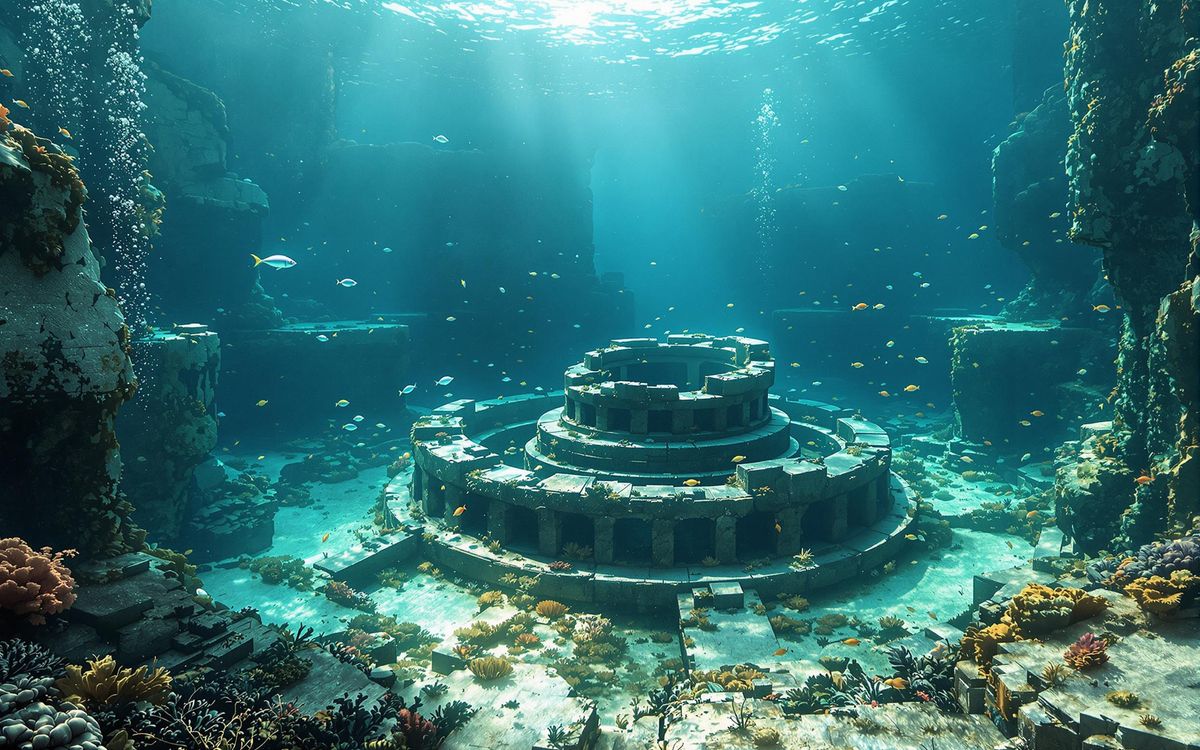
The legend of Atlantis, a technologically advanced civilization swallowed by the sea, has captivated humanity for millennia. Was it a real place, a cautionary tale, or a figment of Plato's imagination?
The story of Atlantis continues to resonate, inspiring countless books, films, and theories. From its first mention in Plato's dialogues to modern-day explorations, the allure of Atlantis persists, urging us to explore the depths of our history and imagination. But where did this story originate, and is there any truth to it?
Whispers from the Deep: Unveiling Atlantis
The primary source for the Atlantis narrative comes from the ancient Greek philosopher Plato, who introduced the island in his dialogues Timaeus and Critias around 360 B.C.. Plato recounts the tale as a historical event, passed down through generations, beginning with the Athenian statesman Solon, who learned of it from Egyptian priests in Sais. According to the priests, Atlantis was a powerful island nation located beyond the Pillars of Hercules (the Strait of Gibraltar), a naval empire that had conquered parts of Europe and Africa.
Plato describes Atlantis as a land of immense wealth and advanced civilization, with a unique layout of concentric rings of land and water. The Atlanteans possessed advanced technology, a strong military, and abundant resources, including a precious metal called orichalcum. However, their power and prosperity led to hubris and corruption. They attempted to conquer Athens but were defeated. As punishment for their arrogance, the gods sent earthquakes and floods, causing Atlantis to sink beneath the waves in a single day and night.
The question remains: Did Plato intend Atlantis to be taken as a literal historical account, or was it meant as a philosophical allegory? Some scholars believe that Plato created Atlantis as a vehicle to explore his political and moral philosophy, using the story to illustrate the dangers of hubris and the ideal society. Others suggest that Plato may have drawn inspiration from real historical events or civilizations, weaving them into his narrative.
Echoes of the Past: Historical Clues and Ancient Catastrophes
Several theories attempt to link the Atlantis myth to actual historical events or civilizations. One of the most prominent connects Atlantis to the Minoan civilization that flourished on the island of Crete and Thera (modern Santorini) in the Aegean Sea. Around 1600 BCE, a massive volcanic eruption on Thera devastated the Minoan civilization, triggering earthquakes, tsunamis, and widespread destruction.
The similarities between the destruction of the Minoan civilization and the Atlantis myth are striking. Both were advanced maritime cultures that experienced sudden and catastrophic destruction. The volcanic eruption on Thera, one of the largest in recorded history, could have inspired the story of Atlantis being swallowed by the sea. However, there are also significant differences, such as the timeline and geographical location, making a direct link difficult to establish.
Another theory suggests that the Black Sea flood around 5600 BCE may have contributed to the Atlantis myth. According to this theory, the breaching of the Bosporus by the Mediterranean Sea flooded the freshwater Black Sea, inundating coastal settlements and displacing populations. The memory of this cataclysmic event could have been passed down through generations, eventually finding its way into Plato's account.
Despite these intriguing connections, finding concrete evidence to support the existence of Atlantis remains a challenge. Archaeological and geological data are often open to interpretation, and the lack of corroborating evidence outside of Plato's writings makes it difficult to confirm any direct link to a specific historical event or civilization.
Mapping the Uncharted: Theories on Atlantis's Location
The location of Atlantis has been a subject of intense debate and speculation. Plato stated that Atlantis was located in the Atlantic Ocean, beyond the Pillars of Hercules. This has led many to search for the lost city in the Atlantic, with some proposing that the Azores or Canary Islands could be remnants of the sunken land.
However, numerous alternative locations have been suggested, spanning across continents and oceans. Some theories place Atlantis in the Mediterranean Sea, near Cyprus, Sardinia, or Malta. Others propose a location in the North Sea, suggesting that Atlantis could be the ancient land of Doggerland, which was submerged by rising sea levels. Even Antarctica has been put forward as a possible site, based on the theory of a shifting Earth crust.
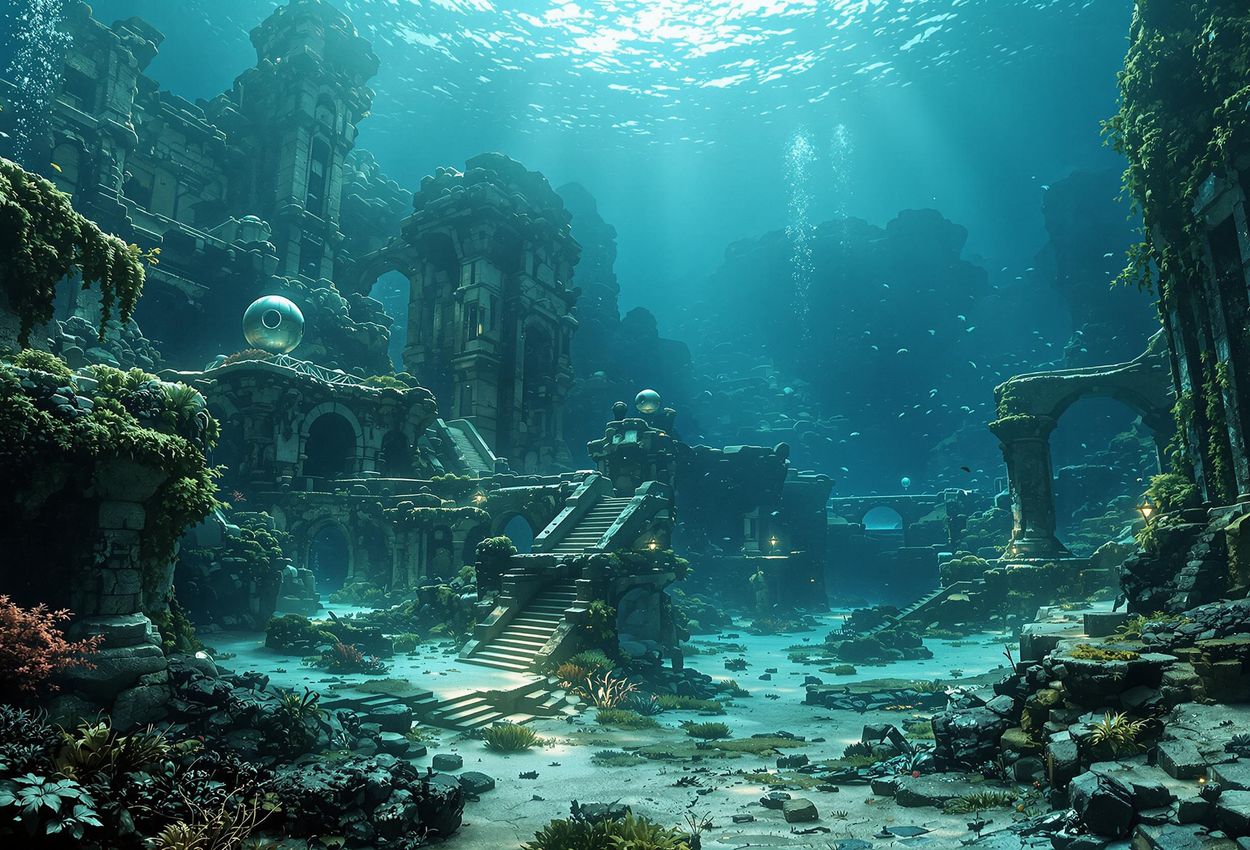
Recently, archaeologist Michael Donnellan claimed to have discovered evidence of Atlantis off the coast of Cádiz, Spain. Using sonar and LiDAR technology, he mapped what he believes are massive concentric circular walls and a temple resembling Plato's description. While these claims have generated excitement, they have also been met with skepticism from the scientific community, who caution against jumping to conclusions without further rigorous investigation.
Voices of the Experts: Historians, Archaeologists, and Mythologists Weigh In
The Atlantis question has elicited diverse perspectives from historians, archaeologists, and mythologists. Many scholars view Atlantis as a purely fictional creation by Plato, intended to serve as a philosophical and moral allegory. They argue that there is no credible evidence to support its existence and that Plato's account should not be taken as a historical record.
“Plato was not writing this down as a land surveyor's report that people could follow 2,400 years later,” says archaeologist William Adams. “He was using this to make a philosophical argument.”
Other experts suggest that the Atlantis myth may be a blend of historical inspiration and imaginative storytelling. They propose that Plato may have drawn upon existing myths, legends, and historical events to create his Atlantis narrative, imbuing it with his own philosophical ideas. This perspective acknowledges the fictional elements of the story while also recognizing the possibility of a historical kernel at its core.
Still others remain open to the possibility that Atlantis may have been a real place, albeit one that has been heavily embellished and mythologized over time. They advocate for continued archaeological and geological research to explore potential sites and uncover any evidence that could shed light on the Atlantis mystery.
Analyzing Atlantis: Hubris, Morality, and the Fall of Civilizations
Regardless of its historical authenticity, the Atlantis myth offers valuable insights into human nature and the dynamics of civilizations. The story serves as a cautionary tale about the dangers of hubris, corruption, and moral decay. The Atlanteans, once virtuous and prosperous, succumbed to greed and arrogance, leading to their downfall.
The concept of divine punishment is also central to the Atlantis myth. The gods, angered by the Atlanteans' impiety and aggression, unleashed natural disasters that destroyed their civilization. This theme highlights the importance of respecting the natural world and adhering to moral principles.
In the modern world, the Atlantis story can be interpreted as a warning about the potential consequences of unchecked technological advancement, environmental degradation, and social inequality. It reminds us of the need for sustainability, responsibility, and ethical leadership to avoid the mistakes of the past.
The Enduring Allure: Why Atlantis Still Captivates Us
The enduring fascination with Atlantis stems from several factors. The myth taps into our innate curiosity about the past, our desire to uncover hidden truths, and our longing for a lost golden age. The idea of a technologically advanced and utopian society that vanished without a trace sparks our imagination and fuels our sense of wonder.
The Atlantis myth has been adapted and reinterpreted in countless works of literature, film, and popular culture. From Jules Verne's 20,000 Leagues Under the Sea to Disney's Atlantis: The Lost Empire, the story has been reimagined in various forms, reflecting contemporary anxieties and aspirations. The legend has also appeared in video games such as Assassin's Creed: Odyssey and slot games like Atlantean Treasures.
The psychological and cultural significance of lost civilizations also contributes to the allure of Atlantis. The myth provides a framework for exploring themes of loss, memory, and the impermanence of human achievements. It reminds us that even the most advanced societies are vulnerable to decline and destruction, urging us to appreciate and preserve our cultural heritage.
Sifting Through the Sand: Archaeological Discoveries and Dubious Claims
Numerous archaeological claims have been made in connection to Atlantis, often generating excitement and controversy. The discovery of submerged structures off the coast of Cádiz, Spain, has been touted as potential evidence of the lost city. These structures, including circular walls and rectangular formations, have been interpreted by some as remnants of an ancient harbor or temple complex.
However, these claims have been met with skepticism from archaeologists, who caution that the formations could be natural geological features or the remains of more recent settlements. Without further rigorous investigation and analysis, it is difficult to definitively link these discoveries to Atlantis.
Other discoveries, such as the Bimini Road, an underwater rock formation in the Bahamas, have also been associated with Atlantis. However, scientists have concluded that the Bimini Road is a natural formation of beach rock, rather than a man-made structure. These examples highlight the importance of scientific rigor and skepticism when evaluating Atlantis claims, as well as the need to distinguish between genuine archaeological evidence and natural phenomena.
Atlantis in the Modern Eye: Pop Culture and the Power of Imagination
Atlantis continues to be a popular subject in modern media, inspiring countless works of fiction and entertainment. The myth has been portrayed in various forms, from science fiction and fantasy novels to animated films and video games. These adaptations often reflect contemporary anxieties and aspirations, using Atlantis as a canvas to explore themes of technology, utopia, and the human condition.
In science fiction, Atlantis is often depicted as a technologically advanced civilization with futuristic technologies, such as energy crystals and underwater cities. In fantasy stories, Atlantis may be portrayed as a magical realm with powerful artifacts and mystical beings. These different interpretations highlight the versatility of the Atlantis myth and its ability to resonate with diverse audiences.
The Atlantis myth has also inspired exploration and scientific inquiry, encouraging researchers to investigate potential sites and explore the mysteries of the deep sea. The search for Atlantis, whether real or imagined, serves as a reminder of the power of myth and imagination to drive human curiosity and innovation.
The Shifting Sands of Truth: Geological Perspectives on Atlantis
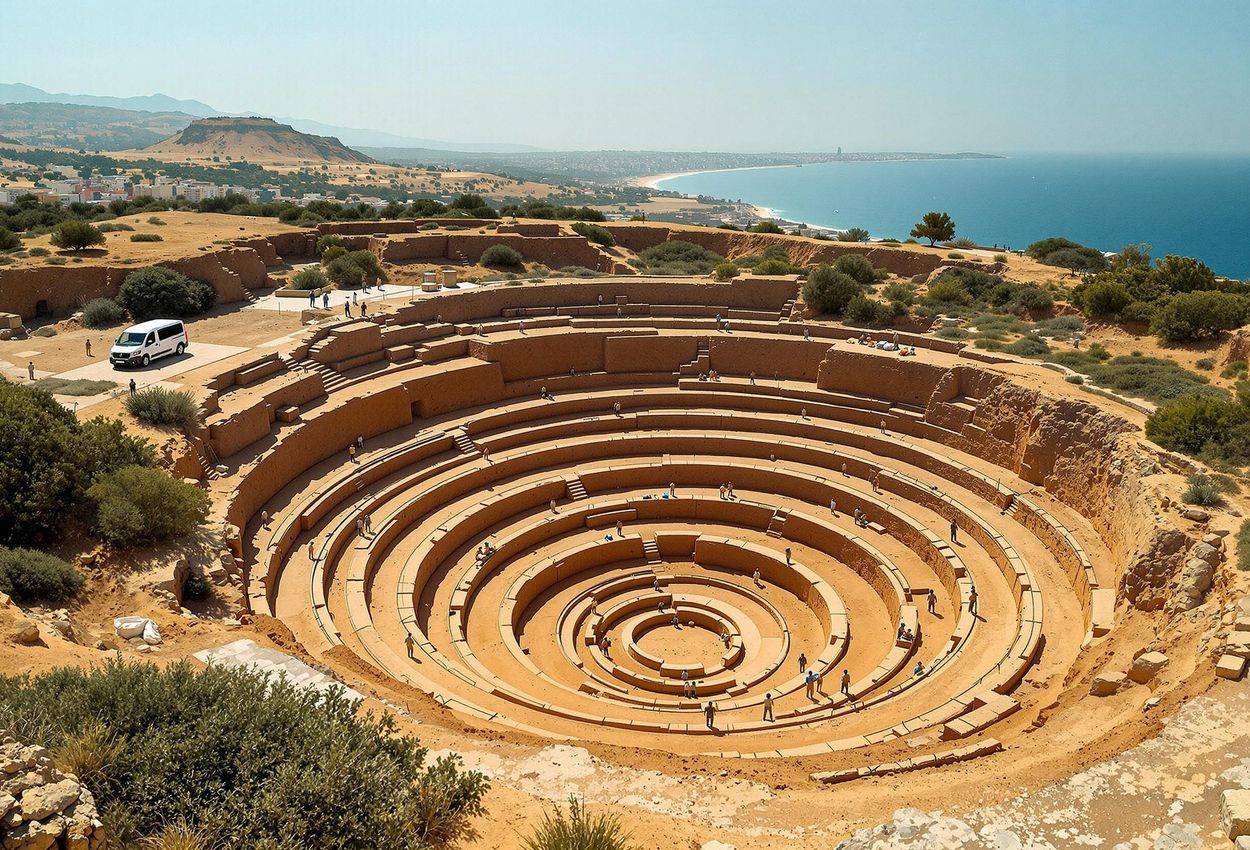
Geological factors may have played a role in shaping the Atlantis myth. The possibility of past geological events, such as tsunamis, earthquakes, and volcanic eruptions, influencing the story cannot be ruled out. The destruction of the Minoan civilization by the volcanic eruption on Thera provides a compelling example of how a natural disaster could have inspired the Atlantis narrative.
The concept of a shifting Earth crust, although largely discredited by modern science, has also been invoked to explain the disappearance of Atlantis. This theory suggests that a sudden shift in the Earth's crust could have caused a continent to sink beneath the waves. However, the scientific consensus is that the Earth's crust is relatively stable and that catastrophic shifts are unlikely.
Despite the lack of conclusive evidence, geological perspectives offer valuable insights into the potential origins and evolution of the Atlantis myth. By examining past geological events and processes, we can gain a better understanding of how natural phenomena may have contributed to the story's enduring appeal.
Beyond the Horizon: Atlantis as a Symbol of Human Potential and Loss
The Atlantis myth transcends its potential historical origins, serving as a powerful symbol of human potential, innovation, and cultural achievement. The Atlanteans, often depicted as an advanced and enlightened civilization, represent the pinnacle of human ingenuity and creativity. Their sudden and catastrophic demise serves as a reminder of the fragility of human achievements and the impermanence of civilizations.
The theme of loss is also central to the Atlantis myth. The destruction of Atlantis represents the loss of a unique and valuable culture, a loss that resonates with our own fears of societal decline and cultural disintegration. The story encourages us to reflect on the importance of preserving our cultural heritage and learning from the mistakes of the past.
Ultimately, the Atlantis myth invites us to contemplate the broader significance of human existence and the choices we make as individuals and societies. It challenges us to strive for greatness while also remaining mindful of the potential consequences of our actions.
Atlantis and the Temple Priests of Egypt
According to Plato, the story of Atlantis was first told to Solon by priests at a temple in Sais, Egypt. These priests claimed to possess ancient records, written on the walls of their temple, detailing the history of Atlantis and its conflict with Athens.
The significance of this lies in the implication that the story of Atlantis is not merely a Greek invention, but rather a part of a much older and broader historical tradition. The Egyptian priests, as custodians of ancient knowledge, would have been privy to historical events and cultural narratives that were unknown to the Greeks. This lends credibility to the Atlantis story, suggesting that it may have been based on real events or civilizations that were recorded in Egyptian archives.
However, it is important to note that no independent Egyptian accounts of Atlantis have ever been discovered. The only source for this claim is Plato himself, who may have been using the Egyptian connection to lend authority and mystique to his narrative. Nevertheless, the role of the Egyptian priests in the Atlantis story highlights the potential for ancient cultures to have shared knowledge and influenced each other's historical and mythological traditions.
New Technologies and the Search for Atlantis
Modern technology offers unprecedented opportunities to explore the ocean depths and search for evidence of Atlantis. Underwater survey technology, such as sonar and LiDAR, can be used to map the seafloor and identify potential underwater structures. Submersibles, both manned and unmanned, can be deployed to investigate these structures and collect data.
Sonar (Sound Navigation and Ranging) uses sound waves to create images of the seafloor, revealing the presence of submerged objects or formations. LiDAR (Light Detection and Ranging) uses laser light to create detailed 3D maps of underwater terrain. These technologies can be particularly useful in identifying geometric underwater structures that may be indicative of human construction.
Research vessels like the Atlantis are equipped with advanced technology to aid in underwater exploration. These vessels can deploy submersibles like the Alvin, which can transport researchers to depths of up to 14,700 feet. Autonomous underwater vehicles (AUVs) like the Sentry can explore the ocean down to 19,685 feet. These technologies allow scientists to conduct detailed surveys of the seafloor and collect data that was previously inaccessible.
Atlantis: A Warning
The story of Atlantis is not just a tale of a lost civilization, but also a warning about the dangers of unchecked ambition and moral decay. The Atlanteans, according to Plato, became obsessed with wealth and domination, leading them to disregard the gods and violate ethical principles. This hubris ultimately led to their destruction, as the gods unleashed natural disasters that swallowed their island.
The Atlantis myth serves as a reminder that unhealthy obsessions, whether with wealth, power, or technology, can have disastrous consequences. Even if a society appears strong and successful, moral corruption and a disregard for ethical principles can lead to its downfall. The story warns against the pursuit of selfish desires at the expense of others and the environment.
In the context of the modern world, the Atlantis myth can be interpreted as a call for responsible stewardship of our planet and a commitment to ethical behavior. If humanity continues to behave in a contrary manner, seeking to hurt others to attain their desires, then it risks facing a similar fate to that of Atlantis. The story urges us to learn from the mistakes of the past and strive for a more just and sustainable future.
Whether Atlantis was a real place or a fictional creation, its story continues to resonate with us today. It serves as a reminder of the power of myth and imagination, the importance of historical inquiry, and the enduring relevance of moral and philosophical questions. The search for Atlantis may never end, but the lessons it offers will continue to guide us as we navigate the challenges of the modern world.