Kyoto, the ancient capital of Japan, is renowned for its stunning temples, traditional teahouses, and meticulously designed gardens. Beyond the famous landmarks, a world of hidden serenity awaits, offering a chance to escape the bustling city and find peace in the emace of nature.
From the enigmatic rock arrangements of Ryoan-ji to the mossy landscapes of Gio-ji, these gardens invite contemplation and a deeper connection with Japanese culture. Join us as we explore some of Kyoto’s most enchanting hidden gardens, each a testament to the art of cultivating tranquility.
Whispers of the Zen Masters at Ryoan-ji
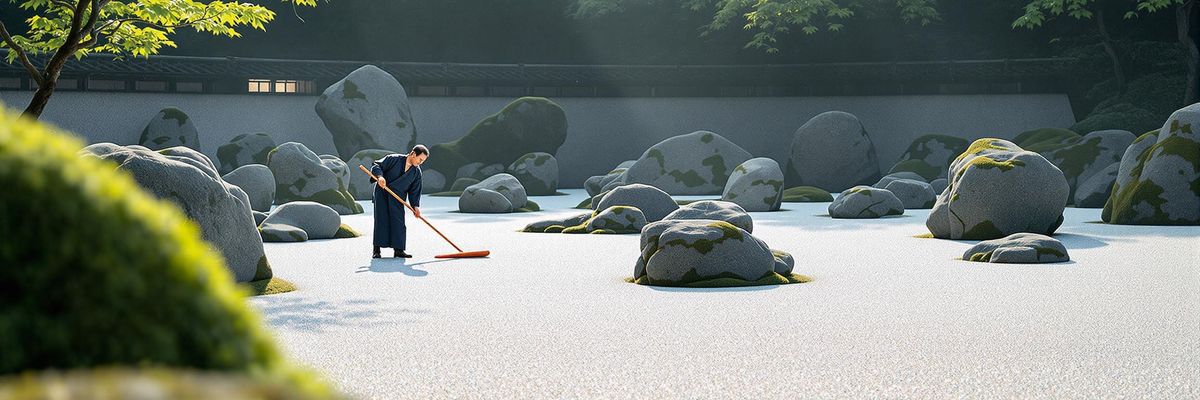
The Zen garden at Ryoan-ji Temple is perhaps the most well-known karesansui (dry landscape) garden in Japan, yet its enduring mystery only adds to its allure. Enclosed within earthen walls, the garden presents a seemingly simple arrangement: fifteen rocks of varying sizes, carefully placed on patches of moss within a sea of meticulously raked white gravel. This composition sparks endless interpretations, inviting viewers to find their own meaning within its tranquil expanse.
Some believe the rocks represent islands floating in an ocean, or a mother tiger carrying her cubs across the sea. Others see a more abstract representation of the Zen Buddhist principles of wabi (refined austerity) and sabi (subdued taste). The beauty of Ryoan-ji lies in its ambiguity, encouraging personal reflection and contemplation. It is said that from any vantage point, only fourteen of the fifteen rocks can be seen, a subtle reminder of the imperfection inherent in life and the limitations of perspective. The garden is viewed from the hojo, the former residence of the head priest.
Beyond the rock garden, Ryoan-ji boasts an outer stroll garden featuring the Kyoyochi Pond, offering a contrasting experience of lush greenery and serene waters. Originally a villa for a high-ranking aristocrat, the site was converted into a Zen temple in 1450. The temple belonged to the Myoshinji school of the Rinzai sect of Zen Buddhism. While the exact origins and designer of the rock garden remain shrouded in mystery, its impact on visitors is undeniable.
Visiting Ryoan-ji can be a deeply moving experience, especially during the early morning hours when the crowds are smaller and the atmosphere is more conducive to contemplation. The hushed reverence of fellow viewers, the gentle rustling of the wind, and the subtle textures of the garden create a space for introspection and a connection to the timeless wisdom of Zen Buddhism.

Strolling Through Paradise at Okochi Sanso Villa
Nestled in the scenic Arashiyama district, the Okochi Sanso Villa offers a tranquil escape from the crowds. This enchanting estate was once the home of Denjiro Okochi, a famous samurai film actor, who dedicated over 30 years to creating its exquisite gardens and buildings. The villa covers approximately 20,000 square meters.
As you wander through the gardens, you'll be treated to eathtaking views of Mount Ogura and the city of Kyoto. The landscape is designed to showcase the beauty of each season, with cherry blossoms in spring, azaleas in summer, viant maple trees in autumn, and serene pines in winter. Okochi incorporated traditional Momoyama and Kamakura styles for the buildings.
The Okochi Sanso Villa includes several buildings, including a traditional home, tea house, and Buddhist halls. A small Buddhist shrine, the Jibutsu-do, was moved to the property at Denjiro's request, and he would meditate there. Other buildings, including the Daijokaku temple hall and Tekisui-an tea room, were built in the 1930s and 1940s.
The entrance fee includes a delightful treat: a cup of matcha tea and a traditional Japanese sweet served in the tea house. This provides a perfect opportunity to relax and savor the stunning views while immersing yourself in the peaceful atmosphere. The villa is located a short distance from Tenryuji, at the site where Hyakunin Isshu (One Hundred Poems by One Hundred Poets) was edited.
The path meanders through the sprawling property, giving the feeling of wandering through a carefully designed landscape. The villa is also well known for its view of Kyoto City spread out below it. The actor passed away in 1962, and the estate passed to his wife, who eventually decided to open the garden to the public. To this day, family continues to maintain the estate.

Tranquility and Tea at Camellia Garden
Located near Ryoan-ji Temple, Camellia Garden offers a unique and intimate tea ceremony experience. Housed in a traditional Japanese house with a superb garden, this venue provides a serene escape from the crowds and a chance to immerse yourself in the art of tea.
Camellia Garden is run by a gracious host who speaks fluent English, making the tea ceremony accessible and engaging for international visitors. The tea ceremony is performed with grace and skill, offering a glimpse into the rich cultural traditions of Japan. The setting is a lovely traditional Japanese house with a superb garden.
The traditional sweets served at Camellia are made by one of Kyoto's finest confectioners. Guests are taken through to the tearoom, which overlooks a traditional Japanese back garden. The tea instructor performs the tea ceremony and serves bowls of matcha to enjoy. Guests learn the right etiquette on how to be a guest in a tea ceremony, including bowing, turning of tea cups, how to drink the tea itself, and how to compliment the host by slurping the last sip of tea from the cup.
After the tea ceremony, visitors are often invited to try their hand at preparing matcha themselves, adding a personal touch to the experience. This is the perfect way to relax after a visit to Ryoan-ji or Kinkaku-ji, offering a moment of reflection and a deeper appreciation for Japanese aesthetics.

Finding Peace at Ginkaku-ji's Silver Sand Sea
Ginkaku-ji, the Silver Pavilion, offers a different kind of beauty than its golden counterpart. Originally built as a retirement villa for Shogun Ashikaga Yoshimasa in 1482, it was later converted into a Zen temple. While the pavilion itself was never covered in silver as intended, its understated elegance and serene gardens embody the Japanese aesthetic of wabi-sabi, finding beauty in imperfection and impermanence.
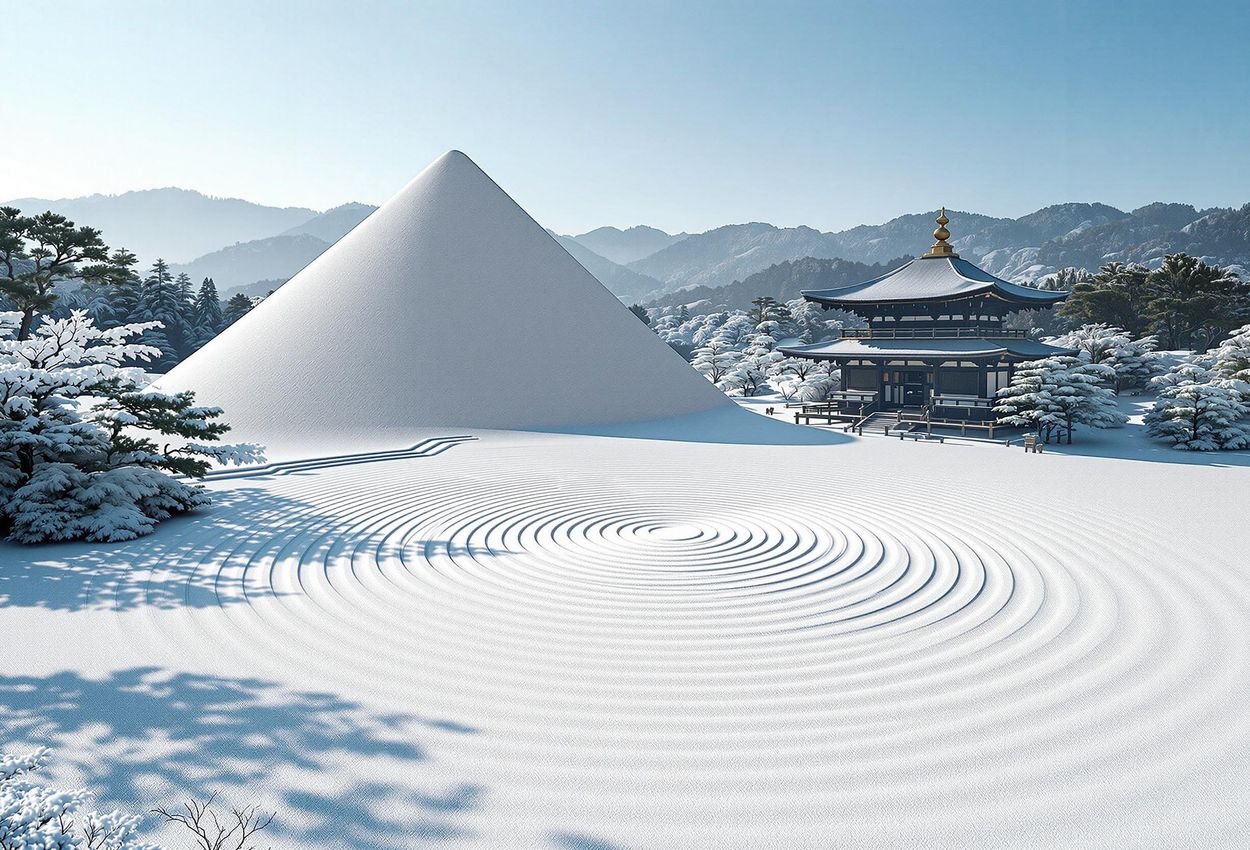
The gardens at Ginkaku-ji were designed by the landscape artist Soami. One of the most striking features of Ginkaku-ji is the Sea of Silver Sand (Ginshadan), a meticulously raked dry sand garden that represents a stylized seascape. A large sand cone, known as the Moon Viewing Platform (Kogetsudai), stands nearby, designed to enhance the appreciation of the moon's reflection. The dry garden is modeled after a celeated lake near Hangzhou, China, while the sand pyramid is the mirror-image of Mount Fuji.
The temple grounds also boast a moss garden, with viant green carpets of moss covering the forest floor. The Sea of Silver Sand and Moon Viewing Platform are meant to accentuate the beauty of the moon's light falling on them. Yoshimasa was respected for refinement in the disciplines of the tea ceremony, noh theater, poetry, calligraphy, and garden design. The villa was converted to a temple on his death, officially named Jisho-ji (“Temple of Shining Mercy”).
Walking through the gardens, you'll find a sense of peace and tranquility, a reminder of the beauty that can be found in simplicity and the natural cycle of life.
The Mossy Carpets of Gio-ji Temple
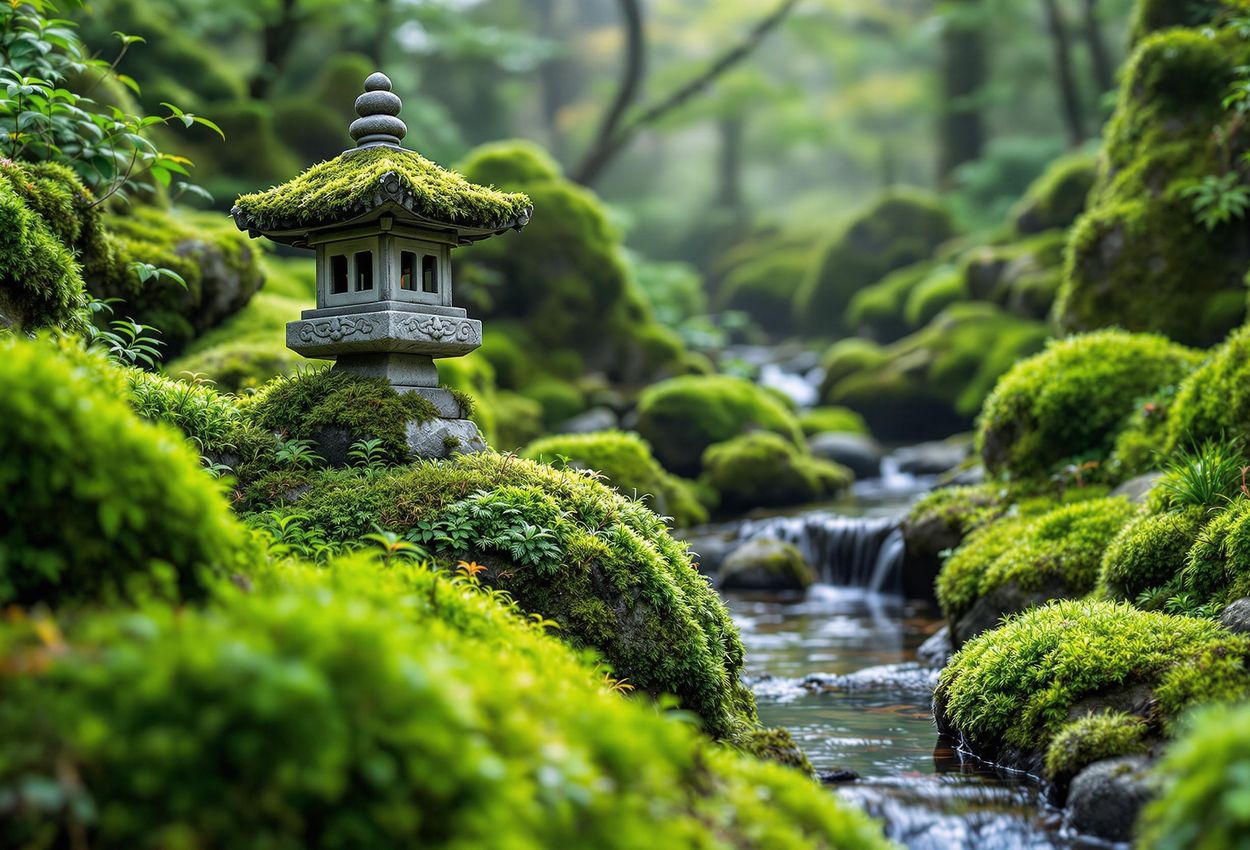
Tucked away in Arashiyama, Gio-ji Temple is a hidden gem known for its enchanting moss garden. This small temple offers a unique and immersive experience, transporting visitors to a world of lush greenery and serene beauty. The temple is named after Gio, a dancer who reportedly fell in love with Taira no Kiyomori.
As you step through the temple gate, you'll be greeted by a eathtaking landscape of moss, covering nearly every surface in a viant green carpet. The mossy garden provides a tranquil atmosphere, inviting contemplation and a connection to nature.
With its lush moss garden, thatched-roof main hall, and intriguing backstory, Gio-ji Temple provides a captivating experience. The garden is home to over 120 different species of moss. The pathway that leads to the main hall meanders through the moss garden, allowing visitors to soak in the serene beauty. A small stream adds to the therapeutic feel of water.
The temple also holds wooden images to the dancer Gio, her sister, and her mother. When Taira no Kiyomori terminated his relationship with Gio, she retreated to the convent at Gio-ji with her mother and sister, to spend the rest of her life as a priestess.
Enchantment at Kyoto Gyoen National Garden
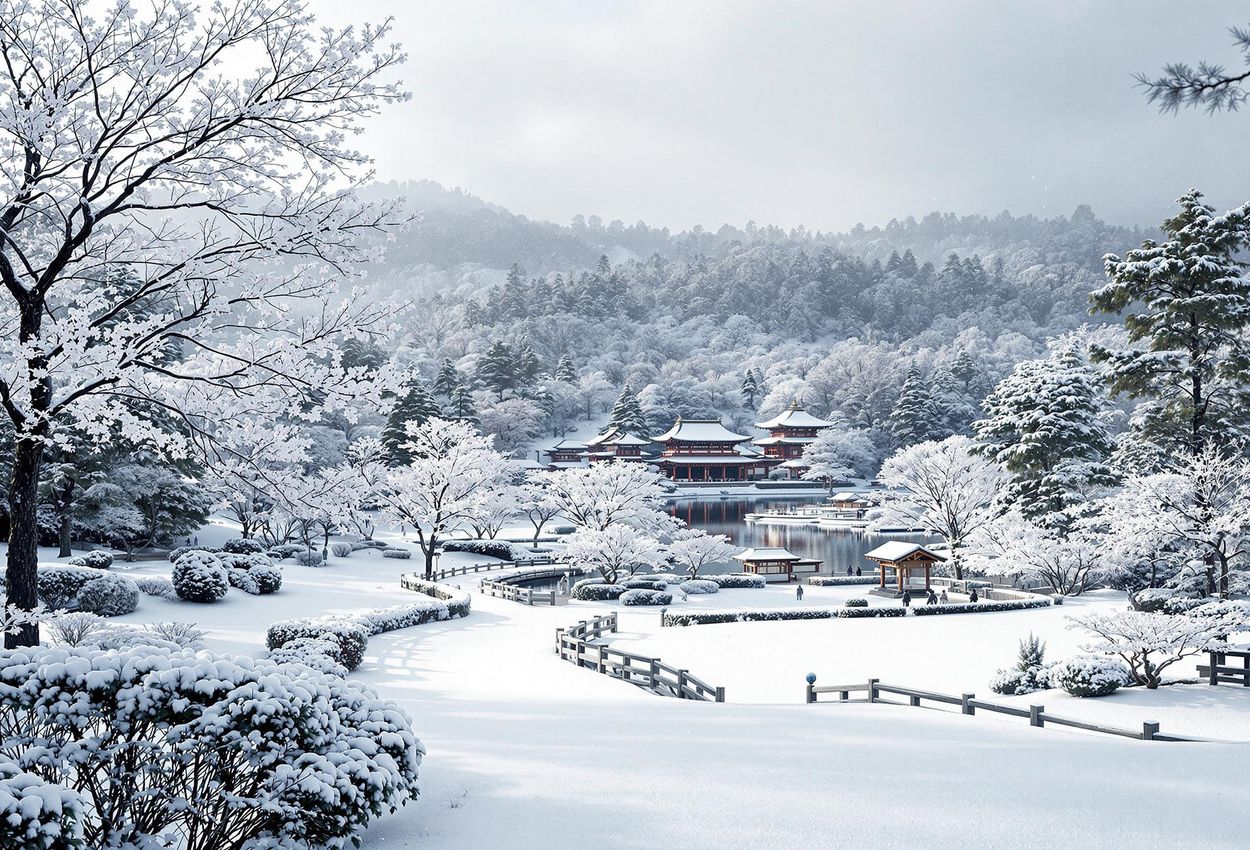
In the heart of Kyoto, the Kyoto Gyoen National Garden offers a vast expanse of greenery and a glimpse into the city's rich history. This former imperial garden was once the residential area for court nobles during the Edo period, and today it provides a peaceful retreat for locals and tourists alike.
Within the garden, you'll find historic spots such as the Kyoto Imperial Palace, the former residence of the emperor, and the Sento Imperial Palace. The garden was established to preserve the Imperial Palace. After World War II, the garden was changed to be a national garden.
The Shusui-tei Tea house offers a tranquil setting for a traditional tea ceremony, while the Site of the Kan-in no Miya Residence provides a glimpse into the lives of the former nobility. The area was the Court Nobles Residential Area in the Edo period. After the transfer of the capital to Tokyo, buildings were removed and the Kyoto Gyoen (garden) was established.
The Kyoto Gyoen National Garden is open to everyone, anytime, and admission is free. The Kyoto Imperial Palace had been the home of the Emperor for more than one thousand years. In the last years of the Edo Period, residences of court nobles were located surrounding the Kyoto Imperial Palace. The Shusui Tei was built about 200 years ago, in the latter part of the Edo period.
Modern Zen at Tofuku-ji Temple's Gardens
For a unique blend of traditional and modern garden design, head to Tofuku-ji Temple. The gardens at Tofuku-ji Temple were designed by Mirei Shigemori and showcase a fusion of Zen principles with elements of cubism and surrealism. Tofuku-ji was founded in 1236.
The gardens were laid out in 1939 by Mirei Shigemori, who intended to express the simplicity of Zen in the Kamakura period with the abstract construction of modern arts. The temple is the head temple of the Tofukuji School of the Rinzai sect of Zen Buddhism. It was built in 1236 on the instructions of Kujo Michiie, who desired to build in Kyoto a temple complexes in Nara.
One notable feature is the Zen garden with rocks resembling the four sacred mountains, arranged in a way that evokes a sense of both harmony and dynamism. Another highlight is the Tsutenkyo idge, a covered walkway that offers stunning views of the surrounding maple trees, especially viant during the autumn season.
The southern garden is a classic Zen dry landscape garden with four sacred mountains in the Chinese mythology represented in stone. The east features seven pillars amidst sand and moss that form the shape of Ursa Major, the Big Dipper. The grounds of Tofuku-ji contain 25 sub-temples, though only a few are open to the public.

Heian Shrine's Vermilion Reflections
Heian Jingu Shrine stands out with its viant vermilion architecture, a striking contrast to the serene garden scenery. Built in 1895 to commemorate the 1100th anniversary of Kyoto's founding, the shrine is dedicated to the spirits of Emperor Kammu and Emperor Komei.
The main buildings are a partial replica of the original Imperial Palace from the Heian Period. The gardens are especially captivating during cherry blossom season, when the weeping cherry trees create a eathtaking spectacle of pink hues. The Heian Jingu boasts four stroll gardens, each influenced by a different period from history. The gardens have cherry blossom trees, and they bloom a bit later than most areas of the city.
The Minami Shin-en is famous for its weeping cherry blossoms, which bloom beautifully in spring. The Heian Garden features winding streams and plants mentioned in classic Japanese literature. The Heian Jingu Shrine is widely known as a representative shrine in Kyoto, showing the culmination of 1,000 years of architectural techniques since the city was the capital.
The shrine's court is used for special events, such as the Jidai Festival each year on October 22. The festival's main event is a parade of people in costumes from different periods of Japanese history that leads from the Kyoto Imperial Palace to Heian Shrine.

From the meticulously raked gravel of Zen gardens to the viant colors of imperial estates, Kyoto's hidden gardens offer a sanctuary for the soul. These tranquil spaces invite contemplation, connection, and a deeper appreciation for the timeless beauty of Japan.