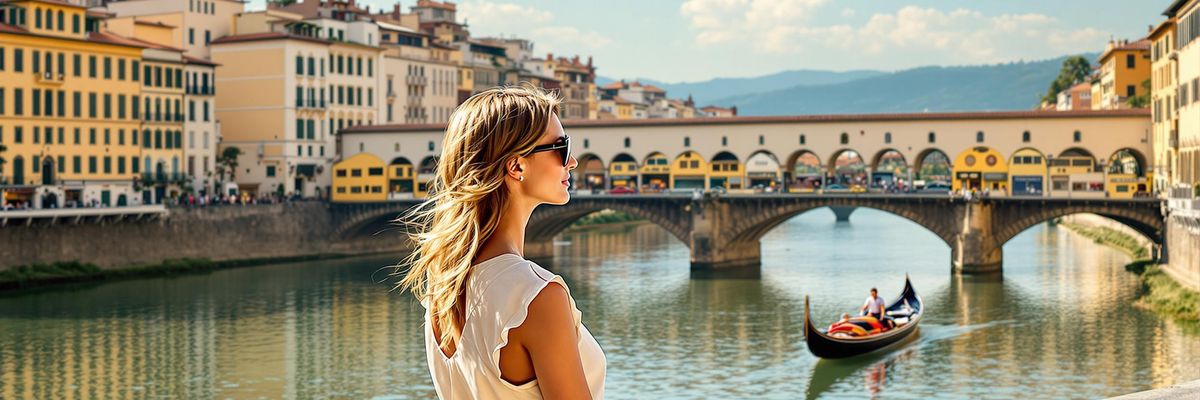
The Venice Biennale 2025: A spectacle of innovation, intelligence, and international collaboration, returning to the enchanting canals of Venice.
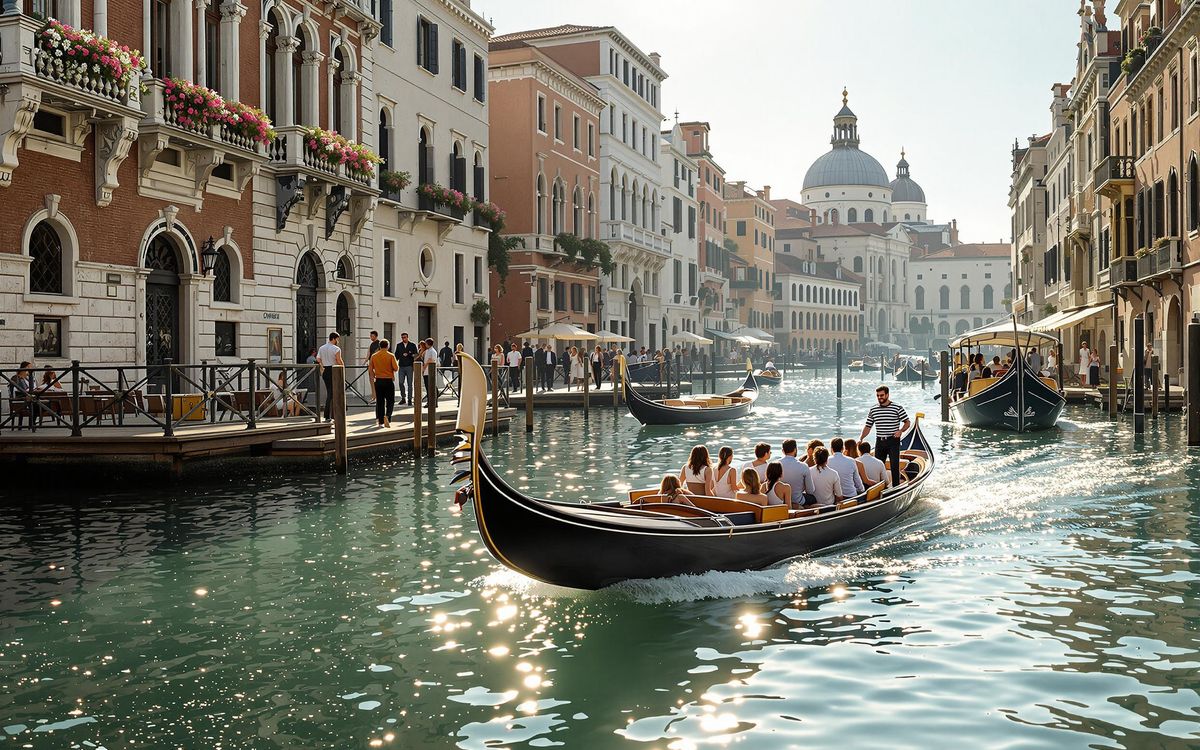
As the vaporetto glides through the shimmering waters of the lagoon, the anticipation builds. The year is 2025, and the Venice Biennale is once again set to transform this historic city into a vibrant hub of artistic and architectural exploration. From May 10th to November 23rd, the 19th International Architecture Exhibition will unfold, inviting visitors to immerse themselves in a world where art, nature, and technology converge. This year's theme, 'Intelligens. Natural. Artificial. Collective.,' curated by Carlo Ratti, promises a multi-sensory journey, urging us to rethink how we build and live in an increasingly unpredictable world.
The Biennale sprawls across Venice, with its primary venues nestled in the Giardini and the Arsenale, alongside various captivating installations scattered throughout the city center. The air is thick with the sounds of lapping water against ancient stone, a symphony punctuated by the excited chatter of art enthusiasts from every corner of the globe. Sights of Renaissance facades mingle with avant-garde structures, each a testament to human ingenuity and creative expression. The aroma of freshly brewed espresso wafts from charming cafes, blending with the subtle, salty scent of the lagoon. This year, the Biennale is not just an exhibition; it's an invitation to experiment beyond today's limited focus on AI and digital technologies, urging a collaborative approach to address pressing environmental challenges.
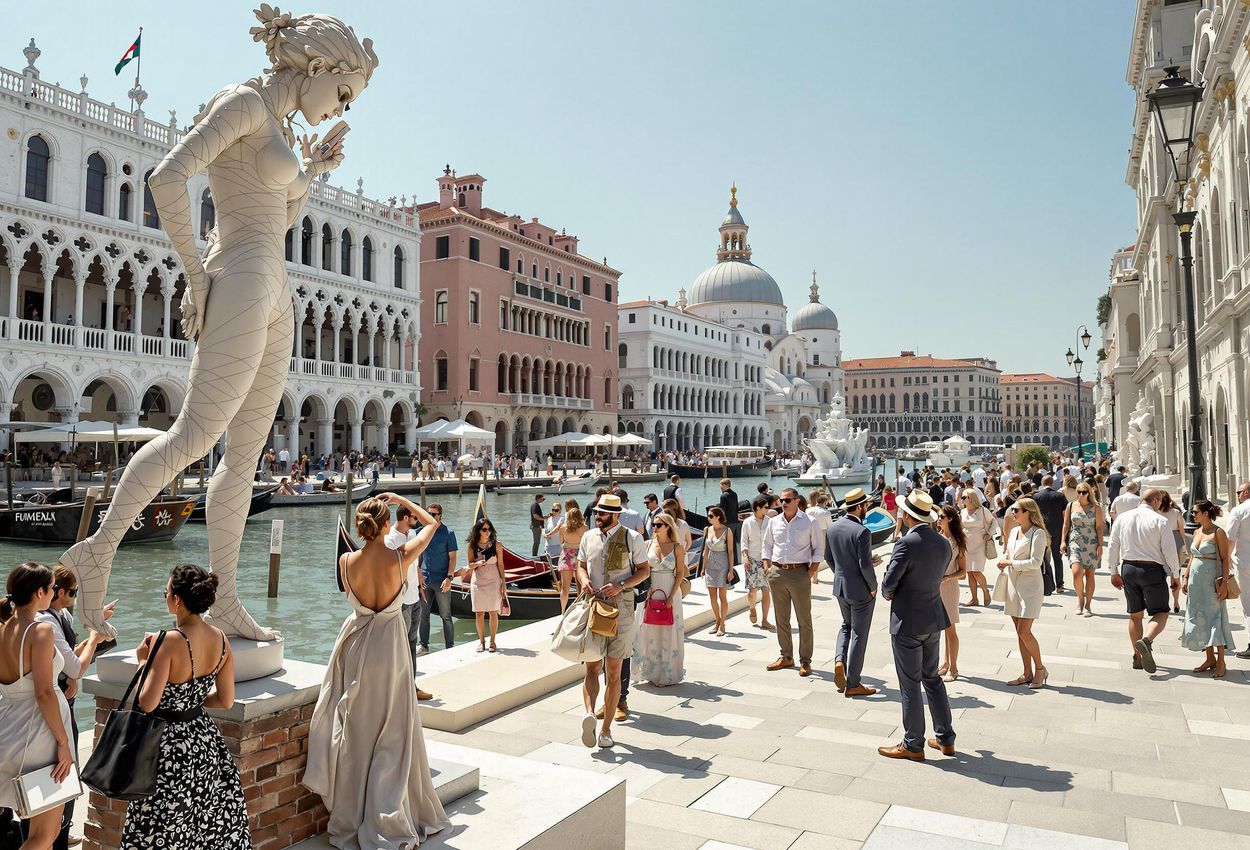
Giardini's Green Embrace: Where Nature's Intelligence Takes Center Stage.
Stepping into the Giardini is akin to entering a realm where nature and architecture dance in harmonious synchronicity. This historic park, transformed into a landscape of innovation, showcases national pavilions that interpret 'natural intelligence' in myriad thought-provoking ways. Each pavilion stands as a unique ecosystem, inviting visitors to explore the boundless potential of integrating the natural world with our built environment.
The Belgian Pavilion, curated by Bas Smets and Stefano Mancuso, presents 'Building Biospheres,' an ambitious exhibition exploring how plant intelligence can create and regulate indoor climates. Over 200 plants have been integrated into the installation. Sensors meticulously monitor their behavior, with real-time data driving adaptive responses such as irrigation and lighting. The system creates what the team calls “a new symbiosis between what the plants need, what the building can handle and what people want”. The pavilion becomes a living prototype, demonstrating how buildings can evolve into dynamic biospheres through the natural intelligence of plants.
Nearby, the Australian Pavilion offers a contrasting yet equally compelling perspective. Titled 'HOME', the pavilion, led by an all-First Nations team, is dedicated to Australia's natural environment and Indigenous knowledge systems. A curved rammed-earth wall and bench seat wrap a circular, sand-filled ceremonial space at the center of the pavilion. Soil, sand and plaster sourced from Venice were used to build the structure. The design encapsulates “a serene and highly sensory domain inspired by the vast, beautifully storied natural terrains of the Australian continent.”
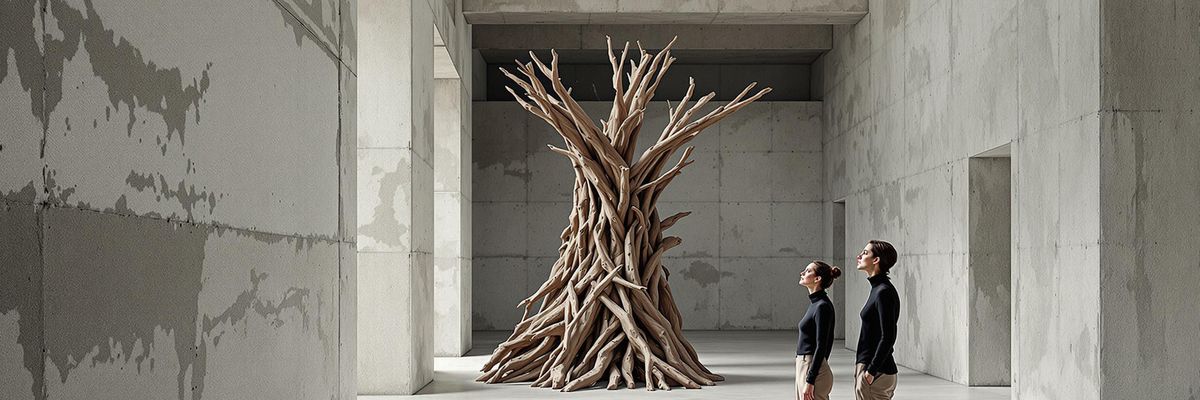
Kengo Kuma's 'Domino 3.0: Generated Living Structure' offers a compelling vision of humans returning to nature. Constructed from trees uprooted by Storm Vaia, the structure uses AI to seamlessly integrate into the natural environment while maintaining structural integrity. The fallen trees were fully 3D-scanned, then reassembled with the assistance of AI. Soft joints, flexible and responsive to movement, were created using 3D printing and embedded into the branches.
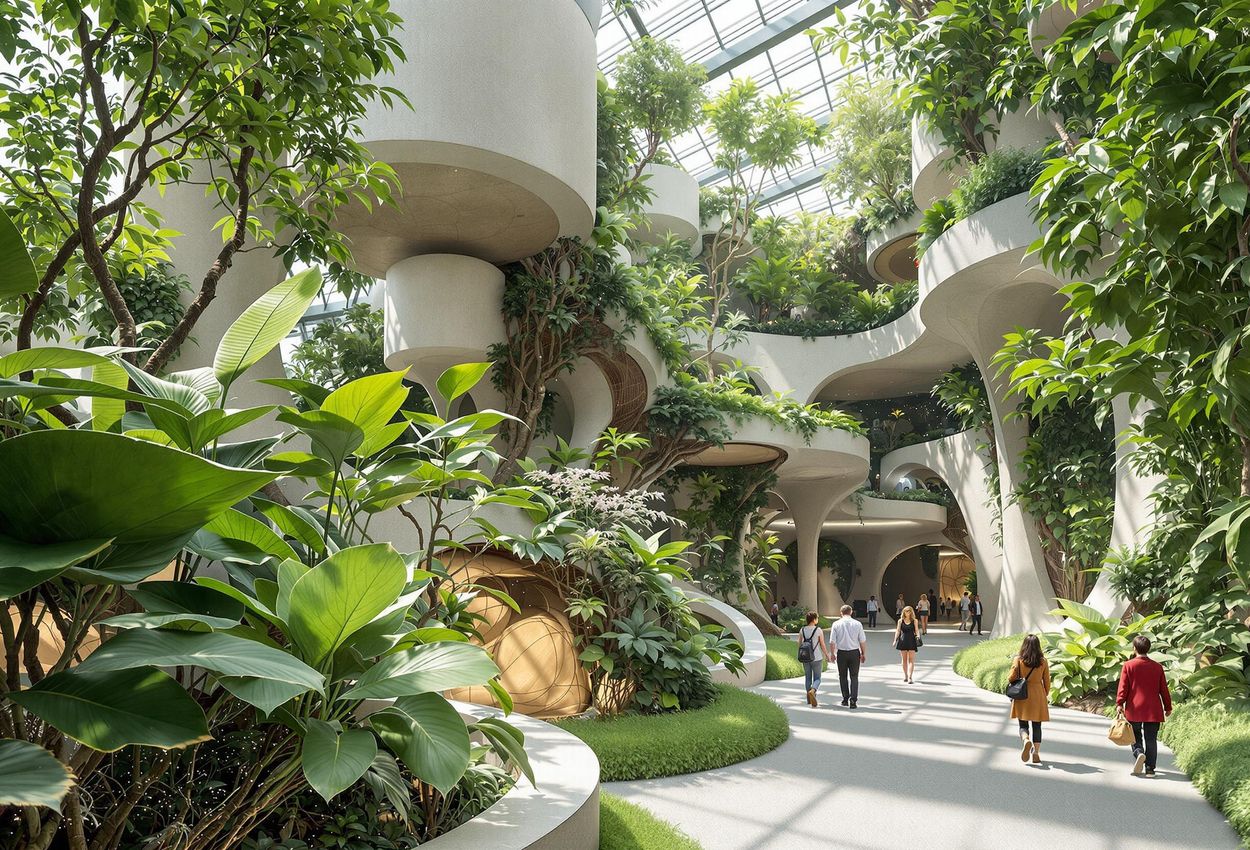
Arsenale's Artificial Echoes: Where AI Shapes the Future of Form.
Transitioning from the Giardini to the Arsenale is like stepping into a different dimension, one where artificial intelligence and technological innovation take center stage. This vast complex, a historical shipyard, now houses exhibits that explore the transformative potential of AI in architecture and design. Here, the boundaries between the physical and digital blur, challenging our perceptions of what is possible in the built environment.
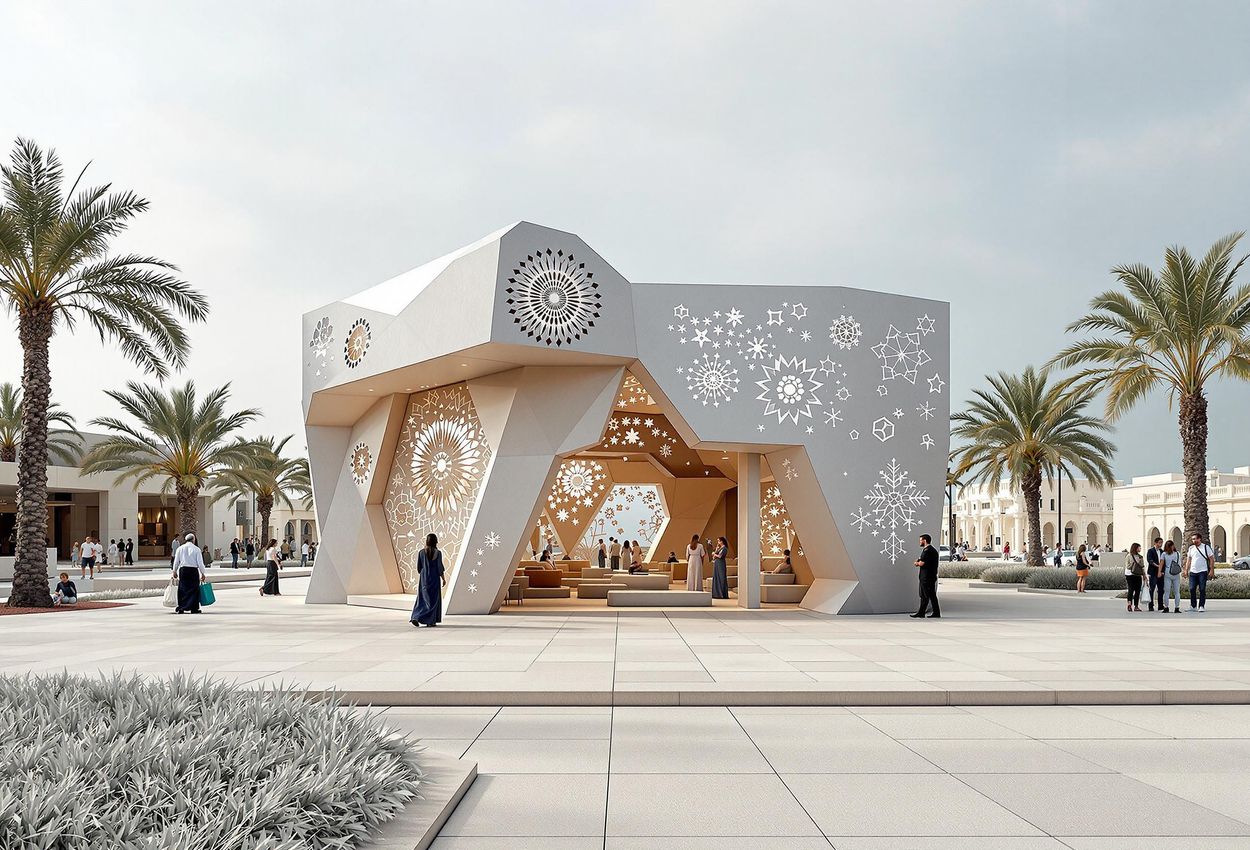
The Sultanate of Oman makes its debut at the Biennale with a national pavilion exploring the theme 'Integrating Human and Artificial Intelligence Technologies in Architecture'. The pavilion, titled “Athar”, curated by engineer Majda Al Hana’ee, reflects Oman’s growing cultural presence on the global stage. By reimagining the sabla within a contemporary architectural vision, the pavilion highlights the role of the sabla as an adaptable model that connects past and present, reflecting authentic Omani values of hospitality, dialogue, and community spirit.
ACT MIT's 'Wetland Games,' part of the main curated exhibition, presents a platform that aims to foster multi-species perspectives among users in environmental planning. This “serious game” models how diverse economic activities transform the landscape and negotiate with non-human agents like birds or plants as active stakeholders. The game simulates the impacts of diverse factors: sea level and salinity dynamics, volatile climate and economy informing decisions made by various “caretakers” of the wetland.
Japan steps into the 2025 Venice Architecture Biennale with IN-BETWEEN – A Future with Generative AI, an exhibition that probes the evolving relationship between human imagination and machine intelligence. Curated by architect Jun Aoki, the pavilion explores the Japanese concept of ma—a subtle space of pause, tension, and potential—as both a design philosophy and a framework for collaboration with generative AI.

Collective Minds at Work: Pavilions of Shared Innovation.
Beyond the individual expressions of national identity, the Biennale also shines a spotlight on 'collective intelligence' and collaborative design. Pavilions showcasing shared innovation underscore the power of working together to address global challenges, fostering a sense of unity and shared purpose. These exhibits demonstrate that by pooling our knowledge, resources, and creative energies, we can achieve solutions that are greater than the sum of their parts.
The Canadian Pavilion presents 'Picoplanktonics', an exploration of architecture's relationship with biology, digital fabrication, and ecological systems. The Living Room Collective has developed a ground-breaking exhibition that showcases the potential for collaboration between humans and nature. Comprised of 3D printed structures that contain live cyanobacteria capable of carbon sequestration, Picoplanktonics is an exploration of our potential to co-operate with living systems by co-constructing spaces that remediate the planet rather than exploit it.
The Holy See Pavilion, designed by Tatiana Bilbao ESTUDIO and MAIO Architects, presents 'Opera Aperta', transforming the site into a space for collaborative restoration and public engagement. The project positions architecture as a practice of collective care and responsibility. The pavilion becomes a place for learning through doing, for reflection through action, and for building together.
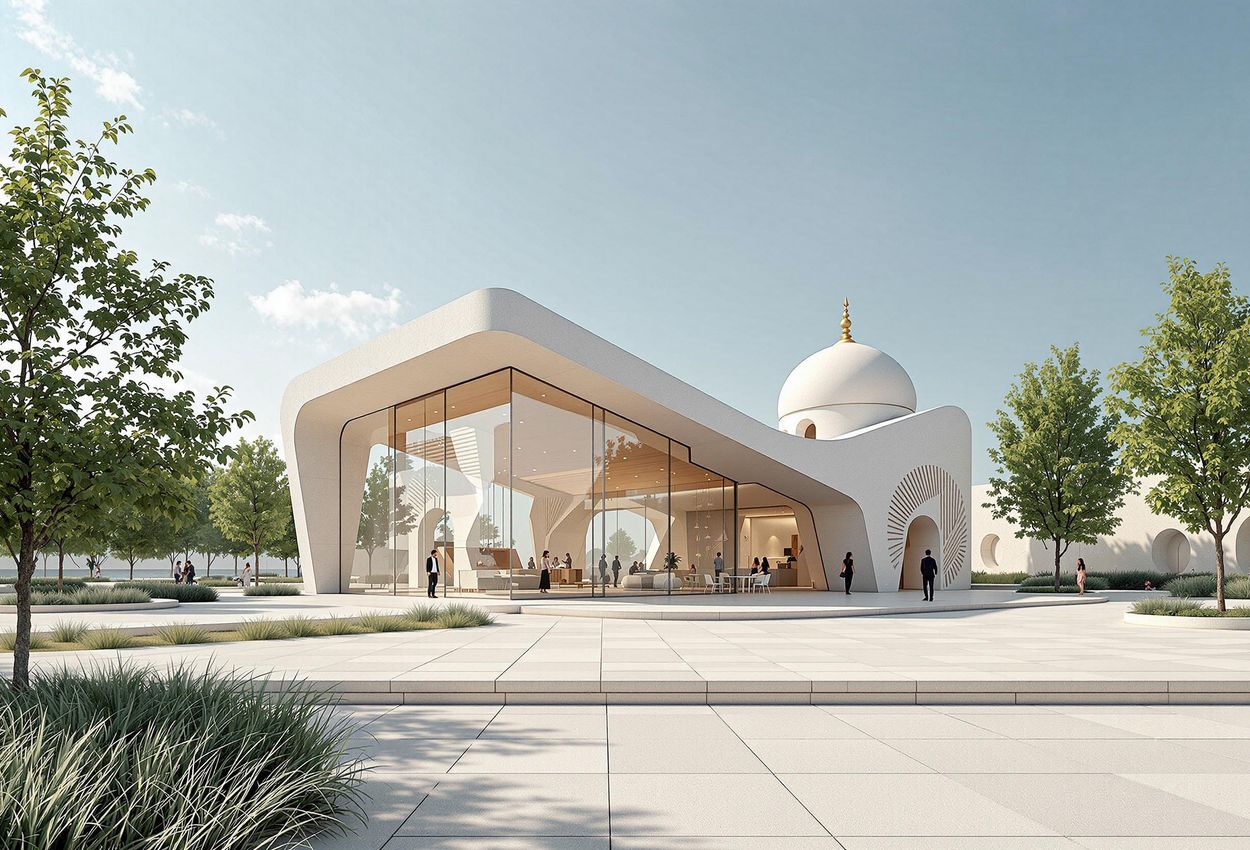
Azerbaijan's Debut: A Glimpse into Architectural Heritage.
This year marks a significant milestone as Azerbaijan makes its debut at the Venice Biennale, presenting 'Equilibrium. Patterns of Azerbaijan'. This exhibition offers a captivating glimpse into the nation's architectural heritage, showcasing the seamless integration of cultural identity with modern design themes. The pavilion, curated by Nigar Gardashkhanova, emphasizes the principles of Regenerate. Innovate. Preserve.
The Azerbaijani pavilion, presented under the concept “Reconstruction. Innovation. Preservation”, features three architectural projects – the Baku White City, Victory Park and Zangilan Mosque. The Baku White City project represents the transformation from industrial past to sustainable future, emphasizing the collective effort required for such progress. The magnificent Victory Park, a symbol of the November 8 Victory, stands as a tribute to national unity and the enduring spirit of those who sacrificed for the country's freedom. The Zangilan Mosque, built in the Karabakh architectural style, symbolizes the fusion of nature and architecture, the present and the future.
Sultanate of Oman's Debut: Merging Tradition with Tomorrow.
Joining Azerbaijan in its inaugural Biennale participation is the Sultanate of Oman, adding another layer of cultural richness to the exhibition. Oman's pavilion focuses on their exploration of integrating human and artificial intelligence in architecture, reflecting the nation's commitment to innovation while honoring its deep-rooted traditions. The Omani pavilion is titled “Athar” and themed “Integrating Human and Artificial Intelligence Technologies in Architecture.”
The pavilion reflects Oman's cultural presence on the global stage, highlighting the country's architectural identity, rich urban heritage, and ambition to engage with emerging technologies and global design discourse. The overall vision of Oman’s participation in the event is based on the 'Omani sabla', a typical manifestation of space for communication, decision-making, and dialogue. By reimagining the sabla within a contemporary architectural vision, the pavilion highlights the role of the sabla as an adaptable model that connects past and present, reflecting authentic Omani values of hospitality, dialogue, and community spirit.
As the sun sets over Venice, casting a golden glow on the Biennale's myriad exhibits, a sense of hope and inspiration lingers in the air. The Venice Biennale 2025 is more than just an art and architecture exhibition; it is a testament to the power of human ingenuity, a celebration of international collaboration, and a call to action for a more sustainable and equitable future. It is an experience that will undoubtedly leave a lasting impression on all who have the privilege of witnessing it, reminding us that through art and architecture, we can shape a better world for generations to come.