In the shadowy realm of paranormal investigation, a new era is dawning, one where traditional methods are being augmented—and in some cases, replaced—by groundbreaking technologies.
From artificial intelligence deciphering ghostly whispers to quantum sensors detecting subtle energy fluctuations, the tools of the trade are evolving at an unprecedented pace. Join us as we delve into the innovative technologies that are shaping the future of ghost hunting, offering new perspectives on the age-old quest to understand the unexplained.
Decoding the Spirit World: The Rise of AI in Paranormal Investigations
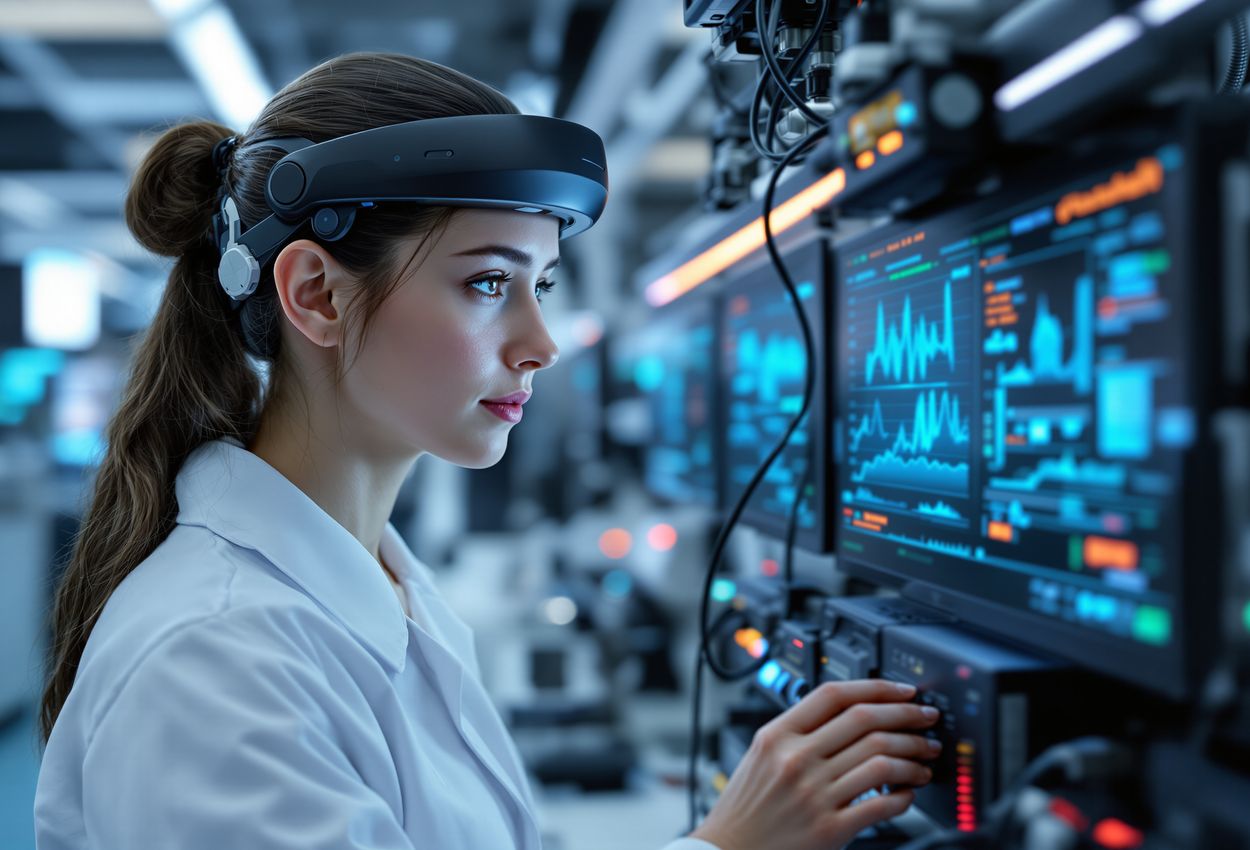
Artificial intelligence (AI) is rapidly transforming numerous fields, and paranormal investigation is no exception. AI's ability to analyze vast datasets of audio, images, and sensor data with unparalleled speed and precision is providing investigators with new insights into potential paranormal activity.
One of AI's key strengths lies in its capacity to identify patterns that might be missed by human observers. For instance, machine learning algorithms can be trained to differentiate between natural environmental sounds and Electronic Voice Phenomena (EVP), those mysterious voices sometimes captured on audio recordings. At the haunted Pennhurst Asylum in Pennsylvania, AI has been used to analyze audio recordings, flagging a significant percentage of clips as anomalies worthy of further investigation.
AI is also being used for anomaly detection, predictive modeling, and image recognition. Anomaly detection involves identifying unusual patterns in sensor data, such as sudden spikes in electromagnetic fields or unexpected temperature fluctuations. Predictive modeling uses historical data to identify paranormal hotspots and forecast when and where activity might peak. Image recognition algorithms can analyze video footage for unusual movement, light anomalies, or even facial recognition in supposed spirit apparitions.
While AI offers tremendous potential, it's important to acknowledge its limitations. AI algorithms are only as good as the data they are trained on, and they can be susceptible to biases or errors. It is also crucial to maintain a human element in paranormal investigations, as AI can identify anomalies, but human investigators provide context, intuition, and subjective experiences.
Despite these limitations, AI is poised to play an increasingly important role in paranormal investigations, helping to bridge the gap between anecdotal evidence and data-driven credibility.

Thermal Vision Evolved: Cutting-Edge Thermal Imaging for Ghost Hunting
Thermal imaging has become a staple in paranormal investigations, thanks to its ability to detect subtle temperature variations that are invisible to the naked eye. Thermal cameras detect heat signatures and temperature fluctuations, potentially revealing cold spots or heat signatures associated with paranormal entities.
These cameras work by detecting infrared energy emitted by objects and converting it into a visual image. Colder objects appear in blue or purple, while warmer objects appear in yellow or red. This allows investigators to identify temperature anomalies that might indicate the presence of an apparition or other paranormal phenomenon.
Thermal cameras are particularly useful for outdoor investigations or in large properties, where it can be difficult to monitor temperature changes across a wide area. They can also be used in conjunction with regular cameras to provide more credible evidence. If a thermal camera detects a cold spot in a particular location, investigators can use a regular camera to visually document the area and look for any other unusual phenomena.
Several models of thermal cameras are popular among paranormal investigators, including the FLIR ONE Pro, FLIR TG267, and FLIR E6-XT. These cameras offer a range of features, such as adjustable temperature scales, multiple color palettes, and the ability to record video and capture still images.
While thermal imaging can be a valuable tool, it's important to be aware of potential sources of error. Environmental factors such as drafts, sunlight, and even the presence of living beings can affect temperature readings. It's crucial to rule out any mundane explanations for temperature anomalies before attributing them to paranormal activity.

Capturing Whispers: Digital Voice Recorders and the EVP Phenomenon
Digital voice recorders (DVRs) have long been a mainstay of paranormal investigations, used to capture Electronic Voice Phenomena (EVP). EVP are anomalous sounds or voices believed to be of paranormal origin, often too faint to be heard with the naked ear.
DVRs work by recording audio onto a digital storage medium, such as a flash drive or SD card. Investigators typically set up the DVR in a location of interest and leave it running for an extended period, capturing any sounds that might occur. Later, they review the recording, listening for any unusual voices or sounds that were not present at the time of recording.
Capturing high-quality audio is essential for EVP research. Many DVRs offer features such as noise reduction and filtering capabilities to help minimize background noise and enhance the clarity of potential EVP. Some popular DVRs used in paranormal investigations include the Olympus Voice Recorder, Zoom Audio Recorder and the EVP Wrist Recorder.
Interpreting EVP recordings can be challenging. It's important to carefully analyze the recordings, comparing them to known sounds and looking for any patterns or anomalies. It's also crucial to differentiate EVP from background noise or other mundane sounds. Some skeptics argue that EVP are simply the result of auditory pareidolia, the tendency to perceive patterns in random noise.
Despite these challenges, many paranormal investigators believe that EVP provide valuable evidence of paranormal activity. By carefully capturing and analyzing audio recordings, investigators can gain new insights into the nature of ghostly communication.

Sensing the Unseen: EMF Readers and Electromagnetic Field Detection
EMF (Electromagnetic Field) readers are another commonly used tool in paranormal investigations. The theory behind their use is that ghosts or spirits can manipulate electromagnetic fields, causing fluctuations that can be detected by EMF readers.
EMF readers measure the strength of electromagnetic fields in a given area. They typically display the readings on a digital screen or through a series of lights. Investigators use EMF readers to scan rooms and other locations, looking for any unusual spikes or fluctuations in the electromagnetic field.
There are different types of EMF meters, such as K-II meters and TriField meters. K-II meters are simple, handheld devices that use a series of LED lights to indicate the strength of the electromagnetic field. TriField meters are more sophisticated devices that can measure electromagnetic, radio frequency, and electric fields.
When using an EMF reader, it's important to conduct baseline readings to establish the normal electromagnetic field levels in the area. This helps to identify potential sources of interference, such as electrical wiring or electronic devices. During an investigation, any sudden spikes or unusual patterns in EMF readings might indicate the presence of a ghostly entity.
However, it's crucial to exercise caution when interpreting EMF readings. Electromagnetic fields are present everywhere, and there are many mundane sources that can cause fluctuations. It's important to rule out any potential sources of interference before attributing EMF spikes to paranormal activity.

Beyond the Five Senses: Brain-Computer Interfaces and Quantum Sensors
As technology continues to advance, paranormal investigators are exploring even more cutting-edge tools, such as Brain-Computer Interfaces (BCIs) and quantum sensors. These technologies offer the potential to revolutionize the field, providing new ways to interact with and detect paranormal entities.
Brain-Computer Interfaces (BCIs) are devices that establish a direct communication link between the brain's electrical activity and an external device, such as a computer. Some researchers believe that BCIs could be used to facilitate direct communication with spirits, allowing investigators to receive messages or impressions directly from the other side. While still in its early stages, research suggests BCI can decode words and sentences.
Quantum sensors are another emerging technology with potential applications in paranormal investigations. These sensors are designed to detect extremely subtle changes in electromagnetic fields, temperature, or other environmental factors. Some paranormal enthusiasts believe that hauntings might involve unknown quantum interactions, making these sensors a potential new tool for investigation. Quantum sensors analyze haunting evidence by turning the strange rules of quantum physics into a powerful method for uncovering the unseen.
However, there are also significant challenges associated with using BCIs and quantum sensors in paranormal investigations. These technologies are highly complex and require specialized expertise to operate and interpret the data. It is also difficult to link quantum effects to supernatural events. Additionally, the ethical implications of using these technologies to interact with spirits need to be carefully considered.
Despite these challenges, BCIs and quantum sensors represent a potentially transformative development in the field of paranormal investigation. As these technologies continue to evolve, they may provide investigators with new ways to explore the mysteries of the spirit world.