

Argolis Private Full Day tour
 Isthmia, GR
 100% of travellers recommend this
Highlights
- Experience ancient wonders away from crowds
- Enjoy personalized service tailored to you
- Discover history with knowledgeable professional drivers
- Visit iconic sites with skip-the-line access
- Relax in comfortable, private transportation
-
Duration: 9-10 hours
-
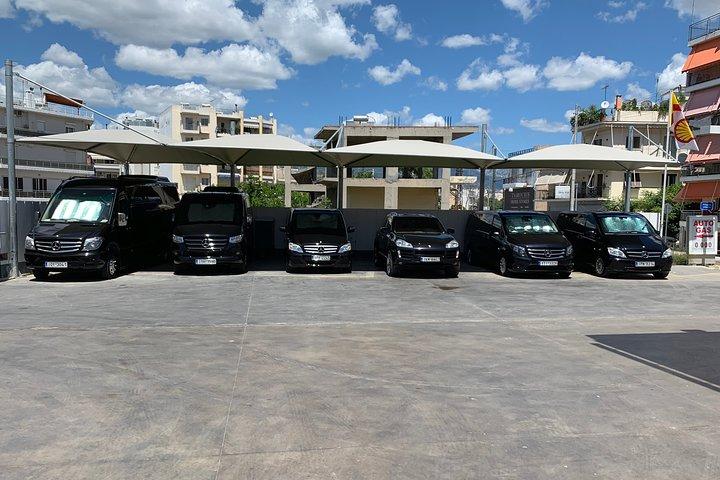
Private transportation
-
Skip-the-line tickets included
-
Bottled water provided
-
Air-conditioned vehicle
-
WiFi on board
Experience the wonders of Argolis on a private full day tour, where you can skip the line and explore the captivating archaeological sites at your own pace. Our professional drivers, fluent in English, will ensure your safety and comfort as you travel in our well-maintained vehicles. With our private tour, you can visit the monuments at different times of the day, avoiding the crowds and truly immersing yourself in their history. And the best part? Our services are more affordable than purchasing individual tickets from large tour companies. Highlights of this tour include skip-the-line access to purchase tickets, private transportation, bottled water, WiFi on board, and an air-conditioned vehicle. While admission fees and a licensed tour guide are not included, you can request the latter for an additional cost. Don't miss out on this unforgettable journey through ancient Greece.
At a Glance
-
 Free cancellation
-
 9 hours
-
 Instant Confirmation
-
 Available in English
-
 Wheelchair accessible
-
 Mobile voucher
-
 Private Tour
-
 Guided
-
 Family friendly

Featured Reviews

Explore Argolis on a private full-day tour, visit ancient sites like Mycenae and Epidaurus, and enjoy personalized service in a comfortable vehicle.
Included
-
 Bottled waterBottled water
 -
On-board WiFiWiFi on board
-
In-vehicle air conditioningAir-conditioned vehicle
-
OtherProfessional Drivers (Not licensed to accompany you into the sites)
-
Private transportationAthens Hotel/Piraeus Port pickup and drop-off included
Excluded
-
 LunchLunch
 -
OtherEnglish-speaking licensed tour guide (Optional / 400 Euros payable in cash).Subject to availability.
-
OtherAirport pickup/drop-off on request (additional fee varies by vehicle type)
-
GratuitiesGratuities
-
Entrance feesEntrance Fees to Ancient Corinth - Mycenae & Epidaurus (55.00 Euros per adult)
Pickup
Check if pick-up is available from your location, you will select during checkout (providers may allow other pickup locations)

What to expect
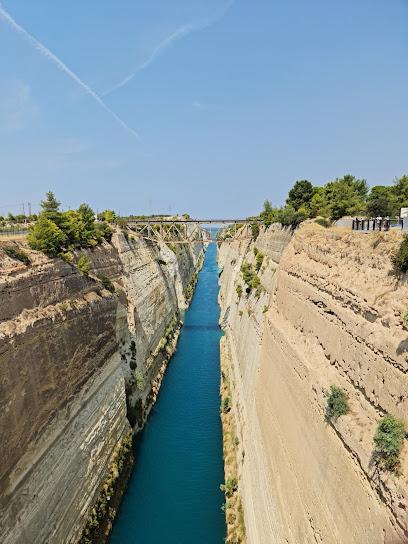
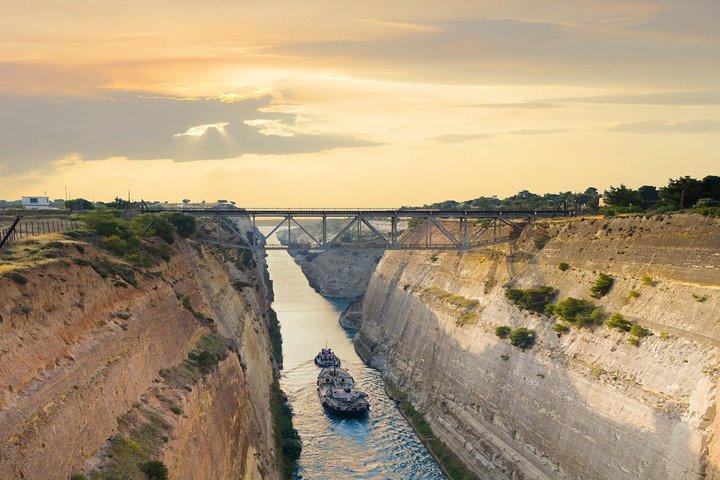
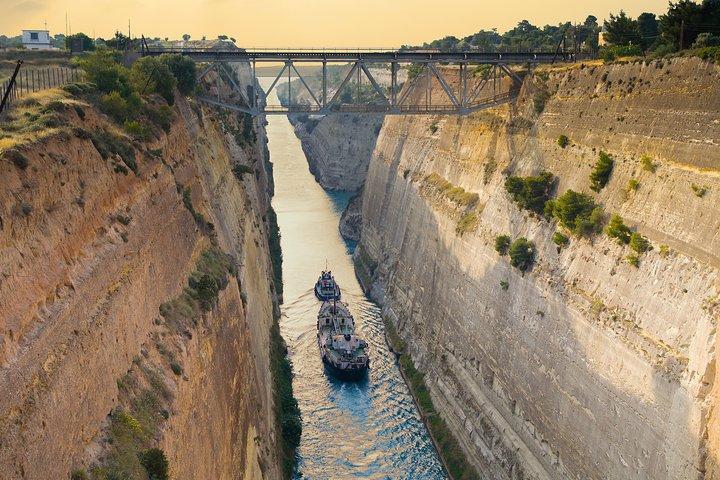
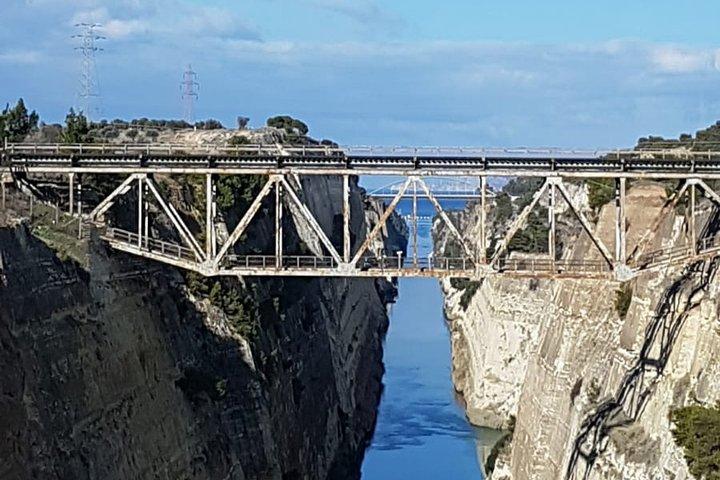
The Corinth Canal connects the Gulf of Corinth with the Saronic Gulf in the Aegean Sea. It cuts through the narrow Isthmus of Corinth and separates the Peloponnese from the Greek mainland, arguably making the peninsula an island. The canal was dug through the Isthmus at sea level and has no locks. It is 6.4 kilometers (4 miles) in length and only 21.4 meters (70 ft) wide at its base, making it impassable for most modern ships. Nowadays it has little economic importance and is mainly a tourist attraction. The canal was initially proposed in classical times and a failed effort was made to build it in the 1st century AD. Construction started in 1881 but was hampered by geological and financial problems that bankrupted the original builders. It was completed in 1893 but, due to the canal's narrowness, navigational problems and periodic closures to repair landslides from its steep walls, it failed to attract the level of traffic expected by its operators.
20 minutes
 Admission Not Included
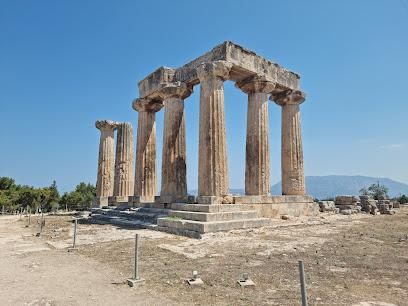
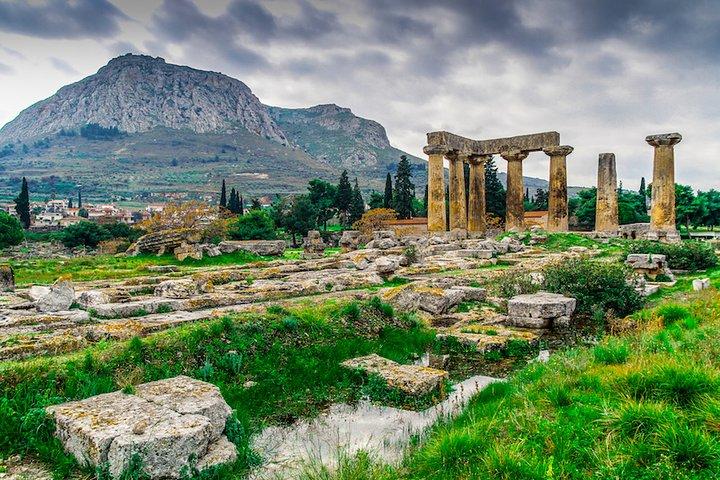
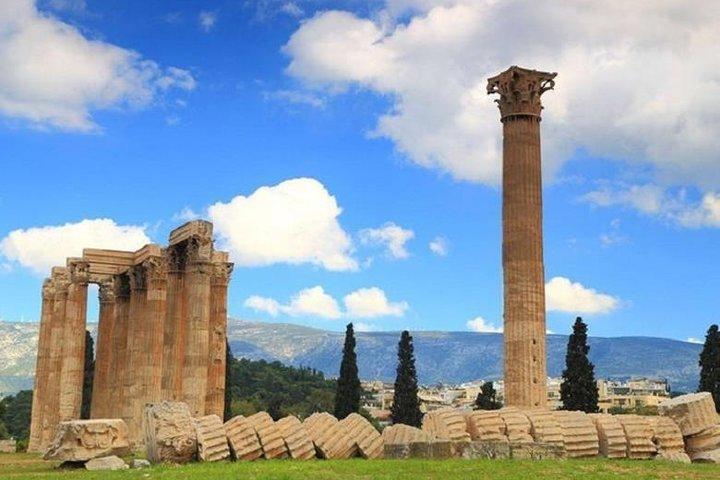
According to myth, the first kings of Corinth were descendants of Sisyphus, the man who was punished by the Gods for his hubris by being forced to roll an immense boulder up a hill only for it to roll down again when they came near the top, repeating this action for eternity. Thanks to traffic and trade over the Isthmus, the narrow strip of land that connects the Peloponnese to the mainland of Greece and Attica, this ancient city, whose foundation dates back to the 10th century BC, could easily compete in terms of wealth and fame with Athens and Thebes. Until the middle of the 6th century BC Corinth's main export product were the black-figured vases, many of which made their way to several colonies in Magna Greece. The great temple on its Acropolis (the Acrocorinth) was dedicated to Aphrodite. Corinth was one of the most important cult centers for the Goddess of Love throughout its history. According to some sources, there were more than a thousand temple maidens serving at the Sanctuary of Aphrodite. Corinth was also famous for hosting Games similar to those in Olympia. They took place in Isthmian, hence the name Isthmian Games. Around 730 BC the city started to found colonies like on the island of Kerkyra (Corfu) and like the city of Syracuse in Sicily. In 664 BC Corinth and Kerkyra clashed in what is now known as the first Greek naval battle in history. In the 7th century BC, when Corinth was ruled by the tyrants Kypselos and Periander, the city sent out more colonists to found cities, such as Poteidaia on the Chalkidiki peninsula, Ambrakia, Apollonia, and Anaktorion, and together with its colony Kerkyra the cities of Leuka and Epidamnos. The city was an important participant in the Persian Wars, as it joined Athens in the Battle of Salamis with the second largest fleet contingent. Also in the Battle of Plataie (479 BC) the city participated with a large contingent. But it soon came to a rift with Athens when in 462 BC the Athenian Kimon with his troops crossed the Corinthian territory without permission. It came to an open war in which Corinth defeated in league with Epidaurus the Athenians at Halieis, but later lost an important naval battle in the Saronic Gulf. Only some ten years later, in 451 BC, a ceasefire and later on a peace treaty were agreed upon with Athens. However, the dispute continued to smolder and eventually became one of the key factors that led to the outbreak of the Peloponnesian War. When Corinth got involved in the internal political turmoil of the Kerkyrian colony of Epidamnos, its fleet first suffered a serious defeat. But in 433 BC Corinth managed to win the naval battle near the Sybota islands just off the coast of Epeiros, which made Kerkyra turn to Athens with a request for help. As a consequence, Corinth joined the side of Sparta. After the end of the Peloponnesian War, in the face of the increasing hegemony of Sparta, the city's government decided to switch sides and move closer to the Athenians. This resulted in the outbreak of the Corinthian War in 394 BC in which Corinth and Athens once again fought together with Thebes and Argos against Sparta. Two years later Corinth witnessed a revolution and became for the first time in its long history a democracy. The new government managed to establish a political union with the city state of Argos. In 390 BC internal political turmoil plunged the city almost into a civil war when a large number of its citizens fought with each other outside the walls. But in 386 BC Sparta managed to restore its hegemony over the other Greek city states. The political union between Corinth and Argos was abolished and an aristocratic oligarchy, favorable to the politics of Sparta, was installed. In 337 BC Corinth fell under the rule of the Macedonians. After the murder on king Philip II of Macedonia in 336 BC the Federal Assembly in Corinth chose his son Alexander the Great as the commanding general of the military campaign against Persia, which had already been planned by Philip. In the subsequent period, the city was under the rule of Macedonian noblemen. During this time, Corinth became the most populous city in Greece and was known far and wide for its thriving economic and cultural life. In 243 BCE the city was attacked and captured by the strategist of the Achaean League called Aratos. Under the reign of this important statesman Corinth joined this league, but when its citizens, dissatisfied with his government, turned to the Spartan king Kleomenes III with a request for help, Aratos handed over the rule of Corinth to the Macedonian king Antigonos III in 224 BCE. The victory of the Romans in the Battle of Kynoskephalai in 197 BCE brought the Corinthians liberation from the Macedonian tutelage, because the Romans forced the Macedonian garrison to withdraw. But after the expulsion of the Macedonians Corinth joined once again the Achaean League and now ran a very anti-Roman policy. When the Achaean League declared war on Sparta in 146 BCE, a military clash with the Roman armies became unavoidable. The victorious Romans under the command of the general Lucius Mummius besieged Corinth, destroyed it, and murdered or enslaved all surviving inhabitants. The area fell partly to Sikyon, the predominant part was declared "ager publicus" and handed over to Roman colonists. Although there is archaeological evidence for a small revival after the destruction of Corinth in 146 BCE, it took more than a century before the city was re-founded in 44 BCE by Gaius Iulius Caesar as a Roman colony under the name "Colonia Laus Iulia Corinthiensis". According to the Roman historian Appianus, the settlers were freedmen from Rome. Under the Romans, Corinth became the administrative seat of the province of Achaea in southern Greece, and for several decades the city was a Latin-speaking island in the midst of a Greek environment. As early as the 2nd century CE, Corinth became the seat of a diocese, at the latest in the 4th century, the seat of a metropolitan bishopric, and it remained in that position until the rise of Athens at the beginning of the 9th century. In 267 CE the city was destroyed by the invasion of the Goths and Herulians, but quickly rebuilt. For more than a hundred years, Corinth was able to experience a late flowering, before it was plundered and sacked by Alaric I in 395 CE during the invasion of the Visigoths in Greece. Many of its citizens were sold into slavery. Nevertheless, Corinth could recover once again. In 521 CE the city was heavily damaged as a result of a severe earthquake, but rebuilt by the Emperor Iustinianus I. A few decades later, the Slavic invasions in Greece, starting around 580 CE, made almost all life in the ancient city impossible. Only after decades did it come back to a modest economic rise. In 1147 the Gulf of Corinth became the operational base of Norman Roger II against the region of Arta. Roger soon occupied Corinth himself and resettled all native silk weavers to Palermo. However, soon the city was re-incorporated by Byzantium. In 1202, a high Byzantine official, Leon Sguros, managed to become master of the city, but only two years later his rule was ended by the participants of the Fourth Crusade who took the city by force. In 1210, Corinth became part of the newly created Principality of Achaia and thus part of the Latin Empire. In the following years, the city had several rulers, who made it the scene of bloody battles over influence in southern Greece. From 1421 to 1458 it was in Byzantine possession. In 1458 the Ottomans took power in Corinth, which had already become a completely insignificant city by that time. In 1611, the Knights of the Order of Malta made a raid on Corinth, which damaged the city even more. From 1687 to 1715, the Venetians ruled the place, in which only 1500 inhabitants lived. The period of Ottoman rule ended in 1829/1830, and Corinth became Greek again. At the beginning of the Greek War of Independence, it had been considered for a time that Corinth should become the capital of the free Hellenic state. On the 21sf of February 1858, the ancient city of Corinth was destroyed by an earthquake and rebuilt six kilometres to the northeast. Today, immediately adjacent to and for a big part right on top of the ancient settlement area is the village of Archaia Korinthos. Since the start of tourism in Greece in the 19th century, the ruins of Ancient Corinth with its temples, fountains, theatre, agora, shops, and paved streets have attracted many visitors. Temple of Apollo in Cornith Temple of Apollo The Temple of Apollon, built in the middle of the 6th century BCE, is probably the most famous testimony of the splendour of the ancient city. A particular feature of the temple is the use of monolithic columns rather than the more commonly used column drums. Seven columns remain standing today. Although only a small part of the ruins of the city has been excavated and so much has been destroyed during many invasions and wars, some remains of the buildings as they are today, together with their 2D and 3D archaeological reconstructions, still manage to give the visitor an idea of what Corinth must have looked like during the time when it was one of the most important Roman cities in the Eastern Mediterranean. Temple of Apollo in Corinth Temple of Apollo Noteworthy is the great agora, which probably dates back to the 4th century BCE and would not have changed much during the following centuries. To the east of the agora the remains of the Basilica Iulia can be seen, a courthouse built by the Emperor Claudius in 44 CE. In the middle of the agora can be found the so-called "bèma" or "rostrum" - a platform where important juridical and political decisions where announced to the citizens of Corinth. It is being claimed by Christians as the place where the proselytiser Paul was questioned by Gallio, proconsul of the Roman province of Achaia. However, archaeological and historical research has proven this claim to be unsubstantial. Even the very presence of Paul in Corinth as well as his activities there have become more than doubtful. In the Middle Ages this place was overbuilt by a church. Lechaion Road, Corinth Lechaion Street In the north of the agora, an elaborately decorated arched gateway of the 1st century CE formed the beginning of the magnificent Lechaion Street, which was preserved in its original state until the 10th century. Even today, the paved street that was bordered by galleries featuring shops with all kinds of products from all over the Roman Empire and beyond, is still very impressive to walk on. The Lechaion Street was a kind of "shopping mile" where almost all public life took place. There is also a well-preserved latrine to admire. During the 11th and 12th centuries the area around the Lechaion Street was where the Byzantine aristocracy of the city built its rich houses. In the 17th century, the palace of the Ottoman Bey, governor of the city, of which hardly anything remains today, was built north of it. In the south, the agora is bordered by the 154 m long Stoa, which was built by Philip II of Macedonia after 338 BCE as a guest house for the deputies of the Corinthian Confederation. At the back of it there were numerous shops. During the period of Roman rule, the southern part of the Stoa functioned as the administrative seat of the Isthmian Games. Fountain of Peirene, Corinth Fountain of Peirene Next to the arched gateway that leads onto the Lechaion Street lies the well house of the spring of Peirene, which was famous for its clear water. It was lavishly decorated and its arcades were once equipped with several statues. Poets came to drink from its water in search for inspiration, as the spring had been linked to swift-winged Pegasos. Roman Odeion, Corinth Roman Odeion Also worthy of mention are two impressive buildings lying to the north-west of the parking and entrance of the archaeological site and museum. The Odeion (or concert hall), dating from the 1st century CE, was substantially enlarged during the 2nd century by none other than Herodes Attikos, known from the Odeion in Athens. And the large Greek-period theatre (from the 4th century BCE, but with many later alterations), was replaced in the Roman period by an arena-equipped building, where even the performance of naval battles, the so-called Naumachiai, was possible.
45 minutes
Admission Not Included
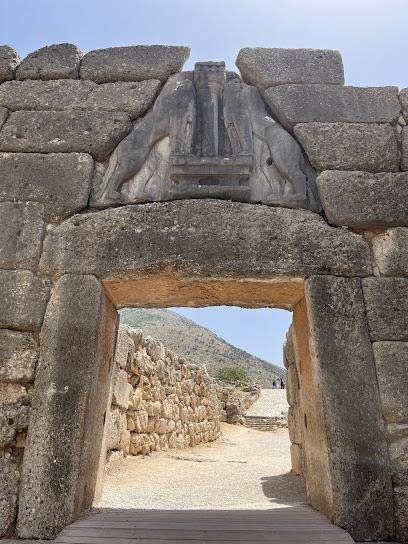
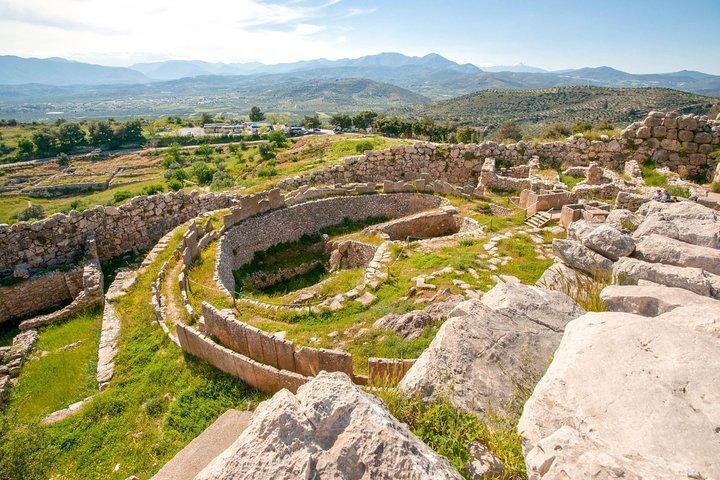
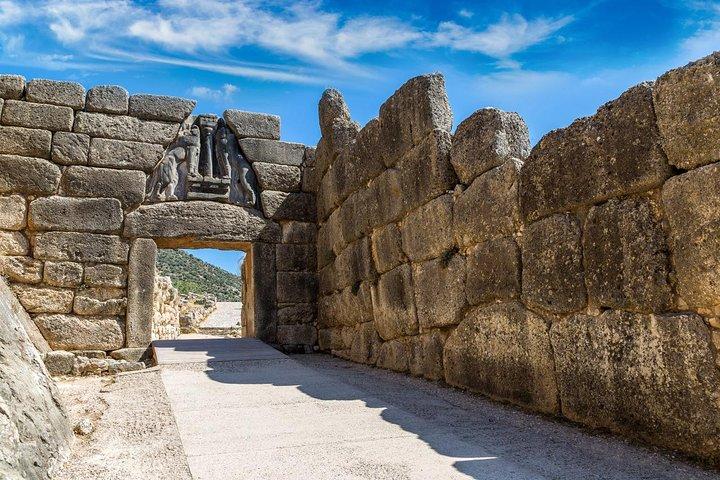
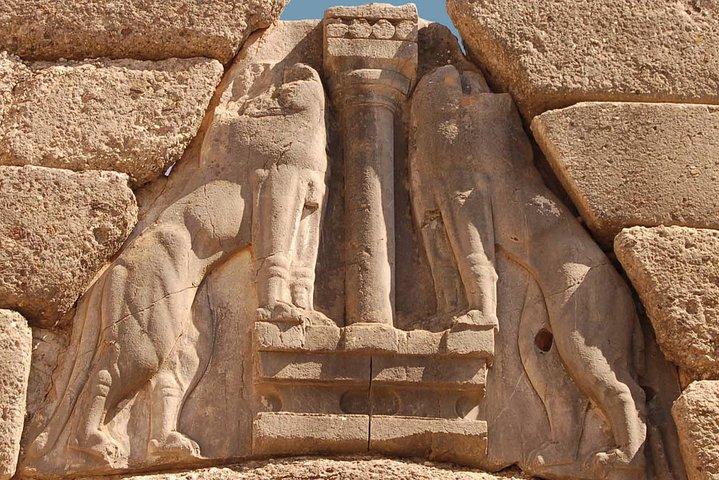
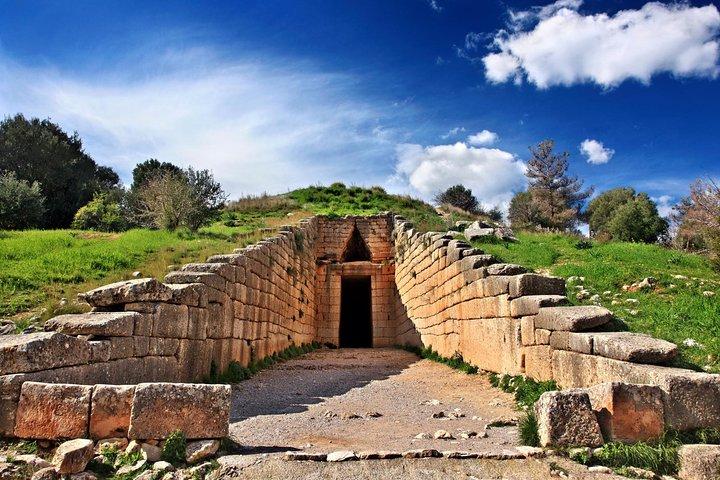
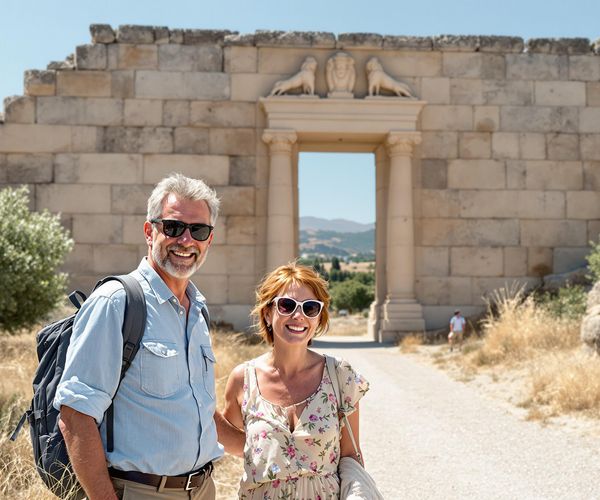
Mycenae is an archaeological site near Mykines in Argolis, north-eastern Peloponnese, Greece. It is located about 120 kilometers (75 miles) south-west of Athens; 11 kilometers (7 miles) north of Argos; and 48 kilometers (30 miles) south of Corinth. The site is 19 kilometers (12 miles) inland from the Saronic Gulf and built upon a hill rising 900 feet above sea level. In the second millennium BC, Mycenae was one of the major centers of Greek civilization, a military stronghold which dominated much of southern Greece, Crete, the Cyclades and parts of southwest Anatolia. The period of Greek history from about 1600 BC to about 1100 BC is called Mycenaean in reference to Mycenae. At its peak in 1350 BC, the citadel and lower town had a population of 30,000 and an area of 32 hectares. The first correct identification of Mycenae in modern literature was during a survey conducted by Francesco Grimani, commissioned by the Provveditore Generale of the Kingdom of the Morea in 1700, who used Pausanias's description of the Lion Gate to identify the ruins of Mycenae.
60 minutes
Admission Not Included
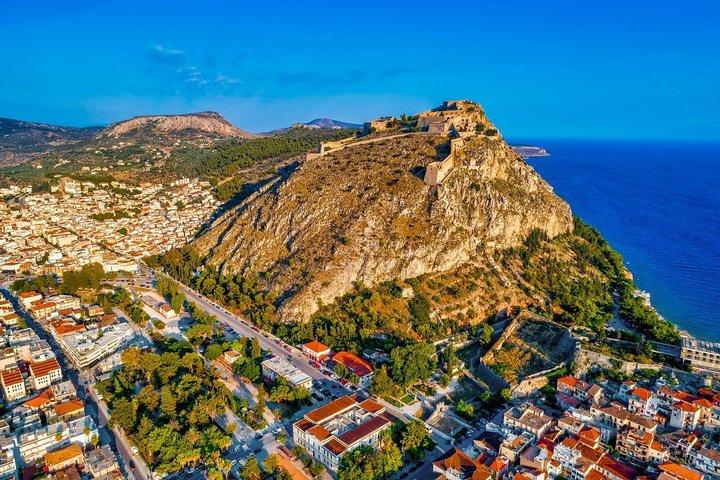
Nafplio
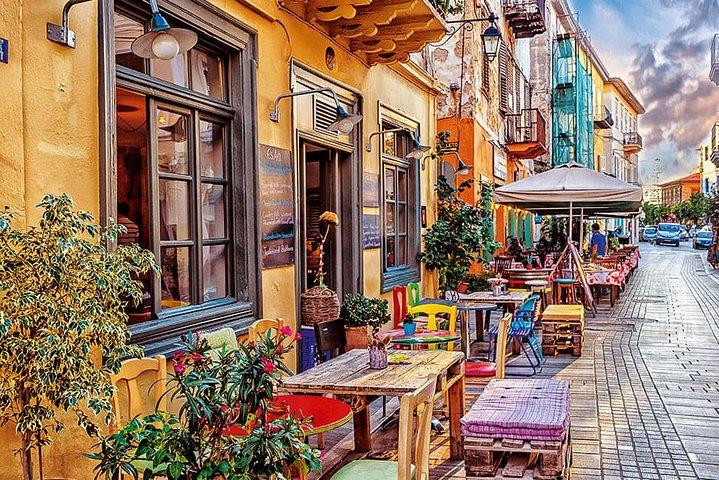
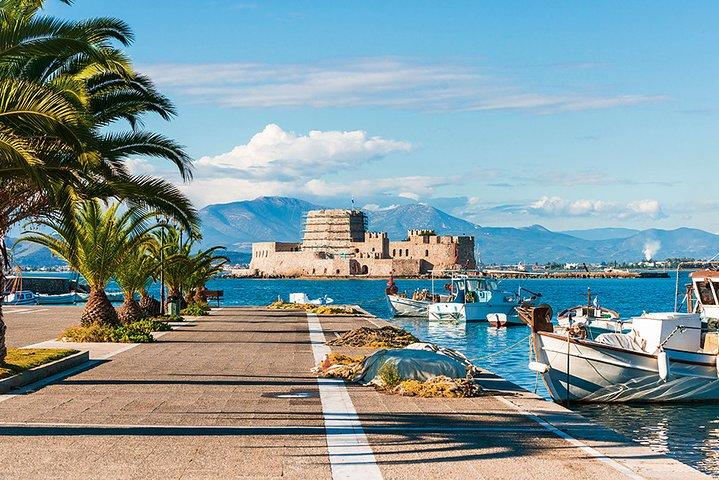
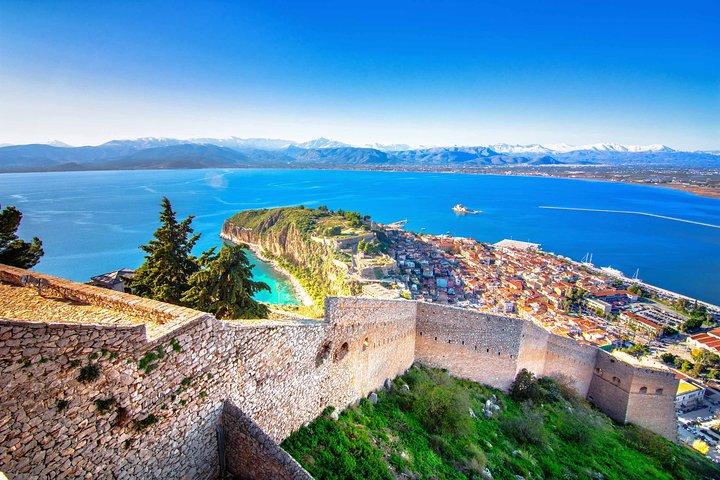
Nafplio is a seaport town in the Peloponnese in Greece that has expanded up the hillsides near the north end of the Argolic Gulf. The town was an important seaport held under a succession of royal houses in the Middle Ages as part of the lordship of Argos and Nafplia, held initially by the de la Roche following the Fourth Crusade before coming under the Republic of Venice and, lastly, the Ottoman Empire. The town was the capital of the First Hellenic Republic and of the Kingdom of Greece, from the start of the Greek Revolution in 1821 until 1834. Nafplio is now the capital of the regional unit of Argolis.
40 minutes
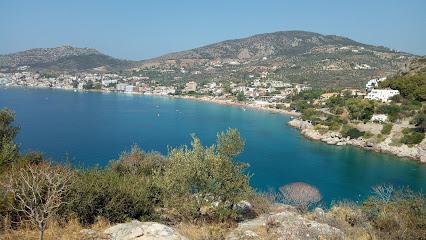
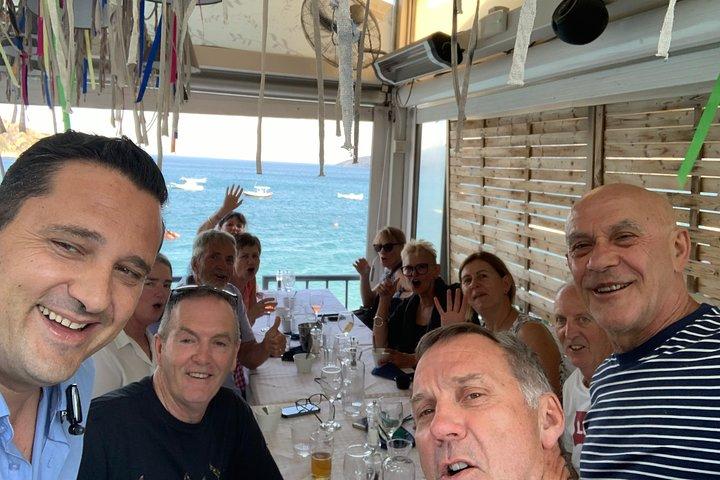
Tolon is a sea town, 7 kilometers (4 miles) east of Nafplion. You will enjoy your lunch at a traditional family owned restaurant enjoying the view of the Saronic gulf.
45 minutes
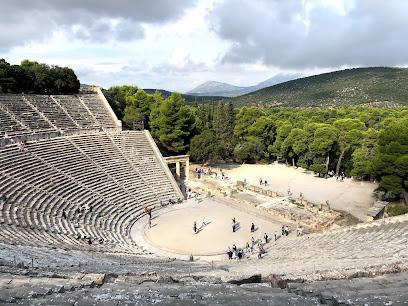
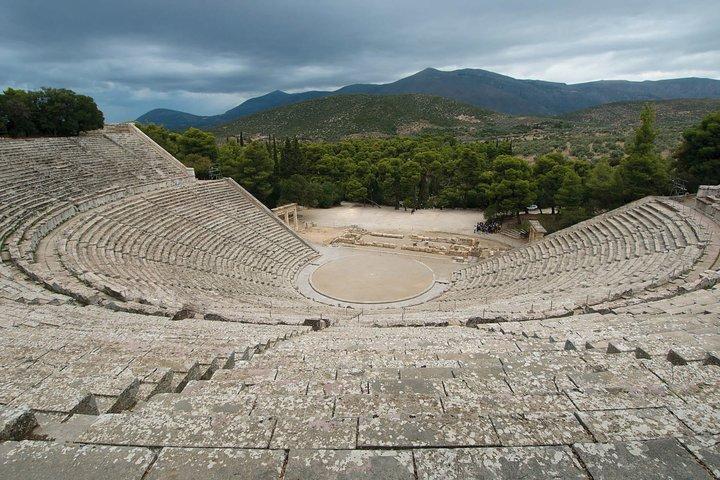
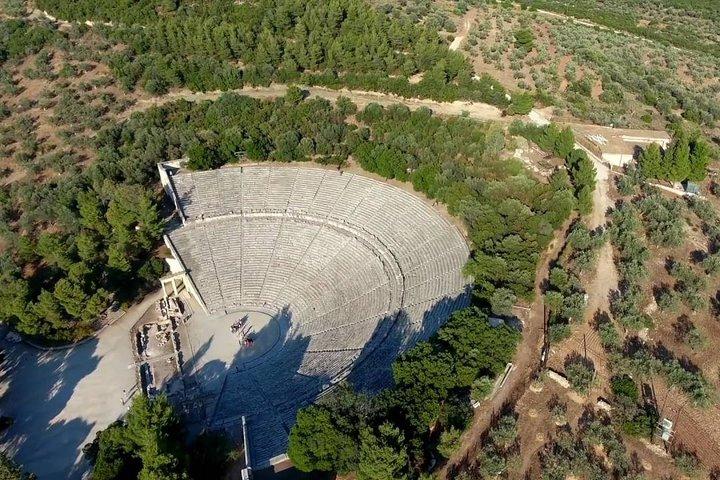
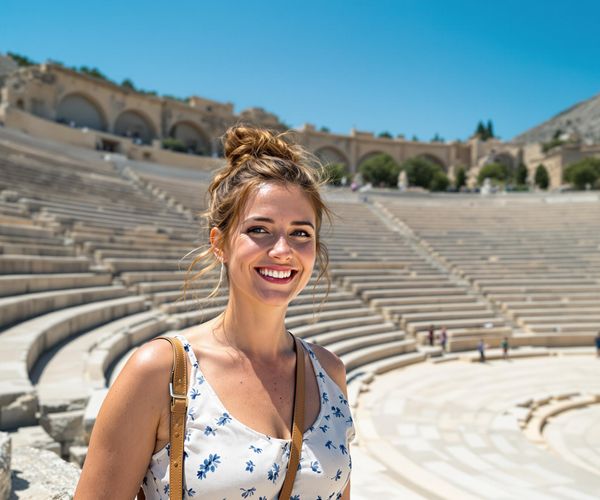
Epidaurus (3rd Century B.C) is a spiritual place worth visiting for its sites such as the Sanctuary of Aesculapius and the ancient Theater with its unique acoustics. The Sanctuary of Aesculapius was a healing and culture center of ancient times and the Theater of Epidaurus is one of the very few that retains its original circular Orchestra and it is a rare aesthetic sight, still used in our days.
45 minutes
Admission Not Included
The experience can be subject to change due to bad weather or unforseen circumstances. We always endeavour to give you the best possible experience.
Additional Information
-
 Infant car seats are available upon request
 -
Infants and small children can ride in a pram or stroller
-
Public transportation options are available nearby
-
Specialized infant seats are available
-
Suitable for all physical fitness levels
-
Transportation options are wheelchair accessible
-
Wheelchair accessible
-
Your English- speaking driver will explain about the ancient monuments that you are about to visit, the ancient history of Greece and interesting facts about historical and modern-day Greece but is not allowed by law to accompany you in the sites. If you wish to have a licensed tour guide to accompany you into the sites, we will help you arrange a licensed tour guide to be with you at an extra cost
-
Your tour is totally private. No unknown passengers will participate in your group.
What our experts say
-
 Lunch at a local restaurant in Tolon.
 -
Visit Nafplio for scenic views.
-
Check out the Temple of Apollo ruins.
-
Bring a camera for stunning landscapes.
-
Wear comfortable shoes for walking.

More About this Experience
Introduction
Step into the captivating past with the Argolis Private Full Day Tour, a journey that offers a unique glimpse into the heart of Greek history and culture. This exclusive tour spans between 9 to 10 hours, allowing travelers to explore the stunning landscapes and iconic archaeological sites of the Argolis region at their own pace. With a focus on personalized experiences, the tour is conducted in comfortable, air-conditioned vehicles, ensuring a smooth ride as you traverse ancient roads. Each professional driver is not only fluent in English but is also equipped with in-depth knowledge about Greece's rich historical tapestry. This means you’ll not only be whisked away to breathtaking locations, but you’ll also gain insights into the stories that shaped this magnificent land. Experience the allure of places like the Corinth Canal, Ancient Corinth, and the timeless beauty of Mycenae, all while enjoying the luxury of a private tour designed just for you.What to expect?
With the Argolis Private Full Day Tour, travelers can look forward to an immersive experience that is both flexible and enriching. The itinerary is designed to minimize crowds, allowing visitors to explore archaeological sites like the Ancient Theatre of Epidaurus and the ruins of Mycenae at optimal times, free from the bustling throngs typical of large group tours. Guests can expect to enjoy comfortable transportation, complete with on-board Wi-Fi and bottled water, making the journey as enjoyable as the destinations. The drivers will provide fascinating commentary about the landmarks, sharing stories that bring the ancient ruins to life. For those who desire a deeper understanding, a licensed tour guide can be arranged for an additional fee, ensuring that every question is answered. This tour is not just about visiting sites; it’s about creating lasting memories in a land steeped in myth and history.Who is this for?
The Argolis Private Full Day Tour is perfect for a diverse range of travelers. History buffs will delight in the deep dives into Greece's ancient past, while families will appreciate the flexible nature of the tour, catering to all ages and physical fitness levels. Couples seeking a romantic getaway will find the scenic vistas and intimate settings ideal for creating special memories together. Even solo travelers will feel welcomed and valued in this private setting, where the focus is entirely on their experience. Whether you’re a seasoned explorer or a first-time visitor to Greece, this tour offers something for everyone. Those needing special accommodations, such as wheelchair access or infant seats, will find the tour adaptable to their needs, ensuring that every traveler can enjoy the beauty of Argolis without barriers.Why book this?
Booking the Argolis Private Full Day Tour means investing in a one-of-a-kind experience that stands out from typical group excursions. The exclusivity of a private tour allows for personalized attention, ensuring that every aspect of the journey is tailored to individual preferences. Unlike larger tours, which often feel rushed and impersonal, this tour provides the luxury of time to truly absorb the magnificence of each site. The knowledgeable drivers not only navigate but also engage with travelers, sharing local insights and stories that enrich the experience far beyond mere sightseeing. Additionally, the cost-effective nature of this tour, compared to purchasing individual tickets for various attractions, makes it an attractive option for those looking to maximize their experience without overspending. By choosing this tour, travelers can immerse themselves in the wonders of Argolis while enjoying the comfort and convenience of private transportation.Good to know
Before embarking on the Argolis Private Full Day Tour, travelers should be aware of a few helpful details. While the tour includes comfortable transportation and a knowledgeable driver, it’s important to note that entrance fees for some sites are not included in the tour price. Guests are encouraged to bring their own lunch or plan to dine at a local restaurant in the picturesque town of Tolon, where they can savor authentic Greek cuisine with a stunning view of the Saronic Gulf. For those traveling with young children, specialized infant seats are available upon request. The tour is designed to be accessible, with options for wheelchair users, ensuring that everyone can partake in this unforgettable journey through Greece's timeless landscapes. Whether it’s your first visit or a return to familiar shores, this tour promises to enrich your understanding and appreciation of Greek culture and history.Reviews
Feedback from travelers who have experienced the Argolis Private Full Day Tour has been overwhelmingly positive, with many praising the personalized nature of the experience. Guests have highlighted the professionalism and friendliness of the drivers, noting how their insights transformed visits to historical sites into engaging narratives that brought the past to life. Travelers appreciated the flexibility of the itinerary, allowing them to explore at their own pace without feeling rushed. Many found the opportunity to visit popular sites like Ancient Corinth and the Theatre of Epidaurus at less crowded times to be a major highlight. Families noted the convenience of private transportation, making the journey enjoyable and stress-free for all ages. Overall, the tour garnered high marks for its blend of comfort, knowledge, and the sheer beauty of the Argolis region, leaving guests with lasting memories and a desire to return to Greece again.Journals from our explorers at this location





Your all‑in‑one travel companion app
Explore expert travel guides, compare and book tours, experiences, hotels, and more—all from the palm of your hand. Download now for seamless trip planning wherever your wanderlust takes you.


This is a popular product and the date you are looking for just sold out. Next available date is
