


Guided Private Tour in Rome in German
 Rome, IT
 100% of travellers recommend this

Highlights
- Small group size for personalized experience
- Explore Rome without time pressure
- Unique tour using public transport and walking
- Experience one of the most beautiful cities
- Guided tour in German for international travelers
-
Duration 10 hours
-
Private group up to 6 people
-
Guided tour in German
-
Includes public transport
-
Walk approx. 15 km
Embark on a guided private tour in Rome like no other! Experience the city in a different light, with minimal talking and a focus on using public transport and walking to explore the stunning sights. With no time pressure, you'll have the opportunity to leisurely discover one of the most beautiful cities in the world. This 10-hour tour covers approximately 15 km of Rome, ensuring an intimate experience with a group size limited to just 6 people. Immerse yourself in the history and culture of Rome with this unique and relaxing tour, conducted in German. Don't miss out on this unforgettable way to see the city!
At a Glance
-
 Free cancellation
-
 10 hours
-
 Instant Confirmation
-
 Available in German
-
 Mobile voucher
-
 Small Group tour
-
 Guided
-
 Family friendly

Featured Reviews

Explore Rome in a unique, relaxed way with a private guided tour in German, using public transport and walking without time pressure.
Included
-
 Othermin.8 Hourly guided tour of Rome
Excluded
-
 LunchLunch
Meeting Point
Meeting point is the Circus Massimo metro station

00184 Rome, Metropolitan City of Rome Capital , Italy


What to expect

The Colosseum (ancient name: Amphitheatrum Novum or Amphitheatrum Flavium, Italian: Colosseo, Anfiteatro Flavio) is the largest of the amphitheatres built in ancient Rome, the largest enclosed building of Roman antiquity and still the largest amphitheatre ever built in the world. Built between 72 and 80 AD, the Colosseum served as the venue for mostly extremely cruel and brutal events that were organized by members of the imperial family for the entertainment and amusement of the free residents of Rome and the Roman Empire with free admission. Today, the ruins of the building are one of the city's landmarks and at the same time a testament to the high level of architecture of the Romans in ancient times.
60 minutes
 Admission Not Included
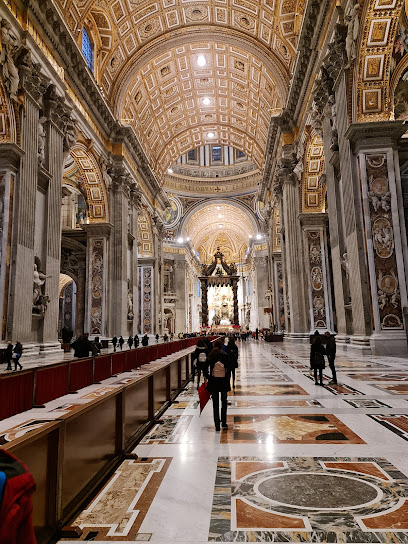
The Basilica of Saint Peter in the Vatican (Italian: San Pietro in Vaticano) in Rome, commonly called St. Peter's Basilica in German-speaking countries because of its size and importance (also Basilica Sancti Petri in Vaticano, St. Peter's Basilica, Vatican Basilica or Templum Vaticanum), is the memorial church of the apostle Simon Peter. It is located on the territory of the independent state of Vatican City and is one of the seven pilgrimage churches of Rome. With a built-up area of 20,139 m²[1] and a capacity of 20,000[2] people, St. Peter's Basilica is the largest of the papal basilicas and one of the largest and most important churches in the world.[
60 minutes
Piazza Venezia / Ancient City
The square was already an important traffic junction in the time of the Roman Republic, as the Via Flaminia met the Porta Fontinalis in the Servian Wall here.[1] In the 15th century, the Venetian cardinal Pietro Barbo, later Pope Paul II, had his palace, the Palazzo Barbo, built on the west side of the square. The Venetian embassy to the Holy See was based there from 1567 to 1797, hence the palace's current name Palazzo Venezia. In 1660, the Palazzo Misciatelli was built to the north, which is now known as the Palazzo Bonaparte, because Letizia Ramolino, the mother of Napoleon Bonaparte, had her retirement home here.
45 minutes
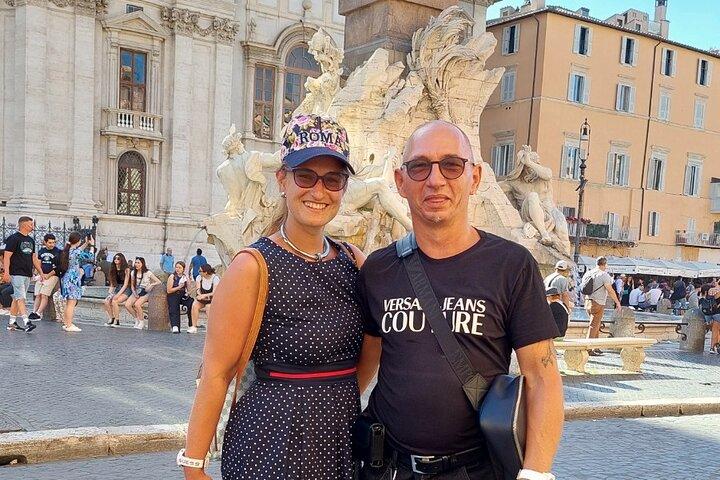
Piazza Navona
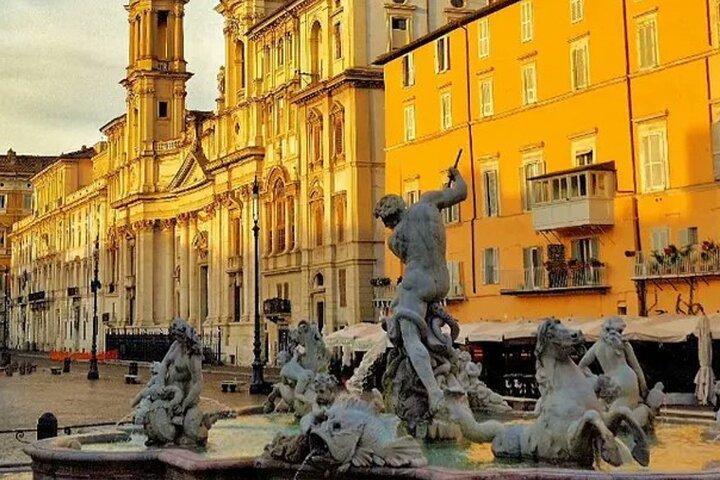
In 46 BC, Julius Caesar built a first, rather provisional stadium for Greek-style games, i.e. athletic competitions, here on the Campus Martius. Emperor Domitian expanded this stadium to a monumental size in 85 AD. It measured 275 by 106 meters and had space for over 30,000 spectators. The ground floor of the outside was surrounded by arcades made of travertine pilasters. No archaeological remains of the second floor have been found. The stadium was decorated with a number of works of art, mainly in Greek style.[1] An excavated torso, the so-called Pasquino, is on display nearby.
45 minutes
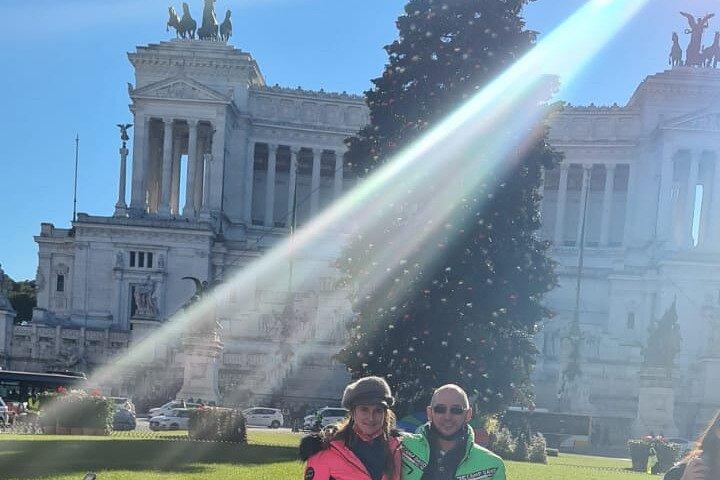
Monumento a Vittorio Emanuele II
The National Monument to Victor Emmanuel II (Italian: Monumento nazionale a Vittorio Emanuele II), colloquially known as the Vittoriano or Altare della Patria ("Altar of the Fatherland"), is a national monument in Rome that was erected in honour of Victor Emmanuel II, the first king of a unified Italy. Designed by Giuseppe Sacconi in 1885, the monument was inaugurated in 1911 and not completed until 1927. It is located on the axis of the Via del Corso in Piazza Venezia next to the Forum of Trajan and is one of the national symbols of Italy. The monument houses the Museo del Risorgimento, which commemorates the unification of Italy in the 19th century.
45 minutes
Corso Roma
Via del Corso, or Corso for short, is one of the most famous streets in the old town of Rome, connecting Piazza del Popolo with Piazza Venezia. It is about 1.6 km long.
25 minutes
Colle Capitolino
Capitol (Latin Capitolium and mons Capitolinus, Ancient Greek Καπετώλιον Kapetṓlion, Italian Campidoglio) is the short name form of the Capitoline Hill, the second smallest of the classical seven hills of ancient Rome, where the religious center of power was located.
45 minutes
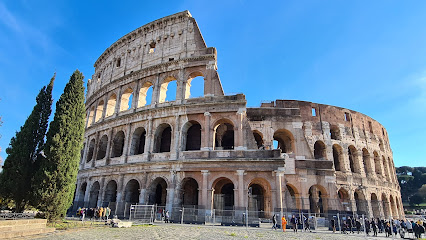
Only from outsideThe Roman Forum (Roman market place) in Rome is the oldest Roman forum and was the centre of political, economic, cultural and religious life. It lies in a depression between the three city hills of Capitol, Palatine and Esquiline and was the site of many public buildings and monuments. en no visit to this museum
25 minutes
Piazza del Popolo
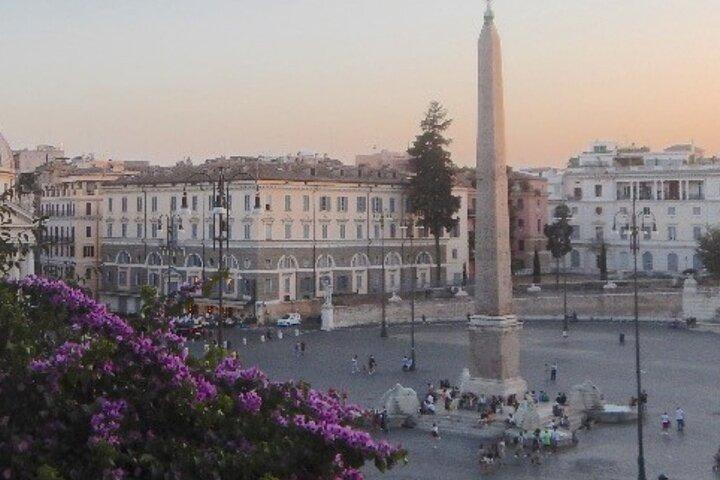
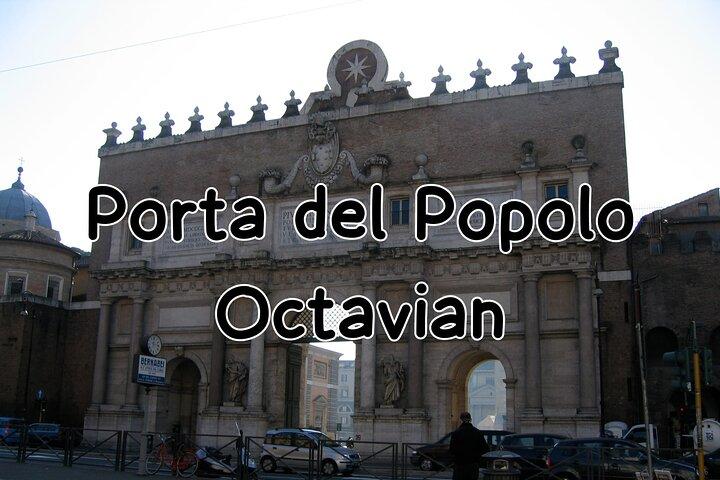
Piazza del Popolo (People's Square, after the church of Santa Maria del Popolo) is one of the most famous squares in Rome. Located in the IV Rione, it has been the square where visitors entered Rome since ancient times, arriving from the north via the Via Flaminia or the Via Cassia.
25 minutes
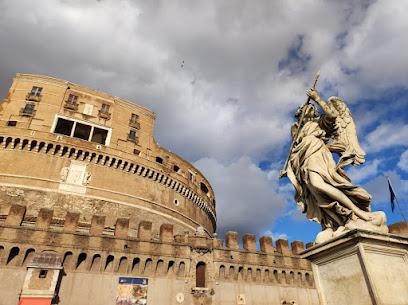
Castel Sant'Angelo (originally Mausoleum of Hadrian) (Italian: Castel Sant'Angelo or Mausoleo di Adriano) in Rome was originally built as a mausoleum for the Roman Emperor Hadrian (117-138 AD) (Latin: Mausoleum Hadriani) and his successors and was later converted into a castle by various popes. The building has not been used as a castle since 1901. Castel Sant'Angelo has been a museum since February 13, 1906.
20 minutes
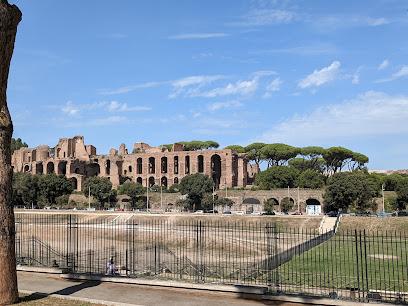
The Circus Maximus (Italian: Circo Massimo) was the largest circus in ancient Rome. It had a total length of around 600 metres (including the arena and steps) and a width of 140 metres.[1] According to Dionysius of Halicarnassus, its capacity was 150,000 when it was completed at the time of Augustus,[2] and 250,000 at the time of Pliny the Elder.[3] It was used for chariot races until the 6th century.
20 minutes
Teatro di Marcello
The Theatre of Marcellus was a theatre in ancient Rome that still exists today in the form of a residential building. Caesar had already purchased the land to the north of the vegetable market (forum holitorium) in the immediate vicinity of the magnificent Temple of Apollo Sosianus. Augustus had the theatre built there, which was completed in 13 BC and dedicated to his nephew Marcellus, who had died 10 years earlier. For the construction, two smaller temples had to be demolished, which were probably dedicated to Pietas and Diana. Unlike Greek theatres, the Theatre of Marcellus was not built on a mountainside, but stood free as a high-rise structure. The approximately 33-metre-high building made of Roman travertine from the quarries of Tivoli and opus caementicium provided the model for the construction of the later Colosseum. In terms of seats, it was the largest theatre in the city of Rome and offered space for around 10,000 to 15,000 spectators.
15 minutes
Isola Tiberina
The Tiber Island (Italian: isola Tiberina, Latin: insula Tiberina) is a small island in the river Tiber in Rome. It is about 270 m long and up to 67 m wide.
20 minutes
Pantheon
The Pantheon (ancient Greek Πάνθειον (ἱερόν) or Πάνθεον, from πᾶν pān "all", "whole", and θεός theós "God") is an ancient building in Rome that was converted into a church. As a Roman Catholic church, the official Italian name is Santa Maria ad Martyres (Latin Sancta Maria ad Martyres). After a form of the name Sancta Maria Rotunda that has been in use since the Middle Ages, the building in Rome is also colloquially known as La Rotonda.
25 minutes
Admission Not Included
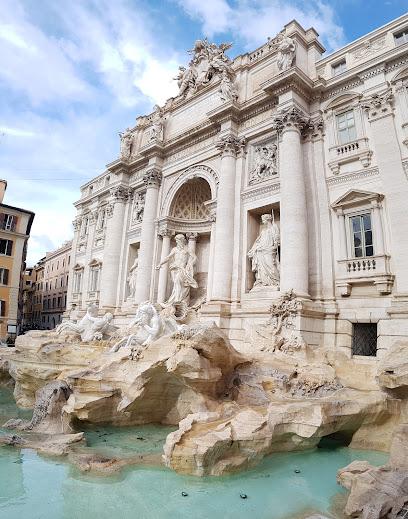
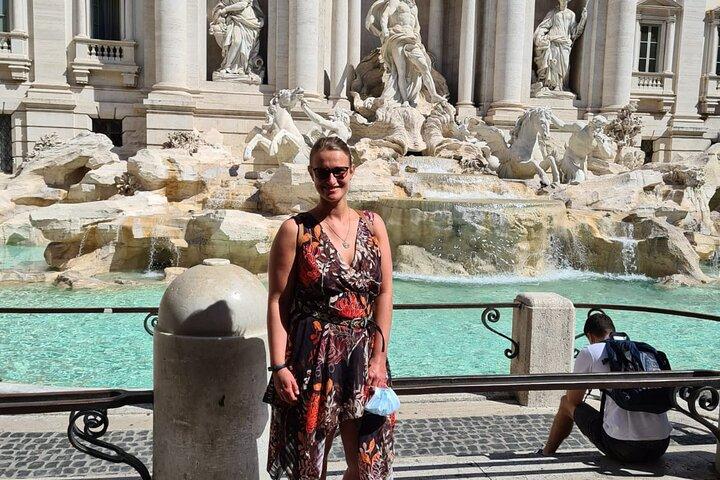
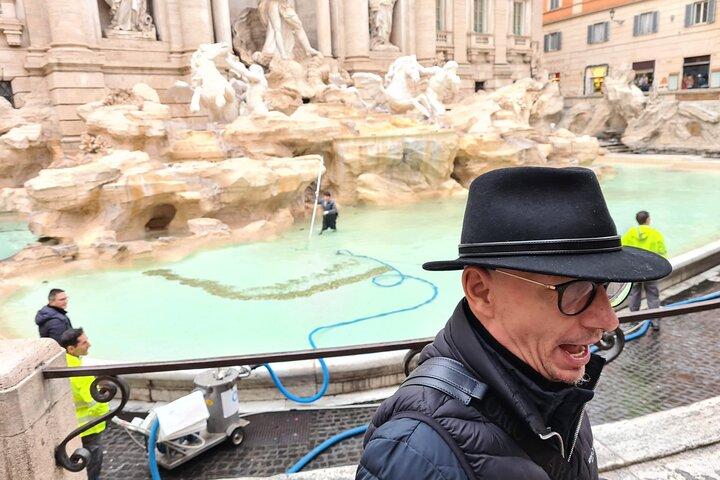
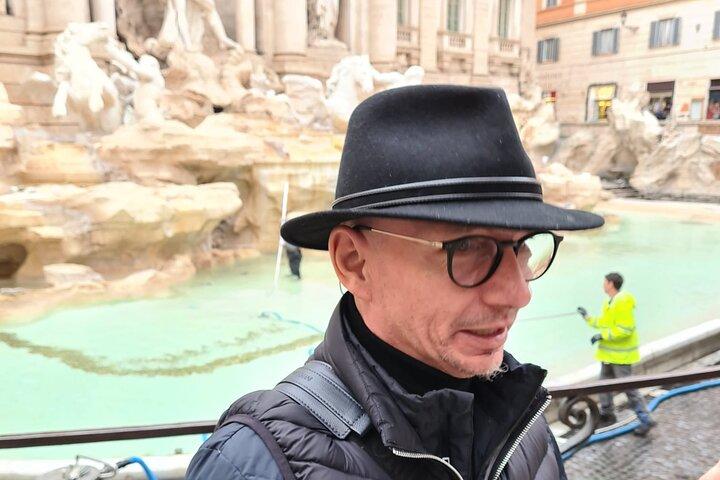
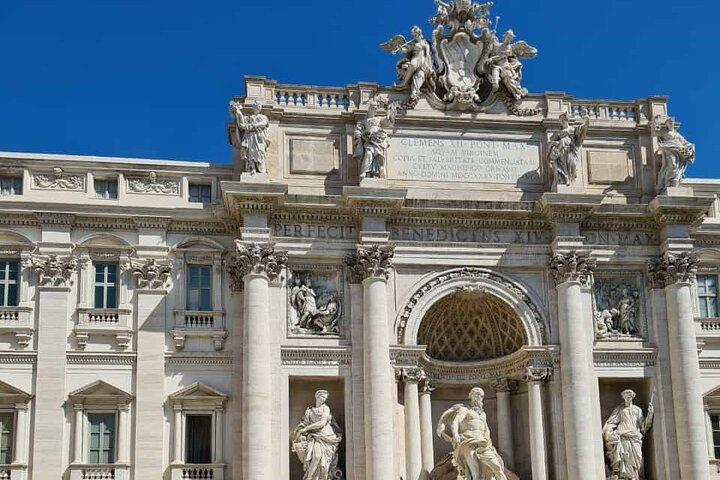
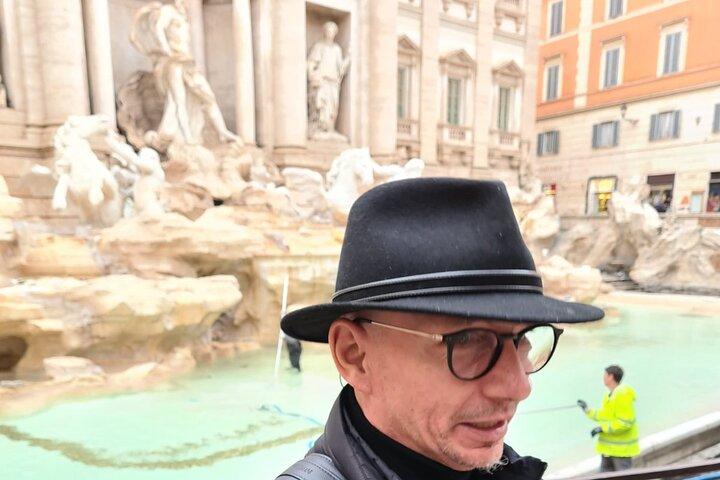
The Trevi Fountain (Italian: Fontana di Trevi) is a monumental fountain on the Piazza di Trevi in front of the Palazzo Poli in Rome. It was created between 1732 and 1762 by the architect Nicola Salvi for Pope Clement XII and is considered a masterpiece of the Baroque period. The Trevi Fountain is the largest fountain in Rome and one of the most famous fountains in the world. It is supplied with 80 million liters of water per day by the Acqua Vergine.
45 minutes
The experience can be subject to change due to bad weather or unforseen circumstances. We always endeavour to give you the best possible experience.
Additional Information
-
 Public transportation options are available nearby
 -
Suitable for all physical fitness levels
What our experts say
-
 Try local gelato at Giolitti.
 -
Lunch options nearby at Trastevere.
-
Visit the Pantheon early to avoid crowds.
-
Check out local markets for souvenirs.
-
Use public transport for easy access.

More About this Experience
Introduction
Indulge in a unique and immersive experience with [ProductName], a guided private tour in Rome that offers a refreshing perspective on this historic city. Explore Rome in German, without the usual chatter, as you navigate through the city using public transport and walking, allowing you to truly soak in the beauty and charm of Rome at your own pace.What to expect?
Embark on a leisurely 10-hour journey through Rome, covering approximately 15 kilometers on foot, with a small group of no more than 6 people. This unconventional tour offers a relaxed and intimate way to discover one of the most enchanting cities in the world, free from the constraints of time pressure and overcrowded tourist spots.Who is this for?
This tour is perfect for travelers seeking a more personalized and authentic experience of Rome. Whether you are a history buff, a culture enthusiast, or simply someone looking to explore a city from a different angle, this guided private tour caters to individuals or small groups who value depth and connection in their travel experiences.Why book this?
Immerse yourself in the essence of Rome with this unique guided tour that goes beyond the typical tourist route. With a focus on exploration through public transport and walking, you'll uncover hidden gems, local secrets, and lesser-known landmarks that showcase the true spirit of this ancient city. Embrace the freedom to discover Rome at your own pace, away from the crowds and commercialized attractions, for an unforgettable and authentic travel experience.Good to know
During this 10-hour tour, be prepared to walk around 15 kilometers, so comfortable shoes are a must. The meeting point at Circus Massimo metro station sets the tone for a day of adventure and discovery. While lunch is not included, you'll have ample opportunities to savor authentic Italian cuisine at your leisure along the way, adding to the overall experience of indulging in the local culture.Reviews
Travelers who have embarked on this guided private tour in Rome rave about the unique and immersive experience it offers. From the personalized approach to exploring the city to the intimate group size that fosters meaningful connections and discoveries, guests have praised the tour for providing a fresh perspective on Rome and its vibrant culture. Don't miss out on this opportunity to see Rome in a whole new light with [ProductName].Journals from our explorers at this location




Your all‑in‑one travel companion app
Explore expert travel guides, compare and book tours, experiences, hotels, and more—all from the palm of your hand. Download now for seamless trip planning wherever your wanderlust takes you.


This is a popular product and the date you are looking for just sold out. Next available date is
