

Isle of Man Travel Guide - Free Web & App
Your ultimate guide to Isle of Man. Discover top landmarks, proposed trips, and local tips. Free on the web or via the Evendo companion app.


Isle of Man travel blends Celtic heritage, TT history, rugged coastlines, mountain roads, castles, railways and wildlife across the Irish Sea.
Sea, Mountain and Open Coast
The Isle of Man is a self-governing Crown Dependency in the Irish Sea, lying broadly between Great Britain and Ireland. Although commonly reached from the United Kingdom and included here under that country for travel purposes, it is not constitutionally part of the UK. Its compact scale conceals a remarkably varied landscape: upland moors rise towards Snaefell, the island’s highest summit, while sea cliffs, sandy bays, glens and exposed headlands shape the coastline. The central mountain road, made famous by the Isle of Man TT races, crosses the island between Douglas and Ramsey, but quieter lanes lead to fishing harbours, farms and wooded valleys.Read more about Isle of Man
Celtic and Norse Character
Wildlife and Island Experiences
When is the best time to visit Isle of Man?
Best: June–August · 18–20°C| Month | High (°C) | Rainfall (mm) |
|---|---|---|
| January | 8 | 80 |
| February | 8 | 70 |
| March | 8 | 60 |
| April | 12 | 50 |
| May | 15 | 40 |
| June (best) | 18 | 40 |
| July (best) | 20 | 50 |
| August (best) | 20 | 60 |
| September | 18 | 70 |
| October | 16 | 80 |
| November | 13 | 90 |
| December | 11 | 100 |
Getting to and around Isle of Man
How to get there
Transportation
Best attractions in Isle of Man
The Isle of Man’s attractions range from medieval fortifications to exposed coastal scenery and working heritage railways. Peel Castle occupies St Patrick’s Isle beside the harbour, while Castle Rushen dominates Castletown and gives the former capital a strong historical focus. In Laxey, the Great Laxey Wheel reflects the island’s mining past; nearby, the Manx Electric Railway climbs through the eastern landscape towards Ramsey. Snaefell provides the island’s principal mountain setting, with the summit area reached by the mountain railway when services operate, while the Mountain Road offers broad views across the uplands. Along the coast, Niarbyl Bay, the Sound near the island’s south-western tip and the harbour villages of Port Erin and Port St Mary reveal different geological and maritime characters. Douglas combines the Sea Terminal, Victorian promenade and access to museums and transport connections, while the Calf of Man, viewed from the south, is associated with important seabird and marine habitats.
-
Castle
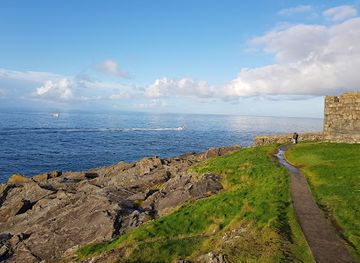
Peel Castle
Explore Peel Castle on St Patrick’s Isle — a captivating Viking fortress with ancient ruins, sweeping sea views, and rich Manx heritage.
-
History museum
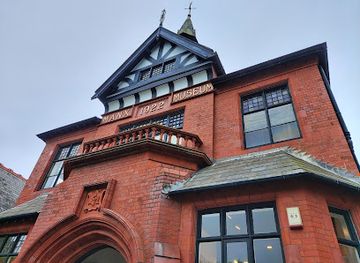
The Manx Museum
Explore 10,000 years of Isle of Man history, from Viking treasures to iconic TT races, in Douglas’s premier cultural museum.
-
Castle
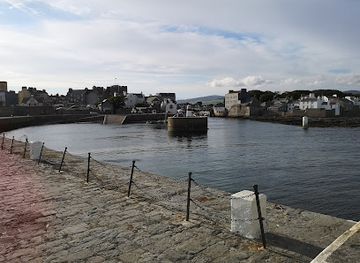
Castle Rushen
Explore Castle Rushen, a stunning medieval fortress in Castletown, Isle of Man, rich with history, immersive exhibits, and breathtaking views.
-
Tourist attraction
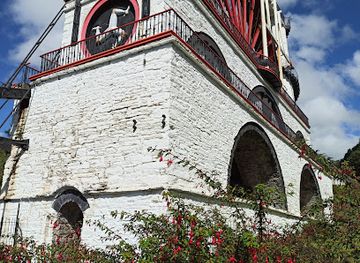
The Great Laxey Wheel
Discover Lady Isabella, the world’s largest working waterwheel, and explore the rich mining heritage amid stunning Glen Mooar Valley views.
Best landmarks in Isle of Man
The Isle of Man’s landmarks express its combined natural, political and industrial identity. Snaefell is the island’s highest mountain and the dominant feature of the central uplands, while the Calf of Man and the Sound define the southern maritime landscape. Tynwald Hill at St John’s is associated with the island’s ancient parliamentary tradition, and nearby sites connect modern Manx government with older Celtic and Norse heritage. Peel Castle, Castle Rushen and the distinctive Laxey Wheel represent ecclesiastical, military and mining chapters of the island’s past. Douglas’s Tower of Refuge stands on the St Mary’s Isle reef in the bay, recalling the hazards of coastal navigation. The Mountain Course is a landmark of a different kind: a public-road circuit whose bends, villages and mountain section have become internationally linked with the Isle of Man TT, while the island’s surviving railways remain important transport and heritage features.
-
Historical landmark
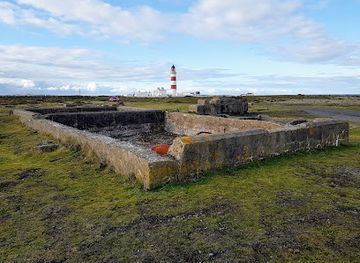
Point of Ayre Lighthouse
Historic 19th-century lighthouse marking the Isle of Man’s northernmost tip, blending maritime heritage with rugged coastal beauty.
-
Historical landmark
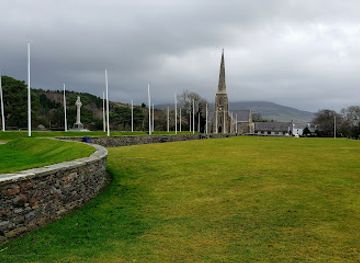
Tynwald Hill
The ancient Viking-age parliament mound where the Isle of Man’s laws are still proclaimed each summer in a living tradition over a thousand years old.
-
Historical landmark
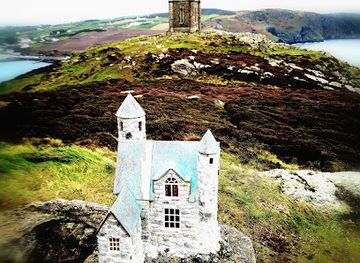
Milner's Tower
Historic Milner's Tower stands sentinel on Bradda Head, offering panoramic views and honoring a local philanthropist’s enduring legacy.
-
Bridge
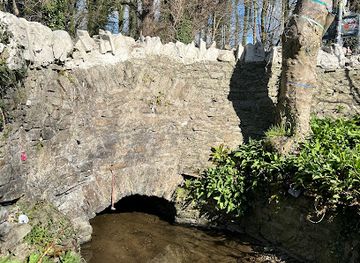
Fairy Bridge
A small bridge with a big tradition: greet the Isle of Man’s little people for luck and avoid misfortune on your travels.
Explore Isle of Man on the map
Plan your trip on one map. See where the top attractions, landmarks, restaurants and hotels are, and book hotels and experiences in a few clicks.
Best hotels in Isle of Man
Best restaurants in Isle of Man
Dining on the Isle of Man is shaped by its waters, pasture and farming traditions. Manx kippers, queen scallops or queenies, locally produced lamb and seafood are among the island’s best-known specialities, while Manx bonnag gives traditional baking a distinctive local identity. Menus vary from straightforward fish and chips, cafés and village pubs to restaurants in Douglas and the larger towns, where regional ingredients may appear in more contemporary cooking. Castletown, Peel, Port Erin, Ramsey and Douglas provide the broadest choice, while rural areas are more dependent on individual pubs, cafés, farm shops and seasonal food outlets. Local produce can include Manx cheeses, smoked fish, preserves, cakes and locally made drinks. Opening patterns and availability can vary outside the main settlements, so visitors exploring remote coasts and uplands should plan where they will eat rather than assuming refreshments will be available along every route.
-
Restaurant
The Sound Cafe Isle of Man
A charming cafe at the Isle of Man’s southern tip offering fresh Manx cuisine, stunning coastal views, and a haven for wildlife lovers.
-
Seafood
Little Fish Cafe
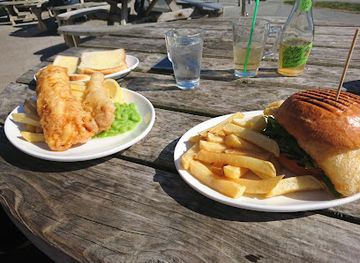
Cozy harbor-side seafood restaurant in Douglas, Isle of Man, famed for fresh fish and chips and warm, intimate service.
-
Thai
Thai Thai Restaurant
A reliable Thai and Asian fusion restaurant in central Douglas, serving aromatic curries, stir-fries and noodle dishes in a relaxed, no-frills setting.
-
Restaurant
The Boatyard Restaurant
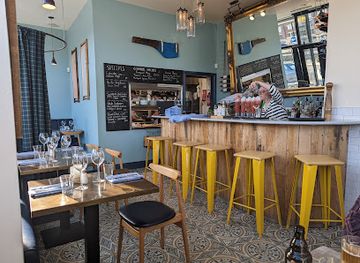
Experience fresh Isle of Man seafood with stunning marina and castle views at Peel’s award-winning Boatyard Restaurant.
Best bars in Isle of Man
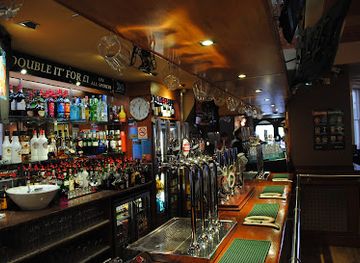
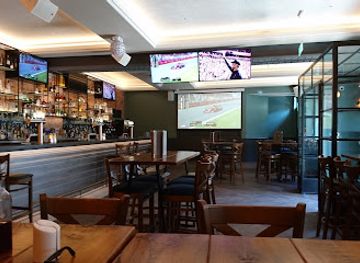
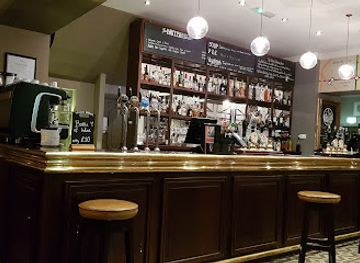
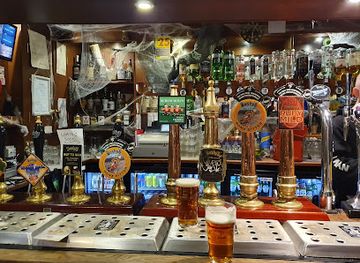
Evening entertainment is concentrated in Douglas, with traditional pubs, hotel bars, restaurants and occasional live music providing the island’s broadest choice. Castletown, Peel, Ramsey, Port Erin and other larger settlements have local pubs where the atmosphere is generally sociable but unhurried rather than centred on a large club scene. During the Isle of Man TT and Festival of Motorcycling, Douglas and towns along the race circuit become considerably busier, with motor-sport gatherings and event-related entertainment, although programmes vary from year to year. Outside major events, evenings are better suited to conversation, local ales, music in established venues and harbour or promenade walks than to late-night clubbing. Visitors staying in rural areas should expect limited nearby nightlife and should arrange transport carefully, particularly if drinking; rural roads are poorly suited to walking after dark.
-
Grill
Jak's Bar & Smokehouse
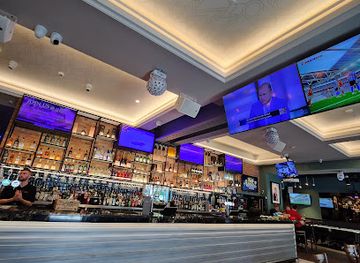
Lively grill and sports bar with scenic Douglas Bay views, renowned for smoked meats, steaks, and a vibrant social scene.
-
Grill
1886 Bar & Grill
A lively Douglas hotspot blending grill dining, cocktails, live music, and late-night entertainment in a modern, vibrant setting.
-
Pub
British Hotel
Classic British pub charm meets modern city-style vibes on Douglas Quay, offering hearty food, local brews, and a welcoming atmosphere.
-
Pub
Rovers Return
Experience authentic Manx hospitality and local ales in the charming, character-filled Rovers Return pub at the heart of Douglas.
Best nightclubs in Isle of Man
Evening entertainment is concentrated in Douglas, with traditional pubs, hotel bars, restaurants and occasional live music providing the island’s broadest choice. Castletown, Peel, Ramsey, Port Erin and other larger settlements have local pubs where the atmosphere is generally sociable but unhurried rather than centred on a large club scene. During the Isle of Man TT and Festival of Motorcycling, Douglas and towns along the race circuit become considerably busier, with motor-sport gatherings and event-related entertainment, although programmes vary from year to year. Outside major events, evenings are better suited to conversation, local ales, music in established venues and harbour or promenade walks than to late-night clubbing. Visitors staying in rural areas should expect limited nearby nightlife and should arrange transport carefully, particularly if drinking; rural roads are poorly suited to walking after dark.
-
Nightclub
1886 Bar & Grill
Douglas’s vibrant four-floor hotspot blending great food, signature cocktails, live music, and a welcoming atmosphere in the heart of the Isle of Man.
-
Club
Manx Legion Club
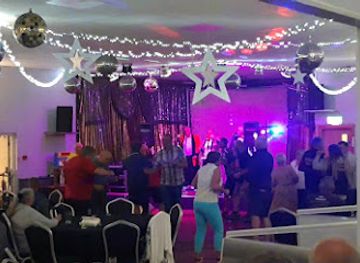
Historic social club in Douglas blending rich heritage with lively entertainment and community spirit in the heart of the Isle of Man.
-
Wine bar
Bar George
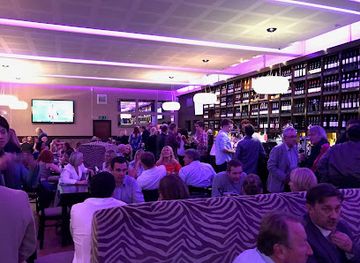
Sophisticated wine bar and gastropub blending historic charm with modern elegance in the heart of Douglas, Isle of Man.
-
Lounge
Rendezvous Executive Lounge
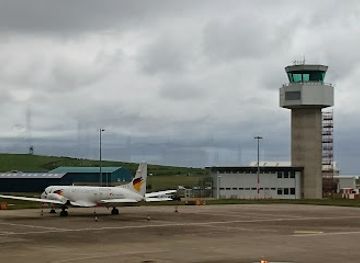
A tranquil and comfortable retreat at Isle of Man Airport offering complimentary refreshments and modern amenities for travelers.
Best shops in Isle of Man
Shopping is modest in scale and concentrated mainly in Douglas, with additional independent shops and services in Castletown, Peel, Ramsey and other larger settlements. Visitors can look for Manx food products such as kippers, cheese, preserves, confectionery, baked goods and locally produced drinks, alongside souvenirs connected with the island’s Celtic, Norse and motor-sport heritage. Craft and gift shops may feature textiles, pottery, artwork, jewellery and products made by Manx artists, although the range depends on the individual business and season. Farm shops and local producers provide another route to regional food, particularly outside the capital. Douglas has the widest everyday retail choice, while smaller towns are more useful for locally rooted purchases than extensive browsing. Rural attractions and coastal villages should not be expected to provide continuous shopping facilities, so supplies for walks and excursions are best obtained in a main settlement.
-
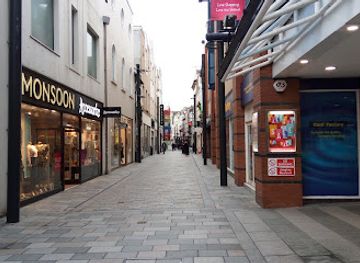
Shopping Centre
The Strand Shopping Centre
Compact and lively shopping centre in Douglas featuring popular brands, unique boutiques, family-friendly stores, and vibrant dining options.
-
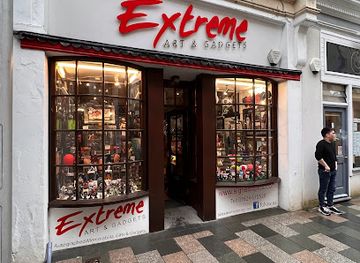
Gift shop
Extreme Art & Gadgets
Discover quirky gadgets, exclusive memorabilia, and Isle of Man TT treasures at Douglas’ iconic gift shop, Extreme Art & Gadgets.
-
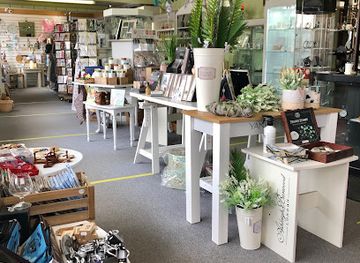
Gift shop
Mostly Manx
Discover authentic Manx gifts and local artisan treasures in a warm, inviting shop at the heart of Douglas, Isle of Man.
-
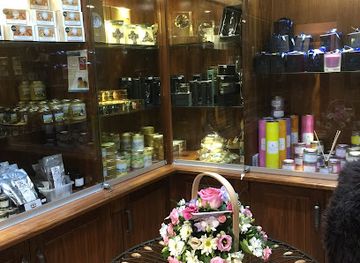
Gift shop
Trend Gift Shop Port Erin.
Discover unique local gifts, handmade candles, and artisan jewelry at Trend Gift Shop in scenic Port Erin, Isle of Man.
Get your free copy of our complete guide to Isle of Man, delivered straight to you.
Everything on this page, from attractions and restaurants to essentials and local phrases, in one PDF you can read offline, print or share.
Already have an account? Sign in
Your Isle of Man guide is ready.
We'll send it to · Not you? Sign out

Getting your guide ready…
We are putting together a fresh copy of the Isle of Man guide. This can take up to a minute.
This can take a few moments. If your browser asks, choose Allow so the download can start. You'll find the guide in your Downloads folder.
Nothing happened? Download it again
Sorry, the guide is taking longer than usual. Please try again in a minute, or get it by email instead.
Isle of Man essentials
Currency and Payment
Safety
Emergency Situations
Do's and Don'ts
Local Tips
From Eve
Local phrases worth knowing
You don't need to get them perfect. A few words go a long way, and locals appreciate the effort.
Basics
| English | Local | Say it |
|---|---|---|
| Hello | Fastyr mie | [Fast-yer mee] |
| Goodbye | Slane lhiat | [Sla-ne leet] |
| Yes | Yes | [Yes] |
| No | Na | [Na] |
| Please/You're welcome | Gura mie eu | [Goo-ra mee eh-oo] |
| Thank you | Gura mie ayd | [Goo-ra mee aid] |
| Excuse me/Sorry | Ta shiu myr dtyer | [Ta shee-oo myr deer] |
| How are you? | Cheet t'eh? | [Cheet tay?] |
| Fine. And you? | Gura mie. As t'eh? | [Goo-ra mee. As tay?] |
| Do you speak English? | Ta shin garragh Saase? | [Ta sheen gar-rah Saas?] |
| I don't understand | Cha nel mee er nhee | [Cha nel mee air nee] |
Eating & Drinking
| English | Local | Say it |
|---|---|---|
| I'd like to see the menu, please | Ta mee goll er y menu, gura mie eu | [Ta mee gol air ee menu, goo-ra mee eh-oo] |
| I don't eat meat | Cha nel mee eat meeat | [Cha nel mee eat meat] |
| Cheers! | Slaynt! | [Slain-t] |
| I would like to pay, please | Ta mee goll er y paag, gura mie eu | [Ta mee gol air ee paag, goo-ra mee eh-oo] |
Emergencies
| English | Local | Say it |
|---|---|---|
| Help! | Fockley! | [Fock-lee] |
| Go away! | Goll dy veih! | [Gol dy vay!] |
| Call the Police! | Goll er y Poilice! | [Gol air ee Police!] |
| Call a doctor! | Goll er doctor! | [Gol air doctor!] |
| I'm lost | Ta mee lost | [Ta mee lost] |
| I'm ill | Ta mee aalin | [Ta mee ail-in] |
Shopping
| English | Local | Say it |
|---|---|---|
| I'd like to buy... | Ta mee goll geddyn... | [Ta mee gol ged-din...] |
| I'm just looking | Ta mee er nhee er | [Ta mee air nee air] |
| How much is it? | Foddey myr? | [Fod-dey meer?] |
| That's too expensive | Ta shoh too dear | [Ta shoh too deer] |
| Can you lower the price? | Ga jee lhisheh y phrice? | [Ga jee leesh-eh ee price?] |
Time & Numbers
| English | Local | Say it |
|---|---|---|
| What time is it? | Cre ta'n oyr? | [Cree tan oy-er?] |
| It's one o'clock | Ta'n un oyr | [Tan un oy-er] |
| Half past (10) | Kiare roish (10) | [Key-ar roish (10)] |
| Morning | Myrgeddin | [Myr-ged-din] |
| Afternoon | Aghte | [Ag-teh] |
| Evening | Oie | [Oi] |
| Yesterday | Yindyss | [Yin-diss] |
| Today | Dy'ne | [Dine] |
| Tomorrow | Myrgeddin shoh | [Myr-ged-din sho] |
| 1 | Un | [Un] |
| 2 | Doo | [Doo] |
| 3 | Tree | [Tree] |
| 4 | Kiare | [Key-ar] |
| 5 | Queig | [Kwayg] |
| 6 | Chaar | [Chaar] |
| 7 | Shay | [Shay] |
| 8 | Hau | [Hau] |
| 9 | Nuy | [Nuy] |
| 10 | Jee | [Jee] |
Transport & Directions
| English | Local | Say it |
|---|---|---|
| Where's a/the...? | Where's yn...? | [Where's in...?] |
| What's the address? | Cre ta'n address? | [Cree tan address?] |
| Can you show me (on the map)? | Ga jee chummal mee (er y map)? | [Ga jee choo-mal mee (air ee map)?] |
| When's the next (bus)? | Cre ta'n next (bus)? | [Cree tan next (bus)?] |
| A ticket (to ....) | Ta ticket (do ....) | [Ta ticket (do ....)] |
History of Isle of Man
A Geological Island in the Irish Sea
The Isle of Man’s scenery reflects a long geological history rather than a single dramatic event. Mountainous rocks, glacially shaped valleys, coastal cliffs and lowland plains create the contrasts visible between Snaefell, the central uplands and the island’s shore. Ice-age processes helped form many of the broad valleys and deposits that later influenced settlement and farming. The island’s separation from neighbouring Britain and Ireland also shaped its distinctive flora, fauna and cultural development, while its exposed position in the Irish Sea encouraged maritime contact throughout human history.
Celtic Communities and Early Christianity
Human settlement on the Isle of Man extends back into prehistory, with burial monuments, carved stones and archaeological remains recording early communities. During the first millennium, the island became an important centre of Celtic Christianity. The remains and carved crosses at sites such as Maughold and the ancient ecclesiastical centre at Peel reflect this period, when religious communities were connected to wider networks around the Irish Sea. Manx tradition and later historical evidence preserve the importance of local church sites, stone crosses and sacred landscapes in the formation of the island’s cultural identity.
Norse Rule and the Kingdom of Man
Norse influence expanded across the Irish Sea from the late first millennium, bringing new political structures, settlement patterns and maritime connections. The Kingdom of Man and the Isles developed as a seaborne power, and Tynwald is traditionally associated with this Norse period, although its institutions evolved over many centuries. Peel Castle occupies the site of an earlier ecclesiastical settlement on St Patrick’s Isle and later became a strategic fortress. The island’s mixed Celtic and Norse inheritance remains visible in place names, historical traditions and the continuing prominence of Tynwald.
Lords, Plantagenets and the Stanley Earls
Control of the Isle of Man changed between powerful regional and English interests during the medieval and early modern periods. The island was associated at different times with the Scottish and English crowns before coming under the Stanley family, whose members held the title of Lord of Man from the fifteenth century. Castle Rushen in Castletown was repeatedly adapted as a fortress, administrative centre and prison, reflecting the island’s strategic position. By the eighteenth century, direct royal control and closer integration with British administration were reshaping Manx political and commercial life.
Trade, Smuggling and Modern Administration
The Isle of Man prospered at times from maritime trade, but its position also made smuggling a significant concern. The Revestment of 1765 transferred the rights of the Lords of Man to the British Crown, bringing greater control over customs and reducing the island’s role as a base for contraband trade. Later centuries brought changes in agriculture, fishing, mining and quarrying, together with the growth of Douglas as a port and resort. The island retained distinctive institutions, including Tynwald, while developing a modern relationship with the United Kingdom as a self-governing Crown Dependency.
Railways, Tourism and the TT Era
Victorian tourism transformed Douglas and encouraged the development of railways, promenades, hotels and excursions into the island’s glens and uplands. The surviving steam railway and Manx Electric Railway belong to this period of transport and leisure expansion. Motor sport added a new international dimension when the Isle of Man TT races began in 1907, using public roads on the Mountain Course. The event became central to the island’s modern identity, alongside a broader heritage and nature-based tourism economy. Conservation initiatives and renewed interest in Manx culture have also strengthened the value placed on landscapes, language and historic sites.
Isle of Man in Photos
Browse through our photo collection highlighting the charm and character of the destination.
Neighbouring destination travel guides
The closest destinations to Isle of Man, if you have time for more than one.
-
-

-

-

-


Swipe for more destinations
Explore more

Explore more of North West England
Explore North West England for Manchester and Liverpool culture, Lake District landscapes, historic towns, coastal scenery and distinctive regional food.
Explore North West England
Explore more of United Kingdom
Discover the United Kingdom: A blend of rich history, stunning landscapes, and vibrant cities, offering a unique travel experience for every visitor.
Explore United Kingdom