

Free Badakhshan Travel Guide & Mobile App
Explore Badakhshan with free travel guides. Discover regional history, expert tips, proposed trips, and audio guides on web or mobile app.


Badakhshan offers Afghanistan’s remote Pamir valleys, historic mountain routes and lapis-lazuli heritage, but travel requires exceptional security planning.
Read more about Badakhshan
When is the best time to visit Badakhshan?
Best: June–August · 25–27°C| Month | High (°C) | Rainfall (mm) |
|---|---|---|
| January | 4 | 20 |
| February | 6 | 25 |
| March | 11 | 30 |
| April | 17 | 35 |
| May | 22 | 40 |
| June (best) | 25 | 30 |
| July (best) | 27 | 25 |
| August (best) | 26 | 25 |
| September | 22 | 20 |
| October | 17 | 25 |
| November | 10 | 30 |
| December | 5 | 35 |
Getting to and around Badakhshan
How to get there
Transportation
Destinations in Badakhshan
Resorts, valleys and scenic spots worth a trip of their own.

Swipe for more destinations
Best attractions in Badakhshan
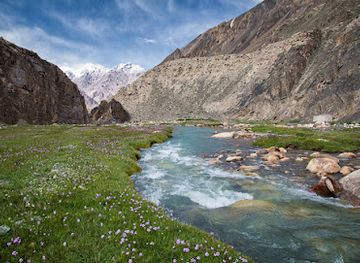
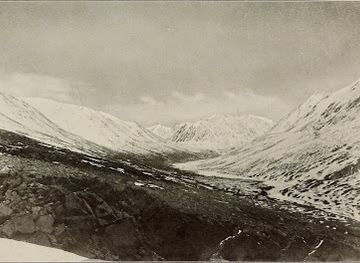
Badakhshan’s attractions are primarily landscape, heritage and cultural rather than developed tourism facilities. The Wakhan Corridor offers broad high valleys, glaciated mountain horizons, summer pastures and views towards the Pamirs, although access is difficult and conditions are highly exposed. Along the Kokcha and Wakhan valleys, traditional settlements, irrigation systems and caravan-route landscapes provide insight into communities shaped by altitude and distance. Historic sites include Yamchun Fortress, associated with the strategic Wakhan route, and the surroundings of Qala-e Panja, one of the corridor’s important settlements. Bibi Fatima hot springs are known locally as a bathing and pilgrimage destination, but facilities are basic and arrangements may be restricted. Faizabad provides the province’s principal urban experience, with markets and administrative life rather than a conventional museum or entertainment circuit. Trekking, mountaineering and wildlife observation may be possible only through specialist arrangements and with careful assessment of security, permissions, weather, altitude and unexploded ordnance. There are no reliable assumptions of marked trails, staffed visitor centres or rapid rescue.
-
National park
Wakhan National Park
Discover Afghanistan's Wakhan National Park: A remote sanctuary of stunning landscapes, unique wildlife, and vibrant cultural heritage.
-
Historical landmark
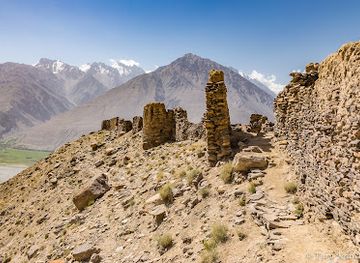
Yamchun Fort
Explore Yamchun Fort, an ancient Silk Road fortress in Tajikistan's Wakhan Valley, offering stunning views and a glimpse into the region's rich history.
-
Mountain peak
Kohe Belandtarin
Discover the majestic Kohe Belandtarin in Afghanistan's Pamir Mountains: a challenging climb or trek through untouched landscapes and breathtaking views.
-
Mountain pass
Wakhjir Pass
Discover Wakhjir Pass: A remote and historic Silk Road mountain pass on the Afghanistan-China border, offering stunning views and challenging adventures.
Best landmarks in Badakhshan
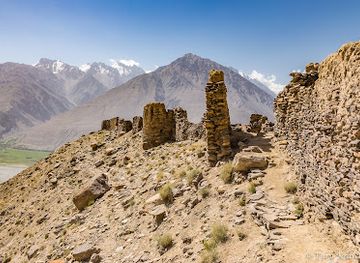
Yamchun Fortress is among Badakhshan’s most recognisable historic structures, occupying a commanding position above the Wakhan landscape and illustrating the defensive importance of the corridor’s mountain route. Nearby Bibi Fatima hot springs combine a natural feature with local religious and cultural significance, although access and facilities are modest. Qala-e Panja is an important settlement landmark in the upper Wakhan, associated with the corridor’s long history of local authority, trade and frontier movement. The Kokcha River and the high valleys of the Wakhan are natural landmarks whose importance lies in their geography: rivers sustain settlements, while the surrounding ranges have shaped every aspect of transport and political control. Lapis-lazuli mining areas are culturally significant to Badakhshan, but they are not ordinary visitor sites and may involve security, environmental and access restrictions. The province’s most meaningful landmarks are therefore often viewed from roads and settlements rather than reached through formal visitor infrastructure.
-
Park
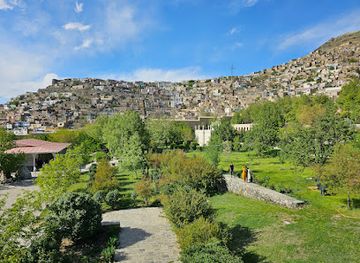
Babur Garden
Explore Kabul's Mughal heritage at Babur Garden, a historic park with terraced lawns, stunning architecture, and panoramic city views.
-
Historical landmark
Yamchun Fort
Explore Yamchun Fort in Tajikistan's Wakhan Valley: An ancient Silk Road fortress with stunning Pamir Mountain views and rich history.
Explore Badakhshan on the map
Plan your trip on one map. See where the top cities, national parks and sights are, and book hotels and experiences in a few clicks.
Best hotels in Badakhshan
Best restaurants in Badakhshan
Dining in Badakhshan is based on household cooking, small local eateries and market provisions rather than a developed restaurant industry. Visitors are likely to encounter rice dishes, flatbreads, soups, noodles, dumplings, beans, dairy products and mutton or other locally available meats, with recipes varying between valley communities. In the Wakhan, food may be simple and dependent on seasonal supplies, while Faizabad offers the widest choice of tea houses and informal eating places. Green or black tea is central to hospitality, and dried fruit, nuts and orchard produce are important in suitable valleys. Travellers should not expect reliable refrigeration, specialist diets or familiar international menus outside the main urban centre. Carrying sealed snacks and water-treatment supplies is prudent, while accepting food or tea should be handled respectfully and in accordance with local customs.
-
Afghani
Sufi Mahal Restaurant ( رستورانت صوفی محل )
Experience authentic Afghan cuisine at Sufi Mahal Restaurant in Kabul - where every dish tells a story.
-
Afghani
Herat Restaurant
Experience the authentic taste of Afghanistan at Herat Restaurant in Kabul - a culinary delight that captures local flavors.
-
 Restaurant
Silk Road Hotel Restaurant
Discover exquisite Asian and Japanese flavors at Silk Road Hotel Restaurant in scenic Bamyan, Afghanistan.
-
Hotel
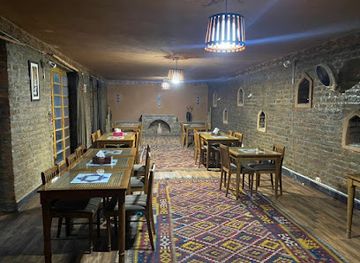
Qasri Kokcha Hotel and Restaurant
Discover authentic Afghan hospitality at Qasri Kokcha Hotel & Restaurant in Fayzabad - where comfort meets culture.
Best bars in Badakhshan
Badakhshan has no conventional bar or nightclub scene, and alcohol is prohibited under Afghanistan’s prevailing legal and religious framework. Evening social life centres on family homes, tea drinking, local conversation and the limited activity of market towns, particularly Faizabad. In rural districts, darkness, cold, conservative social norms and the absence of public venues make nightlife extremely restricted. International visitors should not seek out private drinking parties or treat hospitality as an invitation to disregard local expectations. Entertainment is more likely to consist of conversation, community gatherings or quiet time at basic accommodation, subject to local regulations and security conditions. Photography, recording and movement after dark should be approached with particular caution.
-
Hotel
Safi Landmark Hotel
Experience the elegance and comfort of Safi Landmark Hotel in Kabul, your perfect base for exploring Afghanistan's rich culture and history.
-
Hostel
Pamir Lodge
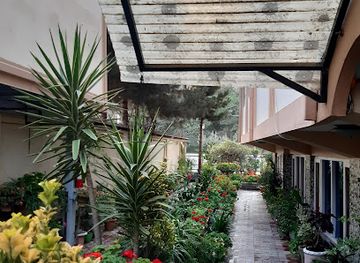
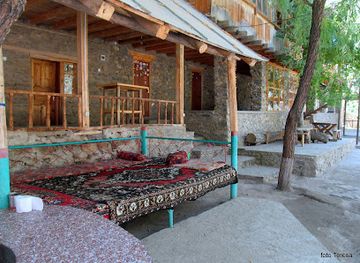
Discover the cozy charm of Pamir Lodge in Tirchid, Tajikistan, your gateway to the majestic Pamir Mountains and unforgettable adventures.
-
Hotel
Qasri Kokcha Hotel and Restaurant
Discover tranquility and exquisite dining at Qasri Kokcha Hotel and Restaurant in Fayzabad, your perfect Afghan retreat.
-
Hotel
Zarya Hotel
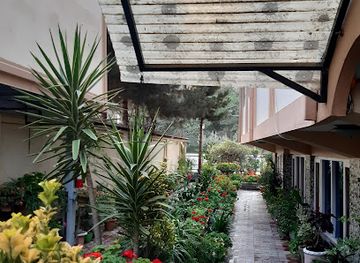
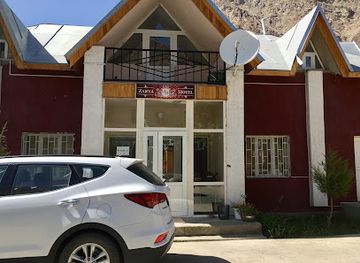
Discover the serene beauty and comfort of Zarya Hotel in Khorog, Tajikistan, your gateway to the majestic Pamir Mountains.
Best nightclubs in Badakhshan
Badakhshan has no conventional bar or nightclub scene, and alcohol is prohibited under Afghanistan’s prevailing legal and religious framework. Evening social life centres on family homes, tea drinking, local conversation and the limited activity of market towns, particularly Faizabad. In rural districts, darkness, cold, conservative social norms and the absence of public venues make nightlife extremely restricted. International visitors should not seek out private drinking parties or treat hospitality as an invitation to disregard local expectations. Entertainment is more likely to consist of conversation, community gatherings or quiet time at basic accommodation, subject to local regulations and security conditions. Photography, recording and movement after dark should be approached with particular caution.
-
Hotel
Qasri Kokcha Hotel and Restaurant
Discover the tranquility and taste of Afghanistan at Qasri Kokcha Hotel and Restaurant in Fayzabad, where comfort meets culinary excellence.
-
Night club
کمیته مردمی کمیسیون برگزاری جشن استقلال
Discover the vibrant nightlife at کمیته مردمی کمیسیون برگزاری جشن استقلال, a premier night club in Kabul, where tradition meets contemporary beats.

Best shops in Badakhshan
Shopping in Badakhshan is concentrated in Faizabad’s markets and the small trading centres of major valleys, where visitors may find practical goods, dried fruit, nuts, textiles, household items and locally made clothing. Lapis lazuli is the province’s most famous associated product, but buyers should be cautious about provenance, legal export requirements and the risk of supporting unregulated extraction or trade. Handicrafts may include embroidered textiles, woven goods and jewellery, with styles varying between communities and districts. In the Wakhan, retail choice is very limited and markets serve local needs rather than tourism. Bargaining may occur in informal markets, but it should remain courteous and proportionate. International visitors should avoid purchasing antiquities, archaeological objects, weapons or wildlife products, and should confirm that any item can be lawfully transported out of Afghanistan.
-
Park
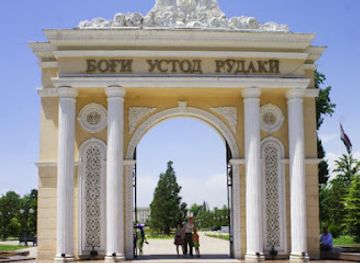
Rudaki Park
Discover the serene beauty of Rudaki Park in Dushanbe, a peaceful escape filled with vibrant gardens, fountains, and cultural significance.
-
Shopping mall
Kabul City Center
Explore Kabul City Center: A vibrant shopping destination featuring local crafts, international brands, and delicious dining options in the heart of Kabul.
-
Tour operator
Kite Travel Boutique
Explore Afghanistan with Kite Travel Boutique, your trusted partner for immersive travel experiences and seamless arrangements.
-
University
Afghan International University
Explore Afghan International University in Kabul – a hub of education, culture, and resilience, set against the backdrop of the historic Palace of Darual Aman.
Get your free copy of our complete guide to Badakhshan, delivered straight to you.
Everything on this page, from attractions and restaurants to essentials and local phrases, in one PDF you can read offline, print or share.
Already have an account? Sign in
Your Badakhshan guide is ready.
We'll send it to · Not you? Sign out

Getting your guide ready…
We are putting together a fresh copy of the Badakhshan guide. This can take up to a minute.
This can take a few moments. If your browser asks, choose Allow so the download can start. You'll find the guide in your Downloads folder.
Nothing happened? Download it again
Sorry, the guide is taking longer than usual. Please try again in a minute, or get it by email instead.
Badakhshan essentials
Currency and Payment
Safety
Emergency Situations
Do's and Don'ts
Local Tips
From Eve
Local phrases worth knowing
You don't need to get them perfect. A few words go a long way, and locals appreciate the effort.
Basics
| English | Local | Say it |
|---|---|---|
| Hello | سلام | [Salam] |
| Goodbye | خداحافظ | [Khuda hafiz] |
| Yes | بله | [Bale] |
| No | نه | [Na] |
| Please/You're welcome | لطفا/خوش آمدید | [Lotfan/Khosh amadid] |
| Thank you | تشکر | [Tashakur] |
| Excuse me/Sorry | ببخشید | [Bebakhshid] |
| How are you? | چطور هستید؟ | [Chetor hastid?] |
| Fine. And you? | خوبم. شما چطورید؟ | [Khoobam. Shoma chetorid?] |
| Do you speak English? | آیا شما انگلیسی صحبت میکنید؟ | [Aya shoma engilisi sohbat mikonid?] |
| I don't understand | من نمیفهمم | [Man nemifahmam] |
Eating & Drinking
| English | Local | Say it |
|---|---|---|
| I'd like to see the menu, please | لطفا منو را نشان بدهید | [Lotfan menu ra neshan bedahid] |
| I don't eat meat | من گوشت نمیخورم | [Man gusht nemikhoram] |
| Cheers! | به سلامتی! | [Be salamat!] |
| I would like to pay, please | لطفا میخواهم پرداخت کنم | [Lotfan mikham pardakht konam] |
Emergencies
| English | Local | Say it |
|---|---|---|
| Help! | کمک! | [Komak!] |
| Go away! | برو برو! | [Boro boro!] |
| Call the Police! | پلیس را صدا کنید! | [Polis ra seda konid!] |
| Call a doctor! | دکتر را صدا کنید! | [Doktor ra seda konid!] |
| I'm lost | من گم شدهام | [Man gom shode-am] |
| I'm ill | من بیمار هستم | [Man bimaar hastam] |
Shopping
| English | Local | Say it |
|---|---|---|
| I'd like to buy... | من میخواهم بخرم... | [Man mikham bekharam...] |
| I'm just looking | فقط دارم نگاه میکنم | [Faghat daram negah mikonam] |
| How much is it? | قیمتش چقدر است؟ | [Gheymatash chandar ast?] |
| That's too expensive | این خیلی گران است | [In khyli geran ast] |
| Can you lower the price? | آیا میتوانید قیمت را کاهش دهید؟ | [Aya mitavanid gheymat ra kahesh dahid?] |
Time & Numbers
| English | Local | Say it |
|---|---|---|
| What time is it? | ساعت چنده؟ | [Saat chande?] |
| It's one o'clock | ساعت یک است | [Saat yak ast] |
| Half past (10) | نیم ساعت (۱۰) | [Nim saat (10)] |
| Morning | صبح | [Sob] |
| Afternoon | بعد از ظهر | [Bad az zuhr] |
| Evening | عصر | [Asr] |
| Yesterday | دیروز | [Dirooz] |
| Today | امروز | [Emruz] |
| Tomorrow | فردا | [Farda] |
| 1 | ۱ | [1] |
| 2 | ۲ | [2] |
| 3 | ۳ | [3] |
| 4 | ۴ | [4] |
| 5 | ۵ | [5] |
| 6 | ۶ | [6] |
| 7 | ۷ | [7] |
| 8 | ۸ | [8] |
| 9 | ۹ | [9] |
| 10 | ۱۰ | [10] |
Transport & Directions
| English | Local | Say it |
|---|---|---|
| Where's a/the...? | کجاست ...؟ | [Kojast ...?] |
| What's the address? | آدرس چیست؟ | [Address chist?] |
| Can you show me (on the map)? | میتوانید به من نشان دهید (روی نقشه)؟ | [Mitavanid be man neshan dahid (ruye naqsha)?] |
| When's the next (bus)? | بعدی (اتوبوس) کی میآید؟ | [Ba’di (otobus) ki miayad?] |
| A ticket (to ....) | یک بلیط (به ...) | [Yek belit (be ...)] |
History of Badakhshan
Ancient Lapis-Lazuli Trade
Badakhshan’s lapis lazuli deposits are among the region’s oldest recorded sources of the blue stone. Archaeological finds show that Badakhshan lapis travelled across long-distance networks linking Central Asia with the Iranian plateau, Mesopotamia and South Asia thousands of years ago. The trade demonstrates that the mountains were connected to wider economies despite their formidable terrain. Lapis remained a symbolic and commercial resource through later centuries, and its association with Badakhshan continues to shape the province’s identity. Mining and transport have often been controlled locally, and modern visitors should distinguish legitimate craft production from unverified or illicitly sourced material.
Mountain Kingdoms and Persianate Influence
Before incorporation into the modern Afghan state, Badakhshan was governed at different times by local rulers and regional powers connected with wider Persianate and Central Asian political worlds. The province’s valleys were not an isolated cultural frontier: they carried languages, religious traditions, goods and political influence between the Oxus basin, the Hindu Kush and northern India. Local authority was often strongest in settled valleys and weaker in high mountain districts. The surviving forts, shrines and settlement patterns reflect this history of small-scale rule, strategic passes and shifting allegiance.
Islamisation and the Wakhan Frontier
Islam spread gradually through the north-eastern mountain valleys, replacing or absorbing earlier religious traditions and linking Badakhshan more closely to the Islamic societies of Central Asia and Afghanistan. The Wakhan became a frontier zone where local communities, regional rulers and travelling merchants interacted across difficult passes. Qala-e Panja and other settlements occupied strategic positions along routes connecting the upper Oxus basin with the Afghan interior. Religious institutions and local customary practices subsequently became important elements of community life, although traditions vary between districts and linguistic communities.
The Wakhan Boundary Settlement, Late Nineteenth Century
The modern shape of the Wakhan Corridor emerged from nineteenth-century imperial rivalry between British India, the Russian Empire and the Afghan emirate. Diplomatic boundary-making separated territories that had previously been linked by mountain travel and pastoral networks, while leaving Afghanistan with a narrow eastern corridor. The resulting geography placed the Wakhan between Russian-controlled Central Asia to the north and British India to the south. These borders remain visible in the province’s restricted crossings, strategic sensitivity and complicated relationship with neighbouring Tajikistan, Pakistan and China.
Afghan State-Building and Provincial Administration
During the twentieth century, Badakhshan became more firmly integrated into Afghanistan’s administrative, military and economic systems. Roads, government offices and market links expanded unevenly, with Faizabad developing as the main provincial centre. Many mountain districts nevertheless remained difficult to reach, and local communities continued to depend heavily on agriculture, livestock, seasonal movement and regional trade. The province’s rugged geography limited state presence and infrastructure, a pattern that later affected education, healthcare, communications and the delivery of security services.
Conflict and the Contemporary Province
Badakhshan has been affected by the conflicts that transformed Afghanistan from the late twentieth century onwards. The province experienced changing control, displacement, insecurity and economic disruption during the Soviet war, the civil war, the Taliban period, the post-2001 international intervention and the Taliban’s return to national power in 2021. Conditions differ between districts and can change quickly, but armed conflict, restrictions, poverty, unexploded ordnance and limited public services continue to shape daily life. These realities are central to any responsible assessment of travel to the province.
Badakhshan in Photos
Browse through our photo collection highlighting the charm and character of the destination.
Neighbouring regions of Badakhshan
The closest regions to Badakhshan, if you have time for more than one.
-

-

-

-

-


Swipe for more regions
Explore more

Explore more of Afghanistan
Discover Afghanistan's rich history, stunning landscapes, and diverse cultures. From ancient cities to breathtaking nature, this Central Asian gem offers a unique travel experience.
Explore Afghanistan