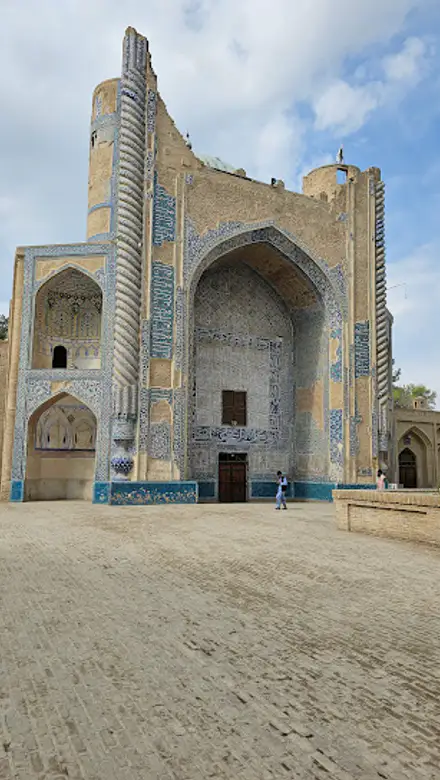
Green Mosque Travel Guide
Free Guide: Discover the Green Mosque in Balkh, a 15th-century Timurid masterpiece with stunning turquoise tiles and a rich spiritual history.


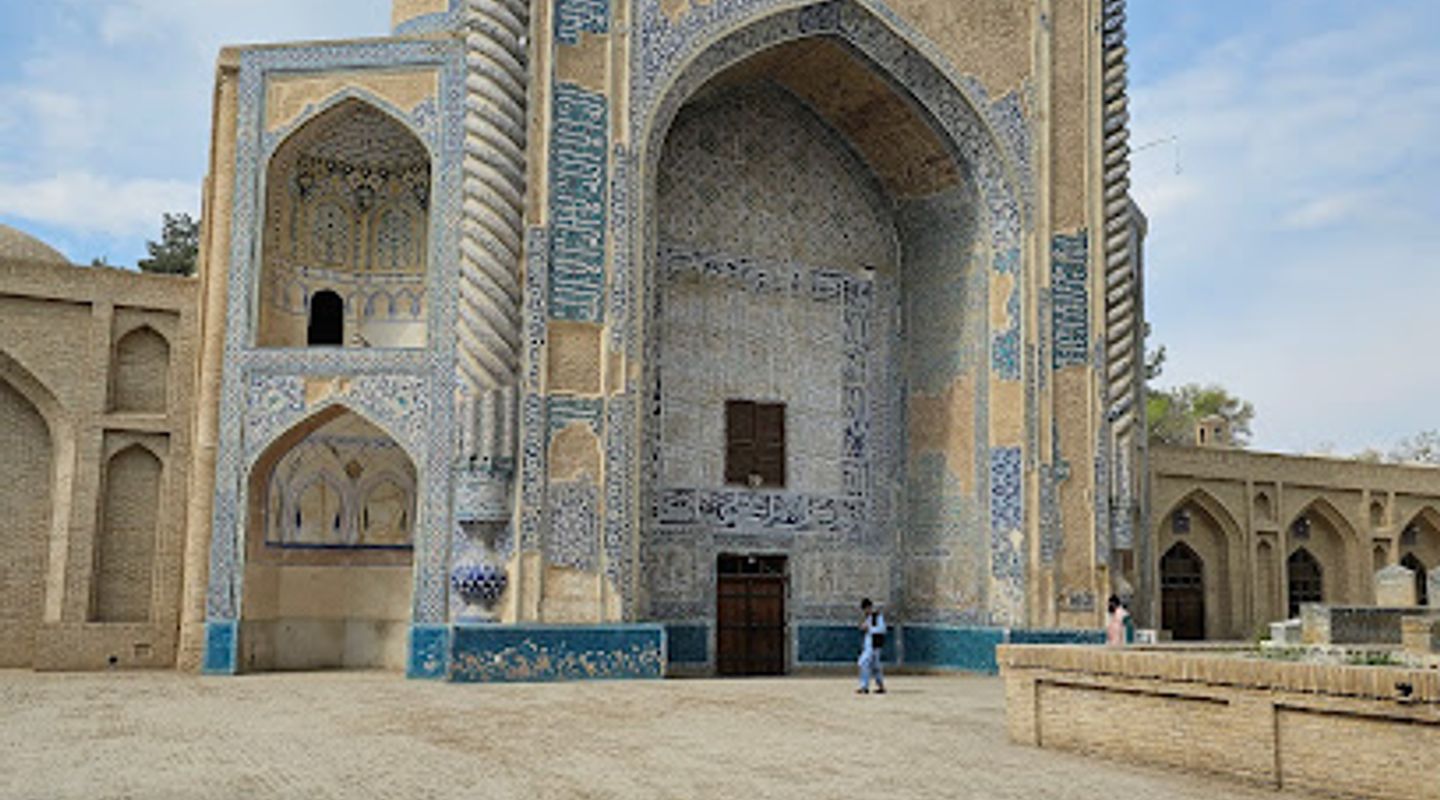
A brief summary of Green Mosque
Discover the Green Mosque in Balkh, a 15th-century Timurid masterpiece with stunning turquoise tiles and a rich spiritual history.
The Green Mosque, or Masjid Sabz, in Balkh, Afghanistan, is a stunning example of Timurid architecture dating back to the 15th century [4, 5]. Known for its vibrant turquoise tiles, the mosque houses the shrine of Khwaja Abu Nasr Parsa, a revered Sufi saint [5, 9]. Despite suffering damage over the years, it remains a significant cultural and spiritual site [5].
- Address
- QV5W+3QH, Balkh, Afghanistan
Getting there
Walking
Taxi
Discover more about Green Mosque
Overview
The Green Mosque, also known as Masjid Sabz, is a historical mosque in the ancient city of Balkh, northern Afghanistan [5, 9]. Its name comes from the striking turquoise, or 'Turkish Green,' tiles that adorn its walls, a hallmark of Timurid architectural style [5, 9]. Constructed in 1421, the mosque was originally built as the mausoleum of Khwaja Abu Nasr Parsa, a local religious teacher and Sufi mystic of the Naqshbandi order [4, 5, 9]. The mosque complex also includes a madrasah, reflecting its historical role as a center for learning and spiritual enlightenment [5, 9]. The main building features a large dome and two minarets, showcasing typical Timurid design [5]. Light streams into the dome through eight openings, though some have unfortunately cracked with time [5]. Inside, the dome is decorated with floral designs and ceramic tiles, resting upon a base of muqarnas [5, 9].Over the centuries, the Green Mosque has undergone several renovations, including work in the late 16th century by Shaybanid governor Abdul-Mo'min bin Abdullah Khan [5, 9]. Sadly, the mosque suffered significant damage during the Soviet-Afghan War and has fallen into disrepair [5]. In 2022, an explosion caused further destruction [5]. Despite the damage, the Green Mosque remains an important symbol of Balkh's rich cultural and religious heritage, attracting pilgrims and tourists alike [7, 9, 17]. Visitors can appreciate the intricate tile work, serene ambiance, and historical significance of this architectural gem [7, 17].
Evendo Review Centre
 Google
Guest reviews
Explore Green Mosque on the map
A handpicked selection of must-see spots near Green Mosque, mapped for you.
Get your free copy of our complete guide to Green Mosque, delivered straight to you.
Everything on this page, from opening hours and how to get there to Eve’s tips and the best time to go, in one PDF you can read offline, print or share.
Already have an account? Sign in
Your Green Mosque guide is ready.
We'll send it to · Not you? Sign out

Getting your guide ready…
We are putting together a fresh copy of the Green Mosque guide. This can take up to a minute.
This can take a few moments. If your browser asks, choose Allow so the download can start. You'll find the guide in your Downloads folder.
Nothing happened? Download it again
Sorry, the guide is taking longer than usual. Please try again in a minute, or get it by email instead.
Other nearby places you may find interesting
The closest places of the same kind, if this one is not quite what you had in mind.
-
-
-
-
-


Swipe for more places
More to explore near Green Mosque

 Best experiences near Green Mosque
 Best hotels near Green Mosque
 Best landmarks near Green Mosque
 Best attractions near Green Mosque
 Best shops near Green Mosque
 Best restaurants near Green Mosque
 Best bars near Green Mosque
Do you manage this location?
Take control to get all the benefits, like improved information, better appearance, and stronger visibility across AI-powered discovery.
Explore more
Explore more of Farah
Discover Farah: Delve into Afghanistan's rich history, vibrant bazaars, and scenic landscapes in this hidden gem of the western region.
Explore Farah
Explore more of Afghanistan
Discover Afghanistan's rich history, stunning landscapes, and diverse cultures. From ancient cities to breathtaking nature, this Central Asian gem offers a unique travel experience.
Explore Afghanistan