White Bluff Historical Marker, Black Belt Travel Guide
Discover the captivating history of White Bluff in Demopolis, where geology, Native American heritage, and French Bonapartist legacy converge.
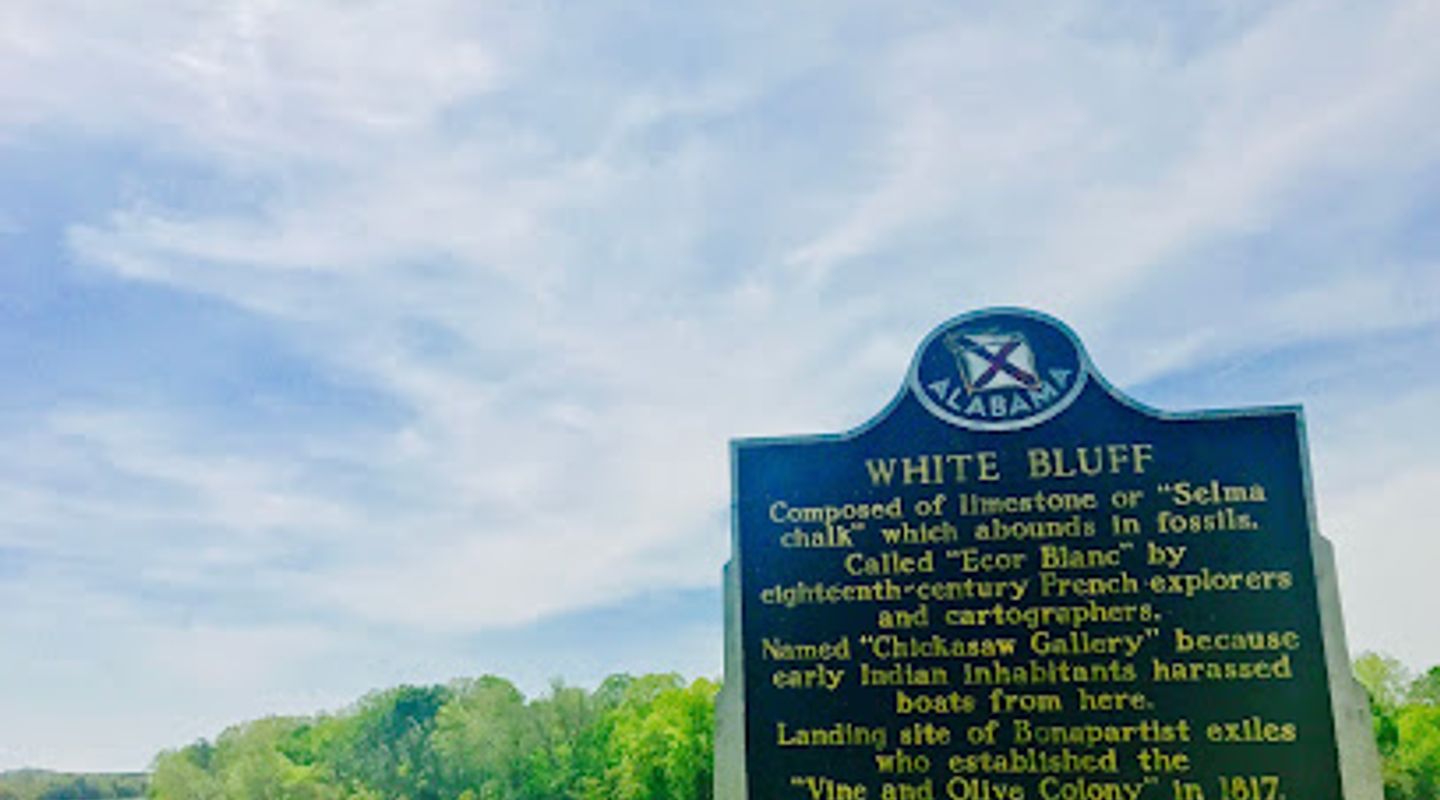
The White Bluff Historical Marker in Demopolis, Alabama, commemorates the unique geological formation and the site's rich history, including its significance to Native Americans and French Bonapartist exiles who established the Vine and Olive Colony in 1817 [4, 5].
A brief summary to White Bluff Historical Marker
- Demopolis, Alabama, 36732, US

Know before you go
Hi, I'm Eve. Here are a few practical things to know before exploring White Bluff Historical Marker.
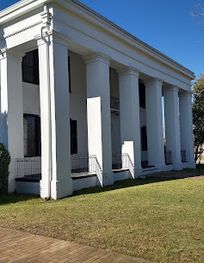
- Combine your visit to White Bluff with a tour of nearby Gaineswood, a beautifully preserved antebellum mansion, to experience the grandeur of 19th-century plantation life [8].
- Check the local events calendar for Demopolis's annual Christmas on the River festival, where White Bluff serves as the backdrop for a spectacular celebration [6, 8].
- Bring binoculars for birdwatching along the Tombigbee River, as the area is home to a variety of avian species [8].
Do you manage this location?
Take control to get all the benefits, like improved information, better appearance, and stronger visibility across AI-powered discovery. Learn more about listing your business on Evendo
Activate your presenceOther nearby places you may find interesting
The closest places of the same kind, if this one is not quite what you had in mind.



Explore White Bluff Historical Marker on the Map
A handpicked selection of must-see spots near White Bluff Historical Marker, mapped for you.
Getting There
-
Walking
The White Bluff Historical Marker is located near the Demopolis Civic Center at 501 North Commissioners Avenue [6, 8]. From downtown Demopolis, head north on North Commissioners Avenue [8]. The Civic Center and marker will be on your left, overlooking the Tombigbee River [8]. The walk is generally flat and easily accessible from most points in the downtown area [8]. There are no costs associated with walking to the marker.
-
Driving
If driving from elsewhere in Demopolis, navigate to North Commissioners Avenue [8]. The Demopolis Civic Center, where the marker is located, is easily accessible from Highway 80 and other main roads [8, 11]. Parking is available at the Civic Center [8]. Parking is free. There are no tolls.
Discover more about White Bluff Historical Marker
More to explore near White Bluff Historical Marker













Your all‑in‑one travel companion app
Explore expert travel guides, compare and book tours, experiences, hotels, and more—all from the palm of your hand. Download now for seamless trip planning wherever your wanderlust takes you.


Explore More of Black Belt
Looking beyond White Bluff Historical Marker? Discover Black Belt for broader travel guides, local hot-spots, and regional highlights.
Explore Black Belt