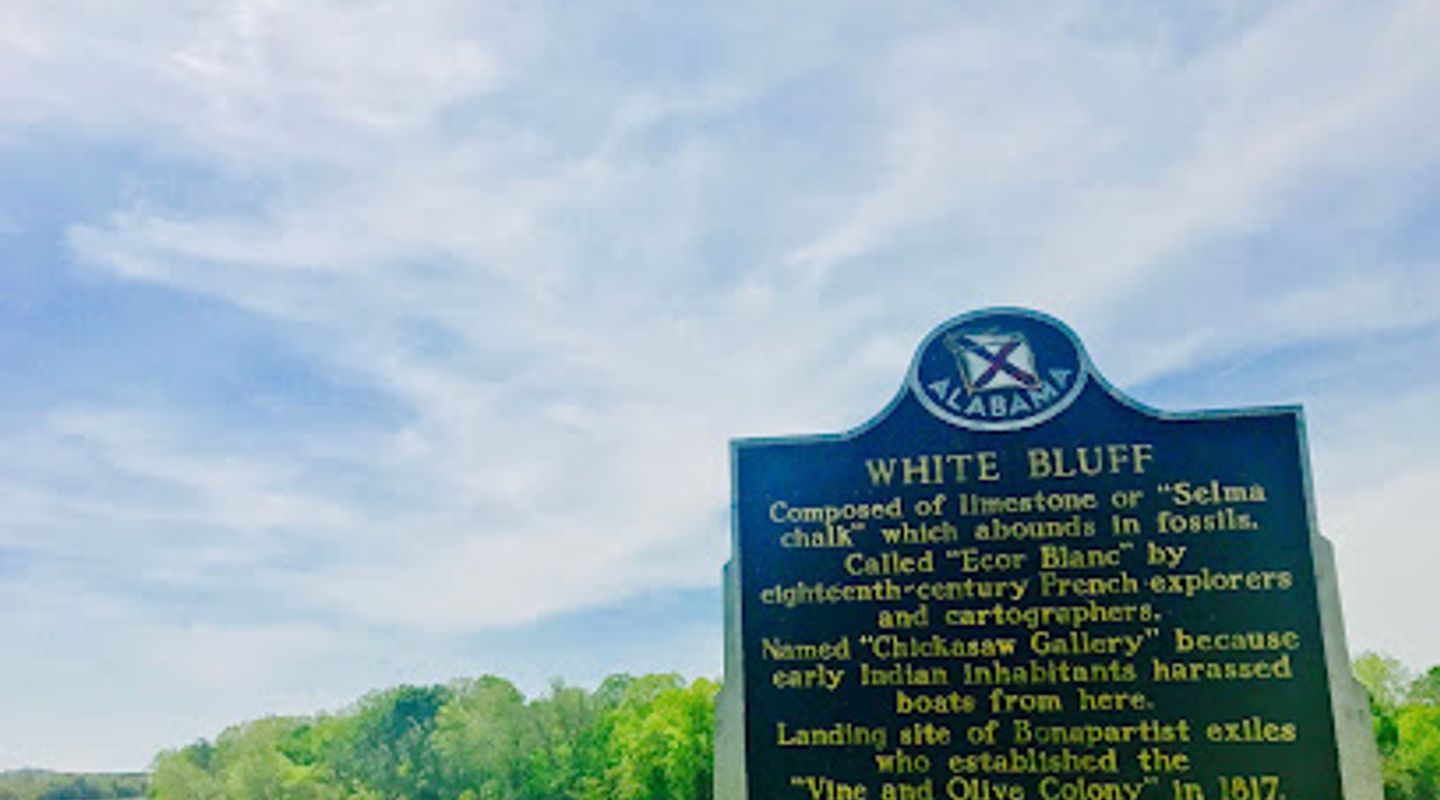
White Bluff Historical Marker, Tombigbee River Valley Travel Guide
Explore White Bluff in Demopolis, AL: where ancient geology, Native American history, and French settlement converge on the banks of the Tombigbee River.
White Bluff Historical Marker in Demopolis, Alabama, marks a site of geological significance and rich history, from Native American heritage to French Bonapartist settlement. Overlooking the Tombigbee River, it offers a glimpse into the region's past and natural beauty.
A brief summary to White Bluff Historical Marker
- Demopolis, Alabama, 36732, US

Know before you go
Hi, I'm Eve. Here are a few practical things to know before exploring White Bluff Historical Marker.
- Visit during the annual Christmas on the River festival to experience the area's vibrant community spirit and witness the main event held at White Bluff.
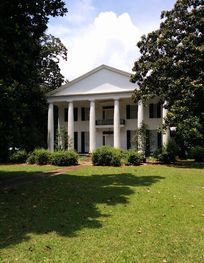
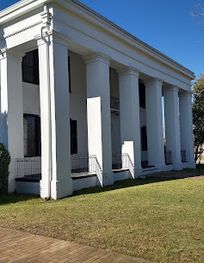
- Combine your visit to White Bluff with a trip to nearby Bluff Hall, a historic residence showcasing Federal and Greek Revival architecture, for a deeper dive into Demopolis's history.
- Take a walk along the Tombigbee River near White Bluff to appreciate the natural beauty of the area and reflect on its historical significance.
Do you manage this location?
Take control to get all the benefits, like improved information, better appearance, and stronger visibility across AI-powered discovery. Learn more about listing your business on Evendo
Activate your presenceOther nearby places you may find interesting
The closest places of the same kind, if this one is not quite what you had in mind.
Explore White Bluff Historical Marker on the Map
A handpicked selection of must-see spots near White Bluff Historical Marker, mapped for you.
Getting There
-
Walking
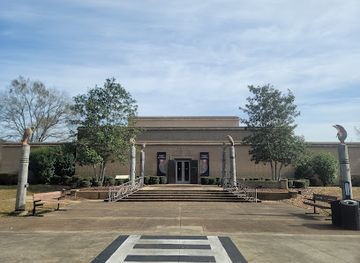
White Bluff Historical Marker is located on the banks of the Tombigbee River behind Bluff Hall and next to The Demopolis Civic Center. From most points in downtown Demopolis, the marker is easily accessible by foot. ориентируйтесь на Demopolis Civic Center. No costs are associated with walking to the marker.
-
Public Transport
While Demopolis has limited public transportation, West Alabama Public Transportation (WAPT) provides services for a minimal fee. Contact WAPT for schedules and availability, especially if coming from outside Demopolis. BusTickets.com also provides charter bus rentals. Greyhound Bus Lines has a stop in Demopolis. Contact the office for Greyhound Shuttle schedule. Fares vary depending on distance and service.
-
Taxi/Ride-Share
Taxis and ride-sharing services like Uber are available in Demopolis. Expect to pay a minimum fare of $4.24 - $7.65. A short trip from anywhere in Demopolis to White Bluff should be relatively inexpensive. Car rentals are also available through Uber.
-
Driving
White Bluff Historical Marker is easily accessible by car. From US Highway 80, turn onto North Commissioners Avenue. The Demopolis Civic Center and White Bluff will be on your left. Limited parking is available near the Civic Center. Prked offers parking options in Demopolis, AL, with prices beginning at $4.25 per hour. Parr's Highway 80 Chevron, located at 510 US 80 E, Demopolis, AL 36732, has 20 parking spots.
Discover more about White Bluff Historical Marker
More to explore near White Bluff Historical Marker













Your all‑in‑one travel companion app
Explore expert travel guides, compare and book tours, experiences, hotels, and more—all from the palm of your hand. Download now for seamless trip planning wherever your wanderlust takes you.


Explore More of Tombigbee River Valley
Looking beyond White Bluff Historical Marker? Discover Tombigbee River Valley for broader travel guides, local hot-spots, and regional highlights.
Explore Tombigbee River Valley