

Theth National Park Travel Guide - Free Web & App
Your ultimate guide to Theth National Park. Discover top landmarks, proposed trips, and local tips. Free on the web or via the Evendo companion app.


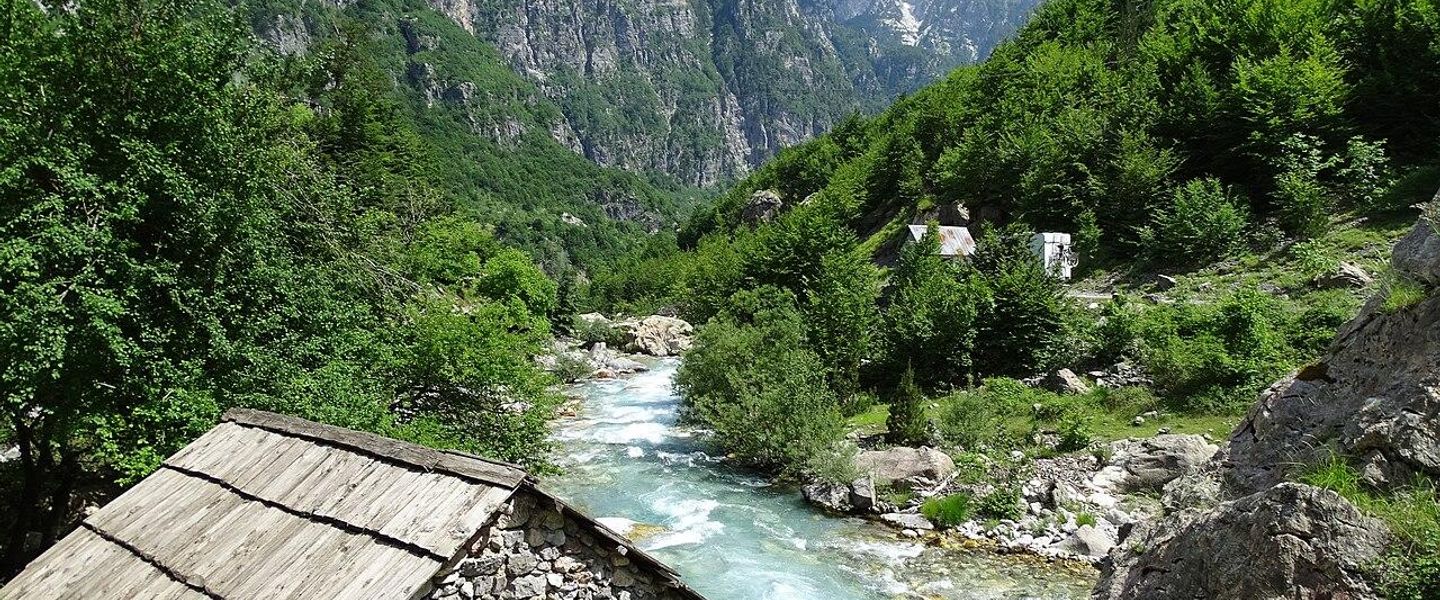


Theth National Park in Albania pairs rugged peaks, village guesthouses, Grunas Waterfall and the Blue Eye with memorable Alpine hiking and mountain trails.
Mountain Landscapes and Protected Nature
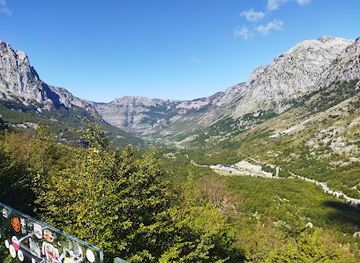
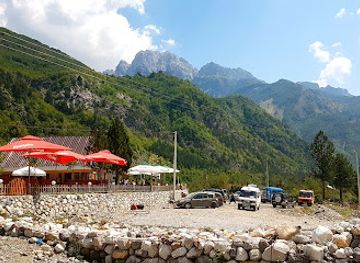
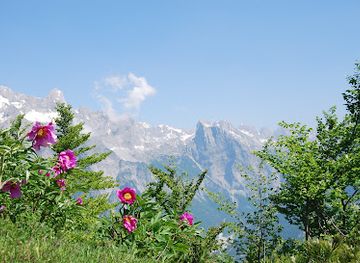
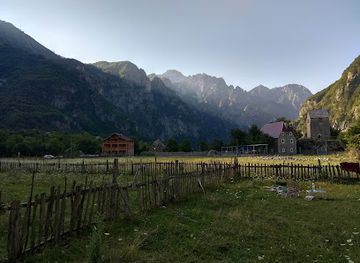
Theth National Park lies in northern Albania, within the Accursed Mountains, or Albanian Alps, close to the border with Montenegro. Its core landscape is the long, narrow Theth Valley, enclosed by steep limestone peaks, forested slopes, alpine meadows and ravines. The valley is associated with the wider Albanian Alps National Park, while Theth remains the best-known visitor base and one of the country’s most rewarding mountain destinations. Paths lead towards Grunas Waterfall, the Blue Eye of Theth and high passes such as Qafa e Valbonës, with routes ranging from valley walks to demanding mountain crossings.Read more about Theth National Park
Village Heritage and Mountain Life
Walking Through the Albanian Alps
When is the best time to visit Theth National Park?
Best: May, September–October · 21–28°C| Month | High (°C) | Rainfall (mm) |
|---|---|---|
| January | 6 | 90 |
| February | 7 | 80 |
| March | 13 | 70 |
| April | 20 | 60 |
| May (best) | 26 | 50 |
| June | 31 | 40 |
| July | 34 | 40 |
| August | 33 | 40 |
| September (best) | 28 | 50 |
| October (best) | 21 | 60 |
| November | 13 | 70 |
| December | 9 | 80 |
Getting to and around Theth National Park
How to get there
Transportation
Best attractions in Theth National Park
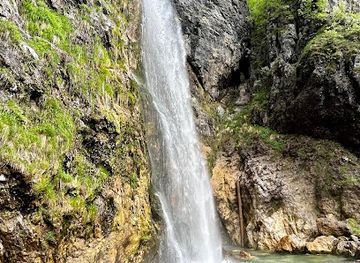
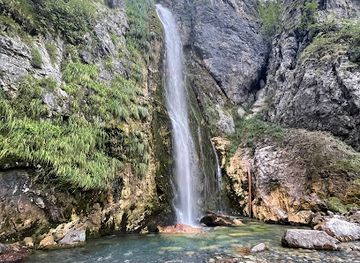
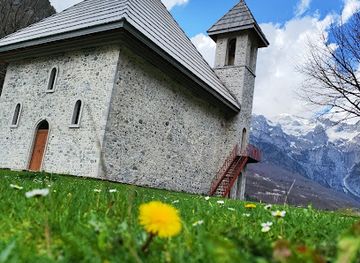
Theth’s principal attractions are reached along mountain paths rather than through a formal sightseeing circuit. Grunas Waterfall drops through a rocky gorge near the village and is one of the valley’s most accessible scenic walks. Farther away, the Blue Eye of Theth is a striking turquoise spring set in woodland and reached by a longer route, often with a combination of driving and walking depending on local access. The historic Kulla e Ngujimit provides an insight into northern Albanian customary life, while the small church and traditional houses give the settlement its cultural character. Experienced hikers can cross Qafa e Valbonës into Valbona, a demanding route linking two of the Albanian Alps’ best-known valleys. Mountain viewpoints towards Maja e Arapit and the surrounding limestone ridges reveal the scale of the landscape, although visibility depends heavily on weather and season.
-
Nature preserve
Waterfall Theth
Discover the breathtaking beauty of Theth Waterfall, a hidden gem in Albania's stunning natural landscape.
-
Nature preserve
Kaskada e Grunasit
Discover Kaskada e Grunasit, a stunning waterfall in Theth National Park, offering a refreshing escape into Albania's breathtaking landscapes.
-
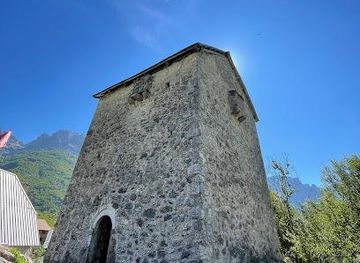
Reconciliation Tower
Discover the Reconciliation Tower in Albania, a museum symbolizing unity and peace, offering insights into the nation's rich cultural heritage.
-
Tourist attraction
Ballkoni Theth
Experience unparalleled panoramic views of the Albanian Alps from Ballkoni Theth, a haven for nature lovers and photographers.
Explore Theth National Park on the map
Plan your trip on one map. See where the top attractions, landmarks, restaurants and hotels are, and book hotels and experiences in a few clicks.
Best hotels in Theth National Park
Best restaurants in Theth National Park
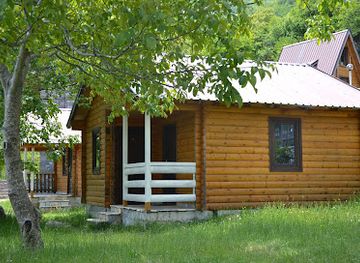
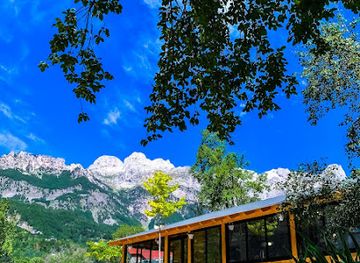
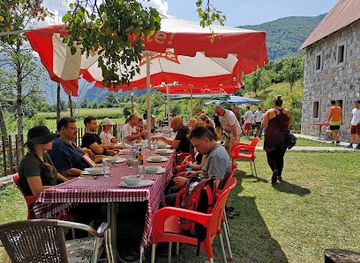
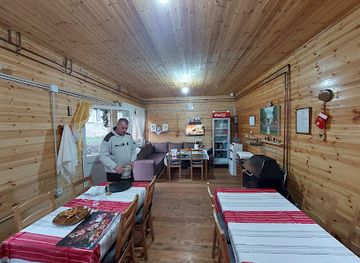
Theth has no broad restaurant district; food is concentrated in family-run guesthouses and a small number of rural hospitality establishments in and around the village. Meals are generally home-style and may include fresh bread, potatoes, beans, vegetables, mountain herbs, yoghurt, cheese, meat and fruit preserves, with menus shaped by what local households and farms can provide. Breakfasts and evening meals are often arranged directly with accommodation hosts, making advance confirmation sensible for visitors with dietary requirements. Shkodër and towns along the approach offer a wider choice of Albanian and international food before the journey into the mountains. Dining in Theth is closely connected to homestay hospitality, and visitors should not expect late-night service, extensive menus or reliable options away from their accommodation.
-
Hotel
Thethi Paradise Restaurant & Hotel
Experience authentic Albanian hospitality at Thethi Paradise Restaurant & Hotel amidst breathtaking mountain views.
-
Restaurant
Villa GJECAJ Guesthouse and Restaurant
Experience authentic Albanian cuisine amidst breathtaking landscapes at Villa GJECAJ Guesthouse and Restaurant.
-
Restaurant
Buni i Bajraktarit
Experience authentic Albanian cuisine amidst stunning mountain views at Buni i Bajraktarit in Bogë.
-
Restaurant
Hotel Restorant Alpet Theth
Experience authentic Albanian cuisine amidst breathtaking scenery at Hotel Restorant Alpet Theth - where every meal tells a story.
Best bars in Theth National Park
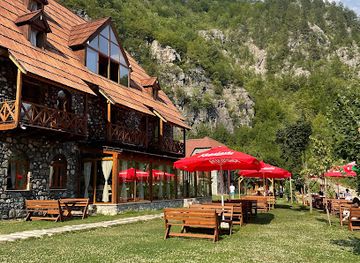
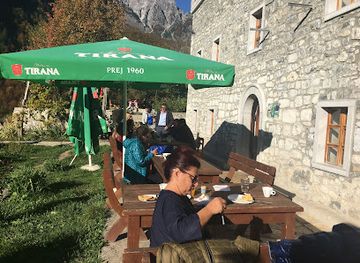
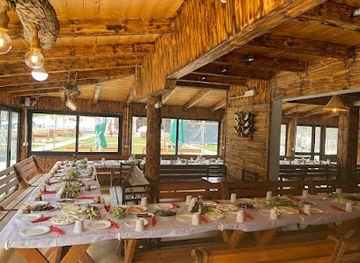
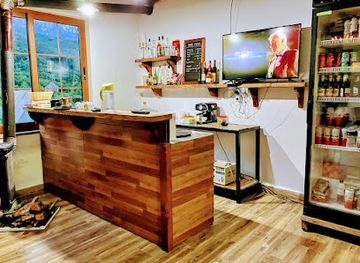
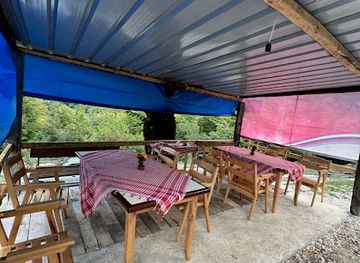
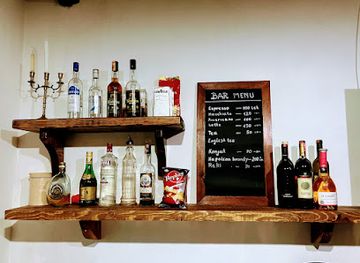
Theth is a quiet mountain destination with no established nightclub scene and very little conventional nightlife. Evenings generally unfold around guesthouse dining rooms, terraces or communal areas, where visitors may share stories with hosts and other hikers after a day outdoors. Some accommodation providers serve local drinks, coffee or beer, but opening arrangements and availability vary rather than following an urban entertainment pattern. The village’s darkness, mountain silence and often clear night skies are part of the evening atmosphere, although weather and the absence of extensive lighting require care when walking after dark. Visitors seeking bars, live music or a wider choice of evening venues should spend time in Shkodër or another larger Albanian town outside the park.
-
Restaurant
Villa GJECAJ Guesthouse and Restaurant
Discover the charm of Villa GJECAJ in Theth, where authentic Albanian cuisine meets breathtaking natural beauty, perfect for your next adventure.
-
Restaurant
Bar Restaurant Jezerca
Experience traditional Albanian cuisine amidst the breathtaking landscapes of Theth at Bar Restaurant Jezerca, a must-visit dining destination.
-
Grill
Okoli Bar Café & Snacks
Discover the authentic flavors of Albania at Okoli Bar Café & Snacks, where grilled delights meet warm hospitality in the heart of Shkoder.
-
Bar
Restaurant Camping Leka
Discover the flavors of Albania at Restaurant Camping Leka, a serene dining experience amidst the captivating landscapes of Rragam.
Best nightclubs in Theth National Park
Theth is a quiet mountain destination with no established nightclub scene and very little conventional nightlife. Evenings generally unfold around guesthouse dining rooms, terraces or communal areas, where visitors may share stories with hosts and other hikers after a day outdoors. Some accommodation providers serve local drinks, coffee or beer, but opening arrangements and availability vary rather than following an urban entertainment pattern. The village’s darkness, mountain silence and often clear night skies are part of the evening atmosphere, although weather and the absence of extensive lighting require care when walking after dark. Visitors seeking bars, live music or a wider choice of evening venues should spend time in Shkodër or another larger Albanian town outside the park.
-
National park
Theth National Park
Discover the untouched beauty of Theth National Park, where adventure meets tranquility amidst the stunning Albanian Alps.
-
Grill
Okoli Bar Café & Snacks
Explore the culinary delights of Shkoder at Okoli Bar Café & Snacks, a premier destination for grill lovers and casual diners alike.
-
Bar
Bar kafe kodra e lterit
Discover the enchanting Bar Kafe Kodra e Lterit in Theth, Albania—a perfect blend of local flavors and stunning mountain views.
-
Hiking area
theth, albania
Explore the breathtaking natural landscapes and rich cultural heritage of Theth, Albania, a hiking paradise in the Albanian Alps.
Best shops in Theth National Park
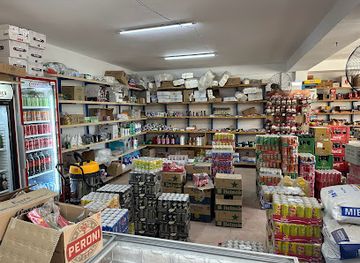
Shopping in Theth is limited and oriented towards practical travel needs rather than conventional retail. Guesthouses may offer or sell small quantities of homemade produce such as cheese, preserves, honey or other food products, although availability depends on the household and season. The valley is not a dependable place to buy specialist outdoor equipment, medicines or a wide range of provisions, so visitors should prepare in Shkodër or along the approach. Small-scale craft and agricultural products can sometimes be encountered through local hospitality, but there is no substantial permanent market or shopping quarter in the park. Shkodër provides the region’s broadest choice of shops, food supplies and equipment before visitors continue into the remote mountain landscape.
-
National park
Theth National Park
Discover the breathtaking beauty of Theth National Park in Albania, a paradise for nature lovers and adventure seekers alike.
-
Market
Mini Market Jezerca
Explore the heart of Theth at Mini Market Jezerca - your local hub for fresh goods and authentic Albanian culture amidst stunning landscapes.
-
Cafeteria
Kulla e Ngujimit
Discover Kulla e Ngujimit, a charming cafeteria in Thethi, Albania, where stunning mountain views and local flavors await every traveler.
-
Hiking area
THeth
Experience breathtaking views and serene nature at Qafe Thore, the picturesque bus stop in Theth, Albania, a gateway to adventure and beauty.
Get your free copy of our complete guide to Theth National Park, delivered straight to you.
Everything on this page, from attractions and restaurants to essentials and local phrases, in one PDF you can read offline, print or share.
Already have an account? Sign in
Your Theth National Park guide is ready.
We'll send it to · Not you? Sign out

Getting your guide ready…
We are putting together a fresh copy of the Theth National Park guide. This can take up to a minute.
This can take a few moments. If your browser asks, choose Allow so the download can start. You'll find the guide in your Downloads folder.
Nothing happened? Download it again
Sorry, the guide is taking longer than usual. Please try again in a minute, or get it by email instead.
Theth National Park essentials
Currency and Payment
Safety
Emergency Situations
Do's and Don'ts
Local Tips
From Eve
Local phrases worth knowing
You don't need to get them perfect. A few words go a long way, and locals appreciate the effort.
Basics
| English | Local | Say it |
|---|---|---|
| Hello | Përshëndetje | [per-shen-de-tye] |
| Goodbye | Mirupafshim | [meer-oo-paf-sheem] |
| Yes | Po | [po] |
| No | Jo | [yo] |
| Please/You're welcome | Ju lutem | [yoo loo-tem] |
| Thank you | Faleminderit | [fa-le-min-de-reet] |
| Excuse me/Sorry | Më falni | [muh fal-nee] |
| How are you? | Si jeni? | [see yeh-nee] |
| Fine. And you? | Mirë. Dhe ju? | [meer-uh. dhe yoo?] |
| Do you speak English? | Flet anglisht? | [flet ang-leesht] |
| I don't understand | Nuk kuptoj | [nook koop-toy] |
Eating & Drinking
| English | Local | Say it |
|---|---|---|
| I'd like to see the menu, please | Do të doja të shihja menunë, ju lutem | [doh tuh doh-yah tuh shee-yah meh-noo-neh yoo loo-tem] |
| I don't eat meat | Nuk ha mish | [nook hah meesh] |
| Cheers! | Gëzuar! | [geh-zoo-ar] |
| I would like to pay, please | Do të doja të paguaja, ju lutem | [doh tuh doh-yah tuh pah-goo-ah yoo loo-tem] |
Emergencies
| English | Local | Say it |
|---|---|---|
| Help! | Ndihmë! | [ndee-muh] |
| Go away! | Shko larg! | [shko lar-g] |
| Call the Police! | Thirrni policinë! | [theer-nee po-lee-tsi-neh] |
| Call a doctor! | Thirrni një doktor! | [theer-nee nyuh dohk-tor] |
| I'm lost | Jam humbur | [yam hoom-boor] |
| I'm ill | Jam i sëmurë | [yam ee suh-mu-reh] |
Shopping
| English | Local | Say it |
|---|---|---|
| I'd like to buy... | Do të doja të blaja... | [doh tuh doh-yah tuh blah-yah] |
| I'm just looking | Po shikoj vetëm | [po shee-koy vet-em] |
| How much is it? | Sa kushton? | [sah koosh-ton] |
| That's too expensive | Është shumë e shtrenjtë | [esh-teh shoo-meh eh shtrenj-teh] |
| Can you lower the price? | A mund të ulni çmimin? | [ah moond tuh ool-nee chmee-meen] |
Time & Numbers
| English | Local | Say it |
|---|---|---|
| What time is it? | Sa është ora? | [sah esh-teh oh-rah] |
| It's one o'clock | Është një ora | [esh-teh nyuh oh-rah] |
| Half past (10) | Një e gjysmë (10) | [nyuh eh gjoos-meh] |
| Morning | Mëngjes | [muhn-jes] |
| Afternoon | Pasdite | [pahs-dee-teh] |
| Evening | Mbrëmje | [mbruhm-yeah] |
| Yesterday | Dje | [djeh] |
| Today | Sot | [sot] |
| Tomorrow | Nesër | [neh-ser] |
| 1 | Një | [nyuh] |
| 2 | Dy | [duh] |
| 3 | Tre | [treh] |
| 4 | Katër | [ka-ter] |
| 5 | Pesë | [peh-suh] |
| 6 | Gjashtë | [gjash-teh] |
| 7 | Shtatë | [shta-teh] |
| 8 | Tetë | [teh-teh] |
| 9 | Nëntë | [nun-teh] |
| 10 | Dhjetë | [thye-teh] |
Transport & Directions
| English | Local | Say it |
|---|---|---|
| Where's a/the...? | Ku është një/a...? | [koo esh-teh nyuh/ah] |
| What's the address? | Cila është adresa? | [chee-lah esh-teh ah-dreh-sah] |
| Can you show me (on the map)? | Mund të më tregoni (në hartë)? | [moon tuh muh troh-nyee (nuh har-teh)] |
| When's the next (bus)? | Kur është autobusi i ardhshëm? | [koor esh-teh ow-toh-boo-see ee ardh-shem] |
| A ticket (to ....) | Një biletë (në ...) | [nyuh bee-leh-teh (nuh)] |
History of Theth National Park
A Limestone Alpine Landscape
Theth’s mountains are part of the Dinaric-Alpine system, with limestone ridges, deeply incised valleys and karst features shaped over geological time by uplift, erosion and water. The narrow valley and surrounding peaks created a naturally enclosed settlement environment, while forests, pasture and watercourses supported a highland economy. This geological setting explains both the dramatic scenery and the rugged character of paths leading towards the Blue Eye, Grunas Waterfall and the mountain passes connecting Theth with neighbouring valleys.
Highland Settlement and Customary Law
Theth developed as a dispersed mountain settlement in the northern Albanian highlands, where families combined livestock keeping, small-scale cultivation and seasonal use of upland pastures. The area is closely associated with the social traditions of the northern highlands and the Kanun, a customary code that historically regulated relationships, property and obligations. The Kulla e Ngujimit, traditionally linked with blood-feud protection, remains a tangible reminder of this social history. The village’s Catholic heritage is represented by its church and longstanding religious identity.
Isolation, Roads and Conservation
For much of the twentieth century, Theth remained difficult to reach, and its isolation helped preserve elements of its traditional architecture and pastoral culture. Theth National Park was established in 1966 to protect the valley’s forests, landscapes and ecological value. During the communist period and the decades that followed, access and local livelihoods changed, while migration reduced the permanent population. Improved road access from the west has since encouraged guesthouse development and mountain tourism, bringing new income but also greater pressure on water, waste management and sensitive habitats.
The Albanian Alps National Park
Theth is now understood within the larger protected landscape of the Albanian Alps National Park, which also encompasses major mountain areas around Valbona and Nikaj-Mërtur. The expanded framework reflects the ecological connections between valleys, forests, alpine habitats and traditional communities rather than treating each valley as an isolated destination. Tourism remains centred on hiking, homestays and landscape appreciation, while conservation efforts must balance visitor access with the protection of biodiversity, water resources, rural architecture and the character of small settlements.
Theth National Park in Photos
Browse through our photo collection highlighting the charm and character of the destination.
Neighbouring destination travel guides
The closest destinations to Theth National Park, if you have time for more than one.
-

-

-

-

-


Swipe for more destinations
Explore more

Explore more of Dukagjin
Discover the untouched beauty and rich cultural heritage of Dukagjin, Albania, where stunning landscapes and ancient traditions await every curious traveler.
Explore Dukagjin
Explore more of Albania
Discover Albania: A land of untamed beauty, rich history, and warm hospitality, offering stunning beaches, rugged mountains, and vibrant cities.
Explore Albania