

Free Hoggar Mountains Travel Guide & Mobile App
Explore Hoggar Mountains with free travel guides. Discover regional history, expert tips, proposed trips, and audio guides on web or mobile app.


Explore Algeria’s Hoggar Mountains for volcanic landscapes, Tuareg heritage, prehistoric rock art and remote Saharan journeys from Tamanrasset.
Read more about Hoggar Mountains
When is the best time to visit Hoggar Mountains?
Best: April–May, November · 25–30°C| Month | High (°C) | Rainfall (mm) |
|---|---|---|
| January | 15 | 3 |
| February | 16 | 4 |
| March | 20 | 5 |
| April (best) | 25 | 4 |
| May (best) | 30 | 3 |
| June | 35 | 2 |
| July | 38 | 3 |
| August | 38 | 4 |
| September | 35 | 5 |
| October | 30 | 4 |
| November (best) | 25 | 3 |
| December | 20 | 3 |
Getting to and around Hoggar Mountains
How to get there
Transportation
Destinations in Hoggar Mountains
Resorts, valleys and scenic spots worth a trip of their own.

Swipe for more destinations
Best attractions in Hoggar Mountains
-
National park
Tassili N'Ajjer National Park
Explore a stunning Saharan plateau with ancient rock art, unique geological formations, and a window into prehistoric life.
-
National park
Ahaggar National Park
Explore Algeria's Ahaggar National Park: a dramatic Saharan landscape of volcanic mountains, ancient rock art, and rich Tuareg culture.
-
Mountain range
Tassili n'Ajjer
Explore Tassili n'Ajjer: A Sahara treasure with ancient rock art, stunning landscapes, and a window into prehistoric life.
-
National park
Parc culturel du Tassili
Explore ancient rock art & stunning landscapes in Algeria's Tassili n'Ajjer, a UNESCO World Heritage Site revealing Sahara's prehistoric past.
Best landmarks in Hoggar Mountains
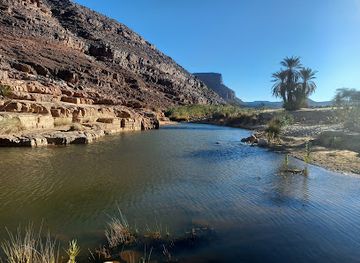
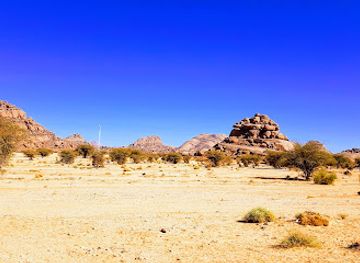
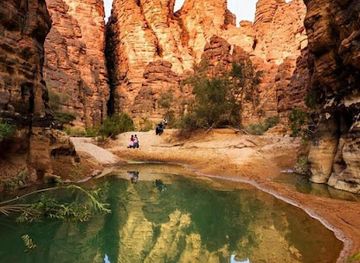
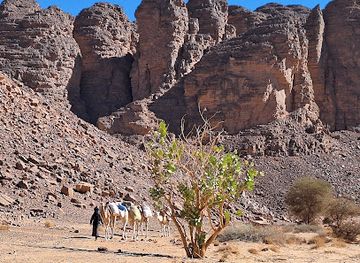
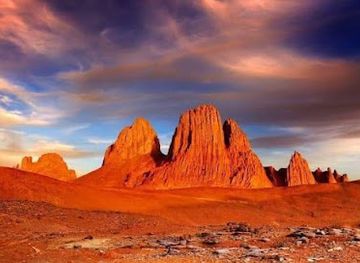
The Assekrem hermitage is the Hoggar’s most recognisable human landmark, a small mountain refuge associated with Charles de Foucauld and situated above the volcanic landscapes of the Atakor. Its significance lies both in its early twentieth-century history and in its commanding setting, although access is remote and conditions are basic. Mount Tahat, Algeria’s highest summit, is the region’s defining natural landmark and a prominent symbol of the Hoggar’s elevated volcanic terrain. The Atakor’s rock towers, ridges and dark plateaux form a wider geological landmark rather than a single monument, with changing light revealing the structure of the massif. Around Tamanrasset, wells, old routes, stone structures and archaeological panels provide less monumental but equally important evidence of long-term human presence. Prehistoric engravings and paintings are especially valuable landmarks of Saharan cultural history, but their locations and access should be handled carefully. Together, these places express the Hoggar through altitude, volcanic geology, desert movement and the cultural memory of the Kel Ahaggar.
-
Plateau
Tassili oua-n-Ahaggar
Explore Tassili oua-n-Ahaggar: A UNESCO site with stunning landscapes and ancient rock art in the heart of the Algerian Sahara Desert.
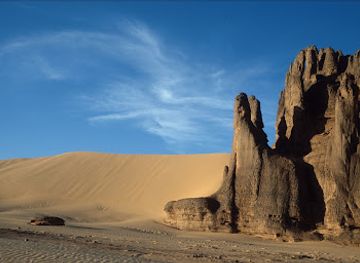
Explore Hoggar Mountains on the map
Plan your trip on one map. See where the top cities, national parks and sights are, and book hotels and experiences in a few clicks.
Best hotels in Hoggar Mountains
Best restaurants in Hoggar Mountains
Dining in the Hoggar centres on Tamanrasset, where visitors find Algerian staples alongside Saharan-influenced cooking. Couscous, stews, soups, flatbreads, grilled meat, dates and sweet mint tea are practical examples of the food encountered in the region, while simple cafés and family-run restaurants provide most everyday meals. Remote excursions generally involve provisions, camp cooking or food prepared by a tour team rather than a choice of restaurants at each stop. Local markets can be useful for fruit, bread, dates and other supplies, although availability varies. Tuareg hospitality and tea preparation are important social practices, but visitors should avoid treating them as staged performances or assuming that every community follows identical customs. Tamanrasset’s dining scene is broader than the mountain camps, yet it remains more functional and locally oriented than the restaurant districts of Algeria’s northern cities. Carrying snacks and confirming meal arrangements in advance is sensible on any multi-day journey.
-
Algerian Restaurant
Restaurant-dar-al-afrah
Experience authentic Algerian cuisine at Restaurant Dar Al Afrah in Idles – where tradition meets flavor.
-
 Algerian Restaurant
Restaurant dar al-afrah
Experience authentic Algerian cuisine at Restaurant dar al-afrah in Tamanrasset – where every dish tells a story.

Best bars in Hoggar Mountains
Nightlife in the Hoggar is modest and is concentrated in Tamanrasset rather than in the mountains. Evening life generally revolves around cafés, restaurants, tea, conversation and informal social gatherings, with some hotels or urban venues offering a more conventional setting for visitors. Alcohol is not central to public life and availability can be limited, so travellers should not expect a nightclub circuit or late-night entertainment comparable to Algeria’s major northern cities. In the mountains, the evening experience is shaped by camp meals, Tuareg music when arranged appropriately, quiet conversation and exceptionally dark skies. Visitors should ask before recording performances or photographing people, and should follow the customs of their hosts. The most rewarding evenings are usually cultural and landscape-based rather than commercial, with low light, cold temperatures at altitude and long distances making independent late-night movement impractical.
-
Restaurant
مطعم و بتزيريا ام درمان
Experience a delightful culinary journey at مطعم و بتزيريا ام درمان in Tamanrasset, savoring authentic Algerian dishes and international favorites.
-
Restaurant Le Grand Sud مطعم الجنوب الكبير
Experience the essence of Algerian cuisine at Restaurant Le Grand Sud in Tamanrasset, where traditional flavors meet modern dining.
-
Restaurant
مقهى ومطعم
Discover a culinary gem in Amguel, blending local flavors with a warm atmosphere for an unforgettable dining experience.
-
Restaurent Chelia
Discover the essence of Algerian cuisine at Restaurant Chelia in Tamanrasset, where every dish tells a story.


Best nightclubs in Hoggar Mountains
-
National park
Tassili N'Ajjer National Park
Discover Tassili N'Ajjer National Park, Algeria's stunning UNESCO site renowned for its unique landscapes, ancient rock art, and diverse wildlife.
-
Mountain range
Tassili n'Ajjer
Experience the breathtaking beauty and ancient history of Tassili n'Ajjer, a UNESCO World Heritage site in Algeria, perfect for nature lovers and adventurers.
-
National park
Parc culturel du Tassili
Explore the mesmerizing landscapes and ancient rock art of Parc culturel du Tassili, a national park that offers adventure and history in the heart of the Sahara.
-
National park
Tassili n'Ahaggar National Parc
Explore the stunning landscapes and ancient heritage of Tassili n'Ahaggar National Park, a UNESCO World Heritage site in the heart of the Sahara.



Best shops in Hoggar Mountains
Shopping in the Hoggar is centred on Tamanrasset’s markets, craft sellers and everyday commercial streets rather than large retail complexes. Visitors may find Tuareg-style silver jewellery, leather goods, woven textiles, indigo-dyed fabrics, knives, baskets and other handmade objects, although quality, provenance and design vary. Regional food products such as dates, tea and spices can also be practical purchases. Buying directly from craftspeople or established local sellers is preferable to treating cultural objects as anonymous souvenirs, and travellers should check export rules before purchasing antiques, archaeological material, fossils or old-looking objects. Bargaining may be customary in some market settings, but it should remain courteous and proportionate. The range of goods is broader in Tamanrasset than in remote mountain camps, where supplies are limited and retail activity is minimal. The most appropriate souvenirs are contemporary crafts and locally sourced products whose ownership and legal export are clear.
-
Produce market
Tafsit Market
Experience the vibrant local culture at Tafsit Market, a lively hub of fresh produce and traditional goods in Tamanrasset, Algeria.
-
Coffee store
Zargo Cofee
Experience the rich aromas and flavors at Zargo Coffee, Tamanrasset's favorite café for a perfect coffee break in a cozy atmosphere.
-
Grocery store
Superrat Desert Star
Explore the vibrant flavors and local culture at Superrat Desert Star, Tamanrasset's beloved grocery store offering unique local products.
-
Home goods store
LE BONHEUR
Explore Le Bonheur in Tamanrasset for unique, handcrafted home goods that reflect the beauty of Algerian culture.


Get your free copy of our complete guide to Hoggar Mountains, delivered straight to you.
Everything on this page, from attractions and restaurants to essentials and local phrases, in one PDF you can read offline, print or share.
Already have an account? Sign in
Your Hoggar Mountains guide is ready.
We'll send it to · Not you? Sign out

Getting your guide ready…
We are putting together a fresh copy of the Hoggar Mountains guide. This can take up to a minute.
This can take a few moments. If your browser asks, choose Allow so the download can start. You'll find the guide in your Downloads folder.
Nothing happened? Download it again
Sorry, the guide is taking longer than usual. Please try again in a minute, or get it by email instead.
Hoggar Mountains essentials
Currency and Payment
Safety
Emergency Situations
Do's and Don'ts
Local Tips
From Eve
Local phrases worth knowing
You don't need to get them perfect. A few words go a long way, and locals appreciate the effort.
Basics
| English | Local | Say it |
|---|---|---|
| Hello | Azul | [A-zool] |
| Goodbye | Tanemmirt | [Ta-nem-meert] |
| Yes | Ih | [Ee] |
| No | Uhu | [Oo-hoo] |
| Please/You're welcome | S'il vous plaît | [Seel voo pleh] |
| Thank you | Tanemirt | [Ta-nem-meert] |
| Excuse me/Sorry | Smahli | [Sma-hli] |
| How are you? | Amek ti? | [A-meck tee] |
| Fine. And you? | Dagh d'k, u ti? | [Dagh deek, oo tee] |
| Do you speak English? | Tsa-uzwen l'anglais? | [Tsa-ooz-wen lan-glay] |
| I don't understand | Ur t'negh | [Oor t-negh] |
Eating & Drinking
| English | Local | Say it |
|---|---|---|
| I'd like to see the menu, please | Rah-ya t'fa-hem l'menu, s'il vous plaît | [Rah-ya t-fa-hem l-ma-noo, seel voo pleh] |
| I don't eat meat | Ur t'khun l'khir | [Oor t-khoon l-kheer] |
| Cheers! | Saha! | [Sa-ha] |
| I would like to pay, please | Rah-ya t'fa-hem l'khidma, s'il vous plaît | [Rah-ya t-fa-hem l-khid-ma, seel voo pleh] |
Emergencies
| English | Local | Say it |
|---|---|---|
| Help! | Aide! | [Aid] |
| Go away! | Dri! | [Dree] |
| Call the Police! | Aghri l'police! | [A-ghree l-pol-eess] |
| Call a doctor! | Aghri l'docteur! | [A-ghree l-doc-teur] |
| I'm lost | N'ra-wen ghal | [N-ra-wen ghal] |
| I'm ill | N'ra-wen ma-za | [N-ra-wen ma-za] |
Shopping
| English | Local | Say it |
|---|---|---|
| I'd like to buy... | Rah-ya t'khri l... | [Rah-ya t-khree l...] |
| I'm just looking | N'ra-wen a-dhi | [N-ra-wen a-dhee] |
| How much is it? | Ch'hal ghali? | [Ch-hal gha-lee] |
| That's too expensive | Dagh ughdun ghali | [Dagh oo-ghd-un gha-lee] |
| Can you lower the price? | Tsa-t'ni t'khafed l'ghal? | [Tsa-t-nee t-kha-fed l-ghal] |
Time & Numbers
| English | Local | Say it |
|---|---|---|
| What time is it? | Ch'hal sa'a? | [Ch-hal sa-a] |
| It's one o'clock | Ih sa'a wa-hed | [Ee sa-a wa-hed] |
| Half past (10) | N'saf sa'a (10) | [N-saf sa-a (10)] |
| Morning | Tazrout | [Taz-root] |
| Afternoon | Tazguert | [Taz-gert] |
| Evening | Tazri | [Taz-ree] |
| Yesterday | Sukrat | [Sook-rat] |
| Today | Lyoum | [L-yoom] |
| Tomorrow | Ghadu | [Gha-doo] |
| 1 | Wa-hed | [Wa-hed] |
| 2 | Zou | [Zoo] |
| 3 | Talata | [Ta-la-ta] |
| 4 | Arba'a | [Ar-ba-a] |
| 5 | Khamis | [Kha-mees] |
| 6 | Sitt | [Sit] |
| 7 | Seb'a | [Seb-a] |
| 8 | Tamanya | [Ta-ma-nya] |
| 9 | Tes'a | [Tes-a] |
| 10 | Ashra | [Ash-ra] |
Transport & Directions
| English | Local | Say it |
|---|---|---|
| Where's a/the...? | Win t'khal l...? | [Win t-khal l...?] |
| What's the address? | Ch'hal l'adresse? | [Ch-hal l-a-dress] |
| Can you show me (on the map)? | Tsa-teh-derni (a-dar)? | [Tsa-teh-der-nee a-dar] |
| When's the next (bus)? | Ch'hal t'khir l'bus? | [Ch-hal t-kheer l-bus] |
| A ticket (to ....) | Un ticket (ila ...) | [Un ti-ket ila ...] |
History of Hoggar Mountains
Prehistoric settlement and Saharan rock art
The Hoggar contains engravings and rock paintings that testify to human occupation over many millennia. Their subjects include animals, people and scenes associated with environments that were wetter and more biologically varied than the present Sahara. The images belong to a long sequence of Saharan artistic traditions rather than a single, easily defined culture. They are important evidence for changing climate, mobility and human adaptation in the central Sahara, although dating and interpretation vary between sites. Visitors should view them as archaeological heritage, not as decorative curiosities, and should never touch, chalk or trace the surfaces.
Caravan routes and the central Sahara
The Hoggar stood within a wider network of desert routes linking communities and trading centres across the Sahara. Knowledge of wells, seasonal pasture, mountain passages and long-distance navigation enabled Tuareg groups and other Saharan peoples to travel through terrain that outsiders often regard as empty. Trade in livestock, salt, dates, metals and manufactured goods changed over time, while political authority remained distributed among local communities and confederations. The surviving routes, wells and settlements help explain why the massif was a cultural crossroads rather than an isolated wilderness.
The Kel Ahaggar and Tuareg society
The Kel Ahaggar, a Tuareg confederation associated with the Hoggar, developed social, political and economic institutions suited to a mobile desert environment. Their history includes alliances, rivalries, pastoral movement, commerce and relationships with neighbouring Saharan populations. Tamasheq languages, distinctive clothing, music, oral poetry, metalwork and knowledge of the landscape remain important elements of Tuareg cultural life, although contemporary communities also participate fully in Algeria’s modern political and economic systems. The name Ahaggar itself reflects the region’s close association with this cultural world.
French expansion and the early twentieth century
French colonial expansion into the central Sahara altered political relationships, routes and systems of administration in the Hoggar during the late nineteenth and early twentieth centuries. The region was drawn more closely into colonial military and administrative structures while older forms of local authority continued to influence everyday life. Charles de Foucauld, a French Catholic priest and former army officer, lived at Tamanrasset and later at Assekrem, where his work included linguistic and ethnographic study as well as religious activity. His presence is now commemorated at the Assekrem hermitage, but it belongs within the broader and more complex history of colonial encounter.
Algerian independence and national integration
Algeria’s independence in 1962 ended French colonial rule and brought the Hoggar more firmly into the institutions of the independent Algerian state. Roads, air links, schools, public services and administrative structures expanded unevenly across the enormous southern territory, with Tamanrasset becoming the principal urban centre for the massif and surrounding desert. Independence also reshaped debates about identity, citizenship, language and the place of Tuareg communities within the Algerian nation. The modern Hoggar therefore combines long-established Saharan cultural practices with national infrastructure and contemporary urban life.
Scientific and strategic importance of the Sahara
During the twentieth century, southern Algeria acquired wider strategic importance because of its size, mineral resources, transport corridors and position within the Sahara. The Hoggar’s geology has attracted scientific interest, particularly its volcanic formations, while its remoteness has made roads, communications and security infrastructure significant elements of modern regional development. These forces have affected patterns of employment and mobility around Tamanrasset without erasing pastoral knowledge or cultural connections to the mountains. Today, tourism forms only one part of the region’s economy and remains dependent on access, security and careful environmental management.
Hoggar Mountains in Photos
Browse through our photo collection highlighting the charm and character of the destination.
Neighbouring regions of Hoggar Mountains
The closest regions to Hoggar Mountains, if you have time for more than one.
-

-

-

-

-


Swipe for more regions
Explore more
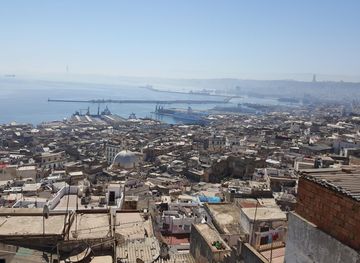
Explore more of Algeria
Discover Algeria: A captivating blend of ancient history, stunning landscapes, and vibrant culture. From the Sahara desert to Mediterranean coasts, adventure awaits.
Explore Algeria