

Free Shoal Bay Travel Guide & Mobile App
Explore Shoal Bay with free travel guides. Discover regional history, expert tips, proposed trips, and audio guides on web or mobile app.


Shoal Bay in Anguilla pairs clear reef-protected water and coral sand with snorkelling, Caribbean seafood, relaxed beach bars and quiet island living.
Read more about Shoal Bay
When is the best time to visit Shoal Bay?
Best: January–March · 29°C| Month | High (°C) | Rainfall (mm) |
|---|---|---|
| January (best) | 29 | 57 |
| February (best) | 29 | 47 |
| March (best) | 29 | 50 |
| April | 30 | 57 |
| May | 31 | 65 |
| June | 31 | 65 |
| July | 31 | 97 |
| August | 32 | 100 |
| September | 31 | 103 |
| October | 31 | 132 |
| November | 30 | 117 |
| December | 29 | 77 |
Getting to and around Shoal Bay
How to get there
Transportation
Top city travel guides in Shoal Bay
The cities of Shoal Bay, and the easiest places to base yourself.
-

-


Swipe for more cities
Destinations in Shoal Bay
Resorts, valleys and scenic spots worth a trip of their own.

Swipe for more destinations
Best attractions in Shoal Bay
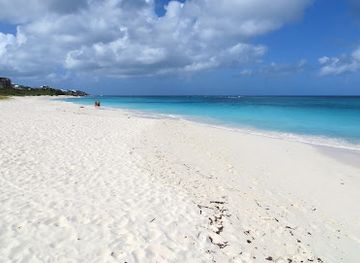
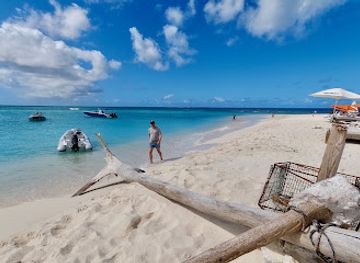
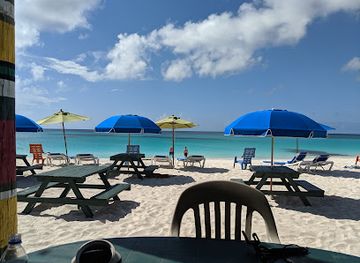
Shoal Bay’s principal attraction is its long coral-sand beach, where clear water, offshore reef and usually gentle shallows support swimming, snorkelling, paddleboarding and relaxed shoreline walks. Small-scale watersports operators and boat excursions may provide equipment or trips, subject to weather and seasonal availability. Behind the beach, the area’s restaurants, beach bars, villas and low-rise hotels create a sociable but generally unhurried setting rather than a large resort complex. There are no major museums or extensive heritage complexes within Shoal Bay itself, so visitors interested in Anguilla’s archaeology and history should travel beyond the bay. The island’s wider attractions include Indigenous heritage at Fountain Cavern National Park, the salt ponds and maritime character around Sandy Ground, historic churches and local museums near The Valley, and beaches such as Rendezvous Bay and Meads Bay elsewhere on Anguilla. Boat trips can add offshore scenery and snorkelling, while the dry scrub, limestone terrain and open Atlantic views around Shoal Bay reward short drives and coastal stops. The attraction landscape is therefore centred on sea, sand and informal outdoor life, with the rest of Anguilla supplying the deeper historical and cultural context.
-
Beach
Shoal Bay Beach
Discover Anguilla's gem: powdery sands, turquoise waters, and serene vibes await at Shoal Bay Beach, a Caribbean paradise.
-
Bay
Shoal Bay
Escape to Shoal Bay, Anguilla: where powdery sands meet turquoise waters in a tranquil Caribbean paradise.
-
Island
Sandy Island
Escape to a tiny paradise: Sandy Island, Anguilla offers pristine beaches, snorkeling, and fresh seafood in a secluded Caribbean setting.
-
Lake
Meads Bay Pond
Discover Anguilla's serene Meads Bay Pond: a haven for birdwatchers and nature lovers, offering tranquil beauty and diverse wildlife encounters.


Best landmarks in Shoal Bay
Shoal Bay Beach is the area’s defining natural landmark: a broad arc of pale sand and transparent water whose reef-fringed seascape has become one of Anguilla’s most recognisable coastal views. Its open Atlantic orientation, low scrub and absence of high-rise buildings give the shoreline a distinctive sense of breadth. The reef and rocky margins are also important geographical features, shaping swimming conditions and supporting the marine life seen by snorkellers. The settlement of Shoal Bay East, with its scattered low-rise accommodation and beach businesses, reflects Anguilla’s preference for relatively small-scale development. There are few monumental buildings within the immediate area, and that absence is part of its visual identity. For architectural and historical landmarks, travellers must go beyond Shoal Bay to sites elsewhere on Anguilla, such as the island’s older churches, salt-working landscapes and Fountain Cavern, an Indigenous heritage site outside the bay. These should be understood as excursions from Shoal Bay rather than landmarks within the beach settlement itself.
-
Hotel
Four Seasons Resort and Residences Anguilla
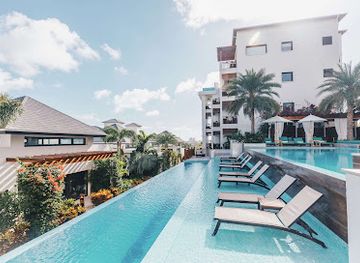
Experience unparalleled luxury and breathtaking beachfront views at the Four Seasons Resort Anguilla, nestled between two turquoise bays.
-
 Hotel
Cap Juluca, A Belmond Hotel, Anguilla
Experience ultimate luxury at Cap Juluca, A Belmond Hotel in Anguilla, where pristine beaches meet world-class service and exquisite dining.
-
Bar
Elvis Beach Bar
Discover the vibrant atmosphere of Elvis Beach Bar in Anguilla, where delicious food and breathtaking views create unforgettable beach experiences.
-
Hotel
Zemi Beach House, LXR Hotels & Resorts
Discover the luxurious Zemi Beach House in Anguilla, where stunning beaches, exquisite dining, and ultimate relaxation await your arrival.


Explore Shoal Bay on the map
Plan your trip on one map. See where the top cities, national parks and sights are, and book hotels and experiences in a few clicks.
Best hotels in Shoal Bay
Best restaurants in Shoal Bay
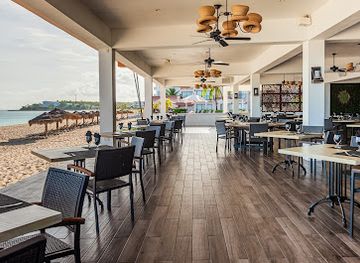
Dining in Shoal Bay is predominantly informal and coastal, with restaurants and beach bars serving grilled or stewed fish, lobster or crayfish when available, chicken, rice and peas, salads, johnnycakes and other Caribbean staples. Anguillan cooking draws on the island’s fishing and farming traditions, while menus also reflect wider Caribbean, North American and international influences brought by tourism. Casual lunches by the sand are central to the area’s appeal, whereas evening establishments may offer more composed meals in open-air settings. Fresh seafood is not guaranteed at every meal, since availability and seasons affect local supply, so asking what was landed recently is more useful than relying on general menu descriptions. Drinks often include rum-based cocktails, local and regional beers, fruit juices and simple refreshments suited to the heat. For a broader food experience, explore restaurants and food businesses elsewhere on Anguilla, where village settings, roadside cooking and locally oriented establishments provide a contrast with Shoal Bay’s beach dining.
-
Restaurant
Straw Hat Restaurant
Experience culinary excellence with breathtaking views at Straw Hat Restaurant in Anguilla - where every meal is a celebration of flavor.
-
Restaurant
Da'Vida
Experience the best of Anguillian cuisine at Da'Vida - where delicious food meets stunning ocean views.
-
Restaurant
Madeariman
Experience exquisite Caribbean flavors at Madeariman in Anguilla - where every meal is a feast for your senses.
-
Grill
Gwen's Reggae Bar and Grill
Discover the vibrant flavors and rhythms of Caribbean culture at Gwen's Reggae Bar and Grill in Anguilla.


Best bars in Shoal Bay
Shoal Bay’s evening scene is relaxed and concentrated around beach bars, hotel lounges and restaurants rather than a dedicated nightclub district. Sunset drinks, rum cocktails, cold beer, music and open-air dining are the usual pattern, with occasional live performances or informal entertainment depending on the season and individual venue. The atmosphere can become lively during holiday periods, but nights are generally quieter than in major Caribbean resort centres. Sandy Ground and other parts of Anguilla may offer additional music and late-evening options, though they are outside Shoal Bay and require a taxi or car. Check return transport before drinking, as distances, limited street lighting and sparse late-night public transport make spontaneous travel less convenient. Nightlife here is best approached as an extension of the beach and restaurant culture, not as a clubbing destination.
-
Bar
Elvis Beach Bar
Experience the vibrant spirit of Anguilla at Elvis Beach Bar, where delicious food, refreshing drinks, and live music create unforgettable moments.
-
Bar
Roy's Bayside Grill
Experience the flavors of Anguilla at Roy's Bayside Grill, where fresh seafood meets a vibrant beachside atmosphere.
-
Restaurant
Madeariman
Experience the vibrant flavors of Anguilla at Madeariman, where fresh seafood meets stunning views and a warm island atmosphere.
-
Bar
SandBar
Experience the vibrant atmosphere of SandBar, a premier beachside bar in Anguilla, where refreshing cocktails and stunning views create unforgettable moments.


Best nightclubs in Shoal Bay
Shoal Bay’s evening scene is relaxed and concentrated around beach bars, hotel lounges and restaurants rather than a dedicated nightclub district. Sunset drinks, rum cocktails, cold beer, music and open-air dining are the usual pattern, with occasional live performances or informal entertainment depending on the season and individual venue. The atmosphere can become lively during holiday periods, but nights are generally quieter than in major Caribbean resort centres. Sandy Ground and other parts of Anguilla may offer additional music and late-evening options, though they are outside Shoal Bay and require a taxi or car. Check return transport before drinking, as distances, limited street lighting and sparse late-night public transport make spontaneous travel less convenient. Nightlife here is best approached as an extension of the beach and restaurant culture, not as a clubbing destination.
-
Bar
Elvis Beach Bar
Discover the vibrant atmosphere and delicious flavors of Elvis Beach Bar, a favorite spot for relaxation and socializing in beautiful Anguilla.
-
Live music bar
Bankie Banx's Dune Preserve
Discover the lively spirit of Anguilla at Bankie Banx's Dune Preserve, where live music and local cuisine create unforgettable moments by the sea.
-
Grill
Gwen's Reggae Bar and Grill
Discover the vibrant flavors and rhythms of the Caribbean at Gwen's Reggae Bar and Grill in Anguilla.
-
Caribbean
Tropical Sunset Restaurant & Bar
Experience the vibrant flavors of the Caribbean at Tropical Sunset Restaurant & Bar, where stunning beach views meet delicious local cuisine.



Best shops in Shoal Bay
Shopping in Shoal Bay is modest and geared towards beach needs, locally made gifts and convenience purchases rather than extensive retail. Small shops and hotel outlets may stock swimwear, sun protection, drinks, artwork, jewellery, crafts and souvenirs, while beach establishments sometimes sell or arrange watersports equipment. The area is not a major destination for designer shopping or large shopping centres. Visitors seeking a wider choice should travel to The Valley, Anguilla’s main administrative and commercial centre, or explore craft and food businesses elsewhere on the island. Useful locally connected purchases include Anguillan art, handmade jewellery, island-themed textiles, spices, rum and packaged regional foods, although provenance and availability vary. Markets and small vendors may operate on changing schedules, so ask locally rather than relying on a fixed timetable. Respectfully browsing, carrying reusable bags and avoiding shells, coral or archaeological objects as souvenirs helps protect the coastal environment and the island’s heritage.
-
Bakery
Le Bon Pain
Discover the sweet side of Anguilla at Le Bon Pain, where every bite of fresh pastry is a taste of island paradise.
-
Bay
Shoal Bay
Explore the natural beauty and serene atmosphere of Shoal Bay, a top Caribbean destination for relaxation and adventure.
-
Shop Supermarket Furniture Shop
BIG STORE
Discover BIG STORE in Anguilla: Your ultimate shopping destination for local goods, groceries, and unique furniture.
-
Gift shop
Irie Life
Explore Irie Life in Anguilla for unique gifts and local crafts that embody the island's vibrant culture.


Get your free copy of our complete guide to Shoal Bay, delivered straight to you.
Everything on this page, from attractions and restaurants to essentials and local phrases, in one PDF you can read offline, print or share.
Already have an account? Sign in
Your Shoal Bay guide is ready.
We'll send it to · Not you? Sign out

Getting your guide ready…
We are putting together a fresh copy of the Shoal Bay guide. This can take up to a minute.
This can take a few moments. If your browser asks, choose Allow so the download can start. You'll find the guide in your Downloads folder.
Nothing happened? Download it again
Sorry, the guide is taking longer than usual. Please try again in a minute, or get it by email instead.
Shoal Bay essentials
Currency and Payment
Safety
Emergency Situations
Do's and Don'ts
Local Tips
From Eve
Local phrases worth knowing
You don't need to get them perfect. A few words go a long way, and locals appreciate the effort.
Basics
| English | Local | Say it |
|---|---|---|
| Hello | Hello | [He-lo] |
| Goodbye | Bye | [Bye] |
| Yes | Yes | [Yes] |
| No | No | [No] |
| Please/You're welcome | Please | [Pleez] |
| Thank you | Thank you | [Thank yuh] |
| Excuse me/Sorry | Excuse me | [Ex-cuze me] |
| How are you? | How yuh doin'? | [How yuh doin'?] |
| Fine. And you? | Fine. An yuh? | [Fine. An yuh?] |
| Do you speak English? | Yuh speak English? | [Yuh speak English?] |
| I don't understand | I nah understand | [I nah un-der-stand] |
Eating & Drinking
| English | Local | Say it |
|---|---|---|
| I'd like to see the menu, please | Mi wan si di menu, please | [Mi wan si di menu, pleez] |
| I don't eat meat | Mi nah eat meat | [Mi nah eet meat] |
| Cheers! | Cheers! | [Cheers] |
| I would like to pay, please | Mi would like fi pay, please | [Mi would like fi pay, pleez] |
Emergencies
| English | Local | Say it |
|---|---|---|
| Help! | Help! | [Help] |
| Go away! | Guh way! | [Guh way] |
| Call the Police! | Call di Police! | [Call di Po-leece] |
| Call a doctor! | Call a doctor! | [Call a doc-tah] |
| I'm lost | Mi lost | [Mi lost] |
| I'm ill | Mi sick | [Mi sick] |
Shopping
| English | Local | Say it |
|---|---|---|
| I'd like to buy... | Mi wan buy... | [Mi wan buy...] |
| I'm just looking | Mi jus a look | [Mi jus a look] |
| How much is it? | How much dat cost? | [How much dat cost?] |
| That's too expensive | Dat too expensive | [Dat too ex-pen-sive] |
| Can you lower the price? | Can yuh lower di price? | [Can yuh lower di price?] |
Time & Numbers
| English | Local | Say it |
|---|---|---|
| What time is it? | Wha time it be? | [Wha time it be?] |
| It's one o'clock | It one o'clock | [It one o'clock] |
| Half past (10) | Half past ten | [Half past ten] |
| Morning | Mornin' | [Mornin'] |
| Afternoon | Afternoon | [Afternoon] |
| Evening | Evenin' | [Evenin'] |
| Yesterday | Yestahday | [Yestahday] |
| Today | Today | [Today] |
| Tomorrow | Tomorrah | [Tomorrah] |
| 1 | One | [One] |
| 2 | Two | [Two] |
| 3 | Three | [Three] |
| 4 | Four | [Four] |
| 5 | Five | [Five] |
| 6 | Six | [Six] |
| 7 | Seven | [Seven] |
| 8 | Eight | [Eight] |
| 9 | Nine | [Nine] |
| 10 | Ten | [Ten] |
Transport & Directions
| English | Local | Say it |
|---|---|---|
| Where's a/the...? | Wha de...? | [Wha de...?] |
| What's the address? | Wha di address? | [Wha di ad-dress?] |
| Can you show me (on the map)? | Can yuh show me (pon di map)? | [Can yuh show me (pon di map)?] |
| When's the next (bus)? | When di next (bus)? | [When di next (bus)?] |
| A ticket (to ....) | A ticket (to ....) | [A ticket (to ....)] |
History of Shoal Bay
Indigenous Anguilla and the Fountain Cave tradition
Long before European settlement, Anguilla was visited and occupied by Indigenous peoples associated with the wider Caribbean world. Archaeological evidence across the island includes settlements, tools and ceremonial material, while Fountain Cavern in the island’s south-east preserves an important Indigenous site and is outside Shoal Bay itself. The north-eastern coast, including the area around Shoal Bay, formed part of this wider island environment of fishing, gathering and seaborne movement. These remains place the beach within a much older human landscape than its modern resort identity suggests.
European colonisation and plantation society
English settlers established a lasting presence on Anguilla from the seventeenth century, developing small farms and livestock holdings rather than the large sugar plantations found on some neighbouring islands. The island’s dry climate and limited freshwater shaped this economy, while its surrounding waters supported fishing and coastal trade. Shoal Bay remained a rural and maritime landscape, connected to Anguilla’s scattered settlements by tracks and local boat routes rather than by tourism infrastructure.
Salt, fishing and island livelihoods
For generations, Anguillans combined subsistence farming, fishing, seafaring and salt gathering. Salt ponds elsewhere on the island, especially around Road Bay and Sandy Ground, became commercially important, while fishing sustained coastal communities throughout Anguilla. Shoal Bay’s reef, beach and open Atlantic setting belonged to this working coastal world. The small-scale character of these industries helped preserve the island’s dispersed settlement pattern, which remains visible around the bay today.
The Anguilla Revolution of 1967
In 1967, Anguillans rejected incorporation into the associated state of Saint Christopher-Nevis-Anguilla and expelled the police force sent to enforce the arrangement. The peaceful revolution reflected strong local concerns about political representation and the island’s distinct identity. Although the events were centred in Anguilla’s communities and administrative centres rather than at Shoal Bay, they shaped the territory in which the beach now operates. British intervention followed, and Anguilla subsequently pursued a separate constitutional future.
Separate British territory and modern tourism
Anguilla became a separate British Overseas Territory in 1980, a constitutional position it retains. From the late twentieth century, tourism gradually became a major part of the economy, building on the island’s beaches, sailing waters and reputation for low-density accommodation. Shoal Bay East developed into one of Anguilla’s best-known visitor areas, but its hotels, villas and restaurants generally remained small in scale. The beach’s contemporary identity therefore reflects tourism growth without the high-rise development found on many Caribbean coasts.
Hurricane Irma and recovery
Hurricane Irma struck Anguilla in September 2017, causing severe damage to homes, businesses, infrastructure and vegetation across the territory, including the Shoal Bay area. Recovery required rebuilding buildings, restoring utilities and repairing tourism facilities while coping with the continuing vulnerability of small islands to major storms. The event remains part of the modern history of Shoal Bay and underlines the importance of checking current conditions and supporting locally owned businesses when visiting.
Shoal Bay in Photos
Browse through our photo collection highlighting the charm and character of the destination.
Neighbouring regions of Shoal Bay
The closest regions to Shoal Bay, if you have time for more than one.
-

-

-

-

-


Swipe for more regions
Explore more

Explore more of Anguilla
Discover Anguilla: Caribbean's best-kept secret with stunning beaches, rich culture, and endless adventure opportunities. Perfect for a serene and luxurious getaway.
Explore Anguilla