

Free Redonda Travel Guide & Mobile App
Explore Redonda with free travel guides. Discover regional history, expert tips, proposed trips, and audio guides on web or mobile app.


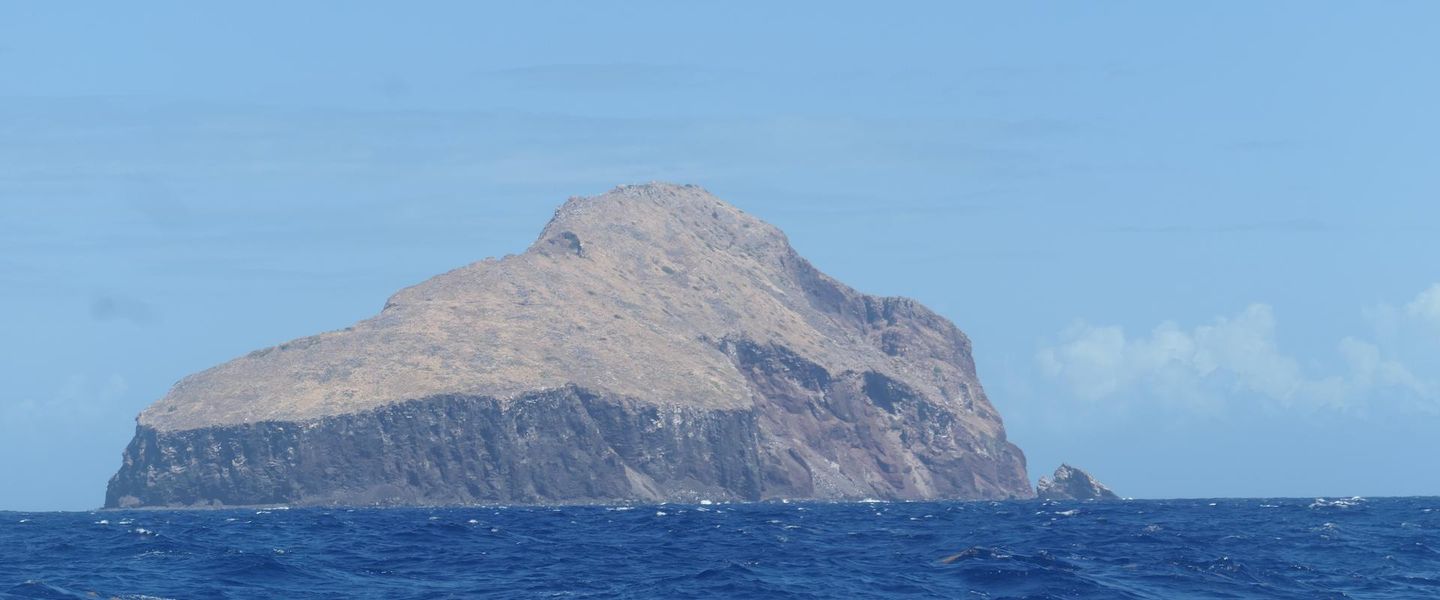


Redonda, Antigua and Barbuda’s remote volcanic island, offers dramatic cliffs, seabird habitat and traces of a remarkable phosphate-mining past.
Read more about Redonda
When is the best time to visit Redonda?
Best: January–March · 29–30°C| Month | High (°C) | Rainfall (mm) |
|---|---|---|
| January (best) | 29 | 50 |
| February (best) | 29 | 45 |
| March (best) | 30 | 50 |
| April | 30 | 60 |
| May | 31 | 70 |
| June | 31 | 80 |
| July | 32 | 100 |
| August | 32 | 110 |
| September | 31 | 120 |
| October | 31 | 100 |
| November | 30 | 80 |
| December | 30 | 60 |
Getting to and around Redonda
How to get there
Transportation
Best attractions in Redonda
Redonda’s attractions are defined by remoteness rather than by a conventional visitor circuit. From the water, the island’s sheer volcanic cliffs and sharply rising summit provide the principal visual experience, with different perspectives revealing its compact scale and exposed terrain. Wildlife interest centres on seabirds using the cliffs and on marine life in the surrounding waters, although viewing should be conducted without approaching colonies or disturbing nesting birds. The abandoned phosphate-mining landscape offers historical interest through traces of extraction and loading activity, but these remains are fragile and may be unsafe to enter. There are no beaches, museums, gardens, hotels or family attractions, and no developed walking routes. A carefully managed boat approach can therefore combine geological observation, maritime history and nature watching, while a landing should be considered exceptional and permission-dependent rather than assumed. Redonda is best suited to visitors with a serious interest in isolated islands, conservation, geology or Caribbean industrial history.
-
Museum
Nelson's Dockyard
Explore Antigua's naval past at this UNESCO World Heritage Site, a beautifully restored Georgian dockyard and active marina.
-
Tourist attraction
Stingray City Antigua
Swim with gentle Southern Stingrays in their natural Caribbean habitat at Stingray City Antigua, an unforgettable marine encounter for all ages.
-
Historical landmark
Devil's Bridge National Park
Witness nature's power at Devil's Bridge National Park, a coastal landmark with stunning views and a poignant history on Antigua's eastern shore.
-
Monument
VC Bird Monument
Honoring Antigua's first Prime Minister, Sir Vere Cornwall Bird, a symbol of independence and national pride in the heart of St. John's.



Best landmarks in Redonda
Redonda’s most recognisable landmark is its steep volcanic mass, rising abruptly from the Caribbean and appearing almost fortress-like when approached by sea. The cliffs are both a geological feature and an important seabird habitat, so their significance is ecological as well as visual. On land, the abandoned phosphate-mining remains provide the island’s principal human landmark: scattered traces of an industry that briefly supported workers, buildings and export activity in an otherwise inhospitable setting. These remnants should be viewed cautiously and not entered without explicit permission and professional safety guidance. The island has no cathedral, civic centre, road bridge or monumental architecture; its identity is expressed through the contrast between a dramatic natural profile and the incomplete industrial imprint left by nineteenth- and early twentieth-century mining.
-
Cruise terminal
Heritage Quay Complex
Discover the vibrant Heritage Quay Complex in St. John's, Antigua - a blend of shopping, dining, and cultural experiences waiting for you.
-
Museum
Nelson's Dockyard
Discover the historical charm and breathtaking scenery at Nelson's Dockyard, a UNESCO World Heritage site in Antigua, perfect for history lovers and nature enthusiasts alike.
-
Island
Antigua
Experience the beauty and culture of Antigua, a Caribbean gem with stunning beaches, rich history, and endless adventures for every traveler.
-
Shopping mall
Redcliffe Quay
Discover the charm of Redcliffe Quay, St. John's premier shopping destination, where local crafts meet Caribbean culture in a picturesque setting.


Explore Redonda on the map
Plan your trip on one map. See where the top cities, national parks and sights are, and book hotels and experiences in a few clicks.
Best hotels in Redonda
Best restaurants in Redonda
Redonda has no restaurants, cafés, pubs, food stalls or permanent food-producing community. All provisions for a boat expedition must be arranged before leaving Antigua, including drinking water, meals and suitable containers for carrying waste back. The island should not be treated as a place for a picnic unless food is securely packed and removed afterwards, since discarded scraps can attract wildlife and damage the remote environment. Visitors dining in the wider destination will find Antigua’s established restaurant scene outside Redonda, with Caribbean cooking, seafood, international menus and local produce represented in coastal and inland establishments. Those planning a Redonda excursion should ask their operator about provisioning rather than expecting catering on the island.
-
Restaurant
Sweet-Ts
Experience delicious meals and unique milkshakes at Sweet-Ts in Piccadilly – a culinary gem perfect for all food lovers.
-
Restaurant
Al Porto
Discover authentic Italian flavors at Al Porto, the charming restaurant in Jolly Harbour known for its fresh ingredients and inviting atmosphere.
-
Restaurant
Sheer Rocks
Experience exquisite tapas and breathtaking views at Sheer Rocks - where fine dining meets Caribbean charm.
-
Restaurant
Ana's On The Beach
Experience authentic Caribbean cuisine with stunning beach views at Ana's On The Beach in Antigua.


Best bars in Redonda
Redonda has no bars, nightclubs, breweries, live-music venues or evening entertainment. There is no permanent settlement and no safe basis for an overnight visit, so evening activity is limited to returning to Antigua or another properly equipped base after a boat excursion. Nightlife, restaurants and traditional pubs belong to the inhabited islands and are outside Redonda’s boundaries. Visitors should not remain offshore after dark without a vessel and crew specifically prepared for night navigation, and should never regard an isolated landing as a substitute for established hospitality facilities.
-
Bar
Sheer Rocks
Experience the best of Caribbean fine dining at Sheer Rocks, where stunning views meet exquisite flavors in a tranquil setting.
-
Family-friendly
Bay House Restaurant & Bar
Experience family-friendly dining at Bay House Restaurant & Bar, where delicious breakfast meets stunning views in Antigua.
-
Grill
The Nest -Beach Bar, Antigua
Discover The Nest Beach Bar in Antigua - a tropical retreat for grilled delights, stunning ocean views, and unforgettable sunsets.
-
Restaurant
Darkwood Beach Bar and Restaurant
Discover the perfect blend of Caribbean cuisine and stunning beach views at Darkwood Beach Bar and Restaurant, Antigua's coastal gem.


Best nightclubs in Redonda
Redonda has no bars, nightclubs, breweries, live-music venues or evening entertainment. There is no permanent settlement and no safe basis for an overnight visit, so evening activity is limited to returning to Antigua or another properly equipped base after a boat excursion. Nightlife, restaurants and traditional pubs belong to the inhabited islands and are outside Redonda’s boundaries. Visitors should not remain offshore after dark without a vessel and crew specifically prepared for night navigation, and should never regard an isolated landing as a substitute for established hospitality facilities.
-
Grill
The Nest -Beach Bar, Antigua
Experience the flavors of the Caribbean at The Nest Beach Bar in Antigua, where stunning views and delicious cuisine await.
-
Grill
Kon Tiki Bar and Grill
Experience the best of Caribbean cuisine at Kon Tiki Bar and Grill, where every meal is a journey and every view is a paradise.
-
Grill
Loose Cannon Beach Bar
Discover the vibrant Loose Cannon Beach Bar, where fine dining meets a festive beachside atmosphere in English Harbour.
-
Bar
The Lime
Experience the vibrant nightlife at The Lime, a trendy bar in English Harbour with exquisite cocktails and a lively atmosphere.


Best shops in Redonda
There is no shopping on Redonda. The island has no market, high street, craft workshop, gallery, food shop or visitor centre, and nothing should be removed as a souvenir. Specialist visitors should purchase provisions, sun protection, waterproof equipment and any locally made gifts before departure from Antigua. Shopping in Antigua, outside the boundaries of Redonda, offers the practical opportunity to find Caribbean food products, crafts, jewellery, artwork and other souvenirs, but these should not be described as products of Redonda unless their provenance is clearly established. A responsible Redonda visit leaves the island exactly as it was found, taking all packaging and other waste back to the mainland.
-
Shopping mall
Heritage Quay Complex
Heritage Quay Complex: A bustling shopping mall and cruise terminal in St. John's, Antigua, blending local culture, shopping, and dining experiences.
-
Shopping mall
Redcliffe Quay
Explore the vibrant shops and dining options at Redcliffe Quay in St. John's, Antigua, a must-visit shopping destination for tourists.
-
Store
Royal Palm Place
Discover Royal Palm Place, a vibrant shopping mall in Antigua with diverse shops, dining, and a lively atmosphere perfect for tourists.
-
Supermarket
BJ's Supermarket
Discover local flavors and essentials at BJ's Supermarket, your one-stop shop in Antigua for fresh produce and Caribbean goods.



Get your free copy of our complete guide to Redonda, delivered straight to you.
Everything on this page, from attractions and restaurants to essentials and local phrases, in one PDF you can read offline, print or share.
Already have an account? Sign in
Your Redonda guide is ready.
We'll send it to · Not you? Sign out

Getting your guide ready…
We are putting together a fresh copy of the Redonda guide. This can take up to a minute.
This can take a few moments. If your browser asks, choose Allow so the download can start. You'll find the guide in your Downloads folder.
Nothing happened? Download it again
Sorry, the guide is taking longer than usual. Please try again in a minute, or get it by email instead.
Redonda essentials
Currency and Payment
Safety
Emergency Situations
Do's and Don'ts
Local Tips
From Eve
Local phrases worth knowing
You don't need to get them perfect. A few words go a long way, and locals appreciate the effort.
Basics
| English | Local | Say it |
|---|---|---|
| Hello | Wah gwan | [Wah gwan] |
| Goodbye | Lata | [Lata] |
| Yes | Yea | [Yea] |
| No | Nah | [Nah] |
| Please/You're welcome | Pleez | [Pleez] |
| Thank you | Tenk yuh | [Tenk yuh] |
| Excuse me/Sorry | Scuse me | [Scuse me] |
| How are you? | How yuh doin? | [How yuh doin?] |
| Fine. And you? | I good. An yuh? | [I good. An yuh?] |
| Do you speak English? | Yuh speak English? | [Yuh speak English?] |
| I don't understand | I nuh understand | [I nuh understand] |
Eating & Drinking
| English | Local | Say it |
|---|---|---|
| I'd like to see the menu, please | Mi wan si di menu, pleez | [Mi wan si di menu, pleez] |
| I don't eat meat | I nuh eat meat | [I nuh eat meat] |
| Cheers! | Cheers! | [Cheers!] |
| I would like to pay, please | Mi wan fi pay, pleez | [Mi wan fi pay, pleez] |
Emergencies
| English | Local | Say it |
|---|---|---|
| Help! | Help! | [Help!] |
| Go away! | Goh weh! | [Goh weh!] |
| Call the Police! | Call di Police! | [Call di Police!] |
| Call a doctor! | Call a doctah! | [Call a doctah!] |
| I'm lost | Mi lost | [Mi lost] |
| I'm ill | Mi sick | [Mi sick] |
Shopping
| English | Local | Say it |
|---|---|---|
| I'd like to buy... | Mi wan buy... | [Mi wan buy...] |
| I'm just looking | Mi jus lookin | [Mi jus lookin] |
| How much is it? | How much dat? | [How much dat?] |
| That's too expensive | Dat too pricey | [Dat too pricey] |
| Can you lower the price? | Yuh can lower di price? | [Yuh can lower di price?] |
Time & Numbers
| English | Local | Say it |
|---|---|---|
| What time is it? | What time it? | [What time it?] |
| It's one o'clock | It one o'clock | [It one o'clock] |
| Half past (10) | Half past ten | [Half past ten] |
| Morning | Mornin | [Mornin] |
| Afternoon | Afternoon | [Afternoon] |
| Evening | Evenin | [Evenin] |
| Yesterday | Yesterday | [Yesterday] |
| Today | Today | [Today] |
| Tomorrow | Tomorrow | [Tomorrow] |
| 1 | One | [One] |
| 2 | Two | [Two] |
| 3 | Three | [Three] |
| 4 | Four | [Four] |
| 5 | Five | [Five] |
| 6 | Six | [Six] |
| 7 | Seven | [Seven] |
| 8 | Eight | [Eight] |
| 9 | Nine | [Nine] |
| 10 | Ten | [Ten] |
Transport & Directions
| English | Local | Say it |
|---|---|---|
| Where's a/the...? | Wheh di...? | [Wheh di...?] |
| What's the address? | Wha di address? | [Wha di address?] |
| Can you show me (on the map)? | Yuh can show mi (pon di map)? | [Yuh can show mi (pon di map)?] |
| When's the next (bus)? | When di next (bus)? | [When di next (bus)?] |
| A ticket (to ....) | A ticket (to ...) | [A ticket (to ...)] |
History of Redonda
Volcanic formation and early recognition
Redonda is the exposed summit of a steep volcanic formation in the Lesser Antilles. Its cliffs and rugged profile distinguish it from the low-lying, developed parts of Antigua and Barbuda. European navigators recorded the island during the early period of Caribbean exploration, although there is little evidence of a substantial permanent Indigenous settlement on Redonda itself. Its distance from larger inhabited islands and lack of fresh water made sustained occupation difficult.
British administration and territorial association
During the colonial period Redonda became associated administratively with Antigua, whose authorities and commercial interests were better placed to deal with the remote island. That relationship continued through the transition from British colonial rule to the independent state of Antigua and Barbuda in 1981. Redonda is therefore part of Antigua and Barbuda’s territory, despite being geographically separate from the two principal inhabited islands and lacking a permanent community.
The phosphate-mining era
Commercial attention turned to Redonda in the nineteenth century because accumulated seabird guano and phosphate offered valuable fertiliser. Mining companies established operations and workers occupied the island during its most intensive industrial period. The enterprise required difficult transport and loading arrangements on a precipitous island, but exports continued for decades. The remains of this activity are among Redonda’s most important historical traces, although they are fragile and unsafe to explore casually.
A short-lived industrial settlement
At the height of mining, Redonda was not entirely deserted: workers and managers lived on the island, and industrial structures were built around extraction and shipment. The settlement was always dependent on supplies and transport from elsewhere, and its existence was constrained by the exposed terrain and rough landing conditions. As the phosphate resource declined and operating difficulties increased, the community disappeared and Redonda returned to an essentially uninhabited state.
The Kingdom of Redonda tradition
Redonda acquired an unusual literary afterlife through the story of a symbolic kingdom. A nineteenth-century claim to a royal title, associated with Matthew Shiell and later passed through a succession of self-styled kings, developed into a cultural and publishing tradition involving writers and publishers. The Kingdom of Redonda has no recognised sovereign status and should not be confused with the constitutional territory administered by Antigua and Barbuda, but it remains part of the island’s distinctive modern mythology.
Conservation and modern isolation
With mining ended and permanent habitation gone, Redonda’s importance has increasingly been viewed through its natural and historical heritage. Its cliffs and surrounding waters support seabirds and marine ecosystems, while abandoned industrial remains illustrate a little-known chapter of Caribbean resource extraction. Modern interest is consequently limited by safety, conservation and access concerns. Redonda’s history is best understood as a movement from volcanic isolation, to extractive industry, and then back towards protected remoteness.
Redonda in Photos
Browse through our photo collection highlighting the charm and character of the destination.
Neighbouring regions of Redonda
The closest regions to Redonda, if you have time for more than one.
-

-

-

-

-


Swipe for more regions
Explore more
Explore more of Antigua and Barbuda
Discover Antigua and Barbuda's 365 beaches, vibrant culture, and rich history. Perfect for sun-seekers, nature lovers, and sailing enthusiasts in the Caribbean.
Explore Antigua and Barbuda