

Free Tierra del Fuego Travel Guide & Mobile App
Explore Tierra del Fuego with free travel guides. Discover regional history, expert tips, proposed trips, and audio guides on web or mobile app.


Explore Tierra del Fuego for Ushuaia, Beagle Channel voyages, Andean forests, Lago Fagnano, Patagonian wildlife and Argentina’s southern landscapes.
Read more about Tierra del Fuego
When is the best time to visit Tierra del Fuego?
Best: November–January · 13°C| Month | High (°C) | Rainfall (mm) |
|---|---|---|
| January (best) | 13 | 40 |
| February | 12 | 35 |
| March | 11 | 45 |
| April | 9 | 50 |
| May | 7 | 50 |
| June | 5 | 40 |
| July | 4 | 40 |
| August | 6 | 45 |
| September | 10 | 45 |
| October | 12 | 50 |
| November (best) | 13 | 45 |
| December (best) | 13 | 40 |
Getting to and around Tierra del Fuego
How to get there
Transportation
Top city travel guides in Tierra del Fuego
The cities of Tierra del Fuego, and the easiest places to base yourself.

Swipe for more cities
Destinations in Tierra del Fuego
Resorts, valleys and scenic spots worth a trip of their own.

Swipe for more destinations
Best attractions in Tierra del Fuego
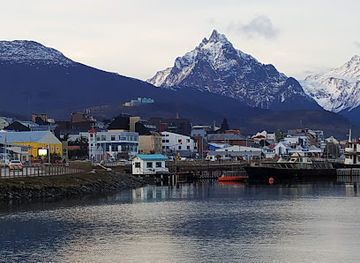
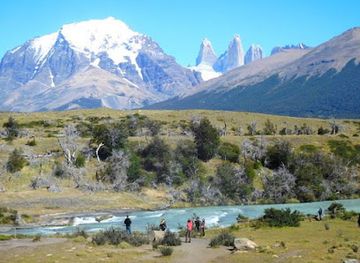
Tierra del Fuego’s attractions range from protected landscapes and wildlife excursions to museums that explain the region’s Indigenous, maritime and penal histories. In and around Ushuaia, Tierra del Fuego National Park offers woodland, peatland, lake and channel scenery, with trails suited to different levels of fitness. The Southern Fuegian Railway provides a heritage journey through former prison-era landscapes, while Beagle Channel cruises focus on lighthouses, seabirds and marine mammals. Cerro Castor is the province’s principal alpine ski area, operating seasonally, and surrounding valleys offer hiking and other outdoor activities. Tolhuin provides access to Lago Fagnano and central island forests, with a quieter, inland character than Ushuaia. Around Río Grande, museums, estancias, lagoons, coastal habitats and fishing landscapes reveal the northern province’s ranching and industrial identity. The region is not a single compact sightseeing circuit: distances are substantial, weather affects plans, and some natural areas require a car, guide or advance logistical arrangements.
-
Tourist attraction
Laguna Esmeralda
Discover the breathtaking beauty of Laguna Esmeralda, a stunning glacial lake in Ushuaia, Tierra del Fuego, perfect for nature lovers and adventure seekers.
-
Park
Plaza Islands Malvinas
Explore Plaza Islands Malvinas, a serene park in Ushuaia celebrating history and offering stunning views of Patagonia’s natural beauty.
-
National park
Bahía Lapataia
Discover the breathtaking beauty and historical significance of Bahía Lapataia, the end of the road in Tierra del Fuego National Park.
-
Ski resort
Glaciar Martial Pista de Esquí
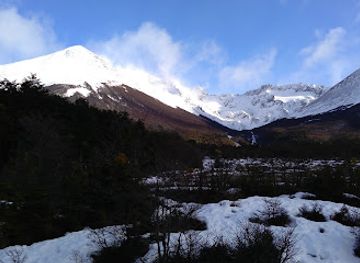
Experience the thrill of skiing and the beauty of nature at Glaciar Martial, Ushuaia's premier ski resort offering stunning views and unforgettable outdoor activities.
Best landmarks in Tierra del Fuego
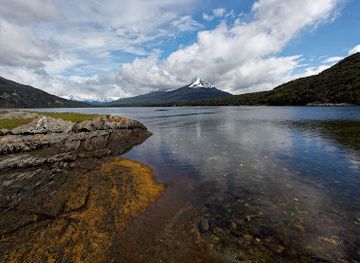
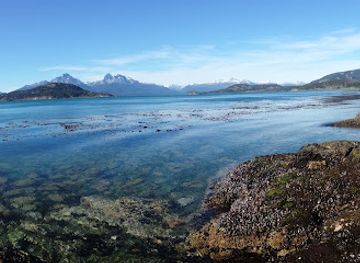
The Beagle Channel is Tierra del Fuego’s defining geographical landmark, forming a broad water corridor beneath the southern mountains and giving Ushuaia its distinctive setting. Near the city, the Les Eclaireurs Lighthouse stands on a rocky islet and has become a familiar symbol of channel excursions, although it is not the so-called lighthouse of Jules Verne’s novel. Tierra del Fuego National Park contains important natural landmarks including Lapataia Bay, where mountains, forest and tidal water meet at the end of the Argentine road network, and Lake Acigami, also known as Lago Roca. In Ushuaia, the former national prison is a major historical reference point, while the Old Government House and other surviving civic buildings recall the settlement’s development. Farther east, Cape San Pablo’s isolated lighthouse and coastal setting form a striking excursion landmark, and central Tierra del Fuego is defined by the long, forested shoreline of Lago Fagnano and the surrounding mountain country.
-
Sightseeing tour agency
Southern Fuegian Railway
Journey through history and stunning landscapes on the world's southernmost railway, a unique Ushuaia experience in Tierra del Fuego National Park.
-
National park
Parque Nacional Tierra del Fuego
Discover dramatic landscapes, subantarctic forests, and unique wildlife at Argentina's southernmost national park, a short trip from Ushuaia.
-
Tourist attraction
Laguna Esmeralda
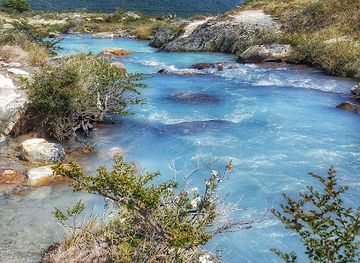
Discover the turquoise beauty of Laguna Esmeralda, a Patagonian jewel offering accessible hiking and stunning glacial landscapes near Ushuaia.
-
Park
Plaza Islands Malvinas
Explore the breathtaking Plaza Islands Malvinas, a serene park in Ushuaia rich in history and natural beauty, perfect for every traveler.


Explore Tierra del Fuego on the map
Plan your trip on one map. See where the top cities, national parks and sights are, and book hotels and experiences in a few clicks.
Best hotels in Tierra del Fuego
Best restaurants in Tierra del Fuego
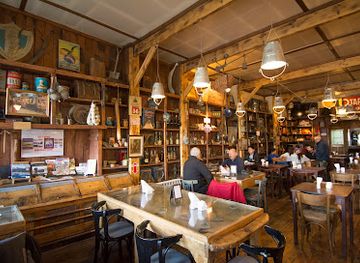
Dining in Tierra del Fuego is shaped by cold waters, Patagonian ranching and the province’s position at the end of Argentina’s road network. Ushuaia is the main centre for restaurants, with king crab, mussels, trout and other seafood appearing alongside Patagonian lamb, beef and Argentine pasta and grilled dishes. Local menus may also feature smoked products, berries and desserts suited to the southern climate, though availability changes with season and supply. Tolhuin and Río Grande offer cafés, bakeries, parrillas and informal restaurants serving residents, travellers and workers, while estancias and rural lodges may provide meals by arrangement. Craft beer and Argentine wine are commonly paired with regional food, but the best choice depends on the individual establishment rather than a single standard of dining. Farmers’ and producers’ outlets are useful for finding preserves, baked goods and locally made specialities, while visitors should confirm opening arrangements outside the main urban centres.
-
Restaurant
Ramos Generales El Almacén
Experience authentic Argentine flavors at Ramos Generales El Almacén in Ushuaia – where tradition meets taste!
-
Argentinian
Bodegón Fueguino
Experience the authentic flavors of Tierra del Fuego at Bodegón Fueguino in Ushuaia - A must-visit Argentinian restaurant.
-
Argentinian
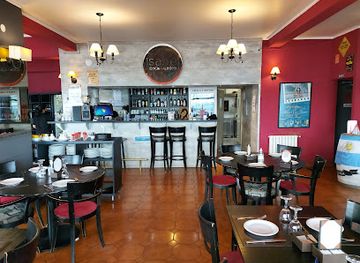
Isabel, Cocina al disco
Discover authentic Argentinian flavors at Isabel, Cocina al Disco in Ushuaia – a must-visit culinary destination for every traveler.
-
Argentinian
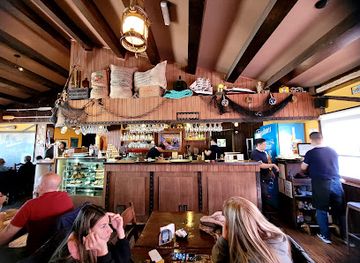
El Viejo Marino
Experience authentic Argentinian cuisine at El Viejo Marino in Ushuaia—delicious seafood with breathtaking views.
Best bars in Tierra del Fuego
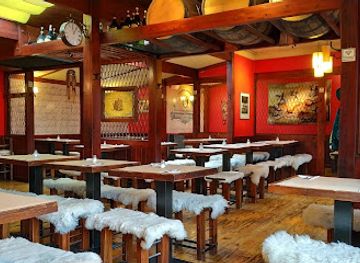
Ushuaia has the province’s broadest evening scene, centred on pubs, beer bars, restaurants and small venues where visitors and residents gather after excursions. Some establishments emphasise local or Patagonian beers, while others offer wine, cocktails and live music, but the atmosphere is generally more compact and early-evening oriented than that of Argentina’s major cities. Río Grande has a more local, dispersed nightlife centred on restaurants, cafés, pubs and occasional entertainment, while Tolhuin is primarily a quiet overnight base rather than a clubbing destination. In winter, ski-related evenings add activity around Cerro Castor and the city, subject to the seasonal programme. Nightlife outside the main settlements is limited, so travellers staying in rural areas should arrange transport and not assume that late services will be available.
-
Bar
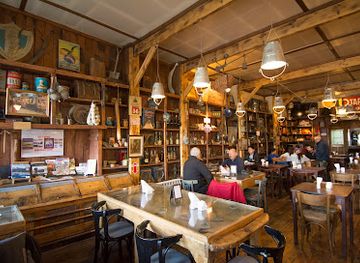
Ramos Generales El Almacén
Experience the delightful fusion of bar, bakery, and restaurant at Ramos Generales El Almacén in Ushuaia, Tierra del Fuego.
-
Bar
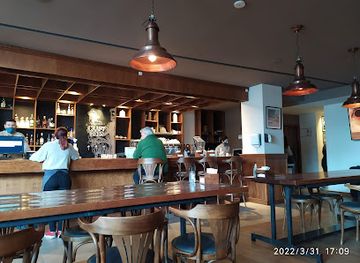
Tante Sara - Café & Bar
Experience the flavors of Argentina at Tante Sara - Café & Bar in Ushuaia, a perfect blend of culinary delights and cozy atmosphere.
-
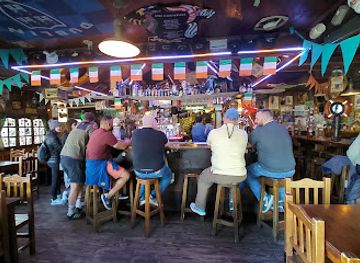
Irish pub
Dublin
Experience the vibrant essence of Irish culture at Dublin, a lively pub in Ushuaia, perfect for food, drinks, and live entertainment.
-
Grill
Yamana Bar & Patín
Discover the taste of Patagonia at Yamana Bar & Patín, where exceptional grill dishes meet a cozy atmosphere in Ushuaia.
Best nightclubs in Tierra del Fuego
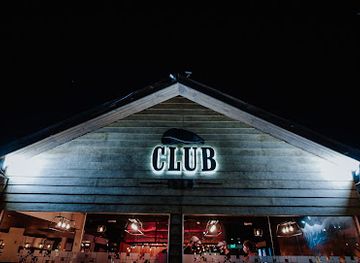
Ushuaia has the province’s broadest evening scene, centred on pubs, beer bars, restaurants and small venues where visitors and residents gather after excursions. Some establishments emphasise local or Patagonian beers, while others offer wine, cocktails and live music, but the atmosphere is generally more compact and early-evening oriented than that of Argentina’s major cities. Río Grande has a more local, dispersed nightlife centred on restaurants, cafés, pubs and occasional entertainment, while Tolhuin is primarily a quiet overnight base rather than a clubbing destination. In winter, ski-related evenings add activity around Cerro Castor and the city, subject to the seasonal programme. Nightlife outside the main settlements is limited, so travellers staying in rural areas should arrange transport and not assume that late services will be available.
-
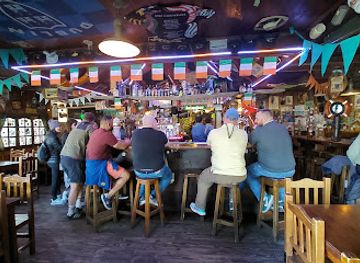
Irish pub
Dublin
Discover the vibrant spirit of Ireland at Dublin, a lively pub in Ushuaia offering authentic dishes, drinks, and unforgettable nightlife.
-
Bar
Viagro
Experience the vibrant nightlife of Tierra del Fuego at Viagro, your go-to bar for regional Argentinian beers and a lively atmosphere.
-
Bar
Club 1210 Ushuaia
Discover Ushuaia's nightlife at Club 1210, a vibrant bar offering craft beers, delicious food, and a lively atmosphere for an unforgettable night.
-
Bar
Latino Pub
Discover Latino Pub in Ushuaia - Your go-to bar for lively nights and local flavors in the heart of Tierra del Fuego.

Best shops in Tierra del Fuego
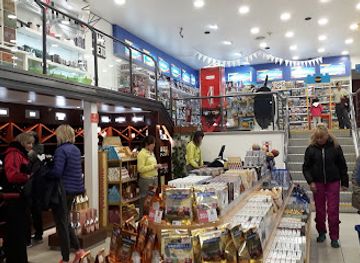
Ushuaia offers the most varied shopping in Tierra del Fuego, with central streets containing outdoor equipment shops, clothing retailers, bookshops, souvenir stores, cafés and outlets selling regional foods. Visitors commonly look for woollen goods, locally themed crafts, chocolates, preserves, artisanal beer and products associated with the southern landscape, but quality and provenance vary, so ask where an item was made. Río Grande has a more practical high-street character, reflecting its resident population and industrial economy, while Tolhuin is known for small-scale food and craft purchases rather than extensive retail. Estancias and rural producers may offer wool, preserves or other goods when operating as visitor destinations. Argentina’s tax and duty arrangements in Tierra del Fuego can differ from those elsewhere in the country, but eligibility, prices and procedures are subject to current rules; check official information and retain receipts for any relevant purchase.
-
Shopping mall
Fire Walk Shopping Center
Experience the charm of Ushuaia at Fire Walk Shopping Center, where shopping meets breathtaking views and delightful dining options.
-
Duty free store
Atlantico Sur Duty Free Shop
Experience unparalleled shopping at Atlantico Sur Duty Free Shop in Ushuaia, where luxury meets affordability in a stunning location.
-
Pastries
Tante Sara Pastelería & Café
Experience the sweet delights of Tante Sara Pastelería & Café, a cozy pastry shop in Ushuaia, offering a delicious assortment of treats and coffee.
-
Hypermarket
Carrefour Hipermercado
Explore Carrefour Hipermercado in Ushuaia for an incredible selection of local and international products in a vibrant shopping atmosphere.



Get your free copy of our complete guide to Tierra del Fuego, delivered straight to you.
Everything on this page, from attractions and restaurants to essentials and local phrases, in one PDF you can read offline, print or share.
Already have an account? Sign in
Your Tierra del Fuego guide is ready.
We'll send it to · Not you? Sign out

Getting your guide ready…
We are putting together a fresh copy of the Tierra del Fuego guide. This can take up to a minute.
This can take a few moments. If your browser asks, choose Allow so the download can start. You'll find the guide in your Downloads folder.
Nothing happened? Download it again
Sorry, the guide is taking longer than usual. Please try again in a minute, or get it by email instead.
Tierra del Fuego essentials
Currency and Payment
Safety
Emergency Situations
Do's and Don'ts
Local Tips
From Eve
Local phrases worth knowing
You don't need to get them perfect. A few words go a long way, and locals appreciate the effort.
Basics
| English | Local | Say it |
|---|---|---|
| Hello | Hola | [OH-lah] |
| Goodbye | Adiós | [ah-DYOS] |
| Yes | Sí | [SEE] |
| No | No | [NO] |
| Please/You're welcome | Por favor | [por fah-VOR] |
| Thank you | Gracias | [GRAH-syahs] |
| Excuse me/Sorry | Perdón | [per-DON] |
| How are you? | ¿Cómo estás? | [KOH-moh es-TAS] |
| Fine. And you? | Bien. ¿Y tú? | [BYEN. ee TOO] |
| Do you speak English? | ¿Hablas inglés? | [AH-blahs een-GLES] |
| I don't understand | No entiendo | [NO en-TYEN-doh] |
Eating & Drinking
| English | Local | Say it |
|---|---|---|
| I'd like to see the menu, please | Me gustaría ver el menú, por favor | [may goos-tah-REE-ah vehr el meh-NOO, por fah-VOR] |
| I don't eat meat | No como carne | [NO KOH-mo KAR-neh] |
| Cheers! | ¡Salud! | [sah-LOOD] |
| I would like to pay, please | Me gustaría pagar, por favor | [may goos-tah-REE-ah pah-GAR, por fah-VOR] |
Emergencies
| English | Local | Say it |
|---|---|---|
| Help! | ¡Ayuda! | [ah-YOO-dah] |
| Go away! | ¡Vete! | [VEH-teh] |
| Call the Police! | ¡Llama a la policía! | [YAH-mah ah lah poh-lee-SEE-ah] |
| Call a doctor! | ¡Llama a un doctor! | [YAH-mah ah oon dok-TOR] |
| I'm lost | Estoy perdido | [es-TOY per-DID-oh] |
| I'm ill | Estoy enfermo | [es-TOY en-FER-mo] |
Shopping
| English | Local | Say it |
|---|---|---|
| I'd like to buy... | Me gustaría comprar... | [may goos-tah-REE-ah kom-PRAR] |
| I'm just looking | Solo estoy mirando | [SO-lo es-TOY mee-RAN-doh] |
| How much is it? | ¿Cuánto cuesta? | [KWAN-toh KWES-tah] |
| That's too expensive | Es demasiado caro | [es deh-mah-SYA-doh KAH-roh] |
| Can you lower the price? | ¿Puedes bajar el precio? | [PWEH-des bah-HAR el PREH-syo] |
Time & Numbers
| English | Local | Say it |
|---|---|---|
| What time is it? | ¿Qué hora es? | [KEH OH-rah es] |
| It's one o'clock | Es la una | [es lah OO-nah] |
| Half past (10) | Diez y media | [DYEZ ee MEH-dyah] |
| Morning | Mañana | [mah-NYAH-nah] |
| Afternoon | Tarde | [TAR-deh] |
| Evening | Noche | [NO-cheh] |
| Yesterday | Ayer | [ah-YER] |
| Today | Hoy | [OY] |
| Tomorrow | Mañana | [mah-NYAH-nah] |
| 1 | Uno | [OO-noh] |
| 2 | Dos | [DOS] |
| 3 | Tres | [TRES] |
| 4 | Cuatro | [KWA-troh] |
| 5 | Cinco | [SEEN-koh] |
| 6 | Seis | [SAYS] |
| 7 | Siete | [SYEH-teh] |
| 8 | Ocho | [OH-choh] |
| 9 | Nueve | [NWEH-beh] |
| 10 | Diez | [DYEZ] |
Transport & Directions
| English | Local | Say it |
|---|---|---|
| Where's a/the...? | ¿Dónde hay un...? | [DON-deh ai oon] |
| What's the address? | ¿Cuál es la dirección? | [KWAL es lah dee-rek-SYON] |
| Can you show me (on the map)? | ¿Puedes mostrarme (en el mapa)? | [PWEH-des mos-TRAR-me (en el MAH-pah)] |
| When's the next (bus)? | ¿Cuándo es el próximo (autobús)? | [KWAN-doh es el PROK-see-mo (ow-toh-BOOS)] |
| A ticket (to ....) | Un boleto (a....) | [oon boh-LEH-toh (ah....)] |
History of Tierra del Fuego
First Peoples of the Archipelago
Tierra del Fuego has been inhabited for thousands of years by Indigenous peoples adapted to very different environments. The Selk'nam lived primarily across the interior and northern plains of Isla Grande, while the Haush occupied the south-eastern area; Yaghan communities travelled the channels and coasts around the Beagle Channel, and the Kawésqar used waterways farther west. Their knowledge of weather, marine resources, fire, clothing and movement was highly specialised. Archaeological sites and museum collections preserve evidence of these societies, while contemporary cultural work continues to challenge accounts written solely by later outsiders.
European Exploration and Missionary Contact
European voyages reached the archipelago from the sixteenth century, naming the area after the fires observed from ships. Regular outside contact increased during the nineteenth century through survey expeditions, missionaries, sealers and settlers. Anglican missionary work around the Beagle Channel, including the efforts associated with Thomas Bridges, formed part of a wider and complicated process of cultural disruption. Epidemics, violence, introduced diseases and the seizure of Indigenous lands caused catastrophic population decline, a legacy that remains central to the region’s historical interpretation.
Argentine Settlement and Territorial Consolidation
Argentina strengthened its presence in Tierra del Fuego during the late nineteenth century, when military, administrative and missionary initiatives accompanied settlement. Ushuaia was founded as a permanent settlement in 1884, and the Argentine state gradually developed institutions, communications and property systems across the territory. The boundary arrangements between Argentina and Chile, whose territory also occupies the archipelago, shaped the modern political geography of the island. The Beagle Channel dispute was eventually addressed by the 1984 Treaty of Peace and Friendship between the two countries.
Sheep Ranching and the Estancias
From the late nineteenth century, sheep farming transformed the open country of northern and eastern Tierra del Fuego. Large estancias were established on steppe and grassland, linking the region to wool markets and to commercial networks operating on both sides of the international border. Fences, shearing sheds, ranch buildings and road patterns remain visible reminders of this period, particularly around Río Grande. Ranching also brought severe pressure on Indigenous communities and accelerated the appropriation of their lands, so its economic importance must be understood alongside its social and environmental consequences.
The Ushuaia Penal Colony
The national prison at Ushuaia operated from 1904 until 1947 and became one of the most enduring symbols of Argentina’s southern frontier. Its inmates contributed to the construction of roads, infrastructure and the railway that served the settlement, although prison life was harsh and punitive. The former prison complex is now associated with museums that interpret crime, punishment, maritime exploration and local history. The so-called End of the World Train follows part of the former route, but the surviving railway experience should not obscure the coercive conditions under which the original infrastructure was built.
Industrial Growth and Provincial Formation
During the twentieth century, Tierra del Fuego developed beyond its earlier dependence on ranching, government activity and maritime services. Oil and gas production became important in the north, while manufacturing expanded significantly after special economic measures encouraged migration and industrial investment, especially in Río Grande and Ushuaia. The National Territory of Tierra del Fuego, Antarctica and the South Atlantic Islands became Argentina’s youngest province in 1990. Today, tourism, public administration, manufacturing, energy, fishing and logistics all contribute to the province’s economy.
Tierra del Fuego in Photos
Browse through our photo collection highlighting the charm and character of the destination.
Neighbouring regions of Tierra del Fuego
The closest regions to Tierra del Fuego, if you have time for more than one.
-
-

-
-

-


Swipe for more regions
Explore more

Explore more of Argentina
Discover Argentina: From the lively streets of Buenos Aires to the breathtaking landscapes of Patagonia, experience the vibrant culture and diverse natural wonders of this South American gem.
Explore Argentina