

Free Coorong Travel Guide & Mobile App
Explore Coorong with free travel guides. Discover regional history, expert tips, proposed trips, and audio guides on web or mobile app.


Explore the Coorong in South Australia for lagoons, migratory birds, Ngarrindjeri culture, coastal walks and wide-open wetland landscapes.
Read more about Coorong
When is the best time to visit Coorong?
Best: December–January · 24–26°C| Month | High (°C) | Rainfall (mm) |
|---|---|---|
| January (best) | 26 | 25 |
| February | 27 | 25 |
| March (best) | 24 | 25 |
| April | 21 | 30 |
| May | 16 | 35 |
| June | 13 | 40 |
| July | 13 | 40 |
| August | 14 | 40 |
| September | 18 | 35 |
| October | 21 | 35 |
| November | 24 | 30 |
| December (best) | 25 | 25 |
Getting to and around Coorong
How to get there
Transportation
Best attractions in Coorong
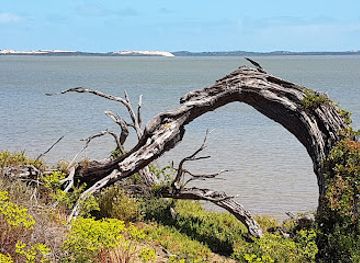
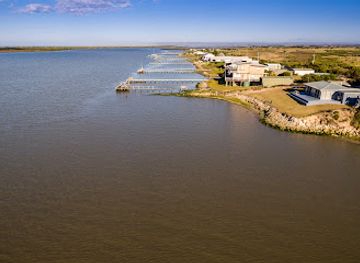
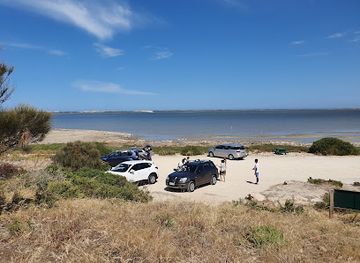
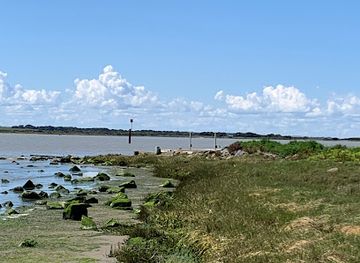
The Coorong's attractions are primarily landscapes and outdoor experiences rather than a concentration of enclosed visitor sites. Coorong National Park protects the lagoon, the Younghusband Peninsula, coastal dunes, saltmarsh, shrubland and wetlands, offering opportunities for birdwatching, photography, walking, kayaking and fishing where regulations permit. The Murray Mouth provides a particularly significant setting, where the Murray River meets the Southern Ocean through a shifting estuarine environment. Lookouts and short walking areas near the lagoon reveal the contrast between open water, low islands and the ocean barrier. Meningie provides useful local interpretation and services, while the surrounding district offers country roads, farming scenery and access points to the northern lagoon. Further south, the park becomes more remote and self-sufficient travel is essential; authorised four-wheel-drive routes and campsites can provide access to beaches and less developed landscapes, subject to conditions. Cultural experiences led by Ngarrindjeri knowledge holders offer an important way to understand the region beyond its scenery. Visitors should check current park notices before departure, since water levels, storm damage, fire, flooding and seasonal management can affect access.
-
Tourist attraction
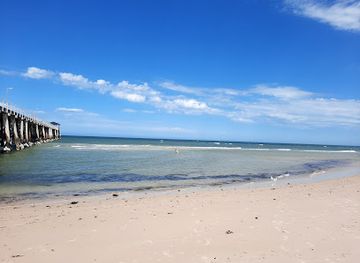
Coonalpyn Silo Mural
Discover the towering Coonalpyn Silo Mural: a vibrant roadside attraction showcasing local children and revitalizing the heart of South Australia.
-
Tourist attraction
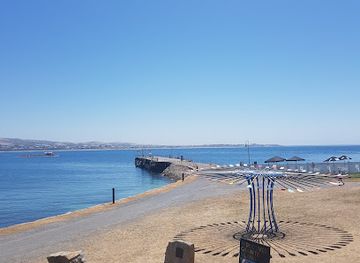
Goolwa Barrage
Explore the Goolwa Barrage: Where the River Murray meets the Coorong, offering scenic views, wildlife encounters, and insights into river management.
-
Tourist attraction
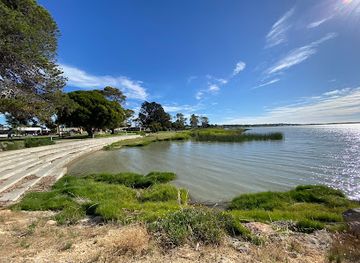
Meningie Lions Jubilee Park
Explore the beauty and tranquility of Meningie Lions Jubilee Park, a perfect getaway featuring lush landscapes and stunning views of Lake Albert.
-
Tour operator
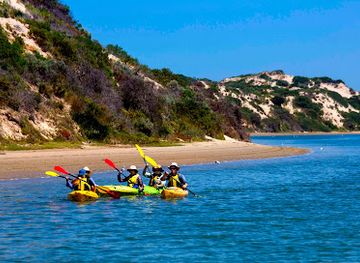
Canoe the Coorong
Discover the breathtaking beauty of South Australia's Coorong with Canoe the Coorong, a unique paddling adventure through nature's paradise.
Best landmarks in Coorong
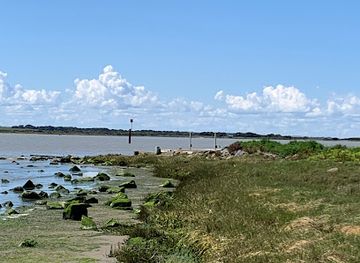
The Murray Mouth is the Coorong's defining geographical landmark: a shifting opening where the Murray River reaches the Southern Ocean between the mainland and the Younghusband Peninsula. Its shape and navigability change with river flows, tides, wind and sand movement, making it a living landscape rather than a fixed monument. The long, narrow Younghusband Peninsula is another major landmark, forming the ocean-facing barrier that separates the lagoon from the Southern Ocean and carrying dunes, beaches and coastal vegetation. The Coorong lagoon itself is the region's great visual feature, extending through a chain of shallow waters and wetlands framed by low shores and wide skies. Meningie's Pink Lake, known locally as Lake Albert, lies beside the town and forms part of the interconnected lower Murray landscape, although its colour varies with conditions and should not be treated as constant. Across the region, shell middens and other Aboriginal archaeological places are significant cultural landmarks, but their locations and access require respect and protection rather than casual sightseeing.
-
National park
Coorong National Park
Explore the breathtaking landscapes, rich biodiversity, and cultural heritage of Coorong National Park, a must-visit destination in South Australia.
-
Tourist attraction
Coonalpyn Silo Mural
Discover the captivating Coonalpyn Silo Mural, where art and community spirit converge in vibrant colors and rich narratives.
-
Tourist attraction
Goolwa Barrage
Experience the serene beauty and diverse wildlife of Goolwa Barrage, a must-visit destination for nature lovers and outdoor enthusiasts in South Australia.
-
Vista point
Murray Mouth Lookout
Experience breathtaking views at Murray Mouth Lookout, where the Murray River meets the Southern Ocean in South Australia.


Explore Coorong on the map
Plan your trip on one map. See where the top cities, national parks and sights are, and book hotels and experiences in a few clicks.
Best hotels in Coorong
Best restaurants in Coorong
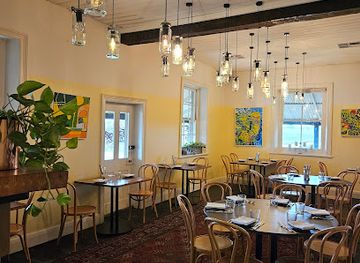
Dining in the Coorong is centred on country cafés, bakeries, pubs, roadhouse-style stops and community facilities rather than a large restaurant scene. Meningie is the principal place to seek meals and provisions, with the wider district drawing on South Australian farm produce, locally sourced meat, dairy products, baked goods and seasonal fruit. Seafood and freshwater or estuarine food are part of the region's broader identity, although availability, licensing and sustainability conditions vary and visitors should not assume that every catch is locally landed or legally available. Country pubs provide familiar Australian meals and a social setting, while cafés are useful for breakfast, coffee and supplies during a road journey. Farmers' markets and small producers, when operating, may offer preserves, baked goods and regional produce, but schedules are changeable. Outside the towns, food options are sparse, so campers and travellers exploring the national park should carry adequate provisions and water rather than relying on finding a meal en route.
-
Asian Fusion
The Salopian Inn
Discover exquisite Asian Fusion cuisine at The Salopian Inn in McLaren Vale, where local flavors meet innovative culinary techniques.
-
National park
Coorong National Park
Experience the breathtaking beauty of Coorong National Park: a haven for wildlife enthusiasts and nature lovers in South Australia.
-
Cafe
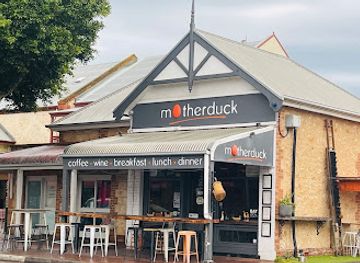
motherduck
Discover the charm of Motherduck Cafe in Goolwa - where modern Australian cuisine meets exceptional coffee in a cozy setting.
-
Restaurant
Bombora on the river
Discover Bombora on the River: A culinary delight with stunning views in Goolwa's scenic landscape.
Best bars in Coorong
Evening life in the Coorong is low-key and concentrated in country pubs, clubs, cafés and accommodation venues in Meningie and other small settlements rather than dedicated nightclub districts. A pub meal, a quiet drink and conversation are more typical than late-night entertainment, while community events and occasional live music provide a social focus when scheduled. Travellers staying near the national park often spend the evening outdoors, watching the changing light over the lagoon or preparing food at camp, subject to weather and fire restrictions. There are no grounds to expect continuous late-night services in remote areas, and taxis or rideshare coverage should not be assumed. Drink-driving is particularly hazardous on long rural roads, and alcohol should never be combined with swimming, boating, four-wheel-drive travel or other activities requiring alertness.
-
Asian Fusion
The Salopian Inn
Discover the vibrant flavors of Asian Fusion at The Salopian Inn, McLaren Vale's culinary treasure, where every dish tells a story.
-
National park
Coorong National Park
Explore the natural wonders of Coorong National Park, a breathtaking destination filled with diverse wildlife, stunning landscapes, and rich cultural heritage.
-
Cafe
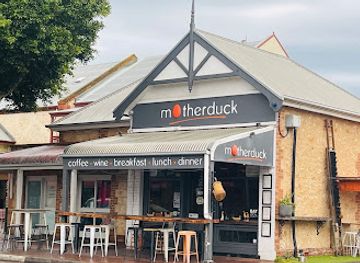
motherduck
Experience the vibrant flavors of modern Australian cuisine at Motherduck Cafe in Goolwa, a must-visit for coffee lovers and breakfast enthusiasts.
-
Restaurant
Bombora on the river
Discover the flavors of South Australia at Bombora on the River, where delicious cuisine meets breathtaking waterfront views.

Best nightclubs in Coorong
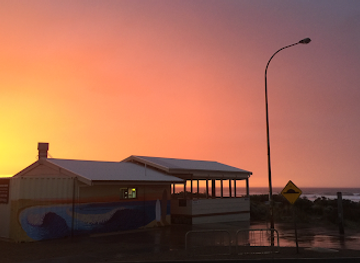
Evening life in the Coorong is low-key and concentrated in country pubs, clubs, cafés and accommodation venues in Meningie and other small settlements rather than dedicated nightclub districts. A pub meal, a quiet drink and conversation are more typical than late-night entertainment, while community events and occasional live music provide a social focus when scheduled. Travellers staying near the national park often spend the evening outdoors, watching the changing light over the lagoon or preparing food at camp, subject to weather and fire restrictions. There are no grounds to expect continuous late-night services in remote areas, and taxis or rideshare coverage should not be assumed. Drink-driving is particularly hazardous on long rural roads, and alcohol should never be combined with swimming, boating, four-wheel-drive travel or other activities requiring alertness.
-
Tourist attraction
Coorong National Park
Explore the breathtaking landscapes and diverse wildlife of Coorong National Park, a natural wonder in South Australia.
-
Wine bar
Wharf Barrel Shed
Discover the charm of Wharf Barrel Shed, Goolwa's premier wine bar, featuring local wines, coffee, and live music in a stunning setting.
-
 Holiday home
Coorong Waterfront Retreat
Discover the tranquility of Coorong Waterfront Retreat, a luxurious holiday home and gateway to South Australia's stunning natural wonders.
-
Night club
Zhivago
Experience the vibrant energy of Zhivago, a premier night club in Adelaide, where unforgettable nights and lively music await.

Best shops in Coorong
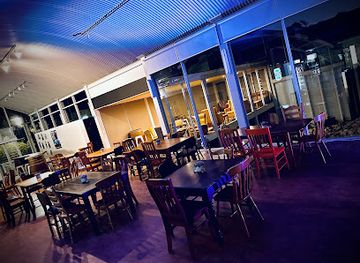
Shopping in the Coorong is practical and small-scale, with Meningie serving as the principal place for groceries, fuel, everyday supplies and locally useful services. Country shops, bakeries and cafés may stock regional produce, while farm gates, community markets and seasonal stalls can offer preserves, honey, baked goods or other South Australian products when available. Visitors seeking souvenirs should look for locally made art, photography, craftwork and books that interpret Ngarrindjeri culture or the wetland environment, buying only from legitimate sellers and respecting cultural intellectual property. The region is not a major fashion or luxury retail destination, and larger selections of clothing, specialist outdoor equipment and gifts are generally found in Adelaide or larger regional centres outside the Coorong. Stock up before entering remote park areas, and remember that shells, Aboriginal cultural material, native plants and other natural objects must not be collected.
-
National park
Coorong National Park
Explore the stunning landscapes and rich biodiversity of Coorong National Park, a true natural gem in South Australia, perfect for adventure and relaxation.
-
Cafe
Finniss General Store
Discover the charm of Finniss General Store, a cozy cafe offering delicious local produce and a warm atmosphere in the heart of South Australia.
-
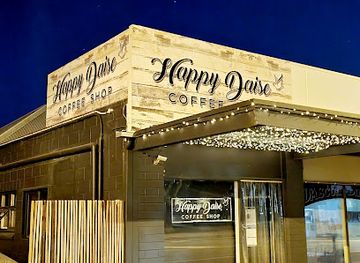
Coffee shop
Happy Daise Coffee
Experience the cozy charm of Happy Daise Coffee in Meningie, where exceptional brews and a warm atmosphere await every traveler.
-
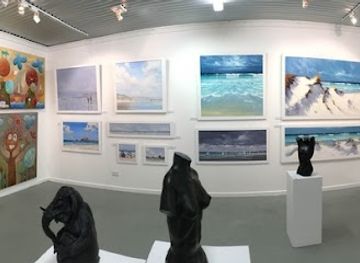
Art gallery
Artworx Gallery
Explore Artworx Gallery in Goolwa for a captivating blend of local art, unique gifts, and a glimpse into South Australia's vibrant creative scene.
Get your free copy of our complete guide to Coorong, delivered straight to you.
Everything on this page, from attractions and restaurants to essentials and local phrases, in one PDF you can read offline, print or share.
Already have an account? Sign in
Your Coorong guide is ready.
We'll send it to · Not you? Sign out

Getting your guide ready…
We are putting together a fresh copy of the Coorong guide. This can take up to a minute.
This can take a few moments. If your browser asks, choose Allow so the download can start. You'll find the guide in your Downloads folder.
Nothing happened? Download it again
Sorry, the guide is taking longer than usual. Please try again in a minute, or get it by email instead.
Coorong essentials
Currency and Payment
Safety
Emergency Situations
Do's and Don'ts
Local Tips
From Eve
Local phrases worth knowing
You don't need to get them perfect. A few words go a long way, and locals appreciate the effort.
Basics
| English | Local | Say it |
|---|---|---|
| Hello | G'day | [guh-day] |
| Goodbye | See ya | [see yah] |
| Yes | Yeah | [yeh] |
| No | Nah | [nah] |
| Please/You're welcome | No worries | [no wurr-ees] |
| Thank you | Thanks mate | [thanks mate] |
| Excuse me/Sorry | Sorry | [sorry] |
| How are you? | How's it going? | [how's it goin'?] |
| Fine. And you? | Good, and you? | [good, an' you?] |
| Do you speak English? | Do ya speak English? | [do yah speak English?] |
| I don't understand | I don't get it | [I don't get it] |
Eating & Drinking
| English | Local | Say it |
|---|---|---|
| I'd like to see the menu, please | Can I see the menu, please? | [can I see the menu, please?] |
| I don't eat meat | I’m a vegetarian | [I'm a vegetarian] |
| Cheers! | Cheers! | [cheers] |
| I would like to pay, please | Can I pay, please? | [can I pay, please?] |
Emergencies
| English | Local | Say it |
|---|---|---|
| Help! | Help! | [help] |
| Go away! | Leave me alone! | [leave me alone!] |
| Call the Police! | Call the coppers! | [call the coppers!] |
| Call a doctor! | Get a doctor! | [get a doctor!] |
| I'm lost | I'm lost | [I'm lost] |
| I'm ill | I'm sick | [I'm sick] |
Shopping
| English | Local | Say it |
|---|---|---|
| I'd like to buy... | I want to buy... | [I want to buy...] |
| I'm just looking | Just browsing | [just browsing] |
| How much is it? | How much? | [how much?] |
| That's too expensive | That's a bit pricey | [that's a bit pricey] |
| Can you lower the price? | Can you drop the price? | [can you drop the price?] |
Time & Numbers
| English | Local | Say it |
|---|---|---|
| What time is it? | What’s the time? | [what’s the time?] |
| It's one o'clock | It's 1 o'clock | [it's 1 o'clock] |
| Half past (10) | Half past 10 | [half past 10] |
| Morning | Morning | [morning] |
| Afternoon | Arvo | [arvo] |
| Evening | Evening | [evening] |
| Yesterday | Yesterday | [yesterday] |
| Today | Today | [today] |
| Tomorrow | Tomorrow | [tomorrow] |
| 1 | One | [one] |
| 2 | Two | [two] |
| 3 | Three | [three] |
| 4 | Four | [four] |
| 5 | Five | [five] |
| 6 | Six | [six] |
| 7 | Seven | [seven] |
| 8 | Eight | [eight] |
| 9 | Nine | [nine] |
| 10 | Ten | [ten] |
Transport & Directions
| English | Local | Say it |
|---|---|---|
| Where's a/the...? | Where's the...? | [where's the...?] |
| What's the address? | What’s the address? | [what’s the address?] |
| Can you show me (on the map)? | Can you show me on the map? | [can you show me on the map?] |
| When's the next (bus)? | When's the next bus? | [when's the next bus?] |
| A ticket (to ....) | A ticket to ... | [a ticket to ...] |
History of Coorong
Ngarrindjeri Country and Ancient Wetland Heritage
The Coorong lies within the cultural landscape of the Ngarrindjeri people, whose communities have maintained enduring connections with the lagoon, the Murray Mouth, the ocean, wetlands and surrounding country. Archaeological sites, including shell middens and former occupation places, demonstrate a history extending over many thousands of years. These records reflect sophisticated knowledge of seasonal resources, waterways and coastal environments. Cultural knowledge remains living and contemporary rather than merely archaeological, and visitors should understand that some places are sensitive or restricted and must not be entered, photographed or disturbed without appropriate permission.
European Exploration and the Murray Mouth
Matthew Flinders charted parts of the South Australian coast in 1802, during the early period of British exploration of the region. In 1830 Charles Sturt travelled down the Murray River and reached the lower river, observing the difficulty of connecting the inland waterway with the sea through the shallow, shifting Murray Mouth. The mouth's bar and surrounding lagoons later became important to navigation, mapping and scientific observation, while also demonstrating the environmental complexity that has always shaped movement through the Coorong.
Pastoral Settlement and Rural Expansion
During the nineteenth century, European pastoral settlement spread across the surrounding limestone plains and mallee country. Sheep grazing, grain production and small-scale farming became important to the local economy, supported by wells, roads and later rail and motor transport. Settlement remained comparatively sparse because water, salinity, sand and distance imposed practical limits. Towns such as Meningie developed as service and trading centres for surrounding properties, while the lagoon and coastal environment continued to support fishing and other local livelihoods.
Transport, Coastal Trade and Changing Connections
The lower Murray and Coorong were once part of a wider transport story linking inland river communities with the South Australian coast. Riverboat traffic reached the lower Murray, although the Murray Mouth itself was a persistent barrier to through navigation. Roads and later improvements to the Princes Highway shifted the region's practical connections towards overland travel. These changes helped consolidate Meningie and other settlements as service points and made the Coorong more accessible to visitors, without removing the distances that still define travel through the region.
Conservation and the Coorong National Park
Recognition of the lagoon and coastal barrier's ecological importance led to the establishment and expansion of protected areas, including the Coorong National Park. Conservation has focused on wetlands, dunes, coastal vegetation and habitat for resident and migratory birds. The park's management also reflects the challenges of salinity, altered freshwater flows, erosion, invasive species, fire and visitor pressure. Its significance is therefore both scenic and scientific: the Coorong is a large working example of a dynamic estuarine and coastal system rather than a static lake.
Environmental Change and Ngarrindjeri Advocacy
In recent decades, the Coorong has become a prominent example of the links between river management, climate variability and wetland health. Reduced water flows, drought, high salinity and changing conditions at the Murray Mouth have affected habitats, fish, vegetation and bird populations. Ngarrindjeri organisations and knowledge holders have played an increasingly important role in cultural heritage protection, environmental stewardship and decisions about the region's future. Contemporary conservation is consequently shaped by both ecological research and the continuing authority of Traditional Owners.
Coorong in Photos
Browse through our photo collection highlighting the charm and character of the destination.
Neighbouring regions of Coorong
The closest regions to Coorong, if you have time for more than one.
-

-

-

-
-


Swipe for more regions
Explore more

Explore more of Australia
Discover the diverse landscapes, vibrant cities, and unique wildlife of Australia, a captivating destination offering endless adventures and unforgettable experiences.
Explore Australia