

Free High Country Travel Guide & Mobile App
Explore High Country with free travel guides. Discover regional history, expert tips, proposed trips, and audio guides on web or mobile app.


Explore Victoria's High Country for alpine walks, gold-rush towns, cycling, snow resorts, orchards, local wine and broad mountain landscapes.
Read more about High Country
When is the best time to visit High Country?
Best: December–February · 22–25°C| Month | High (°C) | Rainfall (mm) |
|---|---|---|
| January (best) | 24 | 80 |
| February (best) | 25 | 71 |
| March | 22 | 81 |
| April | 18 | 91 |
| May | 14 | 100 |
| June | 10 | 110 |
| July | 10 | 121 |
| August | 10 | 110 |
| September | 14 | 100 |
| October | 17 | 91 |
| November | 20 | 80 |
| December (best) | 22 | 70 |
Getting to and around High Country
How to get there
Transportation
Destinations in High Country
Resorts, valleys and scenic spots worth a trip of their own.
-

-


Swipe for more destinations
Best attractions in High Country
The High Country's attractions range from gold-rush heritage to large, protected mountain landscapes. Beechworth and Yackandandah provide walkable historic centres, museums, former government buildings and stories of mining and colonial law, while Bright, Myrtleford and the surrounding Ovens Valley are strong bases for cycling, gardens, orchards and food trails. The Murray to Mountains Rail Trail links several settlements along former railway corridors and can be tackled in sections. In the mountains, Mount Buffalo National Park combines granite formations, waterfalls, forests and high viewpoints, while the Alpine National Park offers extensive walking, wildlife watching and remote scenery. Mount Buller, Falls Creek and Mount Hotham add resort infrastructure and winter snow activities, with summer hiking and cycling extending their use beyond the ski season. The Kiewa Valley and Mount Beauty provide access towards the Bogong High Plains, and the eastern district around Omeo has a more open, pastoral and highland character. Visitors should allow for changing access, fire restrictions, snow conditions and long distances between attractions.
-
Tourist attraction
Currumbin Wildlife Sanctuary
Experience the beauty of Australia's wildlife at Currumbin Wildlife Sanctuary, a perfect blend of adventure and conservation in Queensland.
-
Tourist attraction
Old Parliament House
Explore the halls where Australian democracy matured, from pivotal debates to nation-shaping decisions, at Canberra's Old Parliament House.
-
Tourist attraction
Tamborine Rainforest Skywalk
Explore the breathtaking Tamborine Rainforest Skywalk, where nature's beauty and ecological wonders await in Queensland's lush rainforest.
-
Tourist attraction
Kosciuszko National Park
Discover Australia's alpine heart: Kosciuszko National Park offers year-round adventure, stunning scenery, and rich history in the Snowy Mountains.


Best landmarks in High Country
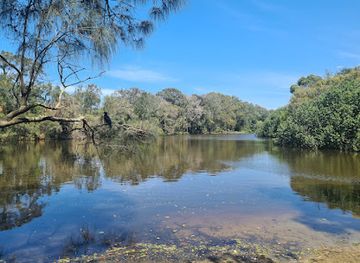
Beechworth's courthouse precinct, gaol, former government buildings and substantial nineteenth-century streetscape are among the clearest architectural reminders of the gold-rush era and the region's colonial legal history. Yackandandah's compact heritage centre retains the scale of a smaller mining settlement, while historic stone and brick buildings recur in other valley towns. In the natural landscape, Mount Buffalo's distinctive granite tors, including the prominent formations around the plateau, form one of the region's best-known visual signatures. The high ridges around Mount Feathertop and the Bogong High Plains convey the scale of the Victorian Alps, while alpine huts preserve evidence of cattlemen's seasonal use of mountain country. Around Omeo, open uplands and old pastoral routes provide a different landmark landscape from the forested western ranges. These places matter not simply as viewpoints, but as evidence of geological processes, Aboriginal Country, pastoral movement, mining, conservation and the region's continuing relationship with difficult terrain.
-
 Park
Hyde Park
Discover Hyde Park, Sydney's iconic urban park featuring lush greenery, historic monuments, and vibrant cultural events in the heart of the city.
-
Scenic spot
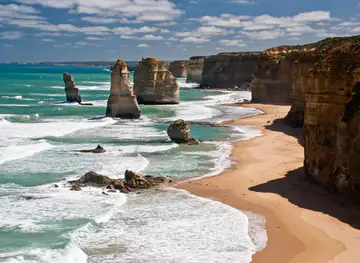
Twelve Apostles
Discover the breathtaking Twelve Apostles, a stunning collection of limestone stacks along Australia's Great Ocean Road, perfect for nature lovers and photographers.
-
Museum
Sovereign Hill
Explore the Gold Rush era at Sovereign Hill, a living museum in Victoria, where history comes alive with gold panning, costumed characters, and authentic shops.
-
War memorial
Shrine of Remembrance
Explore Melbourne's Shrine of Remembrance, a stunning war memorial that honors Australian servicemen and women amidst serene gardens and rich history.


Explore High Country on the map
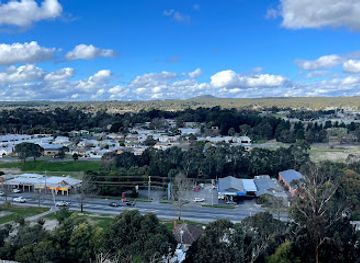
Plan your trip on one map. See where the top cities, national parks and sights are, and book hotels and experiences in a few clicks.
Best hotels in High Country
Best restaurants in High Country
Dining in the High Country reflects the contrast between productive valleys, historic townships and alpine resorts. Apples, pears, berries and other orchard produce are prominent around the Ovens and King valleys, while farm shops and cellar doors offer preserves, cheeses, wine and seasonal goods. Trout, local meats and regional dairy products appear on menus, alongside contemporary Australian cooking in restaurants, cafés and country inns. Beechworth, Bright, Mansfield, Mount Beauty and Myrtleford provide the broadest choice, from breakfast cafés and bakeries to more ambitious dining rooms, while resort restaurants concentrate on convenient meals for visitors staying in the mountains. Craft breweries and wine producers contribute to the drinks scene, but the region is not a single food style: goldfield towns, orchard districts and alpine resorts each have their own rhythm and produce. Farmers' markets and farm-gate sales are often seasonal, so check local arrangements before planning a meal around a particular producer.
-
Restaurant
Mjølner
Experience the rich flavors of Nordic cuisine at Mjølner in Melbourne – where tradition meets modern culinary art.
-
Family-friendly
The Red Stag Restaurant
Experience delightful family dining at The Red Stag Restaurant in Eurobin, Victoria – where great food meets fun for all ages!
-
Restaurant
Lake House
Discover Lake House in Daylesford - where exquisite cuisine meets serene lakeside relaxation amidst beautiful surroundings.
-
Modern Australian
Circa 1876 Restaurant The Convent Hunter Valley
Experience exquisite modern Australian cuisine amidst breathtaking vineyard views at Circa 1876 Restaurant in Hunter Valley.


Best bars in High Country
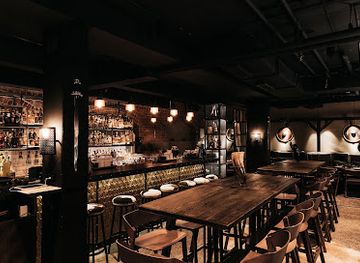
Evenings in the High Country are generally centred on pubs, wine bars, breweries, restaurants and live music rather than a large nightclub circuit. Bright, Beechworth, Mansfield and other larger towns offer historic hotel bars and contemporary venues where visitors can sample regional beer and wine, while smaller communities tend to have a quieter pub-based social life. Alpine resorts become busier after dark during the ski season, with bars, casual dining and occasional live entertainment serving overnight guests, although the atmosphere varies outside peak periods. Some breweries and cellar doors provide daytime tastings rather than late-night nightlife. Designated drivers, taxi availability and long distances matter in rural districts, and visitors should avoid treating winding mountain roads as suitable for driving after drinking.
-
Bar
Wesley Anne
Experience the vibrant atmosphere of Wesley Anne, a premier bar and live music venue in Northcote, offering delicious food and unforgettable entertainment.
-
Grill
Two Hands Rooftop Bar & Beer Garden Eatery
Discover the vibrant flavors and stunning views at Two Hands Rooftop Bar & Beer Garden Eatery, where every meal is a celebration of taste.
-
Pub
The Pig & Whistle Tavern Main Ridge
Experience the charm of The Pig & Whistle Tavern in Main Ridge, where delicious food, local wines, and warm hospitality await every visitor.
-
Cocktail bar
Antique Bar
Experience the charm of Antique Bar in Elsternwick, where creative cocktails and a vibrant atmosphere await every visitor.


Best nightclubs in High Country
Evenings in the High Country are generally centred on pubs, wine bars, breweries, restaurants and live music rather than a large nightclub circuit. Bright, Beechworth, Mansfield and other larger towns offer historic hotel bars and contemporary venues where visitors can sample regional beer and wine, while smaller communities tend to have a quieter pub-based social life. Alpine resorts become busier after dark during the ski season, with bars, casual dining and occasional live entertainment serving overnight guests, although the atmosphere varies outside peak periods. Some breweries and cellar doors provide daytime tastings rather than late-night nightlife. Designated drivers, taxi availability and long distances matter in rural districts, and visitors should avoid treating winding mountain roads as suitable for driving after drinking.
-
Night club
Cocktails Nightclub
Discover the electrifying atmosphere of Cocktails Nightclub in Surfers Paradise, featuring lively music, creative cocktails, and an unforgettable nightlife experience.
-
Disco club
Club Retro
Discover Melbourne's dynamic nightlife at Club Retro, a lively disco club offering great food, drinks, and unforgettable dance experiences.
-
Disco club
New Guernica
Discover the pulsating nightlife of Melbourne at New Guernica, a premier disco club offering an unforgettable party experience.
-
Disco club
Lost Kingdom Nightclub
Discover the ultimate nightlife experience at Lost Kingdom Nightclub in Surfers Paradise, where music, dance, and cocktails come together for an unforgettable evening.



Best shops in High Country
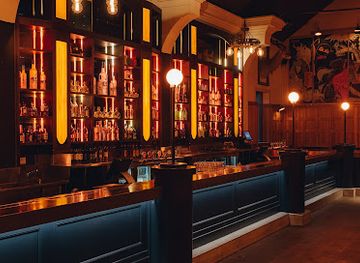
Shopping in the High Country is rooted in small town centres, local produce and practical outdoor life rather than extensive urban retail. Bright, Beechworth, Mansfield, Myrtleford and Yackandandah have independent shops, galleries, bookshops, cafés and food retailers, while larger supermarkets and service businesses are concentrated in the principal towns. Farm-gate outlets and regional food stores are good places to look for apples, pears, preserves, honey, cheese, wine, beer and other seasonal products, although individual availability changes through the year. Heritage towns also support antiques, locally made art, pottery, textiles and small craft businesses, and alpine resorts sell specialist clothing and equipment. Markets and community events can add handmade goods and produce, but schedules are seasonal and should be checked locally. A useful souvenir is often an edible regional product or a piece by a local maker rather than generic mountain-themed merchandise.
-
Shopping mall
Chadstone - The Fashion Capital
Discover Chadstone, Australia's premier shopping destination, featuring over 500 stores, exquisite dining, and vibrant entertainment options all in one place.
-
Department store
Target Shepparton
Explore Target Shepparton for a diverse shopping experience, featuring clothing, homewares, and more in the heart of Victoria.
-
Department store
Target Alice Springs
Explore Target Alice Springs for a diverse shopping experience featuring clothing, homewares, and more in the heart of the NT.
-
Gift shop
Bits of Australia
Explore the essence of Australia at Bits of Australia, where authentic Aboriginal art and unique gifts await every traveler.


Get your free copy of our complete guide to High Country, delivered straight to you.
Everything on this page, from attractions and restaurants to essentials and local phrases, in one PDF you can read offline, print or share.
Already have an account? Sign in
Your High Country guide is ready.
We'll send it to · Not you? Sign out

Getting your guide ready…
We are putting together a fresh copy of the High Country guide. This can take up to a minute.
This can take a few moments. If your browser asks, choose Allow so the download can start. You'll find the guide in your Downloads folder.
Nothing happened? Download it again
Sorry, the guide is taking longer than usual. Please try again in a minute, or get it by email instead.
High Country essentials
Currency and Payment
Safety
Emergency Situations
Do's and Don'ts
Local Tips
From Eve
Local phrases worth knowing
You don't need to get them perfect. A few words go a long way, and locals appreciate the effort.
Basics
| English | Local | Say it |
|---|---|---|
| Hello | G'day | [g'day] |
| Goodbye | See ya | [see ya] |
| Yes | Yeah | [yeah] |
| No | Nah | [nah] |
| Please/You're welcome | No worries | [no worries] |
| Thank you | Thanks, mate | [thanks, mate] |
| Excuse me/Sorry | Sorry, mate | [sorry, mate] |
| How are you? | How ya goin'? | [how ya goin'?] |
| Fine. And you? | Good, mate. You? | [good, mate. you?] |
| Do you speak English? | Do ya speak English? | [do ya speak English?] |
| I don't understand | I dunno what ya mean | [I dunno what ya mean] |
Eating & Drinking
| English | Local | Say it |
|---|---|---|
| I'd like to see the menu, please | Can I have a look at the menu, please? | [can I have a look at the menu, please?] |
| I don't eat meat | I’m a vego | [I'm a vego] |
| Cheers! | Cheers! | [cheers!] |
| I would like to pay, please | Can I settle the bill, please? | [can I settle the bill, please?] |
Emergencies
| English | Local | Say it |
|---|---|---|
| Help! | Help! | [help!] |
| Go away! | Get lost! | [get lost!] |
| Call the Police! | Call the coppers! | [call the coppers!] |
| Call a doctor! | Get a doc! | [get a doc!] |
| I'm lost | I’m turned around | [I’m turned around] |
| I'm ill | I’m crook | [I’m crook] |
Shopping
| English | Local | Say it |
|---|---|---|
| I'd like to buy... | I wanna buy... | [I wanna buy...] |
| I'm just looking | Just looking, thanks | [just looking, thanks] |
| How much is it? | How much is this? | [how much is this?] |
| That's too expensive | That’s a bit pricey | [that’s a bit pricey] |
| Can you lower the price? | Can ya knock a few bucks off? | [can ya knock a few bucks off?] |
Time & Numbers
| English | Local | Say it |
|---|---|---|
| What time is it? | What’s the time? | [what’s the time?] |
| It's one o'clock | It’s one o’clock | [it’s one o’clock] |
| Half past (10) | Half past ten | [half past ten] |
| Morning | Morning | [morning] |
| Afternoon | Arvo | [arvo] |
| Evening | Evening | [evening] |
| Yesterday | Yesterday | [yesterday] |
| Today | Today | [today] |
| Tomorrow | Tomorrow | [tomorrow] |
| 1 | One | [one] |
| 2 | Two | [two] |
| 3 | Three | [three] |
| 4 | Four | [four] |
| 5 | Five | [five] |
| 6 | Six | [six] |
| 7 | Seven | [seven] |
| 8 | Eight | [eight] |
| 9 | Nine | [nine] |
| 10 | Ten | [ten] |
Transport & Directions
| English | Local | Say it |
|---|---|---|
| Where's a/the...? | Where's the...? | [where's the...?] |
| What's the address? | What’s the address? | [what’s the address?] |
| Can you show me (on the map)? | Can ya point it out on the map? | [can ya point it out on the map?] |
| When's the next (bus)? | When’s the next bus? | [when’s the next bus?] |
| A ticket (to ....) | A ticket to... | [a ticket to...] |
History of High Country
Aboriginal Country and Continuing Cultural Connections
The High Country lies across the traditional lands of several Aboriginal peoples, including the Taungurung, Dhudhuroa, Waywurru and Gunaikurnai, with boundaries and cultural relationships varying across the region. Rivers, mountain ranges, alpine plains and seasonal travel routes formed part of longstanding systems of knowledge, ceremony and resource use. European settlement caused dispossession and profound disruption, but Aboriginal communities and organisations continue to maintain cultural connections and contribute to interpretation, land management and contemporary regional life. Visitors should understand that the landscape has a history far older than the gold towns and pastoral properties that dominate many tourist narratives.
Pastoral Expansion and the High Plains
European pastoralists moved into north-eastern Victoria during the nineteenth century, establishing runs in valleys and using higher country for seasonal grazing. The distinctive cattlemen's tradition associated with the alpine huts developed from this pastoral economy rather than from a single isolated frontier story. Huts, stock routes and mountain crossings remain visible reminders of the work required to move cattle through difficult terrain. Pastoral expansion also brought conflict, environmental change and the displacement of Aboriginal communities. Today, parts of the high plains are protected, while grazing continues in carefully regulated areas outside conservation reserves.
Gold Rushes and Chinese Mining Communities
Gold discoveries at places including Beechworth, Yackandandah and the surrounding Ovens and Buckland districts transformed the region from the 1850s. Miners, shopkeepers, farmers and officials arrived rapidly, creating roads, hotels, banks, courts and substantial public buildings. Chinese miners and business owners formed an important part of the goldfields' population and economy, although they faced discriminatory laws and violence. Mining left gullies, water races and altered hillsides across the landscape. The surviving streetscapes of Beechworth and Yackandandah, together with local museum collections and historic mine sites, preserve the scale and complexity of this period.
The Kelly Era and Law on the Goldfields
North-eastern Victoria became associated internationally with the Kelly gang, whose activities in the 1870s unfolded amid tensions involving selectors, police, landholding and colonial authority. Beechworth was a significant legal and administrative centre in the story, and Ned Kelly was tried and imprisoned there before his execution in Melbourne in 1880. The subject has generated competing interpretations and strong regional identities, so it is best approached through documented sites, court records and museums rather than folklore alone. The Kelly narrative is important, but it forms only one part of the High Country's broader social history.
Railways, Timber and Agricultural Change
Railways reached the north-east through branches from the main line, connecting goldfield and agricultural communities with Wangaratta and wider Victorian markets. Timber cutting became significant in the mountain foothills, while orchards, dairying and grazing developed in the valleys. Rail access supported the movement of fruit, livestock, timber and people, and its later decline helped create the network of rail trails now used by walkers and cyclists. The Murray to Mountains Rail Trail follows former railway corridors through several valley settlements, making transport history part of the region's contemporary outdoor economy.
Conservation and the Creation of Alpine Parks
Concern about erosion, logging, catchment protection and the loss of alpine environments gradually strengthened protection for mountain landscapes. Mount Buffalo was proclaimed a national park in the late nineteenth century, and later conservation reserves expanded across the Victorian Alps. The Alpine National Park now protects extensive high country, although its management involves competing questions about recreation, fire, biodiversity, grazing and cultural heritage. Popular access has brought roads, lodges and ski infrastructure to selected areas, while large tracts remain remote. The region's present identity depends heavily on this long shift from extractive use towards conservation and carefully managed visitation.
Skiing, Tourism and the Modern High Country
Organised skiing developed in Victoria during the twentieth century, with Mount Buller, Falls Creek and Mount Hotham becoming major alpine resorts. Improved roads, lifts, accommodation and winter services turned the mountains into a national tourism destination, while summer walking and cycling broadened the market beyond snow sports. Valley towns adapted through hospitality, food production, heritage tourism and outdoor recreation. Snow reliability and changing climate conditions have increased the importance of four-season planning, water management and environmental stewardship. The modern High Country is therefore shaped by both its historic rural economy and a tourism industry that operates across markedly different seasons.
High Country in Photos
Browse through our photo collection highlighting the charm and character of the destination.
Neighbouring regions of High Country
The closest regions to High Country, if you have time for more than one.
-

-

-

-

-


Swipe for more regions
Explore more

Explore more of Australia
Discover the diverse landscapes, vibrant cities, and unique wildlife of Australia, a captivating destination offering endless adventures and unforgettable experiences.
Explore Australia