

Free Gippsland Travel Guide & Mobile App
Explore Gippsland with free travel guides. Discover regional history, expert tips, proposed trips, and audio guides on web or mobile app.


Discover Gippsland’s forests, Gippsland Lakes, gold-mining towns, farm produce and coastal parks across eastern Victoria.
Read more about Gippsland
When is the best time to visit Gippsland?
Best: December–February · 23–25°C| Month | High (°C) | Rainfall (mm) |
|---|---|---|
| January (best) | 25 | 50 |
| February (best) | 25 | 40 |
| March | 22 | 50 |
| April | 19 | 60 |
| May | 16 | 70 |
| June | 14 | 70 |
| July | 13 | 70 |
| August | 14 | 80 |
| September | 16 | 70 |
| October | 19 | 60 |
| November | 22 | 60 |
| December (best) | 23 | 60 |
Getting to and around Gippsland
How to get there
Transportation
Top city travel guides in Gippsland
The cities of Gippsland, and the easiest places to base yourself.

Swipe for more cities
Destinations in Gippsland
Resorts, valleys and scenic spots worth a trip of their own.
-

-

-


Swipe for more destinations
Best attractions in Gippsland
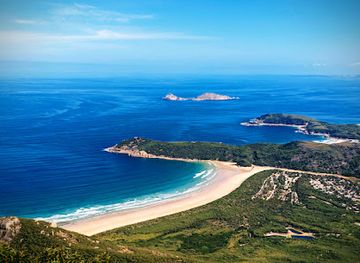
Gippsland’s attractions range from major national parks to working landscapes and historic settlements. Wilsons Promontory National Park combines beaches, granite scenery, coastal heath and wildlife with a substantial network of walks, while Tarra-Bulga National Park offers a very different experience in cool rainforest and fern gullies. The Gippsland Lakes support boating, fishing, kayaking and birdwatching around Lakes Entrance, Paynesville, Metung and the surrounding waterways. In the mountains, Walhalla presents gold-mining heritage in a narrow forested valley, and Mount Baw Baw provides alpine recreation in winter and summer. Buchan Caves, east of Bairnsdale, is known for its limestone chambers, while former railway routes have become walking and cycling trails in several districts. Farm gates, galleries, gardens, regional museums and food producers add a quieter dimension, particularly around Warragul, Sale and the fertile western country. The appeal lies in the contrast between accessible towns and genuinely remote landscapes, rather than in one concentrated attraction precinct.
-
Tourist attraction
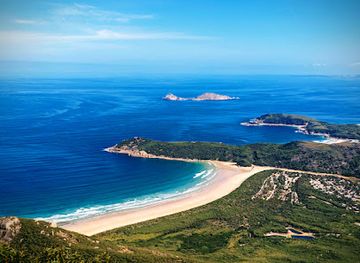
Wilsons Promontory National Park
Explore Wilsons Promontory National Park, Victoria's stunning natural retreat, featuring breathtaking landscapes, diverse wildlife, and unforgettable outdoor adventures.
-
Visitor center
Buchan Caves Reserve Visitor Centre and Ticket Office
Experience the natural beauty and geological wonders at Buchan Caves Reserve Visitor Centre, a must-see attraction in Victoria, Australia.
-
Tourist attraction
Civic Park
Discover the beauty of Civic Park in Warragul, a perfect blend of nature and community for relaxation and recreation.
-
Tourist attraction
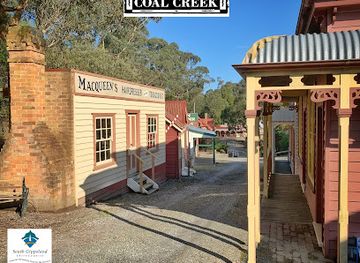
Coal Creek Community Park & Museum
Step back in time at Coal Creek Community Park & Museum, exploring a recreated 1870s-1920s coal mining village in South Gippsland.

Best landmarks in Gippsland
Wilsons Promontory’s granite headlands, especially around the southern coast, form one of Gippsland’s most recognisable natural signatures, while Ninety Mile Beach creates a long, exposed edge beside the Gippsland Lakes. The Lakes Entrance entrance channel and surrounding waterways are defining features of the coastal region, linking inland waters with Bass Strait. In the mountains, Walhalla’s steep valley, historic buildings and mine landscapes express the physical character of the goldfields. Tarra-Bulga National Park’s forested gullies and fern-lined tracks are important landmarks of the Strzelecki Ranges, and Mount Baw Baw marks the transition from settled foothills to alpine country. Sale’s historic civic and canal landscapes reflect its role on the Gippsland Plains, while Buchan Caves provides a geological landmark in East Gippsland’s limestone country. Together these places represent Gippsland’s distinctive combination of coast, water, forest, mountain and regional town architecture.
-
Tourist attraction
Nobbies Centre
Discover the breathtaking coastal views and unique wildlife at The Nobbies Centre, a must-see destination on Phillip Island, Victoria, Australia.
-
Wildlife park
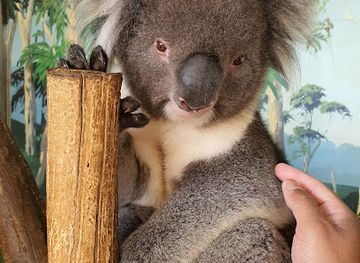
Maru Koala and Animal Park
Explore the beauty of Australian wildlife at Maru Koala and Animal Park, where adventure and conservation come together in a family-friendly setting.
-
National park
Wilsons Promontory National Park
Explore Wilsons Promontory National Park, a stunning blend of coastal beauty, diverse wildlife, and rich cultural heritage in Victoria, Australia.
-
Tourist attraction
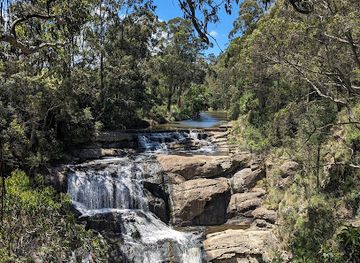
Agnes Falls
Discover the breathtaking beauty of Agnes Falls in Victoria, Australia, a tranquil escape surrounded by lush nature and stunning views.
Explore Gippsland on the map
Plan your trip on one map. See where the top cities, national parks and sights are, and book hotels and experiences in a few clicks.
Best hotels in Gippsland
Best restaurants in Gippsland
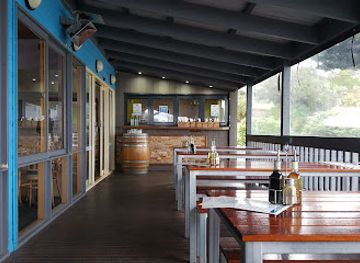
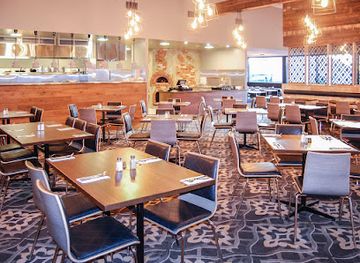
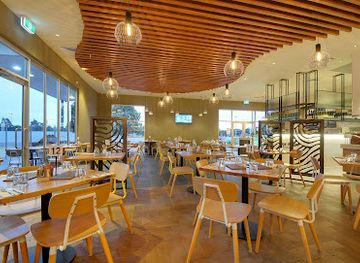
Gippsland’s dining identity is grounded in the products of its farms, forests and coast. Dairy is especially important, with milk, butter, cream and locally made cheeses appearing in farm shops, cafés and restaurant kitchens across the region. Beef, lamb, seasonal vegetables, berries, apples and other horticultural produce support a strong paddock-to-plate culture, while the Gippsland Lakes and nearby coast contribute fish and seafood where local supply and regulation permit. Country pubs and bakeries remain useful social and dining centres in inland towns, and lakeside cafés and restaurants provide the main concentration of eating places around Lakes Entrance, Paynesville and Metung. Farmers’ markets and cellar-door-style producers offer opportunities to buy regional goods directly, although market days vary. Dining is generally more dispersed and informal than in Melbourne, so visitors in rural areas should check locations and service times before setting out.
-
Cafe
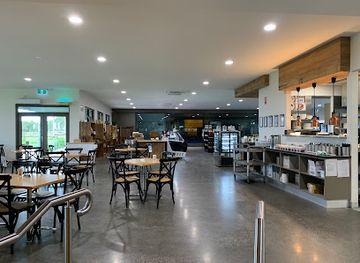
Caldermeade Farm & Cafe
Experience fresh flavors and rural charm at Caldermeade Farm & Cafe in Victoria - perfect for family outings and nature lovers alike.
-
Bar
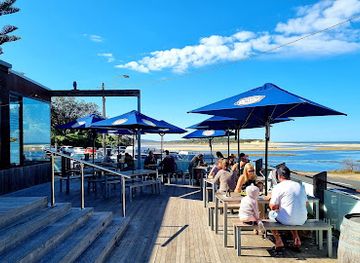
Lake Tyers Beach Tavern
Experience great food, stunning views, and vibrant live music at Lake Tyers Beach Tavern—your ultimate beachside retreat in Victoria.
-
Family-friendly
Newmason Eat Drink Relax
Discover family-friendly dining at Newmason Eat Drink Relax in Warragul - where delicious food meets fun activities for kids!
-
Restaurant
Cafe Qu Bah
Experience exquisite dining at Cafe Qu Bah in Morwell - where delicious breakfasts meet aromatic coffees in a cozy setting.
Best bars in Gippsland
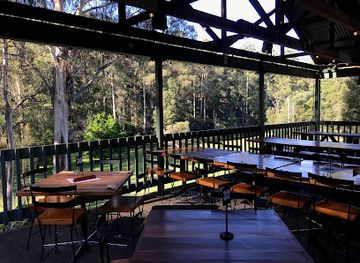
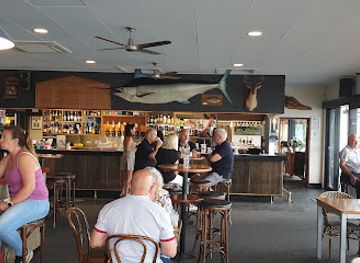
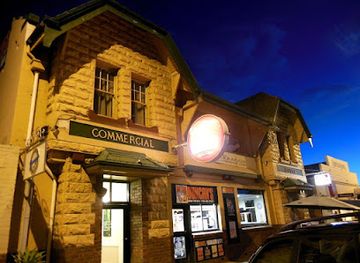
Evening life in Gippsland is shaped more by country pubs, restaurants, breweries, community events and live music than by a large nightclub circuit. Warragul, Traralgon, Sale, Bairnsdale and the holiday centres around the Gippsland Lakes offer the broadest choice of bars and evening dining, while smaller towns generally rely on historic hotels, clubs and local pubs. Lakes Entrance, Paynesville and Metung can feel busier during summer and holiday periods, but the atmosphere is seasonal rather than continuously late-night. In rural districts, evenings often centre on a meal, a regional drink or an event at a community venue. Visitors should arrange transport when leaving remote accommodation, as taxis and rideshare availability can be limited outside the larger towns.
-
Bar
Noojee Hotel
Discover the Noojee Hotel, where rustic charm meets modern comfort in the heart of Victoria's beautiful countryside.
-
Bar
Lake Tyers Beach Tavern
Discover the lively atmosphere and stunning views at Lake Tyers Beach Tavern, where delicious food meets vibrant entertainment in Victoria.
-
Bar
The Metung Hotel
Discover the charm of The Metung Hotel, where delicious cuisine meets stunning waterfront views in Victoria's scenic coastal town.
-
Pub
Yarragon Hotel
Discover the Yarragon Hotel, a cozy pub and hotel offering local cuisine and warm hospitality in the heart of Yarragon, Victoria.
Best nightclubs in Gippsland
Evening life in Gippsland is shaped more by country pubs, restaurants, breweries, community events and live music than by a large nightclub circuit. Warragul, Traralgon, Sale, Bairnsdale and the holiday centres around the Gippsland Lakes offer the broadest choice of bars and evening dining, while smaller towns generally rely on historic hotels, clubs and local pubs. Lakes Entrance, Paynesville and Metung can feel busier during summer and holiday periods, but the atmosphere is seasonal rather than continuously late-night. In rural districts, evenings often centre on a meal, a regional drink or an event at a community venue. Visitors should arrange transport when leaving remote accommodation, as taxis and rideshare availability can be limited outside the larger towns.
-
Bar
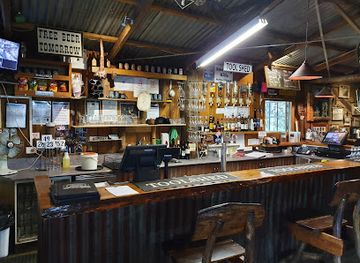
Toolshed Bar, Bistro & Cabins
Discover the enchanting Toolshed Bar, Bistro & Cabins in Noojee - a perfect blend of cozy dining, local flavors, and charming accommodation amidst nature.
-
Social club
Wonthaggi Workmens Club
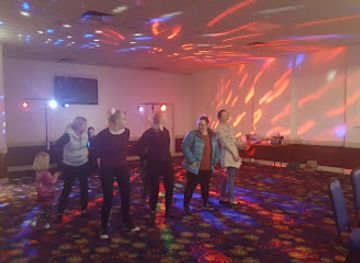
Experience community and entertainment at Wonthaggi Workmens Club, where good food, fun events, and friendly faces await every visitor.
-
Club
Wonthaggi Club
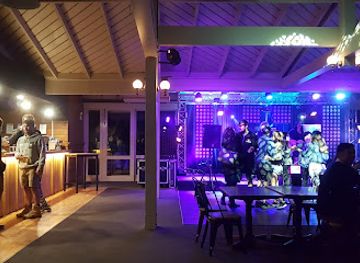
Discover the vibrant Wonthaggi Club, where local culture meets delightful dining and live entertainment in a welcoming atmosphere.
-
Pub
The Wy Yung Pub
Discover the vibrant atmosphere and delicious offerings at The Wy Yung Pub, a charming Australian pub in Victoria's scenic Wy Yung.
Best shops in Gippsland
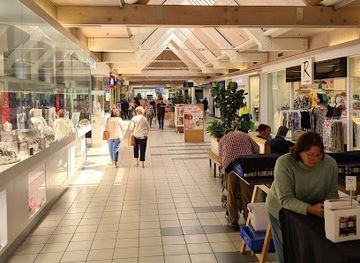
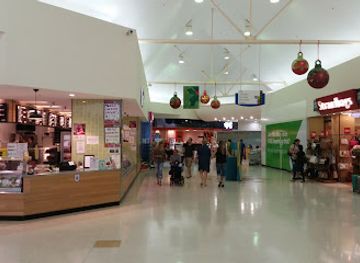
Shopping in Gippsland is centred on practical regional towns, independent high streets, farm produce and local craft rather than large-scale luxury retail. Warragul, Traralgon, Sale and Bairnsdale provide the widest range of everyday shops, cafés, galleries, booksellers and services, while Lakes Entrance, Paynesville and Metung add holiday-oriented stores and maritime products. Country markets and farm gates are good places to look for Gippsland cheese, preserves, honey, fruit, wine, baked goods and seasonal vegetables, with locations and operating days varying throughout the year. Walhalla’s small historic setting supports heritage-themed browsing, and galleries across the region showcase ceramics, textiles, paintings, woodwork and jewellery by local makers. Visitors should regard roadside stalls as informal and bring cash as well as a card, since payment facilities and stock can vary in rural areas.
-
Shopping mall
Traralgon Centre Plaza
Explore Traralgon Centre Plaza, a lively shopping mall filled with diverse stores, dining options, and community events in the heart of Traralgon.
-
Shopping mall
Mid Valley Shopping Centre
Explore the Mid Valley Shopping Centre in Morwell, a vibrant shopping destination with diverse stores and dining options for all visitors.
-
Shopping mall
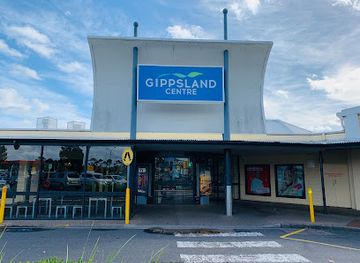
Gippsland Centre
Explore Sale's vibrant shopping scene at Gippsland Centre, where diverse retail and dining options meet family-friendly activities.
-
Clothing store
Ozmosis Sale Plaza
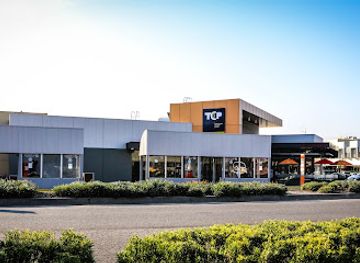
Explore Ozmosis Sale Plaza in Sale, Victoria - a vibrant shopping destination filled with trendy clothing stores and delightful dining options.
Get your free copy of our complete guide to Gippsland, delivered straight to you.
Everything on this page, from attractions and restaurants to essentials and local phrases, in one PDF you can read offline, print or share.
Already have an account? Sign in
Your Gippsland guide is ready.
We'll send it to · Not you? Sign out

Getting your guide ready…
We are putting together a fresh copy of the Gippsland guide. This can take up to a minute.
This can take a few moments. If your browser asks, choose Allow so the download can start. You'll find the guide in your Downloads folder.
Nothing happened? Download it again
Sorry, the guide is taking longer than usual. Please try again in a minute, or get it by email instead.
Gippsland essentials
Currency and Payment
Safety
Emergency Situations
Do's and Don'ts
Local Tips
From Eve
Local phrases worth knowing
You don't need to get them perfect. A few words go a long way, and locals appreciate the effort.
Basics
| English | Local | Say it |
|---|---|---|
| Hello | G'day | [g'day] |
| Goodbye | See ya | [see ya] |
| Yes | Yep | [yep] |
| No | Nah | [nah] |
| Please/You're welcome | No worries | [no worries] |
| Thank you | Thanks mate | [thanks mate] |
| Excuse me/Sorry | Sorry mate | [sorry mate] |
| How are you? | How ya going? | [how ya going] |
| Fine. And you? | Good as gold, you? | [good as gold, you?] |
| Do you speak English? | Can ya speak English? | [can ya speak English] |
| I don't understand | I don't get it | [I don't get it] |
Eating & Drinking
| English | Local | Say it |
|---|---|---|
| I'd like to see the menu, please | Can I see the menu, please? | [can I see the menu, please?] |
| I don't eat meat | I'm a vegetarian | [I'm a vegetarian] |
| Cheers! | Cheers! | [cheers] |
| I would like to pay, please | Can I get the bill, please? | [can I get the bill, please?] |
Emergencies
| English | Local | Say it |
|---|---|---|
| Help! | Help! | [help] |
| Go away! | Get lost! | [get lost] |
| Call the Police! | Call the coppers! | [call the coppers] |
| Call a doctor! | Get a doctor! | [get a doctor] |
| I'm lost | I’m a bit lost | [I'm a bit lost] |
| I'm ill | I’m not feeling well | [I'm not feeling well] |
Shopping
| English | Local | Say it |
|---|---|---|
| I'd like to buy... | I wanna buy... | [I wanna buy] |
| I'm just looking | Just having a browse | [just having a browse] |
| How much is it? | How much is this? | [how much is this?] |
| That's too expensive | That's a bit pricey | [that's a bit pricey] |
| Can you lower the price? | Can you do a better price? | [can you do a better price?] |
Time & Numbers
| English | Local | Say it |
|---|---|---|
| What time is it? | What’s the time? | [what's the time?] |
| It's one o'clock | It's one o'clock | [it's one o'clock] |
| Half past (10) | Half past ten | [half past ten] |
| Morning | Morning | [morning] |
| Afternoon | Arvo | [arvo] |
| Evening | Evening | [evening] |
| Yesterday | Yesterday | [yesterday] |
| Today | Today | [today] |
| Tomorrow | Tomorrow | [tomorrow] |
| 1 | One | [one] |
| 2 | Two | [two] |
| 3 | Three | [three] |
| 4 | Four | [four] |
| 5 | Five | [five] |
| 6 | Six | [six] |
| 7 | Seven | [seven] |
| 8 | Eight | [eight] |
| 9 | Nine | [nine] |
| 10 | Ten | [ten] |
Transport & Directions
| English | Local | Say it |
|---|---|---|
| Where's a/the...? | Where’s the...? | [where's the?] |
| What's the address? | What’s the address? | [what's the address?] |
| Can you show me (on the map)? | Can ya show me on the map? | [can ya show me on the map?] |
| When's the next (bus)? | When’s the next bus? | [when's the next bus?] |
| A ticket (to ....) | A ticket to... | [a ticket to...] |
History of Gippsland
Aboriginal Country Before European Settlement
Gippsland has supported Aboriginal communities for many thousands of years. Gunaikurnai peoples hold continuing cultural connections across much of central and eastern Gippsland, while Bunurong Country extends into western and southern parts of the region. The coast, waterways, wetlands, forests and grasslands were managed and used through sophisticated knowledge of seasons, animals and plants. Archaeological places, cultural landscapes and oral traditions provide evidence of long occupation. Visitors should understand that this history is not confined to the past: Aboriginal communities continue to care for Country and contribute to its interpretation and management.
European Exploration and the Name Gippsland
European pastoral expansion followed exploration of the region in the 1830s and 1840s. The name Gippsland honours Sir George Gipps, Governor of New South Wales, and became associated with the broad south-eastern district that was later incorporated into Victoria. Pastoralists moved into fertile plains and river valleys, while tracks through the mountains and forests connected new stations with ports and markets. This expansion brought dispossession, violence and profound disruption to Aboriginal communities, whose rights and cultural connections were not recognised by colonial authorities.
Pastoralism, Agriculture and Early Towns
Dairy farming, sheep grazing and agriculture became central to Gippsland’s colonial economy during the nineteenth century. Towns including Sale, Warragul, Bairnsdale and Traralgon developed as administrative and commercial centres, serving farms spread across a large area. The region’s rainfall and fertile soils supported butter and cheese production, while timber and livestock moved through emerging transport networks. Many rural landscapes, showgrounds, railway alignments and civic buildings still reflect this period, although modern farming has altered the scale and organisation of production.
Gold at Walhalla and the Mountain Settlements
Gold discoveries in the mountainous districts transformed Gippsland during the 1860s and 1870s. Walhalla grew in a steep valley around the Long Tunnel Mine and became one of the region’s most important goldfields, despite its difficult access and isolated position. Mining encouraged roads, tramways, hotels, churches and other services, while also bringing environmental damage and a transient population. Gold production declined, but Walhalla’s surviving streetscape, cemetery and mine-related heritage preserve an unusually tangible record of Gippsland’s mining era.
Railways, Timber and the Opening of the Interior
Railways reached Gippsland during the late nineteenth and early twentieth centuries, linking agricultural districts and growing towns with Melbourne and coastal ports. Branch lines and timber tramways penetrated forest country, carrying logs, farm goods and passengers. Timber cutting became a major industry, particularly in the ranges and eastern forests, and townships developed around mills and transport routes. Several former railway corridors have since become walking and cycling trails, while debates over forest conservation, logging and national parks continue to influence the region’s identity.
Coal and Electricity in the Latrobe Valley
The discovery and large-scale development of brown coal in the Latrobe Valley reshaped central Gippsland during the twentieth century. Open-cut mines supplied power stations that became important to Victoria’s electricity system, and towns such as Morwell and Traralgon expanded around energy, engineering and associated industries. The sector provided employment and infrastructure but also left major mine landscapes and a difficult environmental legacy. As Victoria moves towards a lower-emissions energy system, the Latrobe Valley is undergoing a significant economic and social transition.
Fire, Conservation and Regional Change
Bushfire has repeatedly influenced Gippsland’s communities, forests and economy, including the major fires of 1939, 1983, 2009 and 2019–20. Fire management, recovery and ecological change remain important parts of regional life. At the same time, conservation has protected places such as Wilsons Promontory, Tarra-Bulga and other forests, wetlands and coastal habitats. Tourism, horticulture, dairy farming, forestry, fishing, energy and conservation now coexist, sometimes uneasily, in a region adapting to climate pressures and changing industries.
Gippsland in Photos
Browse through our photo collection highlighting the charm and character of the destination.
Neighbouring regions of Gippsland
The closest regions to Gippsland, if you have time for more than one.
-

-

-

-

-


Swipe for more regions
Explore more

Explore more of Australia
Discover the diverse landscapes, vibrant cities, and unique wildlife of Australia, a captivating destination offering endless adventures and unforgettable experiences.
Explore Australia