

Fitzroy (Melbourne) Travel Guide - Free
Explore Fitzroy in Melbourne with Evendo's free guide. Find the best shops, historic streets, restaurants, and gems on web or mobile.


Fitzroy in Melbourne blends Victorian streets, First Nations history, independent galleries, Brunswick Street dining, live music and Rose Street market culture.
A Neighbourhood of Layered Character
Immediately north-east of Melbourne's city centre, Fitzroy is a compact inner-city neighbourhood where nineteenth-century terraces, former workshops and lively commercial strips sit alongside newer apartment buildings and creative spaces. Its principal streets—Brunswick Street, Gertrude Street and the Fitzroy section of Smith Street—give the area much of its public energy, while back streets reveal a more residential rhythm of narrow front gardens, painted façades and surviving bluestone details. Fitzroy was Melbourne's first municipality and retains a strong sense of its working-class and migrant past, even as cafés, galleries, restaurants and design-led shops have reshaped its economy.Read more about Fitzroy
Streets, Art and Everyday Life
History in the Streetscape
Best attractions in Fitzroy
Fitzroy's attractions are primarily urban and cultural rather than monumental. Gertrude Street offers a concentrated walk through galleries, design shops, restaurants and carefully preserved nineteenth-century façades, while Brunswick Street provides a livelier sequence of music venues, cafés, fashion retailers and street life. The Rose Street Artists' Market brings local makers, illustrators, designers and food stalls into a compact laneway setting when it is operating. The Fitzroy Town Hall is an important civic landmark, and St Mark's Anglican Church on George Street adds an ecclesiastical dimension to the neighbourhood's architectural story. Visitors interested in contemporary art can explore exhibition spaces such as the Centre for Contemporary Photography, while the Fitzroy Swimming Pool on Alexandra Parade reflects the area's long tradition of public recreation. Street art, painted shopfronts, small galleries and the changing façades of former workshops reward unhurried walking between the main commercial strips.
-
Tourist attraction
Melbourne Museum
Discover the rich tapestry of Australia's history and culture at Melbourne Museum, a must-visit destination for all travelers.
10 min walk · 0.8 km from neighbourhood centre
-
Park
Fitzroy Gardens
Discover the enchanting Fitzroy Gardens, a lush green retreat in Melbourne featuring beautiful landscapes, historic landmarks, and serene picnic spots.
5 min drive · 1.6 km from neighbourhood centre
-
Tourist attraction
Edinburgh Gardens
Escape to Melbourne's Edinburgh Gardens: a historic park offering recreation, sports, and natural beauty in Fitzroy North.
16 min walk · 1.3 km from neighbourhood centre
-
Tourist attraction
Cooks' Cottage
Step back in time at Cooks' Cottage in Melbourne's Fitzroy Gardens, a charming 18th-century English home with a fascinating history.
6 min drive · 1.8 km from neighbourhood centre


Best landmarks in Fitzroy
The Fitzroy Town Hall on Napier Street is the neighbourhood's principal civic landmark, its nineteenth-century municipal presence recalling Fitzroy's early status as a separately governed inner suburb. St Mark's Anglican Church on George Street provides another important historical anchor, with its ecclesiastical architecture set among dense residential streets. The former Fitzroy Baths, now Fitzroy Swimming Pool on Alexandra Parade, represents the practical public architecture of the early twentieth century and the role of municipal recreation in local life. Along Brunswick, Gertrude and Smith Streets, terraces, corner hotels, shopfronts and former commercial premises form a continuous historical record rather than a single monumental site. Many buildings have been adapted for restaurants, galleries and design businesses, yet their narrow plots, parapets and verandas still reveal the neighbourhood's nineteenth-century development. The surviving workers' cottages and industrial remnants in the side streets are equally significant to Fitzroy's sense of place.
-
Park
Fitzroy Gardens
Explore the exquisite Fitzroy Gardens, a historic paradise in Melbourne, featuring lush landscapes, iconic landmarks, and peaceful retreats.
5 min drive · 1.6 km from neighbourhood centre
-
Park
Edinburgh Gardens
Discover the beauty of Edinburgh Gardens, a lush green sanctuary in Fitzroy North, perfect for relaxation, recreation, and community events.
16 min walk · 1.3 km from neighbourhood centre
-
Historical landmark
Cooks' Cottage
Explore Cooks' Cottage in Fitzroy Gardens, a unique historical landmark showcasing the life of Captain James Cook and 18th-century heritage.
6 min drive · 1.8 km from neighbourhood centre
-
Market
Fitzroy Market
Discover the vibrant Fitzroy Market in Melbourne, a cultural hub showcasing local artisans, delicious food, and unique shopping experiences.
3 min walk · 0.2 km from neighbourhood centre


Explore Fitzroy on the map
A handpicked selection of must-see spots in Fitzroy, mapped for you.
Best hotels in Fitzroy
Best restaurants in Fitzroy
Fitzroy's dining culture follows the neighbourhood's history of migration, working-class commerce and later creative redevelopment. Brunswick Street is lined with restaurants, cafés, bakeries, bars and casual eateries, while Gertrude Street has a more compact concentration of contemporary dining and distinctive small venues. Smith Street, along Fitzroy's eastern edge, adds further choice but crosses into Collingwood, so visitors should check addresses rather than treating the whole strip as Fitzroy. The area's food range includes Italian-influenced establishments, Middle Eastern and Asian cooking, vegetarian and plant-based menus, modern Australian restaurants, coffee-focused cafés and late-night casual food. Independent businesses occupy many adapted terraces and former shopfronts, making the setting part of the experience. The best way to understand the local scene is to compare the three principal streets: Brunswick for breadth and energy, Gertrude for compact design-led dining, and the Fitzroy end of Smith Street for its mixed commercial character.
-
Restaurant
Naked For Satan
Discover Naked For Satan: A vibrant restaurant and cocktail bar offering delectable tapas and stunning views in the heart of Fitzroy.
1 min walk · 0.1 km from neighbourhood centre
-
Restaurant
Rice Paper Scissors
Experience authentic Southeast Asian flavors at Rice Paper Scissors in Fitzroy – where every dish tells a story.
1 min walk · 0.1 km from neighbourhood centre
-
French
Bon Ap' Petit Bistro
Experience authentic French cuisine and innovative cocktails at Bon Ap' Petit Bistro in Fitzroy – where every meal is a celebration.
5 min walk · 0.4 km from neighbourhood centre
-
Restaurant
Cutler & Co.
Discover the exquisite flavors of contemporary Australian cuisine at Cutler & Co., a premier dining destination in Fitzroy, Melbourne.
11 min walk · 0.9 km from neighbourhood centre


Best bars in Fitzroy
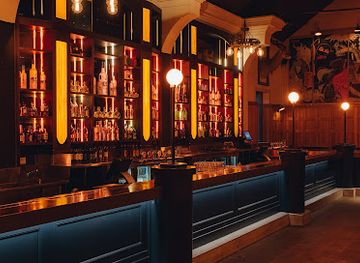
Fitzroy remains one of Melbourne's best-known inner-city areas for evening venues, though its nightlife is varied rather than dominated by large clubs. Brunswick Street combines traditional pubs, live music rooms, small bars and late-night eateries, with venues such as the Napier Hotel and The Provincial Hotel contributing to its established pub culture. Gertrude Street is associated with more intimate bars, including The Everleigh, while the Marquis of Lorne and Builders Arms represent the neighbourhood's continuing connection with historic hotel trading. Music, conversation and dining often overlap, and the atmosphere changes noticeably from early evening meals to later crowds. Fitzroy has fewer large-scale nightclubs than some parts of the central city, so its appeal lies in pub rooms, cocktail bars, live performance and independent venues. Check current entry arrangements and event details before travelling, particularly at weekends when queues and street noise increase.
-
Restaurant
Naked For Satan
Experience the vibrant flavors and cocktails at Naked For Satan in Fitzroy, a must-visit destination for food-loving tourists in Melbourne.
1 min walk · 0.1 km from neighbourhood centre
-
Pub
The Workers Club
Experience the vibrant atmosphere of The Workers Club in Fitzroy, an iconic pub with live music, delicious food, and a lively beer garden.
11 min walk · 0.8 km from neighbourhood centre
-
Wine bar
Marion Wine Bar
Experience the best of Fitzroy at Marion Wine Bar, where exceptional wines meet exquisite culinary delights in a vibrant atmosphere.
11 min walk · 0.9 km from neighbourhood centre
-
Cocktail bar
Polly Bar
Experience the vibrant nightlife at Polly Bar in Fitzroy, Melbourne's premier cocktail bar and cigar shop, perfect for a memorable evening out.
4 min walk · 0.3 km from neighbourhood centre


Best nightclubs in Fitzroy
Fitzroy remains one of Melbourne's best-known inner-city areas for evening venues, though its nightlife is varied rather than dominated by large clubs. Brunswick Street combines traditional pubs, live music rooms, small bars and late-night eateries, with venues such as the Napier Hotel and The Provincial Hotel contributing to its established pub culture. Gertrude Street is associated with more intimate bars, including The Everleigh, while the Marquis of Lorne and Builders Arms represent the neighbourhood's continuing connection with historic hotel trading. Music, conversation and dining often overlap, and the atmosphere changes noticeably from early evening meals to later crowds. Fitzroy has fewer large-scale nightclubs than some parts of the central city, so its appeal lies in pub rooms, cocktail bars, live performance and independent venues. Check current entry arrangements and event details before travelling, particularly at weekends when queues and street noise increase.
-
Pub
The Workers Club
Experience the vibrant atmosphere of The Workers Club in Fitzroy, a community hub for great food, live music, and unforgettable moments.
11 min walk · 0.8 km from neighbourhood centre
-
Night club
The Night Cat
Discover the vibrant nightlife at The Night Cat, a premier venue for live music and dancing in Fitzroy, Melbourne, where every night is a musical celebration.
2 min walk · 0.1 km from neighbourhood centre
-
Disco club
New Guernica
Experience the vibrant nightlife of Collingwood at New Guernica, where unforgettable dance and music await every visitor.
13 min walk · 1.0 km from neighbourhood centre
-
Night club
Laundry Bar
Discover the lively atmosphere of Laundry Bar, a premier nightclub in Fitzroy, boasting live music, vibrant crowds, and an unforgettable nightlife experience.
2 min walk · 0.1 km from neighbourhood centre



Best shops in Fitzroy
Shopping in Fitzroy is concentrated along Brunswick Street and Gertrude Street, with the Fitzroy section of Smith Street offering additional independent retailers before the boundary with Collingwood becomes less distinct. Brunswick Street mixes vintage clothing, records, books, fashion, homewares, music-related businesses and everyday shops with cafés and restaurants. Gertrude Street is more design-led, known for galleries, furniture, interiors, fashion and carefully curated independent retail. The Rose Street Artists' Market provides a changing setting for locally made jewellery, prints, ceramics, clothing and other creative work when open. Fitzroy is not a conventional shopping mall district: much of its character comes from adapted terraces, small shopfronts and businesses with individual identities. Visitors should expect a blend of established stores and newer concepts, with opening patterns varying among independent retailers and market traders rather than following one uniform schedule.
-
Vintage clothing store
American Vintage Clothing Co
Explore the charm of vintage fashion at American Vintage Clothing Co in Fitzroy, where each piece tells a story and sustainability meets style.
8 min walk · 0.6 km from neighbourhood centre
-
Clothing store
BRONZE SNAKE
Explore Bronze Snake, a unique clothing store in Fitzroy, where fashion meets individuality and style in Melbourne's vibrant shopping scene.
1 min walk · 0.1 km from neighbourhood centre
-
Gift shop
M&S Handmade Accessories
Explore M&S Handmade Accessories for unique gifts and handcrafted treasures in the heart of Fitzroy, a vibrant Melbourne neighborhood.
1 min walk · 0.1 km from neighbourhood centre
-
Vintage clothing store
Vintage Sole - Brunswick St, Fitzroy
Explore unique vintage fashion treasures at Vintage Sole in Fitzroy, where style meets nostalgia and every piece tells a story.
2 min walk · 0.2 km from neighbourhood centre


Fitzroy essentials
Getting There
Getting Around
Safety
Emergency Situations
Do's and Don'ts
Local Tips
History of Fitzroy
Subdivision Beyond the Early City
Fitzroy developed on land north-east of Melbourne's early settlement during the nineteenth-century expansion of the town. Its name refers to Sir Charles Augustus FitzRoy, Governor of New South Wales from 1846 to 1855. Residential subdivision accelerated from the 1830s and 1840s, producing the narrow allotments and close-set terraces that still define many local streets. The area was not simply a fashionable suburb: its proximity to the central city, workshops and later factories made it an accessible home for labouring families. Brunswick Street gradually became the principal commercial spine, while smaller streets filled with cottages, boarding houses, churches and neighbourhood businesses.
Melbourne's First Municipality
Fitzroy gained an important civic identity when it became Melbourne's first municipality in 1858, reflecting the area's substantial population and growing urban importance. Municipal government brought investment in roads, drainage, public services and civic buildings, although living conditions remained uneven and overcrowding affected parts of the neighbourhood. The Fitzroy Town Hall, opened in 1863 and later altered, expresses this period of local ambition. Churches, hotels, schools and shops followed the expanding residential grid, creating a streetscape in which modest workers' housing stood close to more imposing commercial and civic architecture.
Industry, Migration and Working-Class Life
By the late nineteenth and early twentieth centuries, Fitzroy contained a dense mixture of homes, small industries, warehouses, shops and public institutions. Manufacturing and service work attracted residents from different parts of Australia and overseas, contributing to the neighbourhood's multilingual and socially mixed character. Italian, Greek and other migrant communities helped shape local commerce and food culture, while hotels, dance halls and street-based businesses provided important social spaces. The Fitzroy Swimming Pool, originally opened in 1908 as Fitzroy Baths, reflects the period's investment in municipal recreation and public health.
Indigenous Presence and Cultural Change
Fitzroy became an important gathering place for Aboriginal people, particularly during the twentieth century, as Aboriginal and Torres Strait Islander families moved to Melbourne from across Victoria and other parts of Australia. Local streets, hotels and community organisations formed part of a wider inner-city network in which Indigenous identity, political organising and social support grew more visible. From the later twentieth century, Fitzroy also became associated with counterculture, music, independent publishing, galleries and alternative retail. Rising property demand and commercial redevelopment have since altered the neighbourhood, bringing investment and new venues while creating pressure on affordability and the continuity of established communities.
Fitzroy in Photos
Browse through our photo collection highlighting the charm and character of the destination.
Neighbourhoods near Fitzroy
The closest neighbourhoods to Fitzroy, if you have time for more than one stop.
-

-

-


Swipe for more neighbourhoods
Explore more

Explore more of Melbourne
Melbourne combines laneway culture, grand Victorian architecture, major galleries, coastal escapes and a celebrated food scene in Australia's cultural capital.
Explore Melbourne