

Southbank (Melbourne) Travel Guide - Free
Explore Southbank in Melbourne with Evendo's free guide. Find the best shops, historic streets, restaurants, and gems on web or mobile.


Southbank Melbourne pairs Yarra River promenades with major arts venues, galleries, riverside dining, skyline views and evening entertainment beside the city centre.
A Riverside Quarter
Southbank occupies the southern bank of the Yarra River opposite Melbourne’s central business district, a short walk across Princes Bridge or the Evan Walker Bridge from Flinders Street Station and Federation Square. Its contemporary identity is shaped by the Southbank Promenade, where riverside paths pass restaurants, public art, boat landings and broad views towards the city skyline. The area is more urban precinct than traditional village, with apartment towers, hotels, cultural institutions and large public venues arranged around the river and St Kilda Road.Read more about Southbank
Arts, Architecture and Public Life
From Industry to Entertaining District
Best attractions in Southbank
Southbank’s principal attractions are concentrated along the Yarra and St Kilda Road. The Southbank Promenade offers an easy way to experience the neighbourhood, with pedestrian paths, river views, public art and access to Southgate’s dining precinct. The Arts Centre Melbourne brings together theatres, concert venues and the landmark spire, while the National Gallery of Victoria presents major Australian and international exhibitions in its St Kilda Road building, including the celebrated water-wall entrance. The nearby Australian Ballet and Melbourne Recital Centre add to the area’s programme of music and performance. Eureka Tower’s Skydeck provides elevated views over Melbourne from the edge of the district, although the tower is primarily a commercial and residential building rather than a historic monument. The Melbourne Convention and Exhibition Centre, farther west along the river, contributes large-scale exhibitions and events, while the promenade itself remains Southbank’s most accessible everyday sightseeing experience.
-
Tourist attraction
National Gallery of Victoria
Explore over 76,000 artworks at Australia's oldest and most visited gallery, the National Gallery of Victoria in Melbourne.
6 min walk · 0.5 km from neighbourhood centre
-
Tourist attraction
SEA LIFE Melbourne Aquarium
Explore the wonders of the underwater world at SEA LIFE Melbourne Aquarium, home to diverse marine life and interactive exhibits.
9 min walk · 0.7 km from neighbourhood centre
-
Plaza
Fed Square
Experience the essence of Melbourne at Fed Square, a cultural hub filled with art, events, and stunning architecture.
11 min walk · 0.9 km from neighbourhood centre
-
Tourist attraction
Under The Clocks
Experience the vibrant culture of Melbourne at Under The Clocks, the iconic meeting point beneath Flinders Street Station's historic architecture.
10 min walk · 0.8 km from neighbourhood centre


Best landmarks in Southbank
The Arts Centre Melbourne is Southbank’s defining architectural landmark, recognised by its tall lattice spire and its role as Melbourne’s principal performing-arts complex. Nearby, the National Gallery of Victoria’s St Kilda Road building, designed by Roy Grounds and opened in 1968, is notable for its monumental façade, moat-like entrance treatment and water wall. Princes Bridge forms the historic visual gateway between the city and Southbank, while the Evan Walker Bridge provides a more recent pedestrian connection across the Yarra. Eureka Tower dominates the southern skyline with its tall glass form and distinctive upper-level observation deck. Along the river, Southgate and the Southbank Promenade represent the physical transformation of a former industrial waterfront into a public entertainment and dining precinct. West of the central promenade, the Melbourne Convention and Exhibition Centre adds a large contemporary structure to the riverside landscape.
-
Art gallery
National Gallery of Victoria
Explore the National Gallery of Victoria, a cultural treasure trove in Melbourne showcasing an extraordinary collection of art from Australia and beyond.
6 min walk · 0.5 km from neighbourhood centre
-
Observation deck
Melbourne Skydeck
Experience Melbourne like never before at the Melbourne Skydeck, where breathtaking views and unique perspectives await every visitor.
5 min walk · 0.4 km from neighbourhood centre
-
Aquarium
SEA LIFE Melbourne Aquarium
Explore the vibrant marine life at SEA LIFE Melbourne Aquarium, where adventure and conservation meet in an unforgettable underwater experience.
9 min walk · 0.7 km from neighbourhood centre
-
War memorial
Shrine of Remembrance
Explore the Shrine of Remembrance in Melbourne, a majestic war memorial that honors Australia's soldiers in a serene and reflective setting.
12 min walk · 1.0 km from neighbourhood centre


Explore Southbank on the map
A handpicked selection of must-see spots in Southbank, mapped for you.
Best hotels in Southbank
Best restaurants in Southbank
Southbank’s dining scene is defined by its riverside setting and concentration of large hospitality precincts rather than by a single local cuisine. Southgate presents a dense run of restaurants, cafés and bars overlooking the Yarra, with menus spanning contemporary Australian cooking, Italian, Asian and modern international styles. Around Crown Melbourne and the broader riverfront, visitors will find hotel dining, restaurants within entertainment venues and options aimed at pre-theatre or post-event meals. The Arts Precinct adds cafés and practical casual choices for gallery visitors and concert audiences, while Southbank Boulevard and City Road have a more mixed local pattern of cafés, takeaway food and restaurants serving apartment residents. Views and convenience influence the riverside venues, so moving a few streets inland can reveal a less formal and often quieter dining atmosphere. Melbourne’s strong coffee culture is also evident, particularly during the daytime around cultural institutions and offices.
-
Australian
Left Bank Melbourne Restaurant & Cocktail Bar
Discover Left Bank Melbourne: A Riverside Culinary Haven Serving Modern Australian & Italian Cuisine with Live Music in Vibrant Southbank.
6 min walk · 0.5 km from neighbourhood centre
-
Restaurant
Rockpool Bar & Grill Melbourne
Experience modern Australian dining at Rockpool Bar & Grill Melbourne - where premium seafood meets exquisite steaks in a stunning riverside setting.
6 min walk · 0.5 km from neighbourhood centre
-
Italian
La Camera, Italian Restaurant
Experience authentic Italian dining at La Camera in Southbank - where tradition meets breathtaking riverside views.
7 min walk · 0.6 km from neighbourhood centre
-
Grill
Hophaus Bar
Experience exquisite grilled cuisine and refreshing drinks at Hophaus Bar, Southbank's premier destination with stunning river views.
7 min walk · 0.5 km from neighbourhood centre


Best bars in Southbank
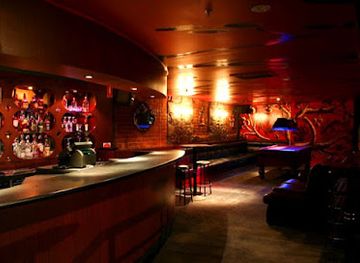
Southbank’s evening life is concentrated along the river, around Southgate, Crown Melbourne and the major theatres rather than spread through a network of small neighbourhood pubs. Riverside bars and restaurant lounges attract pre-dinner and post-performance crowds, while Crown’s large entertainment complex contains a range of licensed venues and late-night activity. The Arts Centre Melbourne, Hamer Hall and nearby theatres give the district a strong performance-led rhythm, with audiences arriving for concerts, ballet, theatre and comedy before dispersing along the promenade. Southbank Boulevard and the residential streets are generally quieter and should not be confused with Melbourne’s more concentrated club districts elsewhere in the city. Event nights can make the area feel particularly busy, whereas non-performance evenings are more oriented towards dining, hotel bars and views across the illuminated central-city skyline.
-
Bar
Left Bank Melbourne Restaurant & Cocktail Bar
Discover Left Bank Melbourne, where modern Australian cuisine meets riverside elegance, perfect for breakfast, lunch, or evening cocktails.
6 min walk · 0.5 km from neighbourhood centre
-
Gastropub
Hopscotch Melbourne
Discover the vibrant flavors of Hopscotch Melbourne, where delicious gastropub fare meets an extensive selection of craft beers and cocktails in Southbank.
6 min walk · 0.5 km from neighbourhood centre
-
Bar
Ponyfish Island
Discover Ponyfish Island: A riverside bar and restaurant under the Evan Walker Bridge in Southbank, Melbourne, serving creative cocktails and delicious cuisine.
7 min walk · 0.6 km from neighbourhood centre
-
Pub
Ludlow Bar & Dining Room
Experience the vibrant atmosphere and stunning riverside views at Ludlow Bar & Dining Room, Melbourne's premier spot for food and drinks.
6 min walk · 0.5 km from neighbourhood centre


Best nightclubs in Southbank
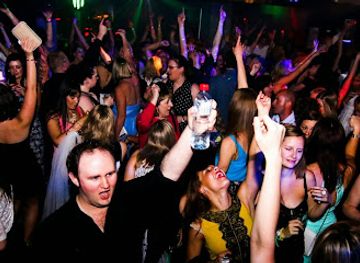
Southbank’s evening life is concentrated along the river, around Southgate, Crown Melbourne and the major theatres rather than spread through a network of small neighbourhood pubs. Riverside bars and restaurant lounges attract pre-dinner and post-performance crowds, while Crown’s large entertainment complex contains a range of licensed venues and late-night activity. The Arts Centre Melbourne, Hamer Hall and nearby theatres give the district a strong performance-led rhythm, with audiences arriving for concerts, ballet, theatre and comedy before dispersing along the promenade. Southbank Boulevard and the residential streets are generally quieter and should not be confused with Melbourne’s more concentrated club districts elsewhere in the city. Event nights can make the area feel particularly busy, whereas non-performance evenings are more oriented towards dining, hotel bars and views across the illuminated central-city skyline.
-
Night club
The Carlton Club
Experience the vibrant nightlife at The Carlton Club in Melbourne, a perfect blend of drinks, dancing, and unforgettable memories.
17 min walk · 1.3 km from neighbourhood centre
-
Disco club
Club Retro
Dive into Melbourne's nightlife at Club Retro, where the beats are hot, the burgers are juicy, and the atmosphere is electric.
17 min walk · 1.4 km from neighbourhood centre
-
Bar
Ocean 12 Entertainment
Unleash your inner performer at Ocean 12, Melbourne's premier cocktail and karaoke bar for unforgettable nights.
8 min walk · 0.6 km from neighbourhood centre
-
Night club
Centrefold Lounge
Discover Melbourne's nightlife at Centrefold Lounge, a chic adult entertainment club offering captivating performances and vibrant atmosphere.
11 min walk · 0.9 km from neighbourhood centre


Best shops in Southbank
Shopping in Southbank is primarily geared towards dining, entertainment, galleries and visitor convenience rather than independent retail streets. Southgate combines riverside restaurants with shops and service businesses, while Crown Melbourne contains retail linked to its broader entertainment complex. The Arts Precinct and National Gallery of Victoria offer exhibition-related retail, design-led gifts, books and art publications, making them useful stops for culturally focused souvenirs. Small convenience outlets and cafés are distributed through the office, hotel and apartment developments, particularly around Southbank Boulevard and City Road. The neighbourhood does not have the market atmosphere of Queen Victoria Market or the specialist boutiques of Melbourne’s inner suburbs, and visitors seeking fashion, records or antiques will generally need to continue into the central city or another district. Its retail character is instead shaped by major venues, galleries, riverside leisure and the needs of residents and event audiences.
-
Cafe
The Bond Store
Discover the perfect blend of cozy ambiance and exceptional coffee at The Bond Store in Southbank, a must-visit café for every traveler.
4 min walk · 0.4 km from neighbourhood centre
-
Gift shop
TheSuperCool
Explore TheSuperCool in South Melbourne for unique gifts, children's clothing, and a treasure trove of books that capture the essence of local culture.
13 min walk · 1.1 km from neighbourhood centre
-
Clothing store
BOSS Store
Shop the latest trends in men's and women's fashion at BOSS Store, Southbank's luxury destination for exquisite clothing and accessories.
7 min walk · 0.5 km from neighbourhood centre
-
Gift shop
Crown Gifts
Explore Crown Gifts in Southbank, your ultimate destination for unique souvenirs and personalized treasures in Victoria.
8 min walk · 0.6 km from neighbourhood centre


Southbank essentials
Getting There
Getting Around
Safety
Emergency Situations
Do's and Don'ts
Local Tips

From Eve
Local phrases worth knowing
You don't need to get them perfect. A few words go a long way, and locals appreciate the effort.
Basics
| English | Local | Say it |
|---|---|---|
| Hello | G'day | [G'day] |
| Goodbye | See ya | [See ya] |
| Yes | Yeah | [Yeah] |
| No | Nah | [Nah] |
| Please/You're welcome | Please/No worries | [Please/No worries] |
| Thank you | Cheers | [Cheers] |
| Excuse me/Sorry | Sorry | [Sorry] |
| How are you? | How ya goin'? | [How ya goin'?] |
| Fine. And you? | Good. You? | [Good. You?] |
| Do you speak English? | Speak English? | [Speak English?] |
| I don't understand | I dunno | [I dunno] |
Eating & Drinking
| English | Local | Say it |
|---|---|---|
| I'd like to see the menu, please | Menu, thanks | [Menu, thanks] |
| I don't eat meat | No meat | [No meat] |
| Cheers! | Cheers! | [Cheers!] |
| I would like to pay, please | Pay, please | [Pay, please] |
Emergencies
| English | Local | Say it |
|---|---|---|
| Help! | Help! | [Help!] |
| Go away! | Bugger off! | [Bugger off!] |
| Call the Police! | Call the cops! | [Call the cops!] |
| Call a doctor! | Get a doc! | [Get a doc!] |
| I'm lost | Lost | [Lost] |
| I'm ill | Sick | [Sick] |
Shopping
| English | Local | Say it |
|---|---|---|
| I'd like to buy... | Buy... | [Buy...] |
| I'm just looking | Just looking | [Just looking] |
| How much is it? | How much? | [How much?] |
| That's too expensive | Too much | [Too much] |
| Can you lower the price? | Lower price? | [Lower price?] |
Time & Numbers
| English | Local | Say it |
|---|---|---|
| What time is it? | What's the time? | [What's the time?] |
| It's one o'clock | One o'clock | [One o'clock] |
| Half past (10) | Half ten | [Half ten] |
| Morning | Mornin' | [Mornin'] |
| Afternoon | Arvo | [Arvo] |
| Evening | Evenin' | [Evenin'] |
| Yesterday | Yesty | [Yesty] |
| Today | Today | [Today] |
| Tomorrow | Tomorra | [Tomorra] |
| 1 | One | [One] |
| 2 | Two | [Two] |
| 3 | Three | [Three] |
| 4 | Four | [Four] |
| 5 | Five | [Five] |
| 6 | Six | [Six] |
| 7 | Seven | [Seven] |
| 8 | Eight | [Eight] |
| 9 | Nine | [Nine] |
| 10 | Ten | [Ten] |
Transport & Directions
| English | Local | Say it |
|---|---|---|
| Where's a/the...? | Where's the...? | [Where's the...?] |
| What's the address? | What's the addy? | [What's the addy?] |
| Can you show me (on the map)? | Show me (on the map)? | [Show me (on the map)?] |
| When's the next (bus)? | When's the next (bus)? | [When's the next (bus)?] |
| A ticket (to ....) | Ticket (to ....) | [Ticket (to ....)] |
History of Southbank
Riverbank Industry and Wharves
For much of Melbourne’s development, the southern bank of the Yarra was a working landscape of industry, storage yards, rail connections and river traffic. The area was close to the city but separated from it by the river, and its uses were shaped more by manufacturing and transport than by residential life. City Road and the riverside formed important routes through this industrial zone, while the wider South Melbourne area developed its own commercial and working-class identity. Warehouses and utilitarian buildings reflected the practical role of the riverbank, although many have since disappeared beneath later roads, towers and cultural facilities.
A New Arts Precinct
The cultural character of Southbank grew from the concentration of major institutions along St Kilda Road. The National Gallery of Victoria opened its present St Kilda Road building in 1968, designed by Roy Grounds, and the Victorian Arts Centre, now Arts Centre Melbourne, developed as a major performing-arts complex during the same period. Its theatres and concert facilities gave the southern riverbank a civic and cultural importance that differed from its industrial past. The Arts Centre spire became one of Melbourne’s most recognisable silhouettes and helped anchor later public investment in the surrounding precinct.
Promenade and Precinct Redevelopment
From the late 1980s and early 1990s, former industrial land beside the Yarra was reshaped for public access, commercial activity and high-density development. Southgate opened in 1990, linking riverside promenades with restaurants and shops, while the river edge was progressively made more accessible to pedestrians. The redevelopment recast Southbank as an extension of the central city, connected by bridges and public transport rather than defined by factories and yards. It also introduced a new pattern of towers, entertainment venues, offices and apartments that remains central to the neighbourhood’s appearance.
Contemporary High-Rise Southbank
The opening of Crown Melbourne in the 1990s, the growth of the Melbourne Convention and Exhibition Centre, and continuing apartment construction strengthened Southbank’s role in Melbourne’s visitor economy. The neighbourhood became closely associated with major events, dining, hotels, arts programming and high-rise living. This transformation brought investment and new public spaces but also changed the scale and rhythm of the former riverside district. Today, Southbank combines the established Arts Precinct with newer residential and commercial development, while the Yarra remains the geographical feature linking its diverse uses.
Southbank in Photos
Browse through our photo collection highlighting the charm and character of the destination.
Neighbourhoods near Southbank
The closest neighbourhoods to Southbank, if you have time for more than one stop.
-

-

-


Swipe for more neighbourhoods
Explore more

Explore more of Melbourne
Melbourne combines laneway culture, grand Victorian architecture, major galleries, coastal escapes and a celebrated food scene in Australia's cultural capital.
Explore Melbourne