

Free Eisenwurzen Travel Guide & Mobile App
Explore Eisenwurzen with free travel guides. Discover regional history, expert tips, proposed trips, and audio guides on web or mobile app.


Explore Eisenwurzen’s ironworking heritage, historic towns, forested valleys and Alpine landscapes across Austria’s Enns and Ybbs country.
Read more about Eisenwurzen
When is the best time to visit Eisenwurzen?
Best: June–August · 23–25°C| Month | High (°C) | Rainfall (mm) |
|---|---|---|
| January | 2 | 40 |
| February | 4 | 35 |
| March | 9 | 40 |
| April | 14 | 45 |
| May | 19 | 50 |
| June (best) | 23 | 60 |
| July (best) | 25 | 65 |
| August (best) | 24 | 65 |
| September | 21 | 55 |
| October | 14 | 45 |
| November | 7 | 40 |
| December | 3 | 35 |
Getting to and around Eisenwurzen
How to get there
Transportation
Destinations in Eisenwurzen
Resorts, valleys and scenic spots worth a trip of their own.

Swipe for more destinations
Best attractions in Eisenwurzen
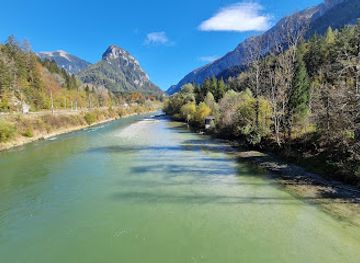
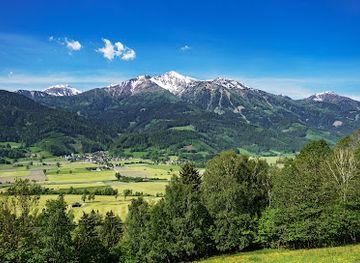
Eisenwurzen’s attractions combine industrial heritage with river valleys and Alpine nature. Steyr provides the strongest urban concentration, with its historic centre, museums and riverside setting, while the Museum Arbeitswelt places regional manufacturing within the wider history of work and social change. In the Ybbs valley, Ybbsitz is closely associated with forging and blacksmithing, and its Schmiedezentrum and historic forge sites explain how water, timber and iron shaped local communities. Waidhofen an der Ybbs offers town history, cultural venues and access to surrounding landscapes. Outdoor visitors can follow walking and cycling routes through the Eisenwurzen Nature Park, around the Ybbs valley and into the forested foothills. Farther south, the Gesäuse National Park brings a more dramatic mountain scale, with the Enns cutting between limestone peaks and opportunities for hiking, climbing and wildlife observation. Historic monasteries, market towns, farm landscapes and river gorges broaden the itinerary, while the region’s distinctive appeal lies in seeing these experiences as connected parts of one resource-based cultural landscape.
-
National park
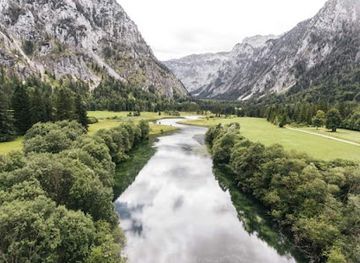
Nationalpark Gesäuse
Explore the breathtaking landscapes and rich biodiversity of Nationalpark Gesäuse, a true gem of the Austrian Alps.
-
Ski resort
Kaiserau
Experience the thrill of skiing and the beauty of nature at Kaiserau, the premier ski resort and hiking area in the Austrian Alps.
-
Tourist attraction
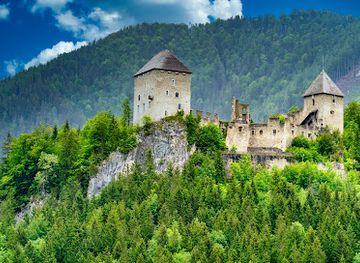
Burgruine Gallenstein
Discover the captivating history and breathtaking views at the stunning ruins of Burgruine Gallenstein in St. Gallen, Austria.
-
National reserve
Nature and Geopark Styrian Eisenwurzen
Explore the stunning landscapes and geological wonders of Nature and Geopark Styrian Eisenwurzen, a must-visit destination in Austria for nature lovers.
Best landmarks in Eisenwurzen
The most recognisable landmark in Eisenwurzen is arguably the historic centre of Steyr, where the confluence of the Enns and Steyr rivers frames a remarkably layered townscape of medieval, Renaissance and Baroque buildings. The Bummerlhaus is a particularly notable Gothic town house, while Schloss Lamberg rises above the rivers and reflects the town’s importance to regional administration and trade. In Waidhofen an der Ybbs, the medieval town structure and Schloss Rothschild express the city’s long connection with commerce, metalworking and local civic life. Ybbsitz’s historic forge buildings and water-powered industrial sites are landmarks of a different kind, preserving the physical setting of traditional iron craftsmanship. The Gesäuse landscape provides the region’s great natural landmarks: the Enns gorge, steep limestone walls and the striking mountain scenery of the national park. Around the Lower Austrian side, the Lunzer See basin and wooded ridges of the Eisenwurzen Nature Park introduce a gentler but equally characteristic landscape of water, forest and cultivated slopes.
-
Fortress
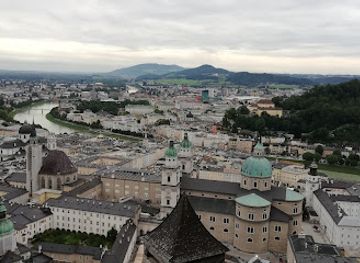
Fortress Hohensalzburg
Explore Fortress Hohensalzburg: A Historic Landmark with Stunning Views and Fascinating Exhibits in Salzburg, Austria.
-
Tourist attraction
Schloss Hellbrunn
Discover the magic of Schloss Hellbrunn, a stunning baroque palace in Salzburg with enchanting gardens and whimsical trick fountains.
-
Historical landmark
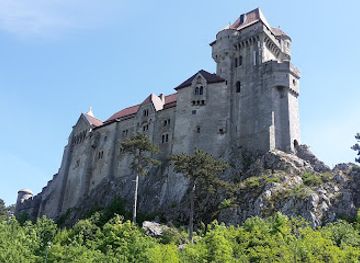
Castle Liechtenstein
Discover the majestic Castle Liechtenstein, a historical landmark that offers breathtaking views and a rich cultural experience in Austria.
-
Hiking area
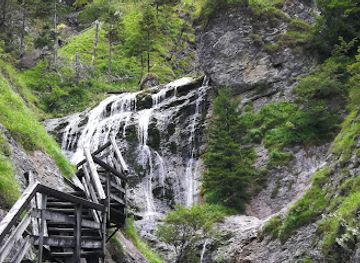
Wasserlochklamm
Discover the stunning natural beauty of Wasserlochklamm, a premier hiking area in Austria with breathtaking gorges, waterfalls, and scenic trails for all adventurers.

Explore Eisenwurzen on the map
Plan your trip on one map. See where the top cities, national parks and sights are, and book hotels and experiences in a few clicks.
Best hotels in Eisenwurzen
Best restaurants in Eisenwurzen
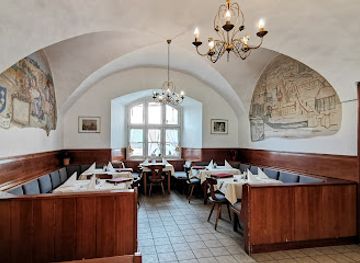
Dining in Eisenwurzen is rooted in Austrian regional cooking, with menus varying between the historic towns, farming valleys and higher mountain areas. Expect dumplings, soups, roast meats, game when in season, freshwater fish, farmhouse cheeses and substantial dishes suited to a cool Alpine climate. Bread, cakes and orchard products are important in the rural economy, while apples, pears and other fruit are used in juices, schnapps and desserts. Steyr and Waidhofen an der Ybbs offer the broadest choice of cafés, traditional inns and contemporary restaurants; smaller villages tend to centre on family-run Gasthäuser, where menus may follow local supply and seasonal availability. Mountain huts provide simple fare rather than elaborate dining, often including soups, dumplings and cold platters. Farmers’ shops and local markets are useful for regional cheese, cured meat, honey, fruit products and baked goods. Beer and Austrian wines are common, although the valley cuisine remains more closely associated with hearty food and orchard produce than with a single defining dish.
-
Restaurant
Klostergasthof Heiligenkreuz
Discover authentic Austrian cuisine amidst the stunning landscapes of Heiligenkreuz at Klostergasthof - where tradition meets tranquility.
-
Restaurant
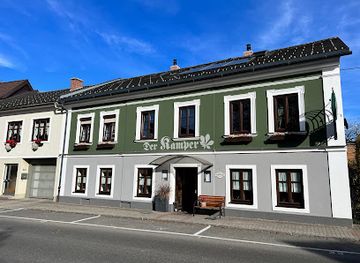
Der Kamper
Experience authentic Austrian cuisine at Der Kamper in Admont - where every dish is a celebration of local flavors.
-
Austrian
Treglwangerhof
Experience exceptional Austrian-French cuisine at Treglwangerhof in Treglwang—where every dish tells a story.
-
Restaurant
Stiegenwirt - Gastlichkeit seit 1969
Discover authentic Austrian flavors at Stiegenwirt in Palfau – where tradition meets modernity in every dish.
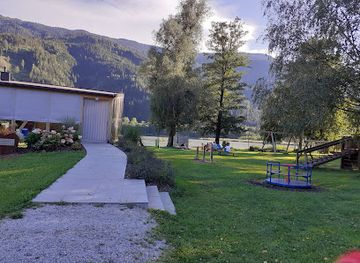
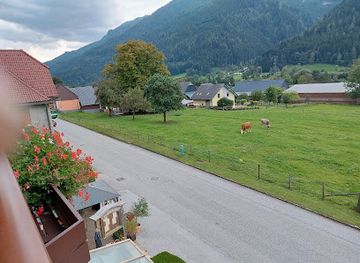
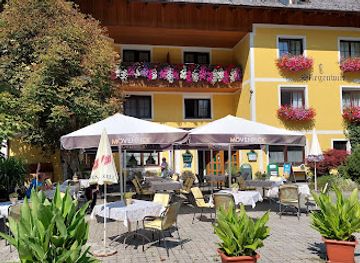
Best bars in Eisenwurzen
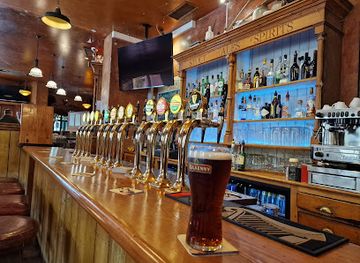
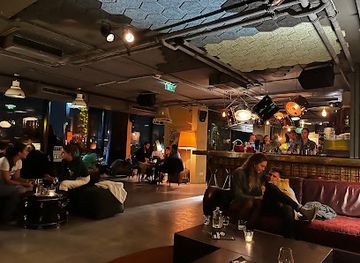
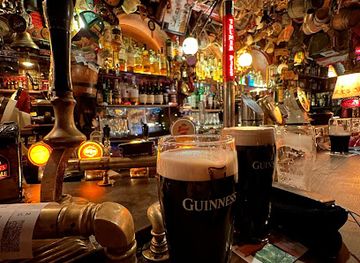
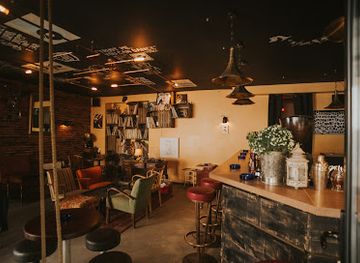
Evenings in Eisenwurzen are generally based around traditional pubs, hotel bars, cafés and village inns rather than a concentrated nightclub scene. Steyr has the most varied urban choice, with relaxed bars, restaurants and occasional live music or cultural programming in and around the historic centre. Waidhofen an der Ybbs also provides cafés, pubs and small evening venues, while smaller communities tend to quieten early and focus on sociable Gasthäuser. In rural areas, an evening meal, a local beer or a seasonal cultural event is more typical than late-night entertainment. Some breweries, farm producers and inns offer tastings or informal gatherings, but arrangements vary and should be checked locally. Visitors should not treat drinking as the defining feature of regional culture: the character of Eisenwurzen’s nightlife lies in conversation, food, music and the slower rhythm of valley communities.
-
Irish pub
Flanagans
Experience authentic Irish hospitality and delicious gastropub fare at Flanagans in Vienna, where culture and cuisine meet in a vibrant atmosphere.
-
Bar
Der Dachboden
Discover the vibrant rooftop bar experience at Der Dachboden in Vienna, where stunning views meet expertly crafted cocktails in a stylish setting.
-
Irish pub
Bockshorn Irish Pub
Discover the warmth of Irish hospitality at Bockshorn Irish Pub in Vienna, where great brews and lively ambiance await.
-
Cocktail bar
Needle Vinyl Bar
Dive into Vienna's nightlife at Needle Vinyl Bar, where exquisite cocktails meet the rhythm of vinyl records in an eclectic atmosphere.
Best nightclubs in Eisenwurzen
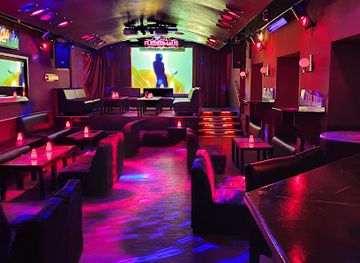
Evenings in Eisenwurzen are generally based around traditional pubs, hotel bars, cafés and village inns rather than a concentrated nightclub scene. Steyr has the most varied urban choice, with relaxed bars, restaurants and occasional live music or cultural programming in and around the historic centre. Waidhofen an der Ybbs also provides cafés, pubs and small evening venues, while smaller communities tend to quieten early and focus on sociable Gasthäuser. In rural areas, an evening meal, a local beer or a seasonal cultural event is more typical than late-night entertainment. Some breweries, farm producers and inns offer tastings or informal gatherings, but arrangements vary and should be checked locally. Visitors should not treat drinking as the defining feature of regional culture: the character of Eisenwurzen’s nightlife lies in conversation, food, music and the slower rhythm of valley communities.
-
Disco club
Cabaret Fledermaus
Dive into the vibrant nightlife of Vienna at Cabaret Fledermaus, where disco meets bar in an unforgettable atmosphere.
-
Restaurant
Der Kamper
Experience authentic Austrian cuisine at Der Kamper in Admont, where local flavors meet warm hospitality.
-
Night club
The Loft
Discover the vibrant nightlife of Vienna at The Loft - a premier night club offering eclectic music, live performances, and delicious drinks in a stylish setting.
-
Night club
Camera Club
Discover the spirited nightlife of Vienna at Camera Club, a vibrant venue with electrifying music and a lively crowd, perfect for a memorable night out.
Best shops in Eisenwurzen
Shopping in Eisenwurzen is strongest in its market towns rather than in large retail districts. Steyr offers the broadest selection of independent shops, bookshops, galleries, cafés and traditional specialist retailers within and around its historic centre, while Waidhofen an der Ybbs combines everyday shopping with small cultural and craft businesses. Ybbsitz is the place to look for the region’s metalworking identity, although specialist craft availability varies and should not be assumed to follow fixed opening hours. Across the rural valleys, farm shops and weekly markets may offer honey, fruit juice, schnapps, cheeses, cured meats, bread, preserves and other locally produced foods. Regional souvenirs are more convincing when they reflect the landscape: forged household objects, woodwork, textiles, ceramics or packaged orchard products are preferable to generic Alpine merchandise. Visitors should distinguish permanent town shops from seasonal markets and farm-gate sales, which may operate on limited days or require a little local planning.
-
Shopping mall
Westfield Shopping City Süd
Discover shopping bliss at Westfield Shopping City Süd—Austria's premier shopping destination featuring hundreds of stores and diverse dining options.
-
Shopping mall
Westfield Donau Zentrum
Experience Vienna's premier shopping destination at Westfield Donau Zentrum, featuring a diverse mix of stores, dining, and entertainment.
-
Shopping mall
G3 Shopping Resort Gerasdorf
Explore G3 Shopping Resort Gerasdorf: A vibrant shopping destination near Vienna with diverse stores, delicious dining, and entertainment options.
-
Shopping mall
Kaufhaus Gerngross
Discover a shopping haven at Kaufhaus Gerngross in Vienna, where tradition meets modernity in an extraordinary retail experience.


Get your free copy of our complete guide to Eisenwurzen, delivered straight to you.
Everything on this page, from attractions and restaurants to essentials and local phrases, in one PDF you can read offline, print or share.
Already have an account? Sign in
Your Eisenwurzen guide is ready.
We'll send it to · Not you? Sign out

Getting your guide ready…
We are putting together a fresh copy of the Eisenwurzen guide. This can take up to a minute.
This can take a few moments. If your browser asks, choose Allow so the download can start. You'll find the guide in your Downloads folder.
Nothing happened? Download it again
Sorry, the guide is taking longer than usual. Please try again in a minute, or get it by email instead.
Eisenwurzen essentials
Currency and Payment
Safety
Emergency Situations
Do's and Don'ts
Local Tips
From Eve
Local phrases worth knowing
You don't need to get them perfect. A few words go a long way, and locals appreciate the effort.
Basics
| English | Local | Say it |
|---|---|---|
| Hello | Grüß Gott | [Grees Gott] |
| Goodbye | Auf Wiedersehen | [Owf Veederzehn] |
| Yes | Ja | [Yah] |
| No | Nein | [Nyn] |
| Please/You're welcome | Bitte | [Bitt-eh] |
| Thank you | Danke | [Dahn-keh] |
| Excuse me/Sorry | Entschuldigung | [Ent-shool-dee-goong] |
| How are you? | Wie geht's? | [Vee gates?] |
| Fine. And you? | Gut. Und dir? | [Goote. Oond deer?] |
| Do you speak English? | Sprechen Sie Englisch? | [Shpre-chen Zee Engl-ish?] |
| I don't understand | Ich verstehe nicht | [Ish fer-shtay-eh nicht] |
Eating & Drinking
| English | Local | Say it |
|---|---|---|
| I'd like to see the menu, please | Ich hätte gerne die Speisekarte, bitte | [Ish hett-eh gair-neh dee Shpie-zeh-kah-teh, bitt-eh] |
| I don't eat meat | Ich esse kein Fleisch | [Ish ess-eh kyn Flysh] |
| Cheers! | Prost! | [Prohst!] |
| I would like to pay, please | Ich würde gerne bezahlen, bitte | [Ish vur-deh gair-neh beh-tsah-len, bitt-eh] |
Emergencies
| English | Local | Say it |
|---|---|---|
| Help! | Hilfe! | [Hil-feh!] |
| Go away! | Geh weg! | [Gay vek!] |
| Call the Police! | Rufen Sie die Polizei! | [Roof-en Zee dee Pol-i-tsai!] |
| Call a doctor! | Rufen Sie einen Arzt! | [Roof-en Zee eye-nen Arts-t!] |
| I'm lost | Ich habe mich verlaufen | [Ish hah-beh mikh fer-lau-fen] |
| I'm ill | Ich bin krank | [Ish bin krah-nk] |
Shopping
| English | Local | Say it |
|---|---|---|
| I'd like to buy... | Ich möchte ... kaufen | [Ish merkh-te ... kow-fen] |
| I'm just looking | Ich schaue nur | [Ish shau-eh noor] |
| How much is it? | Wie viel kostet es? | [Vee feel kost-et es?] |
| That's too expensive | Das ist zu teuer | [Dahs ist tsoo toy-er] |
| Can you lower the price? | Könnten Sie den Preis senken? | [Kern-ten Zee den Prise sen-ken?] |
Time & Numbers
| English | Local | Say it |
|---|---|---|
| What time is it? | Wie spät ist es? | [Vee shpaet ist es?] |
| It's one o'clock | Es ist ein Uhr | [Es ist ine Oor] |
| Half past (10) | Halb elf | [Halb elf] |
| Morning | Morgen | [Mor-gen] |
| Afternoon | Nachmittag | [Nahch-mit-tahg] |
| Evening | Abend | [Ah-bent] |
| Yesterday | Gestern | [Gest-ern] |
| Today | Heute | [Hoy-teh] |
| Tomorrow | Morgen | [Mor-gen] |
| 1 | Eins | [Eins] |
| 2 | Zwei | [Zvai] |
| 3 | Drei | [Dry] |
| 4 | Vier | [Veer] |
| 5 | Fünf | [Fünf] |
| 6 | Sechs | [Zex] |
| 7 | Sieben | [Zee-ben] |
| 8 | Acht | [Acht] |
| 9 | Neun | [Noyn] |
| 10 | Zehn | [Zayn] |
Transport & Directions
| English | Local | Say it |
|---|---|---|
| Where's a/the...? | Wo ist ein/das ...? | [Vo ist ine/dahs ...?] |
| What's the address? | Was ist die Adresse? | [Vahs ist dee Ah-dress-eh?] |
| Can you show me (on the map)? | Könnten Sie mir (auf der Karte) zeigen? | [Kern-ten Zee meer (owf der Kar-teh) tsai-gen?] |
| When's the next (bus)? | Wann kommt der nächste (Bus)? | [Vahn komt der naysh-teh (Boos)?] |
| A ticket (to ....) | Ein Ticket (nach ...) | [Ine Ticket (nahkh ...)] |
History of Eisenwurzen
Prehistoric settlement and Alpine resources
The valleys and lower mountain slopes of Eisenwurzen were settled long before the iron industry gave the region its modern name. Archaeological evidence from the wider Enns and Ybbs country records prehistoric farming, settlement and movement through Alpine passes, while salt, timber and metal-bearing resources encouraged early trade. The landscape was never uniformly inhabited: people concentrated in river valleys and cultivable basins, leaving steeper forest and mountain areas comparatively sparse. These long patterns of settlement help explain the region’s later network of market towns, estate villages and transport routes.
Roman roads and frontier country
Under Roman rule, the valleys of what is now Eisenwurzen formed part of the province of Noricum. Roman settlements and roads were concentrated along the major Alpine corridors and river routes, connecting the Danube basin with the interior. The region was not a densely urbanised Roman heartland, but its resources and passes were strategically important. Remains and archaeological traces in the broader Enns and Ybbs areas provide evidence of Roman administration, trade and movement before political authority shifted during late antiquity.
Medieval monasteries, markets and estates
From the early and high Middle Ages, monasteries, noble estates and emerging market towns organised much of the region’s economy. Religious houses including Seitenstetten and Admont held land and influenced agriculture, forestry and settlement, while towns such as Steyr gained importance through river trade and regional administration. Fortified sites and churches appeared along routes through the valleys. Medieval foundations remain visible in the street plans, churches and estates of Eisenwurzen, although later rebuilding often gave the towns the Renaissance and Baroque appearance seen today.
The rise of ironworking
Eisenwurzen became one of the Habsburg lands’ important ironworking regions because ore from the Erzberg could be combined with abundant timber for charcoal and plentiful waterpower. From the late Middle Ages and especially the early modern period, mining, smelting, hammer mills and specialised blacksmithing developed along the Enns, Ybbs and their tributaries. Steyr prospered as a trading and manufacturing centre, while smaller valley settlements developed around forges and workshops. The industry created a regional division of labour linking miners, charcoal burners, carriers, merchants and metal craftsmen.
Early modern metal trade and urban prosperity
During the sixteenth and seventeenth centuries, iron goods from the Eisenwurzen entered wider markets within the Habsburg monarchy. Knives, tools, household objects and weapons were produced in workshops whose skills were often passed through families and guilds. River transport, roads and commercial houses helped connect Steyr and other towns with the Danube and beyond. Wealth from trade shaped civic buildings, churches and town houses, particularly in Steyr, while rural communities remained closely tied to forests, agriculture and the seasonal demands of the iron economy.
Industrialisation and the changing iron economy
From the nineteenth century, industrialisation transformed the scale and organisation of production. Steam power, improved roads and railways altered the relationship between the traditional hammer mills and larger factories, while some small forges declined or adapted. Steyr developed substantial modern manufacturing, later becoming associated with engineering and vehicle production, and rail connections strengthened the region’s links with Upper Austria, Lower Austria and the Danube. The surviving industrial buildings, museums and craft traditions record this transition from dispersed water-powered work to modern industry.
Heritage conservation and new regional identities
During the twentieth and twenty-first centuries, the decline of some traditional industries encouraged Eisenwurzen communities to reinterpret their history through museums, craft centres, walking routes and protected landscapes. Industrial heritage is presented alongside forestry, farming and Alpine ecology rather than as an isolated story of factories. Nature protection, including the Eisenwurzen Nature Park and the Gesäuse National Park in the wider regional landscape, has given the valleys new significance for recreation and conservation. The result is a region where working history remains central to contemporary tourism.
Eisenwurzen in Photos
Browse through our photo collection highlighting the charm and character of the destination.
Neighbouring regions of Eisenwurzen
The closest regions to Eisenwurzen, if you have time for more than one.
-

-

-

-

-


Swipe for more regions
Explore more
Explore more of Austria
Discover Austria's blend of alpine landscapes, rich cultural heritage, and culinary delights, from Vienna's historic charm to Tyrol's dramatic beauty.
Explore Austria