

Free Mostviertel Travel Guide & Mobile App
Explore Mostviertel with free travel guides. Discover regional history, expert tips, proposed trips, and audio guides on web or mobile app.


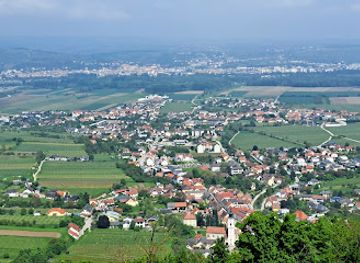
Explore Mostviertel in Lower Austria for pear cider, monasteries, historic iron towns, river valleys and walks towards the Ötscher mountains.
Read more about Mostviertel
When is the best time to visit Mostviertel?
Best: June–August · 23–25°C| Month | High (°C) | Rainfall (mm) |
|---|---|---|
| January | 3 | 40 |
| February | 4 | 35 |
| March | 9 | 45 |
| April | 15 | 50 |
| May | 20 | 60 |
| June (best) | 23 | 70 |
| July (best) | 25 | 75 |
| August (best) | 25 | 70 |
| September | 20 | 65 |
| October | 14 | 55 |
| November | 7 | 50 |
| December | 3 | 45 |
Getting to and around Mostviertel
How to get there
Transportation
Top city travel guides in Mostviertel
The cities of Mostviertel, and the easiest places to base yourself.

Swipe for more cities
Destinations in Mostviertel
Resorts, valleys and scenic spots worth a trip of their own.
-

-
-

-

-
-


Swipe for more destinations
Best attractions in Mostviertel
Mostviertel's attractions range from major monastic and cultural sites in the north to forested valleys and mountain landscapes in the south. Melk Abbey is the region's most internationally recognised heritage attraction, while Seitenstetten Abbey offers another important insight into Benedictine history, art and estate culture. The historic centres of Waidhofen an der Ybbs and Ybbsitz reveal the region's ironworking past through town architecture, workshops and industrial interpretation. The Ötscher-Tormäuer Nature Park is the principal destination for walking in dramatic limestone scenery, with gorges, waterfalls, woodland and highland routes, while the Mostviertel Alpine Foreland provides gentler hills and orchard landscapes. Cycling routes follow rivers and agricultural country, and the Mariazell Railway offers a scenic rail journey through the southern Lower Austrian landscape towards neighbouring Styria. Farm visits, Most producers, museums, parish churches and seasonal markets add cultural depth, making the region's appeal dependent on the relationship between working countryside, historic institutions and outdoor recreation rather than on a concentration of large theme attractions.
-
Tourist attraction
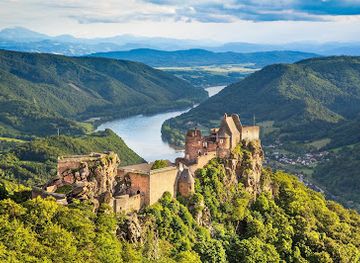
Aggstein Castle
Discover the captivating beauty and rich history of Aggstein Castle, a stunning landmark offering breathtaking views and delicious local cuisine.
-
Tourist attraction
Grafenegg Castle
Experience the charm and history of Grafenegg Castle, an iconic Austrian landmark surrounded by stunning gardens and vibrant cultural events.
-
Tourist attraction
Göttweig Abbey
Explore the breathtaking Göttweig Abbey, a cultural landmark with stunning views, rich history, and a serene atmosphere in the heart of Austria.
-
Tourist attraction
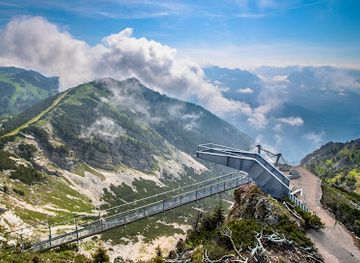
Hochkar Bergbahnen
Discover the breathtaking beauty and thrilling adventures at Hochkar Bergbahnen, Austria's premier destination for skiing and hiking.
Best landmarks in Mostviertel
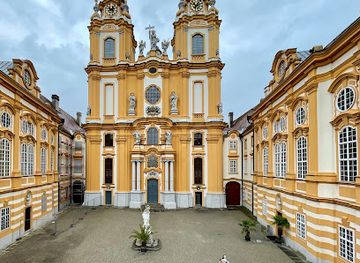
Melk Abbey dominates the northern Danube landscape with its monumental Baroque architecture, ochre façades and elevated position above the river. It is both a working Benedictine monastery and a visible expression of the region's ecclesiastical and cultural history. Seitenstetten Abbey, known for its long monastic tradition, church and landscaped grounds, represents the enduring influence of religious estates in the agricultural interior. In the south, the historic centre of Waidhofen an der Ybbs is marked by medieval and early modern buildings that reflect its role as an iron-trading and craft town. Ybbsitz is associated with the Hammerherren tradition and the water-powered metalworking heritage of the Ybbs valley. The Ötscher massif and the gorges of the Ötscher-Tormäuer form the region's most distinctive natural landmarks, combining limestone cliffs, wooded ravines and fast mountain streams. The Mariazell Railway's bridges, tunnels and mountain route are significant transport landmarks, although its journey continues beyond Mostviertel into neighbouring Styria.
-
Abbey
Melk Abbey
Discover Austria's Baroque jewel: Melk Abbey, a UNESCO World Heritage Site with stunning architecture, library, and Danube views.
-
Hiking area
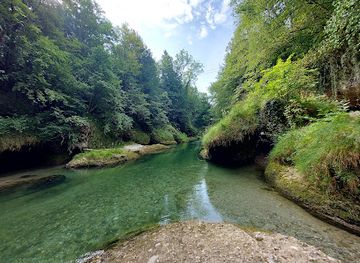
Erlaufschlucht
Discover the serene beauty of Erlaufschlucht, an idyllic hiking area in Austria known for its stunning landscapes and tranquil river views.
-
Hiking area
Mendlingtal
Discover the captivating Mendlingtal Valley in Austria: Hike through history and nature in this unique timber rafting adventure world.
-
Museum
MostBirnHaus
Discover the world of pears at MostBirnHaus: a museum, cafe, and shop celebrating Austria's Mostviertel region and its delicious pear culture.
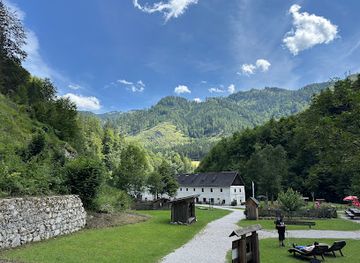
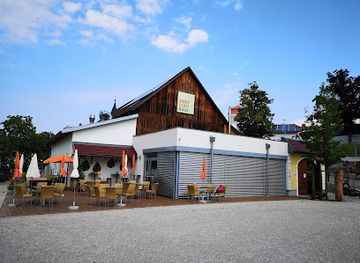
Explore Mostviertel on the map
Plan your trip on one map. See where the top cities, national parks and sights are, and book hotels and experiences in a few clicks.
Best hotels in Mostviertel
Best restaurants in Mostviertel
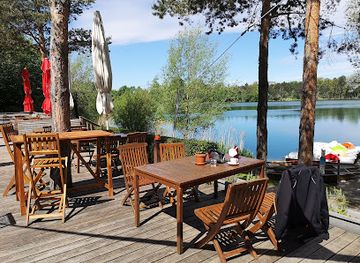
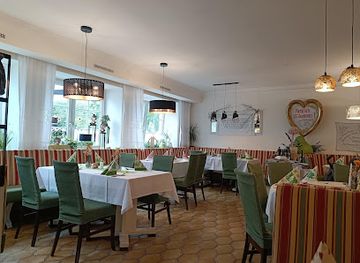
Dining in Mostviertel is closely connected to its orchards, farms and market towns. Most, made from apples or pears, is the defining regional drink and appears in farmhouse taverns, traditional inns and producer-led tastings; it may be dry, sweet, lightly sparkling or stronger than visitors expect. Local menus commonly draw on pork, beef, game, river fish, seasonal vegetables, potatoes, bread and fruit, while farmhouse products and regional cheeses are particularly useful discoveries in rural areas. Apple and pear desserts, fruit brandies and pastries reflect the orchard economy without replacing Austria's wider culinary traditions. In towns such as Amstetten, Waidhofen an der Ybbs, Scheibbs and Melk, visitors will find a mixture of cafés, classic Austrian restaurants and contemporary kitchens. In the countryside, opening days can be limited and menus may be seasonal, so food shops, farmers' markets and traditional inns are often as important to the regional dining experience as formal restaurants.
-
Austrian
Rathauskeller - Der Melker Gasthof
Discover authentic Austrian flavors at Rathauskeller in Melk - where tradition meets hospitality in a charming setting.
-
Restaurant
Panorama-Restaurant w11
Savor exquisite cuisine amidst breathtaking mountain views at Panorama-Restaurant w11 in Spital am Semmering.
-
Restaurant
Seedose
Discover the delightful fusion of local flavors at Seedose in St. Pölten - where every meal is a celebration.
-
Restaurant
Mostviertlerwirt Ott
Discover authentic Austrian cuisine at Mostviertlerwirt Ott in Seitenstetten - where tradition meets taste in every delightful dish.
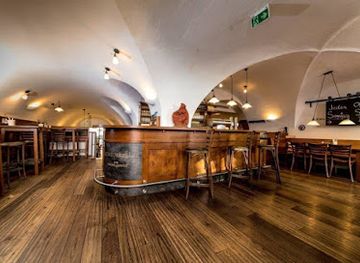
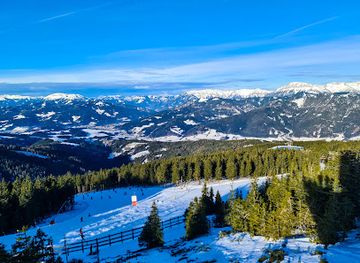
Best bars in Mostviertel
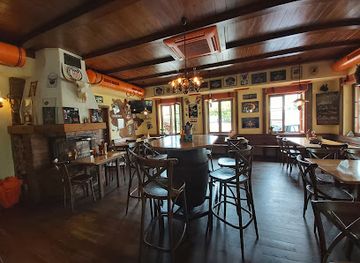
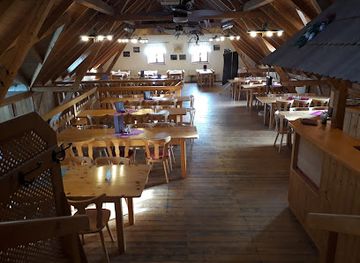
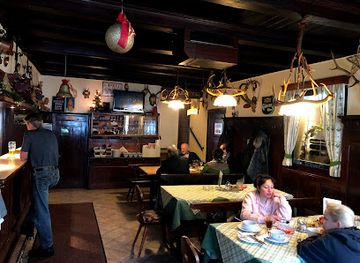
Mostviertel's evening life is modest and locally focused rather than built around a large club scene. Traditional pubs, inns and Most taverns are the main places for an evening drink, often accompanied by regional food and conversation. Larger towns such as Amstetten, Waidhofen an der Ybbs and St Pölten at the region's north-eastern edge provide more cafés, bars, cultural programmes and occasional live music than the rural valleys. Beer, wine, Most and non-alcoholic drinks are all part of the choice, while some producers offer tastings in agricultural settings rather than nightlife venues. In smaller communities, evenings may centre on restaurants, local cultural events or seasonal gatherings, with limited late-night transport. Visitors staying in mountain or orchard villages should plan their return journey in advance and should not assume that rural establishments operate every night or that a short distance on the map means an easy taxi ride.
-
American
Saloon Milwaukee
Experience the best of American cuisine at Saloon Milwaukee, where delicious burgers and steaks meet a lively dining atmosphere.
-
Cocktail bar
Cocktails • Café Bar Club Catering
Experience the vibrant nightlife and delightful cocktails at Cocktails Café Bar Club in Ybbs an der Donau, a must-visit for every traveler.
-
Wine bar
Mostheuriger Moderbacher
Experience the essence of Austrian hospitality at Mostheuriger Moderbacher, where local wines and traditional cuisine come together in a charming setting.
-
Restaurant
Gasthof Pollerus
Experience authentic Austrian cuisine amidst the breathtaking landscapes of Spital am Semmering at Gasthof Pollerus.
Best nightclubs in Mostviertel
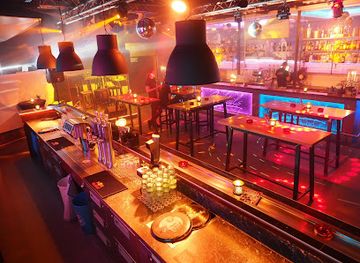
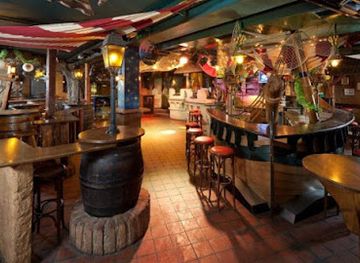
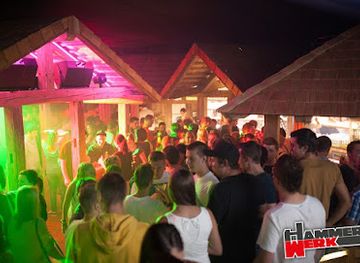
Mostviertel's evening life is modest and locally focused rather than built around a large club scene. Traditional pubs, inns and Most taverns are the main places for an evening drink, often accompanied by regional food and conversation. Larger towns such as Amstetten, Waidhofen an der Ybbs and St Pölten at the region's north-eastern edge provide more cafés, bars, cultural programmes and occasional live music than the rural valleys. Beer, wine, Most and non-alcoholic drinks are all part of the choice, while some producers offer tastings in agricultural settings rather than nightlife venues. In smaller communities, evenings may centre on restaurants, local cultural events or seasonal gatherings, with limited late-night transport. Visitors staying in mountain or orchard villages should plan their return journey in advance and should not assume that rural establishments operate every night or that a short distance on the map means an easy taxi ride.
-
Dance restaurant
Pulverfaß DAS KULT LOKAL
Discover the energetic nightlife at Pulverfaß DAS KULT LOKAL, a vibrant dance restaurant and disco club in Plaika, Austria.
-
Disco club
Hammerwerk
Discover the energetic nightlife of Hammerwerk in Waidhofen an der Ybbs, Austria, where music and dance meet an unbeatable atmosphere.
-
Night club
K1 Discoclub
Discover the nightlife of Amstetten at K1 Discoclub, where music and dance come alive in a vibrant atmosphere perfect for a night out.
-
Disco club
Club 23
Experience the electrifying nightlife at Club 23 in St. Pölten, where music, dance, and good vibes come together for an unforgettable evening.


Best shops in Mostviertel
Shopping in Mostviertel is oriented towards market towns, local food and regional craft rather than large-scale urban retail. Amstetten and St Pölten, the latter on the region's north-eastern edge, offer the broadest high-street and shopping-centre choice, while Waidhofen an der Ybbs, Scheibbs, Wieselburg and Melk are more useful for independent shops, cafés, books, household goods and locally produced specialities. Farm shops and direct-sale outlets are the best places to look for bottled apple or pear Most, fruit brandy, honey, preserves, bread, cheese and seasonal produce. In the ironworking towns, metal crafts and workshop traditions provide a more distinctive souvenir than generic Alpine goods, while monasteries may sell books, religious art and products connected with their estates. Market days vary by town and season, so visitors should check locally rather than expecting a permanent market. Purchases from small producers may need careful packing or luggage space, particularly for bottles and food products.
-
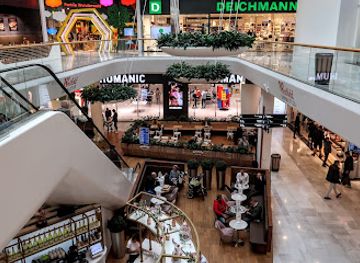
Shopping mall
Westfield Shopping City Süd
Explore Westfield Shopping City Süd: Austria's ultimate shopping destination with diverse shops, delicious dining, and family entertainment.
-
 Shopping mall
G3 Shopping Resort Gerasdorf
Explore G3 Shopping Resort Gerasdorf, where shopping, dining, and entertainment come together for an unforgettable experience just outside Vienna.
-
Shopping mall
City Center (Shoppingmall)
Explore Amstetten's City Center Shopping Mall, where shopping meets dining and entertainment in a vibrant atmosphere.
-
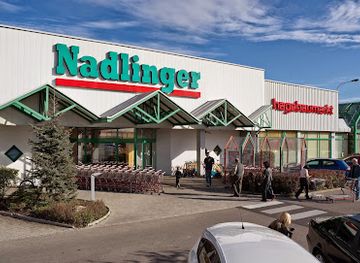
Hardware store
Baumarkt Nadlinger Handelsges.m.b.H.
Explore Baumarkt Nadlinger in St. Pölten for an extensive selection of hardware, building materials, and grilling essentials to elevate your DIY projects.
Get your free copy of our complete guide to Mostviertel, delivered straight to you.
Everything on this page, from attractions and restaurants to essentials and local phrases, in one PDF you can read offline, print or share.
Already have an account? Sign in
Your Mostviertel guide is ready.
We'll send it to · Not you? Sign out

Getting your guide ready…
We are putting together a fresh copy of the Mostviertel guide. This can take up to a minute.
This can take a few moments. If your browser asks, choose Allow so the download can start. You'll find the guide in your Downloads folder.
Nothing happened? Download it again
Sorry, the guide is taking longer than usual. Please try again in a minute, or get it by email instead.
Mostviertel essentials
Currency and Payment
Safety
Emergency Situations
Do's and Don'ts
Local Tips
From Eve
Local phrases worth knowing
You don't need to get them perfect. A few words go a long way, and locals appreciate the effort.
Basics
| English | Local | Say it |
|---|---|---|
| Hello | Grüß Gott | [Grewss Got] |
| Goodbye | Auf Wiedersehen | [Owf Veederzayn] |
| Yes | Ja | [Ya] |
| No | Nein | [Nine] |
| Please/You're welcome | Bitte | [Bitt-eh] |
| Thank you | Danke | [Dahn-keh] |
| Excuse me/Sorry | Entschuldigung | [Ent-shool-dee-goong] |
| How are you? | Wie geht's? | [Vee gates?] |
| Fine. And you? | Gut. Und dir? | [Gooot. Oond deer?] |
| Do you speak English? | Sprechen Sie Englisch? | [Shpreck-en Zee English?] |
| I don't understand | Ich verstehe nicht | [Ish fer-shtay-eh niht] |
Eating & Drinking
| English | Local | Say it |
|---|---|---|
| I'd like to see the menu, please | Ich hätte gerne die Speisekarte, bitte | [Ish hett-eh gair-neh dee Shpyze-kart-eh, bitt-eh] |
| I don't eat meat | Ich esse kein Fleisch | [Ish ess-eh kighn Flysh] |
| Cheers! | Prost! | [Prohst!] |
| I would like to pay, please | Ich möchte bezahlen, bitte | [Ish merkh-teh beh-tsahl-en, bitt-eh] |
Emergencies
| English | Local | Say it |
|---|---|---|
| Help! | Hilfe! | [Hil-feh!] |
| Go away! | Geh weg! | [Geh vek!] |
| Call the Police! | Rufen Sie die Polizei! | [Roo-fen Zee dee Pol-ee-tsy!] |
| Call a doctor! | Rufen Sie einen Arzt! | [Roo-fen Zee eye-nen Artst!] |
| I'm lost | Ich bin verloren | [Ish bin fer-lo-ren] |
| I'm ill | Ich bin krank | [Ish bin krank] |
Shopping
| English | Local | Say it |
|---|---|---|
| I'd like to buy... | Ich möchte kaufen... | [Ish merkh-teh kau-fen...] |
| I'm just looking | Ich schaue nur | [Ish shau-eh noor] |
| How much is it? | Wie viel kostet das? | [Vee feel kost-et das?] |
| That's too expensive | Das ist zu teuer | [Das ist tsu toy-er] |
| Can you lower the price? | Könnten Sie den Preis senken? | [Kern-ten Zee den Pryce senken?] |
Time & Numbers
| English | Local | Say it |
|---|---|---|
| What time is it? | Wie spät ist es? | [Vee shpayt ist es?] |
| It's one o'clock | Es ist ein Uhr | [Es ist ine Oor] |
| Half past (10) | Halb (10) | [Halb (10)] |
| Morning | Morgen | [Mor-gen] |
| Afternoon | Nachmittag | [Nahch-mit-tahg] |
| Evening | Abend | [Ah-bent] |
| Yesterday | Gestern | [Gest-ern] |
| Today | Heute | [Hoy-teh] |
| Tomorrow | Morgen | [Mor-gen] |
| 1 | eins | [Ayns] |
| 2 | zwei | [Ts-vi] |
| 3 | drei | [Dry] |
| 4 | vier | [Fear] |
| 5 | fünf | [Finf] |
| 6 | sechs | [Zex] |
| 7 | sieben | [Zee-ben] |
| 8 | acht | [Acht] |
| 9 | neun | [Noyn] |
| 10 | zehn | [Tsehn] |
Transport & Directions
| English | Local | Say it |
|---|---|---|
| Where's a/the...? | Wo ist ein/der...? | [Vo ist ine/der...?] |
| What's the address? | Was ist die Adresse? | [Vas ist dee Ah-dress-eh?] |
| Can you show me (on the map)? | Könnten Sie mir (auf der Karte) zeigen? | [Kern-ten Zee meer (owf der Kart-eh) tsigh-gen?] |
| When's the next (bus)? | Wann kommt der nächste (Bus)? | [Vahn komt der naysh-te (Boos)?] |
| A ticket (to ....) | Ein Ticket (nach ...) | [Ine Tick-et (nahkh ...)] |
History of Mostviertel
Prehistoric Settlement and Roman Frontier
The Danube corridor and the fertile valleys of Lower Austria have attracted settlement since prehistoric times. Celtic communities occupied parts of the region before Roman expansion, and Rome later established the province of Noricum and a fortified frontier along the Danube. Mostviertel lay south of the principal river forts, but its valleys connected the frontier zone with interior resources, including timber, agricultural land and mineral deposits. Archaeological evidence and the surviving pattern of river settlements indicate that the region was not isolated from the major political and trading systems of the ancient Danube world.
Monasteries and Medieval Landholding
Medieval Mostviertel was shaped by the expansion of Christian institutions and the consolidation of Babenberg and later Habsburg power in Austria. Melk Abbey, founded in the eleventh century and refounded as a Benedictine monastery in 1089, became a major religious and intellectual centre. Seitenstetten Abbey, founded in the twelfth century, played a comparable role in the eastern part of the region. Monasteries cleared land, organised farming, administered estates and influenced education and artistic production. Market towns and castles grew along the Ybbs, Erlauf and Danube routes under this network of ecclesiastical and secular authority.
Market Towns and the Habsburg Interior
From the later Middle Ages into the early modern period, towns such as Waidhofen an der Ybbs, Scheibbs, Amstetten and Ybbs developed as centres of trade, administration and craft production. Their position between the Danube and the Alpine passes made them useful links between northern markets and the interior. Local privileges supported weekly markets and specialist trades, while churches, town houses and defensive features reflected the growing prosperity of urban communities. Habsburg rule brought the area into a wider Austrian political system, although everyday life remained closely tied to farming, forestry and regional commerce.
The Ironworking Tradition of the Ybbs Valley
The valleys south of the Danube became closely connected with the wider Styrian and Lower Austrian iron economy. Water power from the Ybbs and its tributaries drove hammers, mills and workshops, while iron from the Erzberg area moved through established trade routes. Waidhofen an der Ybbs and Ybbsitz were prominent centres of processing and skilled metalworking. The industry supported craftsmen, merchants and transport workers, but it also depended on forests for charcoal and was vulnerable to changing technology. Industrial heritage sites and traditional workshops preserve aspects of this long economic history.
Roads, Railways and Regional Connection
Nineteenth-century improvements to roads and railways altered the balance between remote valleys and larger markets. The development of rail links through the Ybbs valley strengthened trade and allowed agricultural and industrial goods to move more efficiently. The narrow-gauge Mariazell Railway, opened in stages from the late nineteenth century, connected the Lower Austrian foothills with the pilgrimage centre of Mariazell in Styria and remains an important example of mountain railway engineering. Rail access also changed leisure travel, making the southern landscapes more reachable for walkers and visitors.
Agricultural Modernisation and the Most Tradition
Apple and pear orchards have long been part of the foothill economy, but the modern identity of Mostviertel as a cider-producing region developed through the continued cultivation and processing of local fruit. Most was historically a farmhouse drink rather than a luxury product, made for domestic use and local trade. During the twentieth century, improved bottling, quality standards and renewed interest in regional food helped producers present it as a distinctive speciality. Today, orchard management, farm shops and Most taverns connect agricultural heritage with contemporary culinary tourism.
Conservation and Contemporary Rural Tourism
In the later twentieth century, attention increasingly turned to protecting the region's rivers, forests, gorges and mountain habitats while finding sustainable uses for a changing rural economy. The Ötscher-Tormäuer Nature Park brought a stronger conservation focus to the southern landscape, and walking, cycling, rail travel and farm-based tourism became important complements to agriculture and small industry. Mostviertel now presents its history through monasteries, ironworking towns, railway heritage and food culture while retaining a working landscape rather than turning the region into a purely historic or leisure destination.
Mostviertel in Photos
Browse through our photo collection highlighting the charm and character of the destination.
Neighbouring regions of Mostviertel
The closest regions to Mostviertel, if you have time for more than one.
-

-

-

-

-


Swipe for more regions
Explore more
Explore more of Austria
Discover Austria's blend of alpine landscapes, rich cultural heritage, and culinary delights, from Vienna's historic charm to Tyrol's dramatic beauty.
Explore Austria