

Wachau, Wachau Valley Travel Guide
Explore Austria's Wachau Valley: a UNESCO-listed landscape of vineyards, historic towns, and Danube River charm. A perfect day trip from Vienna.
The Wachau Valley, a UNESCO World Heritage site, is a picturesque 36-kilometer stretch of the Danube River between Melk and Krems in Lower Austria. Renowned for its stunning landscape of vineyards, historic towns, and apricot orchards, it offers a blend of natural beauty and cultural richness.
A brief summary to Wachau
- AT

Know before you go
Hi, I'm Eve. Here are a few practical things to know before exploring Wachau.
- Take a river cruise on the Danube for stunning views of the valley's vineyards and historic sites.
- Rent a bike and cycle along the Danube Cycle Path, enjoying the scenery at your own pace.
- Visit Melk Abbey and Dürnstein Castle for a glimpse into the region's rich history and architecture.
- Sample local specialties like Wachau apricots and Grüner Veltliner wine at a traditional wine tavern.
Do you manage this location?
Take control to get all the benefits, like improved information, better appearance, and stronger visibility across AI-powered discovery. Learn more about listing your business on Evendo
Activate your presenceOther nearby places you may find interesting
The closest places of the same kind, if this one is not quite what you had in mind.
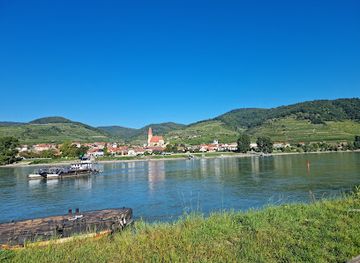
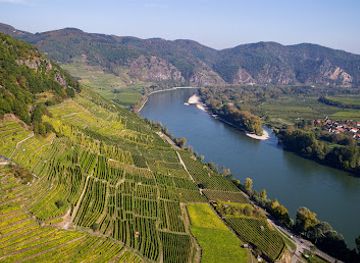
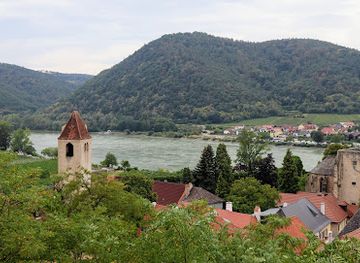
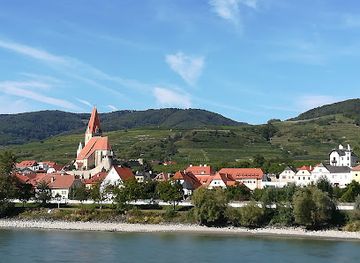
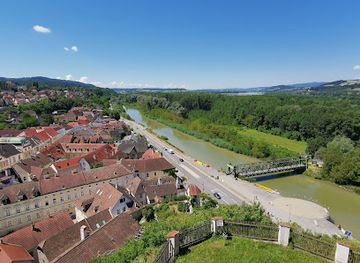
Explore Wachau on the Map
A handpicked selection of must-see spots near Wachau, mapped for you.
Unlock the Best of Wachau
Buy tickets
-
No tickets available
Book tours with entry


Getting There
-
Public Transport
From Vienna, take a train to Krems or Melk. From Krems, buses (e.g., line 715 along the north bank or 720 along the south bank) connect the Wachau villages. A Wachau day ticket (€12, children €6) allows unlimited travel on these buses and ferries between Melk and Krems. Alternatively, take a train from Vienna to Melk and then a Danube river cruise to Krems. Ferries operate between various points, such as Spitz-Arnsdorf (year-round), Dürnstein-Rossatz (April to mid-October), and Weißenkirchen-St. Lorenz (April to November). Fares are typically €2-€5 per person for a short crossing. A family ticket for the Weissenkirchen/St. Lorenz and Spitz/Arnsdorf ferries is available at the Weißenkirchen municipal office for €120.
-
Driving
From Vienna, take the S5 Schnellstrasse to Krems. Then, the B3 (Donau Bundesstrasse) runs along the north bank of the Danube to Emmersdorf. Alternatively, take the A1 to Melk and then the B3 to Krems. A vignette is required for using the S5 and A1 (€9.40 for 10 days). Parking is available in Krems, Dürnstein, Spitz and Melk. In Weissenkirchen, parking is available next to the B3 in Altau, near the train station, and near the civic center. Be aware that some villages have narrow roads and limited parking. Tolls may apply for tunnels on certain routes to the Wachau.
Discover more about Wachau













Your all‑in‑one travel companion app
Explore expert travel guides, compare and book tours, experiences, hotels, and more—all from the palm of your hand. Download now for seamless trip planning wherever your wanderlust takes you.


Explore More of Wachau Valley
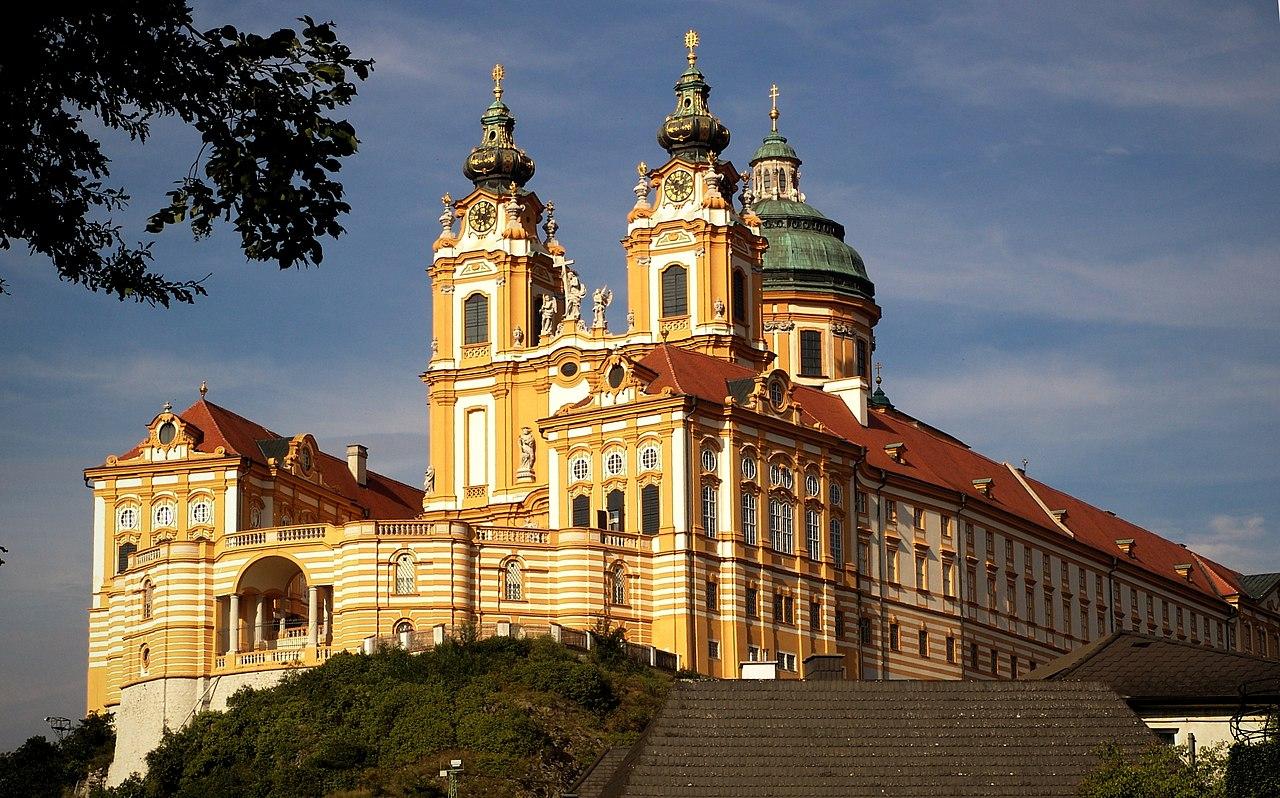
Looking beyond Wachau? Discover Wachau Valley for broader travel guides, local hot-spots, and regional highlights.
Explore Wachau Valley
Discover the enchanting Dürnstein Castle, a historical landmark offering stunning views and rich history amidst the beauty of the Danube Valley.
Explore Kupferwandl's scenic trails in Austria's Wachau region, offering views, historical sites, and a perfect nature escape. Hiking and history combined.
