

Free Wipptal Travel Guide & Mobile App
Explore Wipptal with free travel guides. Discover regional history, expert tips, proposed trips, and audio guides on web or mobile app.


Explore Austrian Wipptal for Brenner-route history, peaceful side valleys, alpine walking, traditional villages and year-round mountain activities.
Read more about Wipptal
When is the best time to visit Wipptal?
Best: June–August · 21–24°C| Month | High (°C) | Rainfall (mm) |
|---|---|---|
| January | 0 | 40 |
| February | 2 | 45 |
| March | 7 | 50 |
| April | 12 | 55 |
| May | 17 | 60 |
| June (best) | 21 | 65 |
| July (best) | 24 | 70 |
| August (best) | 24 | 70 |
| September | 19 | 65 |
| October | 14 | 60 |
| November | 7 | 55 |
| December | 1 | 50 |
Getting to and around Wipptal
How to get there
Transportation
Top city travel guides in Wipptal
The cities of Wipptal, and the easiest places to base yourself.

Swipe for more cities
Destinations in Wipptal
Resorts, valleys and scenic spots worth a trip of their own.
-

-


Swipe for more destinations
Best attractions in Wipptal
Wipptal's attractions are concentrated in its landscapes, historic villages and access to the mountains rather than in large urban museums. The main valley offers railway heritage, churches, traditional settlement patterns and views of the Europabrücke near Schönberg, while Matrei and Steinach provide useful bases for exploring the surrounding countryside. Maria Waldrast combines pilgrimage history, woodland walks and a high alpine setting above Matrei. In the side valleys, walking routes lead through larch forests, meadow slopes and high mountain terrain around Navis, Schmirn, Vals, Gschnitz and Obernberg. These valleys are also suited to snowshoeing, ski touring and cross-country activities in the appropriate season. Families may appreciate shorter village walks and accessible nature outings, while experienced hikers can use the region as a starting point for longer routes towards surrounding ranges. The most rewarding approach is to combine a village or heritage stop with time outdoors, allowing for changing weather and the slower pace of mountain travel.
-
Tourist attraction
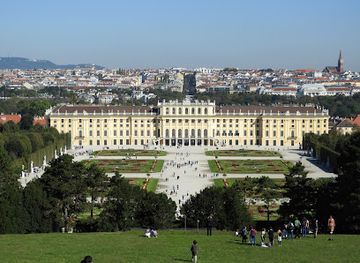
Schönbrunn Palace
Explore Vienna's imperial history at the magnificent Schönbrunn Palace, a UNESCO World Heritage site with stunning Baroque architecture and gardens.
-
Tourist attraction
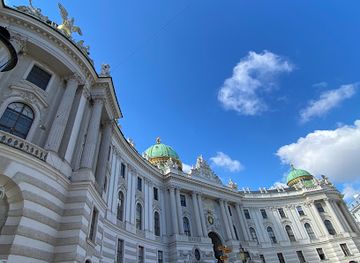
Hofburg
Explore Vienna's Hofburg Palace: a majestic journey through centuries of imperial history, art, and culture in the heart of Austria.
-
 Tourist attraction
Fortress Hohensalzburg
Explore Salzburg's iconic Fortress Hohensalzburg: a medieval masterpiece with stunning views, rich history, and captivating museums.
-
Tourist attraction
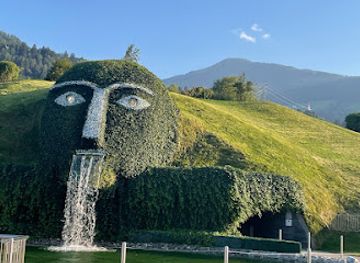
Swarovski Kristallwelten
Discover a sparkling world of art and imagination at Swarovski Kristallwelten in Wattens, Austria, a dazzling experience for all ages.
Best landmarks in Wipptal
The defining landmark of Wipptal is the Europabrücke near Schönberg, a large motorway bridge spanning the Sill valley and a striking reminder of the region's role in modern European transport. It stands above a landscape where older roads, railway lines, villages and farms reveal successive generations of travel infrastructure. Matrei am Brenner's historic centre and parish church represent the valley's long role as a stopping place on the Brenner route, while churches and chapels in the surrounding villages express the dispersed religious culture of Tyrolean mountain communities. Above Matrei, Maria Waldrast is both a pilgrimage landmark and a distinctive high-set religious complex framed by forest and alpine peaks. The Brenner Pass itself is a geographical and historical landmark at the southern end of the Austrian Wipptal, marking a major crossing between the Inn Valley and the continuation of the route into Italy. In the side valleys, the most memorable landmarks are often natural: steep wooded slopes, open pasture basins and high ridgelines that define the character of places such as Gschnitz, Schmirn and Obernberg.
-
Castle
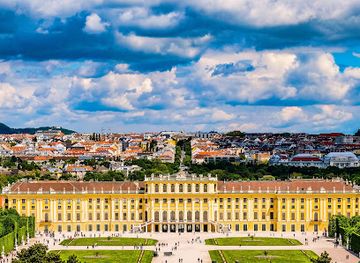
Schönbrunn Palace
Explore Vienna's imperial history at Schönbrunn Palace, a UNESCO World Heritage site with opulent state rooms, stunning Baroque gardens, and the world's oldest zoo, offering a glimpse into the lives of the Habsburgs.
-
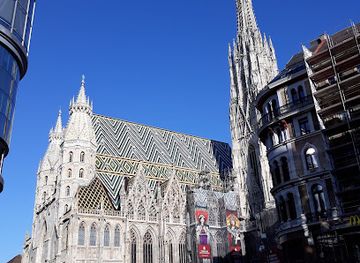
Cathedral
St. Stephen's Cathedral
Explore Vienna's iconic Gothic cathedral: a symbol of history, art, and Austrian identity in the heart of the city.
-
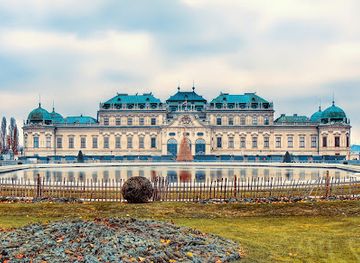
Museum
Belvedere Palace
Discover Austrian art and Baroque architecture at the Belvedere Palace, home to Gustav Klimt's 'The Kiss' and stunning gardens in Vienna.
-
Fortress
Fortress Hohensalzburg
Explore the historic Fortress Hohensalzburg, a majestic medieval castle offering stunning views & a glimpse into Salzburg's rich past.
Explore Wipptal on the map
Plan your trip on one map. See where the top cities, national parks and sights are, and book hotels and experiences in a few clicks.
Best hotels in Wipptal
Best restaurants in Wipptal
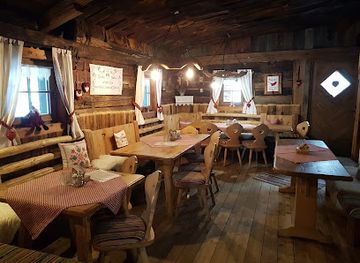
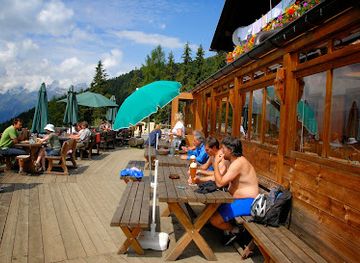
Wipptal's food culture is rooted in Tyrolean home cooking, alpine dairy farming and the traditions of village inns and mountain huts. Menus commonly draw on ingredients such as potatoes, cabbage, cheese, bacon and seasonal game, with dishes including Tiroler Gröstl, Kaspressknödel and Käsespätzle reflecting the wider cuisine of Tyrol rather than an exclusively Wipptal origin. Bread, cakes and strudels are important in cafés and family-run establishments, while mountain huts offer filling food suited to walkers and winter sports enthusiasts. In the main valley, restaurants and guesthouses serve a broader range of Austrian and international dishes, whereas the side valleys tend towards traditional inns and simple alpine fare. Local farm shops and direct-sales points may offer cheese, smoked products, preserves and baked goods, but availability varies by season. Reservations are sensible for popular rural dining rooms, particularly at weekends and during holiday periods.
-
Restaurant
Grawa Alm
Discover authentic Austrian cuisine at Grawa Alm, nestled in stunning alpine scenery within Neustift im Stubaital.
-
Restaurant
Prantneralm
Experience alpine dining at Prantneralm: savor local flavors while enjoying stunning mountain views and access to breathtaking hiking trails.
-
Restaurant
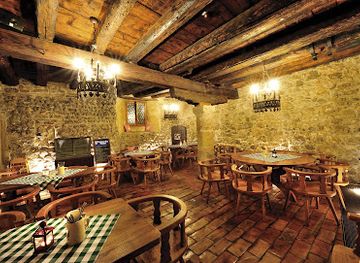
Augustiner Keller - Goldener Engl
Experience authentic Tyrolean cuisine at Augustiner Keller - Goldener Engl, where tradition meets hospitality in Hall in Tirol.
-
Restaurant
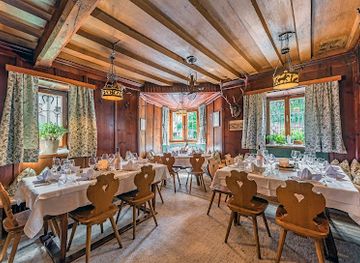
Gasthof Isserwirt
Discover authentic Tyrolean cuisine at Gasthof Isserwirt in Lans, where tradition meets contemporary dining amidst breathtaking mountain views.
Best bars in Wipptal
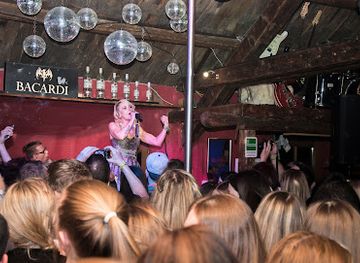
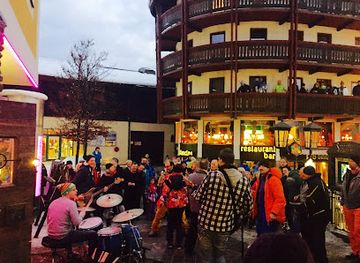
Evening life in Wipptal is modest and locally focused. In Matrei am Brenner and Steinach am Brenner, visitors can find traditional inns, hotel bars and restaurants where the evening is centred on food and conversation rather than a large club scene. Smaller villages in the side valleys generally offer only a few places to eat or drink, with nightlife shaped by local events, seasonal gatherings and occasional live music. Après-ski activity may become more noticeable in winter, but it remains smaller in scale than in Austria's major resort centres. The valley's proximity to Innsbruck, outside Wipptal, gives visitors access to a much wider late-night offering without requiring the region itself to function as a city destination. Check local arrangements in advance, as opening patterns in rural areas can change with the season.
-
Bar
Hohenhaus Tenne Hintertux, Zillertal/Tirol
Experience the vibrant après-ski atmosphere at Hohenhaus Tenne, the ultimate destination for dining, dancing, and unwinding in Hintertux, Tirol.
-
Bar
Liquid Diary
Discover the vibrant nightlife at Liquid Diary in Innsbruck, where creative cocktails and a lively atmosphere await every visitor.
-
Gastropub
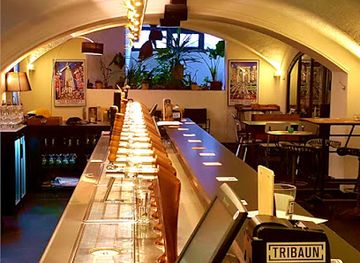
Tribaun
Discover Tribaun: A lively gastropub in Innsbruck, serving gourmet pizzas and live music for an unforgettable night out.
-
Restaurant
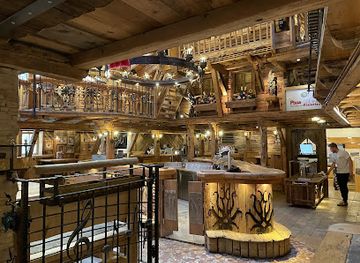
Almi's Berghotel Wipptal, Tirol
Experience the tranquility of Almi's Berghotel Wipptal, an alpine retreat with exquisite dining, a soothing spa, and breathtaking mountain views.

Best nightclubs in Wipptal
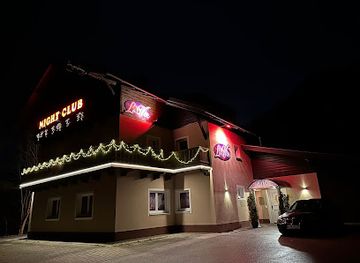
Evening life in Wipptal is modest and locally focused. In Matrei am Brenner and Steinach am Brenner, visitors can find traditional inns, hotel bars and restaurants where the evening is centred on food and conversation rather than a large club scene. Smaller villages in the side valleys generally offer only a few places to eat or drink, with nightlife shaped by local events, seasonal gatherings and occasional live music. Après-ski activity may become more noticeable in winter, but it remains smaller in scale than in Austria's major resort centres. The valley's proximity to Innsbruck, outside Wipptal, gives visitors access to a much wider late-night offering without requiring the region itself to function as a city destination. Check local arrangements in advance, as opening patterns in rural areas can change with the season.
-
Disco club
Disco Villa GmbH (Disco, Tanzbar, Rockbar, Pub)
Discover the electrifying nightlife of Disco Villa GmbH in Mariapfarr, a disco club with diverse music, delicious food, and a vibrant atmosphere.
-
Night club
Lady-o Nightclub
Discover the vibrant nightlife of Innsbruck at Lady-o Nightclub, where unforgettable parties and electrifying music await.
-
Night club
Après Ski & Nightclub Castello
Discover the electrifying nightlife at Après Ski & Nightclub Castello in Saalbach-Hinterglemm, where fun and music meet after a day on the slopes.
-
Night club
La Vie Night Club
Discover the vibrant nightlife and electrifying atmosphere at La Vie Night Club in Lofer, Austria, where every night is a dance party.

Best shops in Wipptal
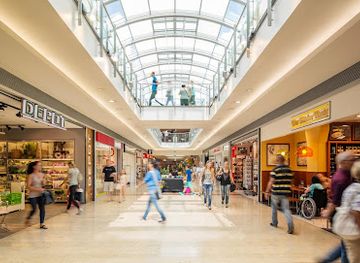
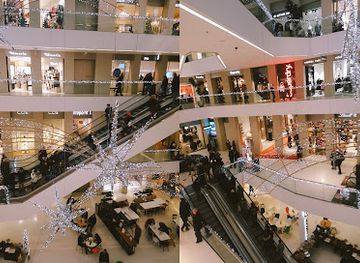
Shopping in Wipptal is practical and local rather than centred on large retail districts. Matrei am Brenner and Steinach am Brenner are the main places for everyday supplies, outdoor equipment and small independent businesses, while village shops serve the needs of residents in the side valleys. Farm shops and direct-sales points may stock regional cheese, smoked meats, bread, preserves, honey and other seasonal products, providing more meaningful souvenirs than generic alpine merchandise. Visitors can also look for Tyrolean handicrafts, woollen goods, woodwork and locally made food products in specialist shops and at selected seasonal markets. The smaller settlements are not designed for extensive browsing, and opening arrangements can vary, particularly outside the main tourist seasons. For a broader selection of fashion, books and international brands, Innsbruck outside the region is the nearest major shopping centre; within Wipptal, the appeal lies in useful local purchases and products connected with farming and mountain life.
-
Shopping mall
DEZ Innsbruck
Discover DEZ Innsbruck: A captivating shopping experience set against the stunning backdrop of the Swiss Alps, offering diverse stores and dining options.
-
Outlet mall
Outlet Center Brenner
Explore unbeatable deals at Outlet Center Brenner, a shopper's haven in the beautiful Brenner region of Italy.
-
Shopping mall
Sillpark
Discover the heart of Innsbruck at Sillpark Shopping Center, where shopping, dining, and local culture come together in a vibrant atmosphere.
-
Shopping mall
Kaufhaus Tyrol
Discover shopping bliss at Kaufhaus Tyrol, Innsbruck's premier shopping mall offering a variety of stores, dining options, and a vibrant atmosphere.
Get your free copy of our complete guide to Wipptal, delivered straight to you.
Everything on this page, from attractions and restaurants to essentials and local phrases, in one PDF you can read offline, print or share.
Already have an account? Sign in
Your Wipptal guide is ready.
We'll send it to · Not you? Sign out

Getting your guide ready…
We are putting together a fresh copy of the Wipptal guide. This can take up to a minute.
This can take a few moments. If your browser asks, choose Allow so the download can start. You'll find the guide in your Downloads folder.
Nothing happened? Download it again
Sorry, the guide is taking longer than usual. Please try again in a minute, or get it by email instead.
Wipptal essentials
Currency and Payment
Safety
Emergency Situations
Do's and Don'ts
Local Tips
From Eve
Local phrases worth knowing
You don't need to get them perfect. A few words go a long way, and locals appreciate the effort.
Basics
| English | Local | Say it |
|---|---|---|
| Hello | Grüß Gott | [Groos Got] |
| Goodbye | Auf Wiedersehen | [Owf Veederzeyn] |
| Yes | Ja | [Yah] |
| No | Nein | [Nine] |
| Please/You're welcome | Bitte | [Bitt-eh] |
| Thank you | Danke | [Dahn-keh] |
| Excuse me/Sorry | Entschuldigung | [Ent-shool-dee-goong] |
| How are you? | Wie geht's? | [Vee gates?] |
| Fine. And you? | Gut. Und dir? | [Goot. Oond deer?] |
| Do you speak English? | Sprechen Sie Englisch? | [Shprecken Zee English?] |
| I don't understand | Ich verstehe nicht | [Ikh fershteh nikht] |
Eating & Drinking
| English | Local | Say it |
|---|---|---|
| I'd like to see the menu, please | Ich hätte gerne die Speisekarte, bitte | [Ikh het-teh gair-ne dee Shpy-seh-kart-eh, bitt-eh] |
| I don't eat meat | Ich esse kein Fleisch | [Ikh ess-eh kahyn Flysh] |
| Cheers! | Prost! | [Prohst!] |
| I would like to pay, please | Ich möchte bezahlen, bitte | [Ikh merk-teh beh-tsahl-en, bitt-eh] |
Emergencies
| English | Local | Say it |
|---|---|---|
| Help! | Hilfe! | [Hil-feh!] |
| Go away! | Geh weg! | [Gay veg!] |
| Call the Police! | Rufen Sie die Polizei! | [Roofen Zee dee Politz-eye!] |
| Call a doctor! | Rufen Sie einen Arzt! | [Roofen Zee eye-nen Arts-t!] |
| I'm lost | Ich bin verloren | [Ikh bin fer-lo-ren] |
| I'm ill | Ich bin krank | [Ikh bin krank] |
Shopping
| English | Local | Say it |
|---|---|---|
| I'd like to buy... | Ich möchte kaufen... | [Ikh merk-teh kau-fen...] |
| I'm just looking | Ich schaue nur | [Ikh shau-eh noor] |
| How much is it? | Wie viel kostet es? | [Vee feel kost-et es?] |
| That's too expensive | Das ist zu teuer | [Dahs ist tsoo toy-er] |
| Can you lower the price? | Können Sie den Preis senken? | [Kern-en Zee den Price senk-en?] |
Time & Numbers
| English | Local | Say it |
|---|---|---|
| What time is it? | Wie viel Uhr ist es? | [Vee feel Oor ist es?] |
| It's one o'clock | Es ist ein Uhr | [Es ist ine Oor] |
| Half past (10) | Halb (10) | [Halb (10)] |
| Morning | Morgen | [Morg-en] |
| Afternoon | Nachmittag | [Nahkh-mit-tahg] |
| Evening | Abend | [Ah-bent] |
| Yesterday | Gestern | [Gest-ern] |
| Today | Heute | [Hoy-teh] |
| Tomorrow | Morgen | [Morg-en] |
| 1 | Eins | [I-ns] |
| 2 | Zwei | [Tsv-eye] |
| 3 | Drei | [Dry] |
| 4 | Vier | [Veer] |
| 5 | Fünf | [Foonf] |
| 6 | Sechs | [Zex] |
| 7 | Sieben | [Zee-ben] |
| 8 | Acht | [Akh-t] |
| 9 | Neun | [Noyn] |
| 10 | Zehn | [Tzen] |
Transport & Directions
| English | Local | Say it |
|---|---|---|
| Where's a/the...? | Wo ist ein/das...? | [Vo ist ine/dahs...?] |
| What's the address? | Wie ist die Adresse? | [Vee ist dee Ah-dres-se?] |
| Can you show me (on the map)? | Können Sie mir (auf der Karte) zeigen? | [Kern-en Zee meer (owf der Kart-eh) tsai-gen?] |
| When's the next (bus)? | Wann kommt der nächste (Bus)? | [Vahn kommt der next-eh (Boos)?] |
| A ticket (to ....) | Ein Ticket (nach ....) | [Ine Tick-et (nahkh ....)] |
History of Wipptal
Prehistoric and Roman Alpine Passage
The Brenner route has long provided one of the most practical crossings of the central Alps. Finds from the wider Tyrolean region attest to prehistoric movement through the mountains, while Roman administration brought greater structure to the route between the northern Italian territories and the Inn Valley. The Roman road over the Brenner helped connect settlements and military centres, and the corridor that later became Wipptal developed its enduring importance from this combination of geography and transport. Although much of the modern infrastructure has replaced earlier roads, the valley's role as a north-south route is an ancient one.
Medieval Matrei and the Brenner Route
During the Middle Ages, the communities of the Wipptal grew around agriculture, ecclesiastical foundations and the movement of merchants, pilgrims and officials across the pass. Matrei became an important stopping place on the route, while churches and chapels served scattered settlements in the main valley and side valleys. Local landholding was shaped by the Counts of Tyrol and later Habsburg rule, linking the region politically with the wider Tyrolean lands. The pattern of compact villages, farmsteads and religious buildings still reflects this medieval organisation of settlement.
Pilgrimage at Maria Waldrast
The monastery and pilgrimage church of Maria Waldrast, on the slopes above Matrei, became one of the significant religious destinations of the Wipptal. Its origins lie in a medieval tradition associated with a Marian image, and the site developed as a place of pilgrimage in the centuries that followed. The high setting, wooded approach and mountain panorama contributed to its appeal, while the surrounding communities supported its religious and practical life. Today Maria Waldrast remains a working pilgrimage site as well as a historic destination for walkers and visitors interested in Tyrolean religious heritage.
The Napoleonic Era and Tyrolean Resistance
The Wipptal's position on the Brenner route made it strategically important during the conflicts surrounding the Napoleonic Wars. Tyrol was contested between the Habsburg monarchy and forces allied with Napoleon, and the 1809 Tyrolean uprising drew support from communities across the region. Fighting and troop movements affected the route over the Brenner and the settlements along it, although the best-known episode of the uprising took place at Bergisel outside Wipptal, near Innsbruck. The period strengthened the historical association between the region, Tyrolean political identity and resistance to foreign occupation.
The Brenner Railway, 1867
The opening of the Brenner Railway in 1867 transformed travel through the valley. The line created a reliable connection between Innsbruck and the South Tyrolean side of the pass, accelerating the movement of passengers, goods and mail while reducing dependence on packhorse and coach traffic. Stations at settlements along the route encouraged new economic activity and made the Wipptal more accessible to visitors. Railway engineering also became part of the region's landscape, and the line remains an important north-south passenger and freight route within the Austrian section of the valley.
Modern Transit and the Europabrücke
Twentieth-century road building changed Wipptal on a scale comparable with the railway a century earlier. The Brenner motorway became a major European transport artery, and the Europabrücke, completed in the 1960s near Schönberg, became a prominent symbol of modern Alpine engineering. The bridge and motorway improved long-distance connections but also brought traffic, noise and infrastructure pressure to the valley floor. This contrast between an international transit corridor and quieter agricultural side valleys is central to understanding Wipptal today.
Wipptal in Photos
Browse through our photo collection highlighting the charm and character of the destination.
Neighbouring regions of Wipptal
The closest regions to Wipptal, if you have time for more than one.
-

-

-

-

-


Swipe for more regions
Explore more
Explore more of Austria
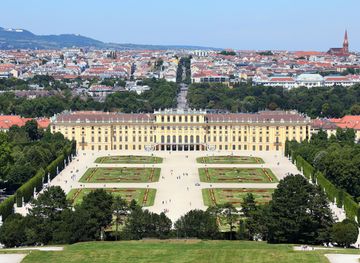
Discover Austria's blend of alpine landscapes, rich cultural heritage, and culinary delights, from Vienna's historic charm to Tyrol's dramatic beauty.
Explore Austria