

Free De Haan Travel Guide & Mobile App
Plan your De Haan trip with Evendo. Get free guides to top attractions, restaurants, hotels, and bars. Web access or download the mobile app.


De Haan's coastal dunes, Belle Époque villas, broad beach and quiet lanes offer relaxed Belgian seaside sightseeing near Bruges and Ostend, Belgium.
Seaside Character
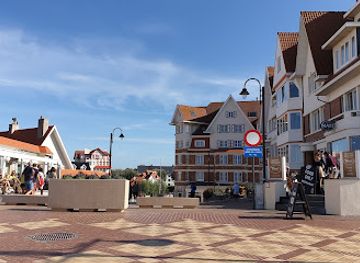
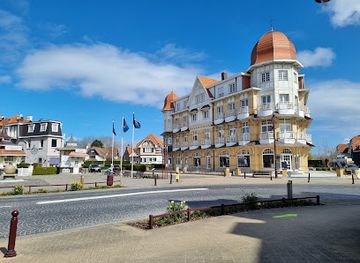
De Haan is a low-rise Belgian resort on the North Sea coast, known for its broad sandy beach, wooded dunes and distinctive Belle Époque villas. Unlike many more intensively developed coastal towns, its central district, often called the Concession, retains a relatively spacious, garden-like character, with winding streets and few tall apartment blocks. The result is a seaside landscape shaped as much by architecture and planting as by the beach itself.Read more about De Haan
Villas, Dunes and the Coast
A Quiet Base for Flanders
When is the best time to visit De Haan?
Best: June–August · 22–24°C| Month | High (°C) | Rainfall (mm) |
|---|---|---|
| January | 6 | 67 |
| February | 8 | 50 |
| March | 11 | 59 |
| April | 15 | 48 |
| May | 18 | 63 |
| June (best) | 22 | 75 |
| July (best) | 24 | 81 |
| August (best) | 23 | 83 |
| September | 20 | 75 |
| October | 16 | 93 |
| November | 11 | 107 |
| December | 8 | 91 |
Getting to and around De Haan
How to get there
Transportation
Best attractions in De Haan
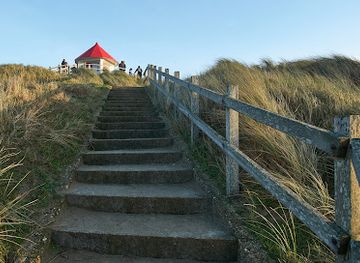
De Haan’s principal attraction is the coastal landscape itself: a broad sandy beach backed by dunes and a seafront promenade suited to walking, swimming in supervised areas and watching the changing North Sea light. Inland, the Concession rewards slow exploration among leafy lanes and Belle Époque villas, where decorative gables and verandas reveal the resort’s early twentieth-century ambitions. Dune paths lead towards Wenduine, a neighbouring seaside district with its own promenade and the Spioenkop, a red-and-white lookout tower standing on one of the coast’s higher dunes. The Hubertmolen, a restored windmill near Wenduine, provides a link with the agricultural history of the surrounding polder landscape. De Haan’s connection with Albert Einstein is recalled at Villa Savoyarde, where he stayed briefly in 1933. Cycling routes extend beyond the resort towards villages, waterways and open fields, offering a calmer perspective on the Flemish coast.
-
State park
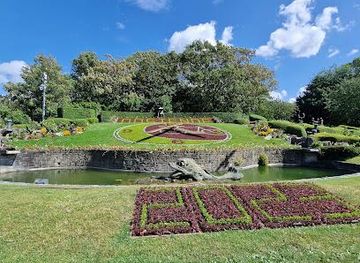
Leopoldpark
Discover Leopoldpark in Ostend: a serene escape with historical charm, vibrant gardens, and cultural attractions in the city's heart.
29 min drive · 9.7 km from city centre
-
Event venue
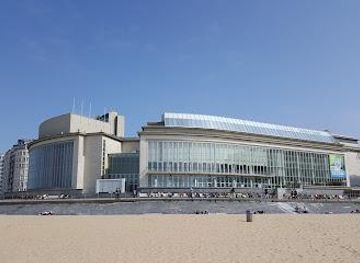
Kursaal Oostende
Discover the vibrant culture and breathtaking views at Kursaal Oostende, the premier event venue along the Belgian coast.
29 min drive · 9.6 km from city centre
-
Event venue
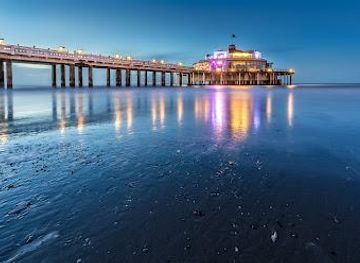
Belgium Pier
Discover the enchanting Belgium Pier in Blankenberge, where stunning views meet delightful dining and vibrant local events.
27 min drive · 8.9 km from city centre
-
Tourist attraction
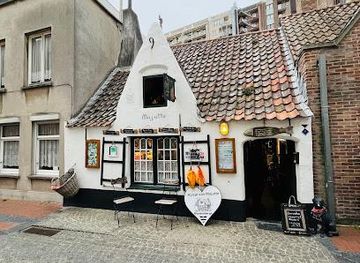
Huisje van Majutte
Experience the unique blend of maritime history and local culture at Huisje van Majutte, a must-visit destination in Blankenberge.
24 min drive · 7.9 km from city centre
Best landmarks in De Haan
De Haan’s most distinctive landmark ensemble is the Concession, where low-rise Belle Époque and interwar villas line curving, tree-filled streets planned as a resort landscape rather than a dense urban centre. The De Haan aan Zee Coastal Tram station is a recognisable reminder of the transport infrastructure that opened the coast to mass tourism. In Wenduine, the Spioenkop is a small red-and-white lookout tower on a dune, valued for its elevated views over the shoreline and hinterland. The Hubertmolen, a traditional windmill near Wenduine, represents the agricultural world behind the resort and the importance of wind power in the Flemish countryside. Villa Savoyarde is associated with Albert Einstein’s stay in 1933, adding a modern cultural episode to the municipality’s architectural and coastal story.
-
 Holiday park
Center Parcs de Haan
Discover the ultimate family retreat at Center Parcs de Haan, where adventure meets relaxation in a stunning Belgian coastal setting.
7 min drive · 2.3 km from city centre
-
Beach
Strand De Haan
Experience the serene beauty of Strand De Haan, a family-friendly beach in Belgium known for its golden sands and breathtaking sunsets.
8 min walk · 0.7 km from city centre
-
Tourist attraction
Wenduine Spioenkop
Experience breathtaking panoramic views and invigorating hiking trails at Wenduine Spioenkop, a must-visit tourist attraction in De Haan, Belgium.
13 min drive · 4.2 km from city centre
-
Public beach
De Haan Beach
Discover the serene beauty of De Haan Beach, a top-rated public beach in Belgium perfect for relaxation, family fun, and seaside adventures.
8 min walk · 0.7 km from city centre
Explore De Haan on the map
Plan your De Haan trip on one map. See where the top attractions, landmarks, restaurants, bars and hotels are, find what's near where you're staying, and book hotels and experiences in a few clicks.
Best hotels in De Haan
Best restaurants in De Haan
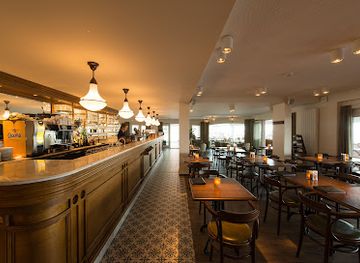
De Haan’s dining scene reflects its seaside setting and Flemish coastal traditions, with cafés, brasseries, bakeries and restaurants concentrated around the centre, the Concession and the promenade. Menus commonly draw on North Sea produce, including mussels, grey shrimp, sole and other seasonal fish, while Belgian staples such as chips, croquettes and hearty stews provide more informal choices. Waffles, pancakes, pastries and ice cream suit a traditional day beside the beach, and Belgian beer is a familiar accompaniment to regional dishes. Wenduine adds a fishing-town atmosphere and is associated with shrimp-fishing heritage, though the catch and preparation available in restaurants varies by season. Visitors will find both straightforward family dining and more polished contemporary menus, with prices and opening patterns often changing outside the summer period.
-
Brasserie
Brasserie Paname
Experience delightful dining at Brasserie Paname with local flavors and stunning sea views in beautiful De Haan.
8 min walk · 0.6 km from city centre
-
Brasserie
Mano
Experience exquisite coastal dining at Mano in De Haan - where fresh flavors meet stunning sea views.
8 min walk · 0.6 km from city centre
-
Breakfast
Ontbijthuis Beaufort
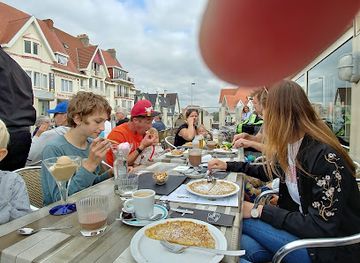
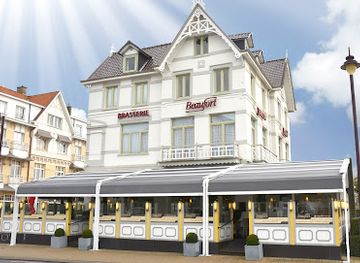
Enjoy delightful breakfasts at Ontbijthuis Beaufort in De Haan - where cozy ambiance meets exquisite taste!
1 min walk · 0.1 km from city centre
-
Brasserie
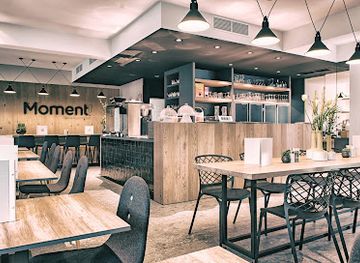
Apart & Moment (De Coqisserie)
Discover authentic Belgian cuisine at Apart & Moment (De Coqisserie), your go-to brasserie in scenic De Haan.
7 min walk · 0.5 km from city centre
Best bars in De Haan
De Haan’s evenings are generally relaxed rather than club-focused. The main options are hotel bars, Belgian cafés, brasseries and terraces around the centre and seafront, where local beer, wine, coffee and simple aperitifs accompany conversation after a day outdoors. In summer, the promenade and beach area gain more seasonal activity, while the Concession offers a quieter setting among villas and trees. Larger nightlife venues are limited, so late-night entertainment is more likely to involve a leisurely drink, a restaurant meal or occasional cultural programming than a dedicated nightclub circuit. The Coastal Tram makes neighbouring resorts accessible for a broader choice of evening venues, although visitors should check the last connections rather than assume frequent late service. Respect for residential quiet is particularly important in the villa districts.
-
Brasserie
Brasserie Paname
Discover the flavors of Belgium at Brasserie Paname, a coastal culinary delight in De Haan offering exquisite dishes and a warm atmosphere.
8 min walk · 0.6 km from city centre
-
Brasserie
Mano
Discover the coastal culinary delight at Mano, a charming brasserie in De Haan offering fresh local dishes and stunning sea views.
8 min walk · 0.6 km from city centre
-
Brasserie
Apart & Moment (De Coqisserie)
Experience the charm of De Haan at Apart & Moment (De Coqisserie), a delightful brasserie offering fresh pastries, pancakes, and local cuisine for every taste.
7 min walk · 0.5 km from city centre
-
Pub
Westhinder
Experience the warmth of Belgian hospitality at Westhinder Pub, a cozy spot perfect for unwinding with local brews and vibrant culture.
10 min drive · 3.3 km from city centre
Best nightclubs in De Haan
De Haan’s evenings are generally relaxed rather than club-focused. The main options are hotel bars, Belgian cafés, brasseries and terraces around the centre and seafront, where local beer, wine, coffee and simple aperitifs accompany conversation after a day outdoors. In summer, the promenade and beach area gain more seasonal activity, while the Concession offers a quieter setting among villas and trees. Larger nightlife venues are limited, so late-night entertainment is more likely to involve a leisurely drink, a restaurant meal or occasional cultural programming than a dedicated nightclub circuit. The Coastal Tram makes neighbouring resorts accessible for a broader choice of evening venues, although visitors should check the last connections rather than assume frequent late service. Respect for residential quiet is particularly important in the villa districts.
-
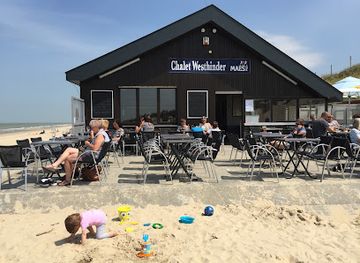
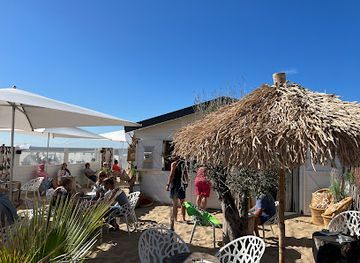
Bar
Baja Beach & Bar
Experience the ultimate beachside relaxation at Baja Beach & Bar, where delicious cocktails meet stunning seaside views in De Haan.
9 min walk · 0.7 km from city centre
-
Brasserie
De Witte Doorn
Experience the delightful flavors of Belgium at De Witte Doorn, a charming brasserie and lounge in De Haan, perfect for food lovers and beachgoers alike.
8 min drive · 2.5 km from city centre
-
Tapas Bar
Plaza d'Amanté
Experience the best of local cuisine at Plaza d'Amanté, a charming tapas bar and boutique eatery by the sea.
8 min walk · 0.6 km from city centre
-
Bar
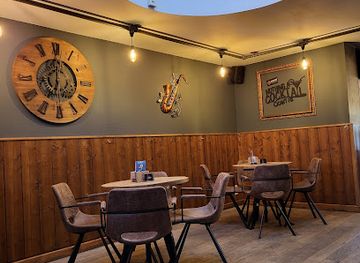
The Barrel
Explore the lively atmosphere of The Barrel in De Haan, a bar that offers a fantastic selection of drinks and a vibrant social scene.
3 min walk · 0.2 km from city centre
Best shops in De Haan
Shopping in De Haan is largely local and seasonal, centred on the streets around the Concession, the seafront and the village centre rather than a large enclosed retail district. Visitors will find bakeries, chocolatiers, cafés, beachwear shops, bookshops, small boutiques and stores selling practical seaside goods. Belgian chocolate, biscuits, beer and regional food products make familiar edible souvenirs, while coastal-themed gifts and simple craft items reflect the resort’s holiday economy. Wenduine provides additional everyday shops and seasonal beach retail. The most appealing purchases are often modest and useful—a box from a local-style chocolatier, fresh pastries or provisions for a picnic—rather than luxury goods. Opening patterns can be seasonal, with a wider choice during the summer and busy holiday weekends.
-
Supermarket
Delhaize De Haan
Explore Delhaize De Haan for local flavors and quality products in the heart of De Haan, Belgium.
1 min walk · 0.1 km from city centre
-
Brasserie
Apart & Moment (De Coqisserie)
Discover the delightful culinary experience at Apart & Moment, where fresh pastries meet savory dishes in the heart of De Haan's coastal charm.
7 min walk · 0.5 km from city centre
-
Ice Cream
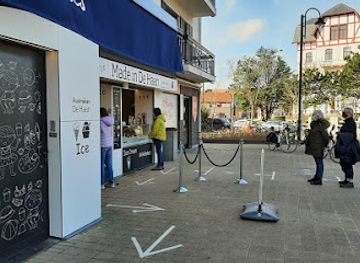
De Haan - Australian Home Made Ice Cream
Experience the exquisite flavors of homemade ice cream in De Haan, where each scoop is crafted with passion and quality.
4 min walk · 0.3 km from city centre
-
Supermarket
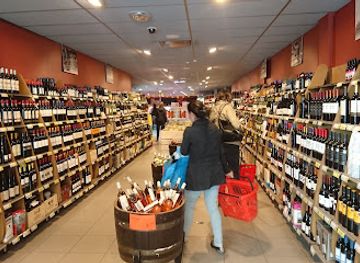
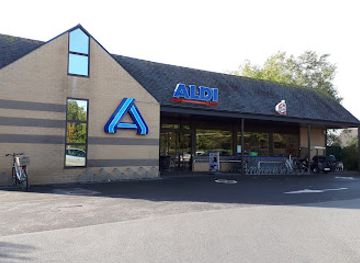
ALDI
Discover De Haan's ALDI: Your go-to supermarket for fresh produce, local cheeses, and exquisite wines at affordable prices.
10 min walk · 0.8 km from city centre
Get your free copy of our complete guide to De Haan, delivered straight to you.
Everything on this page, from attractions and restaurants to essentials and local phrases, in one PDF you can read offline, print or share.
Already have an account? Sign in
Your De Haan guide is ready.
We'll send it to · Not you? Sign out

Getting your guide ready…
We are putting together a fresh copy of the De Haan guide. This can take up to a minute.
This can take a few moments. If your browser asks, choose Allow so the download can start. You'll find the guide in your Downloads folder.
Nothing happened? Download it again
Sorry, the guide is taking longer than usual. Please try again in a minute, or get it by email instead.
De Haan essentials
Currency and Payment
Safety
Emergency Situations
Do's and Don'ts
Local Tips
From Eve
Local phrases worth knowing
You don't need to get them perfect. A few words go a long way, and locals appreciate the effort.
Basics
| English | Local | Say it |
|---|---|---|
| Hello | Hallo | [ha-loh] |
| Goodbye | Tot ziens | [toht zeens] |
| Yes | Ja | [yah] |
| No | Nee | [nee] |
| Please/You're welcome | Alstublieft | [alst-oo-bleeft] |
| Thank you | Dank u | [dahnk oo] |
| Excuse me/Sorry | Sorry | [soh-ree] |
| How are you? | Hoe gaat het met u? | [hoo gaat het met oo] |
| Fine. And you? | Goed. En met u? | [khoot en met oo] |
| Do you speak English? | Spreekt u Engels? | [sprekt oo ehngels] |
| I don't understand | Ik begrijp het niet | [ik be-ghreyp het neet] |
Eating & Drinking
| English | Local | Say it |
|---|---|---|
| I'd like to see the menu, please | Ik zou graag de menukaart willen zien, alstublieft | [ik zou khraahg de meh-noo-kahrt vil-len zeen, alst-oo-bleeft] |
| I don't eat meat | Ik eet geen vlees | [ik eet khayn flays] |
| Cheers! | Proost! | [prohst] |
| I would like to pay, please | Ik zou graag willen betalen, alstublieft | [ik zou khraahg vil-len buh-tah-len, alst-oo-bleeft] |
Emergencies
| English | Local | Say it |
|---|---|---|
| Help! | Help! | [help] |
| Go away! | Ga weg! | [gah wekh] |
| Call the Police! | Bel de politie! | [bel deh poh-lee-see] |
| Call a doctor! | Bel een dokter! | [bel ayn dohk-ter] |
| I'm lost | Ik ben verdwaald | [ik ben fer-dwahld] |
| I'm ill | Ik ben ziek | [ik ben zik] |
Shopping
| English | Local | Say it |
|---|---|---|
| I'd like to buy... | Ik zou graag ... kopen | [ik zou khraahg ... koh-pen] |
| I'm just looking | Ik ben gewoon aan het kijken | [ik ben khuh-woon ahn het kee-ken] |
| How much is it? | Hoeveel kost het? | [hoo-veyl kost het] |
| That's too expensive | Dat is te duur | [daht is teh dyur] |
| Can you lower the price? | Kunt u de prijs verlagen? | [koont oo de preys ver-lah-ghen] |
Time & Numbers
| English | Local | Say it |
|---|---|---|
| What time is it? | Hoe laat is het? | [hoo laht is het] |
| It's one o'clock | Het is één uur | [het is ayn oor] |
| Half past (10) | Half elf | [half elf] |
| Morning | Ochtend | [okh-tent] |
| Afternoon | Middag | [mi-dahkh] |
| Evening | Avond | [ah-vohnt] |
| Yesterday | Gisteren | [khis-ter-en] |
| Today | Vandaag | [vahn-dahkh] |
| Tomorrow | Morgen | [mor-khen] |
| 1 | Een | [ayn] |
| 2 | Twee | [tveh] |
| 3 | Drie | [dree] |
| 4 | Vier | [feer] |
| 5 | Vijf | [fayf] |
| 6 | Zes | [zehs] |
| 7 | Zeven | [zeh-ven] |
| 8 | Acht | [ahkht] |
| 9 | Negen | [nay-khen] |
| 10 | Tien | [teen] |
Transport & Directions
| English | Local | Say it |
|---|---|---|
| Where's a/the...? | Waar is een/de...? | [vahr is ayn/deh] |
| What's the address? | Wat is het adres? | [vaht is het ah-dres] |
| Can you show me (on the map)? | Kunt u het mij laten zien (op de kaart)? | [koont oo het may la-ten zeen (op deh kahrt)] |
| When's the next (bus)? | Wanneer is de volgende (bus)? | [ven-ehr is deh vol-hen-deh (bus)] |
| A ticket (to ....) | Een kaartje (naar ....) | [ayn kahrt-yuh (nar)] |
History of De Haan
Medieval Coastal Settlements
The area now administered by De Haan developed from several small settlements on the Flemish coastal plain, including Klemskerke, Vlissegem and Wenduine. Their history was shaped by the changing North Sea coastline, drainage works and the agricultural economy of the polders. Medieval parish churches and village structures provided the central focus of local life, while access to the sea supported fishing and small-scale coastal trade. Much of the landscape was never a dense medieval town: it was a dispersed environment of villages, fields, dykes and dunes. This rural foundation remains visible beyond the resort streets, particularly in the open polder scenery around the municipality.
From Fishing Village to Seaside Resort
Wenduine had an established fishing tradition before tourism altered the coast, while De Haan itself remained a relatively modest rural place until the late nineteenth century. The expansion of seaside recreation in Belgium encouraged new investment in coastal settlements, supported by improved roads and the developing railway network nearby. In 1889, the De Haan concession was granted for resort development. Rather than imposing a tightly packed urban grid, the plan promoted villas, greenery and a lower-density setting among the dunes. This decision became fundamental to the town’s later identity and explains the contrast between De Haan and more intensively built Belgian resorts.
The Belle Époque Concession
At the turn of the twentieth century, De Haan grew as a fashionable coastal resort for visitors seeking sea air, promenades and villa architecture. Houses combined late nineteenth- and early twentieth-century influences, including gables, turrets, verandas, decorative brickwork and half-timber effects. The Concession’s curving roads and planted spaces reflected contemporary ideas about health, leisure and picturesque planning. The coastal railway, and later the electric coastal tram, connected the resort with neighbouring towns and helped make the shore accessible to a wider public. Although wartime damage and later rebuilding changed parts of the coast, De Haan retained an unusually coherent impression of its early resort landscape.
War and Coastal Transformation
The Belgian coast became strategically important during both world wars, and the wider De Haan area experienced military occupation, restrictions and disruption. The Atlantic Wall, constructed during the Second World War under German occupation, left defensive structures along sections of the Belgian shoreline, although the most extensive surviving complex lies at Raversyde near Ostend rather than in central De Haan. After 1945, Belgian seaside towns entered a period of reconstruction and mass tourism. De Haan also modernised, but its lower-rise building pattern and wooded dunes helped preserve a character distinct from the apartment-dominated skyline found elsewhere on the coast.
Einstein’s Brief Belgian Stay
In 1933, Albert Einstein spent several months in De Haan after leaving Germany, during a period of political upheaval and growing antisemitic persecution. He stayed at the Villa Savoyarde, now associated with the town’s cultural history, before continuing his journey abroad. Einstein’s presence was brief, but it gives De Haan an unusual connection with the intellectual and political crises of interwar Europe. The episode also reflects the resort’s international clientele during the interwar years, when coastal villas and hotels attracted visitors from across Belgium and neighbouring countries. It is remembered as one strand of the town’s twentieth-century identity rather than its defining historical period.
Travel experiences inspired by this city


Swipe for more travel diaries
De Haan in Photos
Browse through our photo collection highlighting the charm and character of the destination.
Cities near De Haan
The closest cities to De Haan, if you have time for more than one stop.
-

-

-

-
-


Swipe for more cities
Explore more

Explore more of Belgium
Discover Belgium: A blend of medieval charm, culinary delights, and stunning landscapes. Explore historic cities, savor exquisite chocolates, and enjoy a perfect getaway.
Explore Belgium