

Free Flores Travel Guide & Mobile App
Plan your Flores trip with Evendo. Get free guides to top attractions, restaurants, hotels, and bars. Web access or download the mobile app.


Flores, Guatemala, pairs a colourful island town on Lake Petén Itzá with Maya heritage, sunset walks, local food and access to Tikal and northern Guatemala.
Island Setting and Character
Flores occupies a small island in Lake Petén Itzá, linked by a causeway to Santa Elena and the mainland in northern Guatemala. Its compact historic centre is a pleasing tangle of steep lanes, brightly painted façades, tiled roofs and lakeside viewpoints, where buildings associated with the Spanish colonial period stand alongside cafés, modest restaurants and family-run guesthouses. The island is small enough to explore on foot, yet its position gives the town an expansive outlook across the water, particularly at sunset from the shoreline promenade or near the white-domed Iglesia de Nuestra Señora de los Remedios y San Pablo.Read more about Flores
Maya Heritage and Living Culture
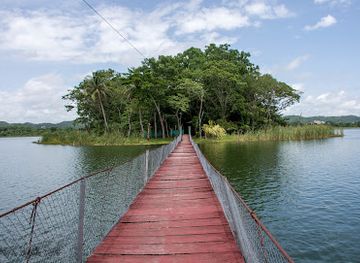
Lake and Forest Landscapes
When is the best time to visit Flores?
Best: July–September · 27°C| Month | High (°C) | Rainfall (mm) |
|---|---|---|
| January | 28 | 13 |
| February | 28 | 10 |
| March | 28 | 7 |
| April | 28 | 3 |
| May | 28 | 2 |
| June | 28 | 1 |
| July (best) | 27 | 1 |
| August (best) | 27 | 1 |
| September (best) | 27 | 1 |
| October | 28 | 3 |
| November | 28 | 8 |
| December | 28 | 11 |
Getting to and around Flores
How to get there
Transportation
Best attractions in Flores
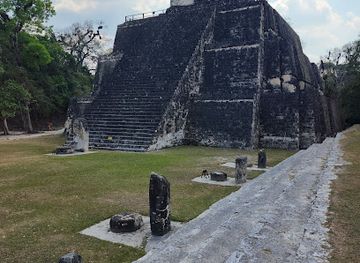
Flores's principal attraction is the island itself, where a walk around Lake Petén Itzá links the waterfront promenade, small plazas, colourful streets and the Iglesia de Nuestra Señora de los Remedios y San Pablo. The lake provides changing views across the water and access to boat excursions, while nearby Santa Elena offers the Museo Regional del Mundo Maya, which places the region's archaeology in a broader context. The great draw beyond town is Tikal National Park, a forested archaeological landscape of temples, plazas and causeways associated with one of the ancient Maya world's major cities; it lies outside Flores and requires separate transport. Other organised excursions reach Yaxha, another significant Maya site overlooking lakes, and the Biotopo Protegido Cerro Cahuí, where forest trails and wildlife complement the archaeological focus. Together, these experiences reveal Flores as both a compact lakeside town and a base for exploring northern Guatemala's heritage and ecosystems.
-
National park
Tikal National Park
Discover the ancient Mayan city of Tikal, a UNESCO World Heritage Site, surrounded by the lush rainforest of northern Guatemala.
1 h 3 min drive · 43 km from city centre
-
Historical landmark
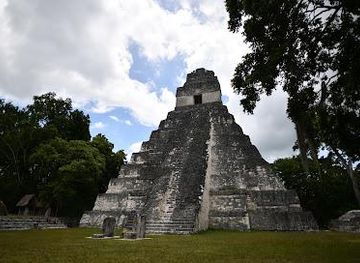
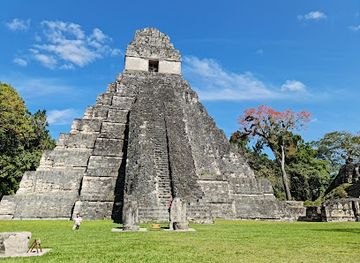
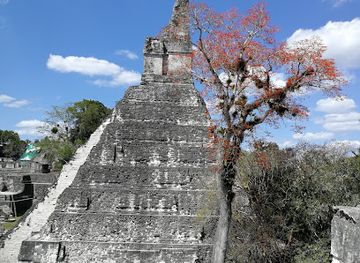
Templo de la Serpiente Bicéfala
Climb the tallest temple in Tikal for breathtaking jungle views and a glimpse into ancient Maya civilization. A must-see landmark!
1 h 3 min drive · 43 km from city centre
-
National park
TIKAL National Park
Discover the ancient Mayan city of Tikal, a UNESCO World Heritage Site nestled in the heart of the Guatemalan rainforest.
1 h 3 min drive · 43 km from city centre
-
Historical landmark
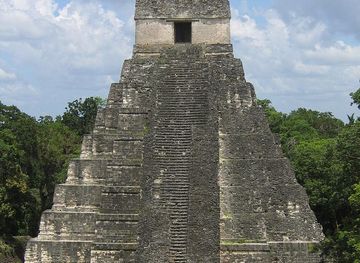
Templo del Gran Jaguar
Explore the iconic Templo del Gran Jaguar in Tikal National Park, a testament to the Mayan civilization's architectural and cultural achievements.
1 h 3 min drive · 43 km from city centre



Best landmarks in Flores
The most recognisable landmark in Flores is the Iglesia de Nuestra Señora de los Remedios y San Pablo, whose position on the island's highest central area gives it a visible presence above the surrounding streets and lake. The waterfront itself is another defining civic landscape, marked by the compact island's shoreline, viewpoints and relationship with Lake Petén Itzá. The causeway linking Flores to Santa Elena expresses the town's modern connection with the mainland, airport and regional roads. Flores's narrow streets and low, brightly coloured buildings reflect its development as a modest colonial and post-colonial settlement rather than a grand Spanish city. Its deepest historical landmark, however, lies beneath the modern town: the island was the site of Nojpetén, the Itza Maya capital captured by Spanish forces in 1697. Nearby archaeological museums and the wider Petén sites give physical context to that earlier history.
-
National park
Tikal National Park
Uncover the ancient wonders of Tikal National Park, a UNESCO site filled with towering pyramids, vibrant wildlife, and rich Mayan history in the heart of Guatemala.
51 min drive · 31 km from city centre
-
Historical landmark
Templo IV, Tikal
Experience the grandeur of Templo IV in Tikal, a historic Mayan temple offering stunning views and rich cultural heritage amidst lush rainforest.
1 h 3 min drive · 43 km from city centre
-
National park
TIKAL National Park
Experience the majesty of ancient Maya civilization at TIKAL National Park, a UNESCO World Heritage Site surrounded by breathtaking jungles.
51 min drive · 31 km from city centre
-
Hostel
Los Amigos Hostel
Discover the charm of Flores at Los Amigos Hostel, where comfort meets community in the heart of Guatemala's stunning landscapes.
4 min walk · 0.3 km from city centre
Explore Flores on the map
Plan your Flores trip on one map. See where the top attractions, landmarks, restaurants, bars and hotels are, find what's near where you're staying, and book hotels and experiences in a few clicks.
Best hotels in Flores
Best restaurants in Flores
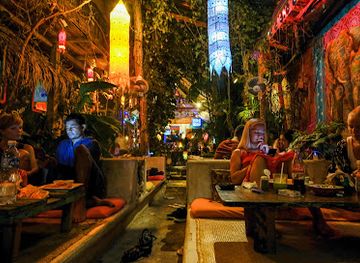
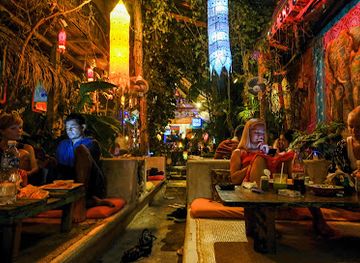
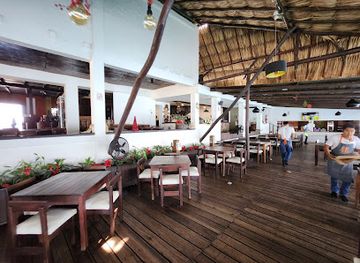
Flores's dining scene draws on the food traditions of Petén, Guatemala's wider maize-based cuisine and ingredients from the lake and tropical lowlands. Local menus may include lake fish, tamales, stews, tortillas, beans, plantains and fruit drinks, while restaurants around the island and in Santa Elena range from informal family eateries to cafés and international-style dining. The waterfront is particularly associated with relaxed meals and sunset views, although the mainland offers a more everyday atmosphere and a broader selection of modest local establishments. Visitors may encounter dishes influenced by neighbouring Maya communities, including preparations built around corn, chilli, herbs and seasonal produce. Markets and small food stalls are useful for snacks and fresh fruit, but hygiene standards vary, so busy vendors with a good local trade are generally the more sensible choice. Menus and opening patterns can change, particularly outside the main tourism season.
-
Restaurant
Los Amigos Hostel
Experience comfort and community at Los Amigos Hostel - your gateway to exploring Guatemala's breathtaking beauty.
4 min walk · 0.3 km from city centre
-
Restaurant
Restaurante Raices
Experience authentic Guatemalan flavors at Restaurante Raices in Flores - where every meal tells a story.
7 min walk · 0.6 km from city centre
-
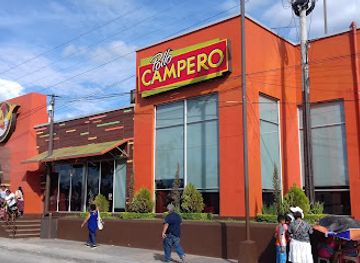
Chicken
Pollo Campero C.C. Maya Mall
Experience authentic Guatemalan flavors at Pollo Campero C.C. Maya Mall – where delicious chicken meets vibrant culture.
12 min walk · 1.0 km from city centre
-
Brunch
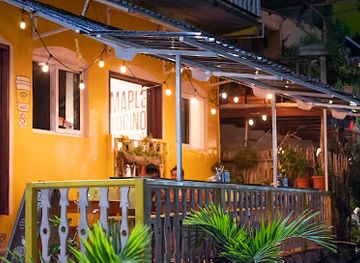
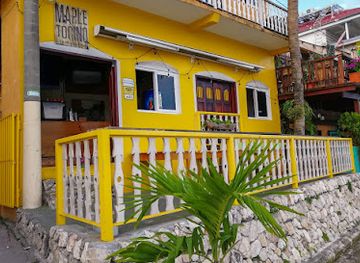
Maple & Tocino
Experience the best brunch in Flores at Maple & Tocino—where delicious breakfast meets delightful desserts.
2 min walk · 0.1 km from city centre
Best bars in Flores
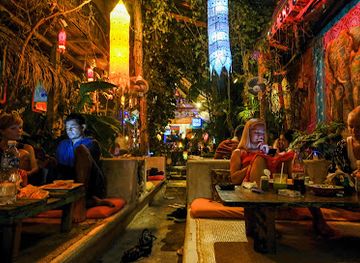
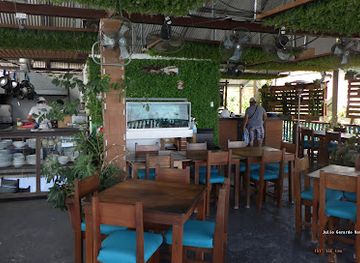
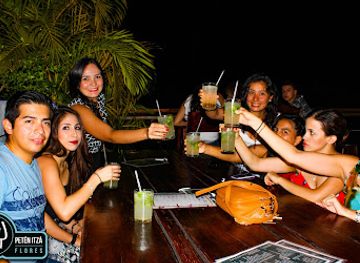
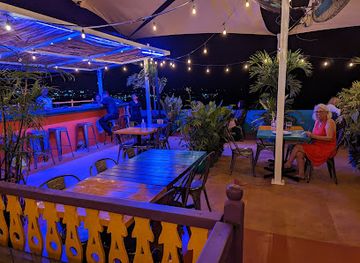
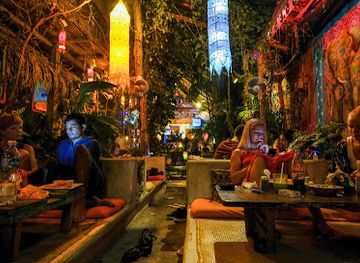
Evenings in Flores are generally sociable and relaxed rather than centred on a large club scene. The island's lakeside restaurants and bars provide places for a drink while the water darkens, and some venues offer music or informal entertainment, with greater activity usually concentrated around the central streets and waterfront. Santa Elena has additional local bars and casual nightlife, though the atmosphere is more practical and less scenic than on the island. Travellers seeking a late, high-energy club circuit should keep expectations modest; Flores is primarily a base for archaeological and lake excursions. Early evenings may also include cultural performances or live music in tourism-oriented venues, but programmes are variable. After dark, use established transport between the island, Santa Elena and accommodation outside the central area, and observe local expectations around noise and respectful behaviour.
-
Restaurant
Los Amigos Hostel
Discover the charm of Guatemala at Los Amigos Hostel in Isla de Flores, where vibrant community meets adventure, culture, and comfort.
4 min walk · 0.3 km from city centre
-
Restaurant
Restaurante Raices
Savor authentic Guatemalan cuisine at Restaurante Raices in Flores, where local flavors meet a stunning view.
7 min walk · 0.6 km from city centre
-
Restaurant
Restaurante Maracuyá
Experience the flavors of Guatemala at Restaurante Maracuyá, nestled in the heart of Isla de Flores with stunning views and delightful dishes.
2 min walk · 0.2 km from city centre
-
Restaurant
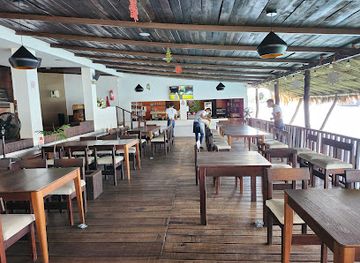
Terrazzo, Ristorante E Bar
Experience exquisite dining at Terrazzo, Ristorante E Bar in Flores, where culinary excellence meets breathtaking lakeside views.
4 min walk · 0.3 km from city centre
Best nightclubs in Flores
Evenings in Flores are generally sociable and relaxed rather than centred on a large club scene. The island's lakeside restaurants and bars provide places for a drink while the water darkens, and some venues offer music or informal entertainment, with greater activity usually concentrated around the central streets and waterfront. Santa Elena has additional local bars and casual nightlife, though the atmosphere is more practical and less scenic than on the island. Travellers seeking a late, high-energy club circuit should keep expectations modest; Flores is primarily a base for archaeological and lake excursions. Early evenings may also include cultural performances or live music in tourism-oriented venues, but programmes are variable. After dark, use established transport between the island, Santa Elena and accommodation outside the central area, and observe local expectations around noise and respectful behaviour.
-
Restaurant
Sky Bar
Experience vibrant nightlife and breathtaking views at Sky Bar in Flores, the perfect spot for dining and socializing under the stars.
4 min walk · 0.3 km from city centre
-
Bar
El Tropico
Experience the vibrant nightlife at El Tropico, a lively bar in Flores offering delicious drinks and a taste of local culture.
6 min walk · 0.4 km from city centre
-
Bar
Mangos Bar
Experience vibrant nightlife and exquisite cocktails at Mangos Bar on Isla de Flores, where every sunset becomes a celebration.
4 min walk · 0.3 km from city centre
-
Night club
Mayan Discoteca
Discover the vibrant nightlife of Flores at Mayan Discoteca, where music, dance, and culture come together for an unforgettable experience.
6 min walk · 0.5 km from city centre


Best shops in Flores
Shopping in Flores is concentrated in small independent shops, market stalls and craft outlets around the island and mainland Santa Elena rather than in large retail districts. Visitors can find woven items, embroidered textiles, carved objects, jewellery, paintings and souvenirs drawing on Maya visual traditions, although quality and provenance vary. Santa Elena's markets are more closely connected with everyday local commerce, offering fruit, vegetables, household goods and regional food products, while the island caters more directly to visitors. Petén's tropical setting is reflected in fresh produce, snacks and locally made food items, and small shops stock practical supplies for excursions. Bargaining may be appropriate in some informal market settings but is not universal, so a courteous approach is important. For culturally significant textiles and crafts, asking about the maker, materials and place of production helps distinguish locally produced work from generic merchandise.
-
Hostel
Los Amigos Hostel
Discover comfort and culture at Los Amigos Hostel, the perfect base for exploring the enchanting island of Flores and the wonders of Guatemala.
4 min walk · 0.3 km from city centre
-
Hotel
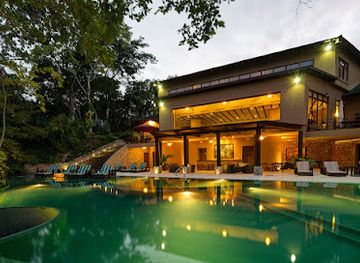
Las Lagunas Boutique Hotel
Discover unparalleled luxury and natural beauty at Las Lagunas Boutique Hotel in Flores, Guatemala.
25 min drive · 8.3 km from city centre
-
Brunch
Maple & Tocino
Savor the best brunch experience in Flores, Guatemala at Maple & Tocino, where every dish is crafted with love and local flavors.
2 min walk · 0.1 km from city centre
-
Zoo
Petencito Zoo
Explore the vibrant wildlife of Central America at Petencito Zoo, a must-visit attraction in Flores, Guatemala, perfect for families and nature lovers.
7 min drive · 2.4 km from city centre
Get your free copy of our complete guide to Flores, delivered straight to you.
Everything on this page, from attractions and restaurants to essentials and local phrases, in one PDF you can read offline, print or share.
Already have an account? Sign in
Your Flores guide is ready.
We'll send it to · Not you? Sign out

Getting your guide ready…
We are putting together a fresh copy of the Flores guide. This can take up to a minute.
This can take a few moments. If your browser asks, choose Allow so the download can start. You'll find the guide in your Downloads folder.
Nothing happened? Download it again
Sorry, the guide is taking longer than usual. Please try again in a minute, or get it by email instead.
Flores essentials
Currency and Payment
Safety
Emergency Situations
Do's and Don'ts
Local Tips
From Eve
Local phrases worth knowing
You don't need to get them perfect. A few words go a long way, and locals appreciate the effort.
Basics
| English | Local | Say it |
|---|---|---|
| Hello | Chuq'a | [choo-kah] |
| Goodbye | Chiri' | [chee-ree] |
| Yes | E' | [eh] |
| No | Ma' | [mah] |
| Please/You're welcome | Jay | [high] |
| Thank you | Matyox | [mah-cho] |
| Excuse me/Sorry | Tz'ikin | [tz'ee-keen] |
| How are you? | Laq b'antiox | [lahk bahn-tee-ohsh] |
| Fine. And you? | K'aslemte' | [kahs-lem-tay] |
| Do you speak English? | At ajtz'ib'al inglés? | [aht ah-ts'ee-bahl een-glehs] |
| I don't understand | Ma xk'un | [mah shkoon] |
Eating & Drinking
| English | Local | Say it |
|---|---|---|
| I'd like to see the menu, please | Xk'ask'utuk re q'ijob' jay | [shkahskoo-took reh kee-hohb high] |
| I don't eat meat | Ma xk'utinik re tij | [mah shkoo-tee-neek reh teeh] |
| Cheers! | Jalatuun! | [hah-lah-toon] |
| I would like to pay, please | Xk'ask'utuk re jay | [shkahskoo-took reh high] |
Emergencies
| English | Local | Say it |
|---|---|---|
| Help! | Achu! | [ah-choo] |
| Go away! | K'ut chik! | [koot cheek] |
| Call the Police! | Tz'ib' chik k'ajolb'il! | [ts'eeb' cheek kah-hohl-beel] |
| Call a doctor! | Tz'ib' chik ajk'olb'il! | [ts'eeb' cheek ahk'ohl-beel] |
| I'm lost | Xk'utinik re k'ajolb'il | [shkoo-tee-neek reh kah-hohl-beel] |
| I'm ill | Xk'utinik re k'ajolb'il | [shkoo-tee-neek reh kah-hohl-beel] |
Shopping
| English | Local | Say it |
|---|---|---|
| I'd like to buy... | Xk'ask'utuk k'ajb'il... | [shkahskoo-took kahk-b'eel] |
| I'm just looking | Xk'utinik re jolomaj | [shkoo-tee-neek reh hoh-loh-mahk] |
| How much is it? | Q'ijob' xk'aslemte'? | [kee-hohb kahs-lem-tay] |
| That's too expensive | Q'ijob' k'aslemte' xk'ab'anoj | [kee-hohb kahs-lem-tay kahb-ah-nohsh] |
| Can you lower the price? | At tz'ib'al k'i'xik re xk'ab'anoj? | [aht ts'ee-bahl kee-sheek reh kahb-ah-nohsh] |
Time & Numbers
| English | Local | Say it |
|---|---|---|
| What time is it? | Q'ijob' winaq? | [kee-hohb wee-nahk] |
| It's one o'clock | Winaq jun | [wee-nahk hoon] |
| Half past (10) | Winaq aq'ab'al (10) | [wee-nahk ahk-ahb-ahl (10)] |
| Morning | K'aslemte' k'iche' | [kahs-lem-tay kee-chay] |
| Afternoon | K'aslemte' xk'aslemte' | [kahs-lem-tay shkahs-lem-tay] |
| Evening | K'aslemte' ruk'u'x | [kahs-lem-tay roo-koo-sh] |
| Yesterday | K'aslemte' re k'ajolb'il | [kahs-lem-tay reh kah-hohl-beel] |
| Today | K'aslemte' | [kahs-lem-tay] |
| Tomorrow | K'aslemte' re k'ajolb'il | [kahs-lem-tay reh kah-hohl-beel] |
| 1 | Jun | [hoon] |
| 2 | Ka'wiq | [kah-weesh] |
| 3 | Oxib' | [oh-sheeb] |
| 4 | Kan | [kahn] |
| 5 | Wuqub' | [woo-koob] |
| 6 | Waqib' | [wah-keeb] |
| 7 | Wuqub' k'ajolb'il | [woo-koob kah-hohl-beel] |
| 8 | B'elej | [beh-lehkh] |
| 9 | B'elej k'ajolb'il | [beh-lehkh kah-hohl-beel] |
| 10 | Lajuj | [lah-hoohkh] |
Transport & Directions
| English | Local | Say it |
|---|---|---|
| Where's a/the...? | K'ut chik a/a'... | [koot cheek ah-ah] |
| What's the address? | K'ut q'ijob' ronojel? | [koot kee-hohb roh-noh-hel] |
| Can you show me (on the map)? | At tz'ib'al xk'ut chik (re map)? | [aht ts'ee-bahl shkoot cheek (reh mahp)] |
| When's the next (bus)? | Q'ijob' k'ut chik chiqin (bus)? | [kee-hohb koot cheek cheek-een (boos)] |
| A ticket (to ....) | Xk'ask'utuk re k'aj chiqin (...) | [shkahskoo-took reh kah-h cheek-een] |
History of Flores
Nojpetén and the Itza Maya
Before the Spanish conquest, the island was known as Nojpetén and served as the political centre of the Itza Maya in the Petén lakes region. The Itza maintained an independent kingdom after the collapse of many Classic-period Maya centres, and Nojpetén became a significant settlement on an island in Lake Petén Itzá. Its position supported movement and communication across the lake while the surrounding forests provided food, timber and other resources. Spanish expeditions encountered resistance in the region for generations, partly because the northern lowlands were difficult to reach and partly because Maya political authority remained resilient after the conquest of other parts of Guatemala.
The Spanish Conquest of 1697
Spanish forces under Martín de Ursúa y Arizmendi captured Nojpetén on 13 March 1697, bringing the last independent Maya kingdom in the region under colonial rule. The conquest was both a military and religious undertaking, and the existing settlement was subsequently reshaped according to Spanish colonial priorities. The island's modern name, Flores, honours Cirilo Flores, a nineteenth-century Guatemalan political figure, while the town's church and street pattern reflect later colonial and post-colonial development rather than the earlier Maya capital. Archaeological and historical work continues to recover the importance of the Itza settlement beneath and around the present town.
Colonial Administration in Petén
Following the conquest, Spanish authorities incorporated Petén into the colonial administrative and religious system, although the region remained remote from Guatemala's principal centres. Missionary activity, military control and the movement of settlers gradually altered local political and economic life. The lake route was important because overland travel through dense forest was arduous, while small agricultural communities supplied food and materials. The limited scale of early colonial urban development helped preserve the island's compact form. Contemporary Flores contains comparatively few grand colonial buildings, but its church, waterfront setting and narrow streets evoke the modest scale of a regional settlement shaped by distance and water.
Petén in Independent Guatemala
After Central American independence in the nineteenth century, Petén remained geographically isolated but became more closely integrated into the Guatemalan state. Flores developed as the departmental capital and administrative focus for the region, with commerce linked to the lake, forest products and small-scale agriculture. Its position on Lake Petén Itzá made the settlement a natural point for officials, traders and travellers moving between communities. The town's modern identity also took shape during this period, as the name Flores became established and civic institutions expanded. Indigenous Maya communities throughout Petén continued to preserve cultural knowledge and adapt to changing political and economic conditions.
Roads, Tourism and Archaeological Protection
During the twentieth century, improved roads and air connections reduced Petén's isolation and brought increasing attention to its Maya archaeological sites and rainforest ecosystems. Flores and neighbouring Santa Elena became the region's principal visitor base as research, conservation and tourism developed around Tikal and other sites. The growth of tourism created accommodation, transport and guiding services while also increasing pressure on fragile archaeological and natural environments. Today Flores combines departmental administration, local commerce and hospitality with a role in heritage tourism. Its relationship with Tikal, Yaxha and protected forest areas has made the town an important meeting point between contemporary Petén and the ancient Maya landscape.
Flores in Photos
Browse through our photo collection highlighting the charm and character of the destination.
Cities near Flores
The closest cities to Flores, if you have time for more than one stop.
-

-

-

-

-


Swipe for more cities
Explore more
Explore more of Guatemala
Discover Guatemala: A land of ancient Mayan wonders, breathtaking natural beauty, and vibrant cultural experiences. Perfect for history buffs, nature lovers, and adventure seekers.
Explore Guatemala