Free Couffo Travel Guide & Mobile App
Explore Couffo with free travel guides. Discover regional history, expert tips, proposed trips, and audio guides on web or mobile app.


Explore Couffo in south-western Benin for Adja heritage, red-earth landscapes, local markets, farming communities and unhurried rural journeys.
Read more about Couffo
When is the best time to visit Couffo?
Best: December–February · 31–32°C| Month | High (°C) | Rainfall (mm) |
|---|---|---|
| January (best) | 31 | 10 |
| February (best) | 32 | 12 |
| March | 33 | 30 |
| April | 34 | 70 |
| May | 33 | 110 |
| June | 32 | 130 |
| July | 31 | 120 |
| August | 31 | 130 |
| September | 32 | 130 |
| October | 32 | 100 |
| November | 32 | 30 |
| December (best) | 31 | 15 |
Getting to and around Couffo
How to get there
Transportation
Top city travel guides in Couffo
The cities of Couffo, and the easiest places to base yourself.

Swipe for more cities
Best attractions in Couffo
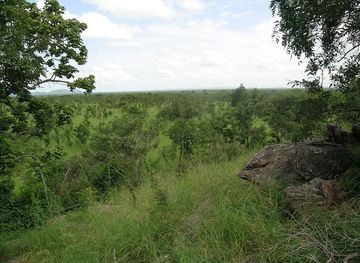
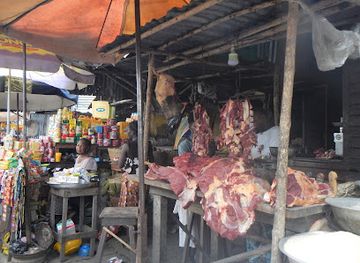
Couffo's attractions are primarily cultural, rural and experiential rather than concentrated in a formal circuit of large museums or ticketed monuments. Aplahoué provides a useful introduction to departmental life, with busy commercial streets, transport activity and access to surrounding communities. The towns of Djakotomey, Dogbo, Klouékanmè, Lalo and Toviklin offer opportunities to observe local markets, food production and everyday craft and trading practices. Travellers interested in heritage can explore Adja cultural traditions, oral histories, religious life and community spaces with permission and suitable local interpretation. The countryside is an attraction in its own right: red-earth roads pass fields of maize, cassava, yams and other crops, with palms, shade trees and village compounds creating a distinctly southern Beninese landscape. Seasonal journeys reveal changes from dry-season dust to rain-fed greenery, while birdlife and small-scale farming provide quiet interest for visitors who travel slowly. Couffo is best experienced through planned visits with local contacts rather than through an assumption of fully developed tourist infrastructure.
-
Market
Dantokpa Market
Discover the vibrant tapestry of Benin at Dantokpa Market, a must-visit cultural and shopping destination in Cotonou.
-
Historical place
Red Star Square
Discover the vibrant cultural essence and rich history of Red Star Square in the heart of Cotonou, Benin, a must-visit for every traveler.
-
Tourist attraction
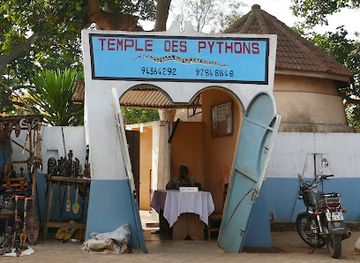
Pythons Temple
Explore the enchanting Pythons Temple in Ouidah, a sacred site where tradition, spirituality, and local culture converge in a mesmerizing experience.
-
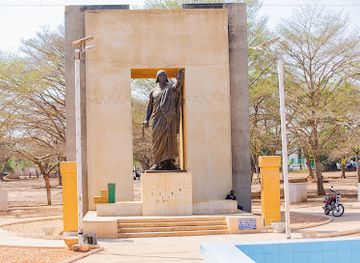
Memorial
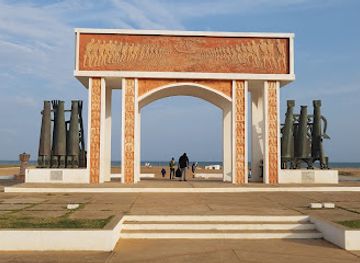
Door of Non Return of Benin
Explore the Door of No Return in Ouidah, Benin, a memorial steeped in history and resilience, reflecting on the legacy of the transatlantic slave trade.
Best landmarks in Couffo
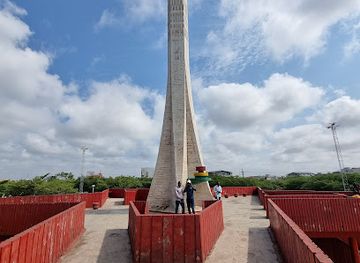
Couffo's most recognisable landmarks are often civic, cultural or landscape features rather than monumental stone buildings. Aplahoué's role as departmental capital gives its administrative centre and principal streets particular regional importance, while the town networks of Djakotomey, Dogbo, Klouékanmè, Lalo and Toviklin express the organisation of contemporary Couffo. Traditional compounds, market spaces, churches, mosques and community shrines help reveal the coexistence of newer institutions with older Adja cultural structures, although many sacred places are not public tourist monuments and should be visited only with permission. The department's red laterite roads and cultivated plains are also defining visual landmarks, especially where fields, palms and village settlements meet. In some communities, large trees or protected ritual spaces carry local historical meaning even when they have no formal signage. The most valuable landmarks therefore require context from residents or a knowledgeable guide. Rather than presenting a short list of grand monuments, Couffo rewards attention to the relationship between settlement, agriculture, belief and movement across this borderland department.
-
Market
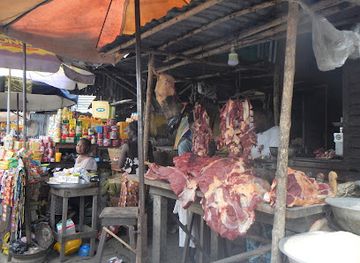
Dantokpa Market
Discover the vibrant essence of Cotonou at Dantokpa Market, a cultural and shopping haven in West Africa's largest marketplace.
-
Conference center
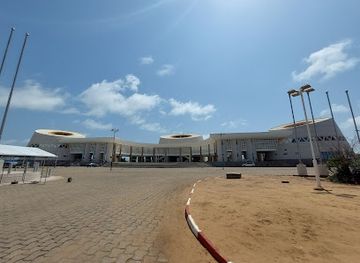
Congress Palace
Discover the stunning architecture and cultural significance of the Congress Palace in Cotonou, a premier conference center and vibrant hub of activity.
-
Tourist attraction
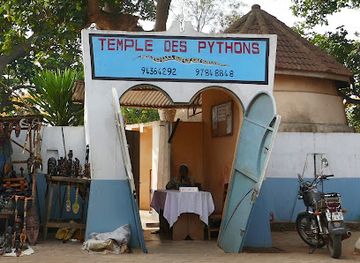
Pythons Temple
Explore the mystical Pythons Temple in Ouidah, Benin, a unique blend of culture, spirituality, and nature that captivates every visitor.
-
Monument
Place GOHO
Explore the historic significance and stunning architecture of Place GOHO, a must-visit monument in Abomey, Benin.
Explore Couffo on the map
Plan your trip on one map. See where the top cities, national parks and sights are, and book hotels and experiences in a few clicks.
Best hotels in Couffo
Best restaurants in Couffo
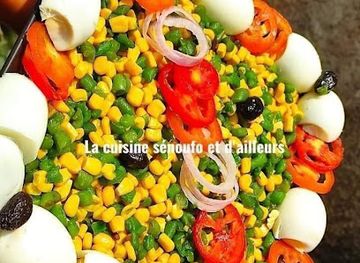
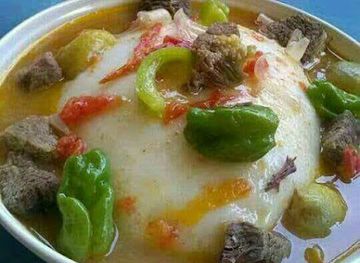
Dining in Couffo is grounded in the everyday foods of southern Benin and the agricultural economy of the department. Maize, cassava, yams, beans, rice and vegetables appear in filling home-style meals, while sauces may include tomato, chilli, leafy greens, groundnuts or palm-derived ingredients. Street stalls and small local eateries are the most characteristic places to eat, serving dishes such as pâte with sauce, rice meals, grilled chicken or fish, beans and fried snacks; recipes and names vary between communities. Dogbo, Aplahoué and the other larger towns offer more choice than rural villages, where meals are often arranged through accommodation or local contacts. Markets are useful for tasting seasonal fruit and buying roasted maize, nuts and other inexpensive snacks. Visitors should carry drinking water, choose busy food stalls with a good turnover, and explain dietary restrictions clearly in French. The region shares much of its food culture with neighbouring southern Benin and Togo, so not every dish encountered is exclusively Couffo in origin.
-
Restaurant
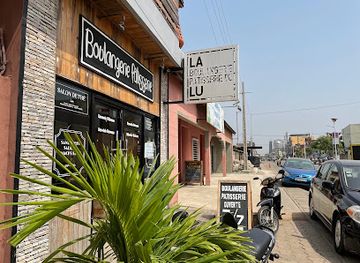
Le Lieu Unique
Discover the rich flavors of Benin at Le Lieu Unique, where local ingredients meet culinary creativity in a charming atmosphere.
-
Restaurant
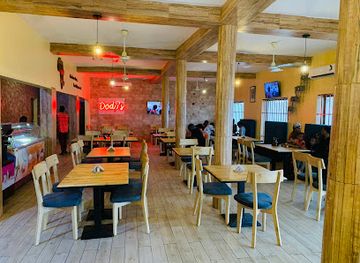
Dody’s Pizza & Pasta
Experience authentic Italian flavors at Dody's Pizza & Pasta in Parakou - where every bite tells a story!
-
Restaurant
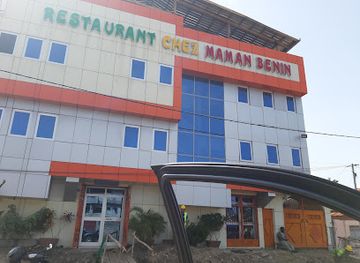
Restaurant Chez Maman Benin
Experience authentic Beninese cuisine at Restaurant Chez Maman Benin - a culinary haven in Cotonou serving delicious local dishes.
-
Restaurant
Le Grand Café
Experience authentic Beninese cuisine at Le Grand Café in Abomey Calavi - where every meal tells a story.
Best bars in Couffo
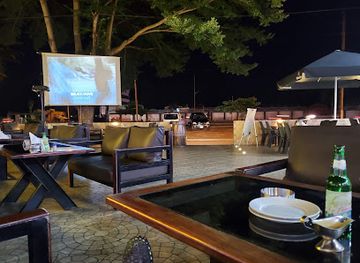
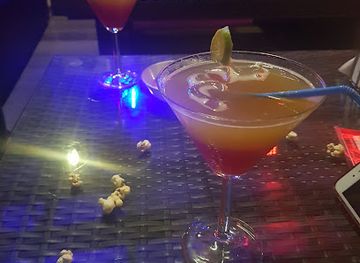
Nightlife in Couffo is modest and concentrated in the larger towns, particularly Aplahoué and other commune centres. Evenings generally revolve around local bars, small restaurants, music from bars or private gatherings, and social conversation rather than a large club circuit. Bottled beer, soft drinks and locally produced alcoholic drinks may be available, although selection and opening arrangements vary by place. Rural communities become quiet earlier, and transport options are limited after dark, making it sensible to arrange a return journey before going out. Occasional celebrations, ceremonies and live music can bring greater activity, but these are community occasions rather than reliable scheduled nightlife attractions. Visitors should dress respectfully, keep valuables secure and avoid photographing people in social settings without permission. Couffo's evening character is best understood through its town-based social life and relaxed hospitality, not through comparisons with the major nightclub scenes of Cotonou.
-
Grill
Bar Setondji
Discover the authentic flavors of Bohicon at Bar Setondji, a vibrant grill spot offering delicious dishes in a friendly atmosphere.
-
Restaurant
Bar Restaurant Chez Adjovi
Discover the authentic flavors of Lokossa at Bar Restaurant Chez Adjovi, a cozy eatery serving local delicacies in a warm atmosphere.
-
Bar
Bar Privilège
Discover Lokossa's vibrant nightlife at Bar Privilège, where refreshing drinks and local culture come together in a lively atmosphere.
-
Bar
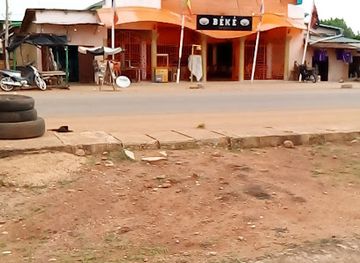
Béké bar
Discover the lively atmosphere of Béké Bar in Bohicon, where local culture meets delightful drinks in a vibrant setting.

Best nightclubs in Couffo
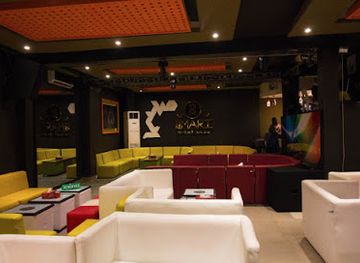
Nightlife in Couffo is modest and concentrated in the larger towns, particularly Aplahoué and other commune centres. Evenings generally revolve around local bars, small restaurants, music from bars or private gatherings, and social conversation rather than a large club circuit. Bottled beer, soft drinks and locally produced alcoholic drinks may be available, although selection and opening arrangements vary by place. Rural communities become quiet earlier, and transport options are limited after dark, making it sensible to arrange a return journey before going out. Occasional celebrations, ceremonies and live music can bring greater activity, but these are community occasions rather than reliable scheduled nightlife attractions. Visitors should dress respectfully, keep valuables secure and avoid photographing people in social settings without permission. Couffo's evening character is best understood through its town-based social life and relaxed hospitality, not through comparisons with the major nightclub scenes of Cotonou.
-
Night club
LE BLACK
Immerse yourself in the vibrant nightlife of Cotonou at LE BLACK, a premier night club offering electrifying music and a lively atmosphere.
-
Lounge
SMART NIGHT CLUB
Dive into the vibrant nightlife of Cotonou at Smart Night Club, where music and fun intertwine for an unforgettable evening.
-
Night club
Club truth
Immerse yourself in the electrifying nightlife of Benin City at Club Truth, the ultimate destination for clubbing and live music.
-
Disco club
Amsterdam paradise club
Discover the vibrant nightlife of Cotonou at Amsterdam Paradise Club, a premier disco club where music and energy collide for an unforgettable experience.

Best shops in Couffo
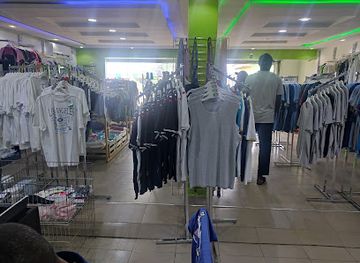
Shopping in Couffo is centred on local markets, town high streets and roadside trading rather than dedicated tourist retail. Aplahoué and the other commune centres are useful for seasonal fruit, maize, cassava products, spices, prepared foods, woven goods, household items and practical clothing. Depending on the market and season, visitors may find baskets, simple woodwork, textiles or locally made utensils, although quality and availability vary and many products are made for everyday use rather than export. Food products make practical souvenirs: dried ingredients, groundnuts, spices and packaged regional produce are easier to transport than fresh goods. Ask about prices politely and check transport restrictions before buying liquids, seeds or agricultural products. Independent stalls often operate alongside mobile-money agents and general shops, but card payment is not dependable. The most rewarding purchases are usually made through respectful conversation with vendors, without treating cultural or religious objects as ordinary souvenirs.
-
Boutique
Cosmos Boutique Africa
Explore the vibrant world of African craftsmanship at Cosmos Boutique Africa, a unique shopping destination in Benin City.
-
Shopping mall
1k Shop
Immerse yourself in the vibrant shopping scene at 1k Shop, Benin City, where local culture meets affordability.
-
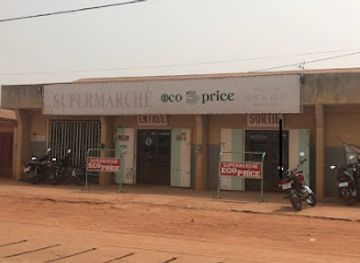
Supermarket
Supermarché ECO PRICE
Discover local flavors and essentials at Supermarché ECO PRICE in Bohicon, the heart of Benin’s vibrant shopping scene.
-
Shopping mall
GOD's GOODNESS
Explore a vibrant shopping scene at GOD's GOODNESS in Azove, where local culture meets diverse products for a unique experience.

Get your free copy of our complete guide to Couffo, delivered straight to you.
Everything on this page, from attractions and restaurants to essentials and local phrases, in one PDF you can read offline, print or share.
Already have an account? Sign in
Your Couffo guide is ready.
We'll send it to · Not you? Sign out

Getting your guide ready…
We are putting together a fresh copy of the Couffo guide. This can take up to a minute.
This can take a few moments. If your browser asks, choose Allow so the download can start. You'll find the guide in your Downloads folder.
Nothing happened? Download it again
Sorry, the guide is taking longer than usual. Please try again in a minute, or get it by email instead.
Couffo essentials
Currency and Payment
Safety
Emergency Situations
Do's and Don'ts
Local Tips
From Eve
Local phrases worth knowing
You don't need to get them perfect. A few words go a long way, and locals appreciate the effort.
Basics
| English | Local | Say it |
|---|---|---|
| Hello | Bokoko | [boh-koh-koh] |
| Goodbye | Odo | [oh-doh] |
| Yes | Iye | [ee-yeh] |
| No | Ayi | [ah-yee] |
| Please/You're welcome | S'il vous plaît | [seel voo pleh] |
| Thank you | Mesi | [meh-see] |
| Excuse me/Sorry | Pardon | [par-dohn] |
| How are you? | N'kó wé? | [n'koh weh] |
| Fine. And you? | M'lé. N'kó wé? | [m'leh. n'koh weh] |
| Do you speak English? | É kó wé anglé? | [eh koh weh ahn-glay] |
| I don't understand | M'ne wé édu? | [m'neh weh eh-doo] |
Eating & Drinking
| English | Local | Say it |
|---|---|---|
| I'd like to see the menu, please | M'vɔa wè ményu, s'il vous plaît | [m'voh-ah weh meh-nyoo, seel voo pleh] |
| I don't eat meat | M'ne jé pɔr | [m'neh jeh por] |
| Cheers! | À la santé! | [ah lah sahn-tay] |
| I would like to pay, please | M'vɔa wè peye, s'il vous plaît | [m'voh-ah weh pay-eh, seel voo pleh] |
Emergencies
| English | Local | Say it |
|---|---|---|
| Help! | S.O.S! | [ess-oh-ess] |
| Go away! | N'kó vɔ | [n'koh voh] |
| Call the Police! | N'ko a Police! | [n'koh ah poh-lees] |
| Call a doctor! | N'ko a dɔktɛ! | [n'koh ah dok-teh] |
| I'm lost | M'ne n'kó | [m'neh n'koh] |
| I'm ill | M'ne mal | [m'neh mahl] |
Shopping
| English | Local | Say it |
|---|---|---|
| I'd like to buy... | M'vɔa wè tɔ | [m'voh-ah weh toh] |
| I'm just looking | M'vɛ bɔ wé | [m'veh boh weh] |
| How much is it? | M'vɛ ahe n'kó? | [m'veh ah-heh n'koh] |
| That's too expensive | Ayi gɛ n'kó | [ah-yee geh n'koh] |
| Can you lower the price? | É kó bɔ n'kó? | [eh koh boh n'koh] |
Time & Numbers
| English | Local | Say it |
|---|---|---|
| What time is it? | N'kó gbɔ mɛ? | [n'koh gboh meh] |
| It's one o'clock | N'kó mɛlan | [n'koh meh-lahn] |
| Half past (10) | N'kó mɛbɔ (10) | [n'koh meh-boh] |
| Morning | Sɔsɔ | [so-so] |
| Afternoon | Kɔnɔ | [kohn-oh] |
| Evening | Kɔlà | [koh-lah] |
| Yesterday | Bɔkɔ | [boh-koh] |
| Today | Akwɛ | [ah-kweh] |
| Tomorrow | Bɔlɔ | [boh-loh] |
| 1 | Kɛ | [keh] |
| 2 | Mɛ | [meh] |
| 3 | Tɛ | [teh] |
| 4 | Nɛ | [neh] |
| 5 | Hɛn | [hen] |
| 6 | Kɛtɛ | [keh-teh] |
| 7 | Mɛtɛ | [meh-teh] |
| 8 | Tɛtɛ | [teh-teh] |
| 9 | Nɛtɛ | [neh-teh] |
| 10 | Hɛtɛ | [heh-teh] |
Transport & Directions
| English | Local | Say it |
|---|---|---|
| Where's a/the...? | N'kó gɛ ...? | [n'koh geh] |
| What's the address? | N'kó gbɔ adrès? | [n'koh gboh ah-dress] |
| Can you show me (on the map)? | É kó wè bɔ mɛ? | [eh koh weh boh meh] |
| When's the next (bus)? | N'kó gɛ bɔ (bɔs)? | [n'koh geh boh] |
| A ticket (to ....) | Bɔtɛtè (kɔ ...) | [boh-teh-teh] |
History of Couffo
Adja Origins and the Aja-Tado Cultural World
Couffo's cultural history is closely linked to the wider Adja world of south-western Benin and neighbouring Togo. Oral traditions connect many Adja communities with Tado, a historic centre in present-day Togo, although these traditions combine genealogy, migration memory and political symbolism rather than providing a simple modern map of settlement. Over time, related communities established villages, chiefly institutions and ritual networks across the region. This legacy remains visible in languages, family histories, religious practices, festivals and connections that cross the contemporary international border.
Precolonial Communities and Regional Exchange
Before colonial rule, the area now called Couffo consisted of farming communities and local political authorities linked by marriage, trade, ritual obligations and competition over land and labour. Markets connected producers of food crops, livestock, cloth and household goods with larger commercial centres farther south and east. The region also lay within the broader political and economic environment shaped by the kingdoms of southern Benin, including Dahomey, although control was uneven and varied from one locality to another. Surviving oral histories and customary institutions preserve parts of this precolonial past.
Atlantic Commerce and the Slave-Trade Era
From the seventeenth century onwards, the wider Bight of Benin became deeply involved in Atlantic commerce, including the forced export of enslaved Africans. Couffo was inland from the principal coastal ports, but communities in the department were connected to regional routes that moved people, agricultural goods and manufactured imports towards the coast and across southern Benin. The effects of this period included warfare, displacement, political consolidation and long-term demographic change. Its history should be understood as part of the wider regional system rather than as an isolated local episode.
French Colonial Rule in Dahomey
French conquest and administration transformed southern Benin at the end of the nineteenth century and during the early twentieth century. The territory that now forms Couffo was incorporated into the colony of Dahomey, later part of French West Africa. Colonial authorities introduced new systems of taxation, labour, schooling, policing and agricultural administration, while roads and market systems were reorganised to serve the colonial economy. Missionary activity and Christianity expanded alongside existing religious traditions. Many present-day administrative and transport patterns have roots in this colonial period.
Agriculture, Education and Post-Independence Change
After Dahomey became independent as the Republic of Dahomey in 1960, and later Benin, Couffo continued to be shaped by farming, local commerce and gradual improvements in education and transport. Cotton became an important commercial crop in parts of the department, while maize, cassava, yams and other staples remained central to household livelihoods. Schools, health centres and administrative offices strengthened the role of towns such as Aplahoué and Dogbo. The area has also experienced migration and cross-border exchange, reflecting its position between southern Benin and Togo.
The Creation of Couffo Department
Couffo became one of Benin's departments during the administrative reorganisation that took effect in the late 1990s, when the country's former departments were divided into smaller administrative units. Aplahoué became the departmental capital, and the communes of Aplahoué, Djakotomey, Dogbo, Klouékanmè, Lalo and Toviklin formed the new department. This arrangement gave the region a clearer administrative identity while preserving older cultural and commercial relationships with neighbouring parts of Benin and Togo.
Couffo in Photos
Browse through our photo collection highlighting the charm and character of the destination.
Neighbouring regions of Couffo
The closest regions to Couffo, if you have time for more than one.
-

-

-

-

-


Swipe for more regions