

Pulau Selirong Forest Reserve Travel Guide - Free Web & App
Your ultimate guide to Pulau Selirong Forest Reserve. Discover top landmarks, proposed trips, and local tips. Free on the web or via the Evendo companion app.


Pulau Selirong Forest Reserve, Brunei, offers mangrove waterways, proboscis monkeys, birdlife and quiet boat excursions through protected coastal forest.
A Tidal Forest in Brunei Bay
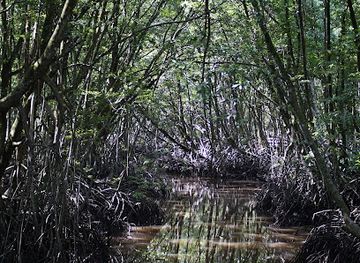
Pulau Selirong Forest Reserve protects a substantial mangrove landscape on Selirong Island, within the sheltered waters of Brunei Bay. This is a destination of tidal creeks, mudflats, nipa palms and dense coastal forest rather than roads, villages or conventional resort facilities. The island is reached by boat, and the approach is part of the experience: waterways narrow between mangrove roots while the changing tide reveals the ecological rhythm of the reserve. Its isolation gives the forest a quieter character than Brunei’s more accessible urban attractions.Read more about Pulau Selirong Forest Reserve
Wildlife and Conservation
Planning an Island Visit
When is the best time to visit Pulau Selirong Forest Reserve?
Best: February–April · 32°C| Month | High (°C) | Rainfall (mm) |
|---|---|---|
| January | 31 | 320 |
| February (best) | 32 | 285 |
| March (best) | 32 | 262 |
| April (best) | 32 | 302 |
| May | 32 | 342 |
| June | 32 | 367 |
| July | 32 | 360 |
| August | 32 | 355 |
| September | 32 | 356 |
| October | 31 | 377 |
| November | 31 | 384 |
| December | 31 | 352 |
Getting to and around Pulau Selirong Forest Reserve
How to get there
Transportation
Best attractions in Pulau Selirong Forest Reserve
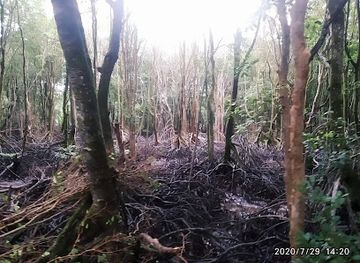
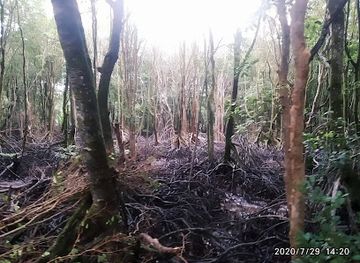
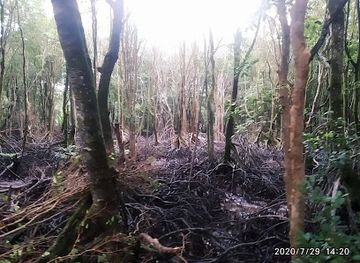
The principal attraction of Pulau Selirong Forest Reserve is the journey through its network of mangrove creeks, where boat travel reveals prop roots, tidal mudbanks, nipa palms and narrow channels opening into Brunei Bay. On land, authorised trails or raised access structures offer a closer view of the forest floor and its small inhabitants, including mudskippers, fiddler crabs and other intertidal life. Birdwatchers can look for kingfishers, herons and other estuarine species, while the reserve’s mangrove and river-edge habitat is associated with proboscis monkeys, although sightings depend on conditions and chance. The island’s value is less about a long list of built attractions than about experiencing a protected coastal ecosystem from water and footpath. Boat excursions may also reveal the changing relationship between open bay, tidal creek and forest edge, with the scenery altered noticeably by tide, cloud and weather.
-
Island
Pulau Selirong
Discover Pulau Selirong: Brunei's hidden gem of mangrove forests, diverse wildlife, and tranquil natural beauty.
Best landmarks in Pulau Selirong Forest Reserve
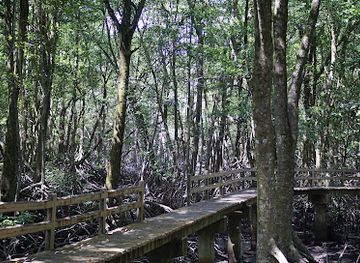
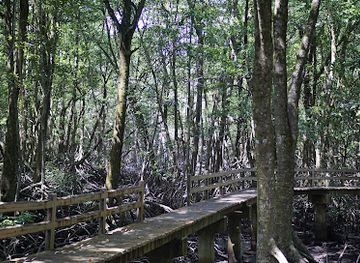
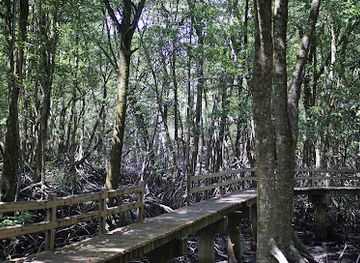
Pulau Selirong’s defining landmarks are natural rather than architectural. The mangrove forest itself, with its tangled roots, tidal pools and branching creeks, marks the transition between Brunei’s land and the waters of Brunei Bay. Mudflats and intertidal channels are continually reshaped by water movement, making the shoreline a living geographic feature rather than a fixed viewpoint. The island’s protected status is also significant: it represents one of Brunei’s conserved coastal forest environments and provides habitat linked to the wider bay ecosystem. There are no prominent castles, churches, monuments or urban buildings on the island, and its identity depends on the relationship between boat route, forest edge and tide. Any boardwalks, observation structures or other visitor facilities should be regarded as access infrastructure rather than historic landmarks and may be subject to management arrangements.
-
Island
Pulau Selirong
Discover the untouched beauty of Pulau Selirong, a mangrove paradise in Brunei, where nature thrives and tranquility awaits.
-
 Woods
WoodsSelirong Forest Reserve
Explore the lush beauty of Selirong Forest Reserve, a tranquil escape rich in biodiversity and natural wonders in Brunei.
-
Lodging
Selirong Mangrove Forest
Immerse yourself in the serene beauty of the Selirong Mangrove Forest, a hidden gem in Brunei's lush nature.
Explore Pulau Selirong Forest Reserve on the map
Plan your trip on one map. See where the top attractions, landmarks, restaurants and hotels are, and book hotels and experiences in a few clicks.
Best hotels in Pulau Selirong Forest Reserve
Best bars in Pulau Selirong Forest Reserve
Pulau Selirong has no bars, nightclubs or evening entertainment, and the reserve is not a destination for nightlife. After a boat excursion, visitors generally return to their mainland accommodation, where the evening may be spent at a hotel restaurant, café or quiet local eating place. Brunei’s nightlife is comparatively restrained, and alcohol is not sold in the country; non-Muslim visitors may bring limited personal supplies subject to Brunei’s customs rules, but these should not be consumed publicly or treated as part of the island experience. Bandar Seri Begawan offers the widest choice of evening dining and cafés, while Muara and smaller coastal settlements are quieter and more practical than entertainment-focused.
-
Woods
Selirong Forest Reserve
Discover the untouched beauty of Selirong Forest Reserve, a lush haven in Brunei, perfect for nature lovers and outdoor adventurers.
Best nightclubs in Pulau Selirong Forest Reserve
Pulau Selirong has no bars, nightclubs or evening entertainment, and the reserve is not a destination for nightlife. After a boat excursion, visitors generally return to their mainland accommodation, where the evening may be spent at a hotel restaurant, café or quiet local eating place. Brunei’s nightlife is comparatively restrained, and alcohol is not sold in the country; non-Muslim visitors may bring limited personal supplies subject to Brunei’s customs rules, but these should not be consumed publicly or treated as part of the island experience. Bandar Seri Begawan offers the widest choice of evening dining and cafés, while Muara and smaller coastal settlements are quieter and more practical than entertainment-focused.
-
Island
Pulau Selirong
Explore the enchanting mangroves and rich biodiversity of Pulau Selirong, a hidden island paradise in Brunei for nature lovers and adventure seekers.
-
Woods
Selirong Forest Reserve
Discover the enchanting Selirong Forest Reserve, a tranquil escape into nature's untouched beauty in Brunei.
-
Lodging
Selirong Mangrove Forest
Explore the serene beauty of Selirong Mangrove Forest, a lush sanctuary rich in biodiversity and natural wonders waiting to be discovered.
Best shops in Pulau Selirong Forest Reserve
Pulau Selirong offers no shops, markets or craft outlets, so shopping must be completed on the mainland before the excursion. Bandar Seri Begawan provides Brunei’s broadest selection of food products, handicrafts, textiles and everyday supplies, while Muara and other gateway settlements are more useful for practical provisions than souvenir hunting. Visitors interested in locally associated products may look for woven goods, traditional textiles, small handicrafts and packaged Bruneian foods in established shops or markets, but product availability changes and not every item is made locally. Buying only what is needed for the boat trip is particularly sensible: the reserve has no opportunity to replace forgotten equipment, and all packaging and waste must be brought back out of the mangrove environment.
-
Island
Pulau Selirong
Explore the untouched beauty and serenity of Pulau Selirong, an enchanting island rich with mangrove forests and vibrant wildlife.
-
Woods
Selirong Forest Reserve
Experience the tranquility and biodiversity of Selirong Forest Reserve, a serene escape into Brunei's rich natural heritage.
-
Lodging
Selirong Mangrove Forest
Immerse yourself in the serene beauty of Selirong Mangrove Forest, a lush natural haven teeming with biodiversity in Piasau.
Get your free copy of our complete guide to Pulau Selirong Forest Reserve, delivered straight to you.
Everything on this page, from attractions and restaurants to essentials and local phrases, in one PDF you can read offline, print or share.
Already have an account? Sign in
Your Pulau Selirong Forest Reserve guide is ready.
We'll send it to · Not you? Sign out

Getting your guide ready…
We are putting together a fresh copy of the Pulau Selirong Forest Reserve guide. This can take up to a minute.
This can take a few moments. If your browser asks, choose Allow so the download can start. You'll find the guide in your Downloads folder.
Nothing happened? Download it again
Sorry, the guide is taking longer than usual. Please try again in a minute, or get it by email instead.
Pulau Selirong Forest Reserve essentials
Currency and Payment
Safety
Emergency Situations
Do's and Don'ts
Local Tips
From Eve
Local phrases worth knowing
You don't need to get them perfect. A few words go a long way, and locals appreciate the effort.
Basics
| English | Local | Say it |
|---|---|---|
| Hello | Halo | [ha-loh] |
| Goodbye | Selamat tinggal | [se-la-mat ting-gal] |
| Yes | Ya | [ya] |
| No | Tidak | [ti-dak] |
| Please/You're welcome | Sila | [si-la] |
| Thank you | Terima kasih | [te-ri-ma ka-sih] |
| Excuse me/Sorry | Maaf | [ma-af] |
| How are you? | Apa khabar? | [a-pa kha-bar] |
| Fine. And you? | Baik. Dan awda? | [ba-ik. dan aw-da] |
| Do you speak English? | Awda boleh bercakap Bahasa Inggeris? | [aw-da bo-leh ber-ca-kap ba-ha-sa ing-ge-ris] |
| I don't understand | Saya tidak faham | [sa-ya ti-dak fa-ham] |
Eating & Drinking
| English | Local | Say it |
|---|---|---|
| I'd like to see the menu, please | Saya mahu melihat menu, sila | [sa-ya ma-hu me-li-hat me-nu, si-la] |
| I don't eat meat | Saya tidak makan daging | [sa-ya ti-dak ma-kan da-ging] |
| Cheers! | Kampai! | [kam-pai] |
| I would like to pay, please | Saya ingin membayar, sila | [sa-ya in-gin mem-ba-yar, si-la] |
Emergencies
| English | Local | Say it |
|---|---|---|
| Help! | Tolong! | [to-long] |
| Go away! | Pergi! | [per-gi] |
| Call the Police! | Panggil polis! | [pang-gil po-lis] |
| Call a doctor! | Panggil doktor! | [pang-gil dok-tor] |
| I'm lost | Saya tersesat | [sa-ya ter-se-sat] |
| I'm ill | Saya sakit | [sa-ya sa-kit] |
Shopping
| English | Local | Say it |
|---|---|---|
| I'd like to buy... | Saya ingin membeli... | [sa-ya in-gin mem-be-li] |
| I'm just looking | Saya hanya tengok-tengok | [sa-ya han-ya teng-ok-teng-ok] |
| How much is it? | Berapa harganya? | [be-ra-pa har-gan-ya] |
| That's too expensive | Itu terlalu mahal | [i-tu ter-la-lu ma-hal] |
| Can you lower the price? | Boleh kurangkan harga? | [bo-leh kur-ang-kan har-ga] |
Time & Numbers
| English | Local | Say it |
|---|---|---|
| What time is it? | Jam berapa sekarang? | [jam be-ra-pa se-ka-rang] |
| It's one o'clock | Pukul satu | [pu-kul sa-tu] |
| Half past (10) | Pukul setengah (10) | [pu-kul se-ten-gah (10)] |
| Morning | Pagi | [pa-gi] |
| Afternoon | Petang | [pe-tang] |
| Evening | Malam | [ma-lam] |
| Yesterday | Semalam | [se-ma-lam] |
| Today | Hari ini | [ha-ri i-ni] |
| Tomorrow | Esok | [e-sok] |
| 1 | Satu | [sa-tu] |
| 2 | Dua | [du-a] |
| 3 | Tiga | [ti-ga] |
| 4 | Empat | [em-pat] |
| 5 | Lima | [li-ma] |
| 6 | Enam | [e-nam] |
| 7 | Tujuh | [tu-juh] |
| 8 | Lapan | [la-pan] |
| 9 | Sembilan | [sem-bi-lan] |
| 10 | Sepuluh | [se-pu-luh] |
Transport & Directions
| English | Local | Say it |
|---|---|---|
| Where's a/the...? | Di mana... | [di ma-na] |
| What's the address? | Apa alamatnya? | [a-pa a-la-mat-nya] |
| Can you show me (on the map)? | Boleh tunjukkan saya (di peta)? | [bo-leh tun-juk-kan sa-ya (di pe-ta)] |
| When's the next (bus)? | Bila yang seterusnya (bas)? | [bi-la yang se-te-rus-nya (bas)] |
| A ticket (to ....) | Sebuah tiket (ke ....) | [se-buah ti-ket (ke)] |
History of Pulau Selirong Forest Reserve
An Estuarine Landscape
Pulau Selirong is part of the low-lying estuarine environment where Brunei’s rivers meet the waters of Brunei Bay. Its landscape has been shaped by tides, sediment and the gradual establishment of mangrove vegetation on sheltered intertidal ground. Unlike a historic town or archaeological complex, the island’s significance lies primarily in the continuity of this coastal ecosystem and in the way its creeks connect land, freshwater and sea. The reserve’s natural history is therefore inseparable from the wider geography of Brunei Bay, where mangrove habitats form a transition between inland forests and marine environments.
Mangroves and Coastal Communities
For generations, Brunei’s coastal communities have lived alongside tidal forests, relying on waterways for movement and drawing food and materials from estuarine environments. Mangroves around Brunei Bay have provided fish nurseries, crab habitat and sheltered channels for small craft, while their timber and other resources were historically used on a local scale. Pulau Selirong itself has not developed as a permanent urban settlement or farming landscape; its historical character is instead connected with the maritime geography of Brunei and the practical knowledge required to travel through tidal channels.
From Resource Landscape to Reserve
The designation of Pulau Selirong as a forest reserve reflects a shift from treating coastal woodland principally as a resource to recognising its wider ecological importance. Protection helps conserve mangrove communities that moderate erosion, support fisheries and provide habitat for birds, mammals and aquatic life. Management of the island is associated with Brunei’s forestry and environmental institutions, while access is kept comparatively limited because the reserve is difficult to reach without boats and vulnerable to disturbance. Conservation here is expressed through controlled visitation as much as through scenic appreciation.
Nature Tourism and Environmental Awareness
In recent decades, Pulau Selirong has become known as a nature destination within Brunei’s wider network of forest and wetland attractions. Boat excursions allow visitors to experience a protected mangrove environment without the large-scale infrastructure found at developed coastal resorts. Tourism remains dependent on local arrangements, tides and weather, and its value is closely tied to environmental education: seeing the forest from the water can make the links between mangroves, fisheries, wildlife and coastal protection tangible. The reserve’s future depends on maintaining that low-impact relationship.
Neighbouring destination travel guides
The closest destinations to Pulau Selirong Forest Reserve, if you have time for more than one.
-

-
 Bukit Shahbandar Recreational Park
 in Brunei offers rainforest trails, hill climbs, viewpoints and an accessible outdoor escape near Bandar Seri Begawan.
Bukit Shahbandar Recreational Park
Bukit Shahbandar Recreational Park in Brunei offers rainforest trails, hill climbs, viewpoints and an accessible outdoor escape near Bandar Seri Begawan.
-

-

-


Swipe for more destinations
Explore more

Explore more of Mukim Labu
Explore Mukim Labu in Brunei’s Temburong District for forest reserves, rural rivers, village roads and a quiet Borneo borderland.
Explore Mukim Labu
Explore more of Brunei
Explore Brunei, a hidden gem in Southeast Asia, where modern opulence meets untouched natural beauty and rich cultural heritage.
Explore Brunei