Background

Stanford Memorial Church: A Sanctuary of Art and History

Discover Stanford Memorial Church, an architectural jewel blending Romanesque and Byzantine styles, adorned with stunning mosaics and stained glass, a testament to the Stanford family's legacy.

4.8

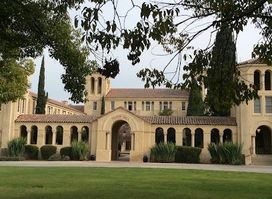
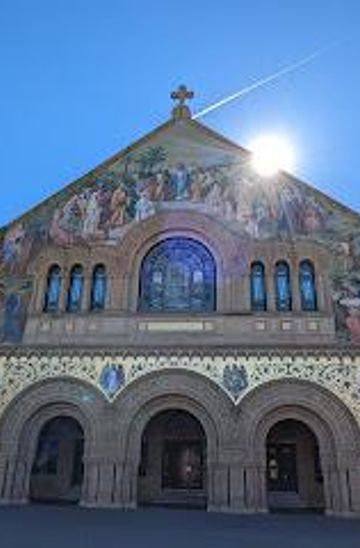
Stanford Memorial Church, affectionately known as 'MemChu,' stands as the architectural centerpiece of Stanford University. Conceived by Jane Stanford as a tribute to her late husband, Leland, this non-denominational church is a stunning blend of Romanesque and Byzantine styles. Its awe-inspiring mosaics, intricate stone carvings, and vibrant stained-glass windows create a serene and contemplative atmosphere. More than just a place of worship, MemChu is a living testament to the Stanford family's vision and a vibrant hub for university life, hosting regular services, musical performances, and significant campus events. Visitors are welcome to explore its artistic and historical treasures, immersing themselves in the rich heritage and spiritual ambiance of this iconic landmark. Approaching from Palm Drive offers the most impressive view.

A brief summary to Memorial Church

  • Monday 9 am-4 pm
  • Tuesday 9 am-4 pm
  • Wednesday 9 am-4 pm
  • Thursday 9 am-4 pm
  • Friday 9 am-1 pm

Local tips

  • Visit during weekdays for fewer crowds and a more contemplative experience.
  • Check the Office for Religious & Spiritual Life website for service schedules and special events.
  • Take a guided tour on Fridays at 11 AM to learn about the church's history and art.
  • Approach the church from Palm Drive to fully appreciate its architectural grandeur.
  • Explore the inscriptions carved into the interior sandstone walls for inspirational sayings selected by Jane Stanford.
widget icon

Getting There

  • Walking

    From the Main Quad, simply walk towards the center; the church is the most prominent building. From the Cantor Arts Center, walk past the Rodin sculptures towards the Quad. The church will be visible in the distance. No costs involved.

  • Public Transport

    From the Palo Alto Caltrain station, take the free Stanford Marguerite Shuttle. Several lines serve the campus, check the schedule for the most direct route to the Main Quad. From the Quad, the church is a short walk. No fare is required for the Marguerite Shuttle.

  • Driving

    From Highway 101, exit at University Avenue West. Follow University Avenue as it becomes Palm Drive into the campus. Parking is available around the Oval at the end of Palm Drive or in the Tresidder Union lot. Parking is enforced Monday-Friday, 6 AM to 4 PM, and costs $4.46 per hour. Weekends are typically free, but check posted signs. From the Oval, walk up the steps into the Main Quad; the church is in the center.

Unlock the Best of Memorial Church

Buy tickets

    No tickets available

Book tours with entry

    No tours available

Book tours without entry

    No tours available

Discover more about Memorial Church

Stanford Memorial Church, often called "MemChu" by students and faculty, is more than just a building; it's a symbol of Stanford University's history, its founders' vision, and its commitment to spiritual and intellectual life. Located at the heart of the Main Quad, the church serves as a non-denominational place of worship, a venue for important university events, and a stunning architectural landmark that draws visitors from around the world. Built by Jane Stanford as a memorial to her husband, Leland Stanford, Sr., the church was dedicated in 1903, a decade after Leland's death. The Stanfords, deeply affected by the loss of their only child, Leland Jr., to typhoid fever, established the university as a lasting tribute to his memory. Memorial Church became an integral part of that memorial, embodying the family's values and their desire to create a place of learning and spiritual growth. The design of Memorial Church is a captivating blend of Romanesque and Byzantine architectural styles. Charles A. Coolidge, a student of the renowned architect Henry Hobson Richardson, drew inspiration from churches in the region of Venice, particularly Ravenna, to create a structure that is both grand and intimate. The cruciform design of the church, with its arches, columns, and red-tiled roofs, harmonizes with the surrounding Quad buildings, creating a unified and aesthetically pleasing campus environment. One of the most striking features of Memorial Church is its extensive use of mosaics. Jane Stanford personally oversaw the selection and installation of these intricate artworks, which depict scenes from the Old and New Testaments. She commissioned the Salviati firm of Venice to create the mosaics, employing over 20,000 different shades of tesserae to capture the subtle variations in color and shading. The mosaics on the exterior facade, depicting Christ welcoming the righteous into the Kingdom of God, are particularly awe-inspiring. The interior of the church is equally impressive, with mosaics adorning the walls, ceilings, and pilasters. The chancel mosaic, a reproduction of Cosimo Rosselli's "Last Supper" from the Sistine Chapel, is a masterpiece of mosaic art. The stained-glass windows, created by Frederick Lamb, add to the church's beauty, casting colorful light patterns across the interior spaces. Memorial Church has five pipe organs, each with its unique sound and capabilities. These organs are used for a variety of musical performances, from traditional hymns to contemporary compositions. The church's acoustics are excellent, making it a popular venue for concerts and recitals. Throughout its history, Memorial Church has faced challenges, including damage from the earthquakes of 1906 and 1989. However, each time, the church has been carefully restored, preserving its architectural integrity and artistic treasures. The 1906 earthquake caused significant damage, collapsing the clock tower and destroying the north facade mosaic. The restoration efforts took many years, and the clock tower was never rebuilt. Today, Memorial Church continues to serve as a vital center for religious and spiritual life at Stanford. Regular services are held on Sundays and weekdays, and the church is open to visitors of all faiths. The church also hosts weddings, memorial services, and other special events. Visiting Memorial Church is an opportunity to experience a place of beauty, history, and spiritual significance. Whether you are drawn to its architecture, its art, or its religious atmosphere, Memorial Church offers a unique and enriching experience. Take time to wander through its halls, admire its mosaics and stained-glass windows, and reflect on the values that it represents. It is a place where the past and the present come together, where art and faith intertwine, and where visitors can find solace, inspiration, and a sense of connection to something larger than themselves. Approaching the church from Palm Drive provides the most stunning view, allowing visitors to fully appreciate the grandeur and beauty of this architectural masterpiece. The Oval, a large grassy area at the end of Palm Drive, offers a perfect vantage point for taking in the church's facade and its surrounding landscape. The walk from the Oval to the church is a pleasant stroll through the heart of the Stanford campus. Memorial Church stands as a testament to the enduring power of art, architecture, and faith. It is a place where visitors can connect with the past, find inspiration in the present, and contemplate the future. Whether you are a student, a faculty member, an alumnus, or a visitor, Memorial Church welcomes you to experience its beauty and its spirit.

Popular Experiences near Memorial Church

Popular Hotels near Memorial Church

Select Currency