

Free Annapolis Valley Travel Guide & Mobile App
Explore Annapolis Valley with free travel guides. Discover regional history, expert tips, proposed trips, and audio guides on web or mobile app.


Explore Nova Scotia's Annapolis Valley for orchards, vineyards, Bay of Fundy tides, Acadian heritage, historic towns and mountain trails.
Read more about Annapolis Valley
When is the best time to visit Annapolis Valley?
Best: June–August · 22–26°C| Month | High (°C) | Rainfall (mm) |
|---|---|---|
| January | 0 | 96 |
| February | 1 | 80 |
| March | 5 | 88 |
| April | 12 | 85 |
| May | 17 | 88 |
| June (best) | 22 | 88 |
| July (best) | 26 | 89 |
| August (best) | 25 | 101 |
| September | 20 | 103 |
| October | 14 | 97 |
| November | 8 | 97 |
| December | 2 | 104 |
Getting to and around Annapolis Valley
How to get there
Transportation
Destinations in Annapolis Valley
Resorts, valleys and scenic spots worth a trip of their own.

Swipe for more destinations
Best attractions in Annapolis Valley
The Annapolis Valley offers a varied mixture of heritage, agriculture and outdoor recreation rather than a single concentrated attraction district. Grand Pré National Historic Site and its surrounding dykelands introduce visitors to Acadian settlement, tidal agriculture and the landscape recognised by UNESCO. At the western end, Annapolis Royal combines Fort Anne National Historic Site, historic streets, waterfront walks and nearby Port-Royal National Historic Site. The central valley around Wolfville, Kentville and Windsor is known for vineyards, orchard country, farm stands, seasonal markets and cultural activities associated with Acadia University. Provincial parks and protected areas on the North Mountain provide forest walks, lookouts and access towards the Bay of Fundy, while Cape Split offers a demanding coastal hike with broad views over the Minas Basin. The valley also suits slower experiences: cycling quiet rural roads, visiting gardens, learning about agricultural research, watching tidal changes and exploring small museums and historic churches. Weather and season strongly influence the experience, with blossom, harvest colour, open-water recreation and winter conditions each revealing different aspects of the region.
-
National park
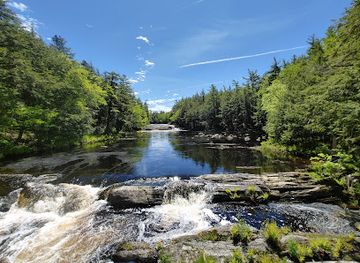
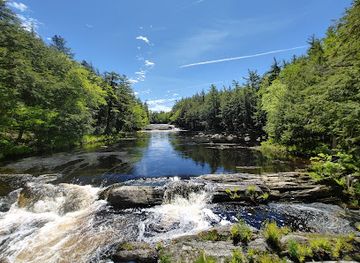
Kejimkujik National Park and National Historic Site
Explore the breathtaking landscapes and rich cultural heritage of Kejimkujik National Park, a hidden treasure in Nova Scotia.
-
Tourist attraction
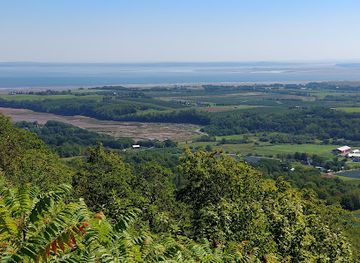
Blomidon Look-Off
Discover the awe-inspiring views of Blomidon Look-Off, a serene tourist attraction in Nova Scotia with stunning landscapes and picturesque surroundings.
-
Historical place museum
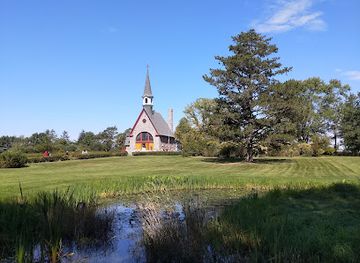
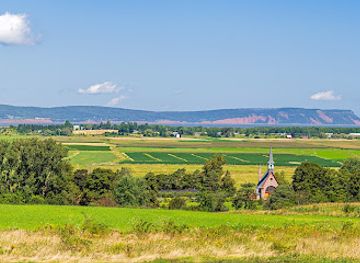
Grand-Pré National Historic Site
Discover the cultural heritage of the Acadian people at Grand-Pré National Historic Site, where history and nature intertwine beautifully.
-
Historical landmark
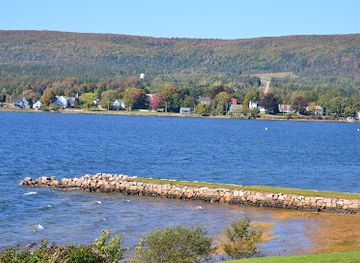
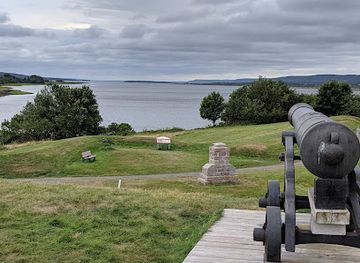
Fort Anne National Historic Site
Discover the legacy of Canada at Fort Anne National Historic Site, a captivating blend of history, culture, and stunning natural beauty in Annapolis Royal.
Best landmarks in Annapolis Valley
Grand Pré's broad dykelands and the memorial landscape associated with Acadian settlement are among the Annapolis Valley's most recognisable places, combining human engineering with the changing waters of the Minas Basin. Fort Anne in Annapolis Royal is a substantial reminder of the town's strategic colonial history, while nearby Port-Royal preserves the setting of the early French habitation established in 1605. Fort Edward at Windsor, including its surviving blockhouse, reflects the military importance of the valley during the eighteenth century. Cape Split forms a dramatic headland on the North Mountain, where forested trails lead to views across the Minas Channel and its powerful tides. The valley's orchard slopes, especially around the central agricultural districts, function as a cultural landmark as much as a scenic one: rows of trees, farm lanes, dykes and seasonal blossom express the region's long relationship with cultivation. Historic churches, town buildings and waterfront structures in Annapolis Royal, Wolfville and Windsor add smaller-scale architectural markers to the wider landscape.
-
Scenic spot
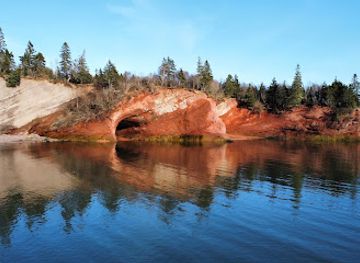
St Martins Sea Caves
Explore the geological wonders of St. Martins Sea Caves, sculpted by the world's highest tides on New Brunswick's Bay of Fundy coast.
-
National park
Kejimkujik National Park and National Historic Site
Discover ancient Mi'kmaw culture and pristine wilderness in Nova Scotia's Kejimkujik National Park and National Historic Site. Paddle, hike, and explore!
-
Historical place museum
Grand-Pré National Historic Site
Explore Acadian history and resilience at Grand-Pré National Historic Site, a UNESCO World Heritage Site in Nova Scotia's Annapolis Valley.
-
Historical landmark
Fort Anne National Historic Site
Explore Canada's oldest National Historic Site in Annapolis Royal, where Scottish, French, English, and Mi'kmaq histories intertwine.
Explore Annapolis Valley on the map
Plan your trip on one map. See where the top cities, national parks and sights are, and book hotels and experiences in a few clicks.
Best hotels in Annapolis Valley
Best restaurants in Annapolis Valley
Annapolis Valley dining draws heavily on its agricultural setting, with apples, berries, vegetables, herbs, grains and locally raised meat appearing in farm shops, cafés, pubs and contemporary restaurants. Orchard produce supports cider, pies, preserves and other seasonal goods, while the valley's vineyards have encouraged wine-focused menus and cellar-door tastings. Wolfville has the broadest concentration of restaurants and cafés, reflecting its university population and tourism economy; Kentville and Annapolis Royal offer further choices, while rural inns and roadside eateries provide a more dispersed dining scene. Farmers' markets and farm stands are useful places to find local produce, baking and prepared foods, though availability changes through the year. Seafood from the wider Bay of Fundy and Atlantic region is common, but not every dish marketed to visitors is specifically a valley tradition. Reserve ahead for popular seasonal restaurants and allow for shorter service hours in rural communities, particularly outside summer.
-
Bistro
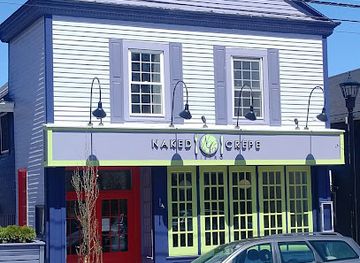
The Naked Crepe Bistro Inc
Experience the culinary delight of crepes at The Naked Crepe Bistro in Wolfville - where flavor meets comfort.
-
Seafood
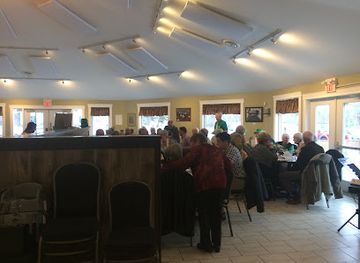
The Crow's Nest - Digby
Experience authentic Nova Scotia seafood at The Crow's Nest - where every dish tells a story of the ocean.
-
Restaurant
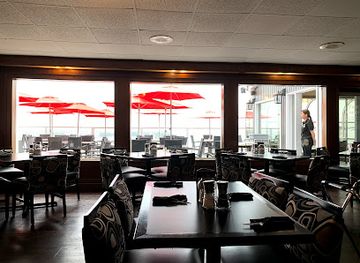
Fundy Restaurant & Dockside Suites
Experience the best of Nova Scotia's seafood at Fundy Restaurant & Dockside Suites with stunning views over the Bay of Fundy.
-
Family-friendly
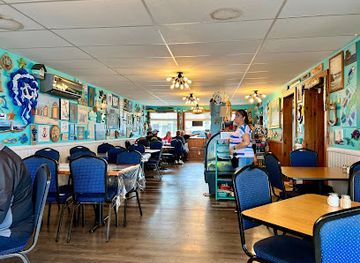
Angie's Family Restaurant
Experience the warmth of family dining at Angie's Family Restaurant in Middleton - where delicious meals and friendly service create unforgettable moments.
Best bars in Annapolis Valley
Evenings in the Annapolis Valley are centred on pubs, restaurants, cafés, live music and community events rather than a large club circuit. Wolfville has the most concentrated nightlife, supported by Acadia University and a sizeable selection of pubs, bars and venues for music or cultural performances. Kentville offers a more local evening scene, while Annapolis Royal combines restaurants and historic-town atmosphere with occasional arts programming. Craft beer, cider and Nova Scotian wine are prominent choices, and some wineries or breweries host tastings and events at selected times of year, but arrangements are seasonal and should be checked before travelling. In rural areas, evening entertainment is often tied to a pub, inn, festival or scheduled performance, with limited late-night transport. Visitors should plan a safe return when touring several producers, as distances between them can be considerable.
-
Vineyard
Luckett Vineyards
Explore Luckett Vineyards: A scenic vineyard experience in Nova Scotia with exquisite wines and local cuisine.
-
Gastropub
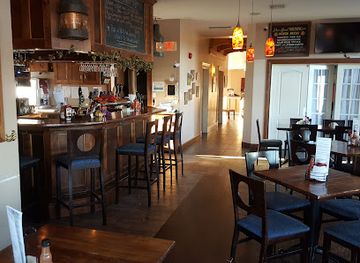
The Port Pub And Bistro
Discover the flavors of Nova Scotia at The Port Pub And Bistro, a charming gastropub offering local cuisine and a warm atmosphere.
-
Restaurant
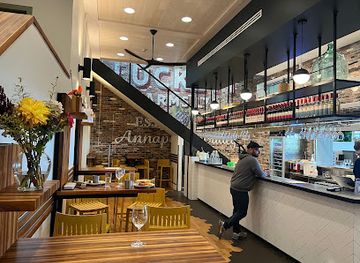
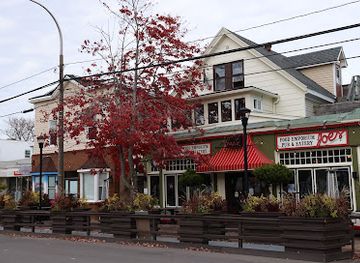
Joe's Food Emporium
Discover a culinary haven in Wolfville, where local ingredients meet delicious flavors at Joe's Food Emporium.
-
 Hotel
HotelOld Orchard Inn
Discover the charm of Old Orchard Inn, where comfort meets culinary excellence in the heart of Nova Scotia's beautiful landscape.
Best nightclubs in Annapolis Valley
Evenings in the Annapolis Valley are centred on pubs, restaurants, cafés, live music and community events rather than a large club circuit. Wolfville has the most concentrated nightlife, supported by Acadia University and a sizeable selection of pubs, bars and venues for music or cultural performances. Kentville offers a more local evening scene, while Annapolis Royal combines restaurants and historic-town atmosphere with occasional arts programming. Craft beer, cider and Nova Scotian wine are prominent choices, and some wineries or breweries host tastings and events at selected times of year, but arrangements are seasonal and should be checked before travelling. In rural areas, evening entertainment is often tied to a pub, inn, festival or scheduled performance, with limited late-night transport. Visitors should plan a safe return when touring several producers, as distances between them can be considerable.
-
Live Music
Coda
Discover the rhythms of Toronto at Coda, a premier live music venue offering an unforgettable blend of music and culinary delights.
-
Night club
Stereo
Immerse yourself in the electrifying atmosphere of Stereo, Montreal's premier night club, known for its stunning sound system and vibrant nightlife.
-
Night club
Club 98
Discover the vibrant nightlife at Club 98, Digby's premier night club, where music and dance come alive in a welcoming atmosphere.


Best shops in Annapolis Valley
Shopping in the Annapolis Valley is strongest in its market towns, where independent bookshops, galleries, craft retailers, clothing shops and cafés occupy traditional main streets. Wolfville has the broadest selection for visitors, with a mixture of local art, gifts, books and food products; Kentville provides practical shopping alongside independent businesses, while Annapolis Royal is known for heritage-town browsing and galleries. Farmers' markets and seasonal farm stands are good places to look for apples, cider, preserves, baking, vegetables, wine and locally made products, although opening days and seasonal availability vary. Pottery, paintings, textiles, jewellery and woodwork are common forms of regional craft, and specialist galleries can be found in several communities. Visitors should distinguish genuinely local produce from generic Canadian souvenirs, especially when buying food or gifts. Rural shops may have limited hours and card facilities, so check arrangements and carry some Canadian cash when touring smaller settlements.
-
Gift shop
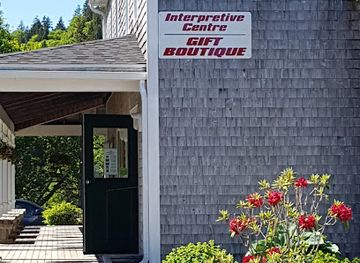
Fundy Trail Parkway Interpretive Center
Discover the natural beauty and cultural heritage of New Brunswick at the Fundy Trail Parkway Interpretive Center, a must-visit for every traveler.
-
Gift shop
Coles - County Fair Mall
Explore Coles at County Fair Mall, your go-to destination for books and unique gifts in New Minas, Nova Scotia.
-
Hiking area
Fundy Trail Parkway West Kiosk
Discover the breathtaking coastal beauty and diverse hiking trails at Fundy Trail Parkway West Kiosk, a must-visit destination in New Brunswick.
-
Gift shop
Market Between the Mountains
Discover unique local crafts and gifts at Market Between the Mountains, a charming Berwick market showcasing the best of Nova Scotia's artisans.


Get your free copy of our complete guide to Annapolis Valley, delivered straight to you.
Everything on this page, from attractions and restaurants to essentials and local phrases, in one PDF you can read offline, print or share.
Already have an account? Sign in
Your Annapolis Valley guide is ready.
We'll send it to · Not you? Sign out

Getting your guide ready…
We are putting together a fresh copy of the Annapolis Valley guide. This can take up to a minute.
This can take a few moments. If your browser asks, choose Allow so the download can start. You'll find the guide in your Downloads folder.
Nothing happened? Download it again
Sorry, the guide is taking longer than usual. Please try again in a minute, or get it by email instead.
Annapolis Valley essentials
Currency and Payment
Safety
Emergency Situations
Do's and Don'ts
Local Tips
From Eve
Local phrases worth knowing
You don't need to get them perfect. A few words go a long way, and locals appreciate the effort.
Basics
| English | Local | Say it |
|---|---|---|
| Hello | Hello | [huh-loh] |
| Goodbye | Goodbye | [good-bye] |
| Yes | Yes | [yes] |
| No | No | [noh] |
| Please/You're welcome | Please/You're welcome | [pleez/yoor wel-kum] |
| Thank you | Thank you | [thangk yoo] |
| Excuse me/Sorry | Excuse me/Sorry | [ex-kyoos mee/sor-ee] |
| How are you? | How are you? | [how ar yoo] |
| Fine. And you? | Fine. And you? | [fine. and yoo] |
| Do you speak English? | Do you speak English? | [doo yoo speek ing-glish] |
| I don't understand | I don't understand | [I dont un-der-stand] |
Eating & Drinking
| English | Local | Say it |
|---|---|---|
| I'd like to see the menu, please | I'd like to see the menu, please | [I'd lyk to see thuh men-yoo, pleez] |
| I don't eat meat | I don't eat meat | [I dont eet meet] |
| Cheers! | Cheers! | [cheerz] |
| I would like to pay, please | I would like to pay, please | [I wood lyk to pay, pleez] |
Emergencies
| English | Local | Say it |
|---|---|---|
| Help! | Help! | [help] |
| Go away! | Go away! | [goh aw-ay] |
| Call the Police! | Call the Police! | [kawl thuh puh-lees] |
| Call a doctor! | Call a doctor! | [kawl a dok-ter] |
| I'm lost | I'm lost | [I'm lost] |
| I'm ill | I'm ill | [I'm il] |
Shopping
| English | Local | Say it |
|---|---|---|
| I'd like to buy... | I'd like to buy... | [I'd lyk to buy...] |
| I'm just looking | I'm just looking | [I'm just luk-ing] |
| How much is it? | How much is it? | [how much iz it] |
| That's too expensive | That's too expensive | [thats too ex-pen-siv] |
| Can you lower the price? | Can you lower the price? | [kan yoo loh-er thuh prys] |
Time & Numbers
| English | Local | Say it |
|---|---|---|
| What time is it? | What time is it? | [what tym iz it] |
| It's one o'clock | It's one o'clock | [its wun uh-klok] |
| Half past (10) | Half past (10) | [haf past ten] |
| Morning | Morning | [mor-ning] |
| Afternoon | Afternoon | [af-ter-noon] |
| Evening | Evening | [eev-ning] |
| Yesterday | Yesterday | [yes-ter-day] |
| Today | Today | [to-day] |
| Tomorrow | Tomorrow | [to-mor-row] |
| 1 | 1 | [one] |
| 2 | 2 | [two] |
| 3 | 3 | [three] |
| 4 | 4 | [four] |
| 5 | 5 | [five] |
| 6 | 6 | [six] |
| 7 | 7 | [seven] |
| 8 | 8 | [eight] |
| 9 | 9 | [nine] |
| 10 | 10 | [ten] |
Transport & Directions
| English | Local | Say it |
|---|---|---|
| Where's a/the...? | Where's a/the...? | [wherz a/thuh...?] |
| What's the address? | What's the address? | [whats thuh ad-dress?] |
| Can you show me (on the map)? | Can you show me (on the map)? | [kan yoo shoh mee (on thuh map)?] |
| When's the next (bus)? | When's the next (bus)? | [whens thuh nex (bus)?] |
| A ticket (to ....) | A ticket (to ....) | [a tik-it (to ....)] |
History of Annapolis Valley
Mi'kmaq Homeland and River Corridors
The Annapolis Valley lies within Mi'kma'ki, the traditional and continuing homeland of the Mi'kmaq. Rivers, marshes, forests and coastal inlets provided routes for travel, fishing, hunting and exchange, linking the interior with the Bay of Fundy and Atlantic coast. The Mi'kmaq maintained relationships with the land long before European settlement, and their presence remains part of the region's contemporary cultural and political landscape. Visitors should understand that colonial place names and later agricultural boundaries do not erase these earlier and continuing connections.
Acadian Settlement and the Dykelands
French settlers established communities at Port-Royal and along the valley's tidal margins from the early seventeenth century. At Grand Pré and nearby settlements, Acadians built dykes and aboiteaux, structures that excluded salt water and converted tidal marshes into productive farmland. This created a distinctive landscape of fields below the surrounding hills. Acadian society developed its own farming practices, Catholic institutions and community networks, while the region remained contested between French and British powers. The dykelands are among the clearest surviving expressions of this period.
Colonial Rivalry and the Deportation of 1755
The Annapolis Valley occupied a strategic position during the repeated conflict between France and Britain in northeastern North America. Fort Anne at Annapolis Royal and Fort Edward at Windsor reflect the military importance of controlling the valley's routes and river approaches. In 1755, British authorities began the deportation of Acadians, a traumatic displacement that affected communities throughout the region. Some Acadians returned later, while others settled elsewhere in the Maritimes and beyond. Grand Pré's national historic and World Heritage interpretation places the event within the broader history of Acadian resilience, loss and diaspora.
New England Planters and Agricultural Expansion
After the Acadian deportation, settlers known as New England Planters arrived from New England in the 1760s, encouraged by the British government to occupy former Acadian lands. They established farms, mills, churches and townships, adding new architectural and agricultural traditions to the valley. Later migration and trade connected settlements such as Windsor, Horton, Cornwallis and Annapolis Royal to wider Atlantic markets. The pattern of prosperous farms separated by roads, waterways and dykelands helped shape the rural landscape that visitors see today.
Timber, Shipping and the Rise of Towns
During the eighteenth and nineteenth centuries, the valley's rivers and tidal ports supported timber cutting, shipbuilding, coastal trade and the movement of farm produce. Annapolis Royal, Windsor and smaller settlements acted as commercial links between inland farms and markets around the Bay of Fundy and Atlantic Canada. The arrival of railways later changed the balance between river ports and inland towns, encouraging the growth of commercial centres such as Kentville. These transport and trading networks helped turn local agriculture into a more organised regional economy.
Orchards, Research and the Modern Valley
Commercial apple growing expanded during the nineteenth and early twentieth centuries, particularly in the central valley and around the north-facing slopes. Packing, exporting and agricultural research became important employers and helped give the region its enduring orchard identity. The Atlantic Food and Horticulture Research Centre in Kentville reflects the valley's continuing role in agricultural science, although the industry has also faced changing markets and climate pressures. More recently, vineyards, cider makers, farm-to-table businesses and heritage tourism have broadened the rural economy without displacing agriculture's central importance.
Universities, Cultural Tourism and Landscape Conservation
Acadia University has made Wolfville an important educational and cultural centre since its foundation in the nineteenth century. Its presence contributes to the town's theatres, music, galleries and restaurant scene, while nearby vineyards and historic landscapes have brought new forms of tourism. Conservation has also become increasingly important: Grand Pré's World Heritage status recognises both its Acadian history and its cultural landscape, and provincial parks protect parts of the North Mountain, Bay of Fundy shore and valley uplands. The contemporary Annapolis Valley balances working agriculture with heritage interpretation and outdoor recreation.
Annapolis Valley in Photos
Browse through our photo collection highlighting the charm and character of the destination.
Neighbouring regions of Annapolis Valley
The closest regions to Annapolis Valley, if you have time for more than one.
-

-

-

-

-


Swipe for more regions
Explore more
Explore more of Canada
Discover Canada's breathtaking landscapes, diverse cities, and rich cultural heritage. A must-visit destination for outdoor adventures and vibrant urban experiences.
Explore Canada