

Free Aysén Region Travel Guide & Mobile App
Explore Aysén Region with free travel guides. Discover regional history, expert tips, proposed trips, and audio guides on web or mobile app.


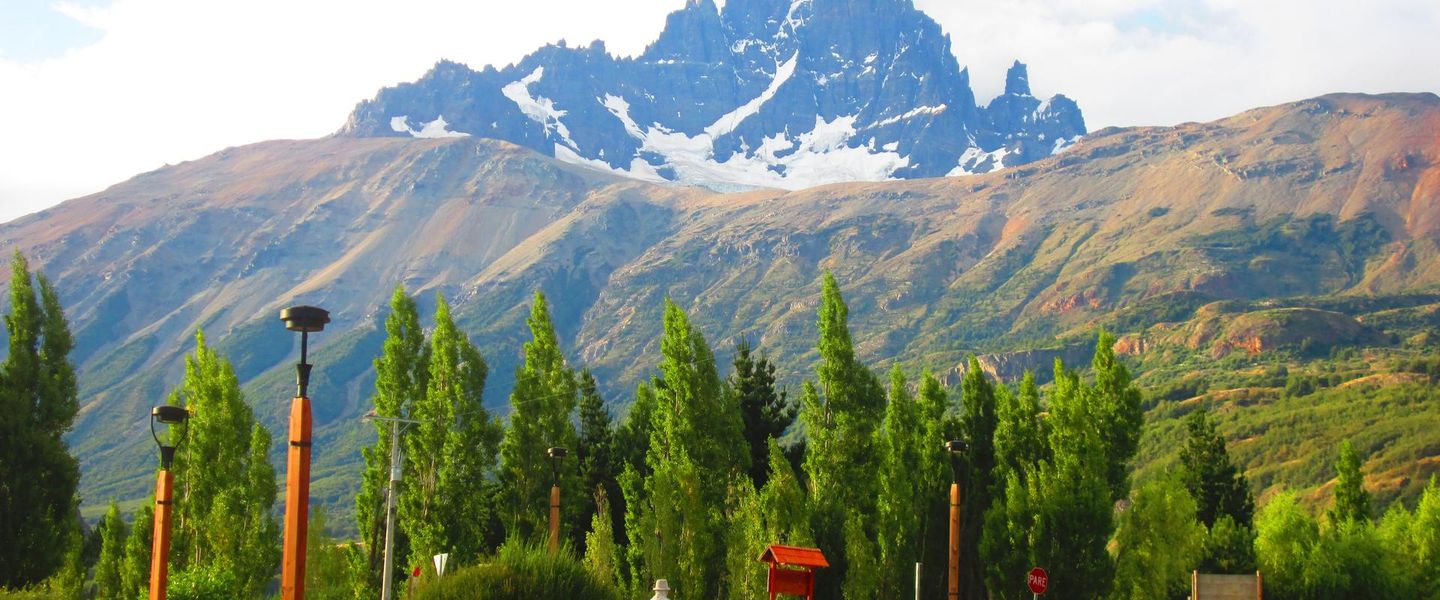


Explore Aysén Region in Chilean Patagonia for fjords, glaciers, national parks, turquoise lakes, remote roads and distinctive frontier towns.
Read more about Aysén Region
When is the best time to visit Aysén Region?
Best: December–February · 18°C| Month | High (°C) | Rainfall (mm) |
|---|---|---|
| January (best) | 18 | 60 |
| February (best) | 18 | 65 |
| March | 16 | 70 |
| April | 13 | 85 |
| May | 10 | 95 |
| June | 8 | 105 |
| July | 7 | 110 |
| August | 9 | 105 |
| September | 12 | 95 |
| October | 15 | 85 |
| November | 17 | 75 |
| December (best) | 18 | 65 |
Getting to and around Aysén Region
How to get there
Transportation
Best attractions in Aysén Region
Aysén’s attractions are defined by scale and variety rather than a concentration of urban sights. Queulat National Park offers rainforest trails, waterfalls and views towards the Ventisquero Colgante, or Hanging Glacier, while Cerro Castillo National Park provides demanding mountain walks beneath serrated peaks. Patagonia National Park, near Cochrane, combines grassland, wetlands, forests and wildlife habitat, and Laguna San Rafael National Park protects a remote world of ice, fjords and navigable channels. The Marble Caves on Lake General Carrera are reached by boat from Puerto Río Tranquilo or other lakeside communities, their sculpted surfaces changing with the water and light. The Baker River is important for rafting, fishing and scenery, while Caleta Tortel’s cypress walkways offer a distinctive settlement experience. Around Coyhaique, visitors can find shorter walks, viewpoints, museums, ranch experiences and access to valleys suited to riding, cycling and fly-fishing. Activities are strongly weather-dependent, and remote attractions often require advance transport planning or a guide.
-
National park
Torres del Paine National Park
Explore the breathtaking beauty of Torres del Paine National Park, a UNESCO Biosphere Reserve with stunning landscapes and diverse wildlife in Chile.
-
Park
Plaza de Armas
Plaza de Armas in Puerto Aysén offers a serene blend of nature and culture, perfect for relaxation and exploration in the heart of Chile's Aysén region.
-
Observation deck
Simpson River Viewpoint - Urban Park
Experience the stunning vistas and tranquility of the Simpson River Viewpoint, a must-visit urban park in Coyhaique, Aysén, Chile.
-
Monument
Monumento Al Ovejero
Explore the Monumento Al Ovejero in Coyhaique, a stunning tribute to sheep farming heritage set against the breathtaking backdrop of the Andes.


Best landmarks in Aysén Region
The Ventisquero Colgante in Queulat National Park is one of Aysén’s most recognisable natural landmarks, a glacier suspended above a forested valley and associated with meltwater cascades. The sharp massif of Cerro Castillo dominates the landscape south of Coyhaique and has become a defining symbol of the region’s mountain country. On Lake General Carrera, the Marble Caves are geological formations shaped by water along the lake’s shoreline, best appreciated from the water. Caleta Tortel is a landmark of another kind: its network of raised cypress-wood walkways reflects a settlement adapted to channels, forest and difficult coastal access. The Baker River marks southern Aysén with its powerful turquoise flow and broad river valleys, while the Carretera Austral itself is an important infrastructural landmark, crossing landscapes once connected mainly by sea or air. In Coyhaique, the Simpson River valley and surrounding mountain viewpoints provide a more accessible expression of the region’s geography, linking the capital to the wider Patagonian setting.
-
National park
Torres del Paine National Park
Experience the breathtaking beauty of Torres del Paine National Park, a natural wonder in Chilean Patagonia, ideal for adventure and wildlife enthusiasts.
-
Nature preserve
Marble Caves
Experience the breathtaking beauty of Chile's Marble Caves, a natural wonder showcasing stunning marble formations and crystal-clear waters.
-
National park
Parque Nacional Queulat
Explore the stunning landscapes and rich biodiversity of Parque Nacional Queulat, a must-visit national park in Aysén, Chile, for nature lovers and adventurers.
-
Park
Plaza de Armas
Experience the vibrant culture and stunning natural beauty of Puerto Aysén at the iconic Plaza de Armas, a must-visit destination for every traveler.


Explore Aysén Region on the map
Plan your trip on one map. See where the top cities, national parks and sights are, and book hotels and experiences in a few clicks.
Best hotels in Aysén Region
Best restaurants in Aysén Region
Dining in Aysén reflects Chilean cooking, Patagonian ranching and the region’s lakes, rivers and coast. Coyhaique has the broadest choice, from cafés and bakeries to restaurants serving lamb, beef, trout, salmon, soups, empanadas and seasonal produce. In smaller towns and rural areas, meals are more likely to centre on family kitchens, simple restaurants, lodges and traditional asados, with hearty portions suited to a cool climate and active travel. Local berries, jams, preserves, mushrooms and honey appear seasonally, while bread and baked goods are useful provisions on long drives. Coastal settlements and lakeside communities may offer fish and seafood, although menus depend on supply and season rather than a single uniform regional cuisine. Craft beer and Chilean wine are widely available in established restaurants and accommodation, while remote areas may have a much smaller selection. Markets and small shops in Coyhaique and other towns are practical places to buy picnic ingredients for national-park excursions.
-
Restaurant
Mamma Gaucha
Experience exquisite dining at Mamma Gaucha in Coyhaique - where local flavors meet exceptional service.
-
Restaurant
Casino de Bomberos
Experience authentic Chilean cuisine at Casino de Bomberos in Coyhaique – where local flavors meet warm hospitality.
-
Restaurant
LA TABERNA D'OLBEK
Experience La Taberna D'Olbek: A delightful restaurant and brewery serving exquisite Belgian beers and local cuisine in scenic Coyhaique.
-
Restaurant
El Meson De La Patiko
Discover authentic Chilean cuisine at El Meson De La Patiko in Puerto Aysén, where local flavors meet warm hospitality.


Best bars in Aysén Region
Aysén’s evening life is concentrated in Coyhaique and a handful of larger towns, with traditional pubs, restaurants, cafés and small bars providing the main social settings. Coyhaique has the region’s widest choice of places for craft beer, Chilean wine, cocktails and occasional live music, while Puerto Aysén and other communities tend towards straightforward local bars and eateries rather than a large club scene. In remote settlements, evenings are generally quiet, shaped by early departures, weather and the rhythms of outdoor activities. Some lodges and hosterías serve drinks and informal meals, and seasonal visitor activity can bring more life to towns along the Carretera Austral. Nightclubs are limited and changeable, so visitors should not plan an itinerary around a particular venue without checking locally. The region’s nightlife is best understood as relaxed and community-oriented, with conversation, food and music more prominent than late-night entertainment.
-
Restaurant
Mamma Gaucha
Experience the authentic taste of Patagonia at Mamma Gaucha, where every dish tells a delicious story.
-
Restaurant
Casino de Bomberos
Discover the flavors of Aysén at Casino de Bomberos, a charming restaurant in Coyhaique offering local and international cuisine in a cozy setting.
-
Bar
LA TABERNA D'OLBEK
Discover the vibrant flavors of Aysén at La Taberna D'Olbek, a charming bar and restaurant in Coyhaique featuring local brews and delicious cuisine.
-
Restaurant
El Meson De La Patiko
Experience the taste of Aysén at El Meson De La Patiko, where local flavors and warm hospitality meet in a cozy setting.


Best nightclubs in Aysén Region
Aysén’s evening life is concentrated in Coyhaique and a handful of larger towns, with traditional pubs, restaurants, cafés and small bars providing the main social settings. Coyhaique has the region’s widest choice of places for craft beer, Chilean wine, cocktails and occasional live music, while Puerto Aysén and other communities tend towards straightforward local bars and eateries rather than a large club scene. In remote settlements, evenings are generally quiet, shaped by early departures, weather and the rhythms of outdoor activities. Some lodges and hosterías serve drinks and informal meals, and seasonal visitor activity can bring more life to towns along the Carretera Austral. Nightclubs are limited and changeable, so visitors should not plan an itinerary around a particular venue without checking locally. The region’s nightlife is best understood as relaxed and community-oriented, with conversation, food and music more prominent than late-night entertainment.
-
Bar
BarGround
Experience the vibrant nightlife at BarGround in Coyhaique, where creative cocktails and local culture come together in a lively setting.
-
Grill
Restobar El Truco
Experience the charm of Puerto Aysén at Restobar El Truco, where local flavors and vibrant ambiance meet.
-
Live music bar
El Bulin's
Experience the vibrant nightlife of Coyhaique at El Bulin's, a lively live music bar serving great drinks and unforgettable performances.
-
Hamburger
Club House Aysen
Indulge in gourmet burgers at Club House Aysen, where flavor meets a cozy atmosphere in the heart of Aysén.


Best shops in Aysén Region
Shopping in Aysén is practical, local and strongly connected to its rural and Patagonian identity. Coyhaique offers the broadest selection of outdoor equipment, woollen clothing, leather goods, books, food shops, cafés and independent craft outlets. In smaller towns along the Carretera Austral, shops are mainly provision stores, bakeries, petrol stations and small workshops rather than conventional retail centres. Look for locally made wool products, knitted garments, leatherwork, woodcraft, jewellery and objects inspired by fjords, forests and mountain landscapes, while checking that natural materials have been sourced and traded responsibly. Regional foods make useful gifts, including preserves, berry products, honey, smoked goods and craft beverages where transport regulations permit. Markets and artisan fairs may be seasonal or held intermittently, so ask locally rather than relying on a fixed timetable. Buying directly from makers, cooperatives or established community enterprises can provide a more meaningful connection to Aysén’s craft traditions than generic souvenirs.
-
Department store
Multitienda Casa Alicia Coyhaique
Explore Multitienda Casa Alicia, the cultural hub of Coyhaique, offering local crafts, everyday essentials, and a unique shopping experience.
-
Clothing store
Corona
Explore Corona in Coyhaique for a unique shopping experience featuring a diverse selection of clothing for all ages and styles.
-
Cafeteria
Cowilij Café Boutique
Explore Cowilij Café Boutique for a taste of Aysén's culinary treasures in a cozy, artisanal setting that enchants every visitor.
-
Department store
Dimarsa- Teniente Merino, Aysén
Discover Dimarsa in Aysén, a vibrant department store offering a wide range of products and a taste of local culture for every visitor.


Get your free copy of our complete guide to Aysén Region, delivered straight to you.
Everything on this page, from attractions and restaurants to essentials and local phrases, in one PDF you can read offline, print or share.
Already have an account? Sign in
Your Aysén Region guide is ready.
We'll send it to · Not you? Sign out

Getting your guide ready…
We are putting together a fresh copy of the Aysén Region guide. This can take up to a minute.
This can take a few moments. If your browser asks, choose Allow so the download can start. You'll find the guide in your Downloads folder.
Nothing happened? Download it again
Sorry, the guide is taking longer than usual. Please try again in a minute, or get it by email instead.
Aysén Region essentials
Currency and Payment
Safety
Emergency Situations
Do's and Don'ts
Local Tips
From Eve
Local phrases worth knowing
You don't need to get them perfect. A few words go a long way, and locals appreciate the effort.
Basics
| English | Local | Say it |
|---|---|---|
| Hello | Hola | [Ola] |
| Goodbye | Adiós | [Adios] |
| Yes | Sí | [See] |
| No | No | [No] |
| Please/You're welcome | Por favor | [Por favor] |
| Thank you | Gracias | [Grathias] |
| Excuse me/Sorry | Disculpa | [Dees-kool-pa] |
| How are you? | ¿Cómo estás? | [Komoh estas] |
| Fine. And you? | Bien. ¿Y tú? | [Byen. Ee too] |
| Do you speak English? | ¿Hablas inglés? | [Ablas ingles] |
| I don't understand | No entiendo | [No entiendo] |
Eating & Drinking
| English | Local | Say it |
|---|---|---|
| I'd like to see the menu, please | Me gustaría ver el menú, por favor | [Me goosta-ree-a ver el menu, por favor] |
| I don't eat meat | No como carne | [No komo karne] |
| Cheers! | ¡Salud! | [Salood] |
| I would like to pay, please | Me gustaría pagar, por favor | [Me goosta-ree-a pagar, por favor] |
Emergencies
| English | Local | Say it |
|---|---|---|
| Help! | ¡Ayuda! | [Ayuda] |
| Go away! | ¡Vete! | [Vete] |
| Call the Police! | ¡Llama a la policía! | [Llama a la polisia] |
| Call a doctor! | ¡Llama a un doctor! | [Llama a un doktor] |
| I'm lost | Estoy perdido | [Estoy perdido] |
| I'm ill | Estoy enfermo | [Estoy enfermo] |
Shopping
| English | Local | Say it |
|---|---|---|
| I'd like to buy... | Me gustaría comprar... | [Me goosta-ree-a comprar] |
| I'm just looking | Solo estoy mirando | [Solo estoy mirando] |
| How much is it? | ¿Cuánto cuesta? | [Kwanto kwesta] |
| That's too expensive | Eso es muy caro | [Eso es muy karo] |
| Can you lower the price? | ¿Puedes bajar el precio? | [Pwe-des bajar el precio] |
Time & Numbers
| English | Local | Say it |
|---|---|---|
| What time is it? | ¿Qué hora es? | [Ke ora es] |
| It's one o'clock | Es la una | [Es la una] |
| Half past (10) | Y media (10) | [Ee media (diez)] |
| Morning | Mañana | [Man-ya-na] |
| Afternoon | Tarde | [Tar-de] |
| Evening | Noche | [No-che] |
| Yesterday | Ayer | [Ayer] |
| Today | Hoy | [Oi] |
| Tomorrow | Mañana | [Man-ya-na] |
| 1 | Uno | [Uno] |
| 2 | Dos | [Dos] |
| 3 | Tres | [Tres] |
| 4 | Cuatro | [Kwat-ro] |
| 5 | Cinco | [Sin-ko] |
| 6 | Seis | [Says] |
| 7 | Siete | [Sye-te] |
| 8 | Ocho | [O-cho] |
| 9 | Nueve | [Nwe-veh] |
| 10 | Diez | [Dyez] |
Transport & Directions
| English | Local | Say it |
|---|---|---|
| Where's a/the...? | ¿Dónde está un/una...? | [Don-de es-ta un/una] |
| What's the address? | ¿Cuál es la dirección? | [Kwal es la direk-sion] |
| Can you show me (on the map)? | ¿Puedes mostrarme (en el mapa)? | [Pwe-des mostrar-me (en el mapa)] |
| When's the next (bus)? | ¿Cuándo es el próximo (bus)? | [Kwan-do es el prok-si-mo] |
| A ticket (to ....) | Un pasaje (a ...) | [Un pa-saje (a ...)] |
History of Aysén Region
Indigenous Peoples of the Channels and Steppe
Long before Chilean settlement, Aysén was travelled and inhabited by peoples adapted to very different environments. Kawésqar communities navigated the western fjords and channels, while Chono groups historically used the island-studded waterways farther north. On the eastern side of the Andes, Aónikenk people moved through Patagonian steppe and neighbouring groups used seasonal routes across the wider region. Their knowledge of waterways, weather, wildlife and mountain passes remains an essential part of Aysén’s deeper history, even though colonial and later settler narratives often gave it insufficient prominence.
Exploration and Limited Colonial Settlement
The intricate coastline of Aysén was charted gradually by Spanish and later Chilean expeditions, but its fjords, forests and icefields discouraged permanent colonial settlement. Maritime routes were important for mapping and navigation, while inland valleys remained difficult to reach from established centres farther north. Missionary and exploratory activity affected indigenous communities, but the region did not develop a dense colonial town network comparable with central Chile. This relative isolation helped preserve a landscape in which maritime, forest and steppe environments remained dominant well into the modern era.
Chilean Incorporation and Early Settlers
Aysén became part of the expanding Chilean state during the late nineteenth and early twentieth centuries, when officials, explorers and settlers sought to establish a stronger presence in the far south. Small settlements developed around river valleys, lakes and accessible coastal points, often relying on supplies brought by sea. Land grants and colonisation encouraged migration from other parts of Chile and from abroad, while relations with indigenous inhabitants and the use of land changed profoundly. The resulting communities formed the basis of towns such as Coyhaique and Puerto Aysén.
Ranching, Timber and Regional Development
Much of eastern Aysén developed through sheep and cattle ranching, with broad grasslands and sheltered valleys supporting estancias and family farms. Forestry also became important in areas where native woodland was cleared or harvested, while fishing and maritime transport shaped coastal settlements. Coyhaique grew as an administrative and commercial centre, linking rural producers with ports and markets. These industries created the region’s enduring Patagonian rural identity, visible in working landscapes, corrals, wool and meat production, horsemanship and the long distances between settlements.
The Carretera Austral
The construction of the Carretera Austral from the late twentieth century transformed access to the region. Built through difficult terrain of forest, river valleys, mountains and fjords, the road connected communities that had previously depended heavily on boats, aircraft or arduous local tracks. It also introduced a powerful new travel route through Aysén, although many sections remain gravel and vulnerable to weather or maintenance conditions. The road’s legacy is therefore both practical and cultural: it strengthened regional links while making Aysén’s landscapes accessible to independent travellers.
Conservation and a New Regional Economy
In recent decades, national parks and protected areas have become central to Aysén’s identity and economy. Conservation initiatives protect major ecosystems including temperate rainforest, Patagonian steppe, glaciers, rivers and wildlife habitat. Parks such as Queulat, Cerro Castillo and Patagonia, together with the extensive protected landscapes around Laguna San Rafael, support trekking, guiding, research and nature-based tourism. This transition has not replaced ranching, fishing or forestry, but it has added new economic opportunities and intensified debates about infrastructure, energy development, land use and the relationship between communities and protected landscapes.
Aysén Region in Photos
Browse through our photo collection highlighting the charm and character of the destination.
Neighbouring regions of Aysén Region
The closest regions to Aysén Region, if you have time for more than one.
-

-

-
-

-


Swipe for more regions
Explore more

Explore more of Chile
Discover Chile: From the Atacama Desert to Patagonia's Glaciers, Experience Diverse Landscapes, Rich Culture, and World-Class Wine in This South American Gem.
Explore Chile